
Chapter 33 Electromagnetic Waves 33 1 What is
- Slides: 27
Chapter 33. Electromagnetic Waves 33. 1. What is Physics? 33. 2. Maxwell's Rainbow 33. 3. The Traveling Electromagnetic Wave, Qualitatively 33. 4. The Traveling Electromagnetic Wave, Quantitatively 33. 5. Energy Transport and the Poynting Vector 33. 7. Polarization 33. 8. Reflection and Refraction 33. 9. Total Internal Reflection 33. 10. Polarization by Reflection
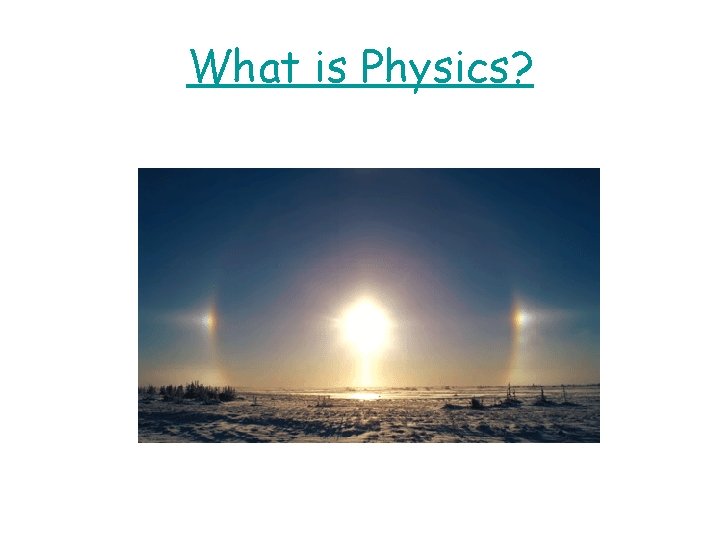
What is Physics?
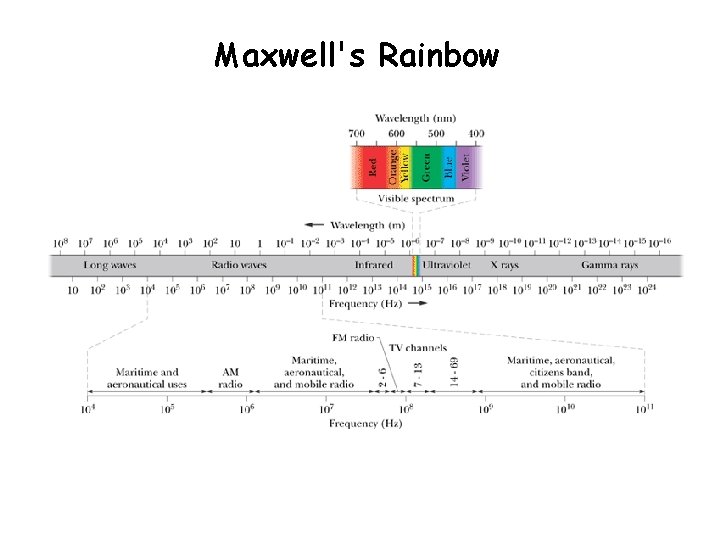
Maxwell's Rainbow
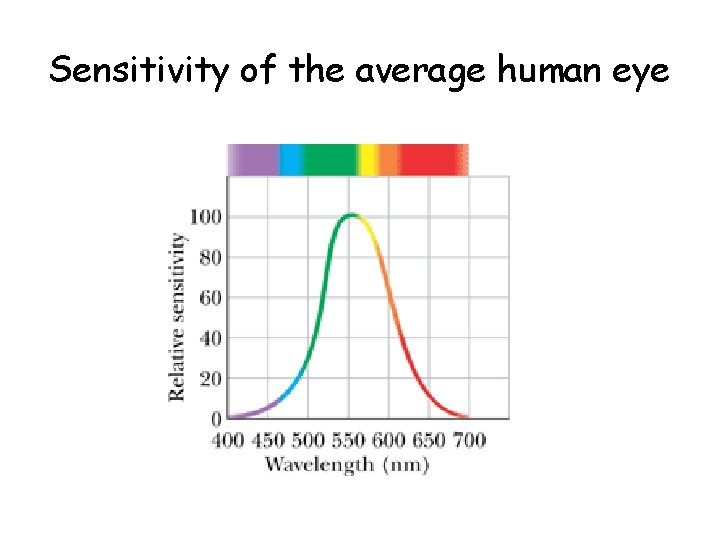
Sensitivity of the average human eye
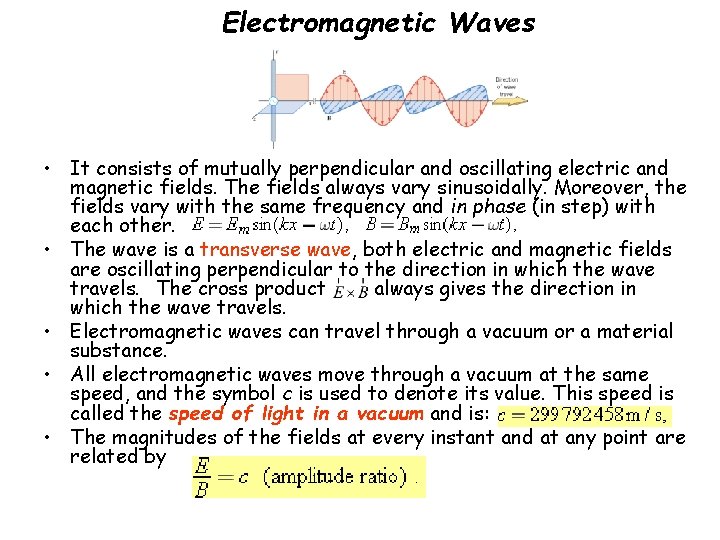
Electromagnetic Waves • It consists of mutually perpendicular and oscillating electric and magnetic fields. The fields always vary sinusoidally. Moreover, the fields vary with the same frequency and in phase (in step) with each other. • The wave is a transverse wave, both electric and magnetic fields are oscillating perpendicular to the direction in which the wave travels. The cross product always gives the direction in which the wave travels. • Electromagnetic waves can travel through a vacuum or a material substance. • All electromagnetic waves move through a vacuum at the same speed, and the symbol c is used to denote its value. This speed is called the speed of light in a vacuum and is: • The magnitudes of the fields at every instant and at any point are related by
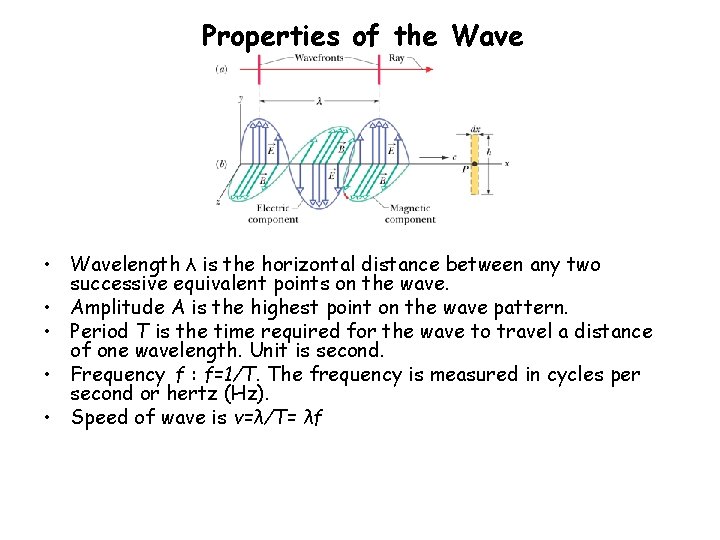
Properties of the Wave • Wavelength λ is the horizontal distance between any two successive equivalent points on the wave. • Amplitude A is the highest point on the wave pattern. • Period T is the time required for the wave to travel a distance of one wavelength. Unit is second. • Frequency f : f=1/T. The frequency is measured in cycles per second or hertz (Hz). • Speed of wave is v=λ/T= λf
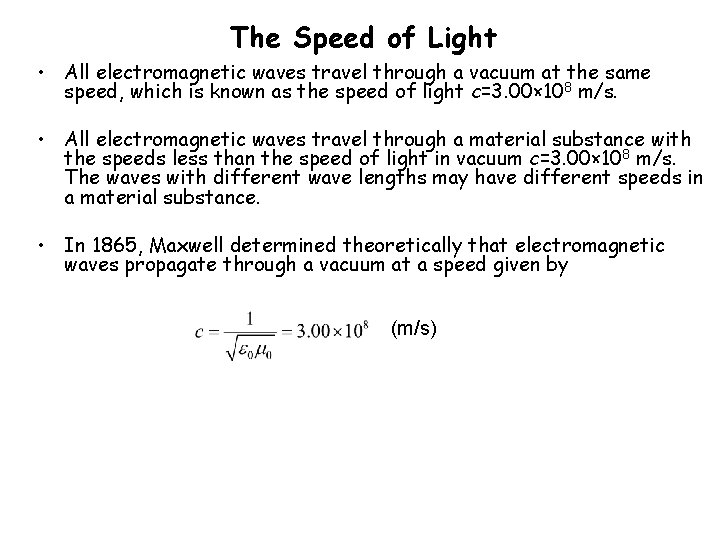
The Speed of Light • All electromagnetic waves travel through a vacuum at the same speed, which is known as the speed of light c=3. 00× 108 m/s. • All electromagnetic waves travel through a material substance with the speeds less than the speed of light in vacuum c=3. 00× 108 m/s. The waves with different wave lengths may have different speeds in a material substance. • In 1865, Maxwell determined theoretically that electromagnetic waves propagate through a vacuum at a speed given by (m/s)
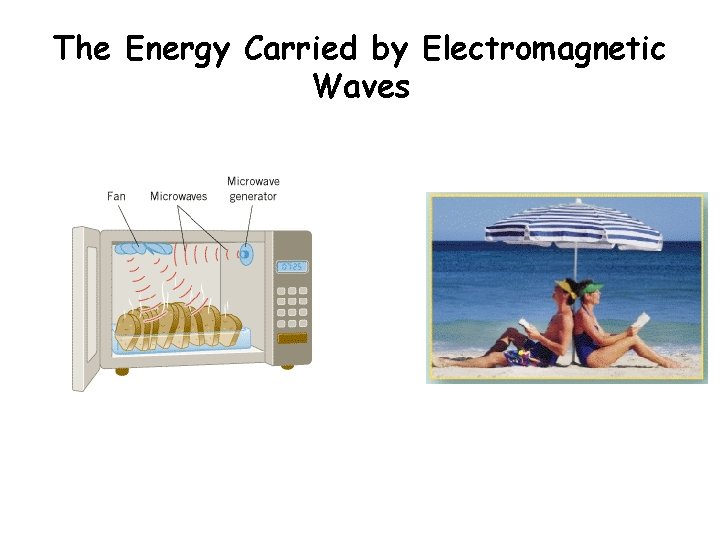
The Energy Carried by Electromagnetic Waves
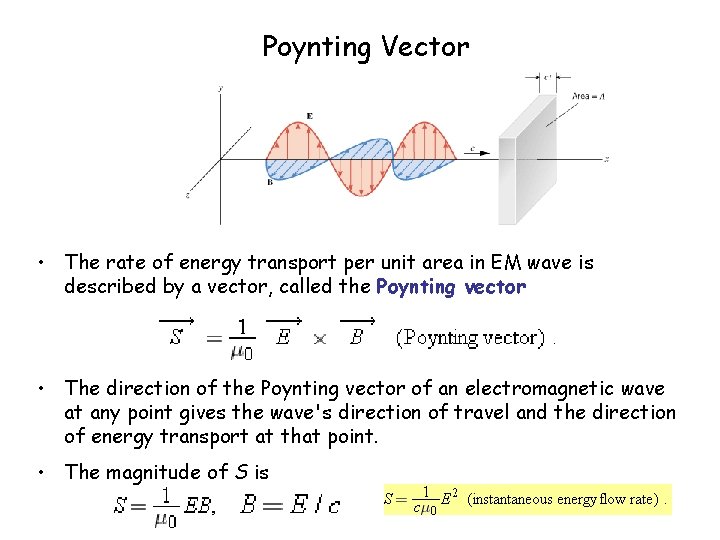
Poynting Vector • The rate of energy transport per unit area in EM wave is described by a vector, called the Poynting vector • The direction of the Poynting vector of an electromagnetic wave at any point gives the wave's direction of travel and the direction of energy transport at that point. • The magnitude of S is
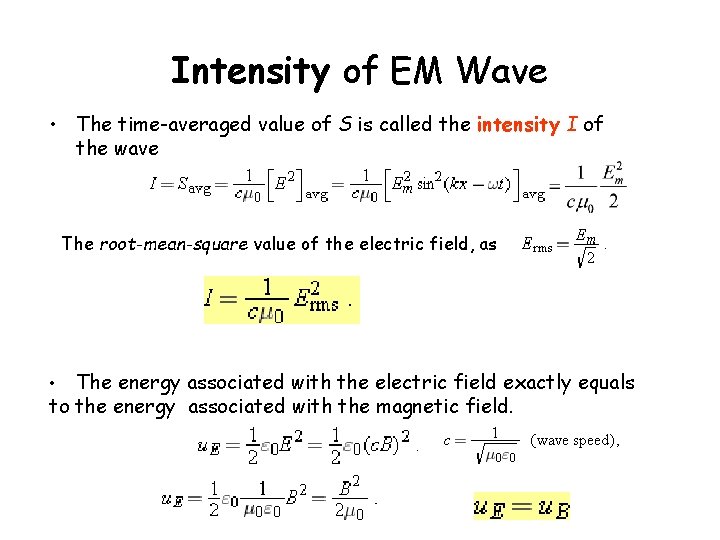
Intensity of EM Wave • The time-averaged value of S is called the intensity I of the wave The root-mean-square value of the electric field, as • The energy associated with the electric field exactly equals to the energy associated with the magnetic field.
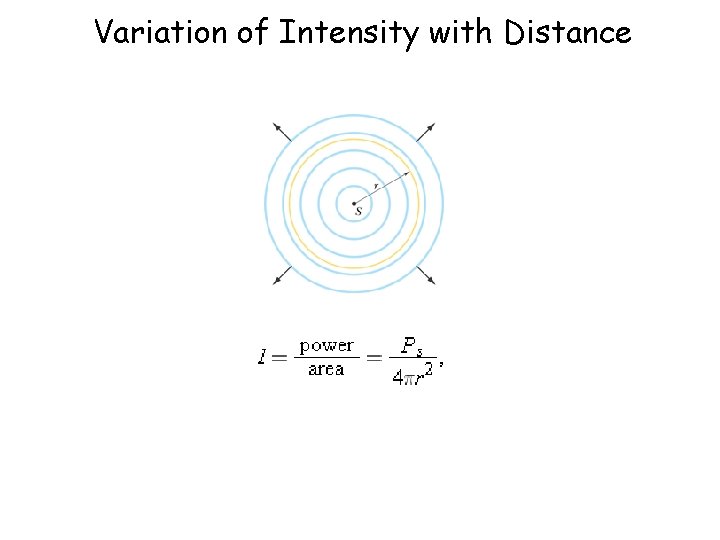
Variation of Intensity with Distance
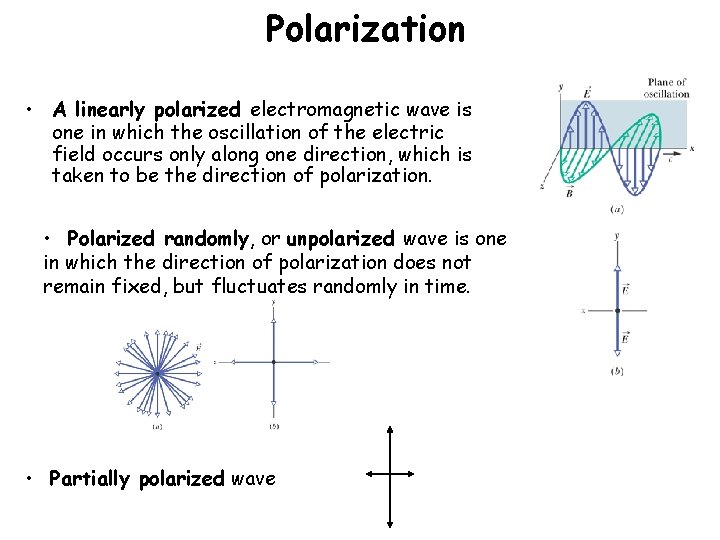
Polarization • A linearly polarized electromagnetic wave is one in which the oscillation of the electric field occurs only along one direction, which is taken to be the direction of polarization. • Polarized randomly, or unpolarized wave is one in which the direction of polarization does not remain fixed, but fluctuates randomly in time. • Partially polarized wave
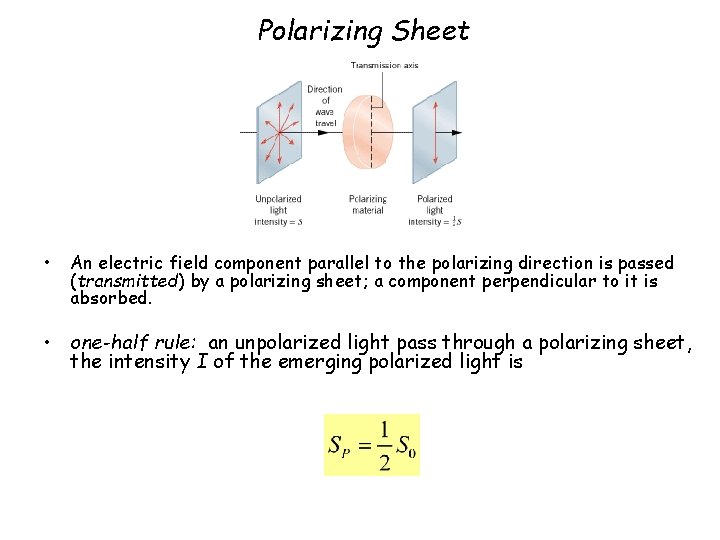
Polarizing Sheet • An electric field component parallel to the polarizing direction is passed (transmitted) by a polarizing sheet; a component perpendicular to it is absorbed. • one-half rule: an unpolarized light pass through a polarizing sheet, the intensity I of the emerging polarized light is
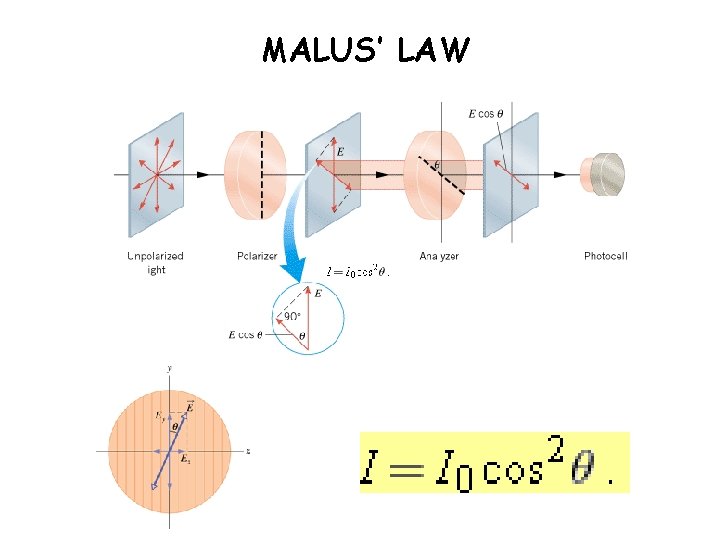
MALUS’ LAW
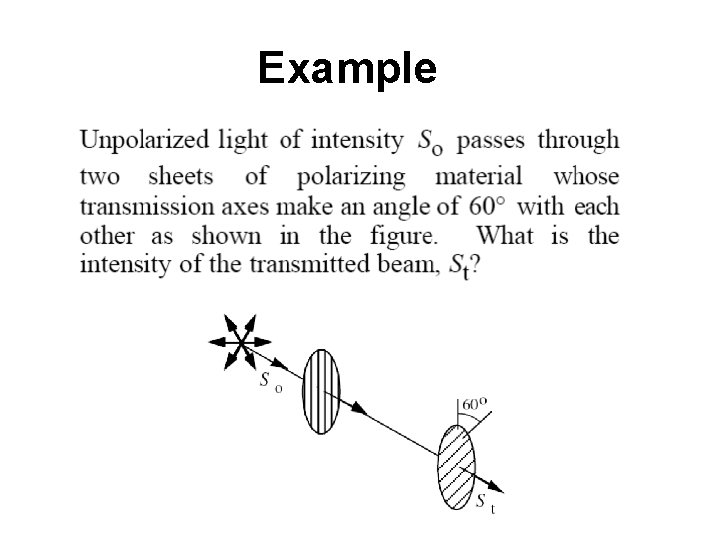
Example
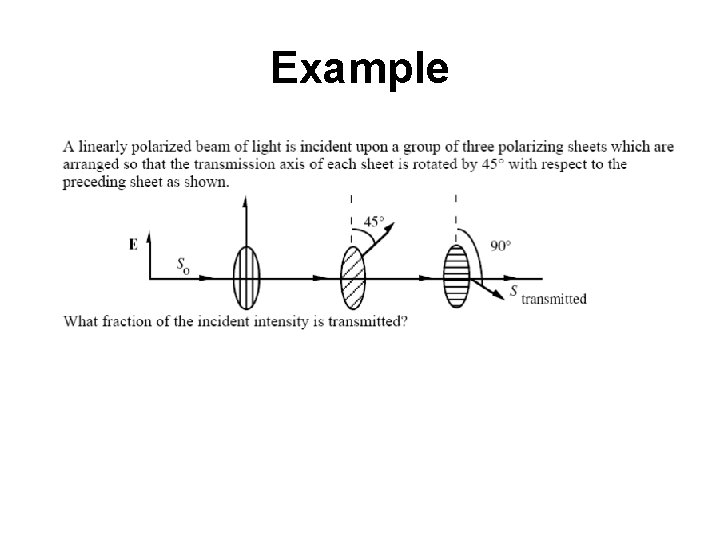
Example
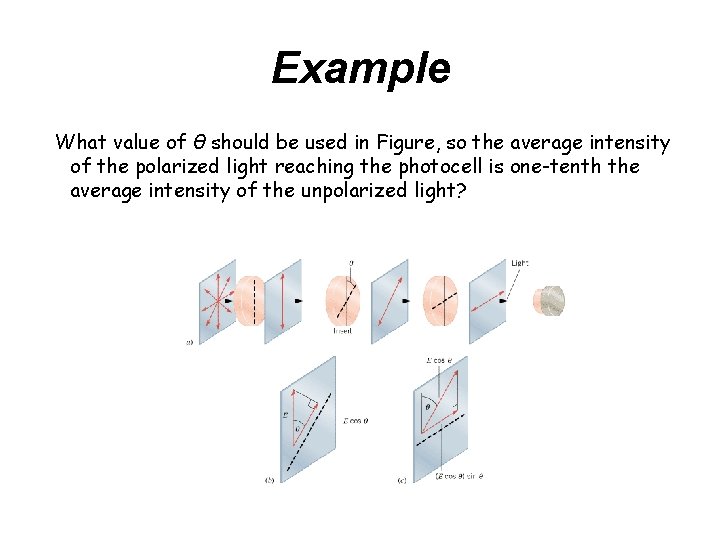
Example What value of θ should be used in Figure, so the average intensity of the polarized light reaching the photocell is one-tenth the average intensity of the unpolarized light?
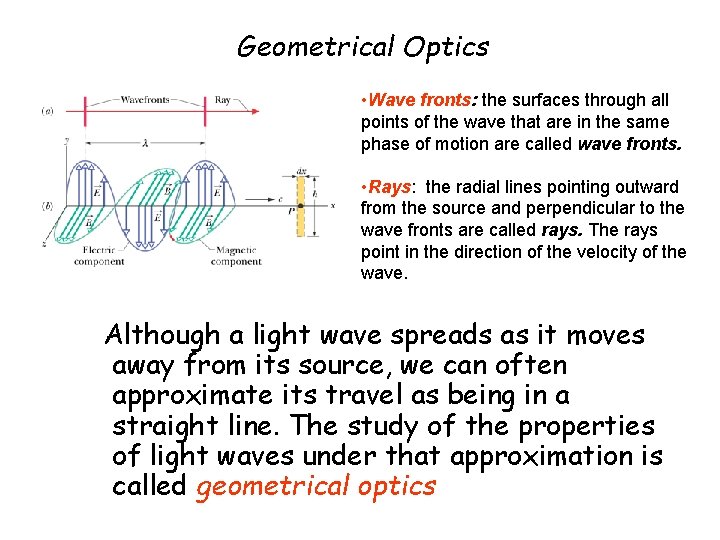
Geometrical Optics • Wave fronts: the surfaces through all points of the wave that are in the same phase of motion are called wave fronts. • Rays: the radial lines pointing outward from the source and perpendicular to the wave fronts are called rays. The rays point in the direction of the velocity of the wave. Although a light wave spreads as it moves away from its source, we can often approximate its travel as being in a straight line. The study of the properties of light waves under that approximation is called geometrical optics
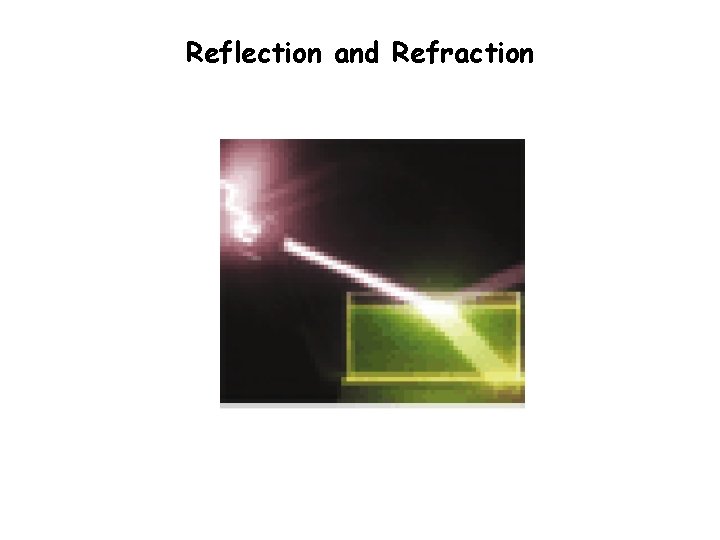
Reflection and Refraction
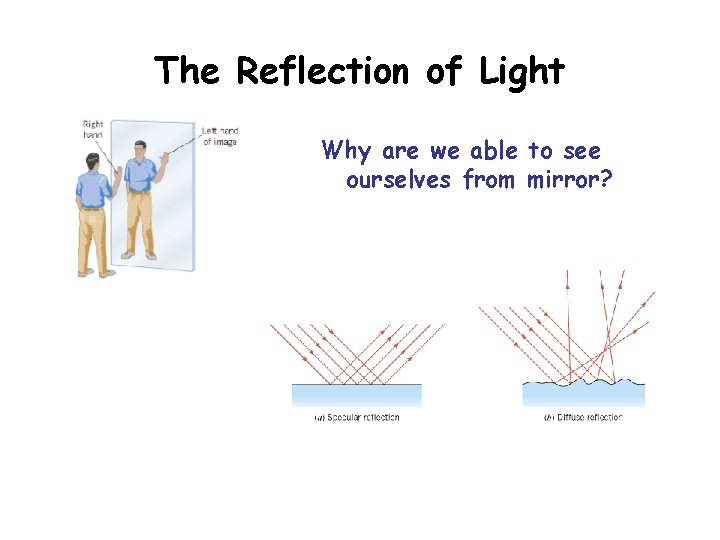
The Reflection of Light Why are we able to see ourselves from mirror?
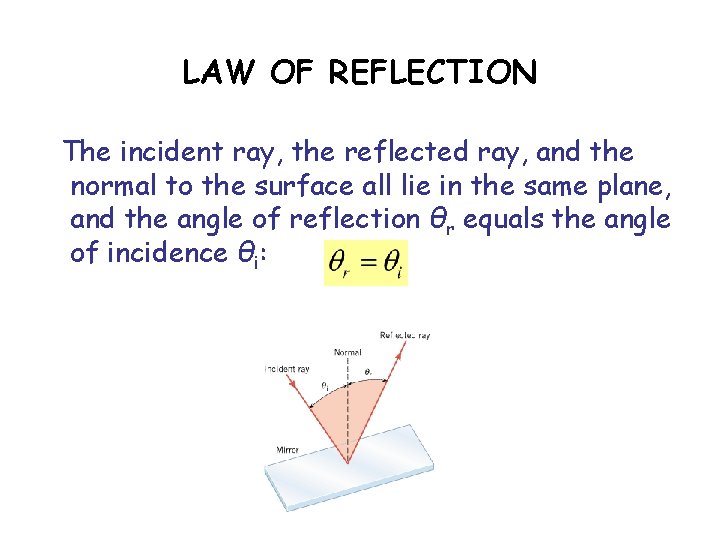
LAW OF REFLECTION The incident ray, the reflected ray, and the normal to the surface all lie in the same plane, and the angle of reflection θr equals the angle of incidence θi:
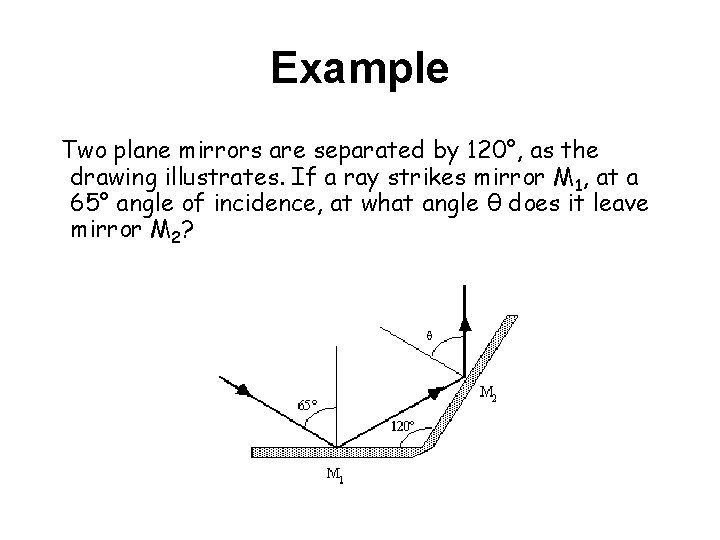
Example Two plane mirrors are separated by 120°, as the drawing illustrates. If a ray strikes mirror M 1, at a 65° angle of incidence, at what angle θ does it leave mirror M 2?
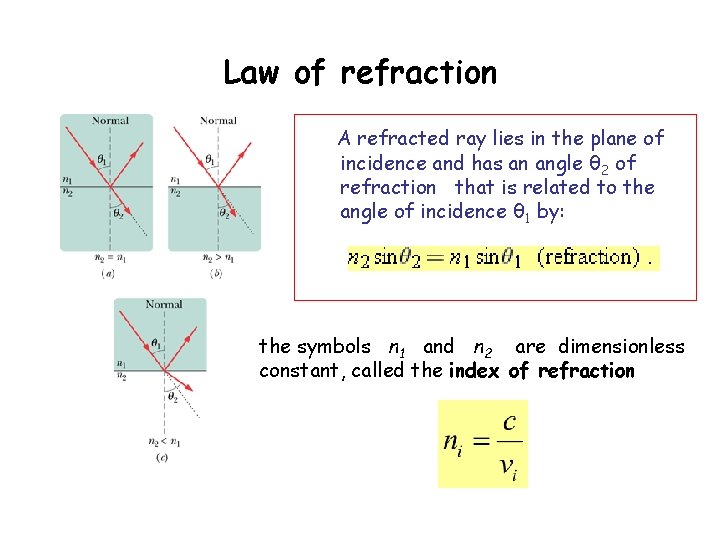
Law of refraction A refracted ray lies in the plane of incidence and has an angle θ 2 of refraction that is related to the angle of incidence θ 1 by: the symbols n 1 and n 2 are dimensionless constant, called the index of refraction
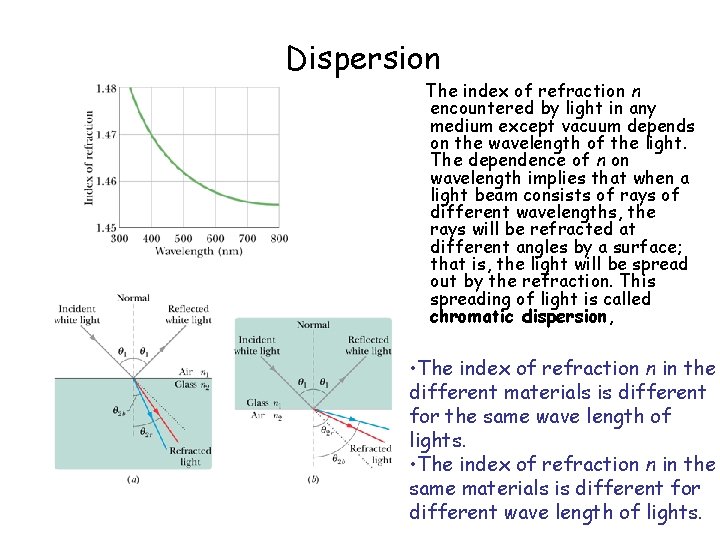
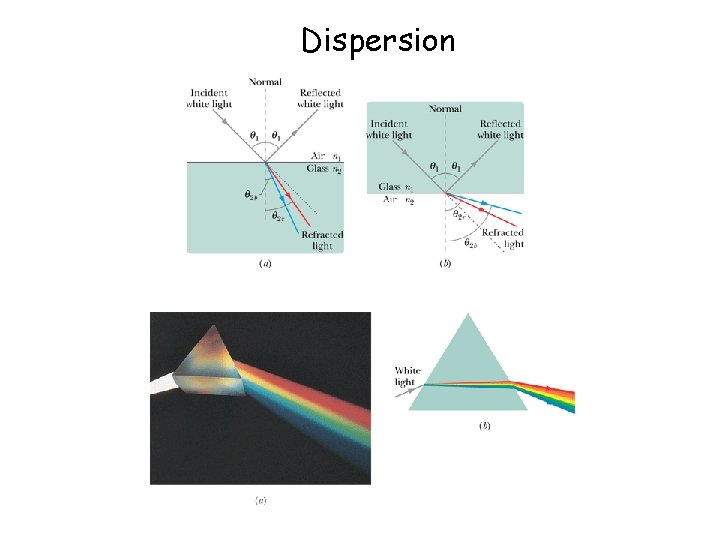
Dispersion The index of refraction n encountered by light in any medium except vacuum depends on the wavelength of the light. The dependence of n on wavelength implies that when a light beam consists of rays of different wavelengths, the rays will be refracted at different angles by a surface; that is, the light will be spread out by the refraction. This spreading of light is called chromatic dispersion, • The index of refraction n in the different materials is different for the same wave length of lights. • The index of refraction n in the same materials is different for different wave length of lights.
Dispersion
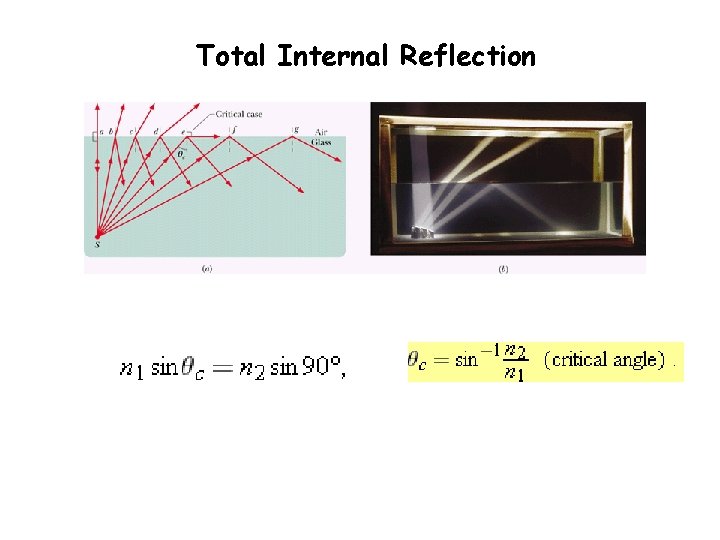
Total Internal Reflection
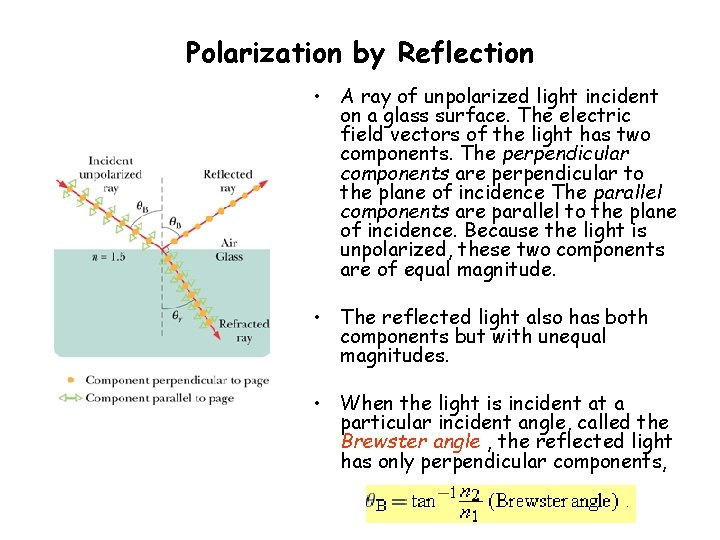
Polarization by Reflection • A ray of unpolarized light incident on a glass surface. The electric field vectors of the light has two components. The perpendicular components are perpendicular to the plane of incidence The parallel components are parallel to the plane of incidence. Because the light is unpolarized, these two components are of equal magnitude. • The reflected light also has both components but with unequal magnitudes. • When the light is incident at a particular incident angle, called the Brewster angle , the reflected light has only perpendicular components,