
Chapter 32 Oscillators Basics of Feedback Block diagram
Chapter 32 Oscillators
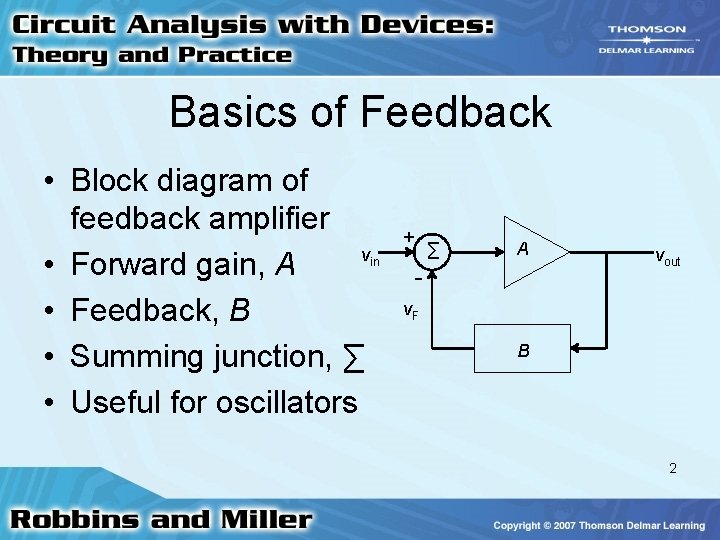
Basics of Feedback • Block diagram of feedback amplifier v • Forward gain, A • Feedback, B • Summing junction, ∑ • Useful for oscillators in + ∑ A - vout v. F B 2
Basics of Feedback • Op-amps – Inverting & non-inverting – Negative feedback 180°out of phase w/input – High input impedance – Low output impedance – Wide bandwidth – Stable operation 3
Basics of Feedback • Oscillators – Positive feedback – In-phase with input – Unstable 4
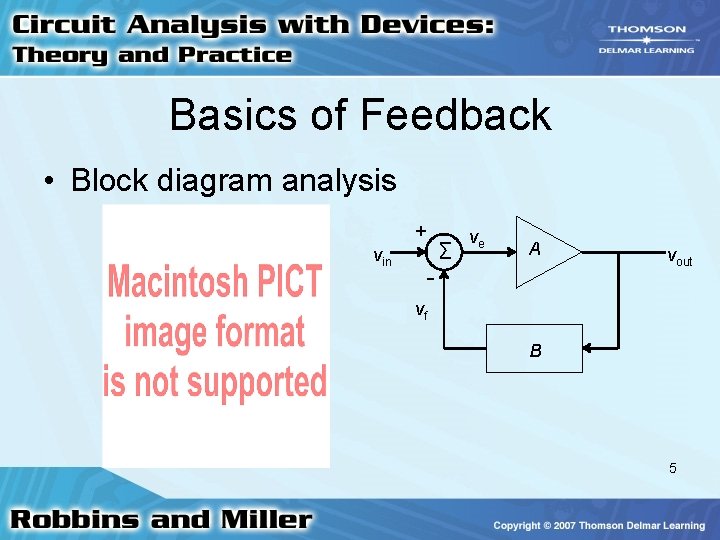
Basics of Feedback • Block diagram analysis + vin ∑ ve A - vout vf B 5
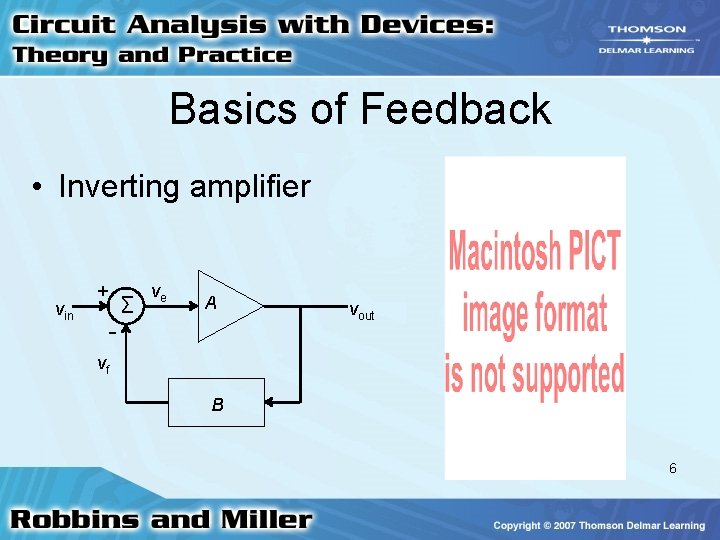
Basics of Feedback • Inverting amplifier vin + ∑ ve A - vout vf B 6
Relaxation Oscillator • Square wave generator • Composed of – Schmitt trigger comparator – Positive feedback – RC circuit to determine period 7
Relaxation Oscillator • Schmitt Trigger – R 1 and R 2 form a voltage divider – Portion of output applied at + input – Hysteresis: output dependent on input and previous value of input 8
Relaxation Oscillator • Schmitt Trigger – Hysteresis: upper and lower trip points – Can use a voltage follower for adjustable trip points 9
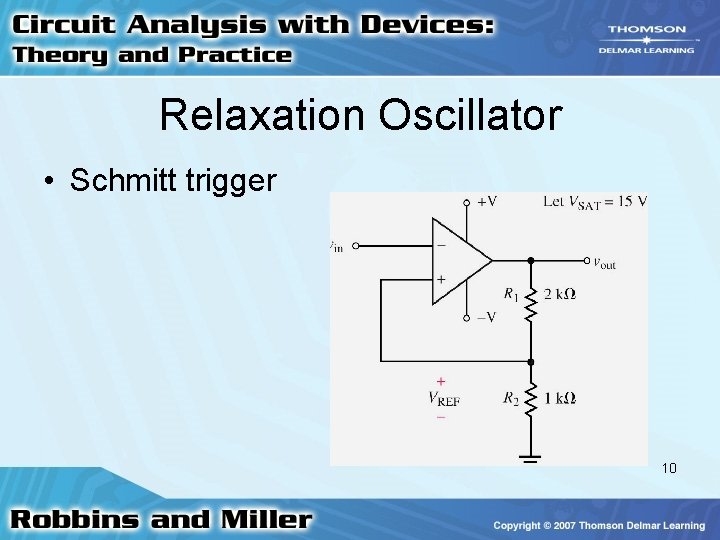
Relaxation Oscillator • Schmitt trigger 10
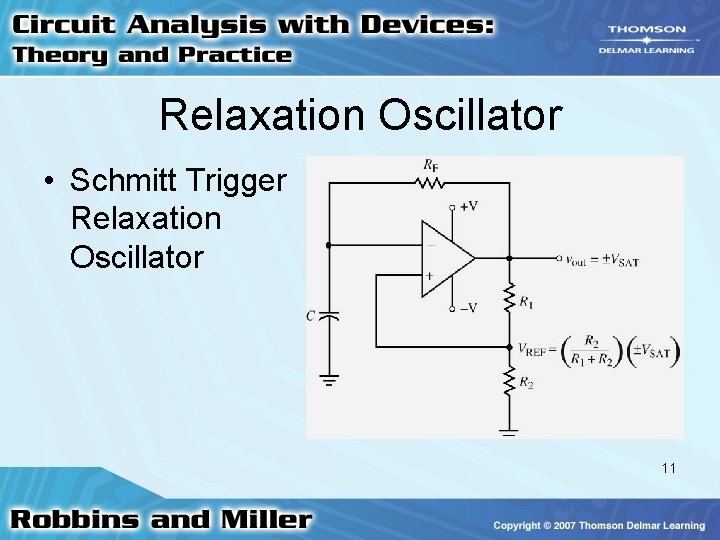
Relaxation Oscillator • Schmitt Trigger Relaxation Oscillator 11
Relaxation Oscillator • R 1 and R 2 voltage divider • Capacitor charges through RF • VC < +VSAT then C charges toward +VSAT • VC > –VSAT then C charges toward –VSAT 12
Relaxation Oscillator • Schmitt Trigger Relaxation Oscillator Equations 13
Wien Bridge Oscillator • For a sinusoidal oscillator output – Closed loop gain ≥ 1 – Phase shift between input and output = 0° at frequency of oscillation • With these conditions a circuit – Oscillates with no external input • Positive feedback = regenerative feedback 14
Wien Bridge Oscillator • Regenerative oscillator – Initial input is small noise voltage – Builds to steady state oscillation • Wien Bridge oscillator – Positive feedback, RC network branch – Resistor branch establish amplifier gain 15
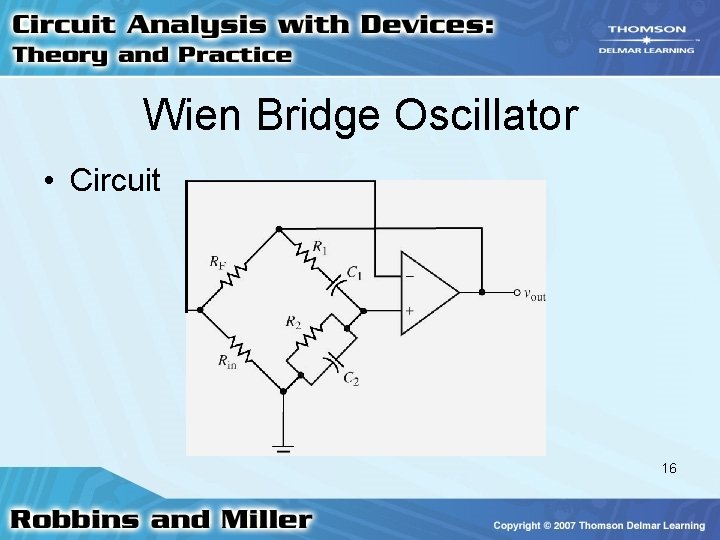
Wien Bridge Oscillator • Circuit 16
Wien Bridge Oscillator • Equations 17
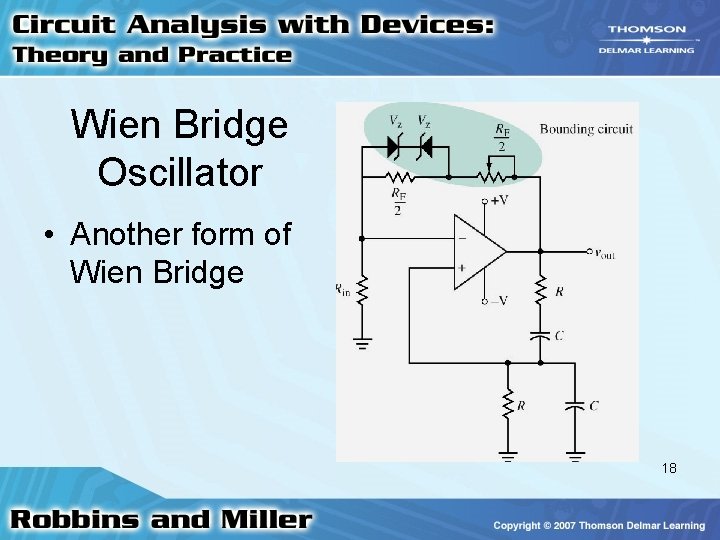
Wien Bridge Oscillator • Another form of Wien Bridge 18
Wien Bridge Oscillator • For a closed-loop gain, AB = 1 – Op-amp gain ≥ 3 • Improved circuit – Separate RF into 1 variable and 1 fixed resistor – Variable: minimize distortion – Zener Diodes: limit range of output voltage 19
Phase-Shift Oscillator • Three-section R-C network – ≈ 60° per section – Negative FB = 180° – 180° + (60° + 60°) = 360° = Positive FB 20
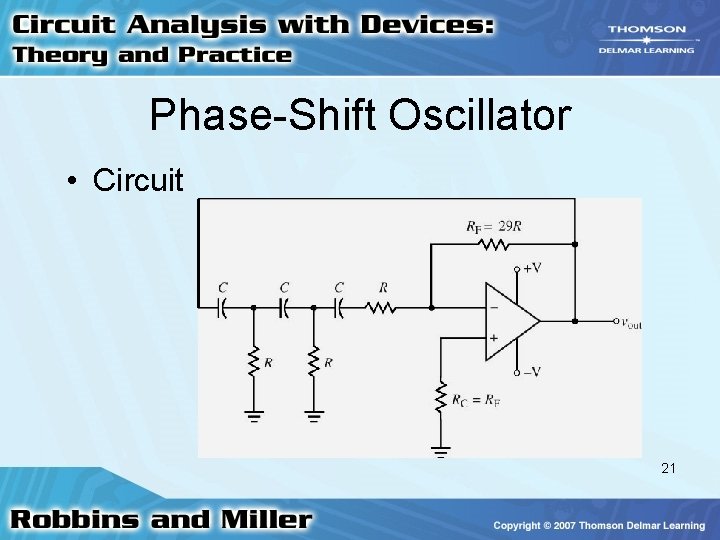
Phase-Shift Oscillator • Circuit 21
LC Oscillators • LC circuits can produce oscillations • Used for – Test and measurement circuits – RF circuits 22
LC Oscillators • Named after pioneer engineers – Colpitts – Hartley – Clapp – Armstrong 23
LC Oscillators • Colpitts oscillator – fs = series resonance – fp = parallel resonance – L-C network → 180° phase shift at fp 24
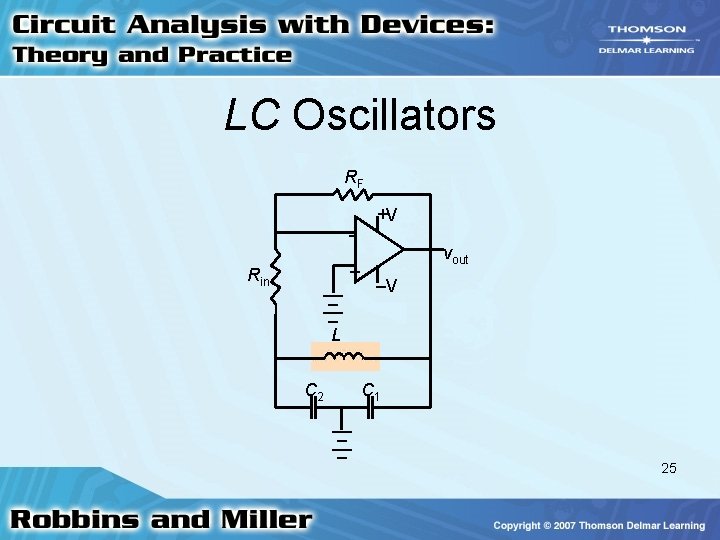
LC Oscillators RF Rin __ _ L + C 2 +V vout –V C 1 __ _ 25
LC Oscillators • Equations 26
LC Oscillators • Hartley oscillator – Similar to Colpitts – L and C’s interchanged – Also have fs and fp 27
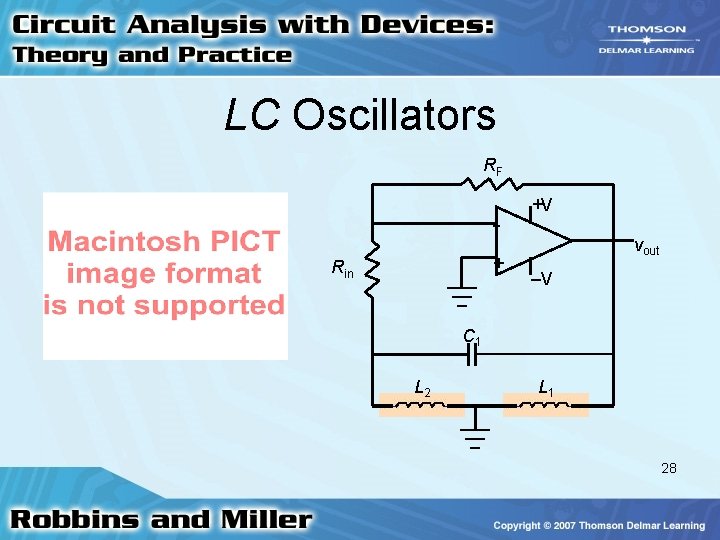
LC Oscillators RF Rin ___ __ _ + +V vout –V C 1 L 2 L 1 ___ __ _ 28
Crystal Oscillators • • Quartz crystals Mechanical device Higher frequencies (>1 MHz) Stability Accuracy Reliability Piezoelectric effect 29
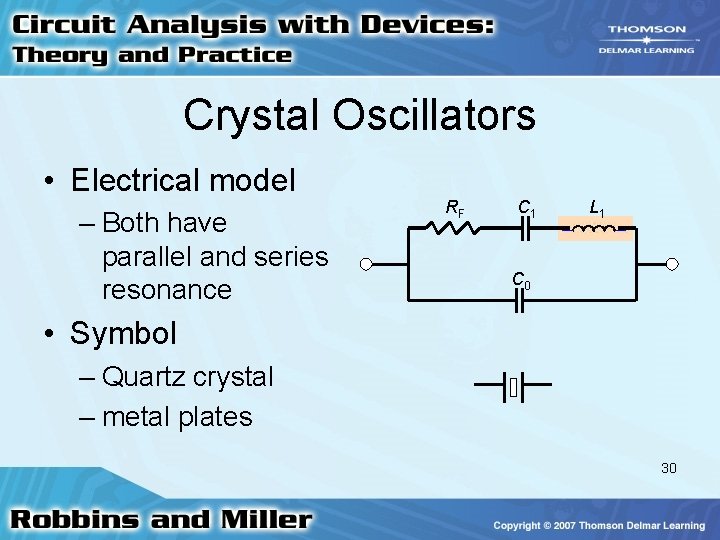
Crystal Oscillators • Electrical model – Both have parallel and series resonance RF C 1 L 1 C 0 • Symbol – Quartz crystal – metal plates 30
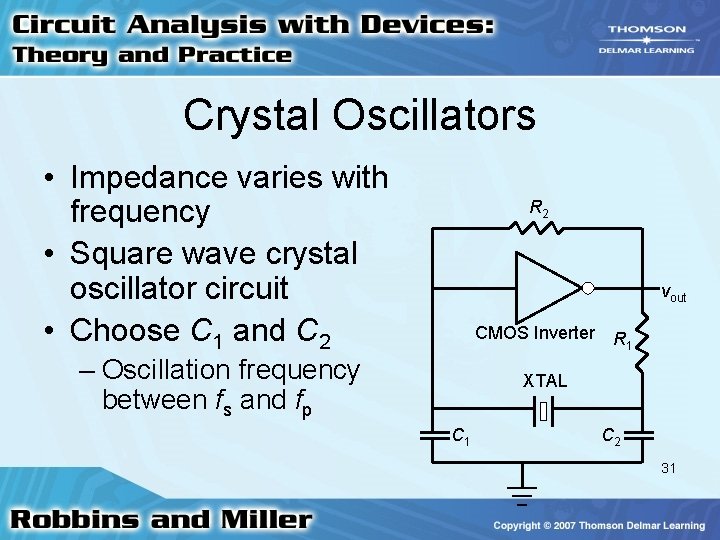
Crystal Oscillators • Impedance varies with frequency • Square wave crystal oscillator circuit • Choose C 1 and C 2 R 2 vout CMOS Inverter – Oscillation frequency between fs and fp R 1 XTAL C 1 C 2 ___ __ _ 31
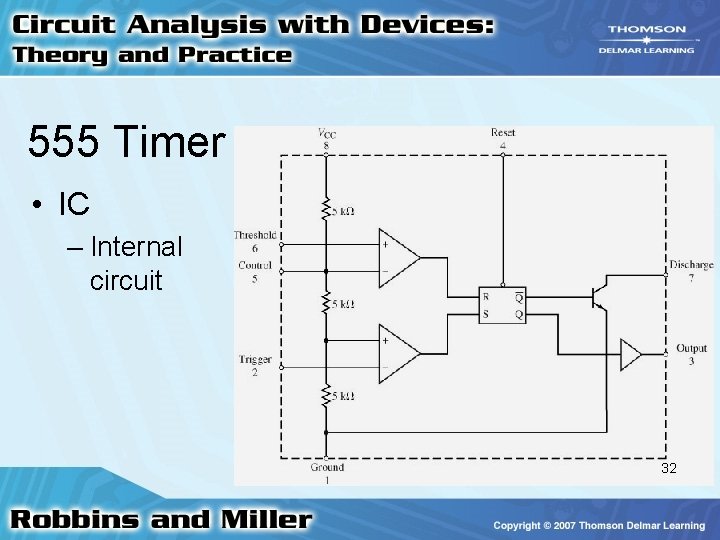
555 Timer • IC – Internal circuit 32
555 Timer • Usage – Monostable timing – Astable mode = relaxation oscillator – Trigger voltage – Control voltage – Threshold voltage – R-S flip-flop 33
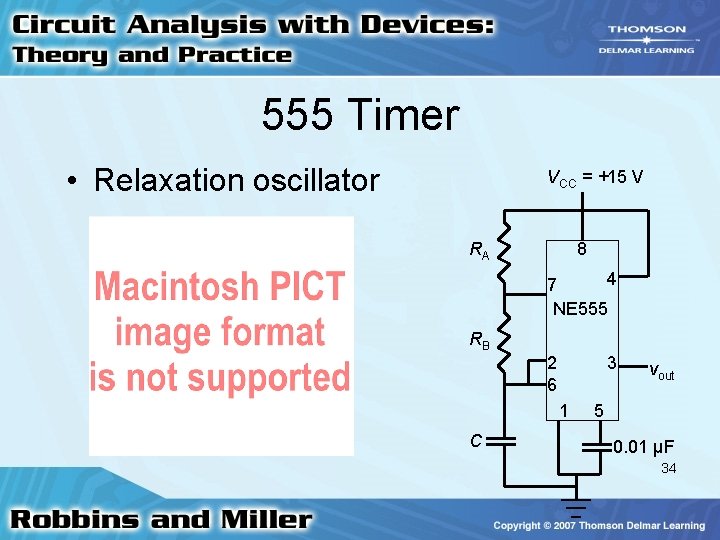
555 Timer • Relaxation oscillator VCC = +15 V RA 8 4 7 NE 555 RB 2 6 3 1 C vout 5 0. 01 μF 34 ___ __ _
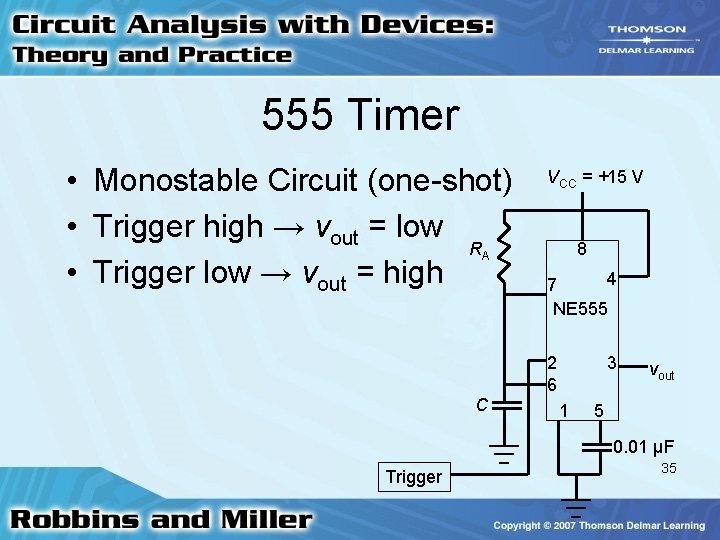
555 Timer • Monostable Circuit (one-shot) • Trigger high → vout = low R • Trigger low → vout = high VCC = +15 V 8 A 4 7 NE 555 2 6 C 3 1 ___ __ _ Trigger vout 5 0. 01 μF 35 ___ __ _
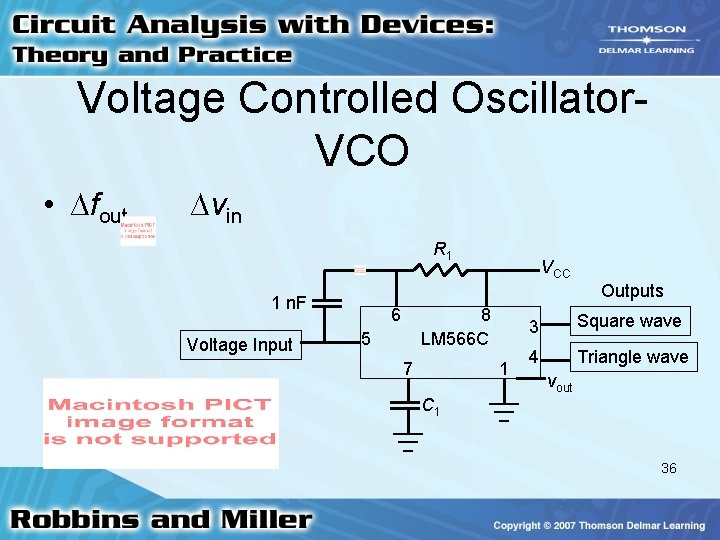
Voltage Controlled Oscillator. VCO • ∆fout ∆vin R 1 Outputs 1 n. F Voltage Input VCC 6 8 LM 566 C 5 7 C 1 ___ __ _ 3 Square wave 4 Triangle wave vout 36
- Slides: 36