
Chapter 3 What are the reasons 1 You
- Slides: 11
Chapter 3 What are the reasons?
1. You cannot determine the worth of a conclusion until you identify the reasons. a. True b. False 10
2. An argument is always a disagreement. a. True b. False 10
3. Reasons could be considered “supporting details”. a. True b. False 10
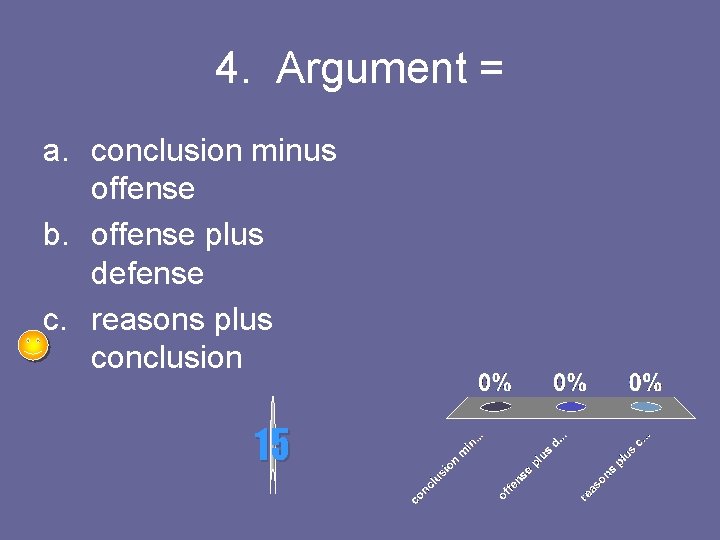
4. Argument = a. conclusion minus offense b. offense plus defense c. reasons plus conclusion 15
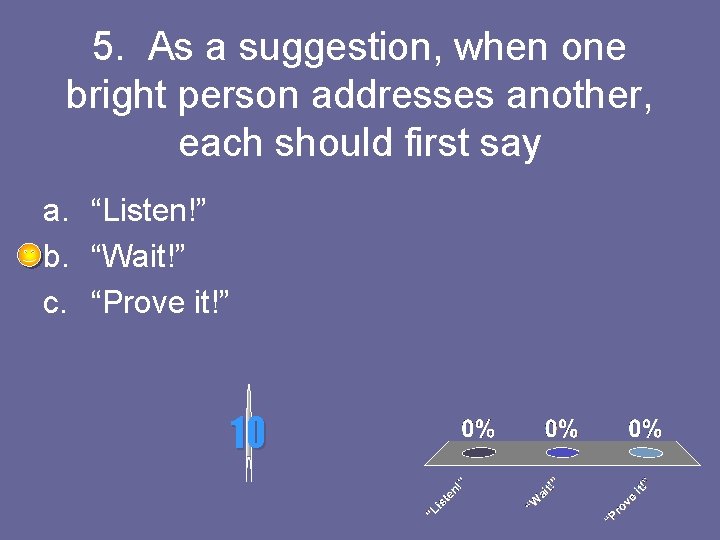
5. As a suggestion, when one bright person addresses another, each should first say a. “Listen!” b. “Wait!” c. “Prove it!” 10
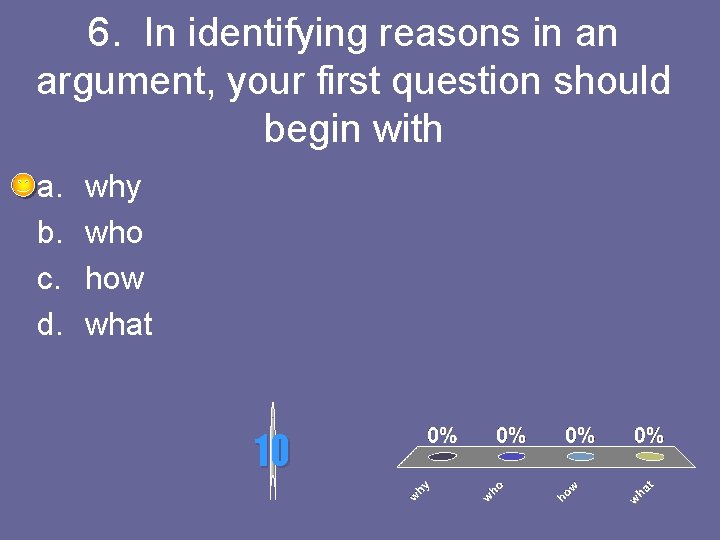
6. In identifying reasons in an argument, your first question should begin with a. b. c. d. why who how what 10
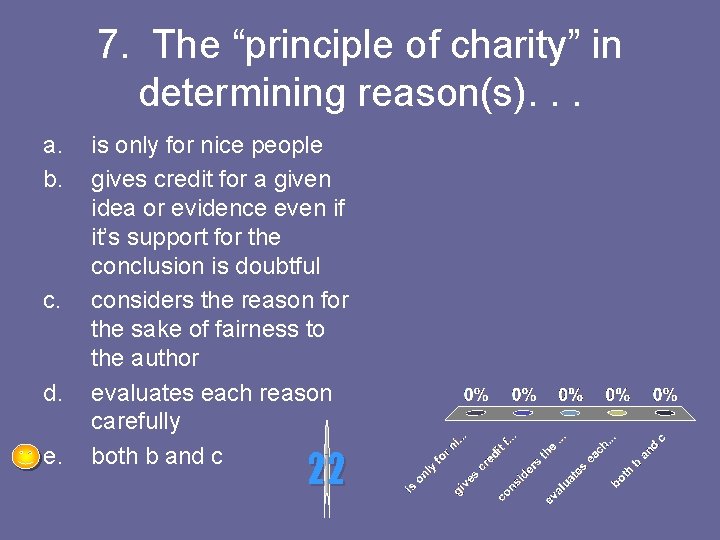
7. The “principle of charity” in determining reason(s). . . a. b. c. d. e. is only for nice people gives credit for a given idea or evidence even if it’s support for the conclusion is doubtful considers the reason for the sake of fairness to the author evaluates each reason carefully both b and c 22
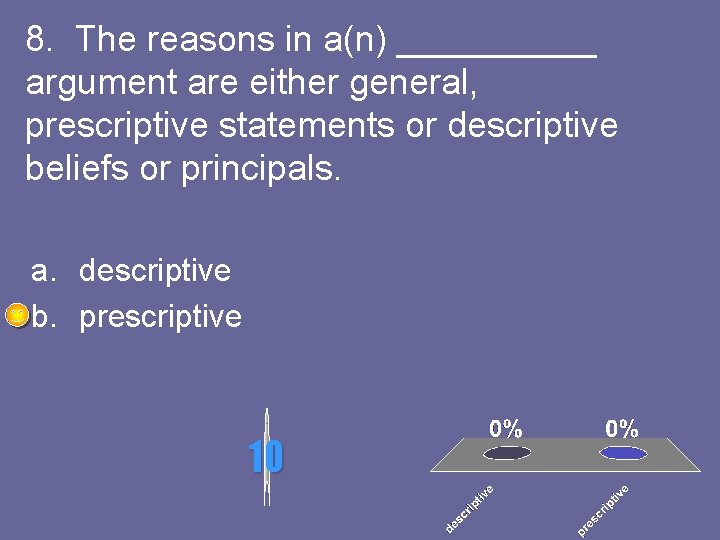
8. The reasons in a(n) _____ argument are either general, prescriptive statements or descriptive beliefs or principals. a. descriptive b. prescriptive 10
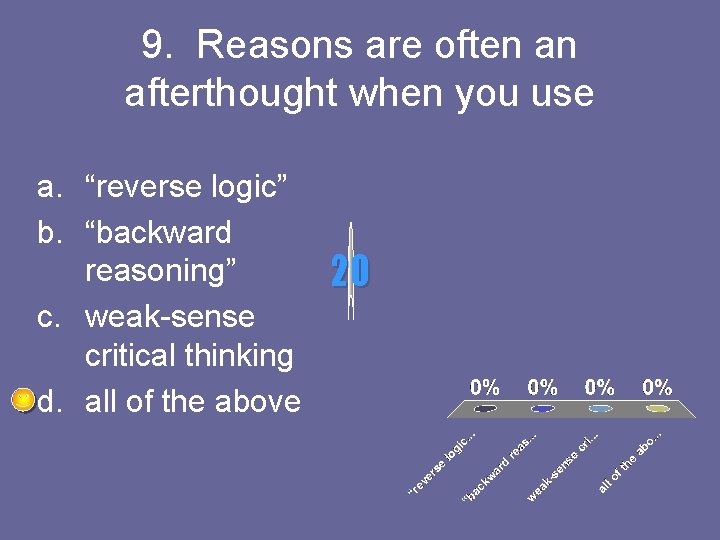
9. Reasons are often an afterthought when you use a. “reverse logic” b. “backward reasoning” c. weak-sense critical thinking d. all of the above 20
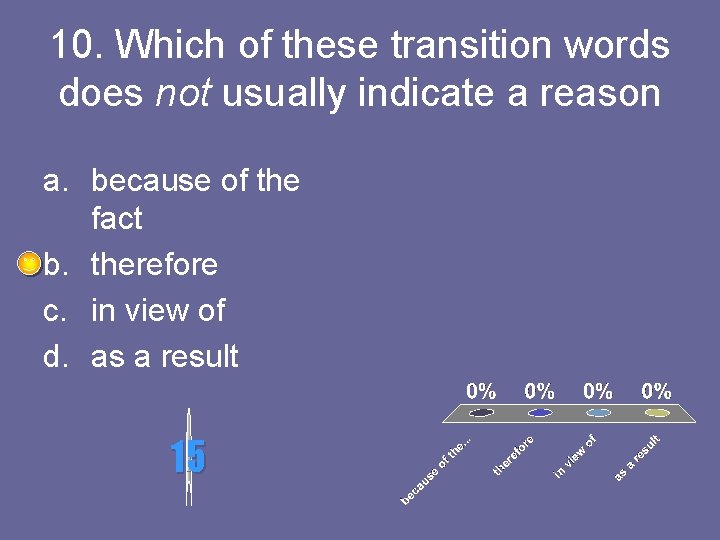
10. Which of these transition words does not usually indicate a reason a. because of the fact b. therefore c. in view of d. as a result 15