
Chapter 3 Vectors and Motion in Two Dimensions
- Slides: 46
Chapter 3 Vectors and Motion in Two Dimensions © 2010 Pearson Education, Inc. Power. Point® Lectures for College Physics: A Strategic Approach, Second Edition
3 Vectors and Motion in Two Dimensions © 2010 Pearson Education, Inc. Slide 3 -2
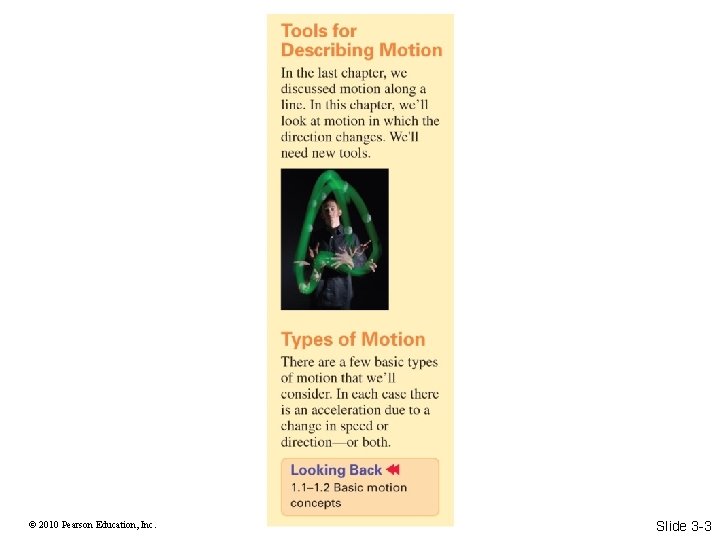
© 2010 Pearson Education, Inc. Slide 3 -3
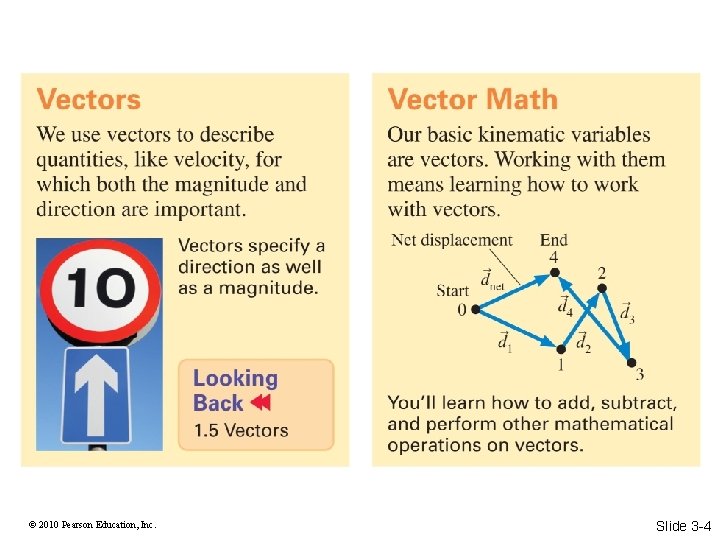
© 2010 Pearson Education, Inc. Slide 3 -4
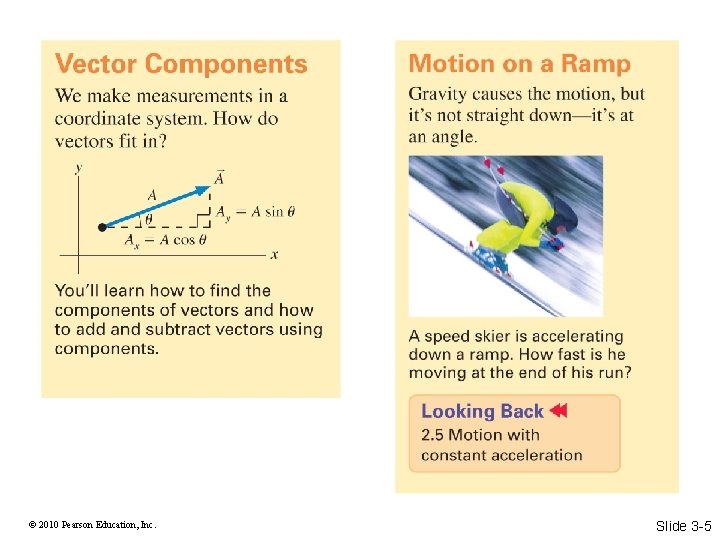
© 2010 Pearson Education, Inc. Slide 3 -5
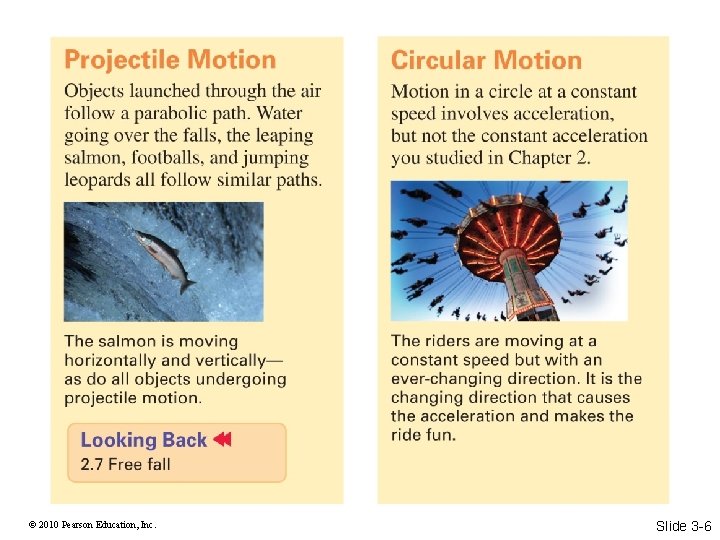
© 2010 Pearson Education, Inc. Slide 3 -6
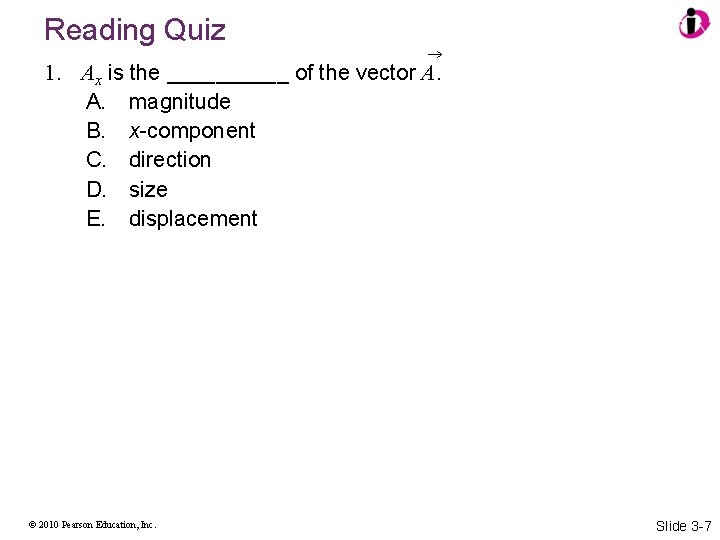
Reading Quiz 1. Ax is the _____ of the vector A. A. magnitude B. x-component C. direction D. size E. displacement © 2010 Pearson Education, Inc. Slide 3 -7
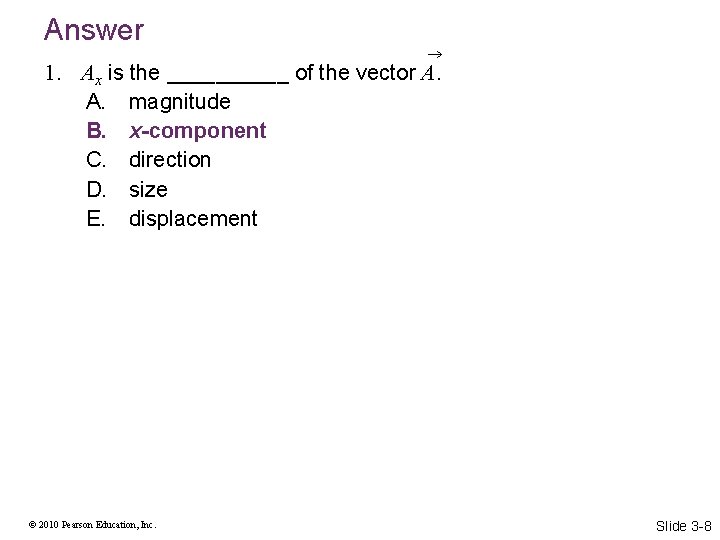
Answer 1. Ax is the _____ of the vector A. A. magnitude B. x-component C. direction D. size E. displacement © 2010 Pearson Education, Inc. Slide 3 -8
Reading Quiz 2. The acceleration vector of a particle in projectile motion A. points along the path of the particle. B. is directed horizontally. C. vanishes at the particle’s highest point. D. is directed down at all times. E. is zero. © 2010 Pearson Education, Inc. Slide 3 -9
Answer 2. The acceleration vector of a particle in projectile motion A. points along the path of the particle. B. is directed horizontally. C. vanishes at the particle’s highest point. D. is directed down at all times. E. is zero. © 2010 Pearson Education, Inc. Slide 3 -10
Reading Quiz 3. The acceleration vector of a particle in uniform circular motion A. points tangent to the circle, in the direction of motion. B. points tangent to the circle, opposite the direction of motion. C. is zero. D. points toward the center of the circle. E. points outward from the center of the circle. © 2010 Pearson Education, Inc. Slide 3 -11
Answer 3. The acceleration vector of a particle in uniform circular motion A. points tangent to the circle, in the direction of motion. B. points tangent to the circle, opposite the direction of motion. C. is zero. D. points toward the center of the circle. E. points outward from the center of the circle. © 2010 Pearson Education, Inc. Slide 3 -12
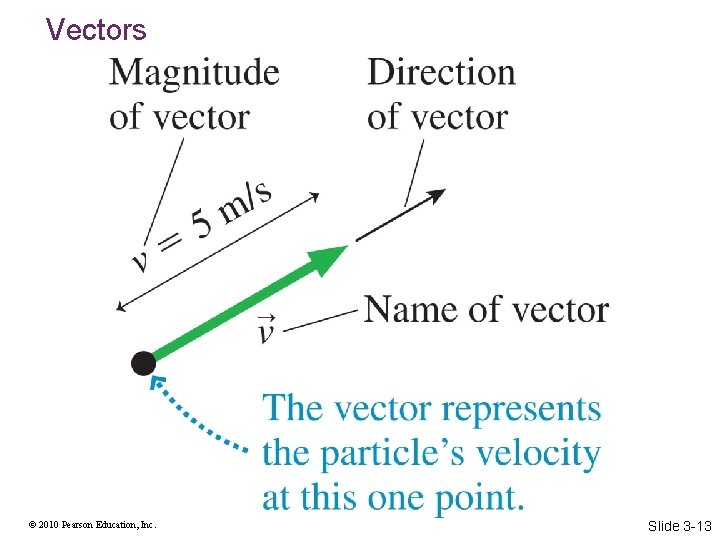
Vectors © 2010 Pearson Education, Inc. Slide 3 -13
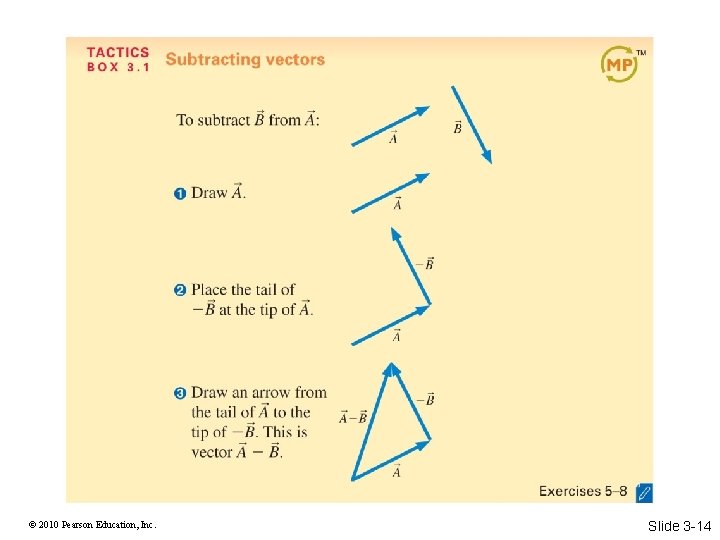
© 2010 Pearson Education, Inc. Slide 3 -14
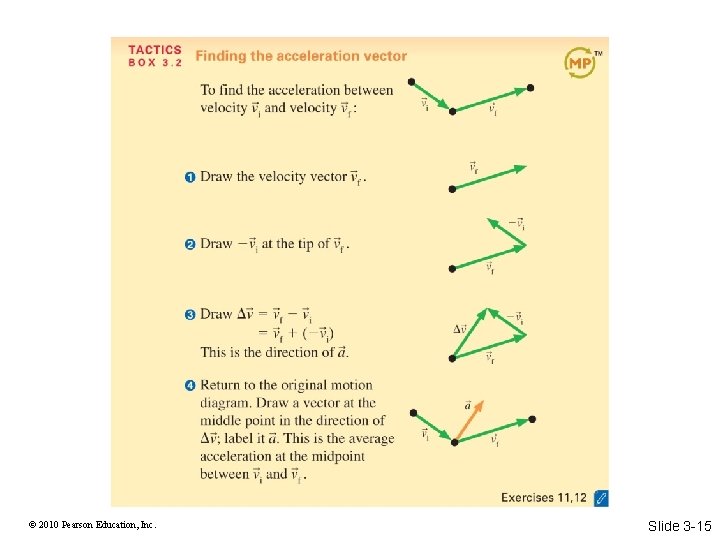
© 2010 Pearson Education, Inc. Slide 3 -15
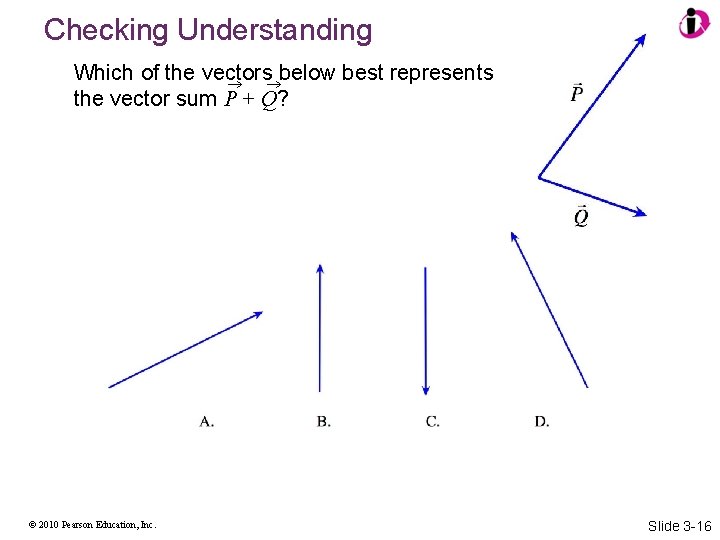
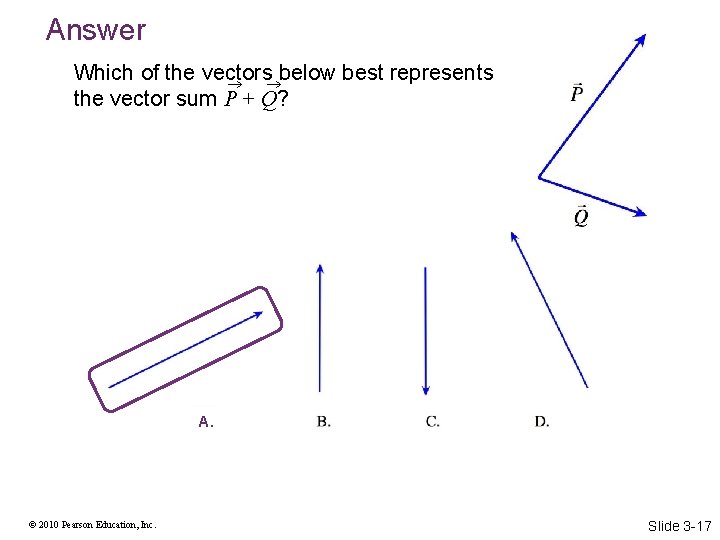
Checking Understanding Which of the vectors below best represents the vector sum P + Q? © 2010 Pearson Education, Inc. Slide 3 -16
Answer Which of the vectors below best represents the vector sum P + Q? A. © 2010 Pearson Education, Inc. Slide 3 -17
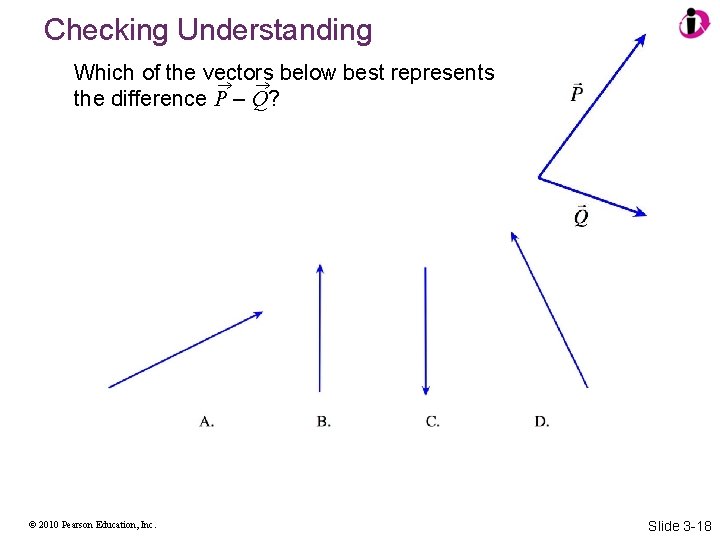
Checking Understanding Which of the vectors below best represents the difference P – Q? © 2010 Pearson Education, Inc. Slide 3 -18
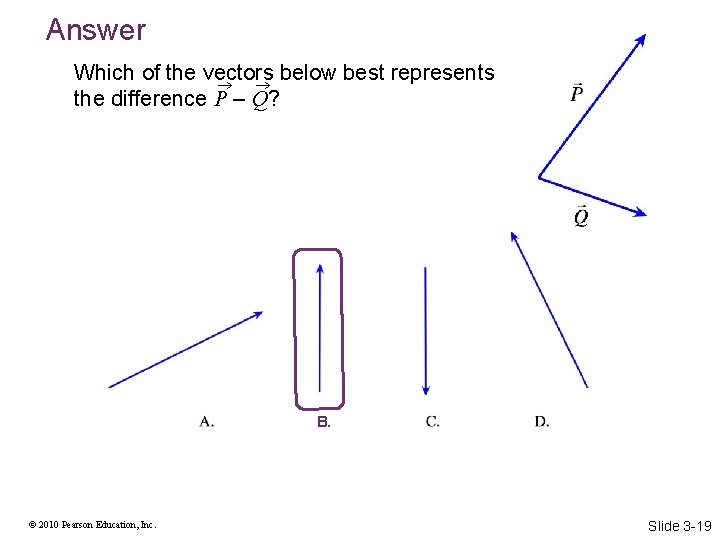
Answer Which of the vectors below best represents the difference P – Q? B. © 2010 Pearson Education, Inc. Slide 3 -19
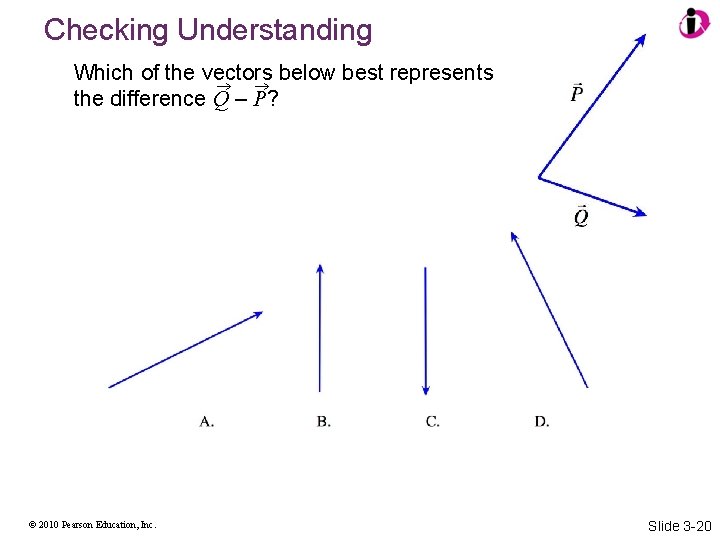
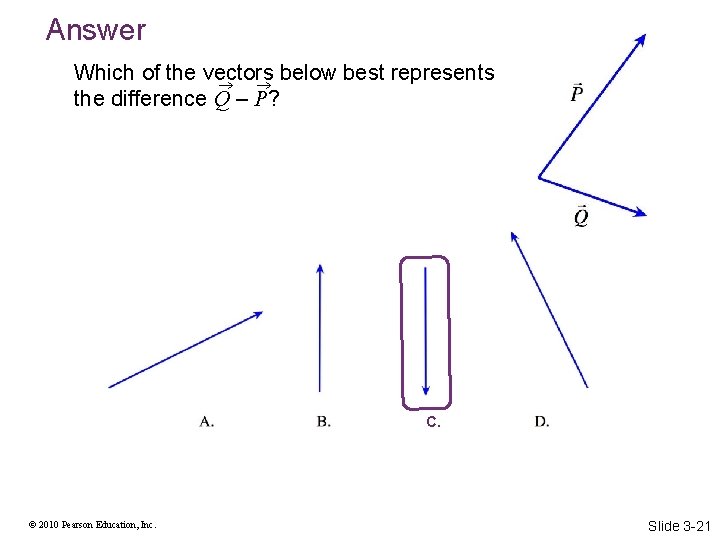
Checking Understanding Which of the vectors below best represents the difference Q – P? © 2010 Pearson Education, Inc. Slide 3 -20
Answer Which of the vectors below best represents the difference Q – P? C. © 2010 Pearson Education, Inc. Slide 3 -21
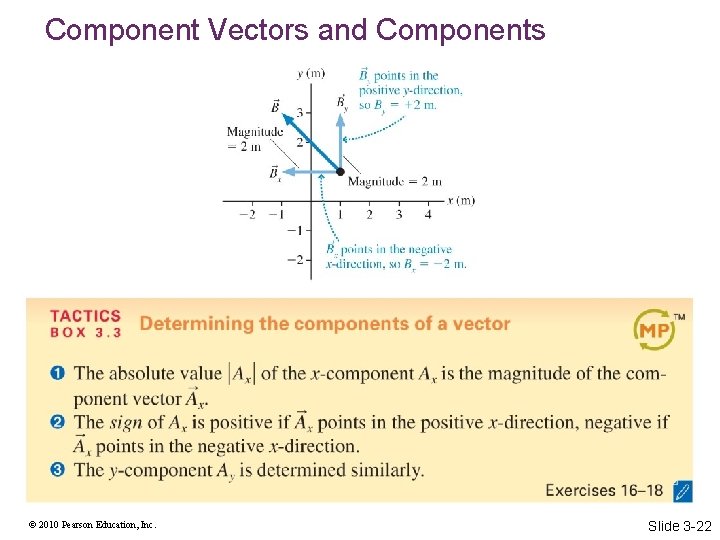
Component Vectors and Components © 2010 Pearson Education, Inc. Slide 3 -22
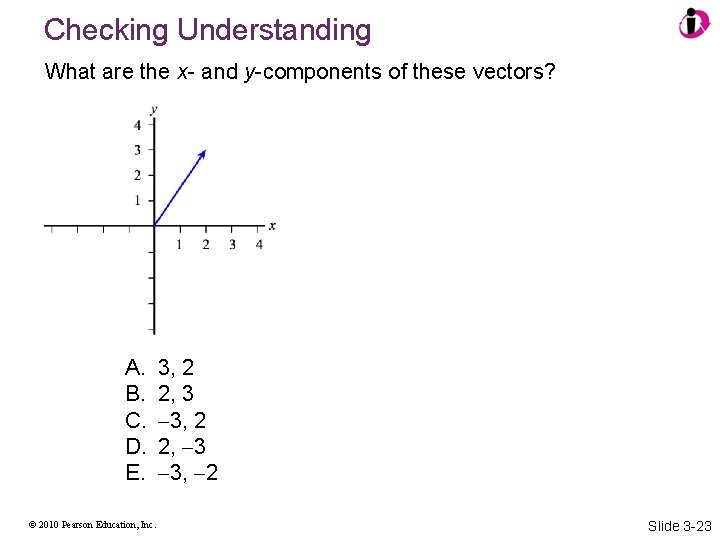
Checking Understanding What are the x- and y-components of these vectors? A. B. C. D. E. © 2010 Pearson Education, Inc. 3, 2 2, 3 3, 2 2, 3 3, 2 Slide 3 -23
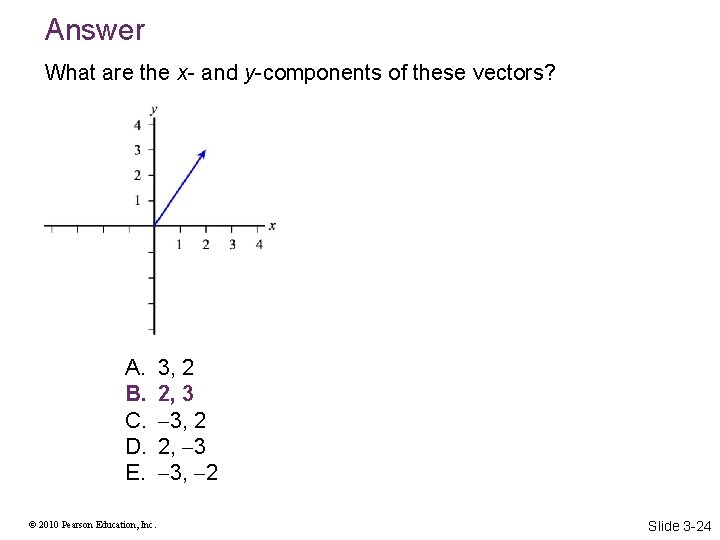
Answer What are the x- and y-components of these vectors? A. B. C. D. E. © 2010 Pearson Education, Inc. 3, 2 2, 3 3, 2 2, 3 3, 2 Slide 3 -24
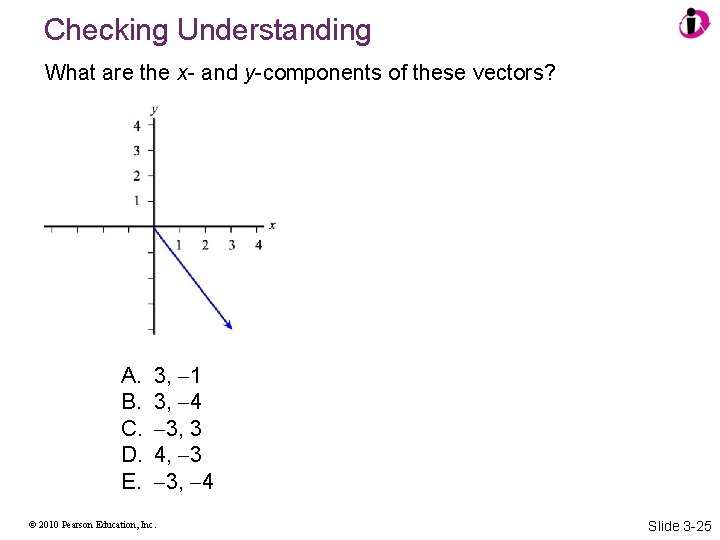
Checking Understanding What are the x- and y-components of these vectors? A. B. C. D. E. 3, 1 3, 4 3, 3 4, 3 3, 4 © 2010 Pearson Education, Inc. Slide 3 -25
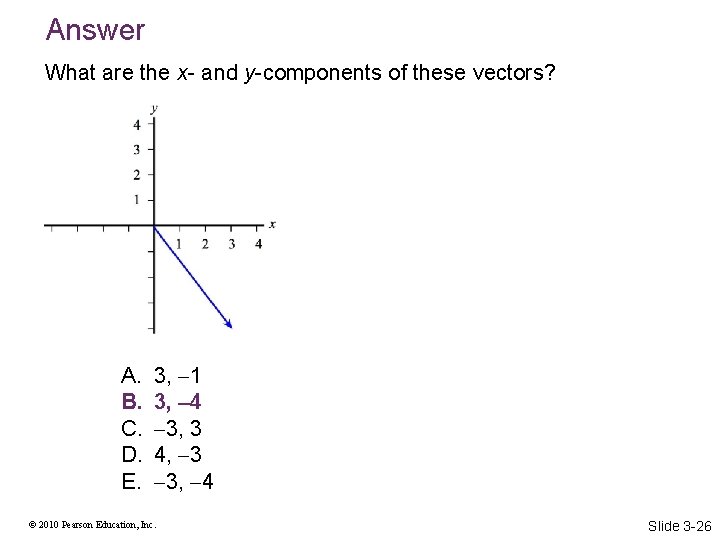
Answer What are the x- and y-components of these vectors? A. B. C. D. E. 3, 1 3, 4 3, 3 4, 3 3, 4 © 2010 Pearson Education, Inc. Slide 3 -26
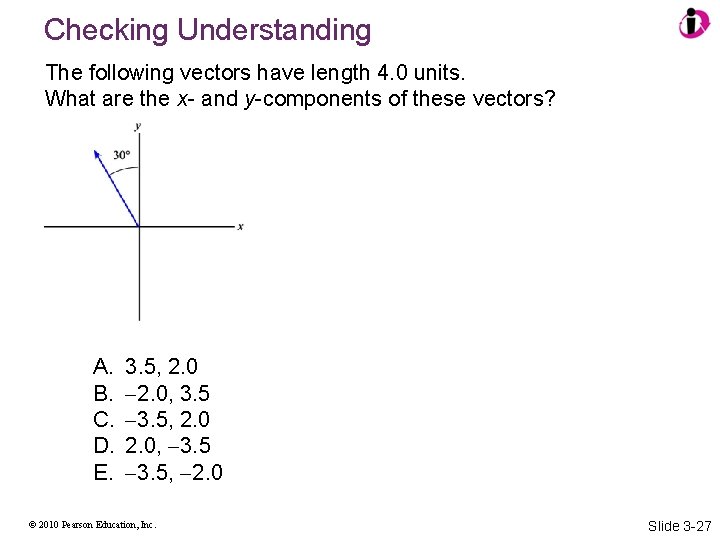
Checking Understanding The following vectors have length 4. 0 units. What are the x- and y-components of these vectors? A. B. C. D. E. 3. 5, 2. 0, 3. 5, 2. 0 © 2010 Pearson Education, Inc. Slide 3 -27
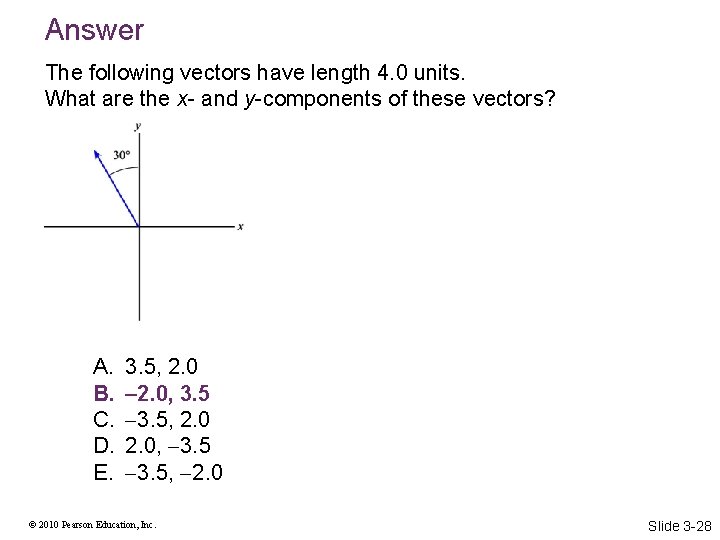
Answer The following vectors have length 4. 0 units. What are the x- and y-components of these vectors? A. B. C. D. E. 3. 5, 2. 0, 3. 5, 2. 0 © 2010 Pearson Education, Inc. Slide 3 -28
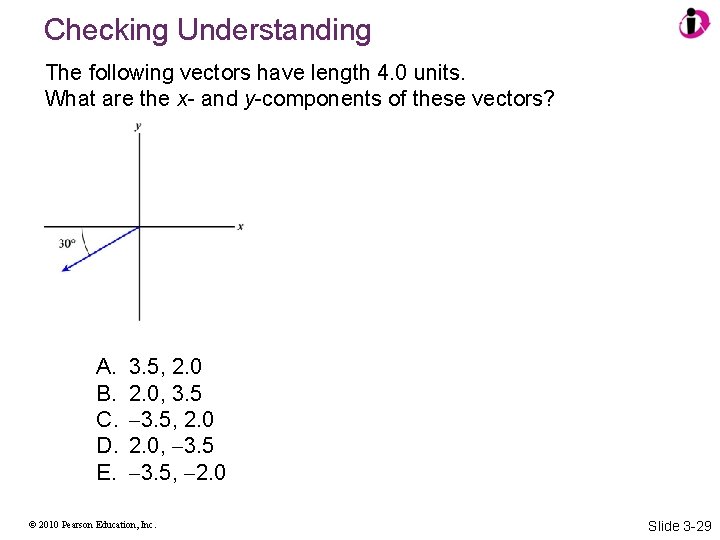
Checking Understanding The following vectors have length 4. 0 units. What are the x- and y-components of these vectors? A. B. C. D. E. 3. 5, 2. 0, 3. 5, 2. 0 © 2010 Pearson Education, Inc. Slide 3 -29
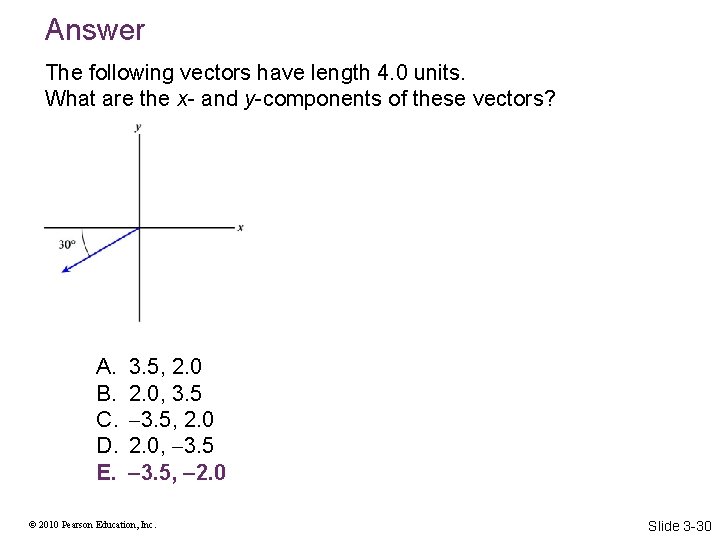
Answer The following vectors have length 4. 0 units. What are the x- and y-components of these vectors? A. B. C. D. E. 3. 5, 2. 0, 3. 5, 2. 0 © 2010 Pearson Education, Inc. Slide 3 -30
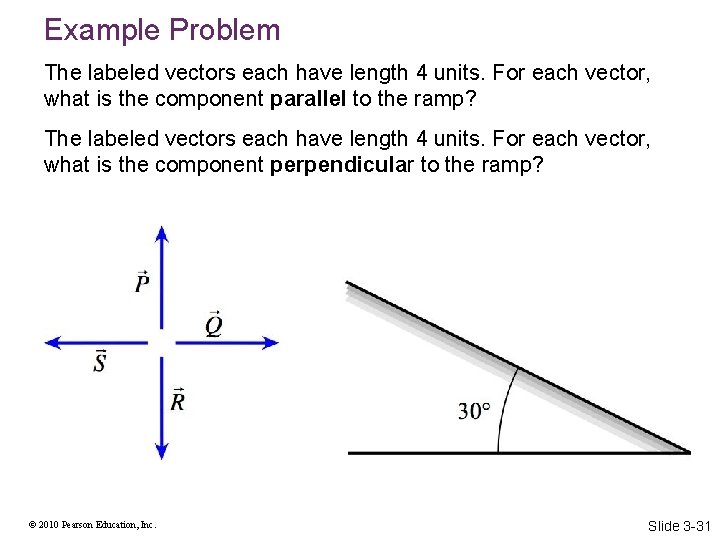
Example Problem The labeled vectors each have length 4 units. For each vector, what is the component parallel to the ramp? The labeled vectors each have length 4 units. For each vector, what is the component perpendicular to the ramp? © 2010 Pearson Education, Inc. Slide 3 -31
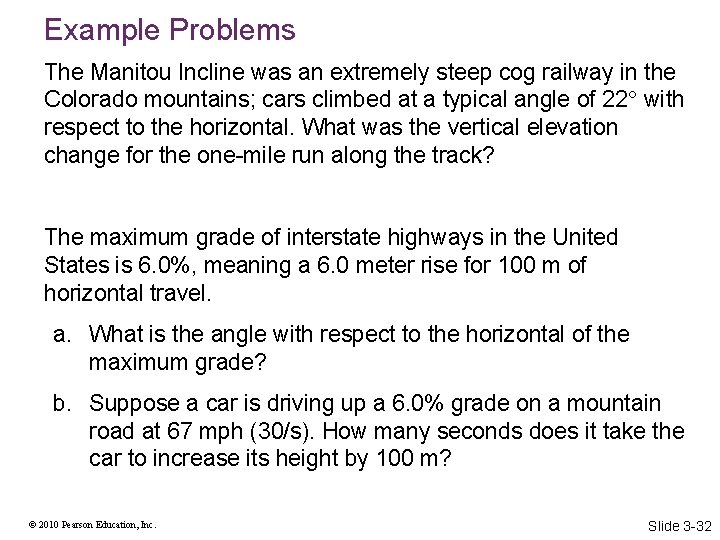
Example Problems The Manitou Incline was an extremely steep cog railway in the Colorado mountains; cars climbed at a typical angle of 22 with respect to the horizontal. What was the vertical elevation change for the one-mile run along the track? The maximum grade of interstate highways in the United States is 6. 0%, meaning a 6. 0 meter rise for 100 m of horizontal travel. a. What is the angle with respect to the horizontal of the maximum grade? b. Suppose a car is driving up a 6. 0% grade on a mountain road at 67 mph (30/s). How many seconds does it take the car to increase its height by 100 m? © 2010 Pearson Education, Inc. Slide 3 -32
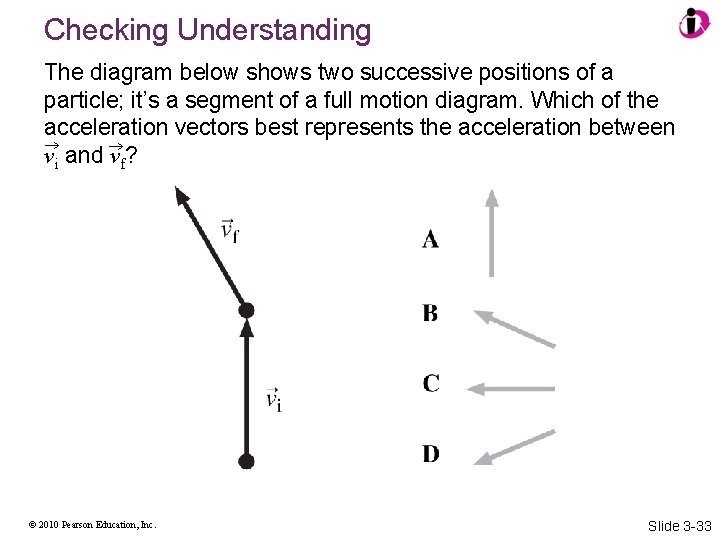
Checking Understanding The diagram below shows two successive positions of a particle; it’s a segment of a full motion diagram. Which of the acceleration vectors best represents the acceleration between vi and vf? © 2010 Pearson Education, Inc. Slide 3 -33
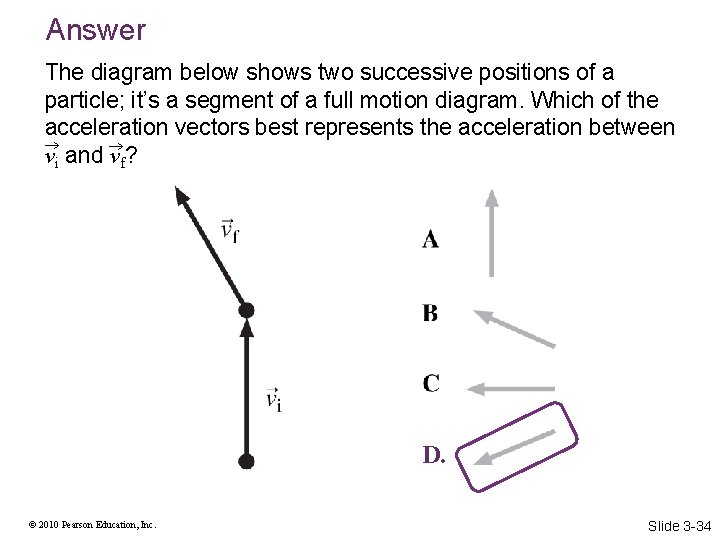
Answer The diagram below shows two successive positions of a particle; it’s a segment of a full motion diagram. Which of the acceleration vectors best represents the acceleration between vi and vf? D. © 2010 Pearson Education, Inc. Slide 3 -34
Example Problems: Motion on a Ramp A new ski area has opened that emphasizes the extreme nature of the skiing possible on its slopes. Suppose an ad intones “Free fall skydiving is the greatest rush you can experience…but we’ll take you as close as you can get on land. When you tip your skis down the slope of our steepest runs, you can accelerate at up to 75% of the acceleration you’d experience in free fall. ” What angle slope could give such an acceleration? Ski jumpers go down a long slope on slippery skis, achieving a high speed before launching into air. The “in-run” is essentially a ramp, which jumpers slide down to achieve the necessary speed. A particular ski jump has a ramp length of 120 m tipped at 21 with respect to the horizontal. What is the highest speed that a jumper could reach at the bottom of such a ramp? © 2010 Pearson Education, Inc. Slide 3 -35
Example Problems: Relative Motion An airplane pilot wants to fly due west from Spokane to Seattle. Her plane moves through the air at 200 mph, but the wind is blowing 40 mph due north. In what direction should she point the plane—that is, in what direction should she fly relative to the air? A skydiver jumps out of an airplane 1000 m directly above his desired landing spot. He quickly reaches a steady speed, falling through the air at 35 m/s. There is a breeze blowing at 7 m/s to the west. At what angle with respect to vertical does he fall? When he lands, what will be his displacement from his desired landing spot? © 2010 Pearson Education, Inc. Slide 3 -36
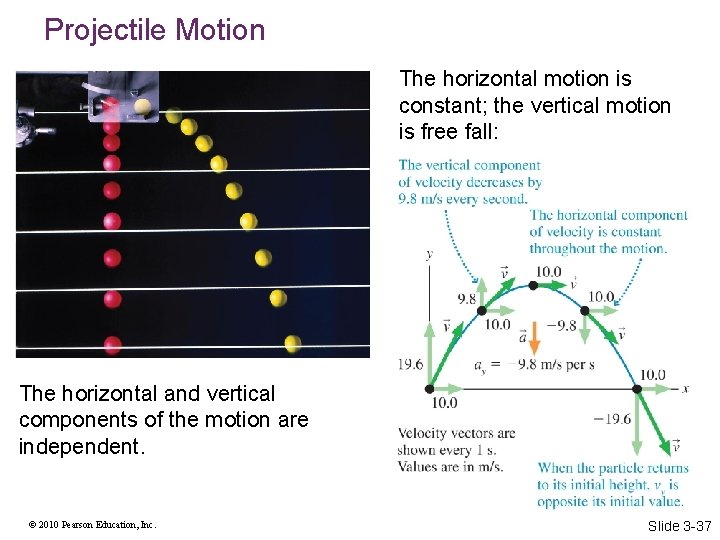
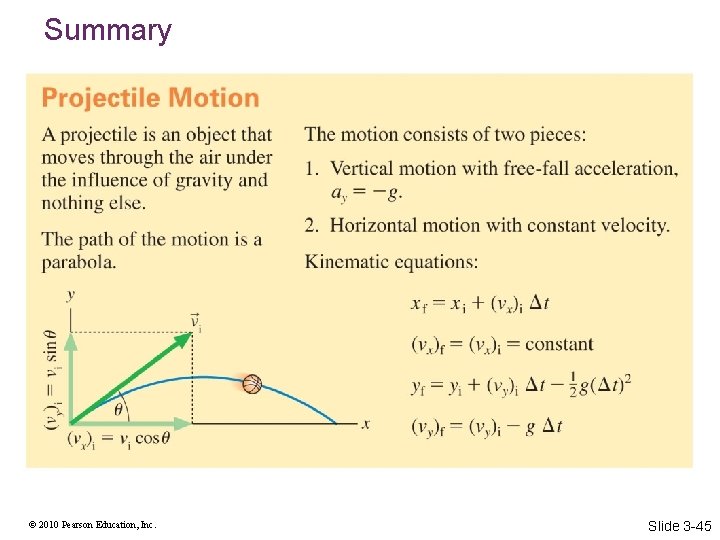
Projectile Motion The horizontal motion is constant; the vertical motion is free fall: The horizontal and vertical components of the motion are independent. © 2010 Pearson Education, Inc. Slide 3 -37
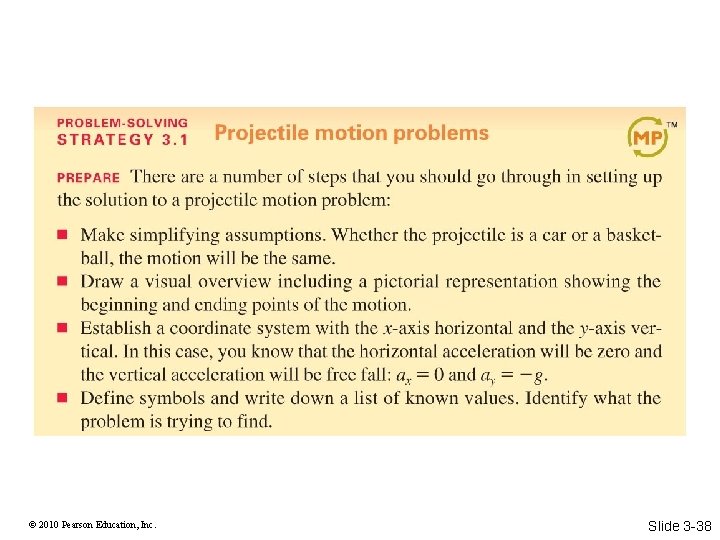
© 2010 Pearson Education, Inc. Slide 3 -38
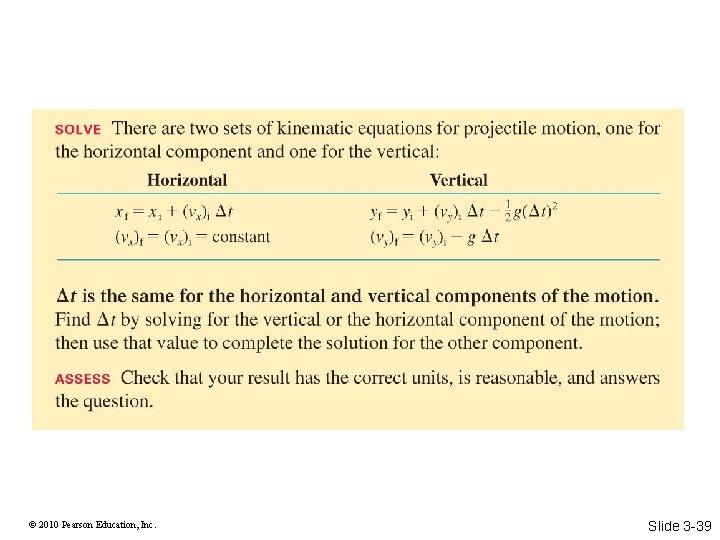
© 2010 Pearson Education, Inc. Slide 3 -39
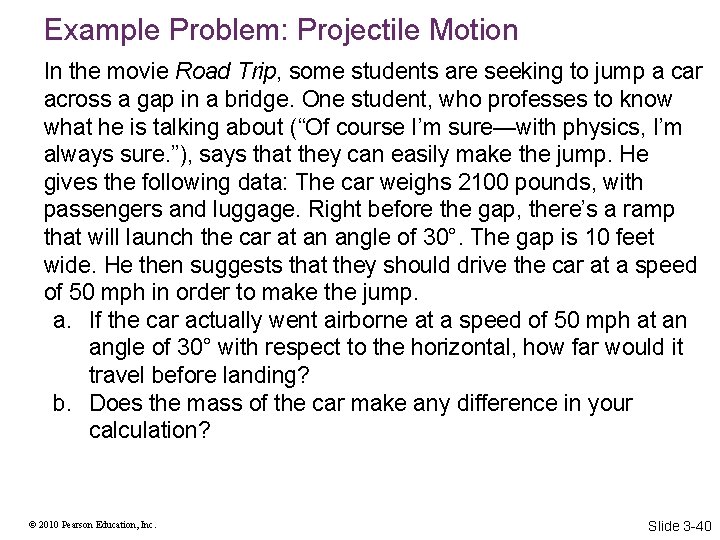
Example Problem: Projectile Motion In the movie Road Trip, some students are seeking to jump a car across a gap in a bridge. One student, who professes to know what he is talking about (“Of course I’m sure—with physics, I’m always sure. ”), says that they can easily make the jump. He gives the following data: The car weighs 2100 pounds, with passengers and luggage. Right before the gap, there’s a ramp that will launch the car at an angle of 30°. The gap is 10 feet wide. He then suggests that they should drive the car at a speed of 50 mph in order to make the jump. a. If the car actually went airborne at a speed of 50 mph at an angle of 30° with respect to the horizontal, how far would it travel before landing? b. Does the mass of the car make any difference in your calculation? © 2010 Pearson Education, Inc. Slide 3 -40
Example Problem: Broad Jumps A grasshopper can jump a distance of 30 in (0. 76 m) from a standing start. If the grasshopper takes off at the optimal angle for maximum distance of the jump, what is the initial speed of the jump? Most animals jump at a lower angle than 45°. Suppose the grasshopper takes off at 30° from the horizontal. What jump speed is necessary to reach the noted distance? © 2010 Pearson Education, Inc. Slide 3 -41
Example Problem Alan Shepard took a golf ball to the moon during one of the Apollo missions, and used a makeshift club to hit the ball a great distance. He described the shot as going for “miles and miles. ” A reasonable golf tee shot leaves the club at a speed of 64 m/s. Suppose you hit the ball at this speed at an angle of 30 with the horizontal in the moon’s gravitational acceleration of 1. 6 m/s 2. How long is the ball in the air? How far would the shot go? © 2010 Pearson Education, Inc. Slide 3 -42
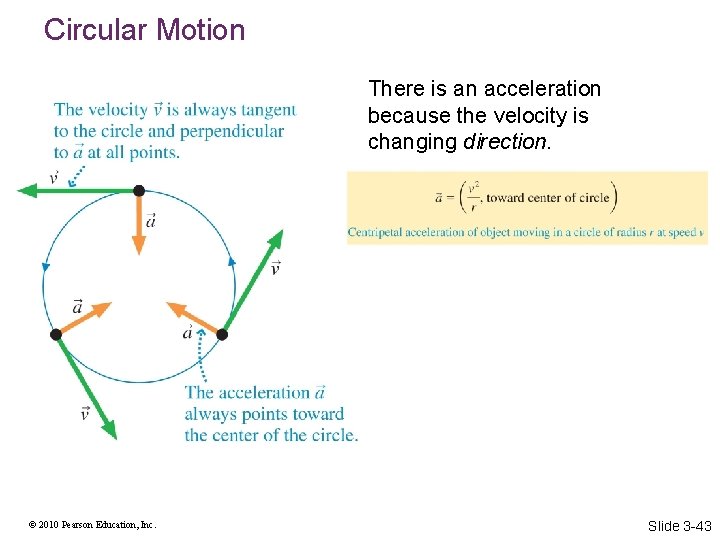
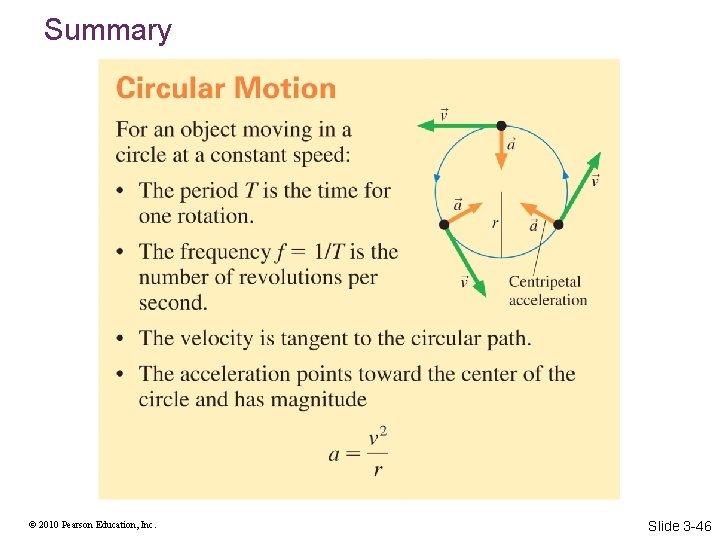
Circular Motion There is an acceleration because the velocity is changing direction. © 2010 Pearson Education, Inc. Slide 3 -43
Example Problems: Circular Motion Two friends are comparing the acceleration of their vehicles. Josh owns a Ford Mustang, which he clocks as doing 0 to 60 mph in a time of 5. 6 seconds. Josie has a Mini Cooper that she claims is capable of higher acceleration. When Josh laughs at her, she proceeds to drive her car in a tight circle at 13 mph. Which car experiences a higher acceleration? Turning a corner at a typical large intersection is a city means driving your car through a circular arc with a radius of about 25 m. If the maximum advisable acceleration of your vehicle through a turn on wet pavement is 0. 40 times the free-fall acceleration, what is the maximum speed at which you should drive through this turn? © 2010 Pearson Education, Inc. Slide 3 -44
Summary © 2010 Pearson Education, Inc. Slide 3 -45
Summary © 2010 Pearson Education, Inc. Slide 3 -46