
CHAPTER 3 TYPES OF PLANS By Jennifer Dickey
CHAPTER 3: TYPES OF PLANS By: Jennifer Dickey, Ashley Bennett, Sarah Yarich, and Tara Wilson
Strategic and Tactical Planning Strategic Planning Plans that are organization wide, establish overall objectives, and position an organization in terms of its environment. Tactical Planning Plans that specify the details of how the overall objectives are to be achieved.
How do they differ? 1. 2. 3. 3 main ways: Timeframe Scope Organizational Objectives. Tactical cover short periods of time Tactical plans start once objectives have been set. Strategic cover long periods of time. Strategic plans involve setting objectives
Short-Term VS Long-Term Plans Short-Term Plans Less than one year. Allows for more flexibility Long-Term Plans More than five years • The greater the uncertainty, the more short term the plan should be. • If there a lot of changes taking place in the environment, a precise, specific plan (Long-Term Plan) would hurt the organization more then help it.
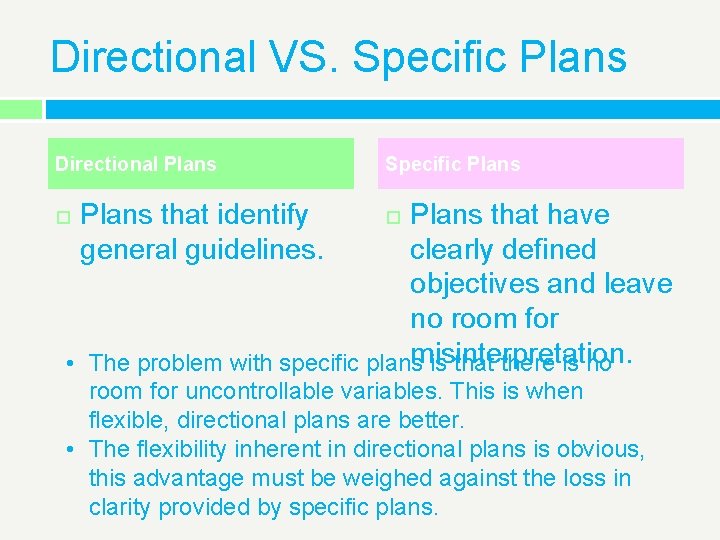
Directional VS. Specific Plans Directional Plans that have clearly defined objectives and leave no room for misinterpretation. • The problem with specific plans is that there is no Plans that identify general guidelines. Specific Plans room for uncontrollable variables. This is when flexible, directional plans are better. • The flexibility inherent in directional plans is obvious, this advantage must be weighed against the loss in clarity provided by specific plans.
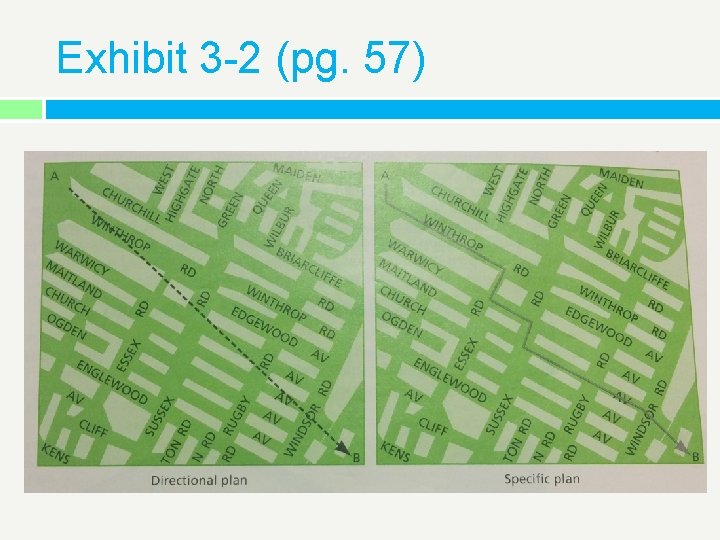
Exhibit 3 -2 (pg. 57)
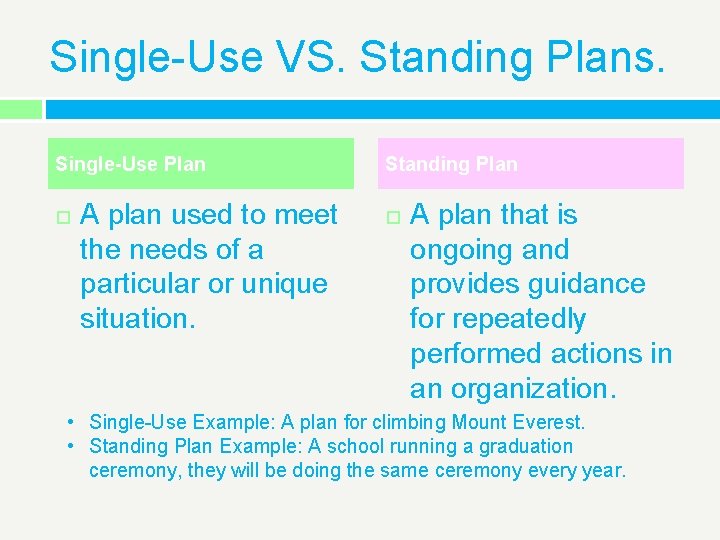
Single-Use VS. Standing Plans. Single-Use Plan A plan used to meet the needs of a particular or unique situation. Standing Plan A plan that is ongoing and provides guidance for repeatedly performed actions in an organization. • Single-Use Example: A plan for climbing Mount Everest. • Standing Plan Example: A school running a graduation ceremony, they will be doing the same ceremony every year.

? ? QUESTION TIME! Want to win a prize?
The End
- Slides: 9