
Chapter 3 The Molecules of Life Power Point
- Slides: 66
Chapter 3 The Molecules of Life Power. Point® Lectures for Campbell Essential Biology, Fourth Edition – Eric Simon, Jane Reece, and Jean Dickey Campbell Essential Biology with Physiology, Third Edition – Eric Simon, Jane Reece, and Jean Dickey Lectures by Chris C. Romero, updated by Edward J. Zalisko © 2010 Pearson Education, Inc.
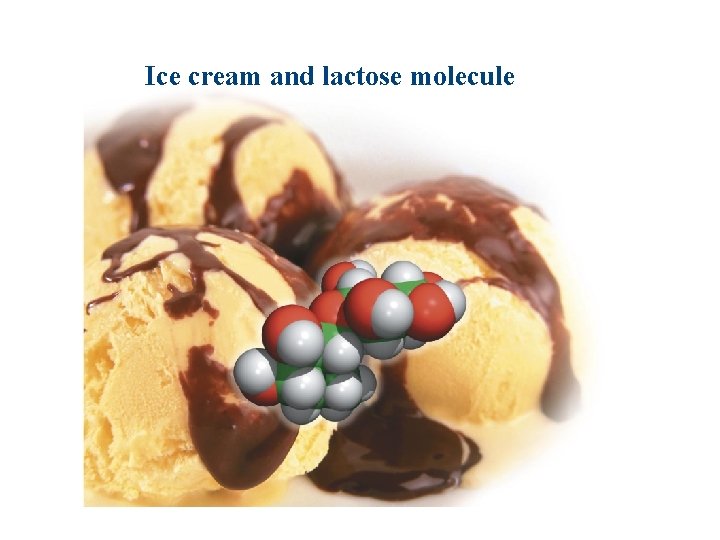
Ice cream and lactose molecule
Biology and Society: Got Lactose? • Lactose is the main sugar found in milk. • Some adults exhibit lactose intolerance, the inability to properly digest lactose. – Instead of lactose being broken down and absorbed in the small intestine – Lactose is broken down by bacteria in the large intestine producing gas and discomfort. • There is no treatment for the underlying cause of lactose intolerance. • Affected people must – Avoid lactose-containing foods or – Take the enzyme lactase when eating dairy products © 2010 Pearson Education, Inc.
Organic Compounds • A cell is mostly water. • The rest of the cell consists mainly of carbon-based molecules. • Organic compounds are carbon-based molecules. • Carbon forms large, complex, and diverse molecules necessary for life’s functions. • Cells are surrounded by cell membrane or plasma membrane © 2010 Pearson Education, Inc.
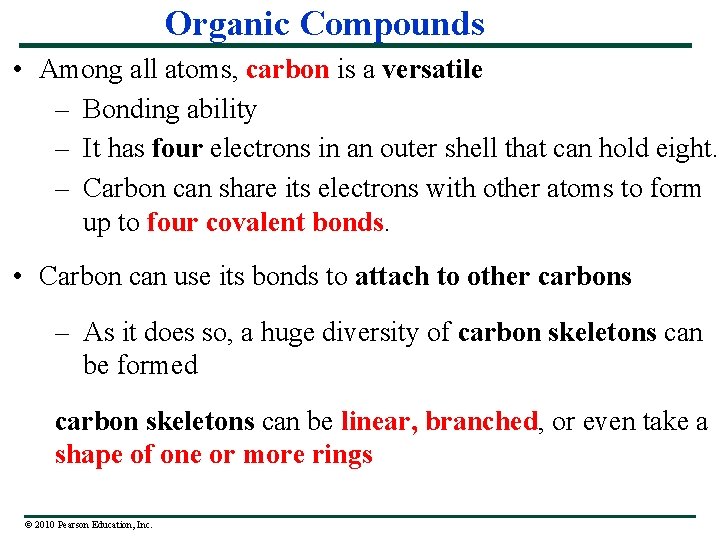
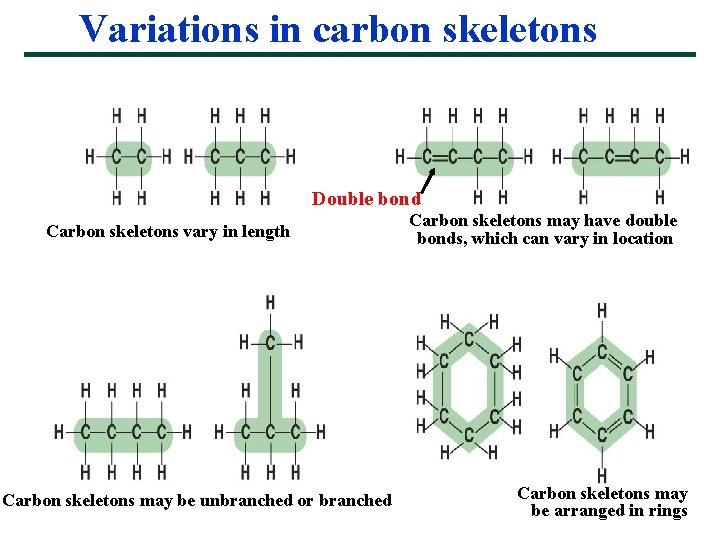
Organic Compounds • Among all atoms, carbon is a versatile – Bonding ability – It has four electrons in an outer shell that can hold eight. – Carbon can share its electrons with other atoms to form up to four covalent bonds. • Carbon can use its bonds to attach to other carbons – As it does so, a huge diversity of carbon skeletons can be formed carbon skeletons can be linear, branched, or even take a shape of one or more rings © 2010 Pearson Education, Inc.
Variations in carbon skeletons Double bond Carbon skeletons vary in length Carbon skeletons may be unbranched or branched Carbon skeletons may have double bonds, which can vary in location Carbon skeletons may be arranged in rings
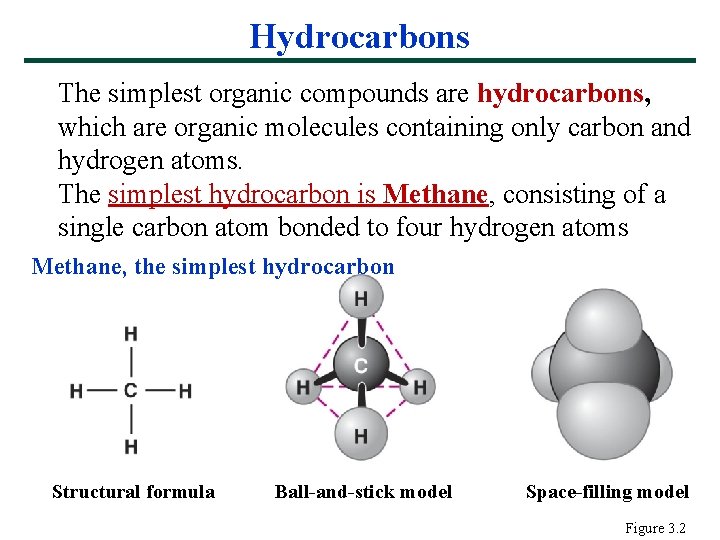
Hydrocarbons The simplest organic compounds are hydrocarbons, which are organic molecules containing only carbon and hydrogen atoms. The simplest hydrocarbon is Methane, consisting of a single carbon atom bonded to four hydrogen atoms Methane, the simplest hydrocarbon Structural formula Ball-and-stick model Space-filling model Figure 3. 2
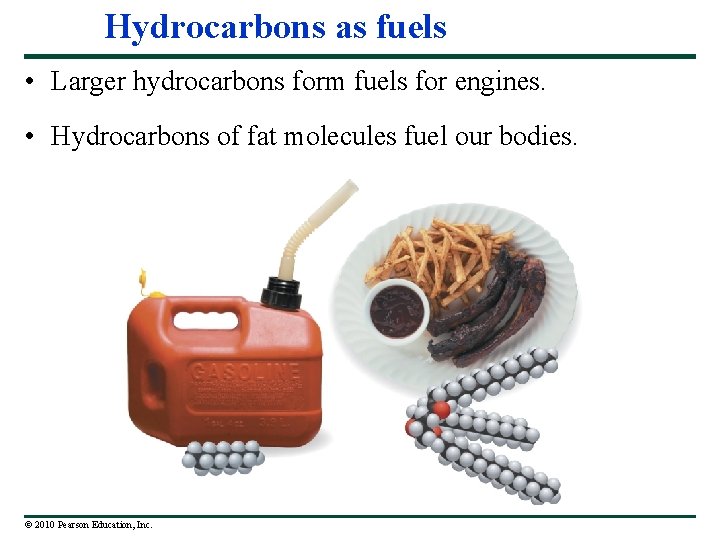
Hydrocarbons as fuels • Larger hydrocarbons form fuels for engines. • Hydrocarbons of fat molecules fuel our bodies. © 2010 Pearson Education, Inc.
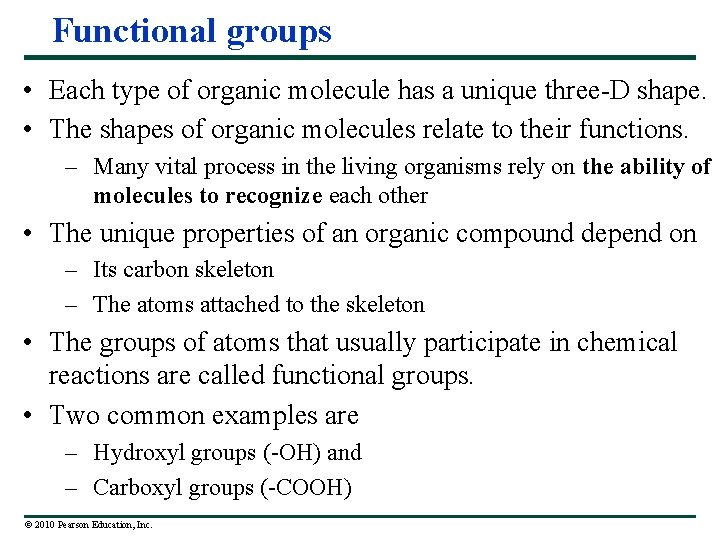
Functional groups • Each type of organic molecule has a unique three-D shape. • The shapes of organic molecules relate to their functions. – Many vital process in the living organisms rely on the ability of molecules to recognize each other • The unique properties of an organic compound depend on – Its carbon skeleton – The atoms attached to the skeleton • The groups of atoms that usually participate in chemical reactions are called functional groups. • Two common examples are – Hydroxyl groups (-OH) and – Carboxyl groups (-COOH) © 2010 Pearson Education, Inc.
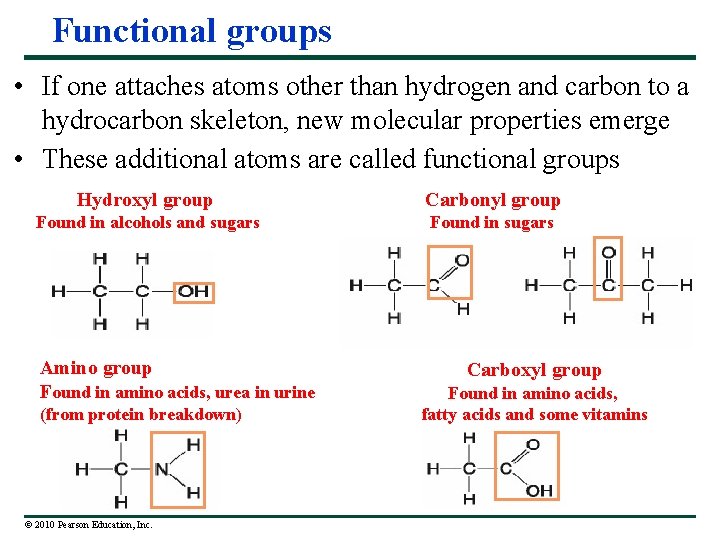
Functional groups • If one attaches atoms other than hydrogen and carbon to a hydrocarbon skeleton, new molecular properties emerge • These additional atoms are called functional groups Hydroxyl group Carbonyl group Found in alcohols and sugars Found in sugars Amino group Found in amino acids, urea in urine (from protein breakdown) © 2010 Pearson Education, Inc. Carboxyl group Found in amino acids, fatty acids and some vitamins
Giant Molecules from Smaller Building Blocks • On a molecular scale, many of life’s molecules are gigantic, earning the name macromolecules. • Three categories of macromolecules are – Carbohydrates – Proteins – Nucleic acids • Most macromolecules are polymers. • Polymers are made by stringing together many smaller molecules called monomers (one unit). © 2010 Pearson Education, Inc.
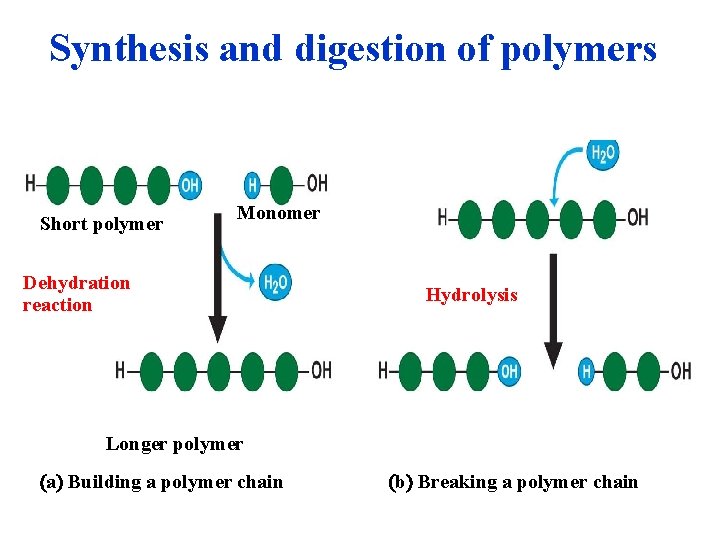
Giant Molecules from Smaller Building Blocks Organisms synthesize macromolecules • Dehydration reaction – links two monomers together and – removes a molecule of water Organisms also have to break down macromolecules. Digestion breaks down macromolecules to make monomers available to your cells. • Hydrolysis – Breaks bonds between monomers – Adds a molecule of water – Reverses the dehydration reaction © 2010 Pearson Education, Inc.
Synthesis and digestion of polymers Short polymer Monomer Dehydration reaction Hydrolysis Longer polymer a Building a polymer chain b Breaking a polymer chain
Which group of large biological molecules is not synthesized via dehydration reactions? a) polysaccharides b) lipids c) proteins d) nucleic acids © 2010 Pearson Education, Inc.
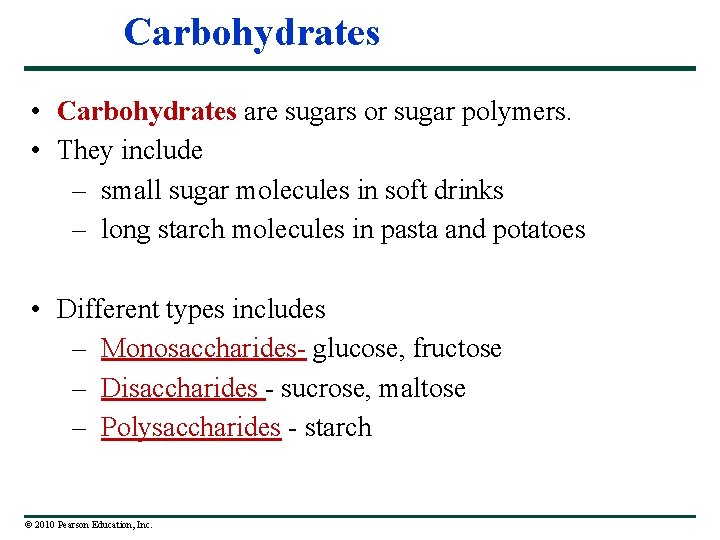
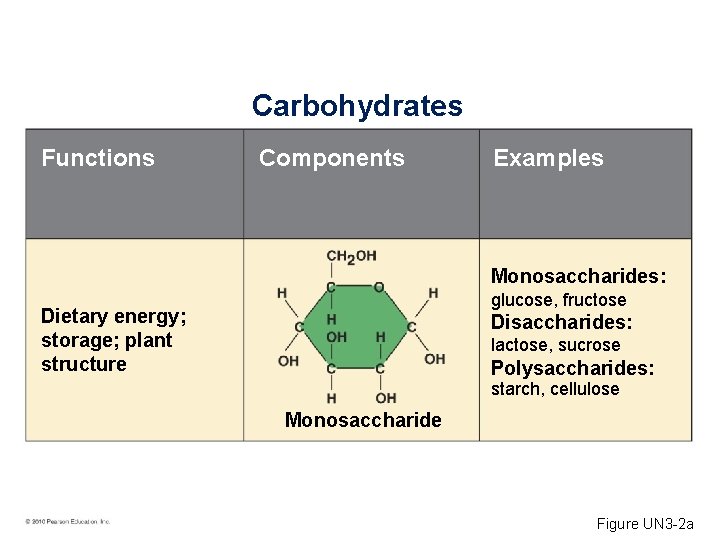
Carbohydrates • Carbohydrates are sugars or sugar polymers. • They include – small sugar molecules in soft drinks – long starch molecules in pasta and potatoes • Different types includes – Monosaccharides- glucose, fructose – Disaccharides - sucrose, maltose – Polysaccharides - starch © 2010 Pearson Education, Inc.
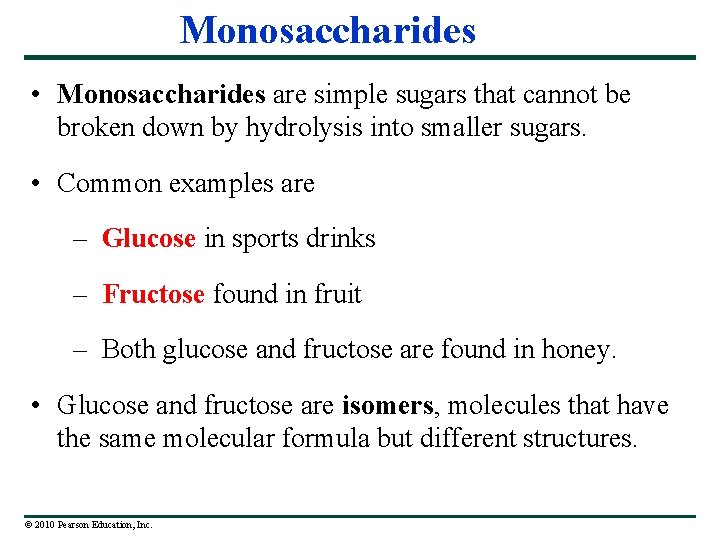
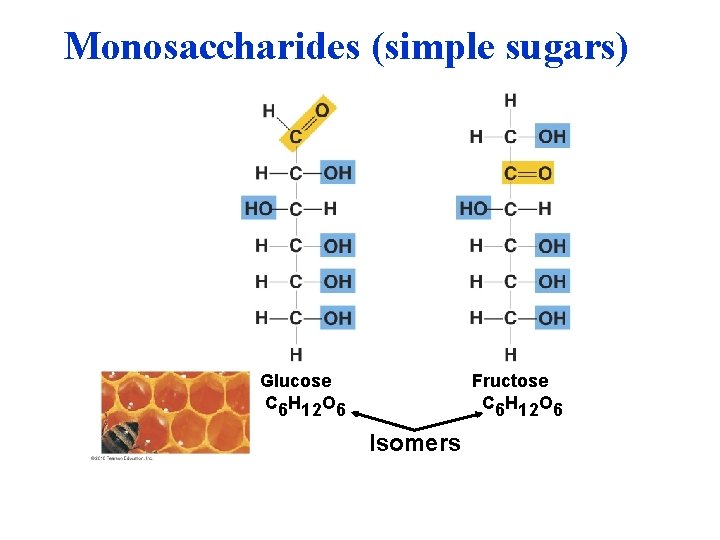
Monosaccharides • Monosaccharides are simple sugars that cannot be broken down by hydrolysis into smaller sugars. • Common examples are – Glucose in sports drinks – Fructose found in fruit – Both glucose and fructose are found in honey. • Glucose and fructose are isomers, molecules that have the same molecular formula but different structures. © 2010 Pearson Education, Inc.
Monosaccharides (simple sugars) Glucose C 6 H 12 O 6 Fructose C 6 H 12 O 6 Isomers
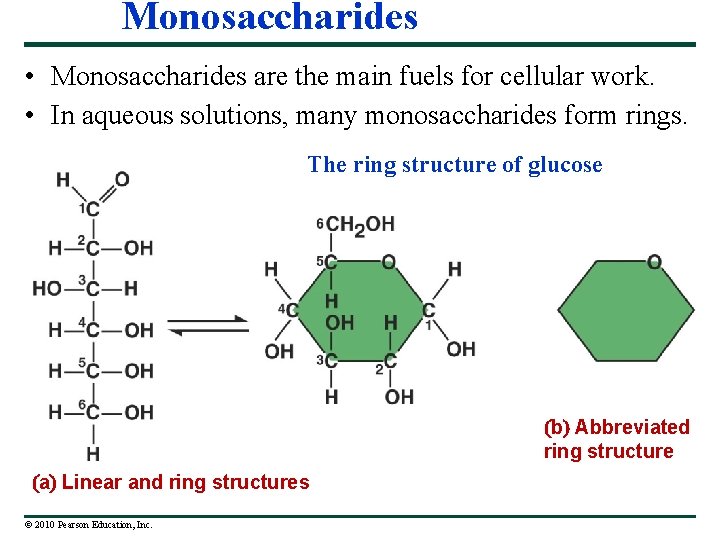
Monosaccharides • Monosaccharides are the main fuels for cellular work. • In aqueous solutions, many monosaccharides form rings. The ring structure of glucose b Abbreviated ring structure a Linear and ring structures © 2010 Pearson Education, Inc.
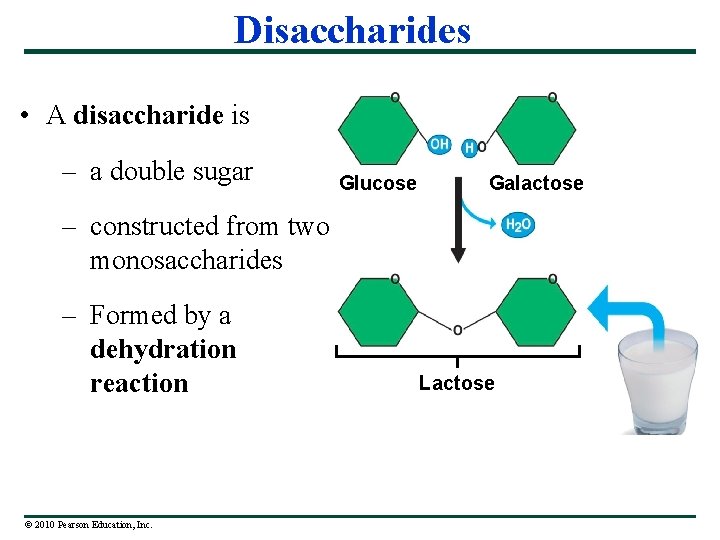
Disaccharides • A disaccharide is – a double sugar Glucose Galactose – constructed from two monosaccharides – Formed by a dehydration reaction © 2010 Pearson Education, Inc. Lactose
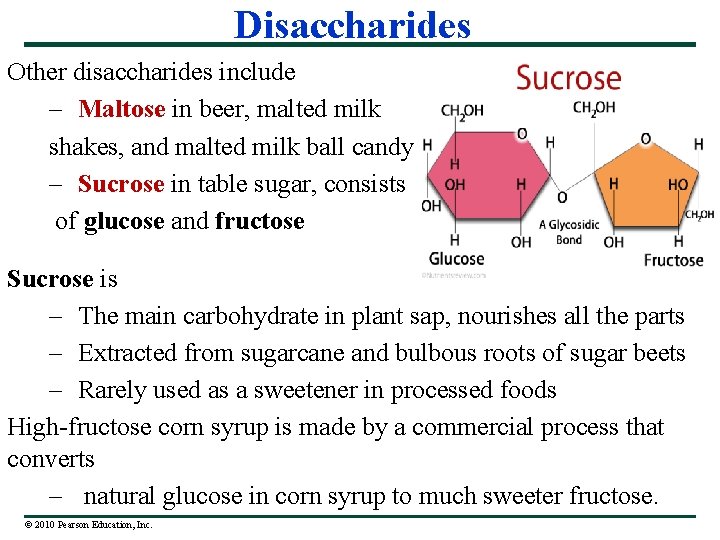
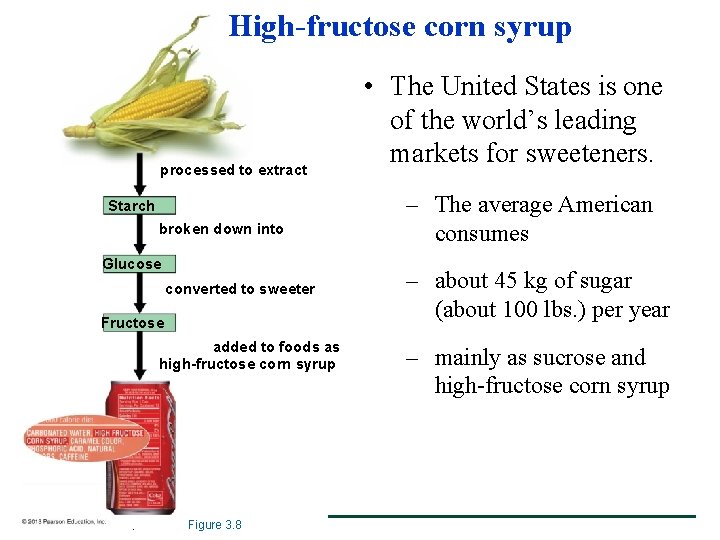
Disaccharides Other disaccharides include – Maltose in beer, malted milk shakes, and malted milk ball candy – Sucrose in table sugar, consists of glucose and fructose Sucrose is – The main carbohydrate in plant sap, nourishes all the parts – Extracted from sugarcane and bulbous roots of sugar beets – Rarely used as a sweetener in processed foods High-fructose corn syrup is made by a commercial process that converts – natural glucose in corn syrup to much sweeter fructose. © 2010 Pearson Education, Inc.
High-fructose corn syrup processed to extract Starch broken down into Glucose converted to sweeter Fructose added to foods as high-fructose corn syrup © 2010 Pearson Education, Inc. Figure 3. 8 • The United States is one of the world’s leading markets for sweeteners. – The average American consumes – about 45 kg of sugar (about 100 lbs. ) per year – mainly as sucrose and high-fructose corn syrup
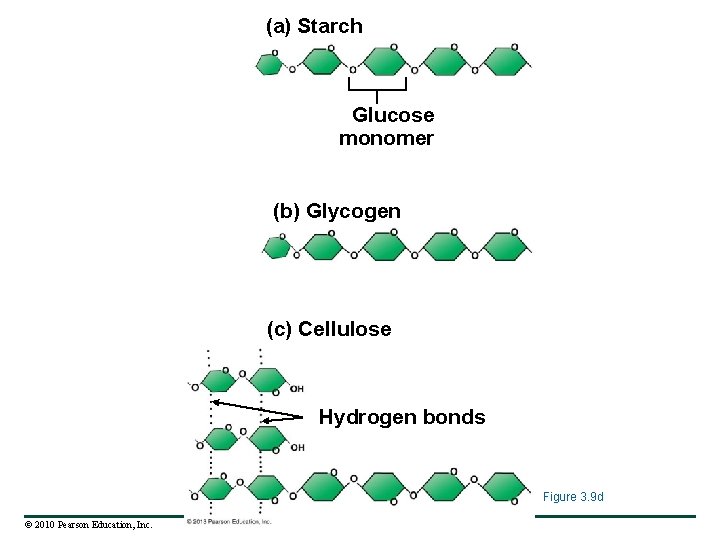
Polysaccharides • Polysaccharides are complex carbohydrates – Made of long chains of sugar units and polymers of monosaccharides – They can be straight or branched – The manner in which the monomers are connected may change – Different types of polysaccharides may be characteristics of different types of organisms © 2010 Pearson Education, Inc.
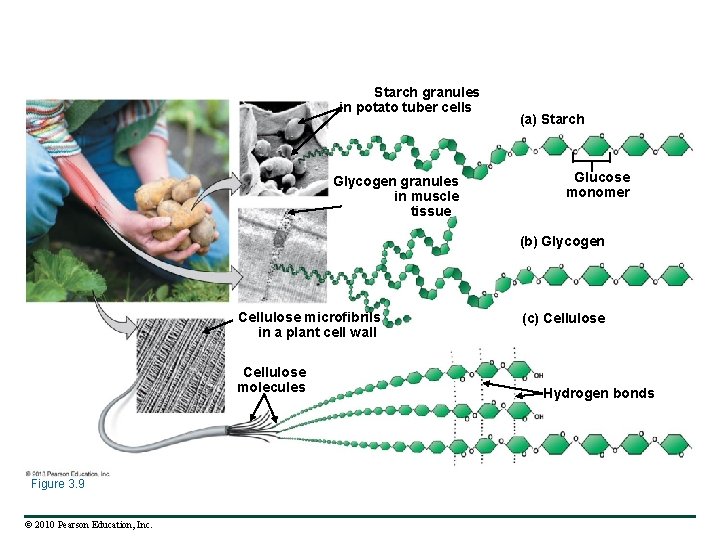
Starch granules in potato tuber cells Glycogen granules in muscle tissue (a) Starch Glucose monomer (b) Glycogen Cellulose microfibrils in a plant cell wall Cellulose molecules Figure 3. 9 © 2010 Pearson Education, Inc. (c) Cellulose Hydrogen bonds
Polysaccharides • Starch is – a familiar example of a polysaccharide – used by plant cells to store energy • Potatoes and grains are major sources of starch in the human diet. • Cellulose – is the most abundant organic compound on Earth – forms cable-like fibrils in the tough walls that enclose plants – cannot be broken apart by most animals because glucose monomers are linked in a different orientation – We use lumber as building material • Glycogen is – used by animals cells to store energy (liver and muscle cells) – converted to glucose when it is needed © 2010 Pearson Education, Inc.
(a) Starch Glucose monomer (b) Glycogen (c) Cellulose Hydrogen bonds Figure 3. 9 d © 2010 Pearson Education, Inc.
Polysaccharides • Monosaccharides and disaccharides dissolve readily in water. • Cellulose does not dissolve readily in water. • Almost all carbohydrates are hydrophilic, or “waterloving, ” adhering water to their surface. – The hydrophilic quality of cellulose makes the bath towel so water absorbent © 2010 Pearson Education, Inc.
Which polysaccharide is the storage form of energy in animals a) cellulose b) chitin c) starch d) glucose e) glycogen © 2010 Pearson Education, Inc.
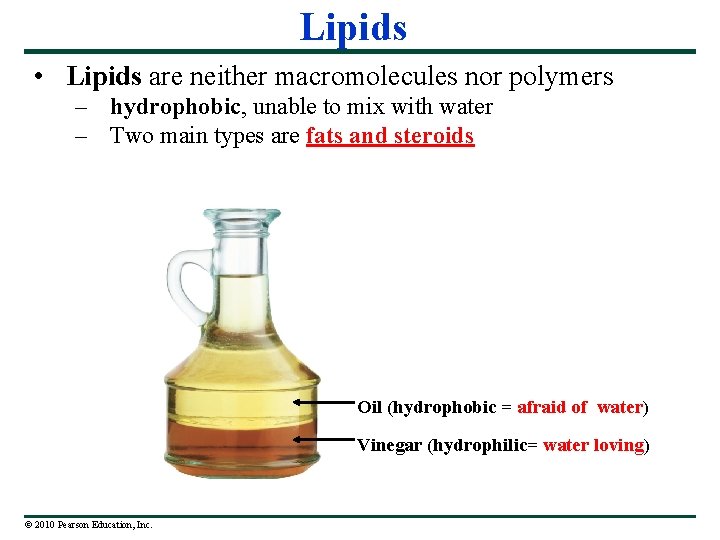
Lipids • Lipids are neither macromolecules nor polymers – hydrophobic, unable to mix with water – Two main types are fats and steroids Oil (hydrophobic = afraid of water) Vinegar (hydrophilic= water loving) © 2010 Pearson Education, Inc.
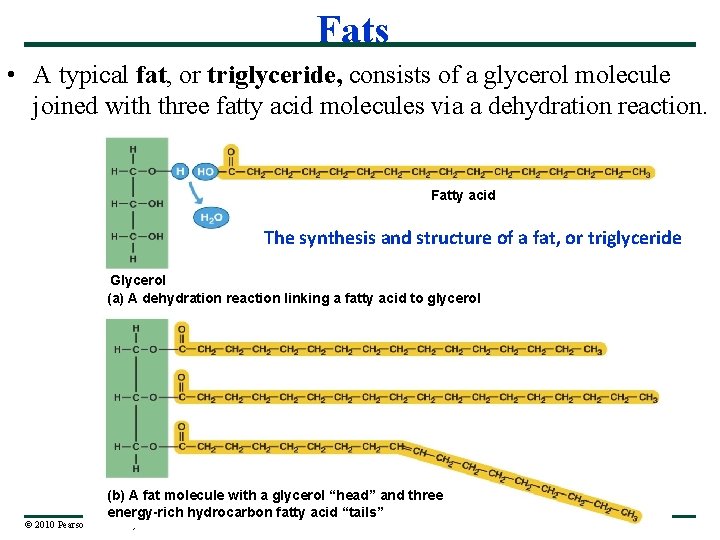
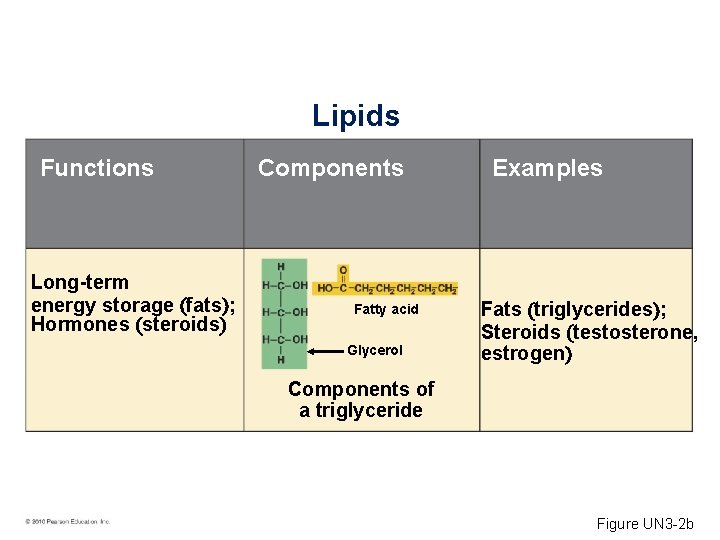
Fats • A typical fat, or triglyceride, consists of a glycerol molecule joined with three fatty acid molecules via a dehydration reaction. Fatty acid The synthesis and structure of a fat, or triglyceride Glycerol (a) A dehydration reaction linking a fatty acid to glycerol Animation: Fats (b) A fat molecule with a glycerol “head” and three energy-rich hydrocarbon fatty acid “tails” © 2010 Pearson Education, Inc.
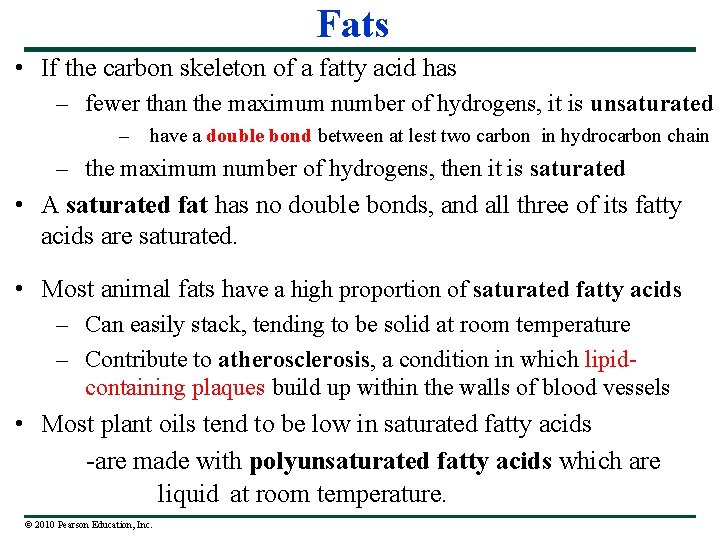
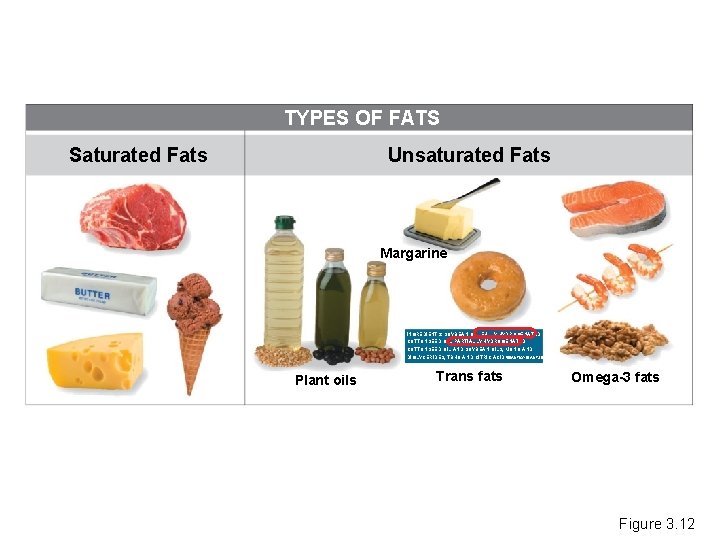
Fats • If the carbon skeleton of a fatty acid has – fewer than the maximum number of hydrogens, it is unsaturated – have a double bond between at lest two carbon in hydrocarbon chain – the maximum number of hydrogens, then it is saturated • A saturated fat has no double bonds, and all three of its fatty acids are saturated. • Most animal fats have a high proportion of saturated fatty acids – Can easily stack, tending to be solid at room temperature – Contribute to atherosclerosis, a condition in which lipidcontaining plaques build up within the walls of blood vessels • Most plant oils tend to be low in saturated fatty acids -are made with polyunsaturated fatty acids which are liquid at room temperature. © 2010 Pearson Education, Inc.
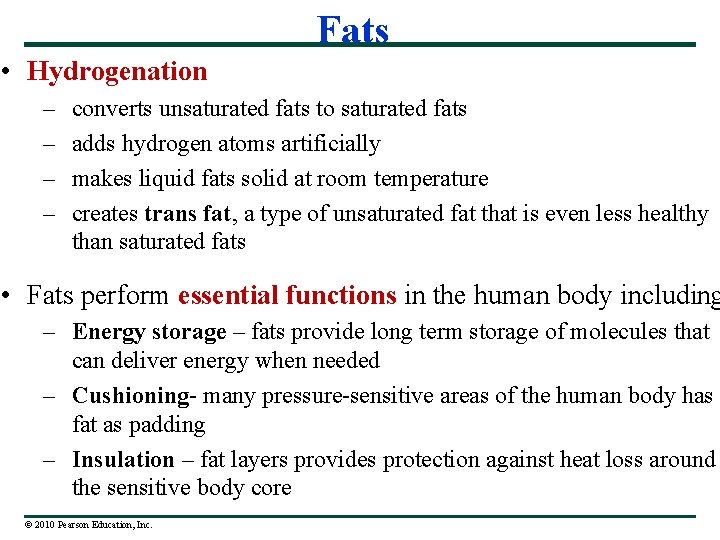
Fats • Hydrogenation – – converts unsaturated fats to saturated fats adds hydrogen atoms artificially makes liquid fats solid at room temperature creates trans fat, a type of unsaturated fat that is even less healthy than saturated fats • Fats perform essential functions in the human body including – Energy storage – fats provide long term storage of molecules that can deliver energy when needed – Cushioning- many pressure-sensitive areas of the human body has fat as padding – Insulation – fat layers provides protection against heat loss around the sensitive body core © 2010 Pearson Education, Inc.
TYPES OF FATS Saturated Fats Unsaturated Fats Margarine INGREDIENTS: SOYBEAN OIL, FULLY HYDROGENATED COTTONSEED OIL, PARTIALLY HYDROGENATED COTTONSEED OIL AND SOYBEAN OILS, MONO AND DIGLYCERIDES, TBHO AND CITRIC ACID Plant oils Trans fats ANTIOXIDANTS Omega-3 fats Figure 3. 12
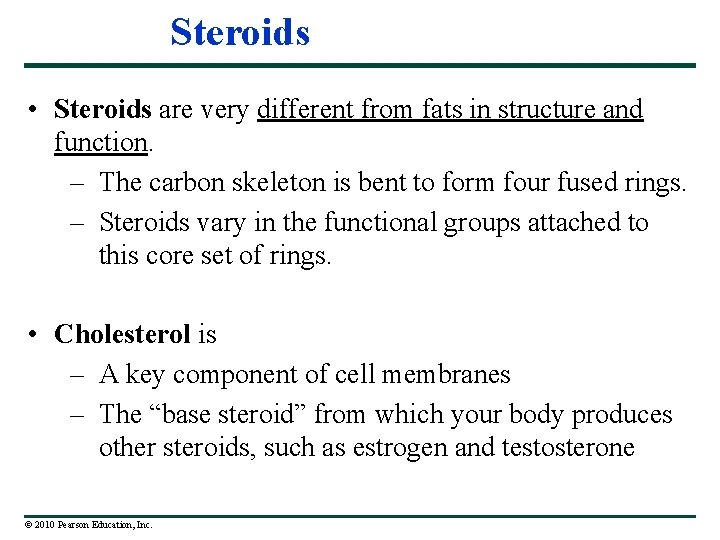
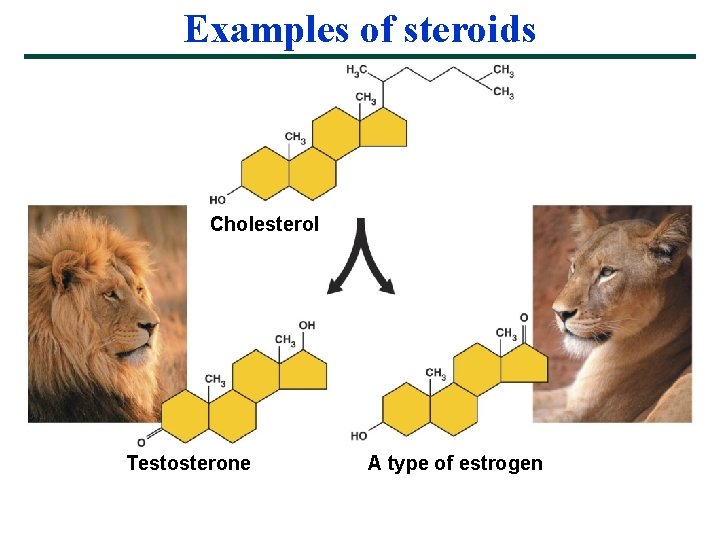
Steroids • Steroids are very different from fats in structure and function. – The carbon skeleton is bent to form four fused rings. – Steroids vary in the functional groups attached to this core set of rings. • Cholesterol is – A key component of cell membranes – The “base steroid” from which your body produces other steroids, such as estrogen and testosterone © 2010 Pearson Education, Inc.
Examples of steroids Cholesterol Testosterone A type of estrogen
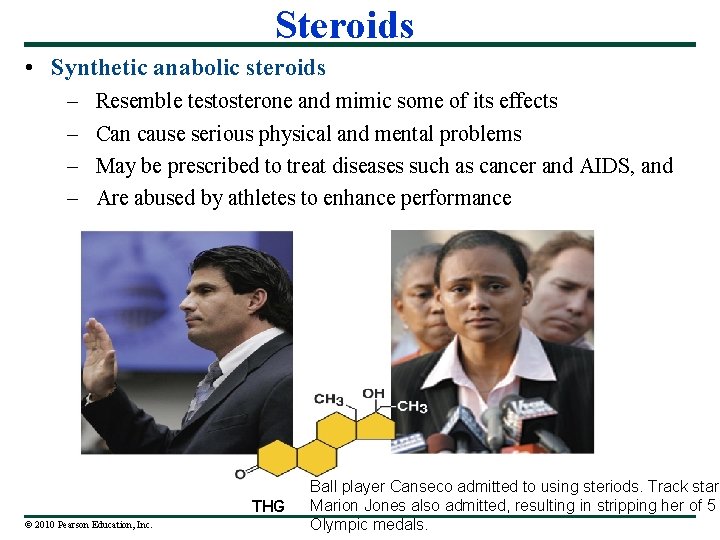
Steroids • Synthetic anabolic steroids – – Resemble testosterone and mimic some of its effects Can cause serious physical and mental problems May be prescribed to treat diseases such as cancer and AIDS, and Are abused by athletes to enhance performance THG © 2010 Pearson Education, Inc. Ball player Canseco admitted to using steriods. Track star Marion Jones also admitted, resulting in stripping her of 5 Olympic medals.
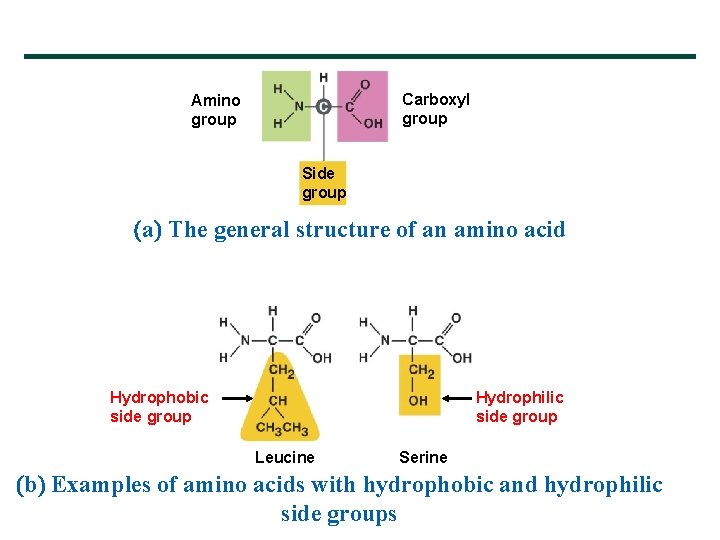
Proteins • Proteins – Are polymers constructed from amino acid monomers – account for more than 50% of the dry weight of most cells – Perform most of the tasks the body needs to function – Form enzymes, chemicals that change the rate of a chemical reaction without being changed in the process • All proteins are constructed from a common set of 20 kinds of amino acids. • Each amino acid consists of a central carbon atom bonded to four covalent partners in which three of those attachment groups are common to all amino acids. © 2010 Pearson Education, Inc.
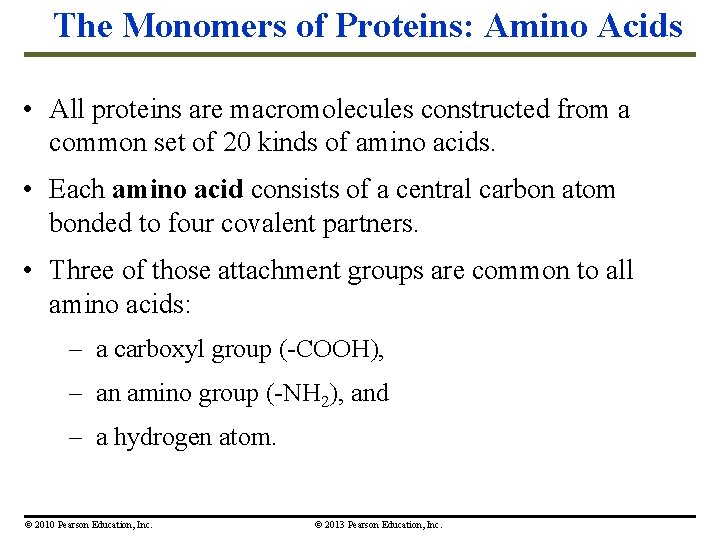
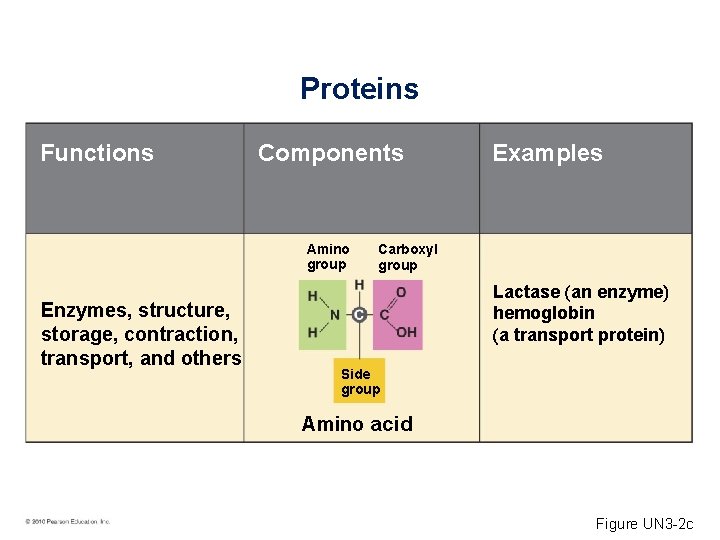
The Monomers of Proteins: Amino Acids • All proteins are macromolecules constructed from a common set of 20 kinds of amino acids. • Each amino acid consists of a central carbon atom bonded to four covalent partners. • Three of those attachment groups are common to all amino acids: – a carboxyl group (-COOH), – an amino group (-NH 2), and – a hydrogen atom. © 2010 Pearson Education, Inc. © 2013 Pearson Education, Inc.
Carboxyl group Amino group Side group a The general structure of an amino acid Hydrophobic side group Hydrophilic side group Leucine Serine b Examples of amino acids with hydrophobic and hydrophilic side groups
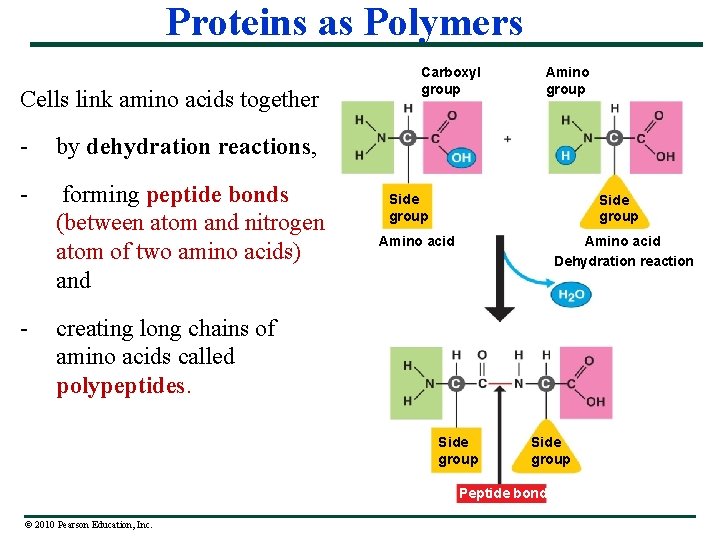
Proteins as Polymers Cells link amino acids together - by dehydration reactions, - forming peptide bonds (between atom and nitrogen atom of two amino acids) and - Carboxyl group Amino group Side group Amino acid Dehydration reaction creating long chains of amino acids called polypeptides. Side group Peptide bond © 2010 Pearson Education, Inc.
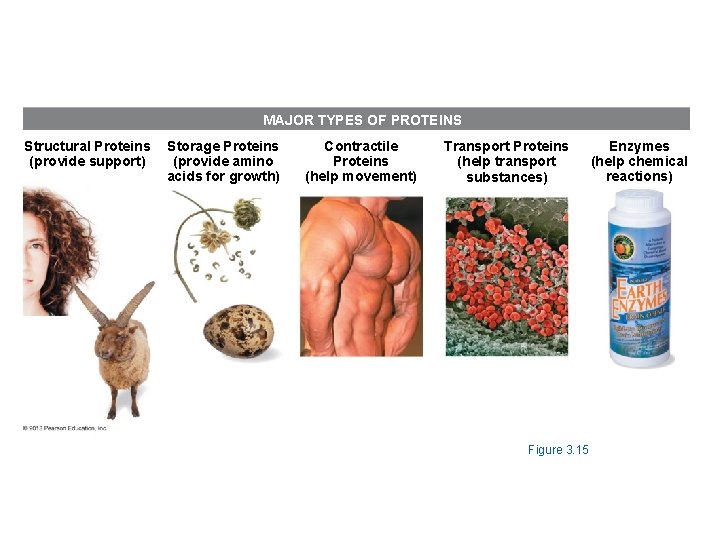
MAJOR TYPES OF PROTEINS Structural Proteins (provide support) Storage Proteins (provide amino acids for growth) Contractile Proteins (help movement) Transport Proteins (help transport substances) Figure 3. 15 Enzymes (help chemical reactions)
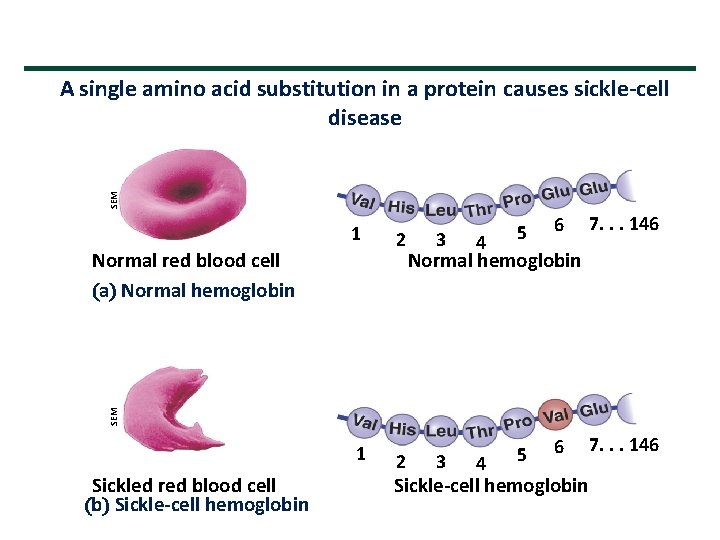
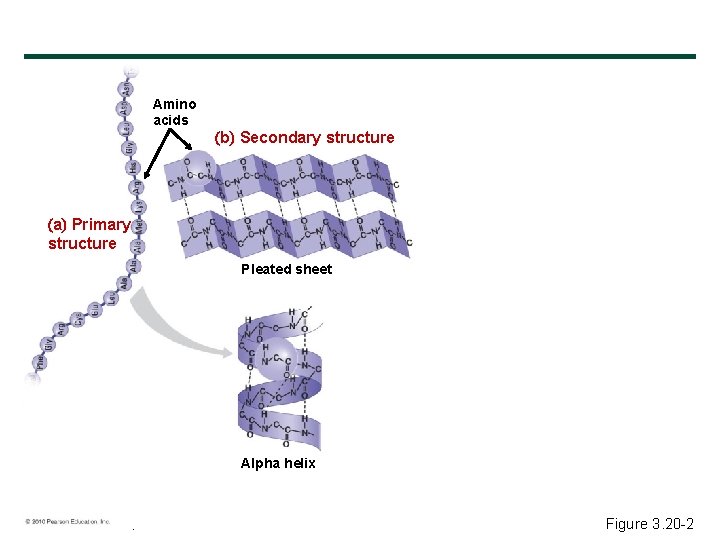
Proteins as Polymers • Your body has tens of thousands of different kinds of protein. • Proteins differ in their composition, order and arrangement of amino acids • The specific sequence of amino acids in a protein is its primary structure. • A slight change in the primary structure of a protein affects its ability to function. • The substitution of one amino acid for another in hemoglobin causes sickle-cell disease. © 2010 Pearson Education, Inc.
SEM A single amino acid substitution in a protein causes sickle-cell disease 1 3 4 4 5 6 7. . . 146 Normal hemoglobin SEM Normal red blood cell a Normal hemoglobin 2 5 1 Sickled red blood cell b Sickle-cell hemoglobin 2 3 6 Sickle-cell hemoglobin 7. . . 146
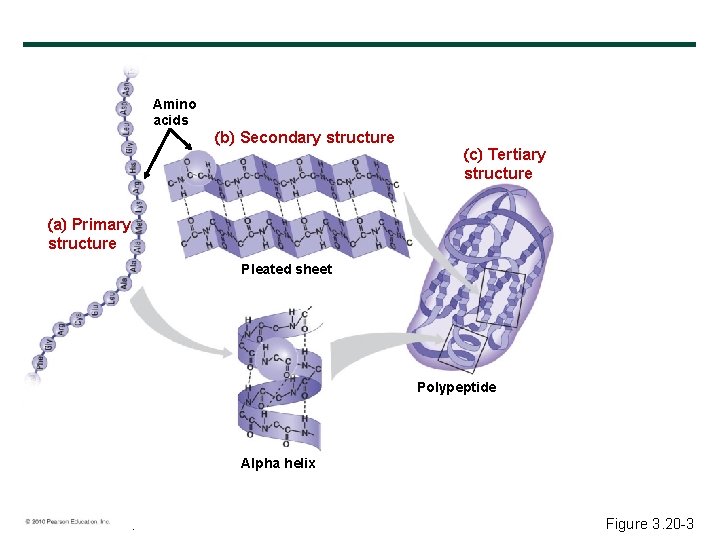
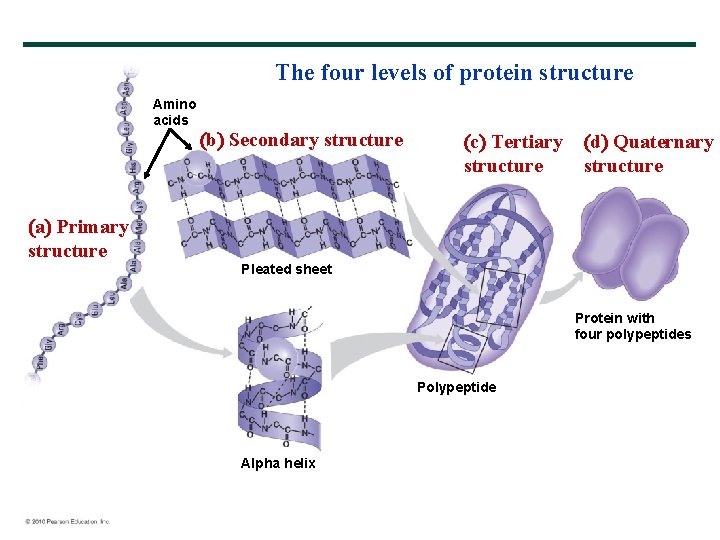
Protein Shape • A functional protein consists of one or more polypeptide chains, precisely folded and coiled into a molecule of unique shape. • Proteins consisting of – One polypeptide have three levels of structure – More than one polypeptide chain have a fourth, quaternary structure © 2010 Pearson Education, Inc.
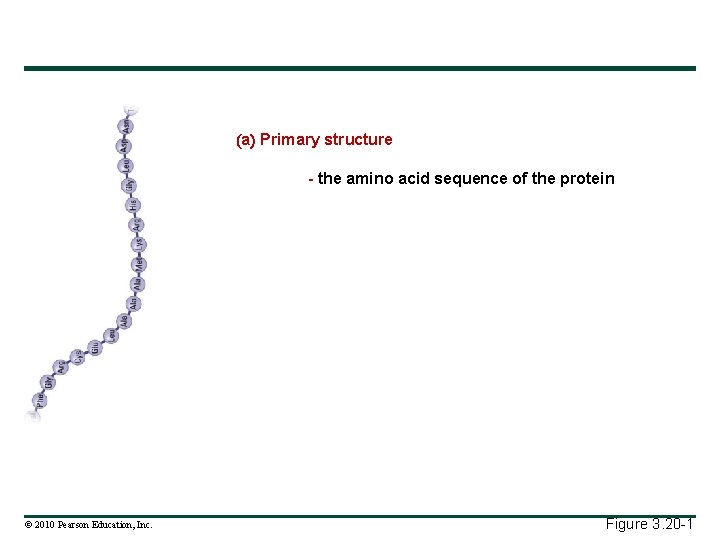
a Primary structure - the amino acid sequence of the protein © 2010 Pearson Education, Inc. Figure 3. 20 -1
Amino acids b Secondary structure a Primary structure Pleated sheet Alpha helix © 2010 Pearson Education, Inc. Figure 3. 20 -2
Amino acids b Secondary structure c Tertiary structure a Primary structure Pleated sheet Polypeptide Alpha helix © 2010 Pearson Education, Inc. Figure 3. 20 -3
The four levels of protein structure Amino acids a Primary structure b Secondary structure c Tertiary structure d Quaternary structure Pleated sheet Protein with four polypeptides Polypeptide Alpha helix
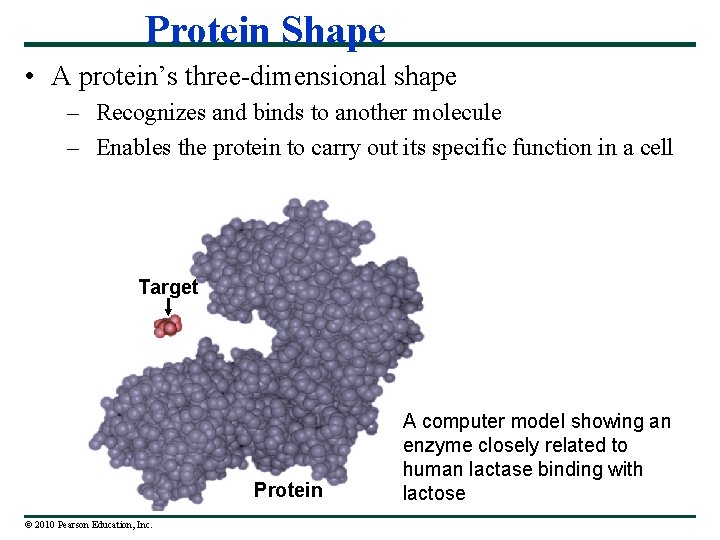
Protein Shape • A protein’s three-dimensional shape – Recognizes and binds to another molecule – Enables the protein to carry out its specific function in a cell Target Protein © 2010 Pearson Education, Inc. A computer model showing an enzyme closely related to human lactase binding with lactose
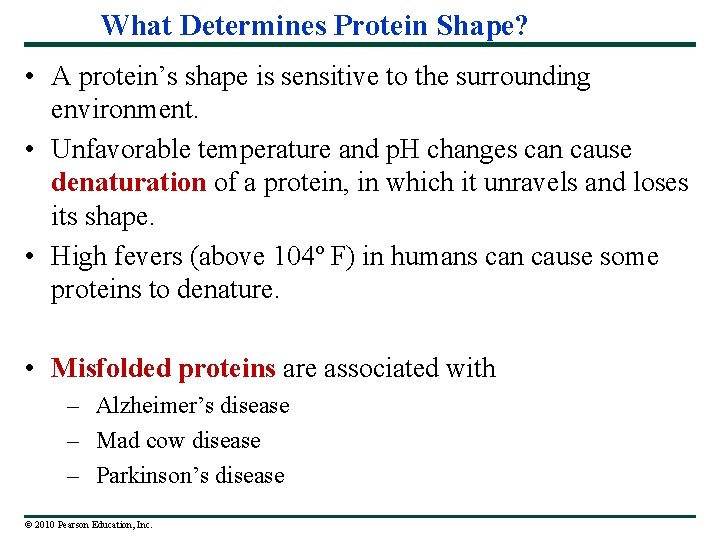
What Determines Protein Shape? • A protein’s shape is sensitive to the surrounding environment. • Unfavorable temperature and p. H changes can cause denaturation of a protein, in which it unravels and loses its shape. • High fevers (above 104º F) in humans can cause some proteins to denature. • Misfolded proteins are associated with – Alzheimer’s disease – Mad cow disease – Parkinson’s disease © 2010 Pearson Education, Inc.
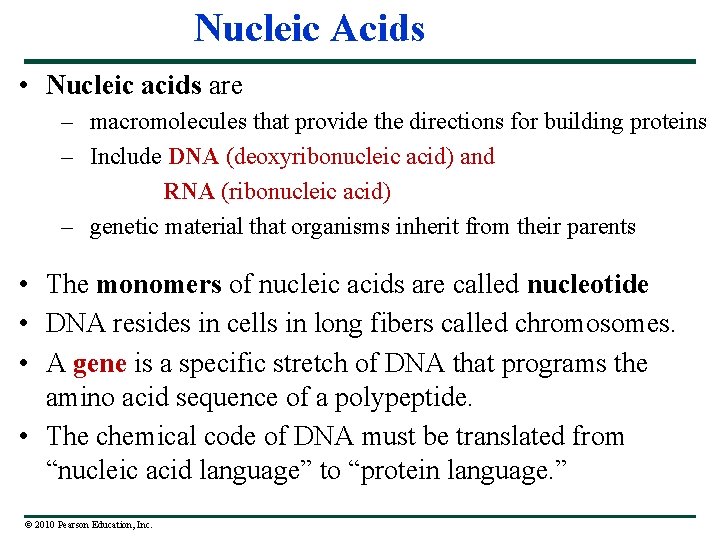
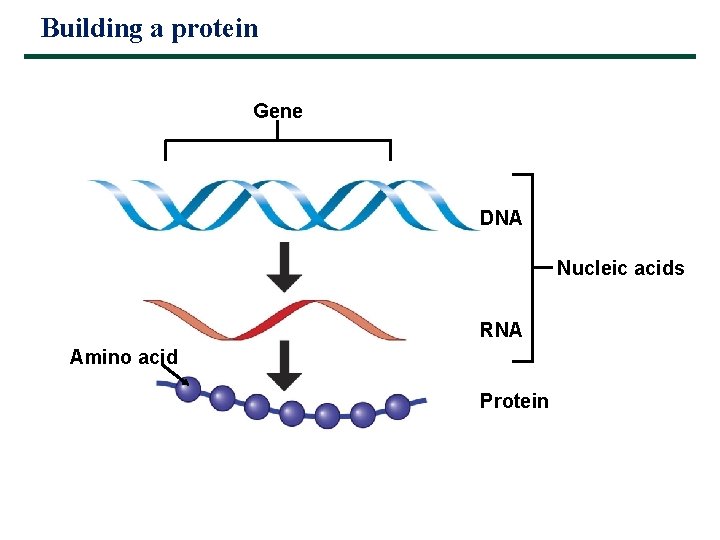
Nucleic Acids • Nucleic acids are – macromolecules that provide the directions for building proteins – Include DNA (deoxyribonucleic acid) and RNA (ribonucleic acid) – genetic material that organisms inherit from their parents • The monomers of nucleic acids are called nucleotide • DNA resides in cells in long fibers called chromosomes. • A gene is a specific stretch of DNA that programs the amino acid sequence of a polypeptide. • The chemical code of DNA must be translated from “nucleic acid language” to “protein language. ” © 2010 Pearson Education, Inc.
Building a protein Gene DNA Nucleic acids RNA Amino acid Protein
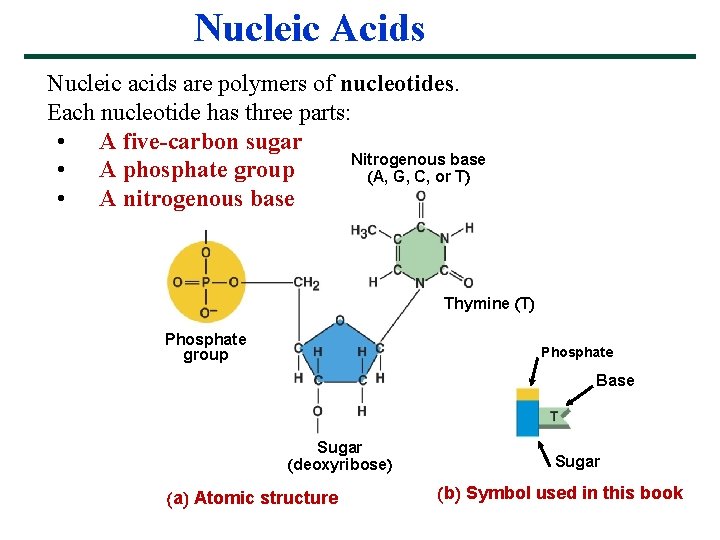
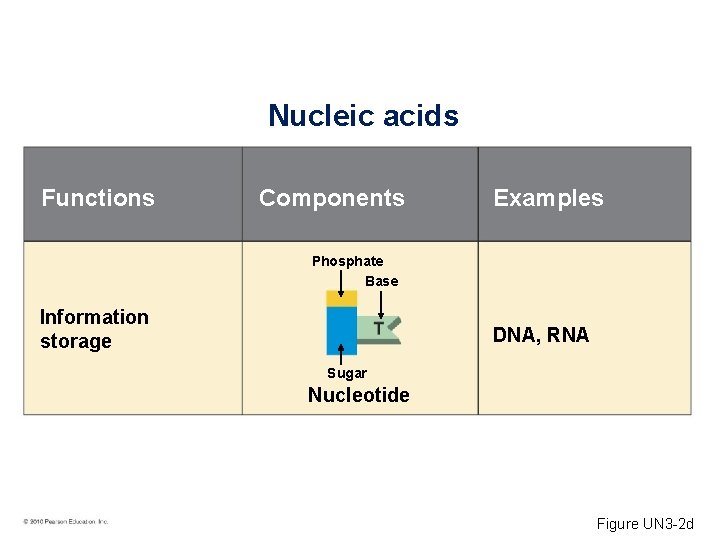
Nucleic Acids Nucleic acids are polymers of nucleotides. Each nucleotide has three parts: • A five-carbon sugar Nitrogenous base • A phosphate group A, G, C, or T • A nitrogenous base Thymine T Phosphate group Phosphate Base Sugar deoxyribose a Atomic structure Sugar b Symbol used in this book
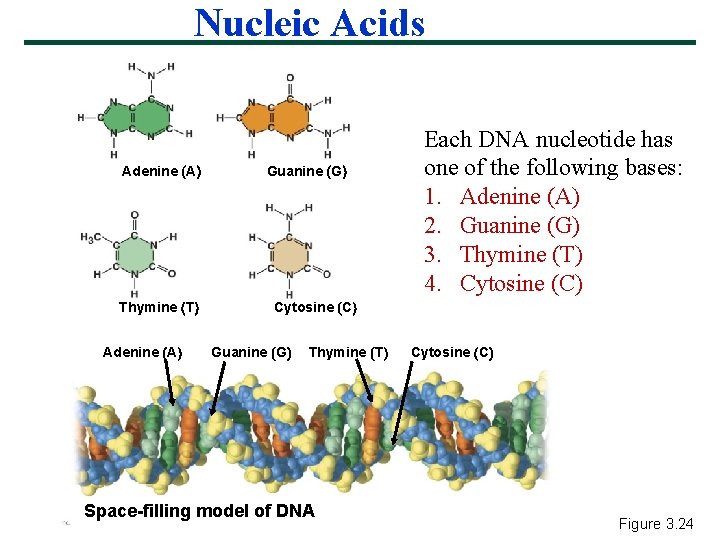
Nucleic Acids Adenine A Thymine T Adenine A Guanine G Each DNA nucleotide has one of the following bases: 1. Adenine (A) 2. Guanine (G) 3. Thymine (T) 4. Cytosine (C) Cytosine C Guanine G Thymine T Space-filling model of DNA Cytosine C Figure 3. 24
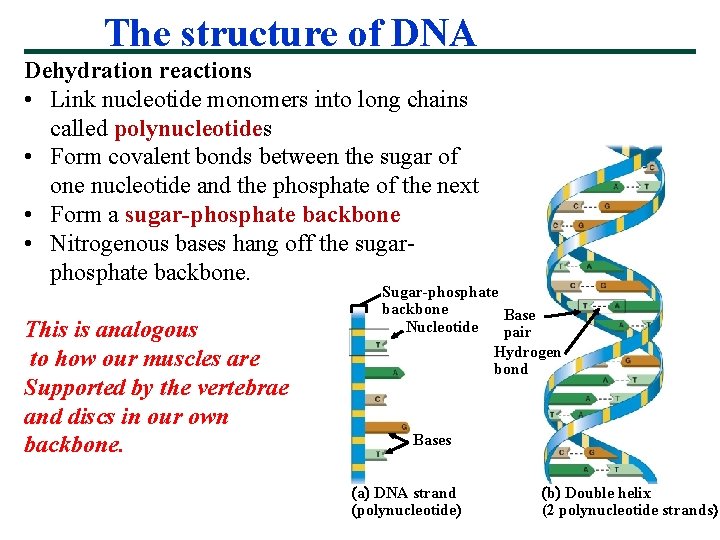
The structure of DNA Dehydration reactions • Link nucleotide monomers into long chains called polynucleotides • Form covalent bonds between the sugar of one nucleotide and the phosphate of the next • Form a sugar-phosphate backbone • Nitrogenous bases hang off the sugarphosphate backbone. This is analogous to how our muscles are Supported by the vertebrae and discs in our own backbone. Sugar-phosphate backbone Base Nucleotide pair Hydrogen bond Bases a DNA strand polynucleotide b Double helix (2 polynucleotide strands
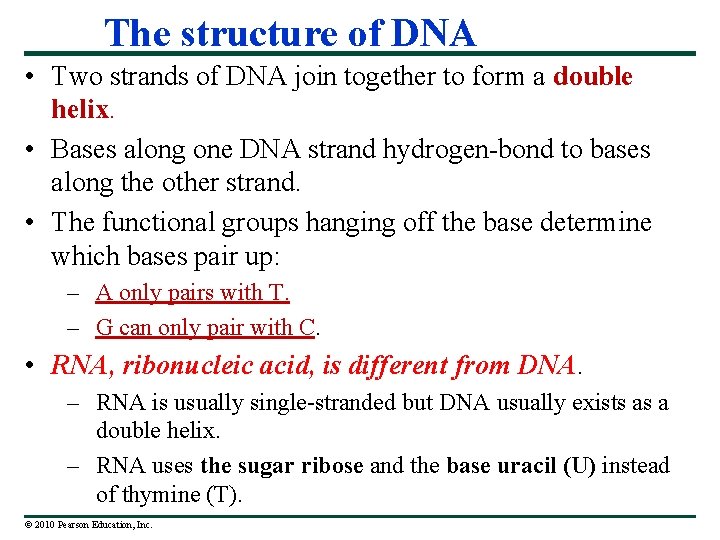
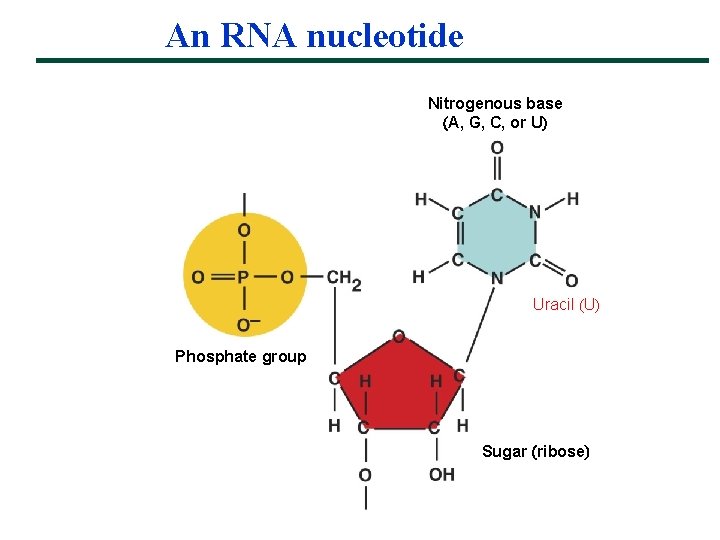
The structure of DNA • Two strands of DNA join together to form a double helix. • Bases along one DNA strand hydrogen-bond to bases along the other strand. • The functional groups hanging off the base determine which bases pair up: – A only pairs with T. – G can only pair with C. • RNA, ribonucleic acid, is different from DNA. – RNA is usually single-stranded but DNA usually exists as a double helix. – RNA uses the sugar ribose and the base uracil (U) instead of thymine (T). © 2010 Pearson Education, Inc.
An RNA nucleotide Nitrogenous base A, G, C, or U Uracil U Phosphate group Sugar ribose
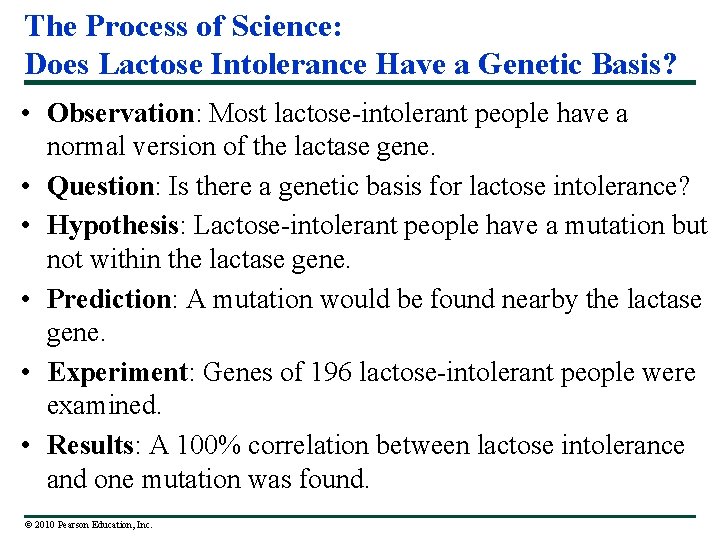
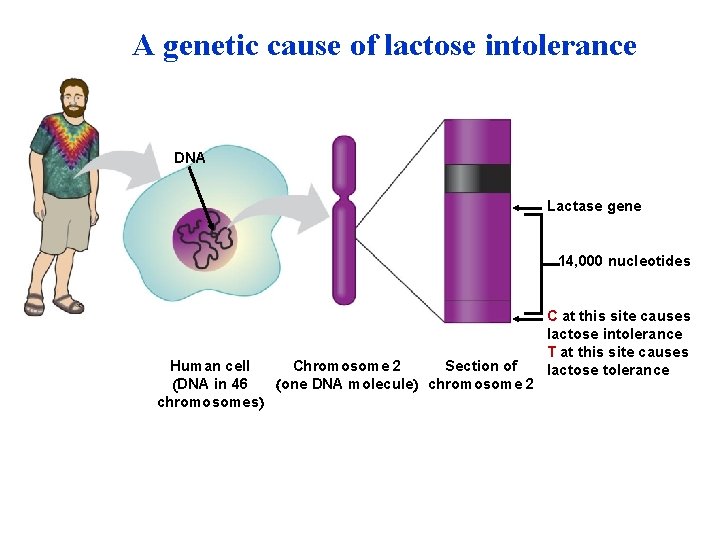
The Process of Science: Does Lactose Intolerance Have a Genetic Basis? • Observation: Most lactose-intolerant people have a normal version of the lactase gene. • Question: Is there a genetic basis for lactose intolerance? • Hypothesis: Lactose-intolerant people have a mutation but not within the lactase gene. • Prediction: A mutation would be found nearby the lactase gene. • Experiment: Genes of 196 lactose-intolerant people were examined. • Results: A 100% correlation between lactose intolerance and one mutation was found. © 2010 Pearson Education, Inc.
A genetic cause of lactose intolerance DNA Lactase gene 14, 000 nucleotides Human cell Chromosome 2 Section of DNA in 46 one DNA molecule chromosome 2 chromosomes C at this site causes lactose intolerance T at this site causes lactose tolerance
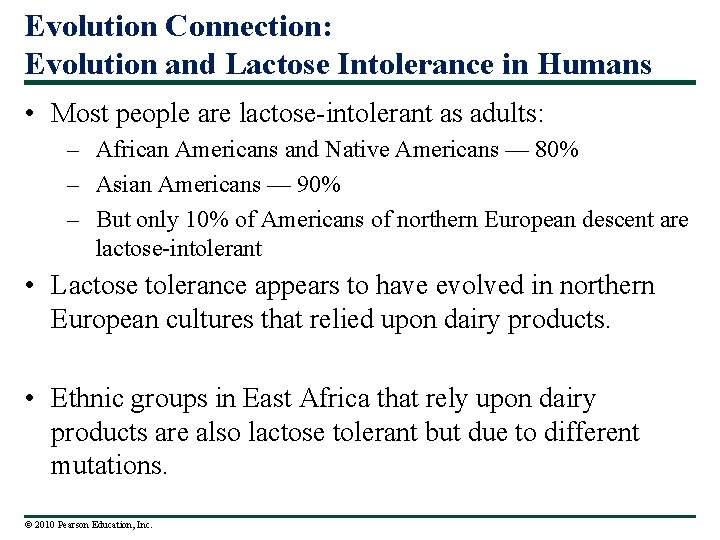
Evolution Connection: Evolution and Lactose Intolerance in Humans • Most people are lactose-intolerant as adults: – African Americans and Native Americans — 80% – Asian Americans — 90% – But only 10% of Americans of northern European descent are lactose-intolerant • Lactose tolerance appears to have evolved in northern European cultures that relied upon dairy products. • Ethnic groups in East Africa that rely upon dairy products are also lactose tolerant but due to different mutations. © 2010 Pearson Education, Inc.
Carbohydrates Functions Components Examples Monosaccharides: glucose, fructose Dietary energy; storage; plant structure Disaccharides: lactose, sucrose Polysaccharides: starch, cellulose Monosaccharide Figure UN 3 -2 a
Lipids Functions Long-term energy storage fats ; Hormones steroids Components Fatty acid Glycerol Examples Fats triglycerides ; Steroids testosterone, estrogen Components of a triglyceride Figure UN 3 -2 b
Proteins Functions Components Amino group Enzymes, structure, storage, contraction, transport, and others Examples Carboxyl group Lactase an enzyme hemoglobin a transport protein Side group Amino acid Figure UN 3 -2 c
Nucleic acids Functions Components Examples Phosphate Base Information storage DNA, RNA Sugar Nucleotide Figure UN 3 -2 d
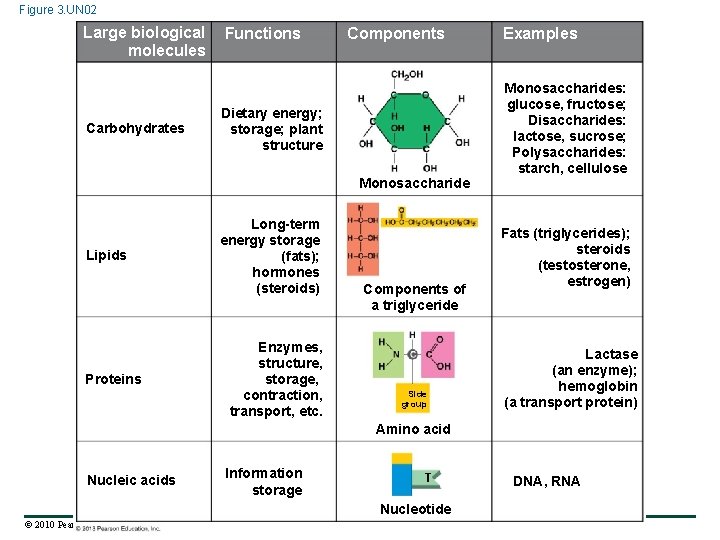
Figure 3. UN 02 Large biological molecules Carbohydrates Functions Components Dietary energy; storage; plant structure Monosaccharide Lipids Proteins Long-term energy storage (fats); hormones (steroids) Enzymes, structure, storage, contraction, transport, etc. Components of a triglyceride Side group Examples Monosaccharides: glucose, fructose; Disaccharides: lactose, sucrose; Polysaccharides: starch, cellulose Fats (triglycerides); steroids (testosterone, estrogen) Lactase (an enzyme); hemoglobin (a transport protein) Amino acid Nucleic acids Information storage T Nucleotide © 2010 Pearson Education, Inc. DNA, RNA
Diversity among Biological Macromolecules Which type of biological polymer is the storage form of genetic information in the cell? a) polysaccharides b) polypeptides c) DNA d) RNA © 2010 Pearson Education, Inc.
Subunits Amino acids are the subunits of ______ a) proteins b) starch c) nucleic acids d) fatty acids © 2010 Pearson Education, Inc.