
Chapter 3 The Marketing Environment and Marketing Ethics
- Slides: 27
Chapter 3 The Marketing Environment and Marketing Ethics
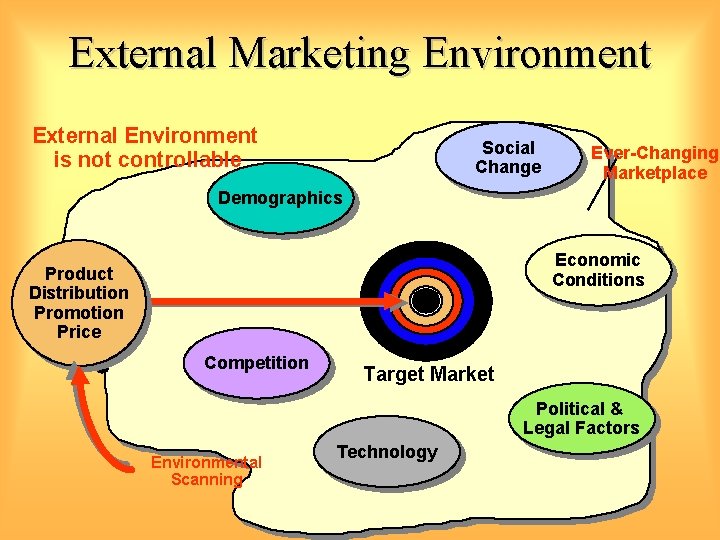
External Marketing Environment External Environment is not controllable Social Change Ever-Changing Marketplace Demographics Economic Conditions Product Distribution Promotion Price Competition Target Market Political & Legal Factors Environmental Scanning Technology
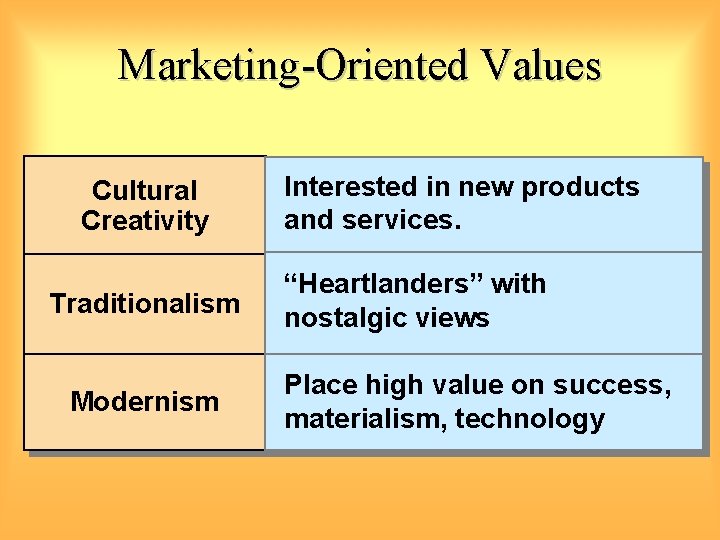
Marketing-Oriented Values Cultural Creativity Traditionalism Modernism Interested in new products and services. “Heartlanders” with nostalgic views Place high value on success, materialism, technology
The Poverty of Time A lack of time to do anything but work, commute to work, handle family situations, do housework, shop, eat, sleep. . .
Role of Families & Women • 58% of all females are in the workforce • Rising purchasing power from dual-income families • Change of “traditional” purchasing roles
Age Groups: Generation Y • Born between 1979 and 1994 • Size creates immense marketing impact • Respond to ads differently
Age Groups: Generation X • Born between 1965 and 1978 • Savvy and cynical consumers • Indulge themselves with meals/alcohol, clothing, and electronics
Age Groups: Baby Boomers • Born between 1946 and 1964 • Cherish youth, convenience, and individuality • Individualism has led to a personalized economy
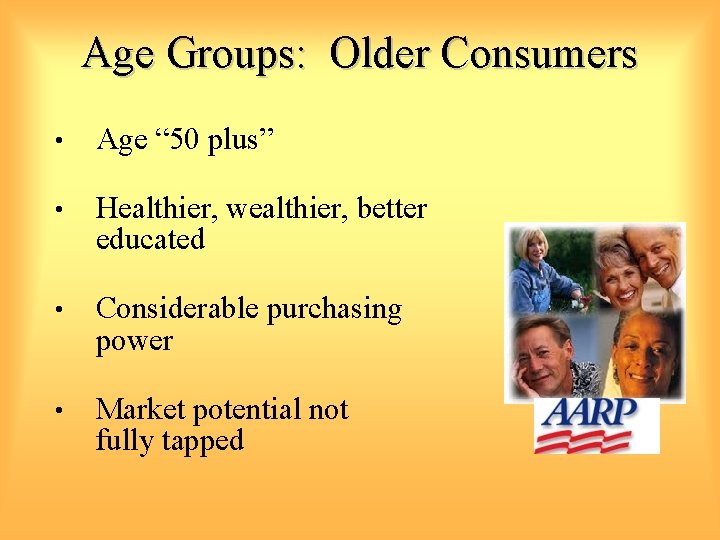
Age Groups: Older Consumers • Age “ 50 plus” • Healthier, wealthier, better educated • Considerable purchasing power • Market potential not fully tapped
Location: Americans on the Move • Average U. S. citizen moves every six years • Immigrants add $10 billion yearly to economy • Migration is a global phenomenon
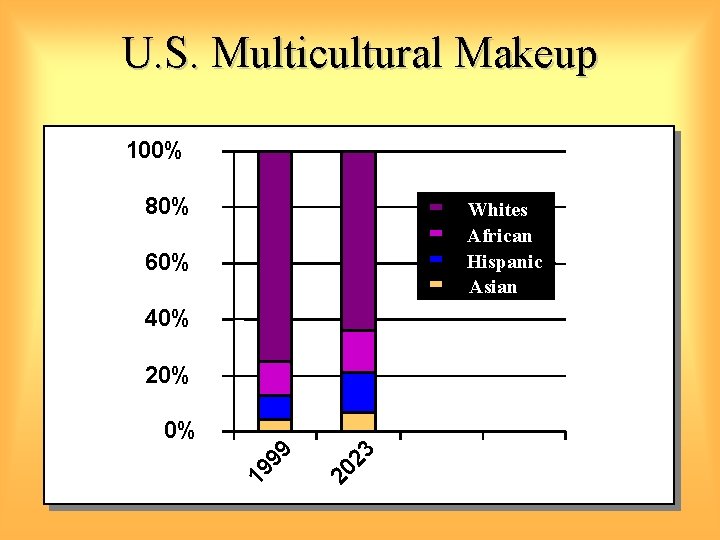
Growing Ethnic Markets • U. S. population is becoming a multicultural society and workforce • Trend in U. S. is toward greater multiculturalism
U. S. Multicultural Makeup 100% 80% Whites African Hispanic Asian 60% 40% 23 20 19 99 0%
Rising Incomes • 66% of U. S. households earn “middle-class” income • Over 10% earn over $75, 000, primarily from dual-income families • More discretionary income for high-end goods and services
Technological & Resource Factors • New technology helps firm cope with other environmental factors • U. S. excels at basic research, but falls short at applied research • Information technology has helped U. S. economic growth
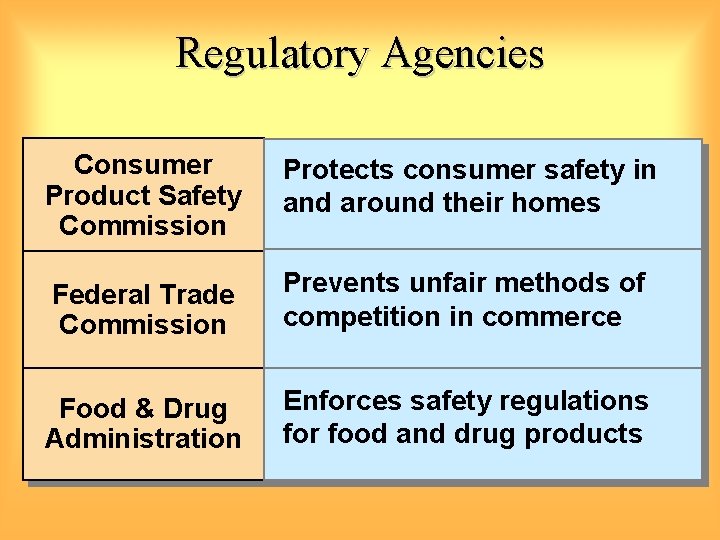
Regulatory Agencies Consumer Product Safety Commission Protects consumer safety in and around their homes Federal Trade Commission Prevents unfair methods of competition in commerce Food & Drug Administration Enforces safety regulations for food and drug products
Global Competition • More foreign firms are entering U. S. market • Foreign firms in U. S. now compete on product quality • Global markets are highly competitive
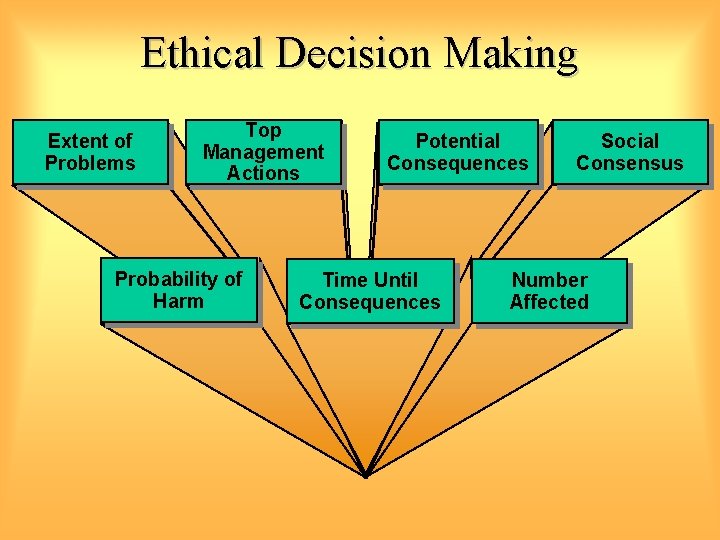
Ethical Decision Making Extent of Problems Top Management Actions Probability of Harm Potential Consequences Time Until Consequences Social Consensus Number Affected
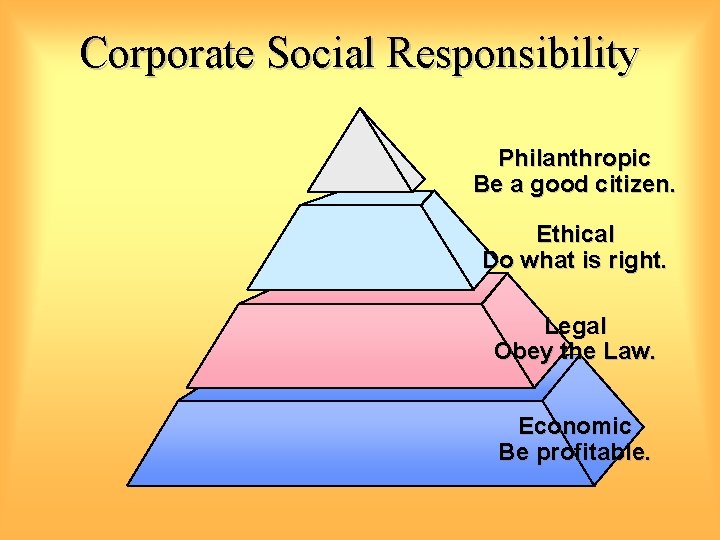
Corporate Social Responsibility Philanthropic Be a good citizen. Ethical Do what is right. Legal Obey the Law. Economic Be profitable.
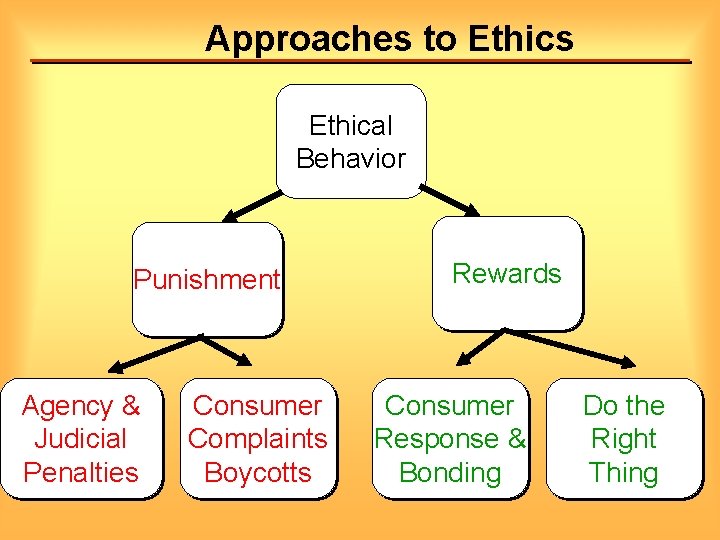
Approaches to Ethics Ethical Behavior Punishment Agency & Judicial Penalties Consumer Complaints Boycotts Rewards Consumer Response & Bonding Do the Right Thing
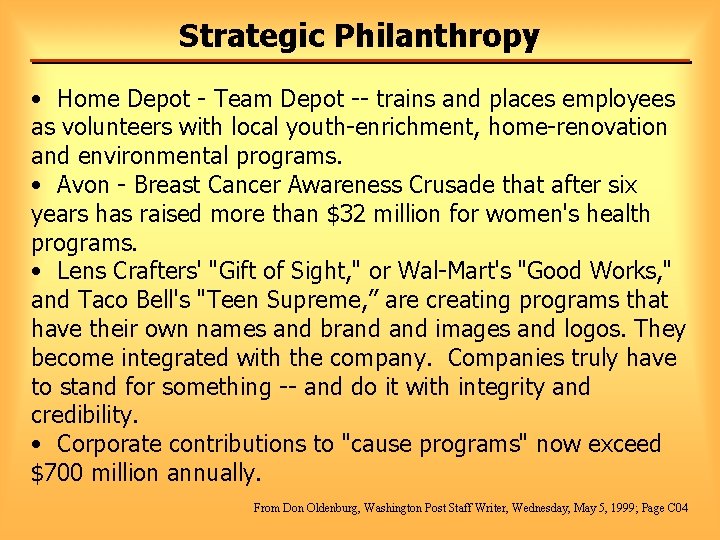
Strategic Philanthropy • Home Depot - Team Depot -- trains and places employees as volunteers with local youth-enrichment, home-renovation and environmental programs. • Avon - Breast Cancer Awareness Crusade that after six years has raised more than $32 million for women's health programs. • Lens Crafters' "Gift of Sight, " or Wal-Mart's "Good Works, " and Taco Bell's "Teen Supreme, ” are creating programs that have their own names and brand images and logos. They become integrated with the company. Companies truly have to stand for something -- and do it with integrity and credibility. • Corporate contributions to "cause programs" now exceed $700 million annually. From Don Oldenburg, Washington Post Staff Writer, Wednesday, May 5, 1999; Page C 04
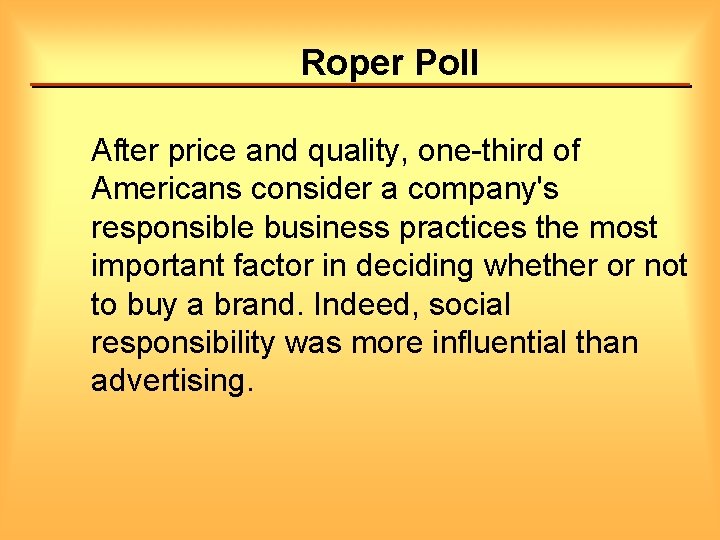
Roper Poll After price and quality, one-third of Americans consider a company's responsible business practices the most important factor in deciding whether or not to buy a brand. Indeed, social responsibility was more influential than advertising.
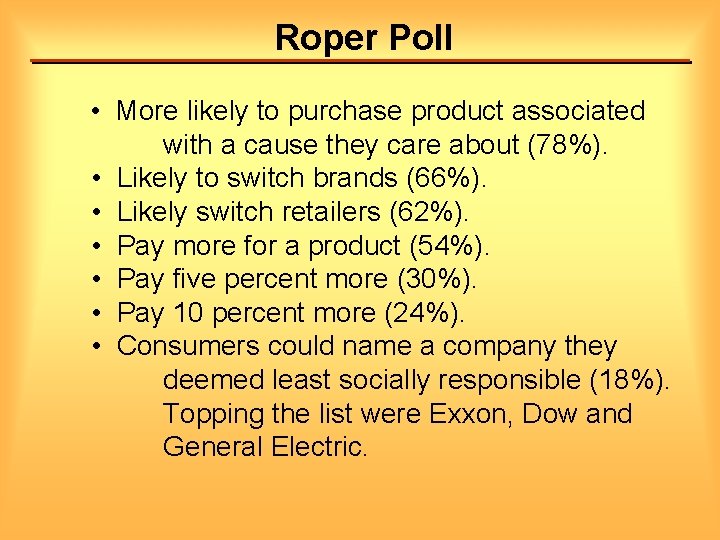
Roper Poll • More likely to purchase product associated with a cause they care about (78%). • Likely to switch brands (66%). • Likely switch retailers (62%). • Pay more for a product (54%). • Pay five percent more (30%). • Pay 10 percent more (24%). • Consumers could name a company they deemed least socially responsible (18%). Topping the list were Exxon, Dow and General Electric.
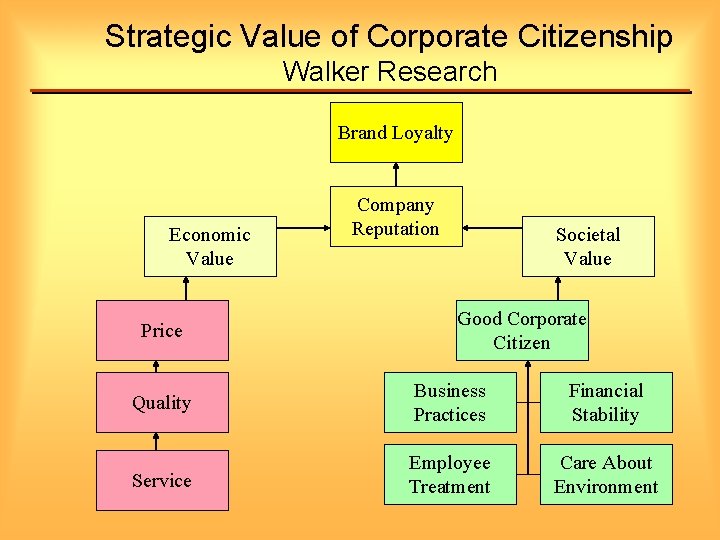
Strategic Value of Corporate Citizenship Walker Research Brand Loyalty Economic Value Price Company Reputation Societal Value Good Corporate Citizen Quality Business Practices Financial Stability Service Employee Treatment Care About Environment
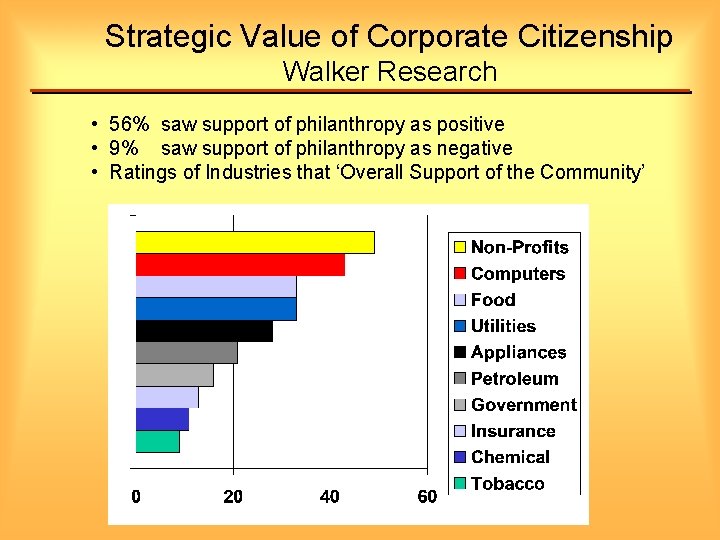
Strategic Value of Corporate Citizenship Walker Research • 56% saw support of philanthropy as positive • 9% saw support of philanthropy as negative • Ratings of Industries that ‘Overall Support of the Community’
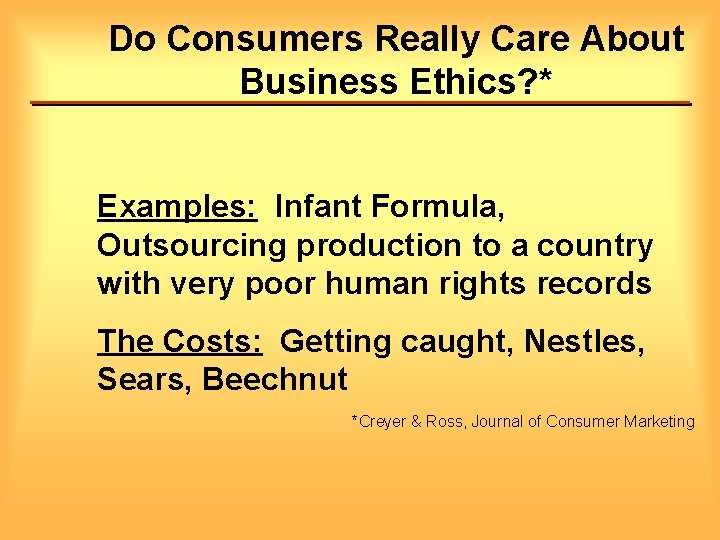
Do Consumers Really Care About Business Ethics? * Examples: Infant Formula, Outsourcing production to a country with very poor human rights records The Costs: Getting caught, Nestles, Sears, Beechnut *Creyer & Ross, Journal of Consumer Marketing
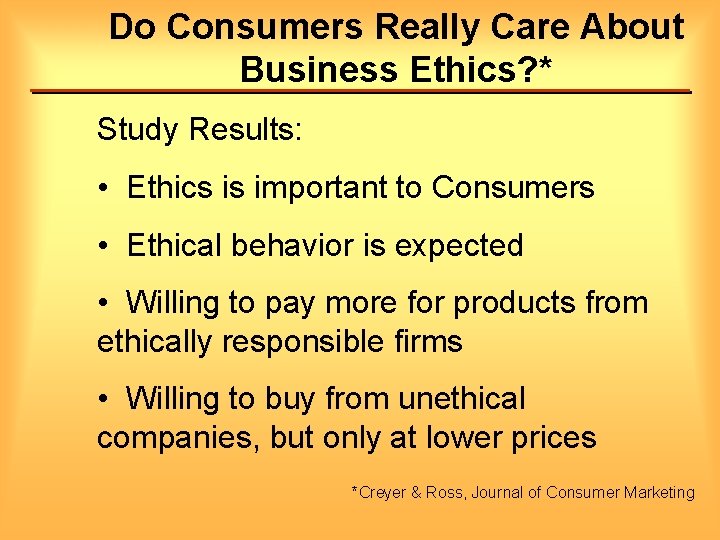
Do Consumers Really Care About Business Ethics? * Study Results: • Ethics is important to Consumers • Ethical behavior is expected • Willing to pay more for products from ethically responsible firms • Willing to buy from unethical companies, but only at lower prices *Creyer & Ross, Journal of Consumer Marketing
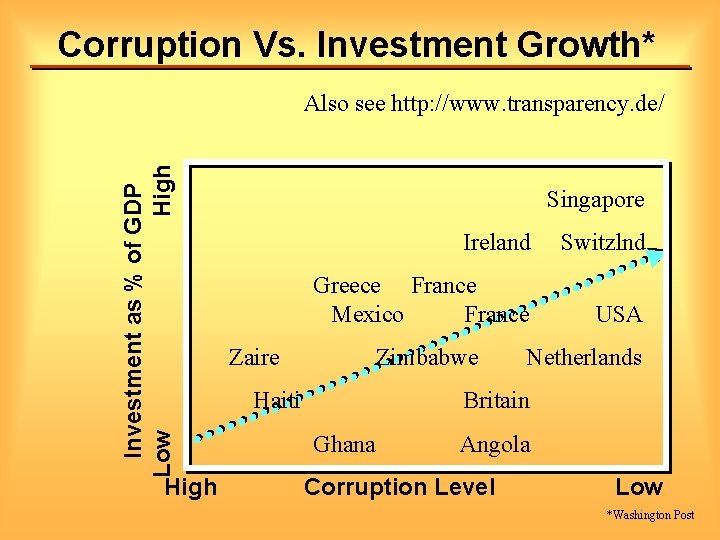
Corruption Vs. Investment Growth* Investment as % of GDP Low High Also see http: //www. transparency. de/ High Singapore Zaire Ireland Switzlnd Greece France Mexico France USA Zimbabwe Haiti Netherlands Britain Ghana Angola Corruption Level Low *Washington Post