
Chapter 3 The Civilization of Greece 1000 400
- Slides: 26
Chapter 3 The Civilization of Greece 1000 – 400 B. C. E.
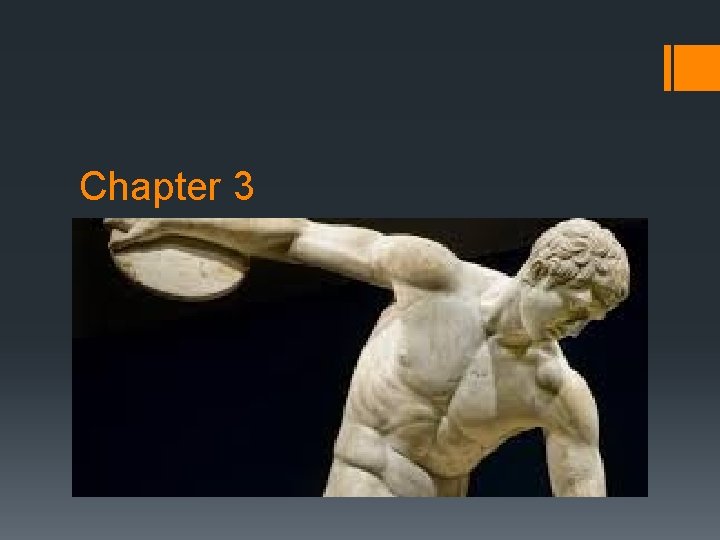
Perfecting the Human Form § Arete “Excellence, virtue, being the best you can be, manliness, courage” § Hubris “Extreme Pride or Arrogance” § Thymos “Potent Reasoning Power, ” Plato § The Public Man
Chapter 3 § Heroic Deeds (Greek Tragedy) § Epic Poem the Iliad & Odyssey, Collection of Greek Oral History, Homer, 800 BCE. § Trojan War (10 th year) 1800 and 1300 BCE. § “in the middle”
Chapter 3 § King Agamemnon of Mycenae, Helen wife of his brother King Menelaus of Sparta, Achiles, Patroclus, Prince Paris of Troy, Prince Hector, King Priam
Chapter 3 §Odyssey §Odysseus return from the Trojan War
Chapter 3
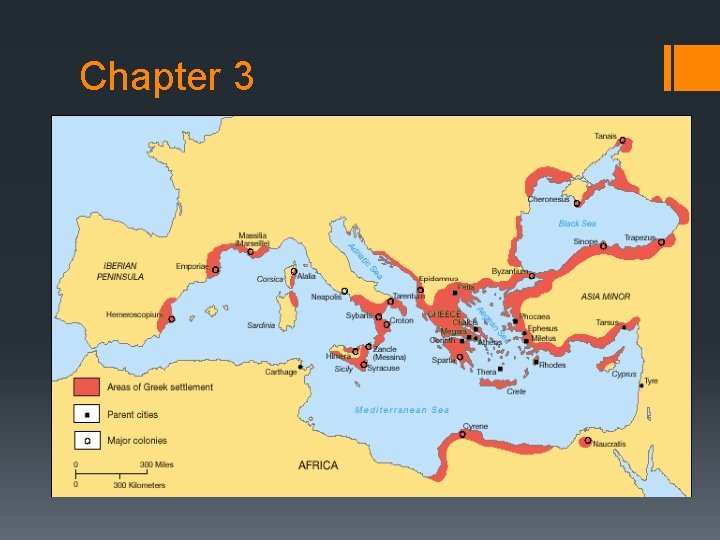
Chapter 3 § Mycenaean Civilization: The First Greeks, 2000 – 1100 B. C. E § Indo – European Greek speaking peoples § “War Mad Greeks” Walling their Cities § Modeled Minoan Civilization § Became Commercial Masters of the Mediterranean with the demise of the Minoans, 1450 B. C. E. § Trade: Egypt, Syria, Palestine & Cyprus § 1200 B. C. E. Mycenaean Civilization dissolved (Trojan War) § Dorian Greek invasions from the North § Dark Ages, 1100 B. C. E to 750 B. C. E
Chapter 3 § From the Bronze Age to the Iron Age § Trading of wine § Greeks adopt the Phoenician alphabet and ship technology 900 B. C. E. § New Greek Colonies appear § Plato, “Whatever the Greeks have acquired from foreigners, they have in the end turned into something finer. ” § “Barbarians”
Chapter 3
Chapter 3 § The Family of Gods § The Oracles, people who interpreted divine will § Delphi § Humans, understand master their world § Philosophy, quest for knowledge or the “love of wisdom” § Thales, Democritus & Pythagoras (math) § Pythagorean Theorem (geometry) § Applied technology
Chapter 3
Chapter 3
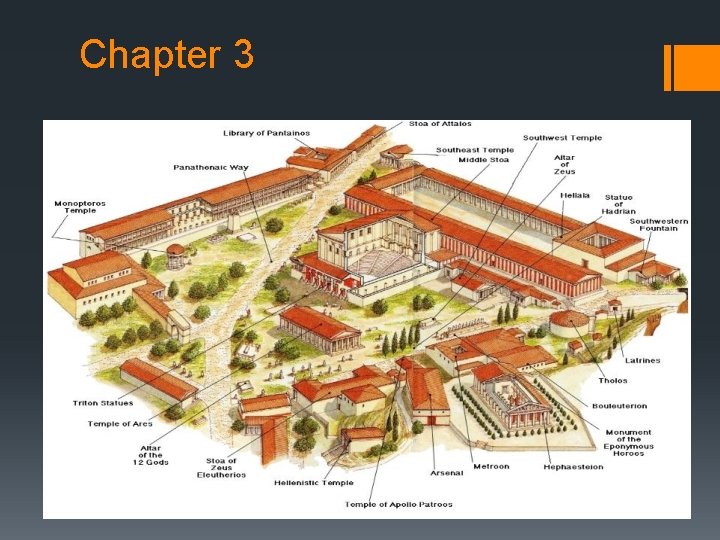
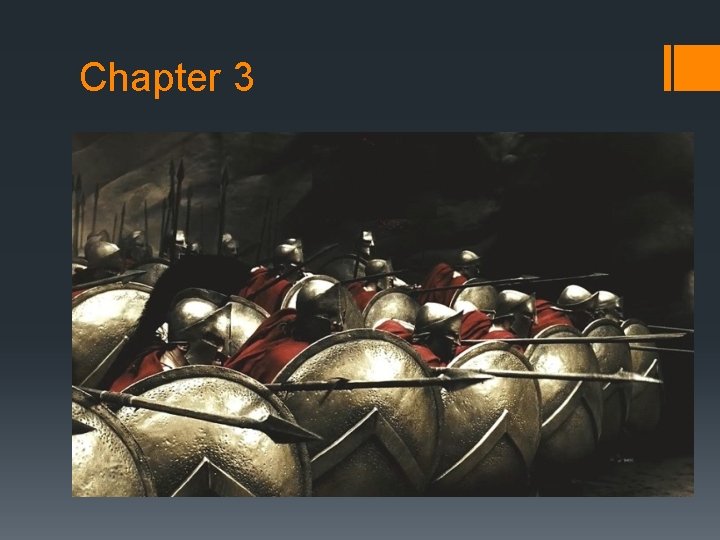
Chapter 3 § Polis 900 – 800 B. C. E. associated with Greek economic growth and expansion § Agora (central place of assembly and market) § Hoplites (infantrymen) § Phalanx
Chapter 3
Chapter 3
Chapter 3 § Greek Family (defined gender roles) § The Gymnasium § Slaves § Fears and Attachments in Greek Emotional Life § Strict segregation of men and women § Suspicion of women § Bisexuality (mentoring relationships) § Island of Lesbos § Prostitution and Courtesans
Chapter 3 § Athens: City of Democracy (Theseus) § Quaestor, Tribune, & Praetor (political offices) § Hoplite army (aristocracy to loose its monopoly over military) § Supply and demand for food § Solon, 594 B. C. E. (reforms) economic and political § Constitution of Cleisthenes (ten tribal units that would represent the Assembly)
Chapter 3
Chapter 3 § Sparta: Model Military State § Conquering their neighboring districts § Spartan Constitution (power lied in the hands of elders) § Age 7 boys turned over to the state, 20 they entered into the army … could marry, at 30 they became full citizens and could live at home § The love of contest and the Olympic Games, 776 B. C. E.
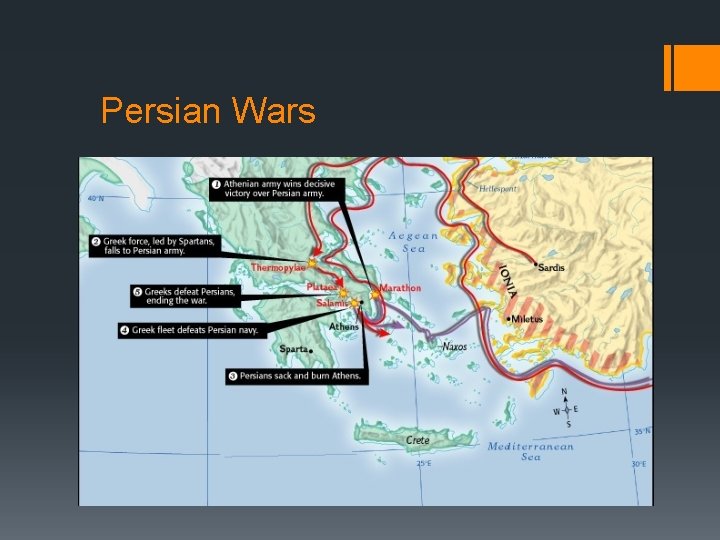
Chapter 3 § The Persian Wars, 490 – 479 B. C. E. § Persian King Darius § Battle of Marathon § Athenian general Miltiades § Philippides legendary 26 mile run § Second Invasion: § Battle of Thermopylae, “Tell them the news in Sparta, passer by: That here obedient to their words, we lie. ” § Themistocles (Athenian leader)
Chapter 3 § Salamis § Artemisia, Queen of Caria, a fleet squadron commander § My men have become women and my women men” § Battle of Plataea (Spartans)
Persian Wars
Chapter 3 § Greece Enters its Classical Age, 479 -336 B. C. E. § Herodotus the Father of History § Athens builds an Empire, 477 -431 B. C. E. § Delian League, defensive league formed by Athens § Pericles (495 – 429 BCE) Political architect Athens Golden Age
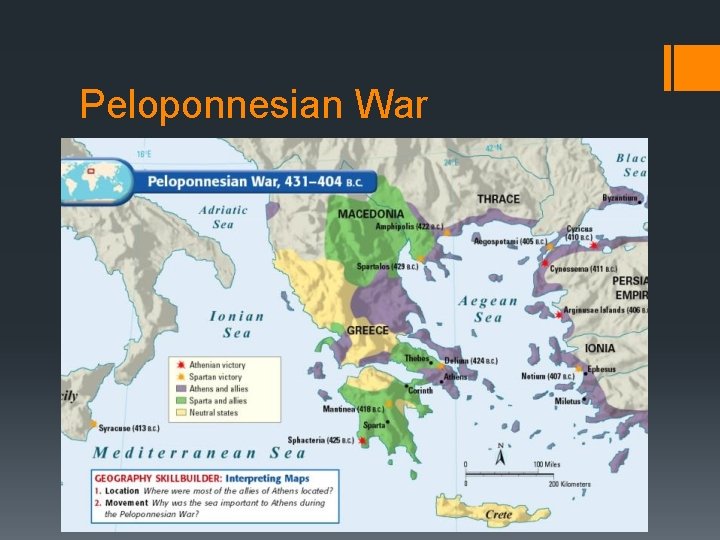
Chapter 3 § Peloponnesian War, 431 - 404 BCE § Thucydides (460 – 400 BCE) historian § 1. Archidamina War, 431 -421 BCE § Sparta King Archidamus II, siege of Athens § General Pericles of Athens § Plague § 2. Sicilian Expedition (17 th year) § 410 -406 Athens, Alcibiades § Lysanders of Sparta § Battles: Arginusae (naval) and Aegospotami (naval) 405 BCE
Peloponnesian War
Chapter 3 § Socrates ca. 470 – 399 BCE § First great philosopher of the west (critical thinking/logic) § Socratic method … asking and answering questions § …”Life without enquiry is not worth living” § Plato (student of Socrates) § The Republic … ideal form of government § … his call for introspection and an awareness of self as the way to knowledge. § The Academy