
Chapter 3 The Cell The Plasma Membrane Lipid
Chapter 3: The Cell The Plasma Membrane
Lipid Bilayer �Contains Phospholipids and some Cholesterol �Cholesterol: A steroid (type of lipid) that functions t 0 decrease the permeability of the membrane to small watersoluble molecules & increase rigidity �Phospholipids: Tails inward (non-polar/hydrophobic) Head outward(polar/hydrophillic) Function: Facilitates movement of polar molecules through the membrane

Phospholipid Bilayer Prevents random movement of water soluble materials, Phospholipids arrange themselves in a double layer in water
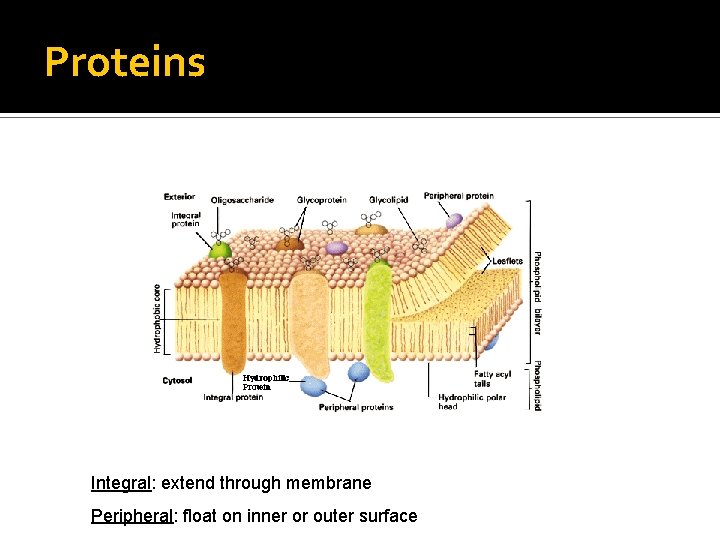
Proteins Integral: extend through membrane Peripheral: float on inner or outer surface
Proteins �Extend through the membrane �Transport: Pores, carriers; move substances from one side of membrane to another �Communication: Receptors identify and attach to specific molecules such as hormones, nutrients, antibodies �Helps give cell membrane shape �Identifies surrounding cells
Selectively Permeable �Regulates the entry and exit of materials �Lipid portion: allows fat soluble vitamins through, and small molecules of H 2 O , O 2, and CO 2 H 2 O molecules small enough will get through the bilayer. Larger molecules and bulk flow of H 2 O is regulated by a type of protein. �Proteins help several substances cross the membrane
Passive Processes �Passive= substances move according to concentration gradient (high to low) using their own kinetic energy Diffusion Facilitated diffusion Osmosis Filtration
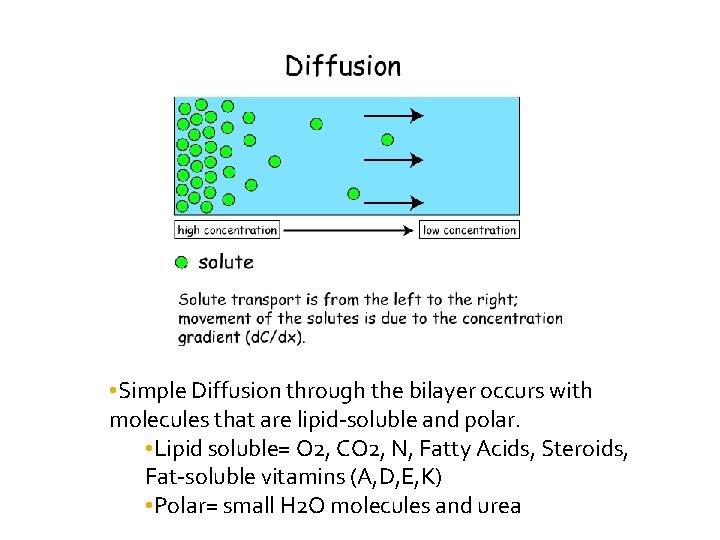
• Simple Diffusion through the bilayer occurs with molecules that are lipid-soluble and polar. • Lipid soluble= O 2, CO 2, N, Fatty Acids, Steroids, Fat-soluble vitamins (A, D, E, K) • Polar= small H 2 O molecules and urea
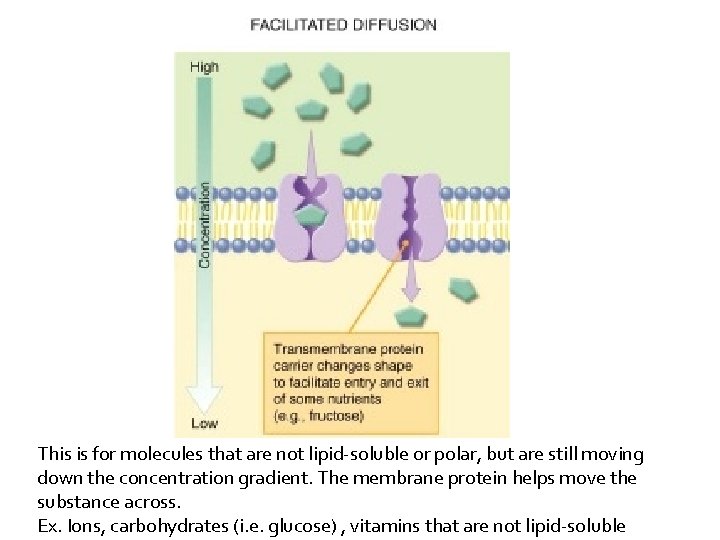
This is for molecules that are not lipid-soluble or polar, but are still moving down the concentration gradient. The membrane protein helps move the substance across. Ex. Ions, carbohydrates (i. e. glucose) , vitamins that are not lipid-soluble
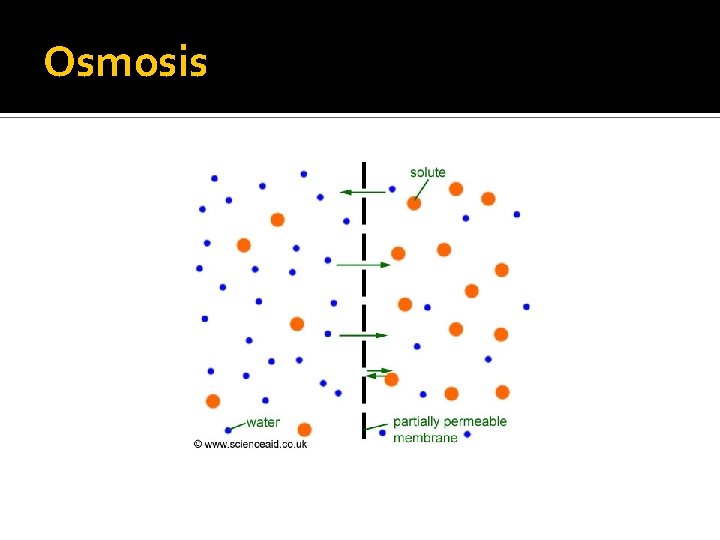
Osmosis
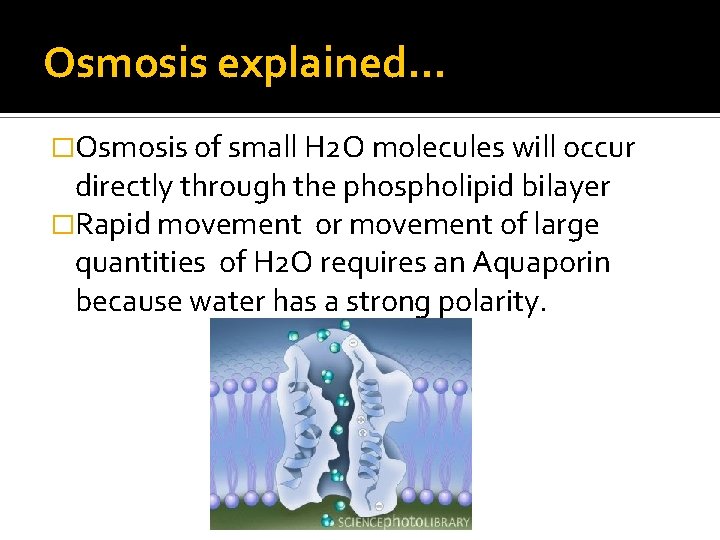
Osmosis explained. . . �Osmosis of small H 2 O molecules will occur directly through the phospholipid bilayer �Rapid movement or movement of large quantities of H 2 O requires an Aquaporin because water has a strong polarity.
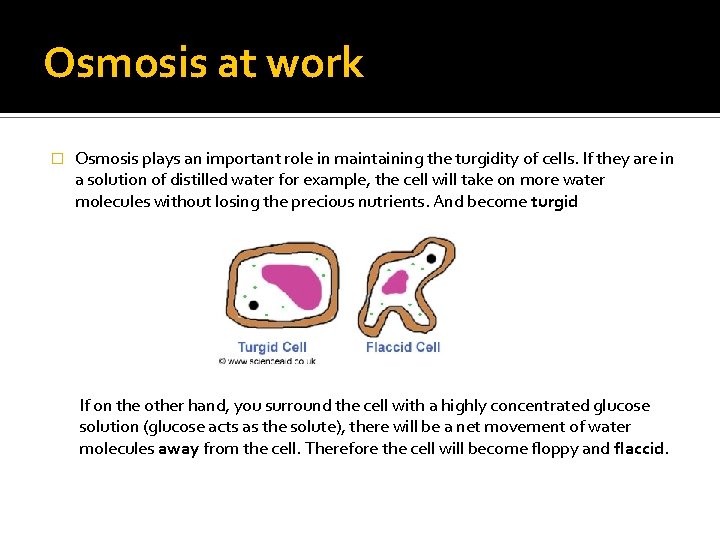
Osmosis at work � Osmosis plays an important role in maintaining the turgidity of cells. If they are in a solution of distilled water for example, the cell will take on more water molecules without losing the precious nutrients. And become turgid If on the other hand, you surround the cell with a highly concentrated glucose solution (glucose acts as the solute), there will be a net movement of water molecules away from the cell. Therefore the cell will become floppy and flaccid.
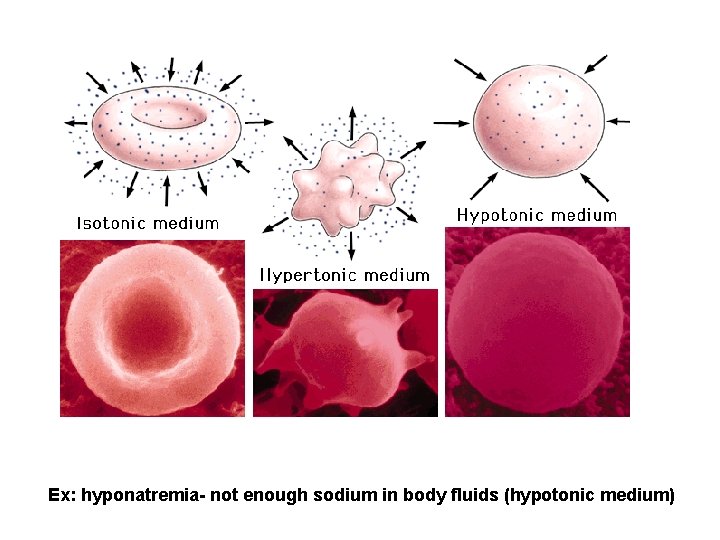
Ex: hyponatremia- not enough sodium in body fluids (hypotonic medium)
Filtration �When small molecules cross the membrane due to differences in pressure �Waste pushes molecules through vessels in kidneys �Movement of molecules from an area of high pressure to an area of low pressure �How O 2 exits capillaries into ECF
Active Processes �Active transport �Phagocytosis �Pinocytosis
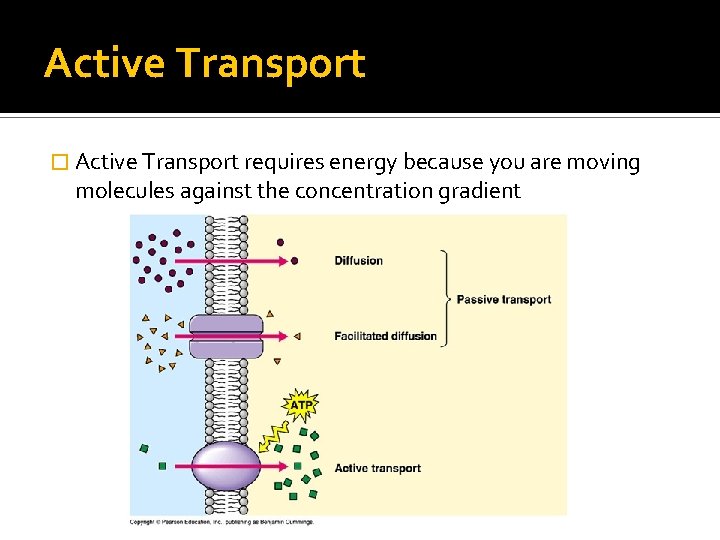
Active Transport � Active Transport requires energy because you are moving molecules against the concentration gradient
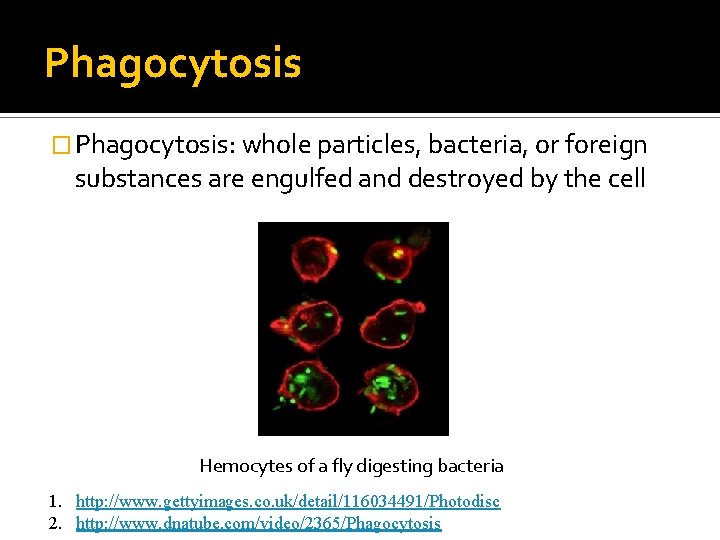
Phagocytosis � Phagocytosis: whole particles, bacteria, or foreign substances are engulfed and destroyed by the cell Hemocytes of a fly digesting bacteria 1. http: //www. gettyimages. co. uk/detail/116034491/Photodisc 2. http: //www. dnatube. com/video/2365/Phagocytosis
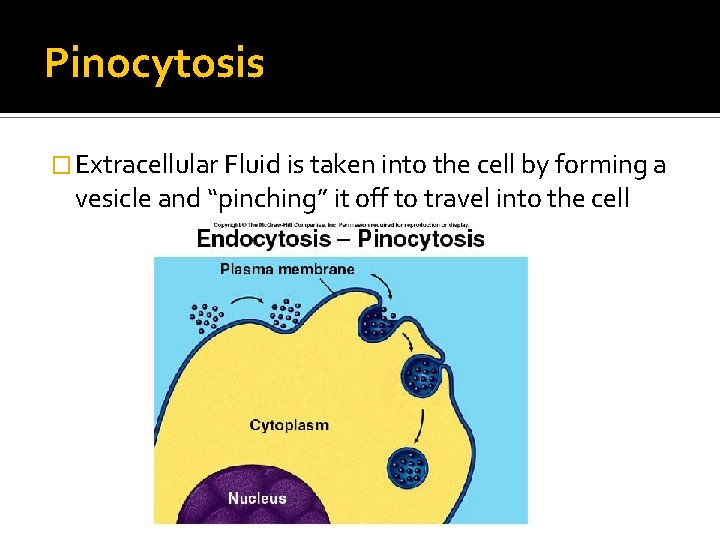
Pinocytosis � Extracellular Fluid is taken into the cell by forming a vesicle and “pinching” it off to travel into the cell
- Slides: 18