
Chapter 3 The Cell part 1 The Cell
- Slides: 35
Chapter 3 The Cell (part 1)
The Cell Theory • Three Principles 1. All organisms are composed of cells 2. Cells are the smallest living units of life 3. All cells arise from pre-existing cells (by cell division)
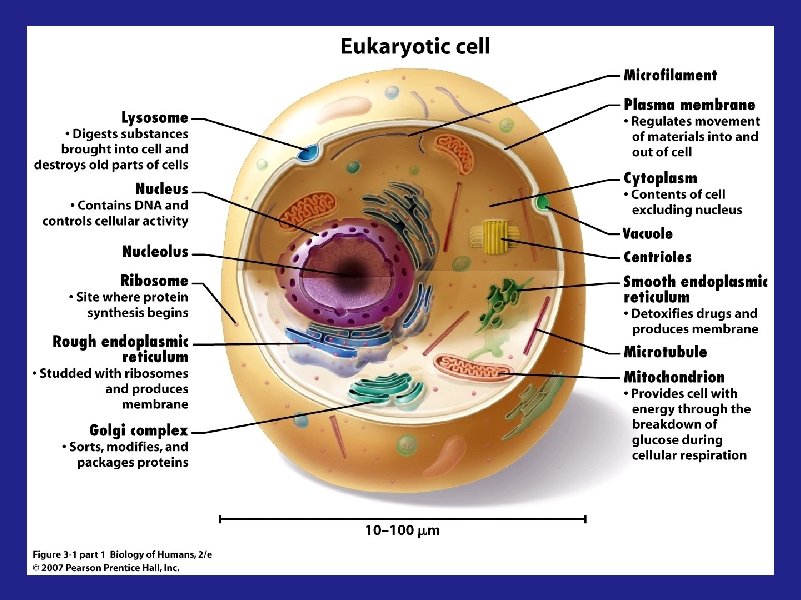
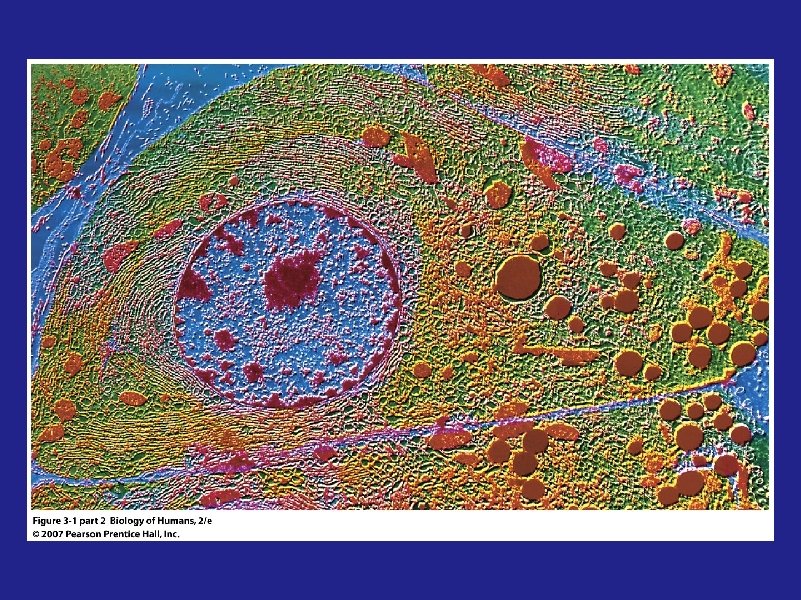
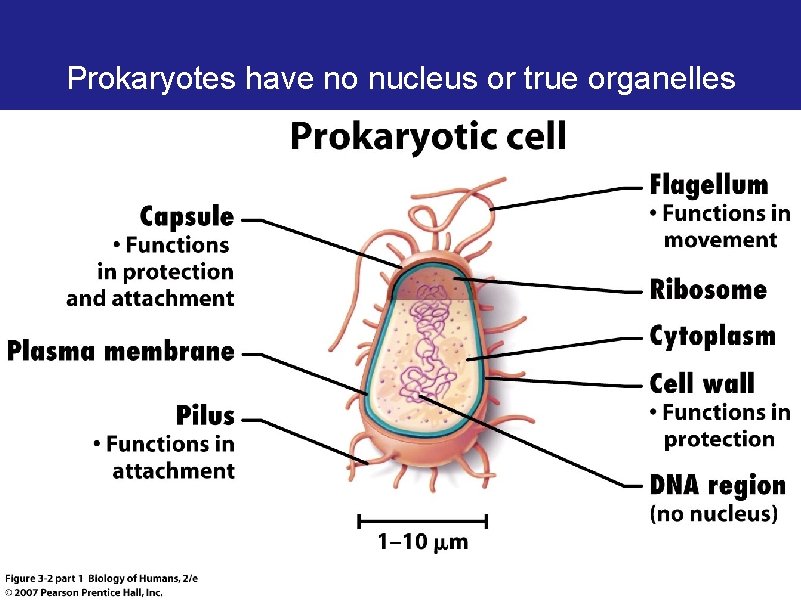
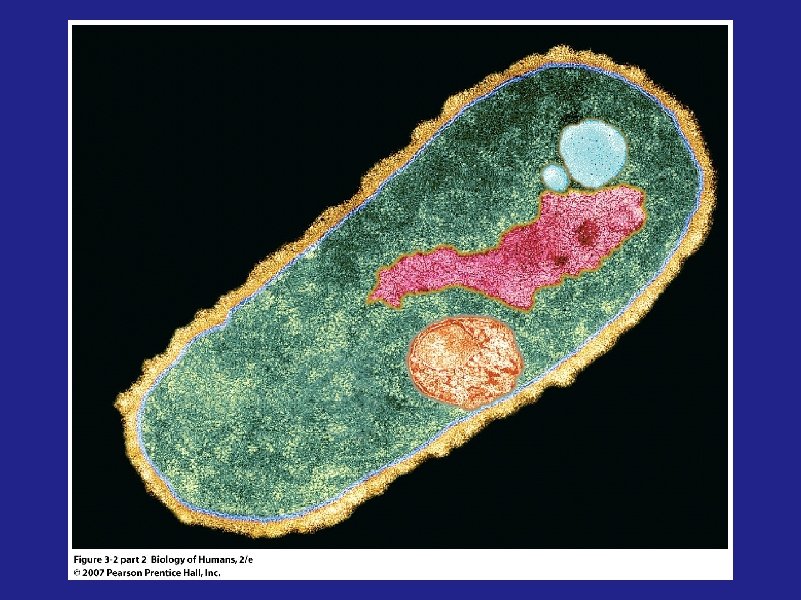
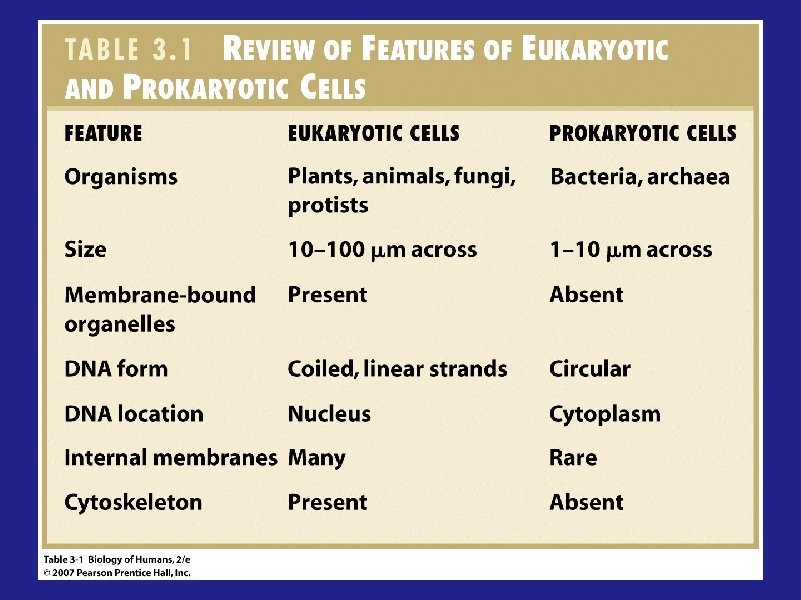
Cells Are Highly Structured § Eukaryotic (“with nucleus”) cells are highly “compartmentalized” § plasma membrane § nucleus: information center § cytoplasm: fluid within membrane § organelles: structures with specialized functions § Prokaryotes have no nucleus or true organelles
Prokaryotes have no nucleus or true organelles
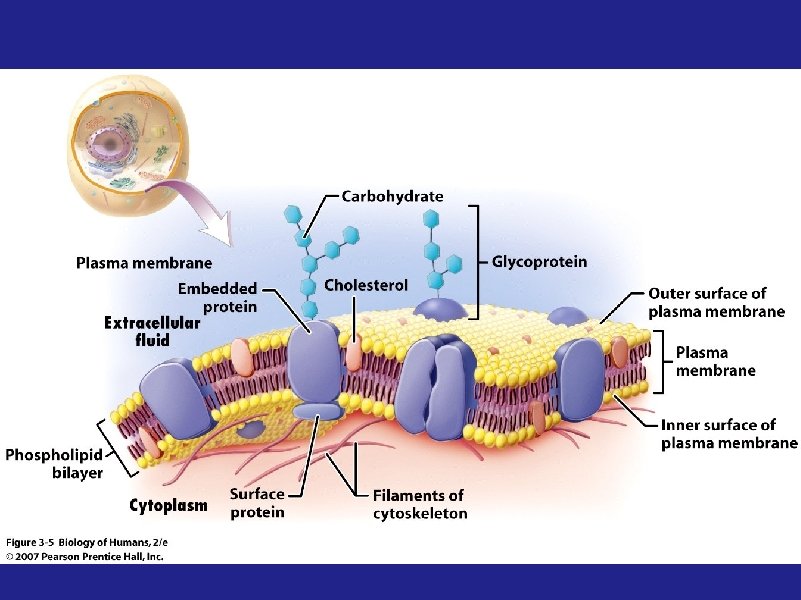
The Plasma Membrane • Structure of the plasma membrane
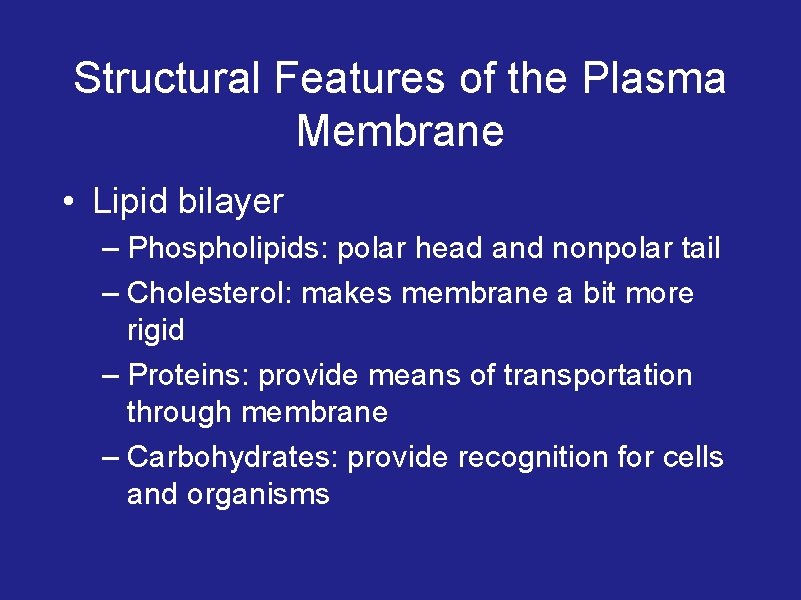
Structural Features of the Plasma Membrane • Lipid bilayer – Phospholipids: polar head and nonpolar tail – Cholesterol: makes membrane a bit more rigid – Proteins: provide means of transportation through membrane – Carbohydrates: provide recognition for cells and organisms
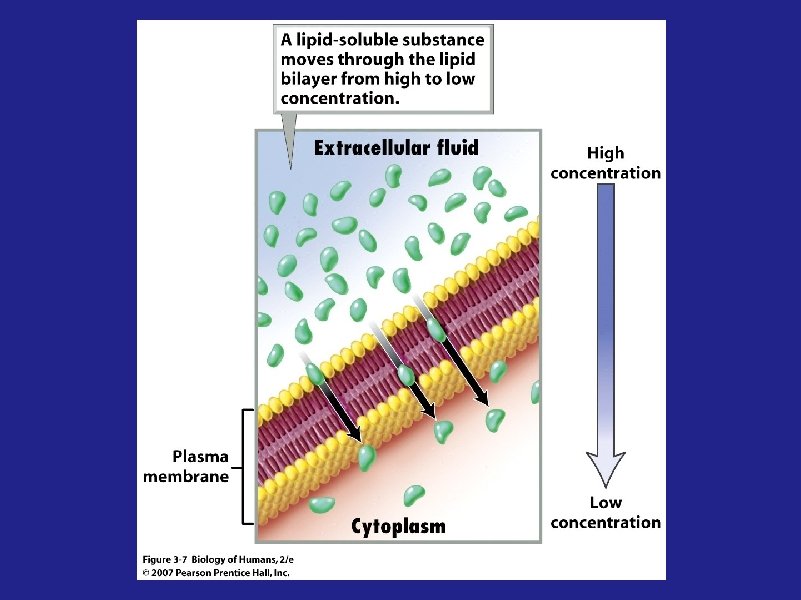
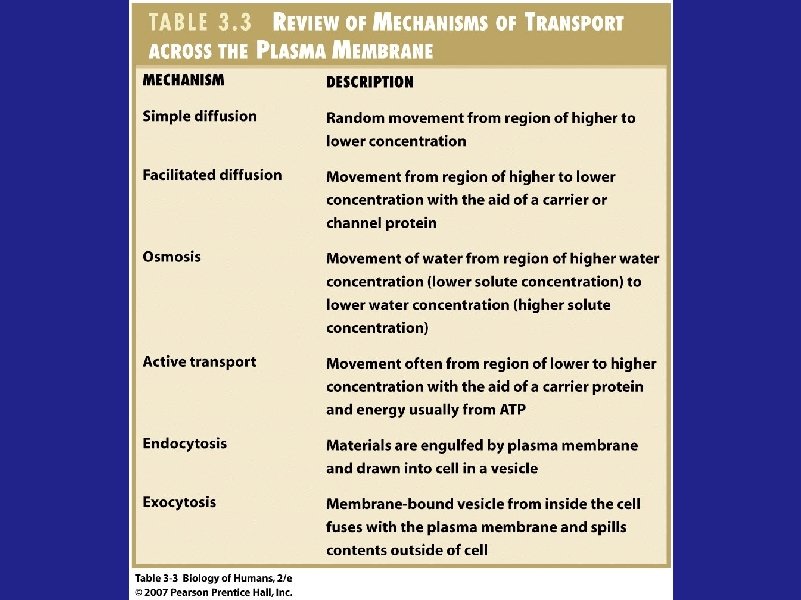
Movement Across the Plasma Membrane • Diffusion – Movement from area of high concentration to low • Passive transport: no energy required
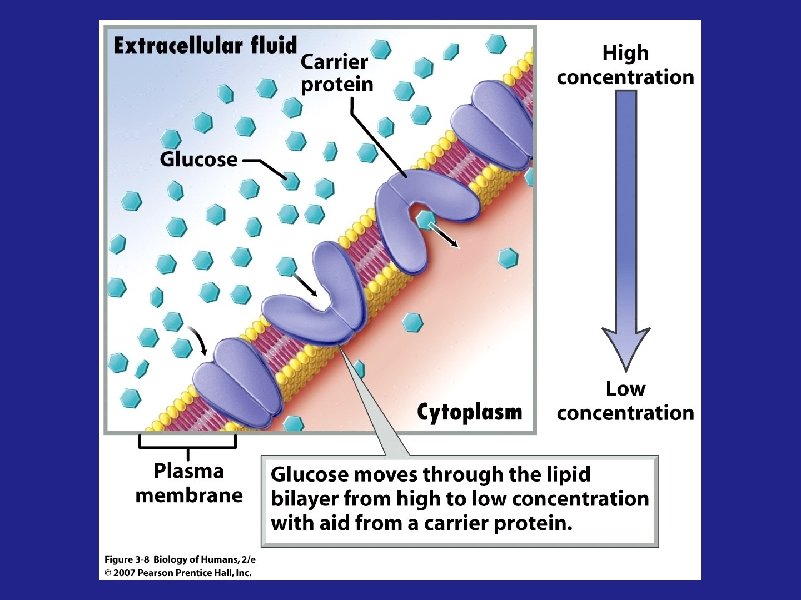
Facilitated Diffusion • Diffusion that uses transport (carrier) proteins in membrane to assist moving molecules across the membrane both: – Down the concentration gradient – Without expending energy
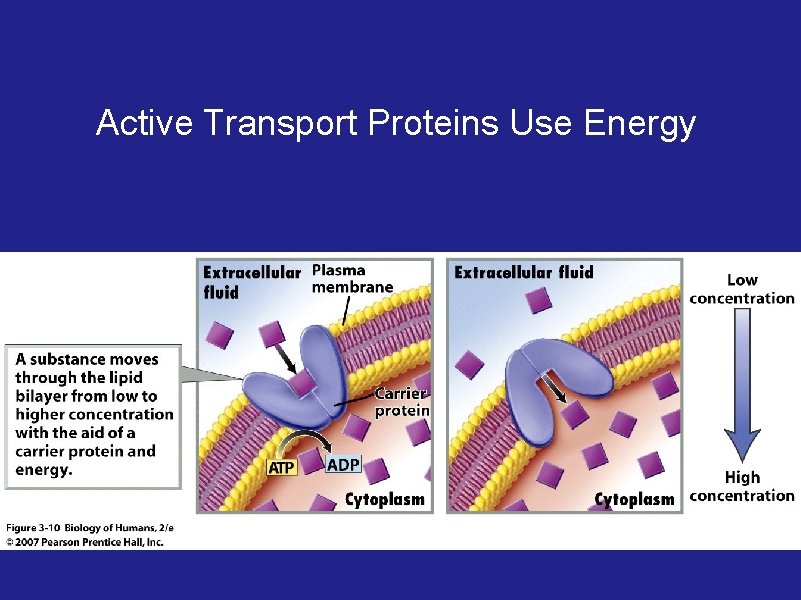
Active Transport • Active transport uses proteins and energy to move substances from an area of lower concentration to an area of higher concentration
Active Transport Proteins Use Energy
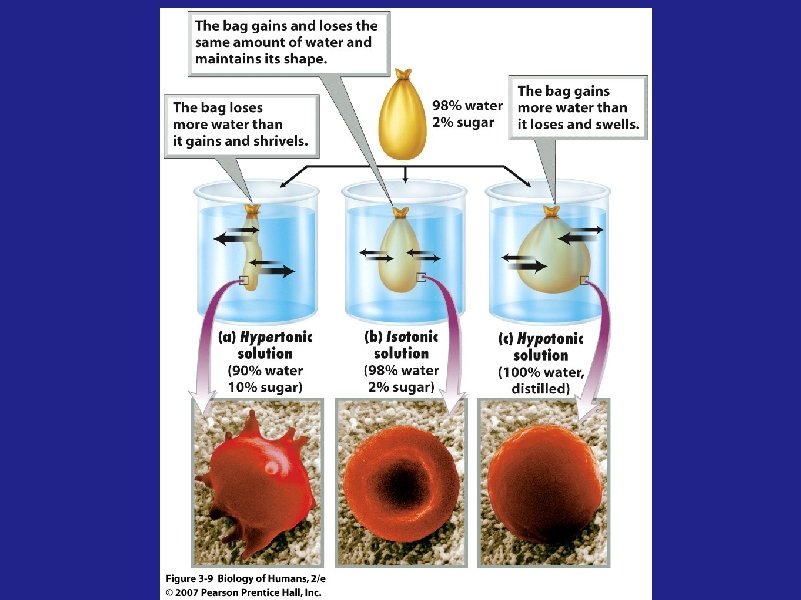
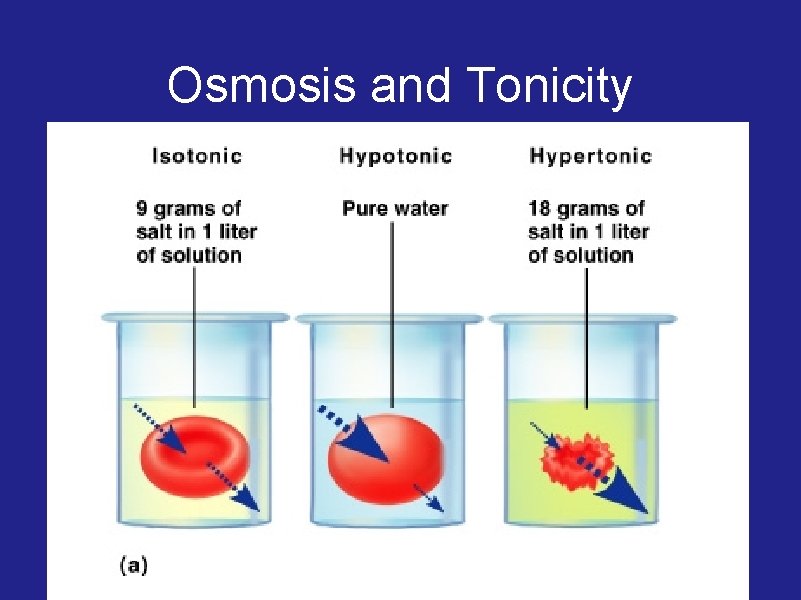
Osmosis • Osmosis: net diffusion of water across a semi-permeable membrane
Osmosis and Tonicity
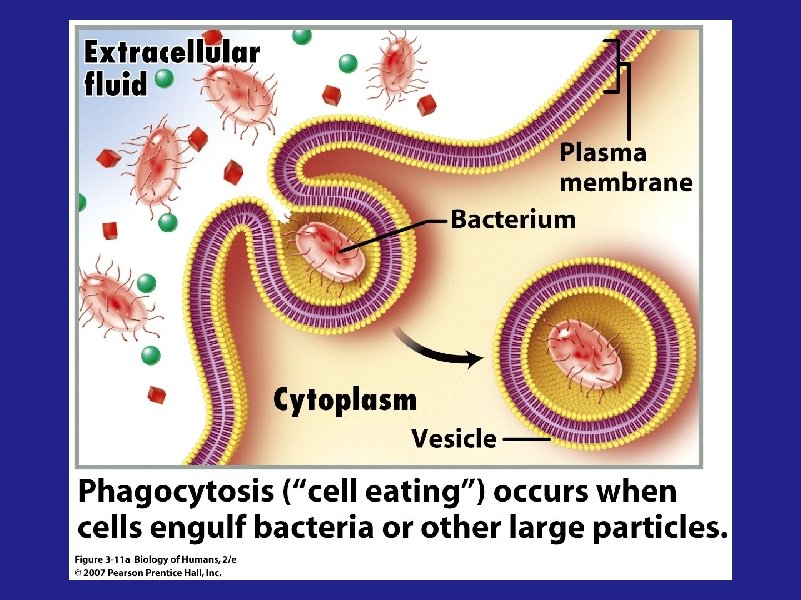
Endocytosis (Phagocytosis) Moves Materials in Bulk • Endocytosis moves material into cell • Example: WBC engulfs bacteria
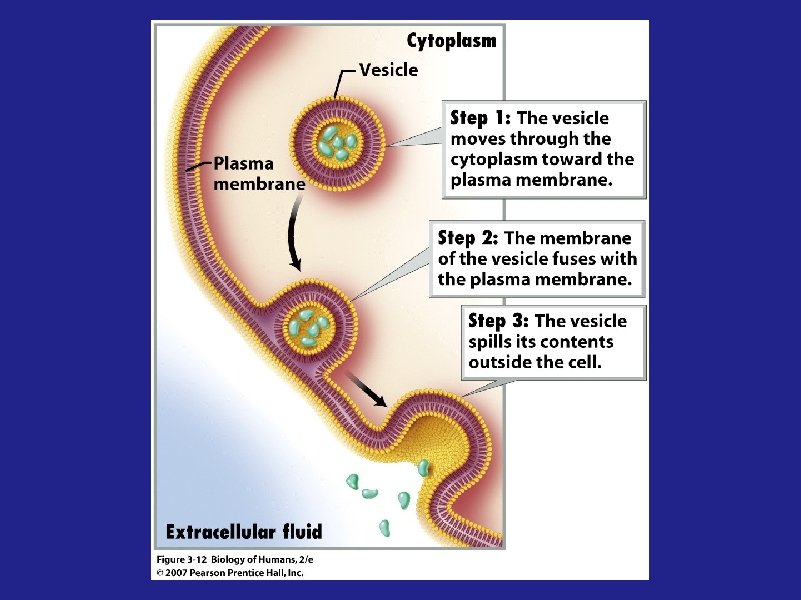
Exocytosis Moves Materials in Bulk • Exocytosis moves material out of the cell • Example: secretion of hormones
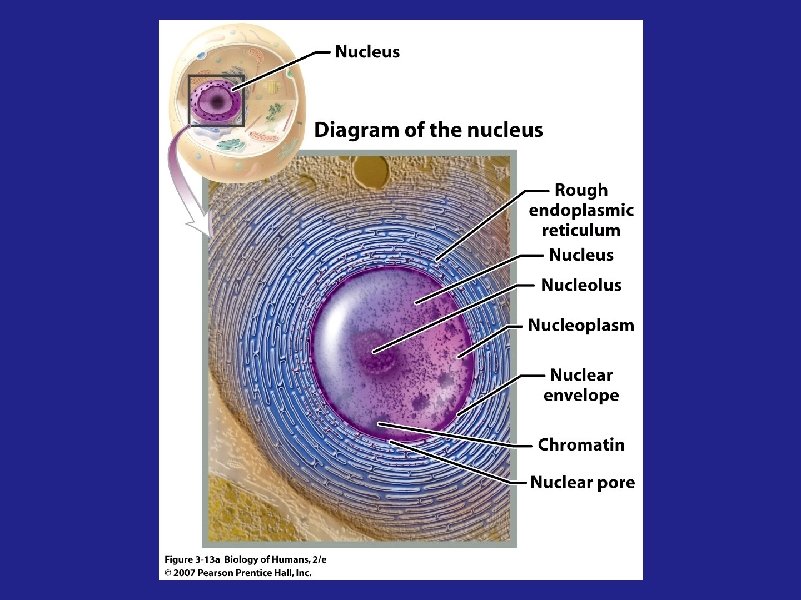
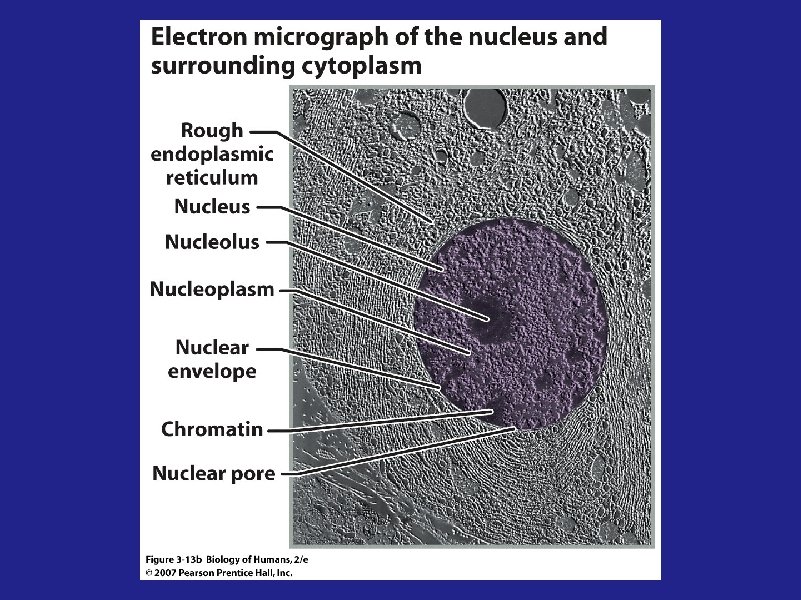
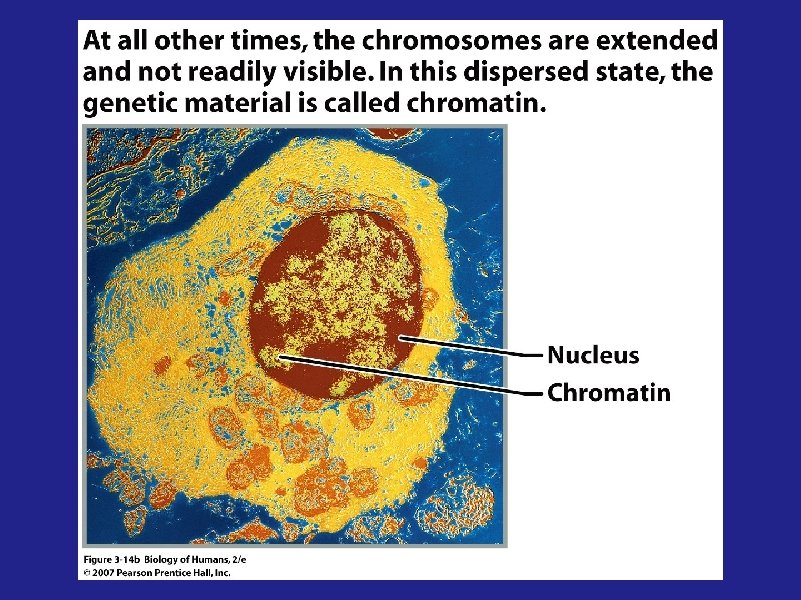
Structure and Function of the Nucleus • Functions: – Contains the genetic information of the cell – Controls the function & the operations of the cell • Structural features: – Double-layered nuclear membrane – Nuclear pores – Chromosomes/chromatin – Nucleolus (synthesizes ribosomes)
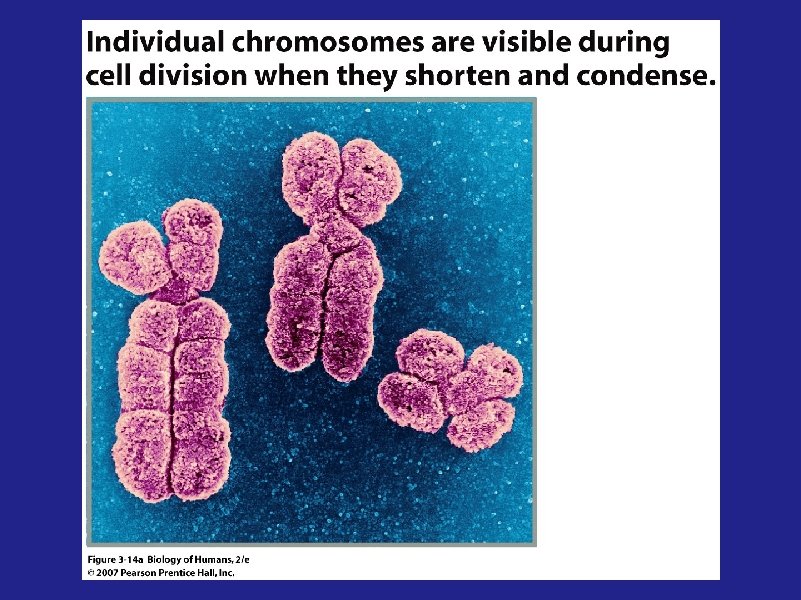
Our Cells Are Highly Structured • Chromosomes contained in the nucleus are made of DNA
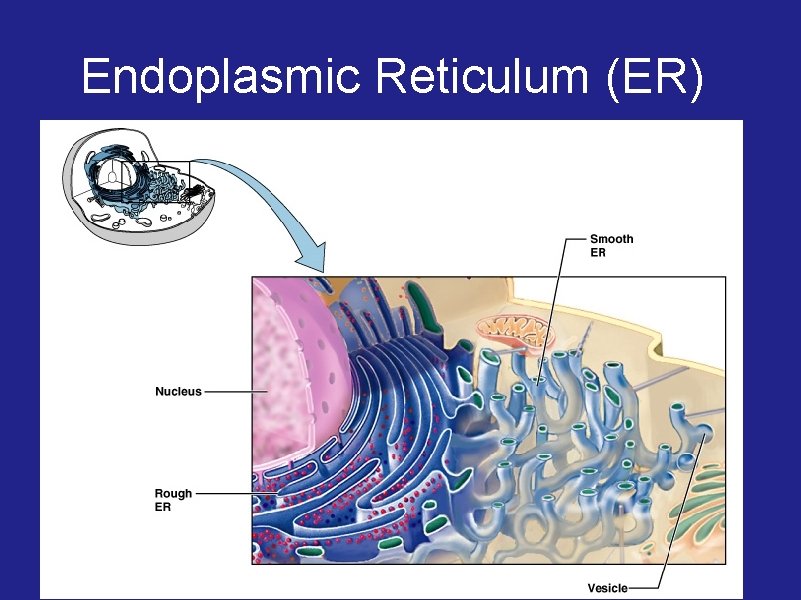
Endoplasmic Reticulum (ER)
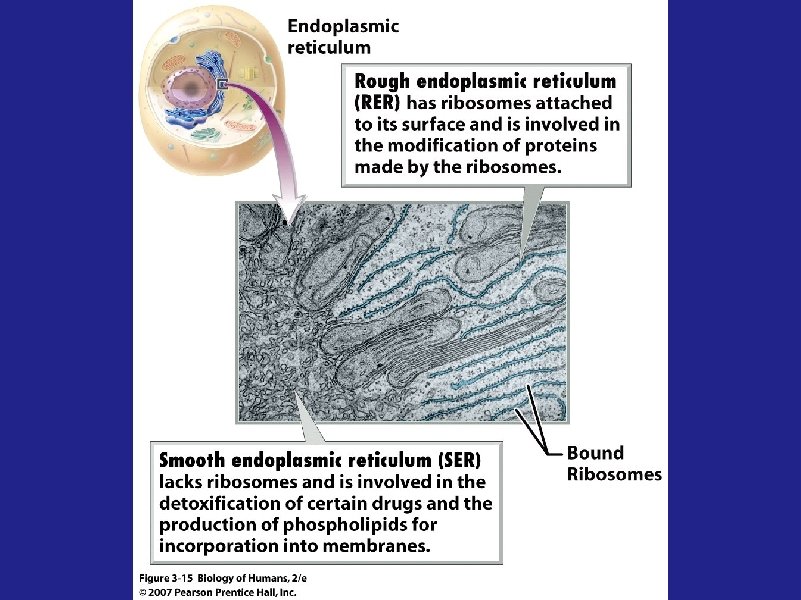
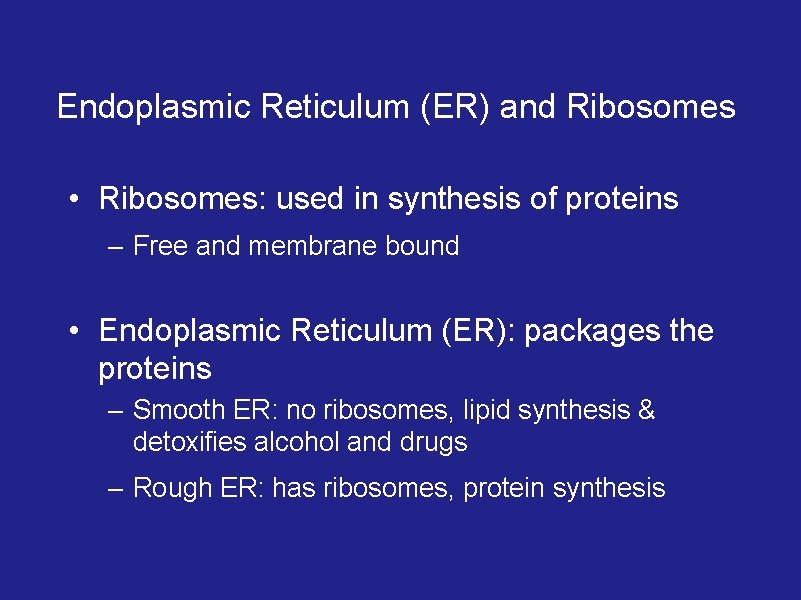
Endoplasmic Reticulum (ER) and Ribosomes • Ribosomes: used in synthesis of proteins – Free and membrane bound • Endoplasmic Reticulum (ER): packages the proteins – Smooth ER: no ribosomes, lipid synthesis & detoxifies alcohol and drugs – Rough ER: has ribosomes, protein synthesis