
Chapter 3 The Biosphere The Study of Ecology
Chapter 3: The Biosphere The Study of Ecology
What is Ecology? • Ecology is the scientific study of interactions among organisms and between organisms and their environment
Why do we study ecology? • We live in the natural world and use its resources (water, space, food, etc) • The natural world effects our lives (weather, fire, economy) • To protect biodiversity
Levels of Organization • Ecologists recognize there is a hierarchy of organization in the environment: biosphere, biome ecosystem, community, population, and organisms
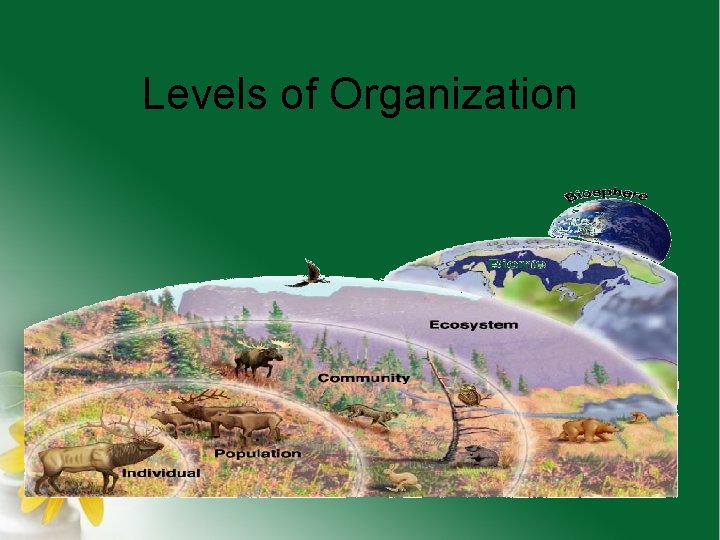
Levels of Organization
What is a Biosphere? • Part of Earth in which life exists including land, water, and air or atmosphere
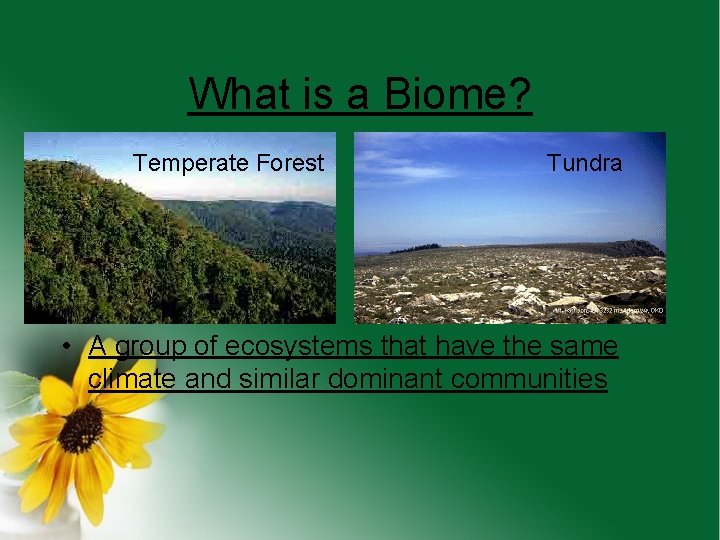
What is a Biome? Temperate Forest Tundra • A group of ecosystems that have the same climate and similar dominant communities
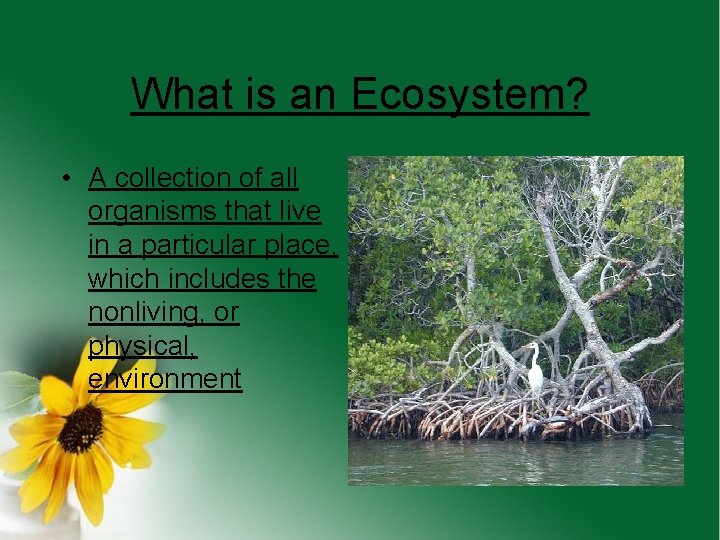
What is an Ecosystem? • A collection of all organisms that live in a particular place, which includes the nonliving, or physical, environment
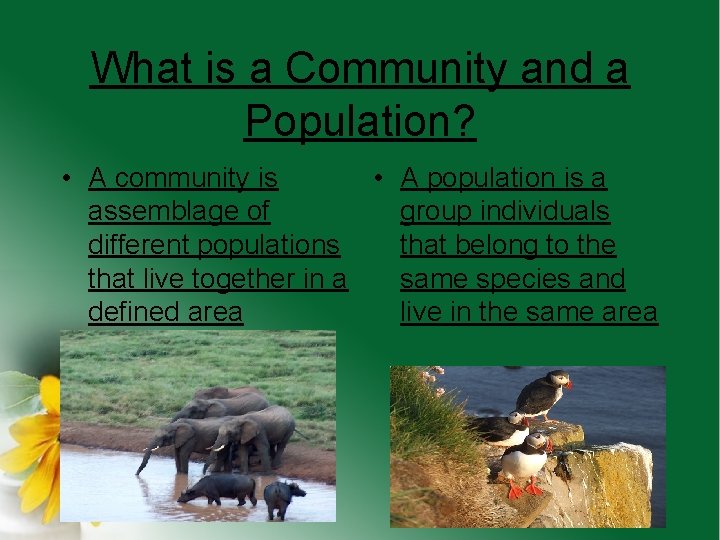
What is a Community and a Population? • A community is • A population is a assemblage of group individuals different populations that belong to the that live together in a same species and defined area live in the same area
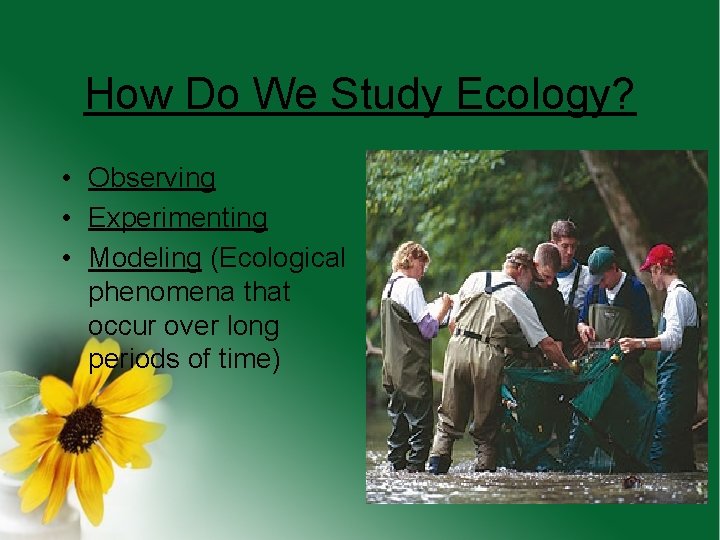
How Do We Study Ecology? • Observing • Experimenting • Modeling (Ecological phenomena that occur over long periods of time)
How Do Organisms Obtain Energy in an Ecosystem? • Sunlight is the main energy source for life on Earth • Autotrophs will then use the energy from the sun (or chemicals) to make their own food • Autotrophs are also known as producers • Examples of autotrophs: plants, algae, cyanobacteria
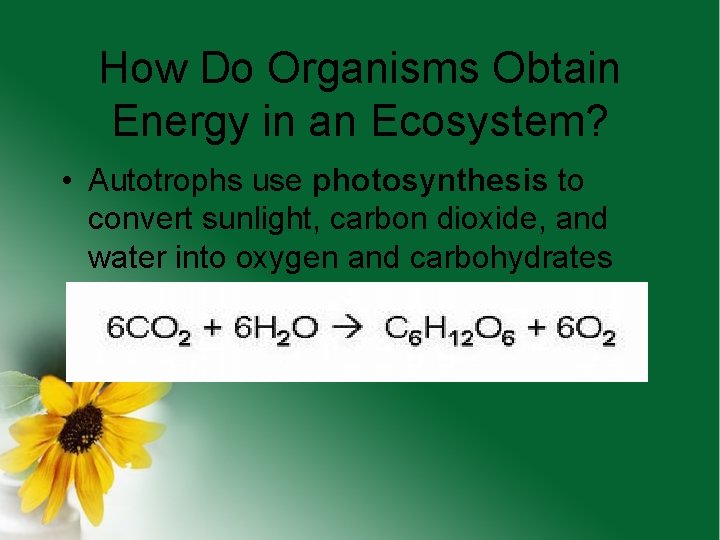
How Do Organisms Obtain Energy in an Ecosystem? • Autotrophs use photosynthesis to convert sunlight, carbon dioxide, and water into oxygen and carbohydrates
How Do Organisms Obtain Energy in an Ecosystem? • What if there is no light in the ecosystem? • The autotrophs will use chemosynthesis, which is a process that uses chemical energy to produce carbohydrates (ex: bacteria living in volcanic vents)
How Do Organisms Obtain Energy in an Ecosystem? • Organisms that rely on other organisms for energy are known as consumers or heterotrophs
Types of Heterotrophs • • Herbivores- consume only plants Carnivores- consume only meat Omnivores- consume both plants and animals Detritivores- consume plant and animal remains (earthworms, mites, crabs) • Decomposer= breaks down organic matter to obtain energy (bacteria & fungi)
Feeding Relationships • Energy in an ecosystem flows in one direction (from sun to the heterotrophs) • Food chain- a series of steps in which organisms transfer energy by eating and being eaten
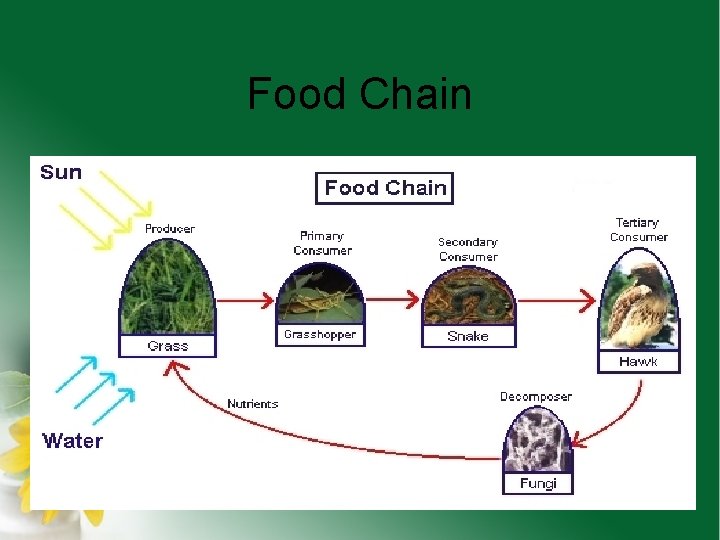
Food Chain
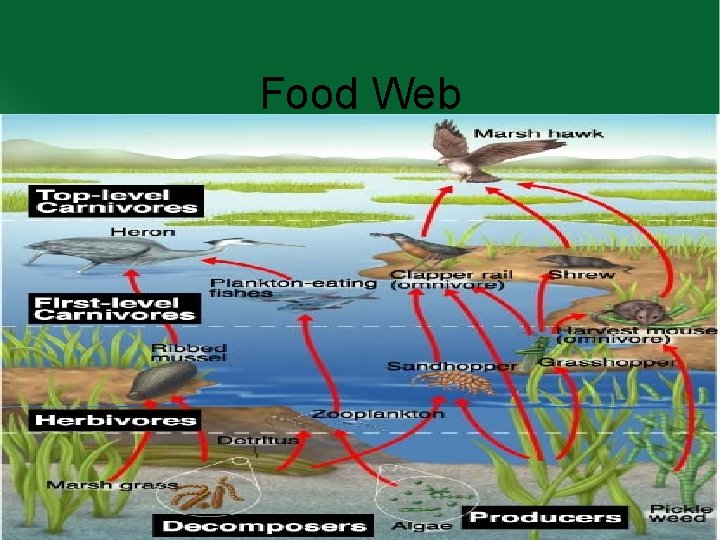
Food Web
Transfer of Energy • Each step in a food chain or food web is called a trophic level • Autotrophs make up the first trophic level, consumers make up 2 nd, 3 rd, 4 th or higher levels • Only about 10% of energy is transferred to organisms at the next trophic level
Transfer of Energy • If 10% of solar energy is captured by plants then animals who eat the grass gain only 10% of that energy (1%), animals who those animals gain 10% from that (. 1%) • 10% --> 1% -->. 1%
What is Biomass? • Biomass is the total amount of living tissue within a given trophic level • A biomass pyramid can show you much food is available to each trophic level
Recycling Matter in the Biosphere • Elements, chemical compounds, and other forms of matter are passed from one organism and from one part of the biosphere to another in biogeochemical cycles
Important Biogeochemical Cycles • • Water cycle Carbon Cycle Nitrogen Cycle Phosphorus Cycle
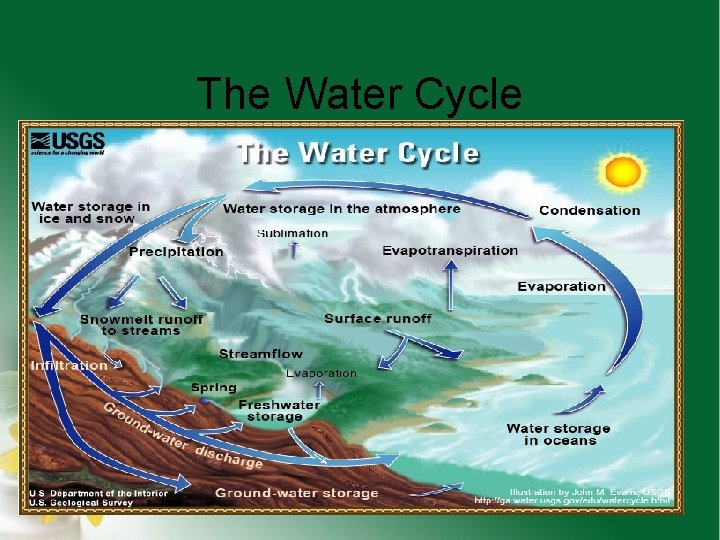
The Water Cycle
The Water Cycle • Water moves between the ocean, atmosphere, and land • Water evaporates from bodies of water into the atmosphere • Water can also enter the atmosphere through transpiration (process by which water is lost through the leaves of plants)
Nutrient Cycles • A nutrient is a chemical substance that an organism needs to sustain life • Important nutrient cycles – Carbon Cycle – Nitrogen Cycle – Phosphorus Cycle
The Carbon Cycle • Carbon’s Roles – Ingredient in living tissue – Important component of animal skeletons (Ca. CO 3) – Important component of the atmosphere (CO 2)
The Carbon Cycle • Carbon enters the atmosphere by: – Respiration – Geochemical processes – Human activities • Carbon is taken up by: – Photosynthesis – Burial and decomposition of dead organisms (formation of fossil fuels)
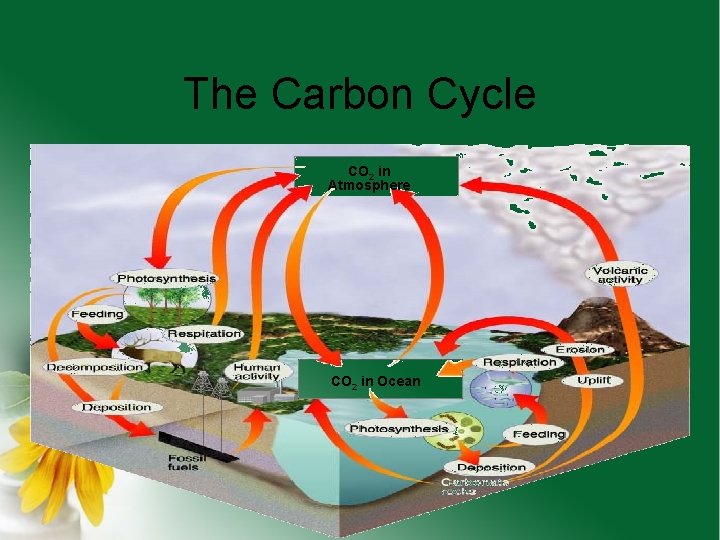
The Carbon Cycle CO 2 in Atmosphere CO 2 in Ocean
The Nitrogen Cycle • The roles of nitrogen: – Important component of amino acids – Major component of fertilizer (NO 3 -) – Major component of atmosphere (N 2)
The Nitrogen Cycle • Nitrogen gas (N 2) cannot be used by plants so it must be converted into a usable form • Soil bacteria convert nitrogen gas into ammonia (NH 3) in the process of nitrogen fixation • More soil bacteria convert ammonia into nitrates (NO 3 -) and nitrites (NO 2 -) a usable form • Other soil bacteria then convert nitrates and nitrites back into nitrogen gas, which is known as denitrification
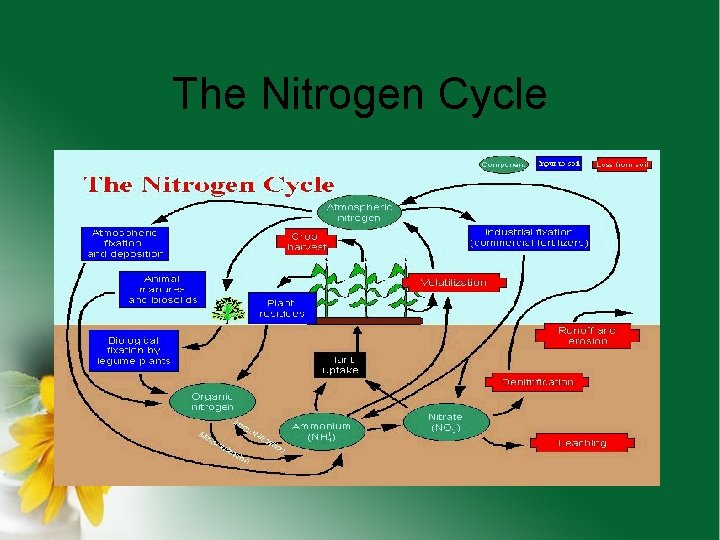
The Nitrogen Cycle
The Phosphorus Cycle • Roles of Phosphorus – Important component of DNA and RNA • Does not enter atmosphere (gas) • Steps – Phosphorus is found in rocks and sediment which gets moved by water – Plants absorb phosphorus in the form of phosphate from soil and water – Heterotrophs consume plants
What is a Limiting Nutrient? • A nutrient that is scarce of cycles very slowly • When an aquatic ecosystem receives a large amount of a limiting nutrient it immediately increases the amount of algae, which is known as algal bloom
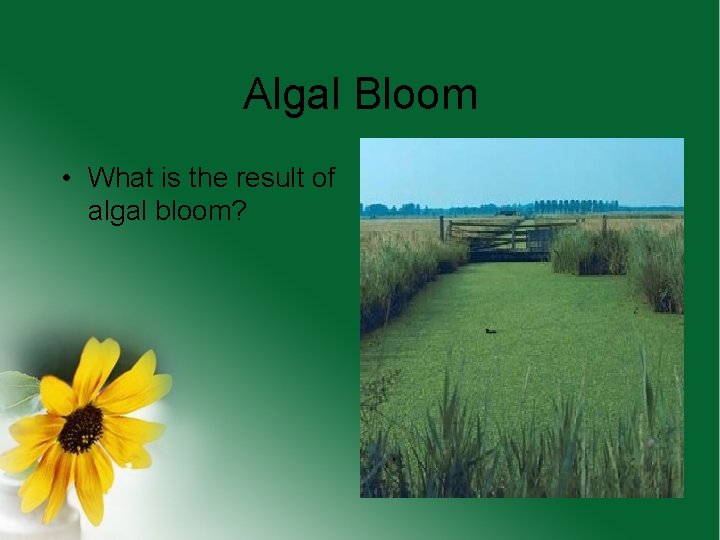
Algal Bloom • What is the result of algal bloom?
- Slides: 35