
Chapter 3 The Biosphere Section 3 1 What
Chapter 3 The Biosphere Section 3 -1 What is Ecology? Section 3 -2 Energy Flow
Ecology • Ecology is the scientific study of interactions among organisms and interactions between organisms and their environment.
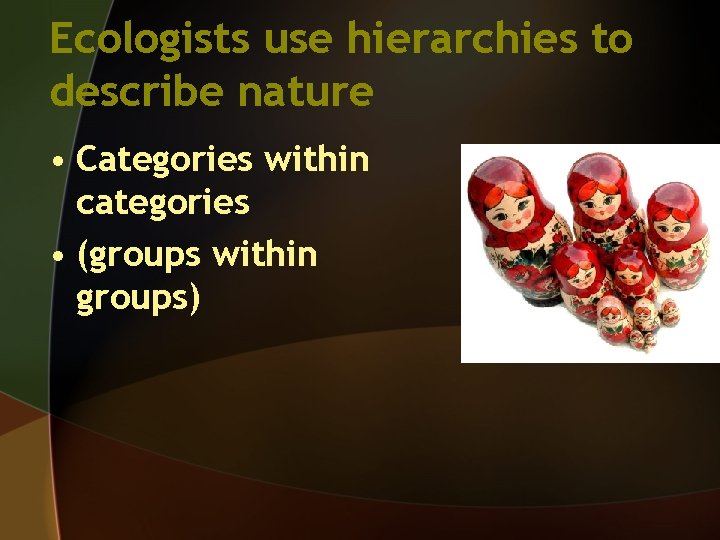
Ecologists use hierarchies to describe nature • Categories within categories • (groups within groups)
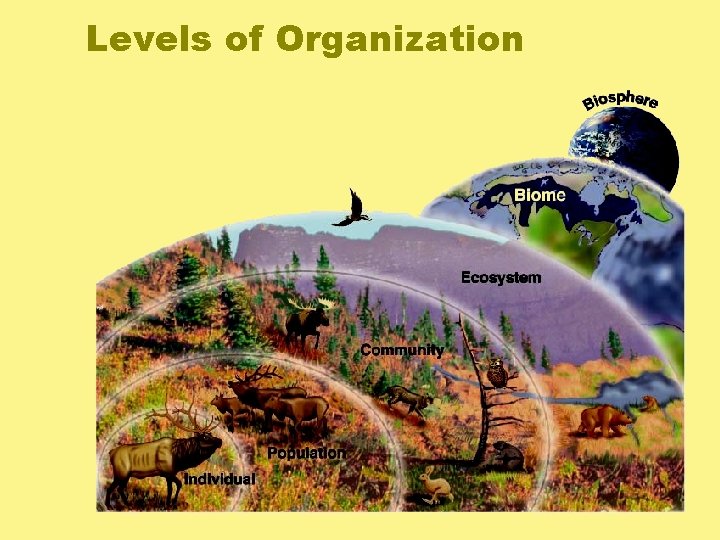
Levels of Organization • The levels of organization will vary from the smallest, simplest, and fewest in number to… the largest, most complex, and greatest in number.
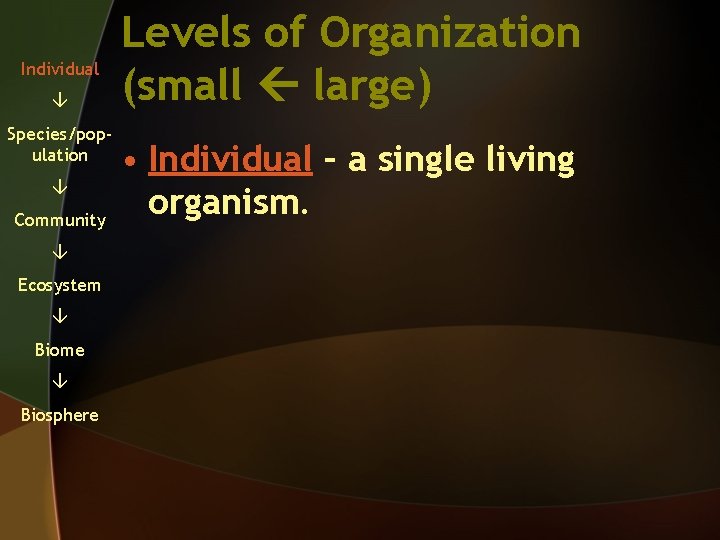
Individual Species/population Community Ecosystem Biome Biosphere Levels of Organization (small large) • Individual – a single living organism.
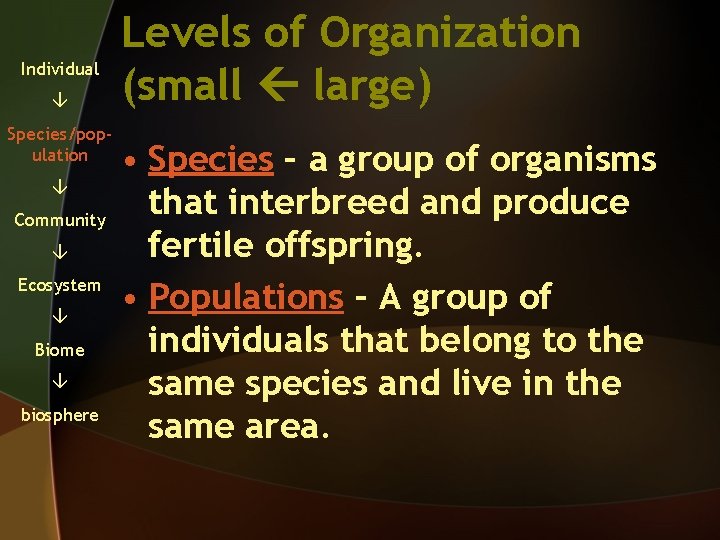
Individual Species/population Community Ecosystem Biome biosphere Levels of Organization (small large) • Species – a group of organisms that interbreed and produce fertile offspring. • Populations – A group of individuals that belong to the same species and live in the same area.
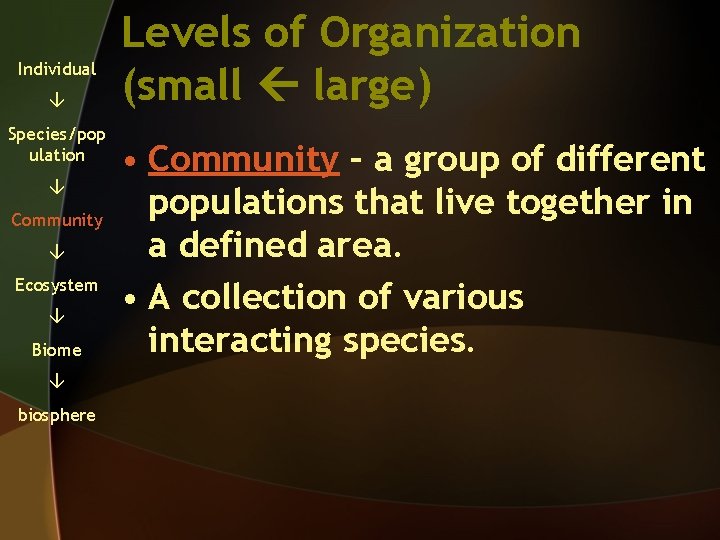
Individual Species/pop ulation Community Ecosystem Biome biosphere Levels of Organization (small large) • Community – a group of different populations that live together in a defined area. • A collection of various interacting species.
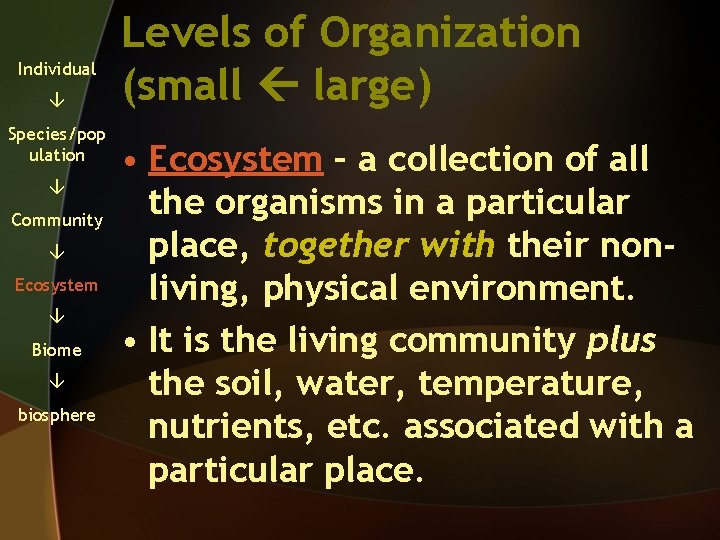
Individual Species/pop ulation Community Ecosystem Biome biosphere Levels of Organization (small large) • Ecosystem – a collection of all the organisms in a particular place, together with their nonliving, physical environment. • It is the living community plus the soil, water, temperature, nutrients, etc. associated with a particular place.

Individual Species/pop ulation Community Ecosystem Biome biosphere Levels of Organization (small large) • Biome – a group of ecosystems that have the same climate and similar dominant communities.
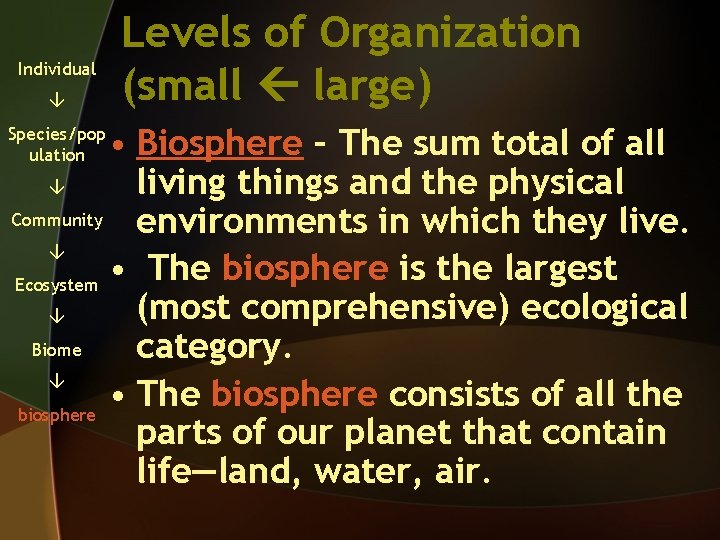
Individual Levels of Organization (small large) • Biosphere – The sum total of all living things and the physical Community environments in which they live. • The biosphere is the largest Ecosystem (most comprehensive) ecological Biome category. • The biosphere consists of all the biosphere parts of our planet that contain life—land, water, air. Species/pop ulation
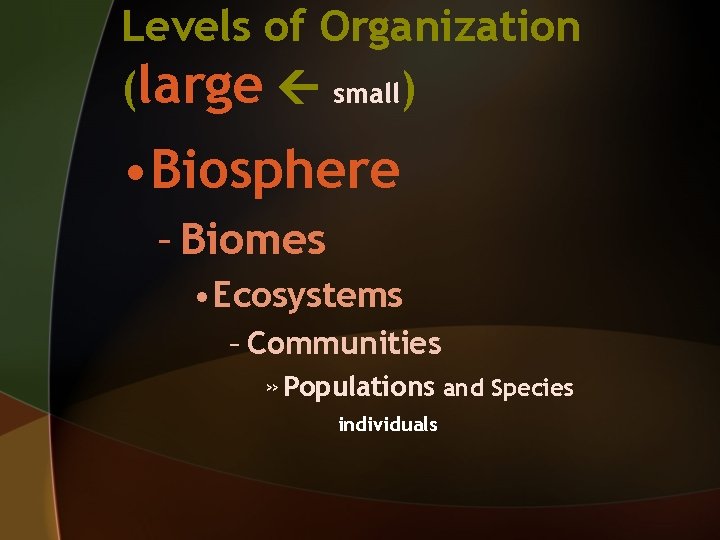
Levels of Organization (large small) • Biosphere – Biomes • Ecosystems – Communities » Populations and Species individuals
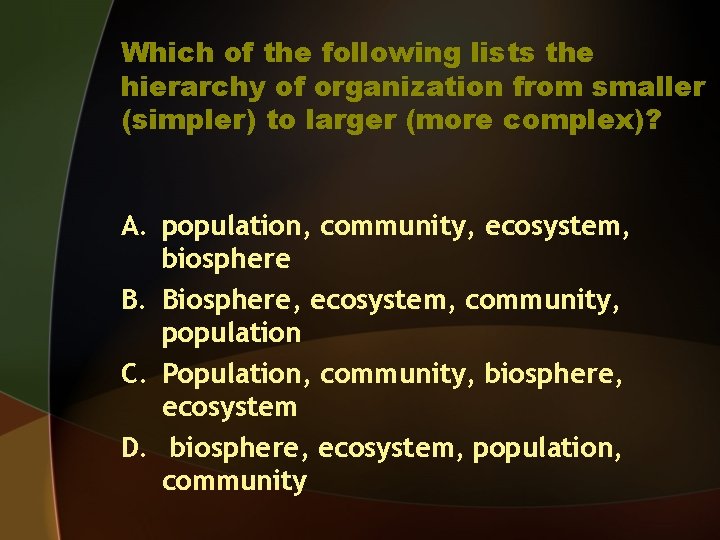
Which of the following lists the hierarchy of organization from smaller (simpler) to larger (more complex)? A. population, community, ecosystem, biosphere B. Biosphere, ecosystem, community, population C. Population, community, biosphere, ecosystem D. biosphere, ecosystem, population, community
Which of the following lists the hierarchy of organization from smaller (simpler) to larger (more complex)? A. population, community, ecosystem, biosphere
Levels of Organization
Energy Flow Section 3 -2, pg. 67 -73
Heterotrophs • Hetero “other” • Troph “nourish; food” • Organisms that cannot make their own food. • Must get their food from other organisms. • Also called consumers.
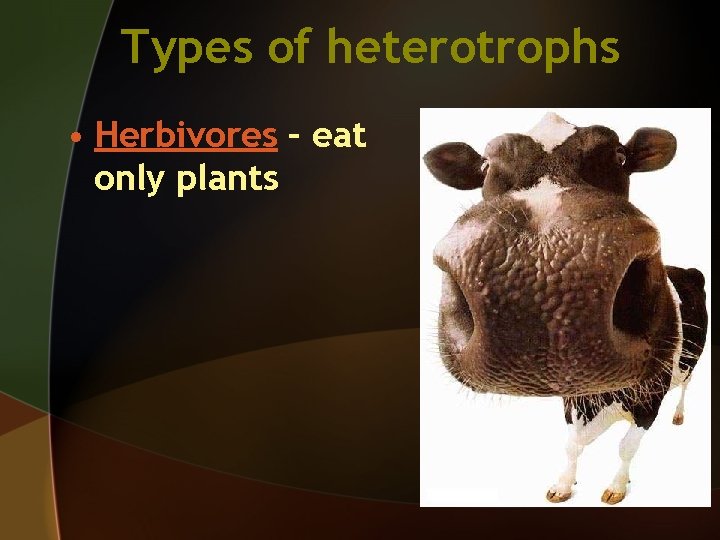
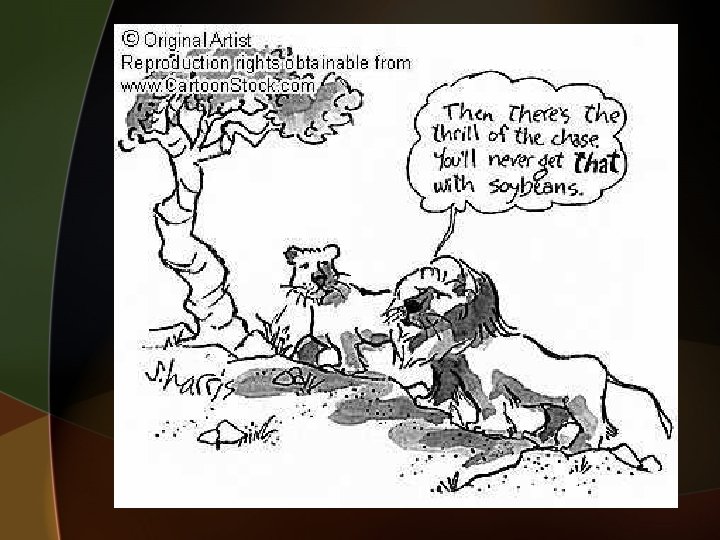
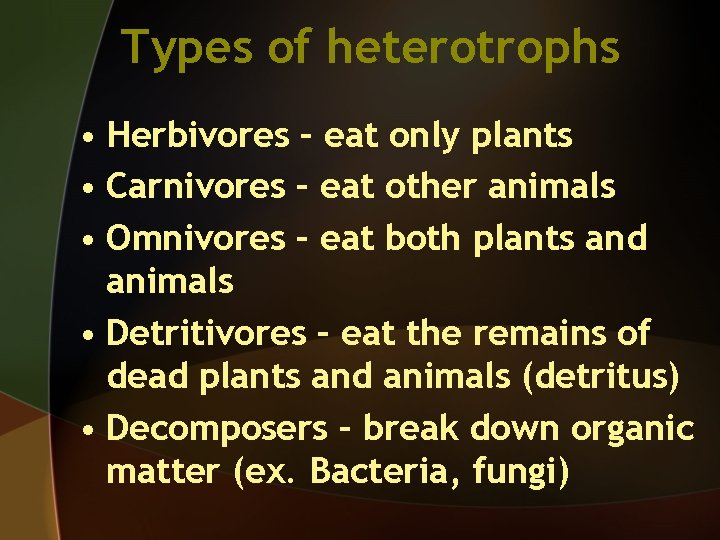
Types of heterotrophs • Herbivores – eat only plants
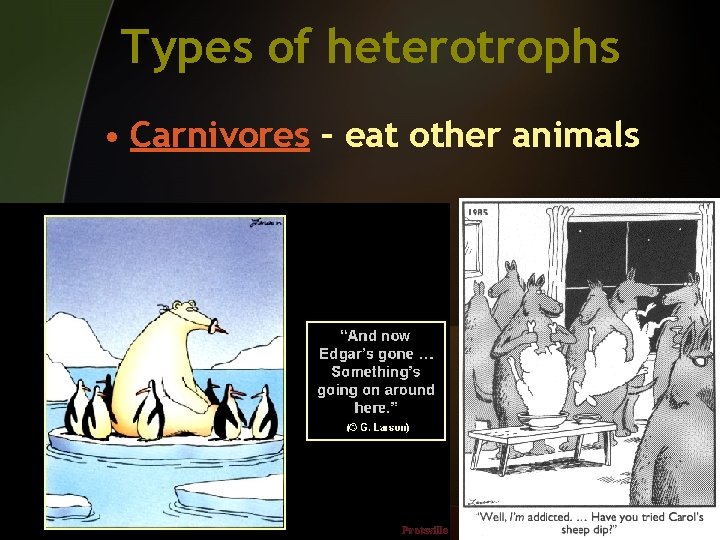
Types of heterotrophs • Carnivores – eat other animals
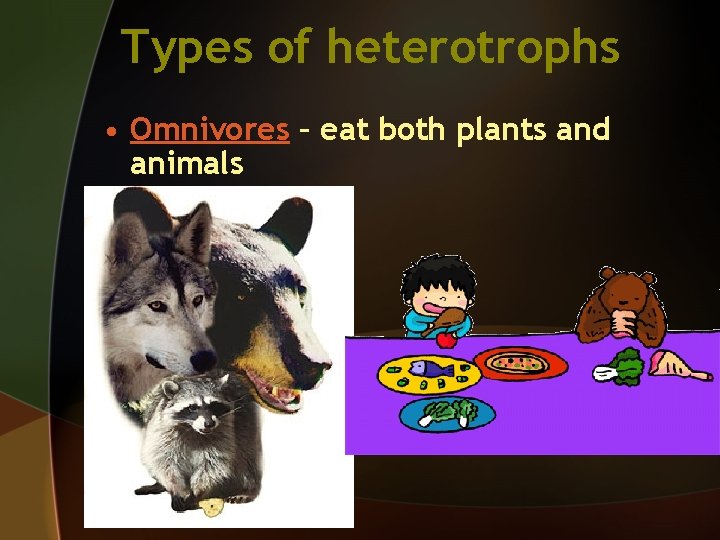
Types of heterotrophs • Omnivores – eat both plants and animals
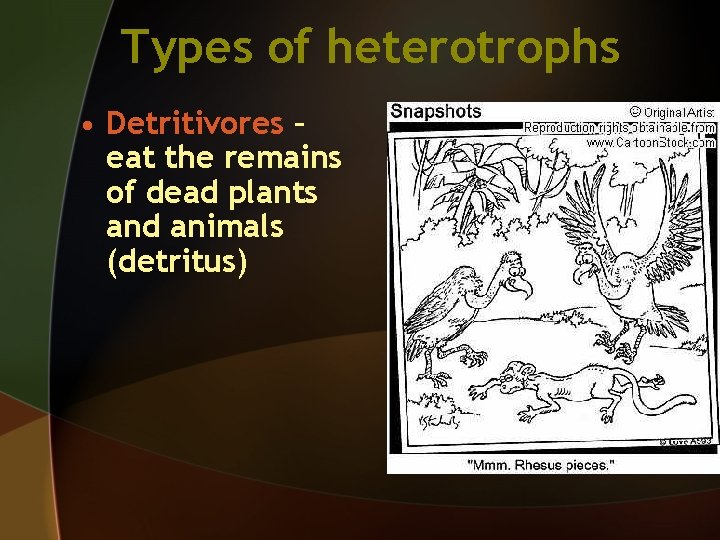
Types of heterotrophs • Detritivores – eat the remains of dead plants and animals (detritus)
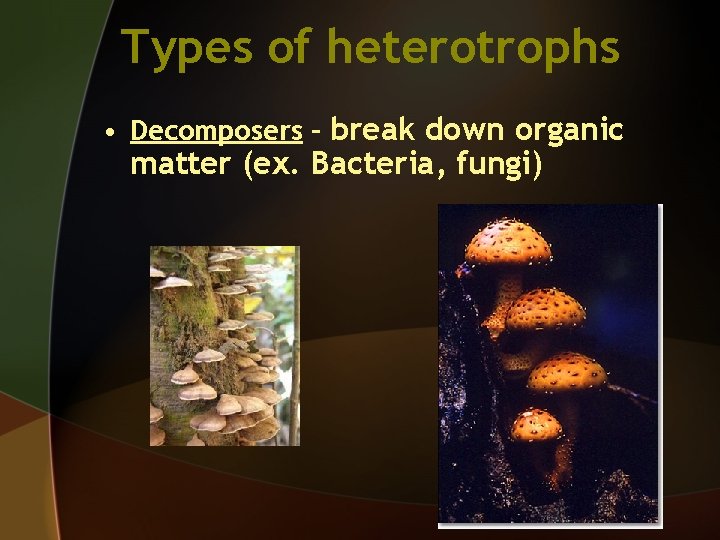
Types of heterotrophs • Decomposers – break down organic matter (ex. Bacteria, fungi)
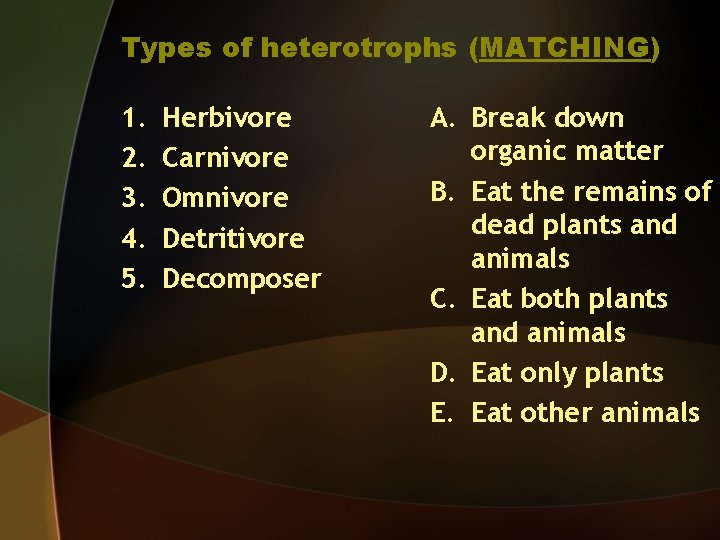
Types of heterotrophs (MATCHING) 1. 2. 3. 4. 5. Herbivore Carnivore Omnivore Detritivore Decomposer A. Break down organic matter B. Eat the remains of dead plants and animals C. Eat both plants and animals D. Eat only plants E. Eat other animals
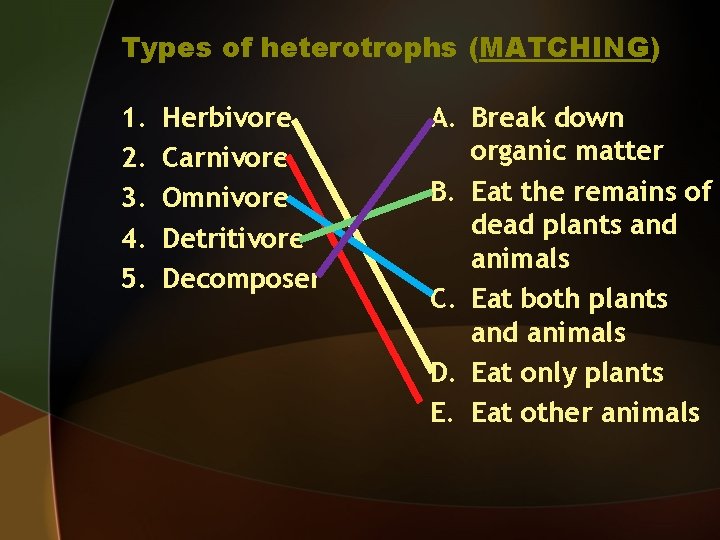
Types of heterotrophs (MATCHING) 1. 2. 3. 4. 5. Herbivore Carnivore Omnivore Detritivore Decomposer A. Break down organic matter B. Eat the remains of dead plants and animals C. Eat both plants and animals D. Eat only plants E. Eat other animals
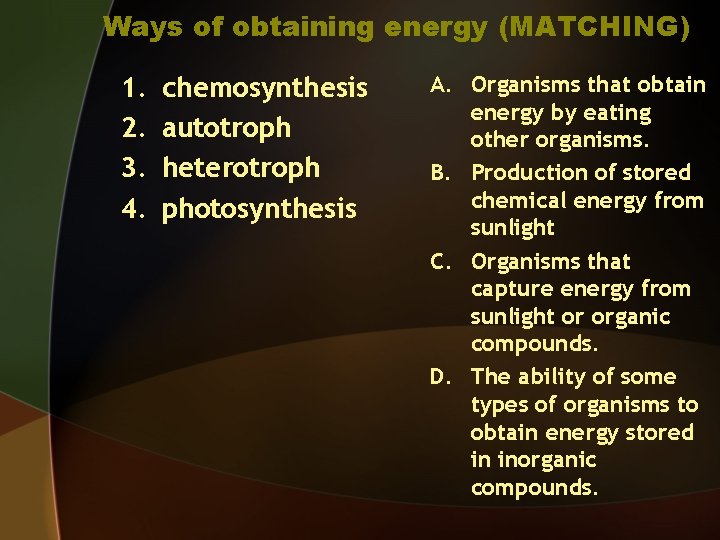
Ways of obtaining energy (MATCHING) 1. 2. 3. 4. chemosynthesis autotroph heterotroph photosynthesis A. Organisms that obtain energy by eating other organisms. B. Production of stored chemical energy from sunlight C. Organisms that capture energy from sunlight or organic compounds. D. The ability of some types of organisms to obtain energy stored in inorganic compounds.
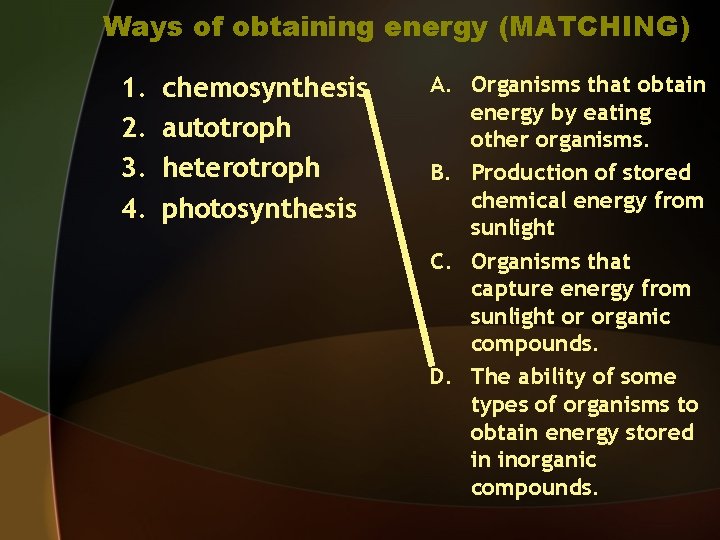
Ways of obtaining energy (MATCHING) 1. 2. 3. 4. chemosynthesis autotroph heterotroph photosynthesis A. Organisms that obtain energy by eating other organisms. B. Production of stored chemical energy from sunlight C. Organisms that capture energy from sunlight or organic compounds. D. The ability of some types of organisms to obtain energy stored in inorganic compounds.
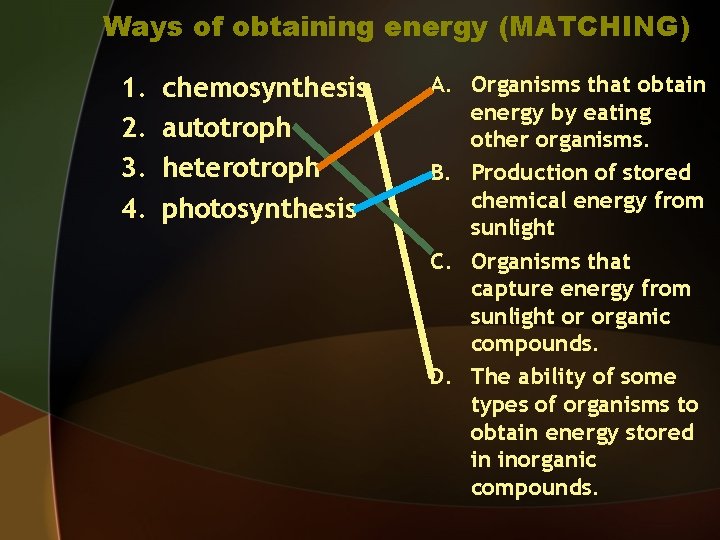
Ways of obtaining energy (MATCHING) 1. 2. 3. 4. chemosynthesis autotroph heterotroph photosynthesis A. Organisms that obtain energy by eating other organisms. B. Production of stored chemical energy from sunlight C. Organisms that capture energy from sunlight or organic compounds. D. The ability of some types of organisms to obtain energy stored in inorganic compounds.
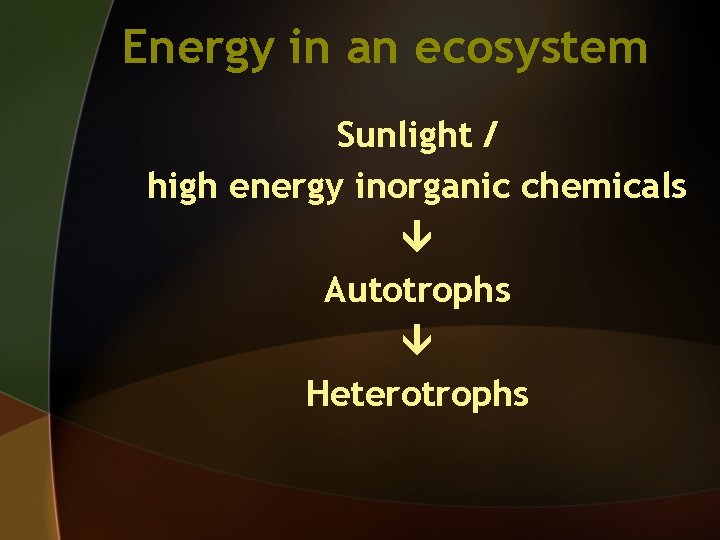
Energy in an ecosystem Sunlight / high energy inorganic chemicals Autotrophs Heterotrophs
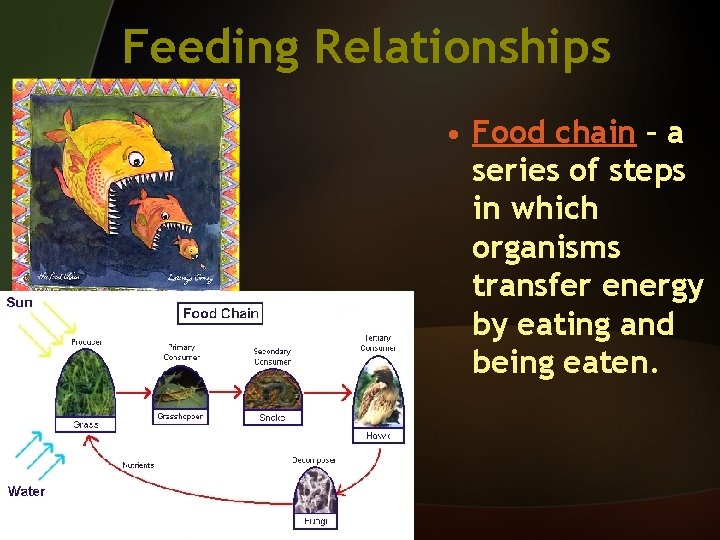
Feeding Relationships • Food chain – a series of steps in which organisms transfer energy by eating and being eaten.
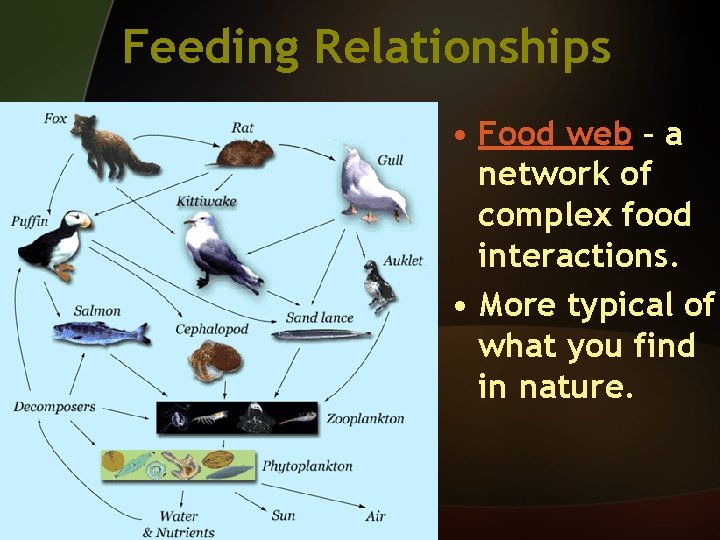
Feeding Relationships • Food web – a network of complex food interactions. • More typical of what you find in nature.
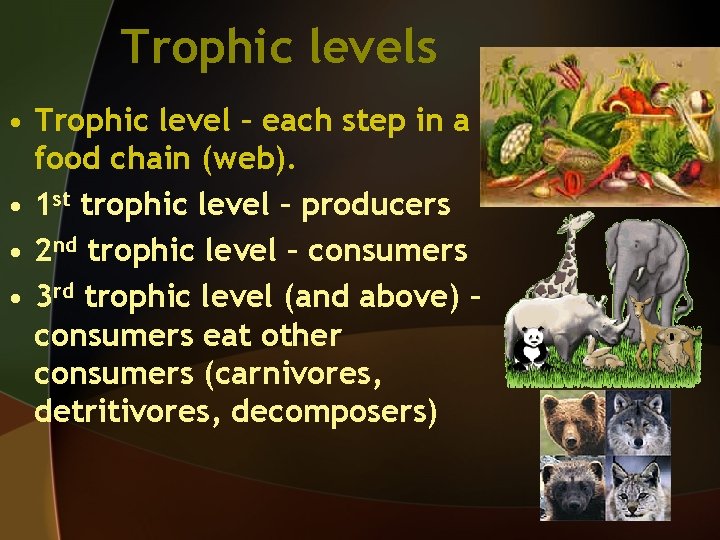
Trophic levels • Trophic level – each step in a food chain (web). • 1 st trophic level – producers • 2 nd trophic level – consumers • 3 rd trophic level (and above) – consumers eat other consumers (carnivores, detritivores, decomposers)
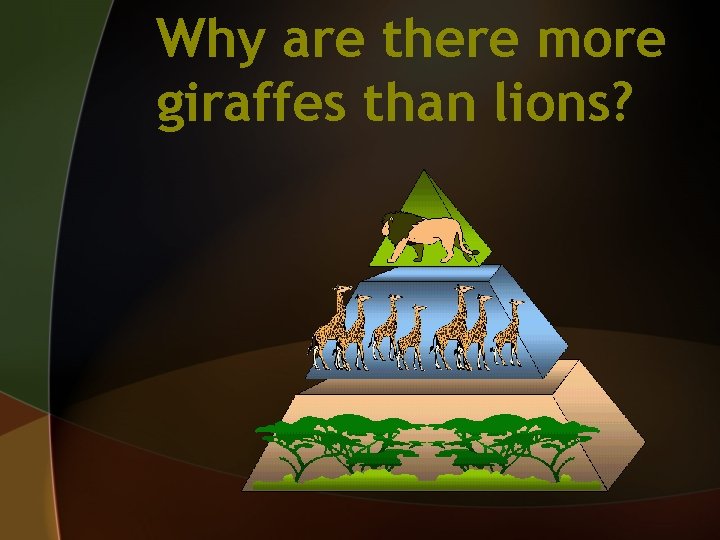
Why are there more giraffes than lions?
Ecological Pyramids • For three different measurements – Energy – Biomass – Numbers of individuals …there are similar patterns between the different trophic levels… Pyramids!
Energy Pyramid • When energy gets passed from one level of the food chain to the next, most of the energy is wasted or used for maintenance. • Only about 10% is accumulated by the next trophic level.
Energy Pyramid • Convoluted energy riddle: – If you had a quantity of leaves that contained 1000 Calories of stored chemical energy, how many Calories of energy would get stored in a predator (ex. Cat) that ate the herbivore (ex. Mouse) that ate the quantity of leaves? • Answer 10 Calories
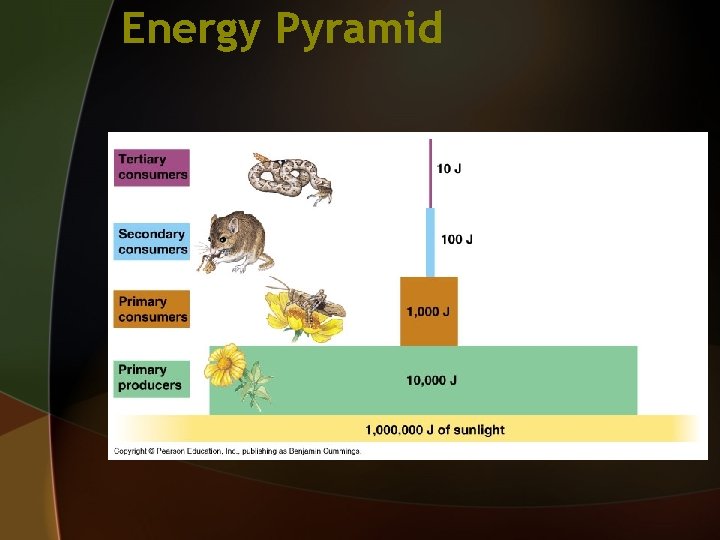
Energy Pyramid
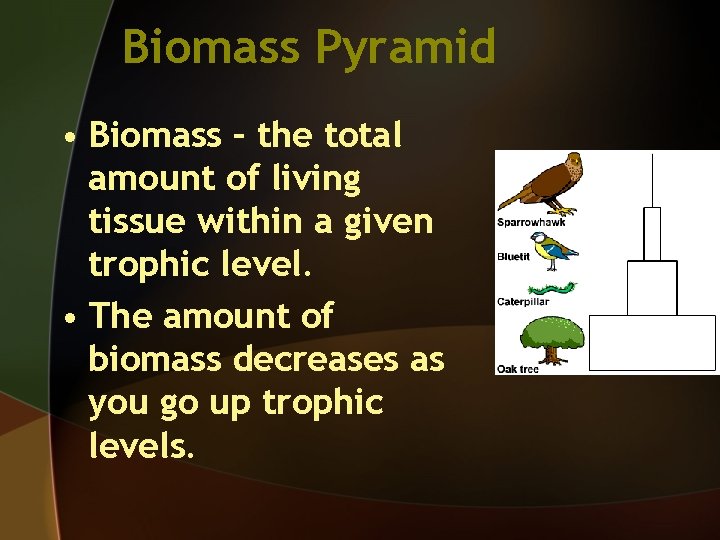
Biomass Pyramid • Biomass – the total amount of living tissue within a given trophic level. • The amount of biomass decreases as you go up trophic levels.
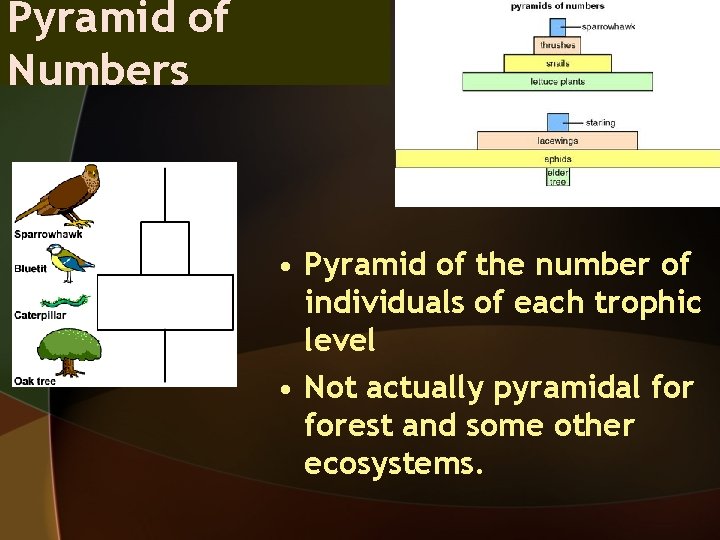
Pyramid of Numbers • Pyramid of the number of individuals of each trophic level • Not actually pyramidal forest and some other ecosystems.
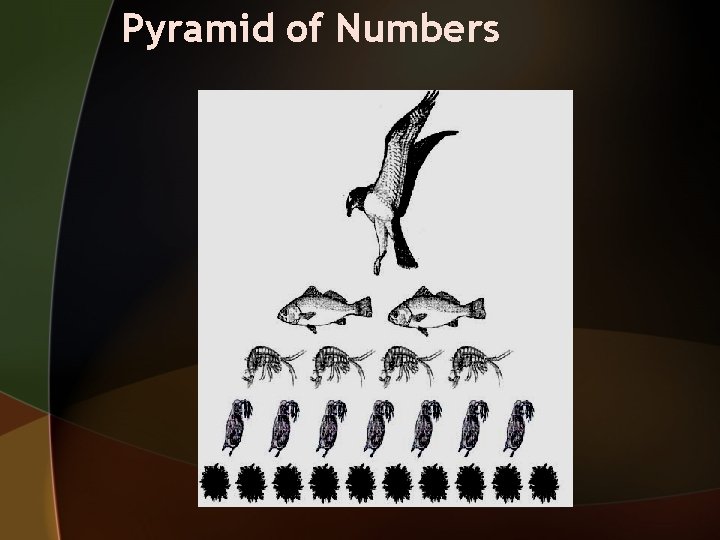
Pyramid of Numbers
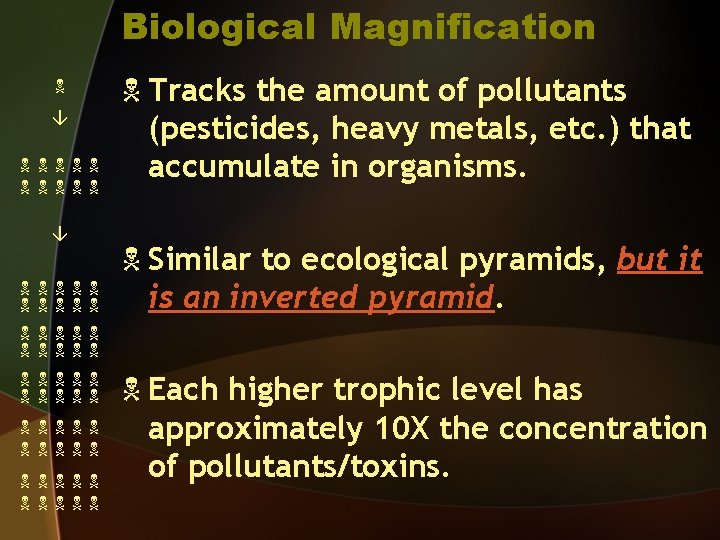
Biological Magnification Tracks the amount of pollutants (pesticides, heavy metals, etc. ) that accumulate in organisms. Similar to ecological pyramids, but it is an inverted pyramid. Each higher trophic level has approximately 10 X the concentration of pollutants/toxins.

Biological Magnification Fish-Eating Birds Magnification of DDT Concentration 10, 000 Large Fish 1, 000 Small Fish 100, 000 Zooplankton 10, 000 Producers 1000 Water 1 Biological Magnification – related to ecological pyramids

Biological Magnification
Types of heterotrophs • Herbivores – eat only plants • Carnivores – eat other animals • Omnivores – eat both plants and animals • Detritivores – eat the remains of dead plants and animals (detritus) • Decomposers – break down organic matter (ex. Bacteria, fungi)
- Slides: 46