
Chapter 3 The Biosphere Section 1 Principles of
Chapter 3 The Biosphere
Section 1 Principles of Ecology Organisms and Their Relationships Ecology § Scientific discipline in which the relationships among living organisms and the interaction the organisms have with their environments are studied § Ecologists observe, experiment, and model using a variety of tools and methods.

Section 1 Principles of Ecology Organisms and Their Relationships The Biosphere § A thin layer around Earth that supports life § Extends several kilometers above the Earth’s surface § Extends several kilometers below the ocean’s surface

Section 1 Principles of Ecology Organisms and Their Relationships The Biosphere
Section 1 Principles of Ecology Organisms and Their Relationships Biotic Factors § Living factors in an organism’s environment Abiotic Factors § Nonliving factors in an organism’s environment § Organisms adapt to survive in the abiotic factors present in their natural environment.
Section 1 Principles of Ecology Organisms and Their Relationships Levels of Organization-Amoeba Sisters: Biological Levels § Levels increase in complexity as the numbers and interactions between organisms increase. § organism § population § biological community § ecosystem § biome § biosphere
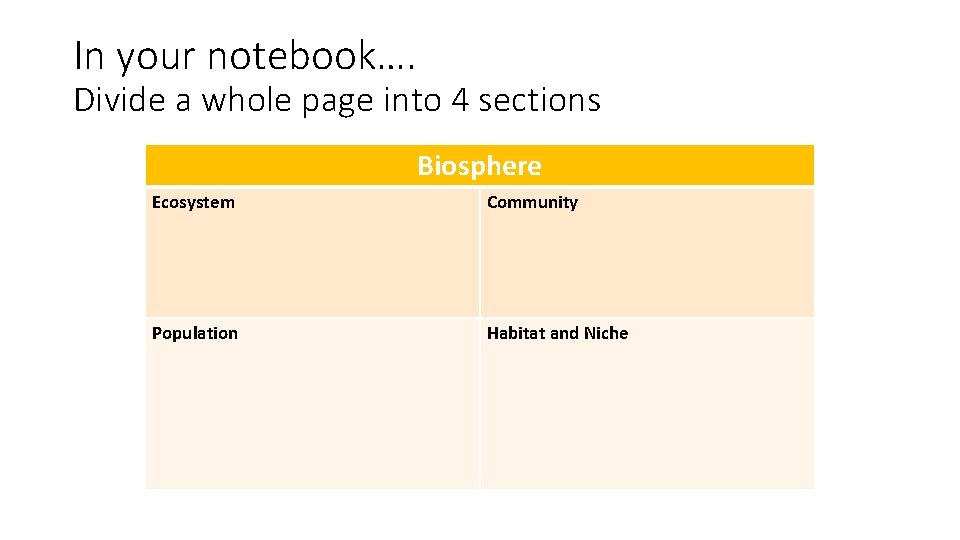
In your notebook…. Divide a whole page into 4 sections Biosphere Ecosystem Community Population Habitat and Niche
For each square on your chart include: • Description: • Picture: • Examples: (see next slide) • Contains Abiotic and/or Biotic factors?
Section 1 Principles of Ecology Organisms and Their Relationships § An ecosystem is a biological community and all of the abiotic factors that affect it. § A biome is a large group of ecosystems that share the same climate and have similar types of communities.
Section 1 Principles of Ecology Organisms and Their Relationships § The lowest level of organization is the individual organism itself. § Organisms of a single species that share the same geographic location at the same time make up a population. § A biological community is a group of interacting populations that occupy the same geographic area at the same time.
Section 1 Principles of Ecology Organisms and Their Relationships Ecosystem Interactions § A habitat is an area where an organism lives. § A niche is the role or position that an organism has in its environment.
Examples-add to your chart where they fit the best • • • A herd of bison Frogs, insects, and birds living near a pond Plants, animals, water and soil of a forest The kelp forest where sea otters live All the hummingbirds that live in your state A freshwater stream where mussels grow Fish, eels, and lobsters living on a coral reef The ocean A dying tree with holes that animals live in Wetland plants, animals, and marshes
Biomes • a large naturally occurring community of flora and fauna occupying a major habitat
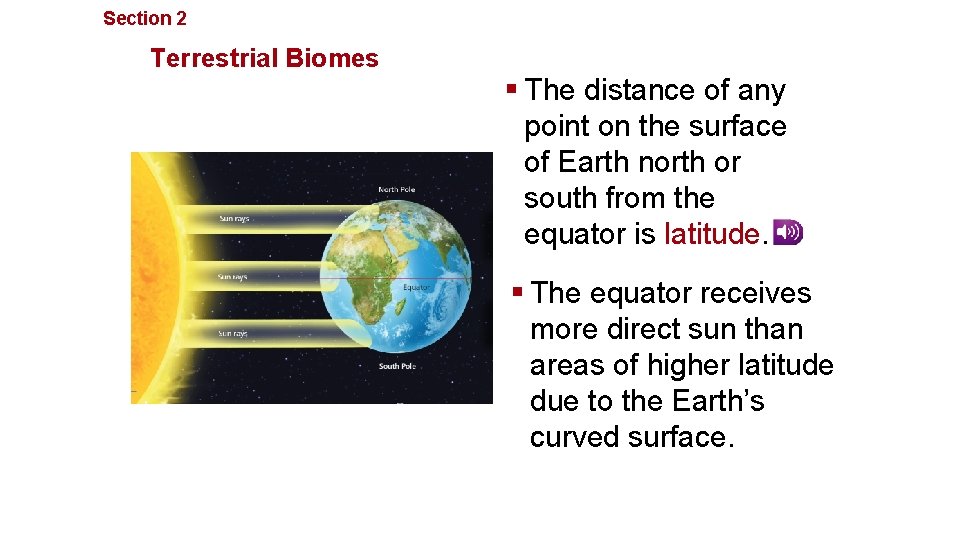
Section 2 Communities, Biomes, and Ecosystems Terrestrial Biomes § The distance of any point on the surface of Earth north or south from the equator is latitude. § The equator receives more direct sun than areas of higher latitude due to the Earth’s curved surface.
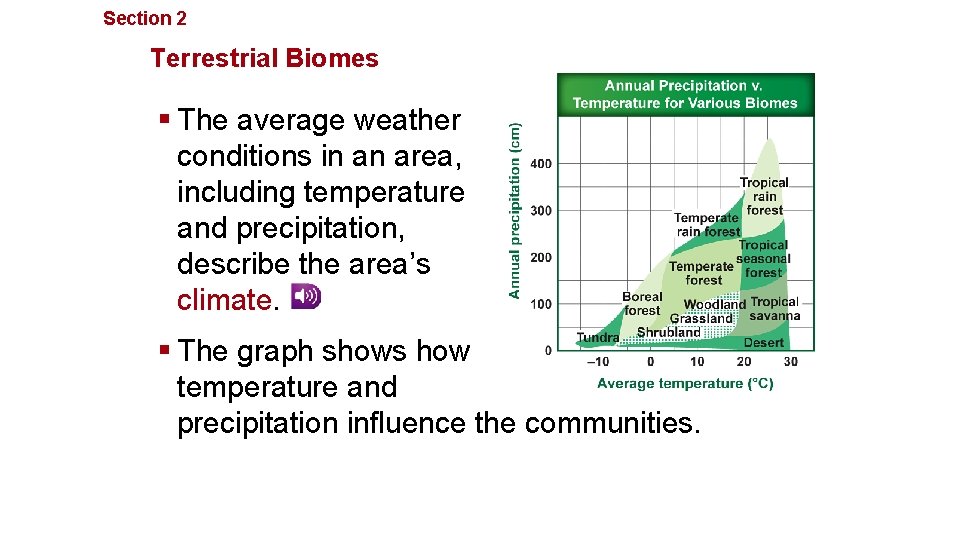
Section 2 Communities, Biomes, and Ecosystems Terrestrial Biomes § The average weather conditions in an area, including temperature and precipitation, describe the area’s climate. § The graph shows how temperature and precipitation influence the communities.

Section 2 Communities, Biomes, and Ecosystems Terrestrial Biomes § Biomes are classified by their plants, temperature, and precipitation. § Videoclip: Untamed Science http: //www. untamedsc ience. com/biology/bio mes/
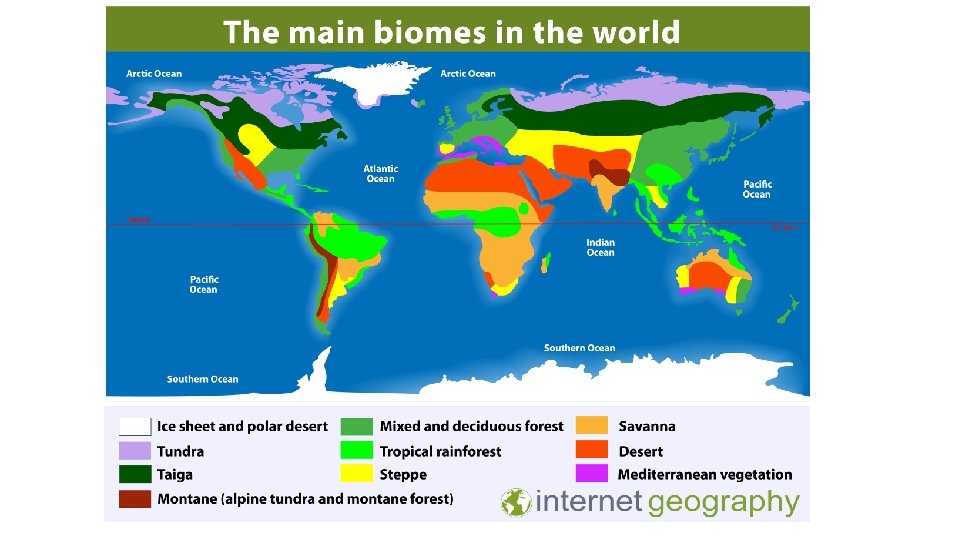
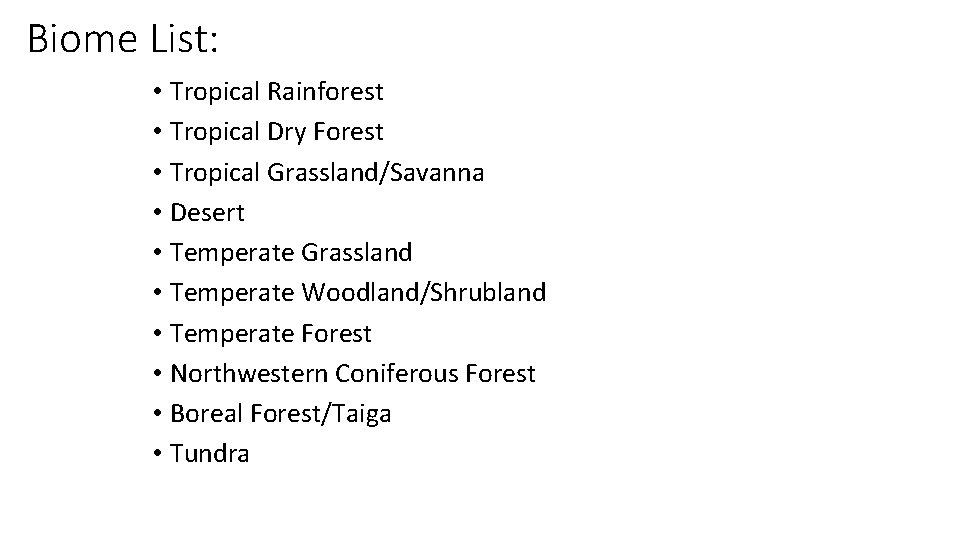
Biome List: • Tropical Rainforest • Tropical Dry Forest • Tropical Grassland/Savanna • Desert • Temperate Grassland • Temperate Woodland/Shrubland • Temperate Forest • Northwestern Coniferous Forest • Boreal Forest/Taiga • Tundra
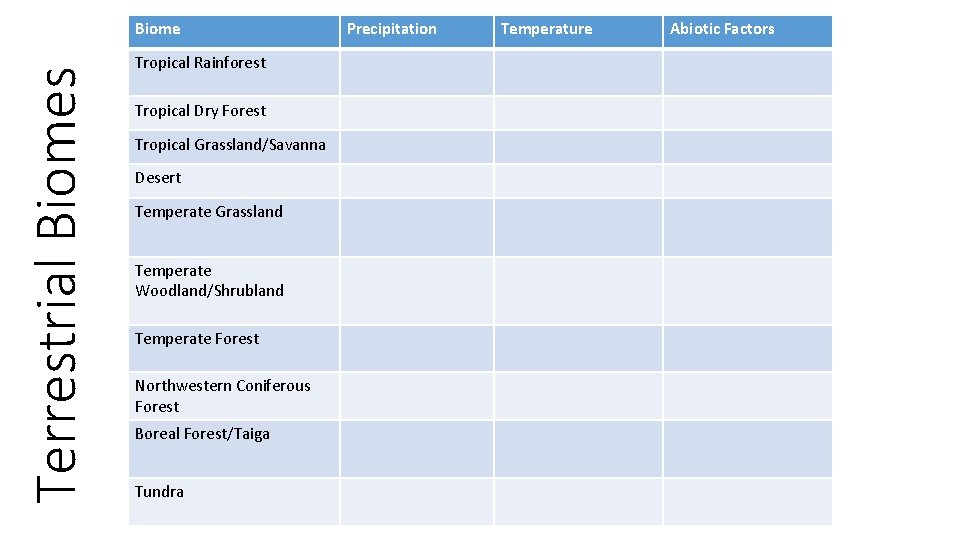
Terrestrial Biomes Biome Tropical Rainforest Tropical Dry Forest Tropical Grassland/Savanna Desert Temperate Grassland Temperate Woodland/Shrubland Temperate Forest Northwestern Coniferous Forest Boreal Forest/Taiga Tundra Precipitation Temperature Abiotic Factors
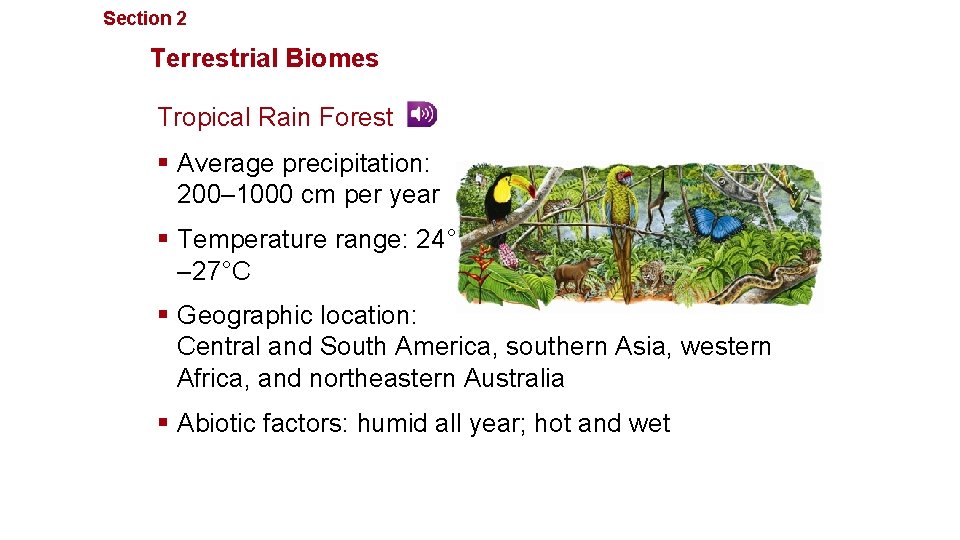
Section 2 Communities, Biomes, and Ecosystems Terrestrial Biomes Tropical Rain Forest § Average precipitation: 200– 1000 cm per year § Temperature range: 24°C – 27°C § Geographic location: Central and South America, southern Asia, western Africa, and northeastern Australia § Abiotic factors: humid all year; hot and wet
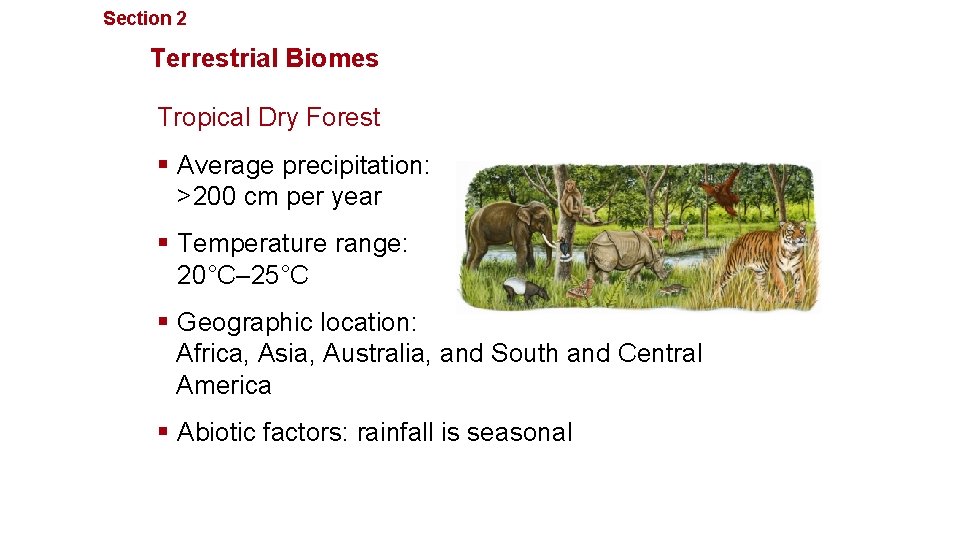
Section 2 Communities, Biomes, and Ecosystems Terrestrial Biomes Tropical Dry Forest § Average precipitation: >200 cm per year § Temperature range: 20°C– 25°C § Geographic location: Africa, Asia, Australia, and South and Central America § Abiotic factors: rainfall is seasonal
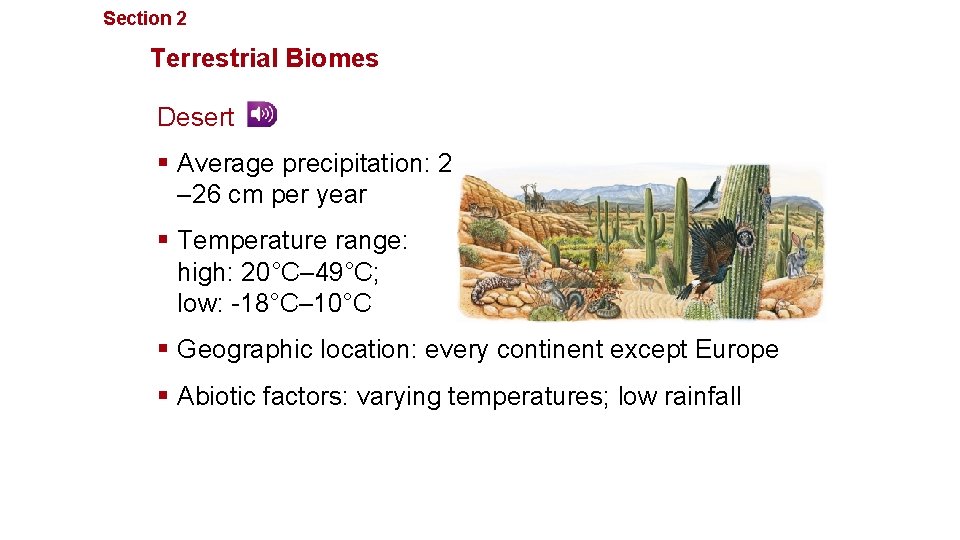
Section 2 Communities, Biomes, and Ecosystems Terrestrial Biomes Desert § Average precipitation: 2 – 26 cm per year § Temperature range: high: 20°C– 49°C; low: -18°C– 10°C § Geographic location: every continent except Europe § Abiotic factors: varying temperatures; low rainfall
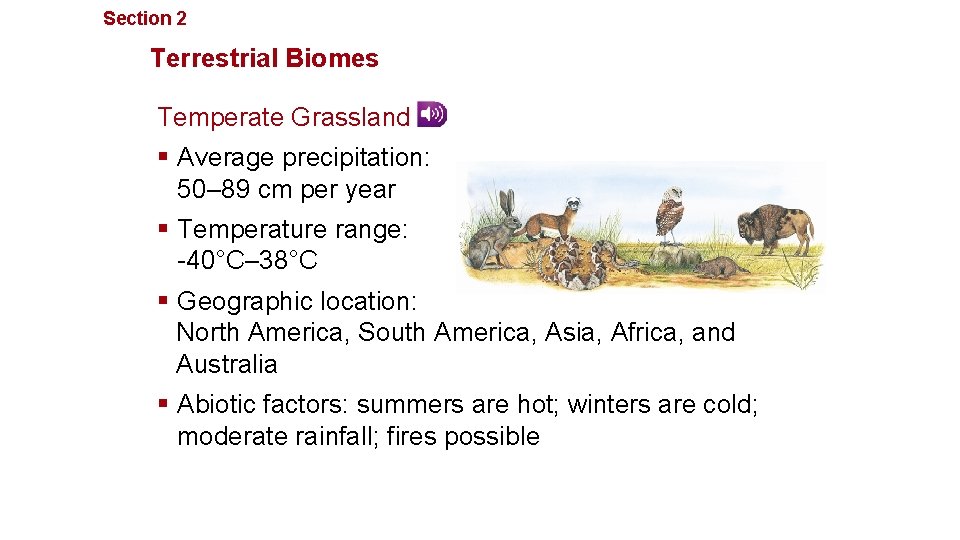
Section 2 Communities, Biomes, and Ecosystems Terrestrial Biomes Temperate Grassland § Average precipitation: 50– 89 cm per year § Temperature range: -40°C– 38°C § Geographic location: North America, South America, Asia, Africa, and Australia § Abiotic factors: summers are hot; winters are cold; moderate rainfall; fires possible
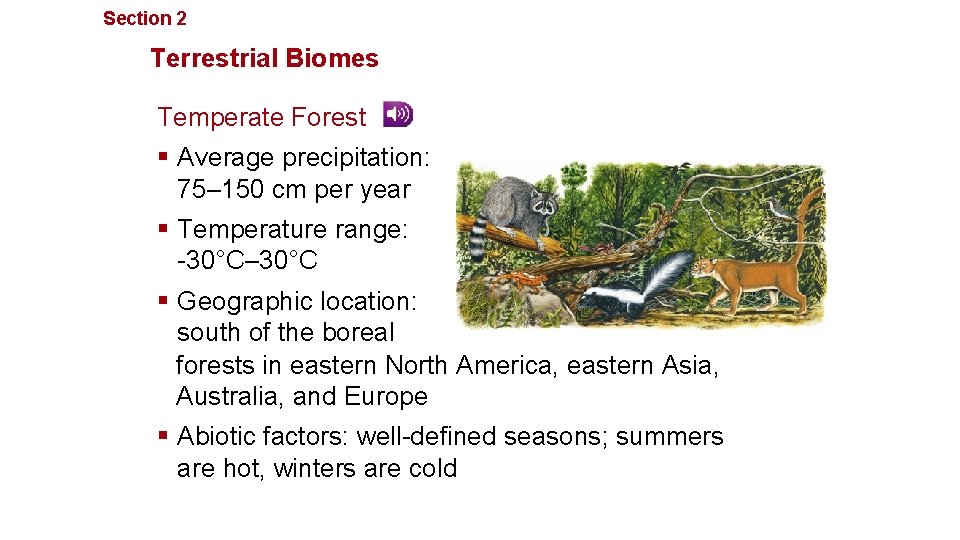
Section 2 Communities, Biomes, and Ecosystems Terrestrial Biomes Temperate Forest § Average precipitation: 75– 150 cm per year § Temperature range: -30°C– 30°C § Geographic location: south of the boreal forests in eastern North America, eastern Asia, Australia, and Europe § Abiotic factors: well-defined seasons; summers are hot, winters are cold
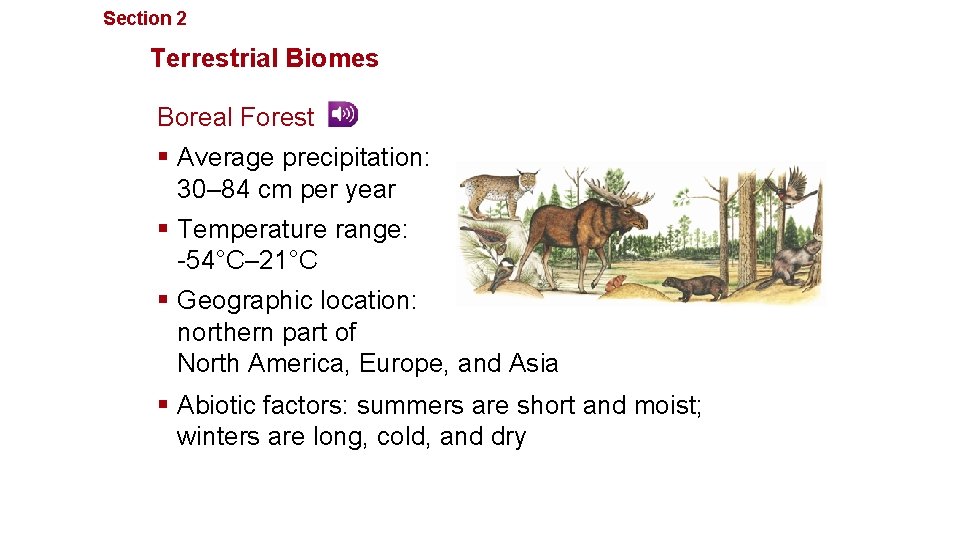
Section 2 Communities, Biomes, and Ecosystems Terrestrial Biomes Boreal Forest § Average precipitation: 30– 84 cm per year § Temperature range: -54°C– 21°C § Geographic location: northern part of North America, Europe, and Asia § Abiotic factors: summers are short and moist; winters are long, cold, and dry
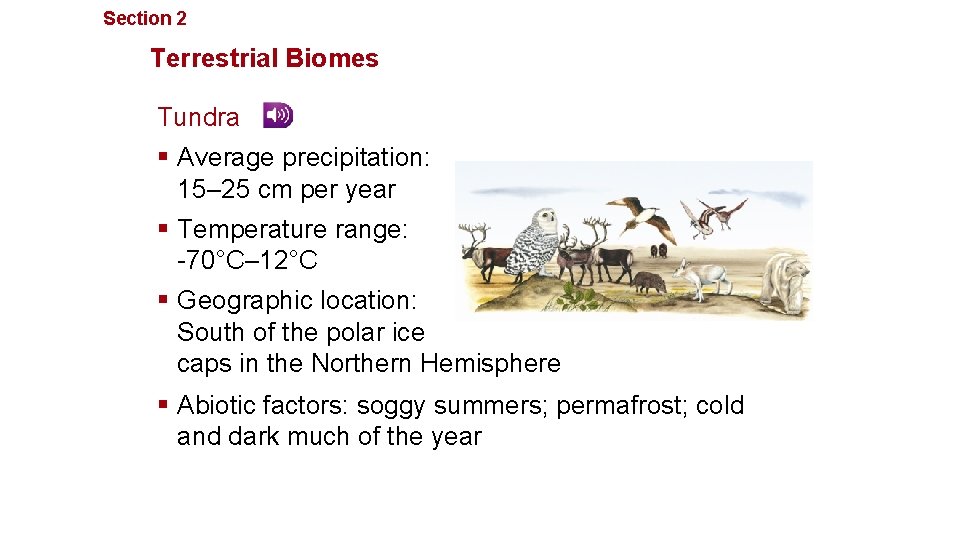
Section 2 Communities, Biomes, and Ecosystems Terrestrial Biomes Tundra § Average precipitation: 15– 25 cm per year § Temperature range: -70°C– 12°C § Geographic location: South of the polar ice caps in the Northern Hemisphere § Abiotic factors: soggy summers; permafrost; cold and dark much of the year
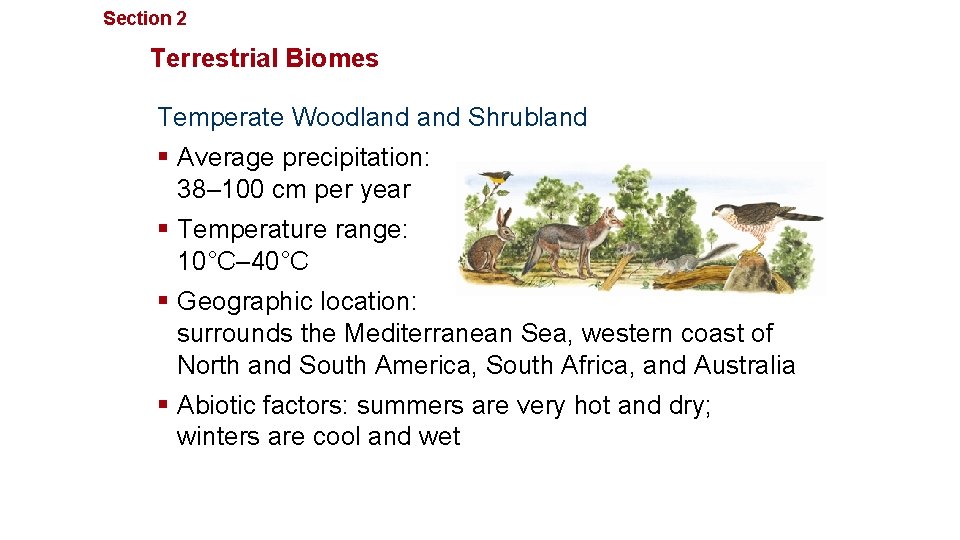
Section 2 Communities, Biomes, and Ecosystems Terrestrial Biomes Temperate Woodland Shrubland § Average precipitation: 38– 100 cm per year § Temperature range: 10°C– 40°C § Geographic location: surrounds the Mediterranean Sea, western coast of North and South America, South Africa, and Australia § Abiotic factors: summers are very hot and dry; winters are cool and wet
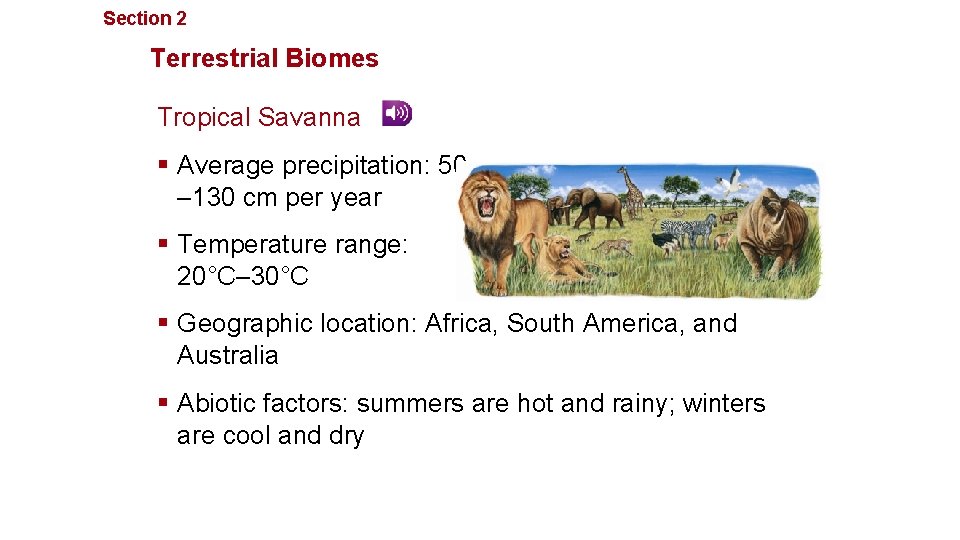
Section 2 Communities, Biomes, and Ecosystems Terrestrial Biomes Tropical Savanna § Average precipitation: 50 – 130 cm per year § Temperature range: 20°C– 30°C § Geographic location: Africa, South America, and Australia § Abiotic factors: summers are hot and rainy; winters are cool and dry
Section 2 Communities, Biomes, and Ecosystems Terrestrial Biomes Polar Regions § Border the tundra at high latitudes § Polar regions are cold all year. § Average winter temperature is about -30ºC.
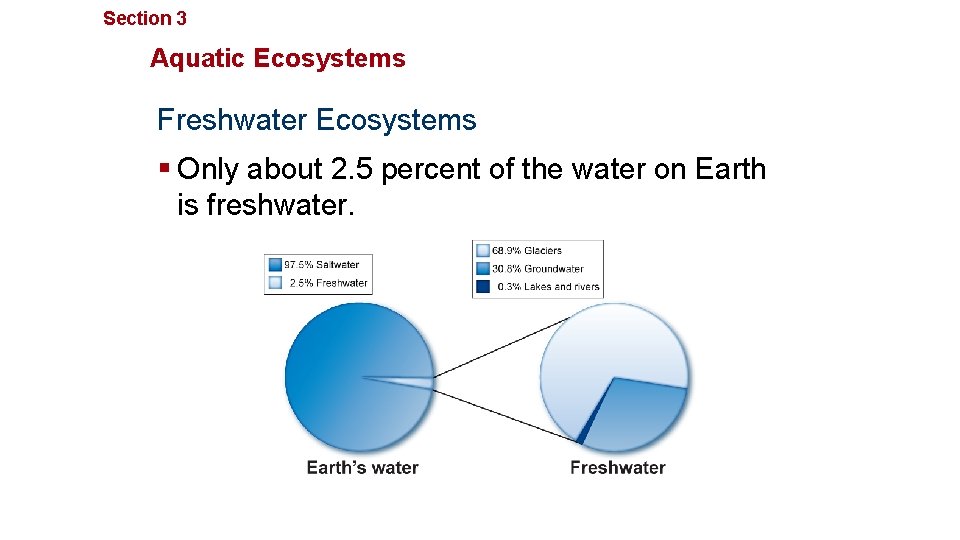
Section 3 Communities, Biomes, and Ecosystems Aquatic Ecosystems Freshwater Ecosystems § Only about 2. 5 percent of the water on Earth is freshwater.
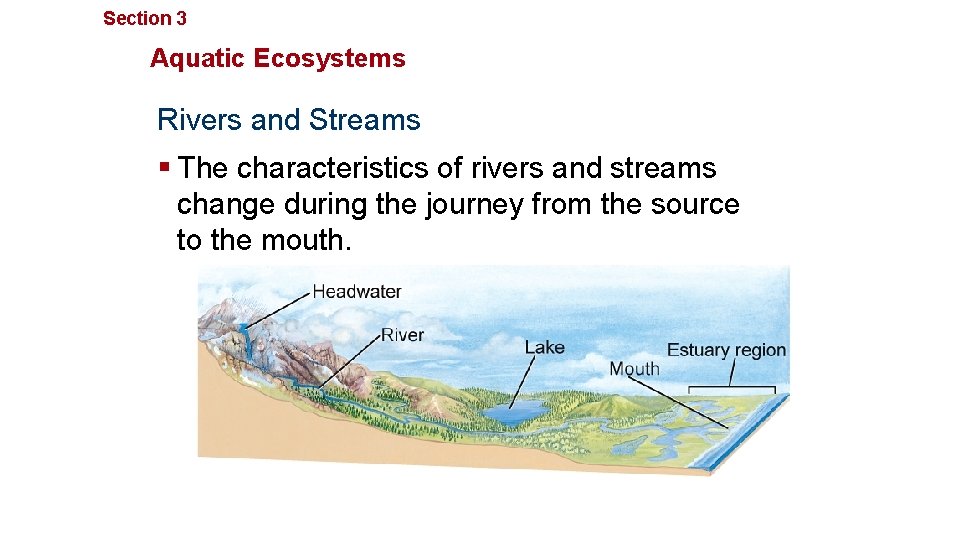
Section 3 Communities, Biomes, and Ecosystems Aquatic Ecosystems Rivers and Streams § The characteristics of rivers and streams change during the journey from the source to the mouth.
Section 3 Communities, Biomes, and Ecosystems Aquatic Ecosystems § Fast-moving rivers and streams keep sediment moving-not much accumulation of organic materials and sediment. § Usually, there are fewer species living in the rapid waters than slower moving rivers § In slow-moving water, more variety of living things and more sediment accumulates at the bottom
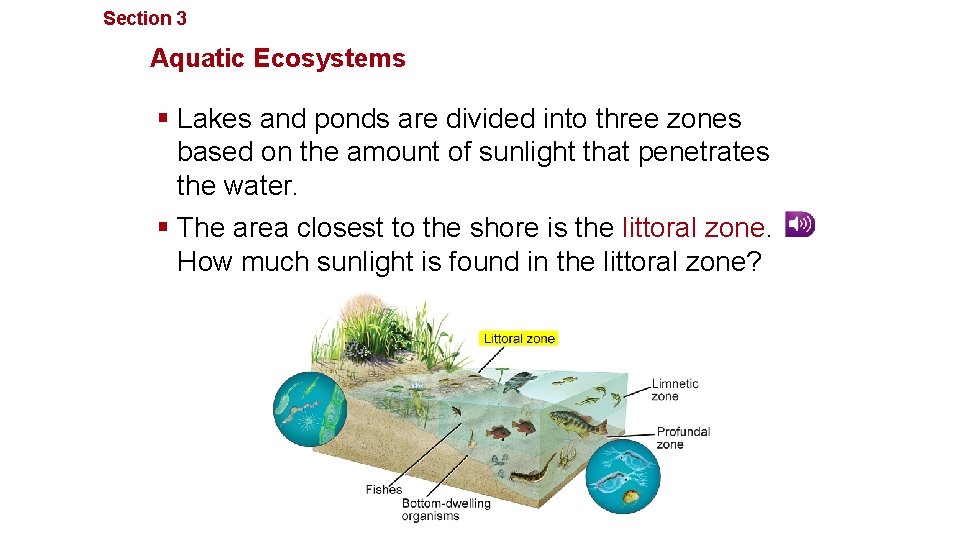
Section 3 Communities, Biomes, and Ecosystems Aquatic Ecosystems § Lakes and ponds are divided into three zones based on the amount of sunlight that penetrates the water. § The area closest to the shore is the littoral zone. How much sunlight is found in the littoral zone?
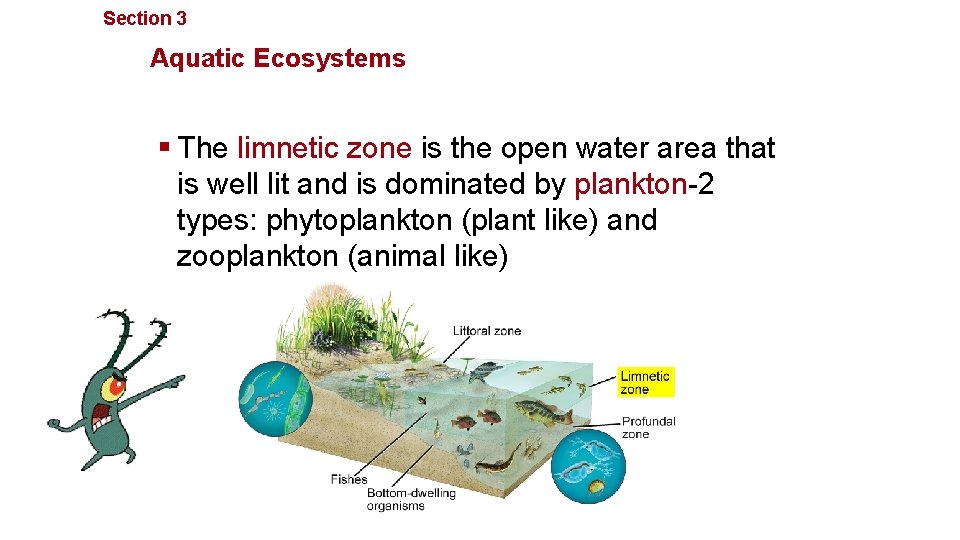
Section 3 Communities, Biomes, and Ecosystems Aquatic Ecosystems § The limnetic zone is the open water area that is well lit and is dominated by plankton-2 types: phytoplankton (plant like) and zooplankton (animal like)
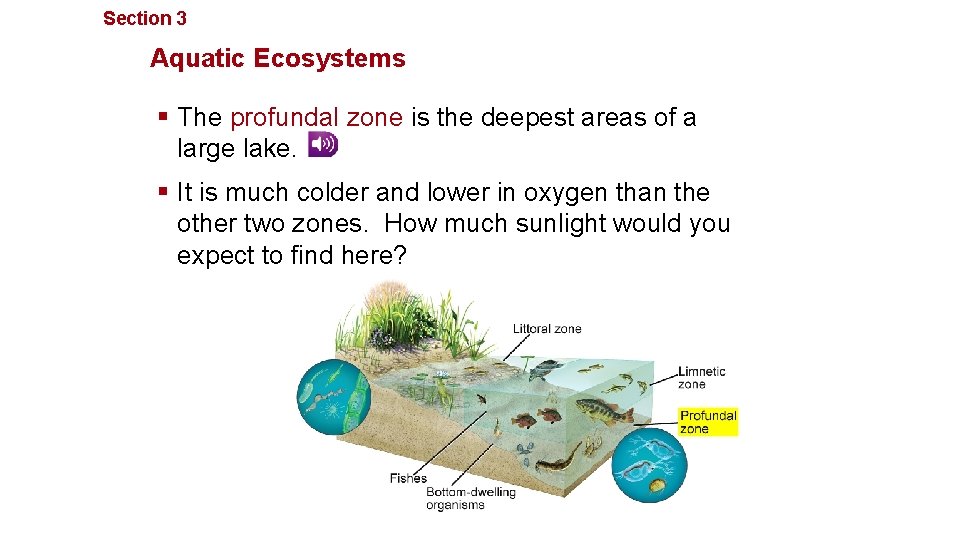
Section 3 Communities, Biomes, and Ecosystems Aquatic Ecosystems § The profundal zone is the deepest areas of a large lake. § It is much colder and lower in oxygen than the other two zones. How much sunlight would you expect to find here?
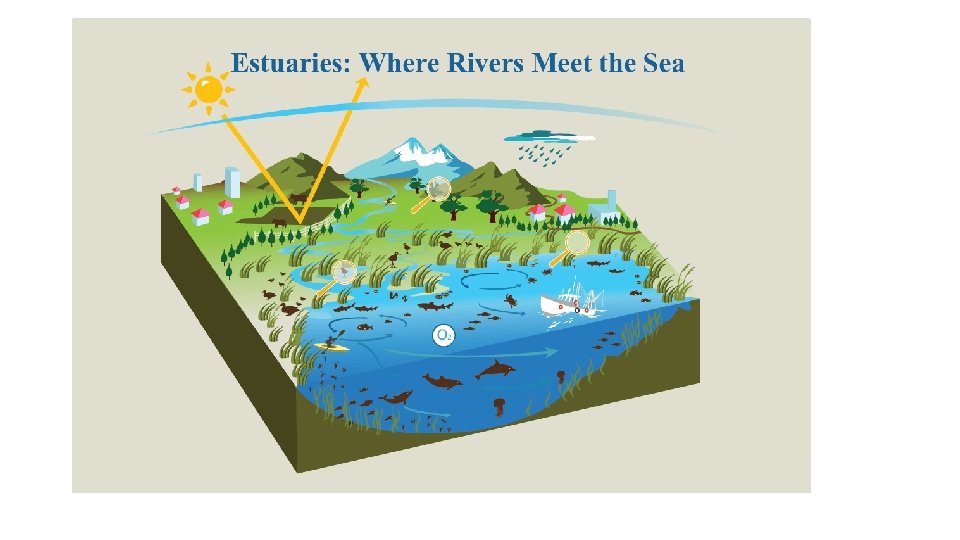
Section 3 Communities, Biomes, and Ecosystems Aquatic Ecosystems Transitional Aquatic Ecosystems § Areas of land such as marshes, swamps, and bogs that are saturated with water and that support aquatic plants are called wetlands. § Estuaries: wetland formed when rivers flow into ocean-breeding grounds for oceanic organisms What is an estuary? § Brain POP: The Everglades https: //www. brainpop. com/science/earthsystem/everglades/
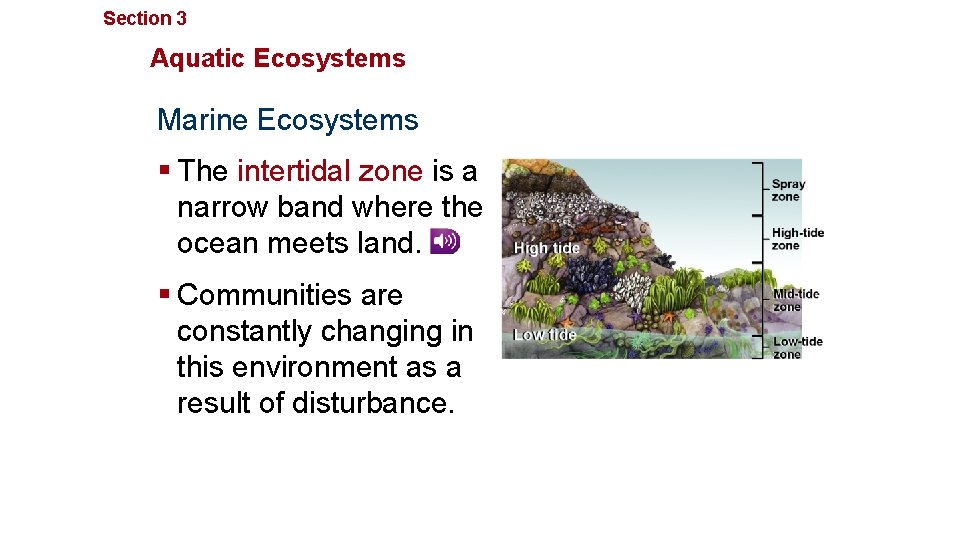
Section 3 Communities, Biomes, and Ecosystems Aquatic Ecosystems Marine Ecosystems § The intertidal zone is a narrow band where the ocean meets land. § Communities are constantly changing in this environment as a result of disturbance.
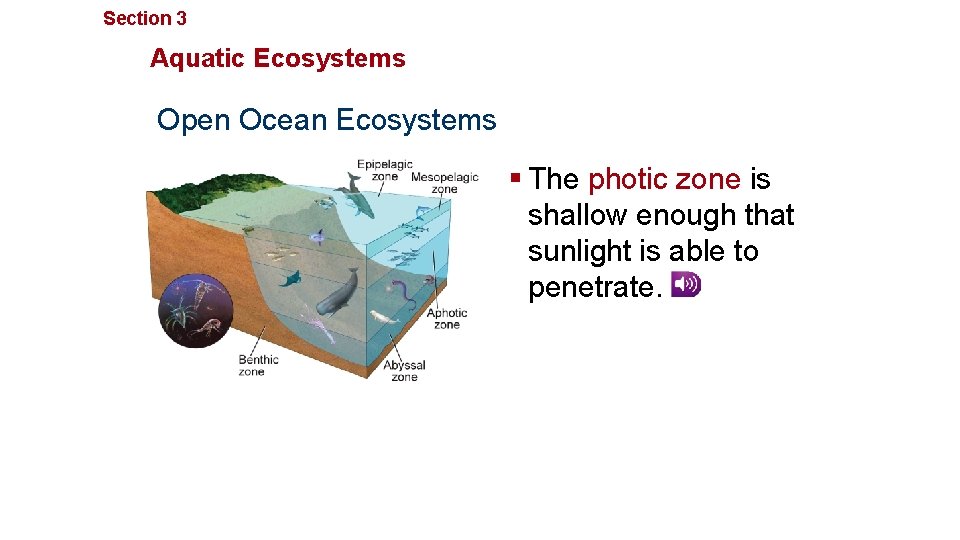
Section 3 Communities, Biomes, and Ecosystems Aquatic Ecosystems Open Ocean Ecosystems § The photic zone is shallow enough that sunlight is able to penetrate.
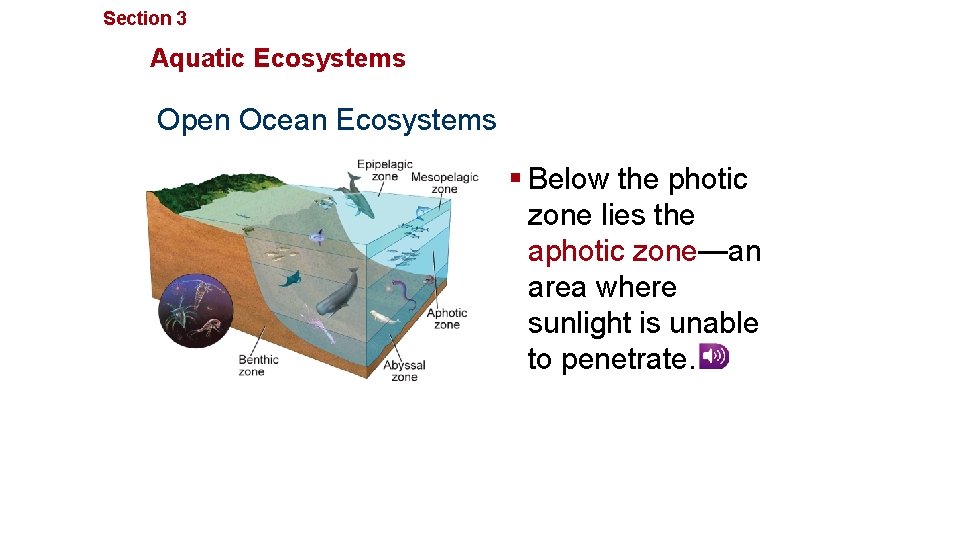
Section 3 Communities, Biomes, and Ecosystems Aquatic Ecosystems Open Ocean Ecosystems § Below the photic zone lies the aphotic zone—an area where sunlight is unable to penetrate.
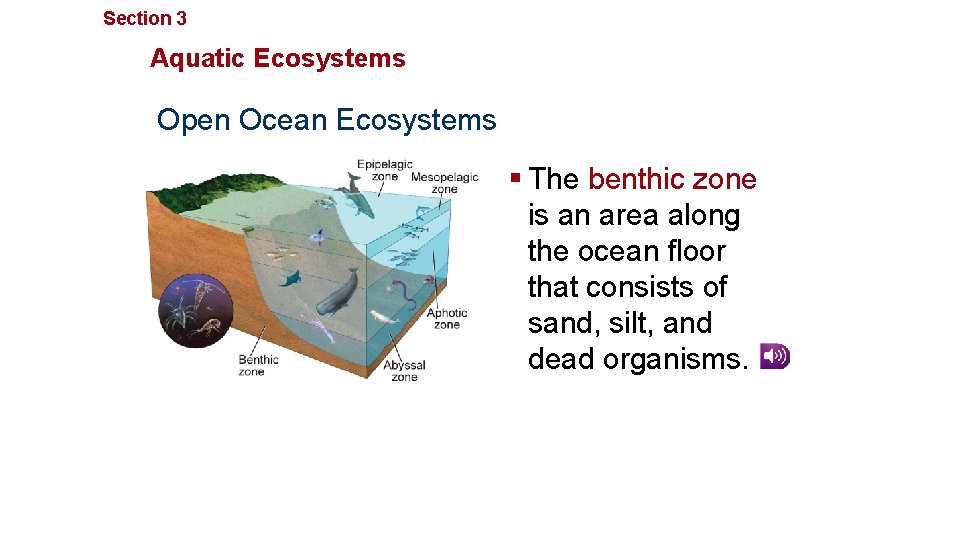
Section 3 Communities, Biomes, and Ecosystems Aquatic Ecosystems Open Ocean Ecosystems § The benthic zone is an area along the ocean floor that consists of sand, silt, and dead organisms.
Coral Reefs • BP: Coral Reefs
- Slides: 42