
Chapter 3 The Biosphere 3 1 What is
Chapter 3 The Biosphere
3. 1 What is Ecology?
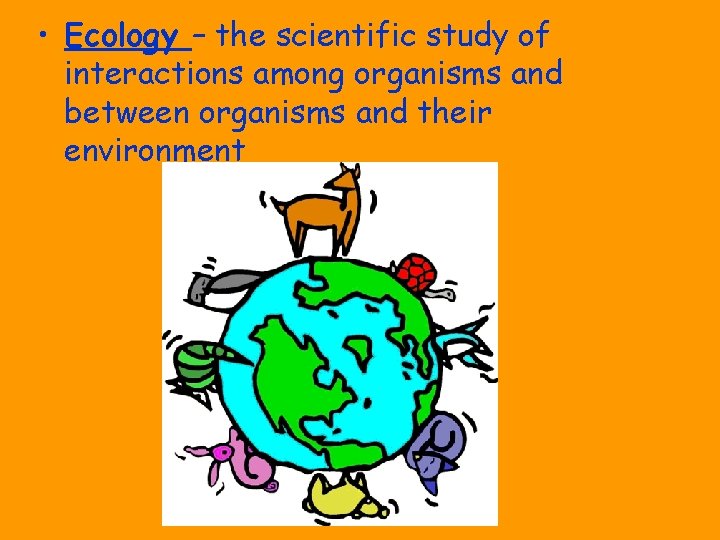
• Ecology – the scientific study of interactions among organisms and between organisms and their environment
Levels of Organization • Ecology can look at interactions on 6 different levels (smallest to largest): – Species: group of similar organisms that can breed with each other to make fertile offspring – Populations: group of individuals of the same species living in the same area – Communities: different populations living together in a defined area
Levels of Organization Cont… – Ecosystems: collection of all organisms that live in a particular place along with the nonliving environment – Biome: group of ecosystems with the same climate and similar dominant communities – Biosphere: contains the combined portions of the planet in which all life exists including land, water, and air (or atmosphere from 11 km below ocean surface to 8 km above earth surface)
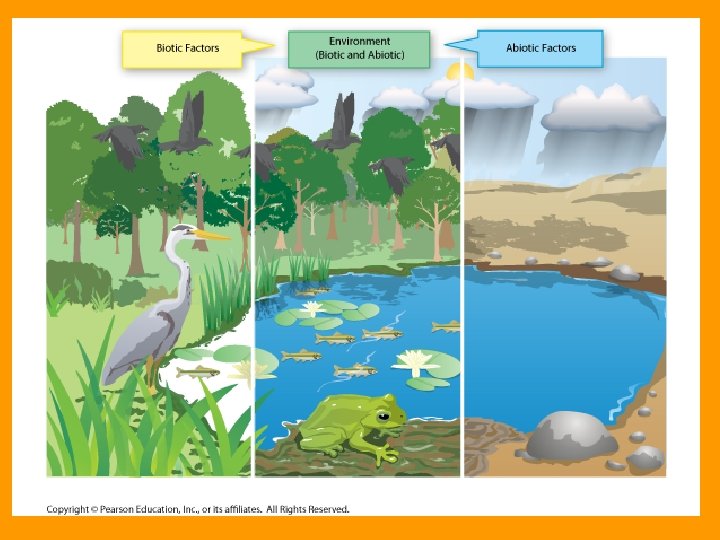
Biotic and Abiotic Factors • Biotic factor- any living part of the environment with which an organism might interact – Example: animals, plants, bacteria, etc • Abiotic factor- any nonliving part of the environment – Example: sunlight, heat, precipitation, water currents, soil types, etc
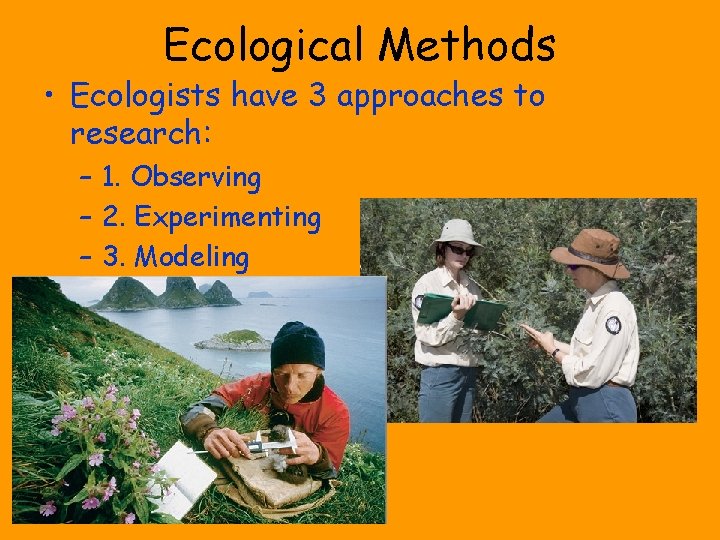
Ecological Methods • Ecologists have 3 approaches to research: – 1. Observing – 2. Experimenting – 3. Modeling
3. 2 Energy, Producers, and Consumers
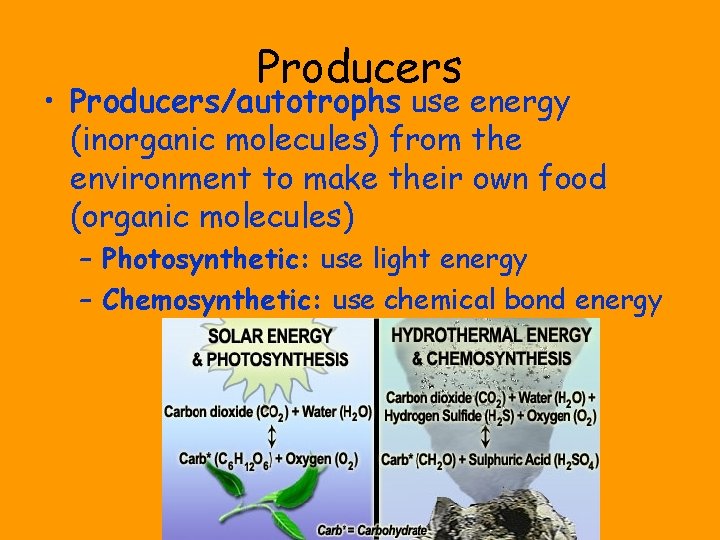
Producers • Producers/autotrophs use energy (inorganic molecules) from the environment to make their own food (organic molecules) – Photosynthetic: use light energy – Chemosynthetic: use chemical bond energy
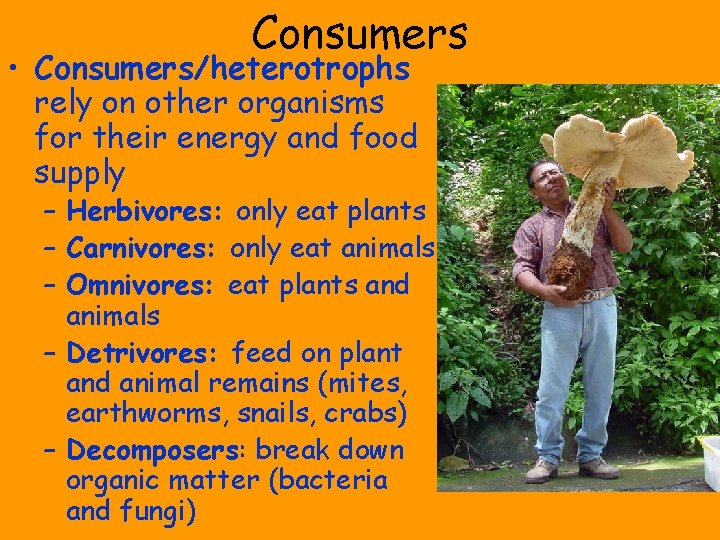
Consumers • Consumers/heterotrophs rely on other organisms for their energy and food supply – Herbivores: only eat plants – Carnivores: only eat animals – Omnivores: eat plants and animals – Detrivores: feed on plant and animal remains (mites, earthworms, snails, crabs) – Decomposers: break down organic matter (bacteria and fungi)
3. 3 Energy Flow in Ecosystems
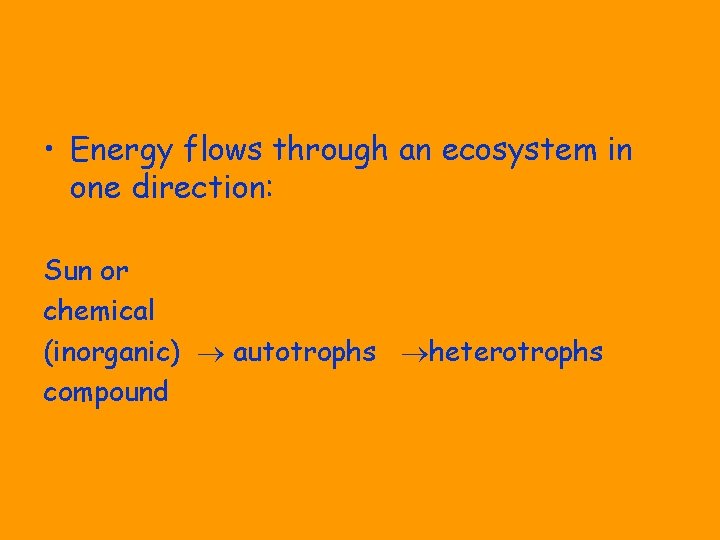
• Energy flows through an ecosystem in one direction: Sun or chemical (inorganic) autotrophs heterotrophs compound
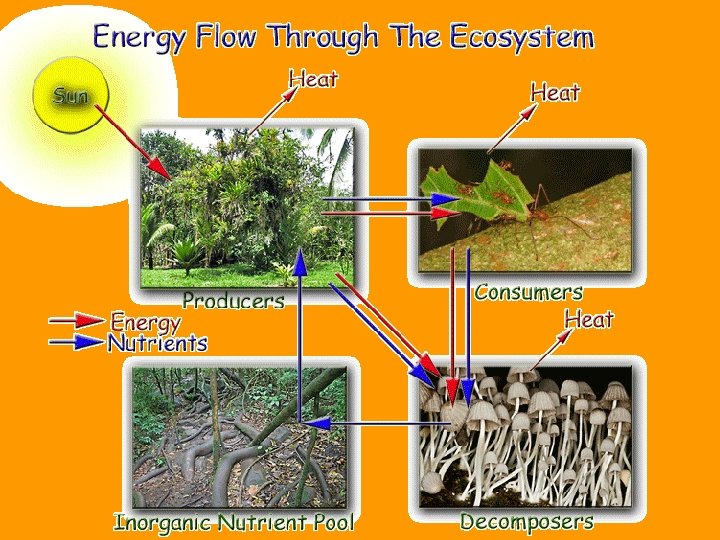
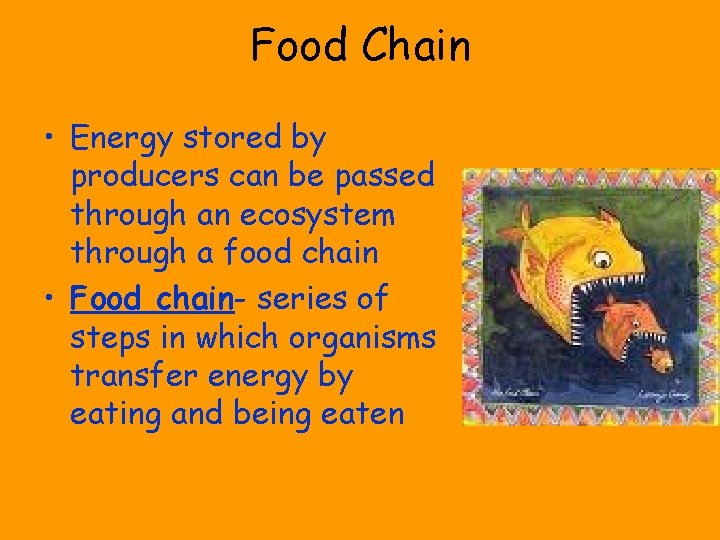
Food Chain • Energy stored by producers can be passed through an ecosystem through a food chain • Food chain- series of steps in which organisms transfer energy by eating and being eaten
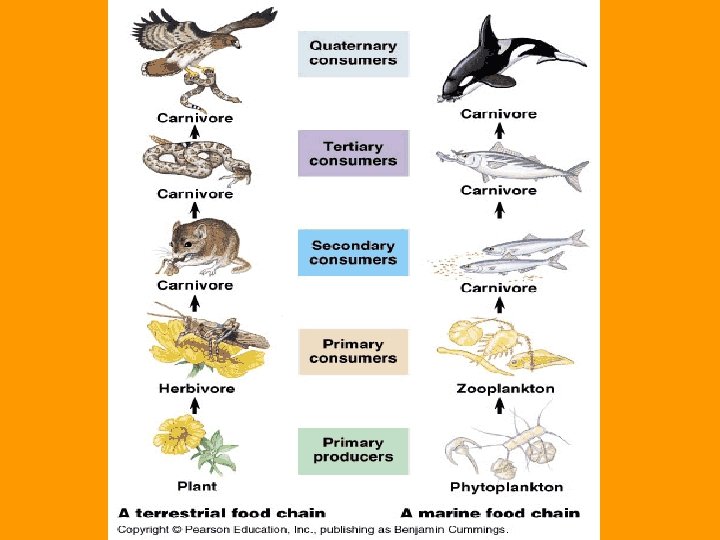
Food Webs • Food Web – network of complex interactions formed by the feeding relationships among various organisms in an ecosystem – More complex and realistic than a food chain
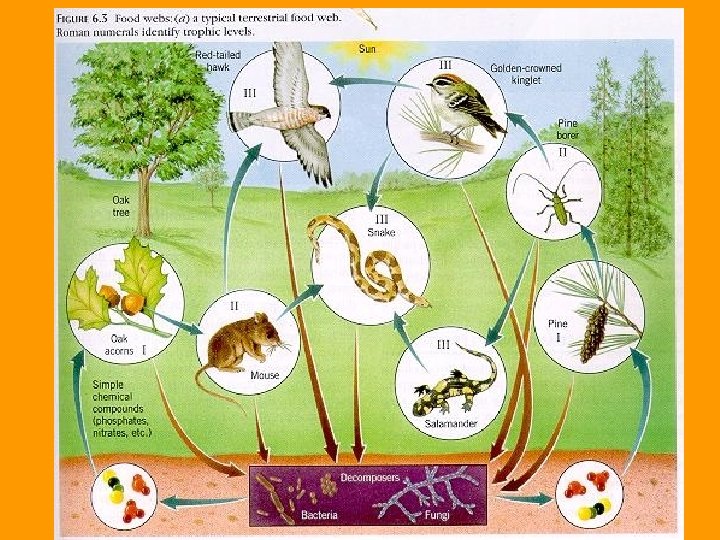
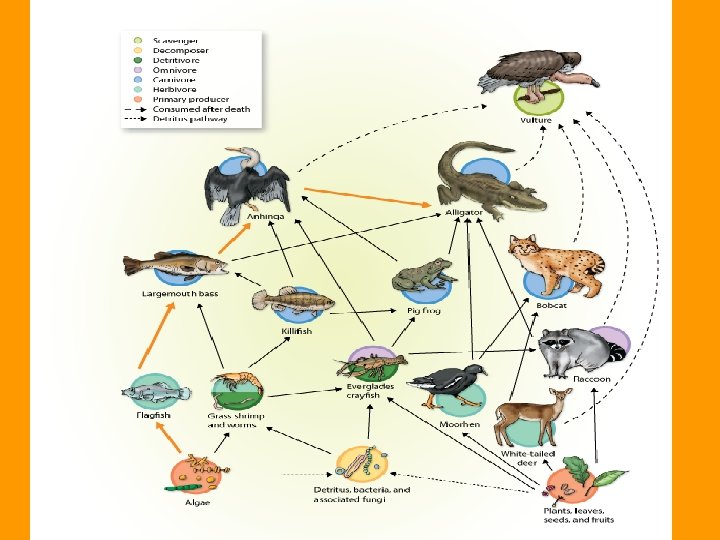
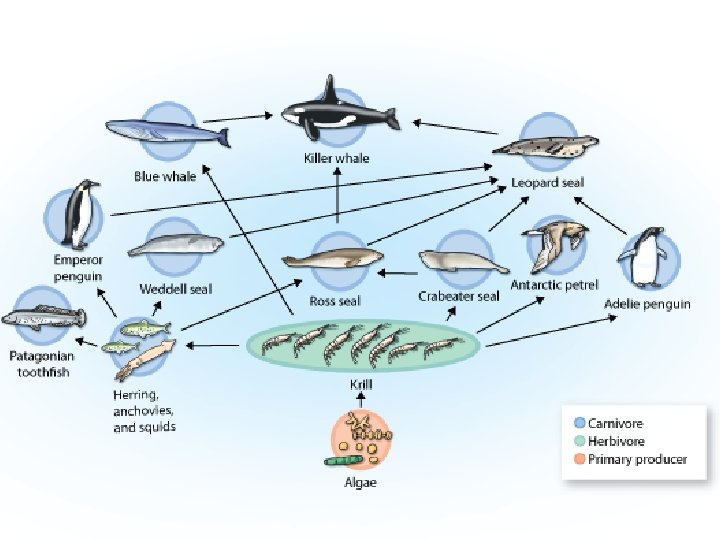
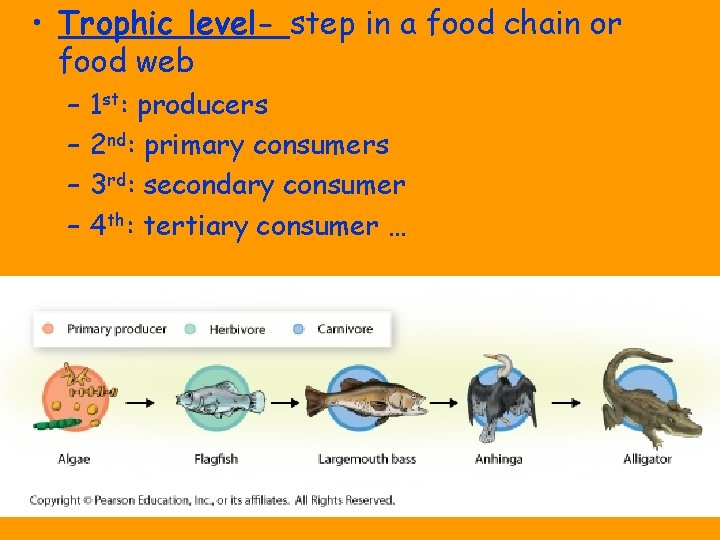
• Trophic level- step in a food chain or food web – – 1 st: producers 2 nd: primary consumers 3 rd: secondary consumer 4 th: tertiary consumer …
Ecological Pyramid • Ecological pyramid- diagram that shows the relative amounts of energy or matter contained within each trophic level of a food chain or food web – 3 kinds: energy, biomass, pyramids of numbers
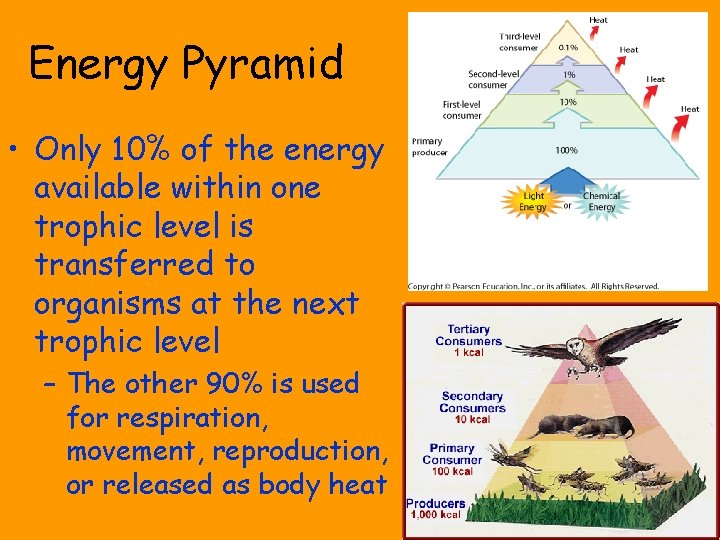
Energy Pyramid • Only 10% of the energy available within one trophic level is transferred to organisms at the next trophic level – The other 90% is used for respiration, movement, reproduction, or released as body heat
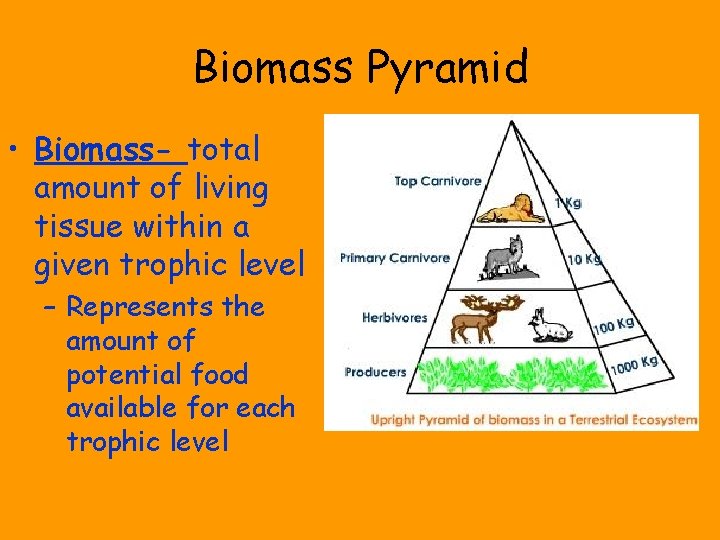
Biomass Pyramid • Biomass- total amount of living tissue within a given trophic level – Represents the amount of potential food available for each trophic level
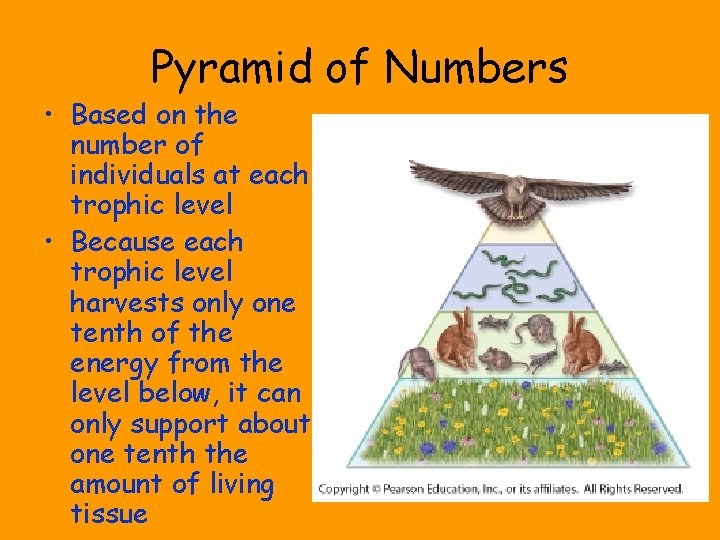
Pyramid of Numbers • Based on the number of individuals at each trophic level • Because each trophic level harvests only one tenth of the energy from the level below, it can only support about one tenth the amount of living tissue
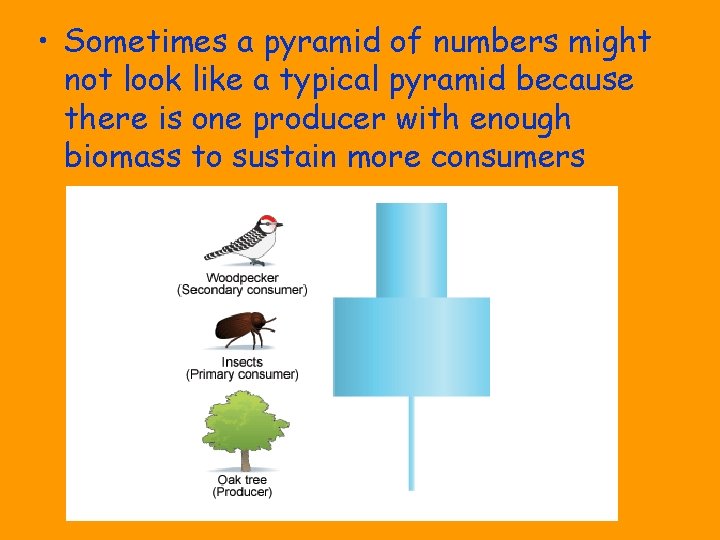
• Sometimes a pyramid of numbers might not look like a typical pyramid because there is one producer with enough biomass to sustain more consumers
3. 4 Cycles of Matter
• In most organisms, more than 95% of the body is made of 4 elements: – – Oxygen Carbon Hydrogen Nitrogen
• Unlike the one-way flow of energy, matter is recycled within and between ecosystems • Biogeochemical cycles – process in which elements, chemical compounds, and other forms of matter are passed from one organism to another and from one part of the biosphere to another
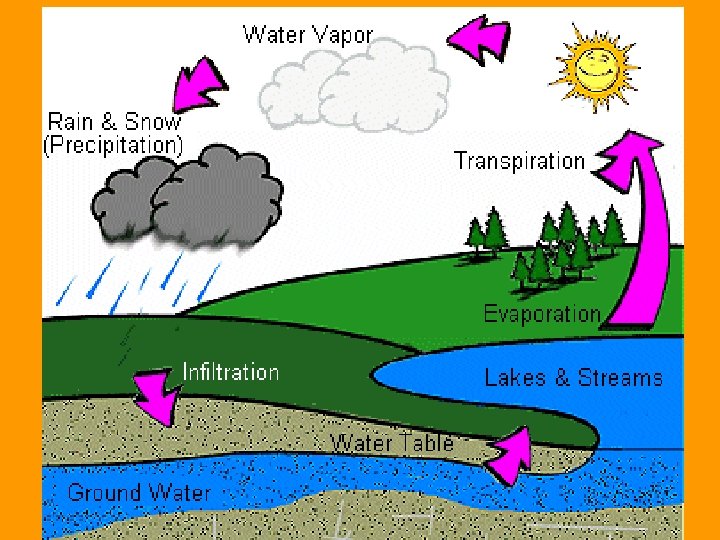
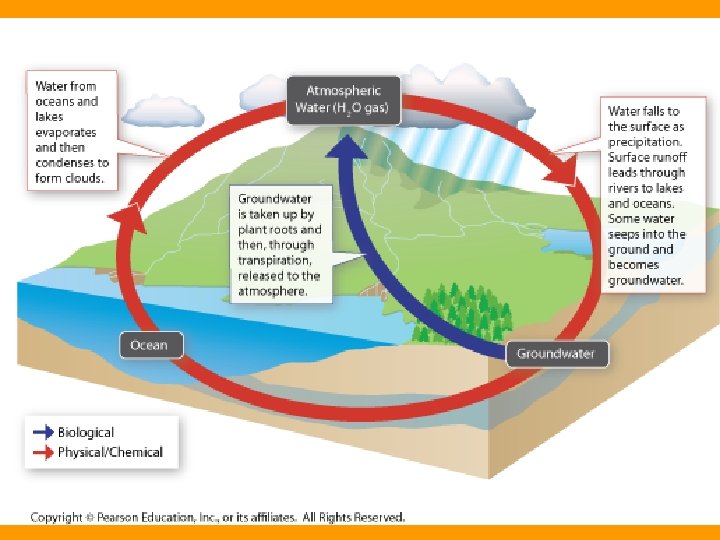
The Water Cycle • Water moves between ocean, atmosphere, and land • Evaporation- process by which water changed from a liquid form to an atmospheric gas • Transpiration- evaporation of water into the atmosphere by a plant through its leaves
• Water evaporates from earth’s surface or transpires from leaves of plants into the atmosphere once heated by the sun • As water vapor rises, it cools and condenses into clouds • Water returns to earth in the form of precipitation- rain, snow, sleet, or hail • Once on ground, water either runs off into streams or rivers or seeps into the ground and is absorbed by plants
Nutrient Cycles • Nutrients- all the chemical substances that an organism needs to sustain life – Needed by every living organism to build tissues and carry out essential life functions • 3 nutrient biogeochemical cycles: – Carbon, nitrogen, phosphorous
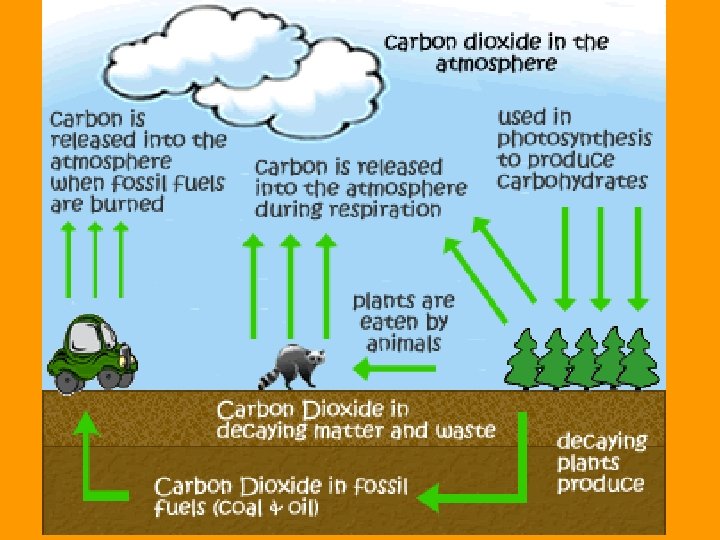
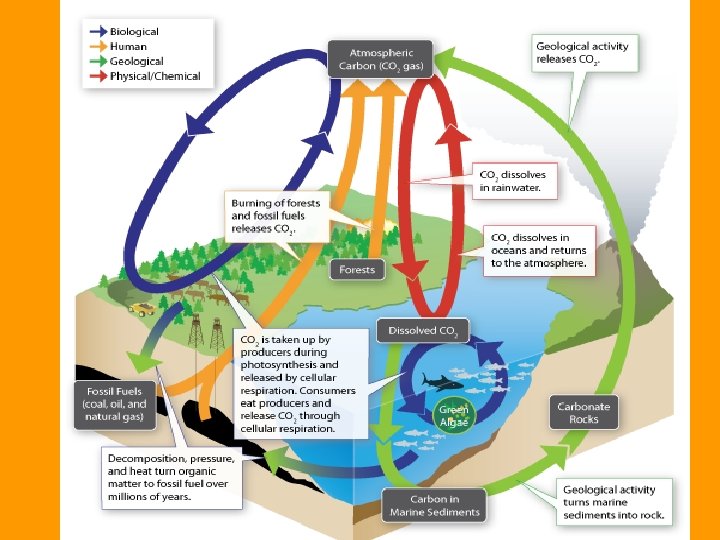
Carbon Cycle • Carbon makes up skeletons (as calcium carbonate- Ca. CO 3) and is needed by plants (as carbon dioxide- CO 2) for photosynthesis
• Photosynthesis, respiration, and decomposition take up and release carbon and oxygen • Erosion and volcanic activity release carbon dioxide to atmosphere and oceans • Dead organisms are converted into coal and petroleum (stored carbon underground) • Human activity (mining, cutting and burning forests, burning fossil fuels) release carbon dioxide to atmosphere
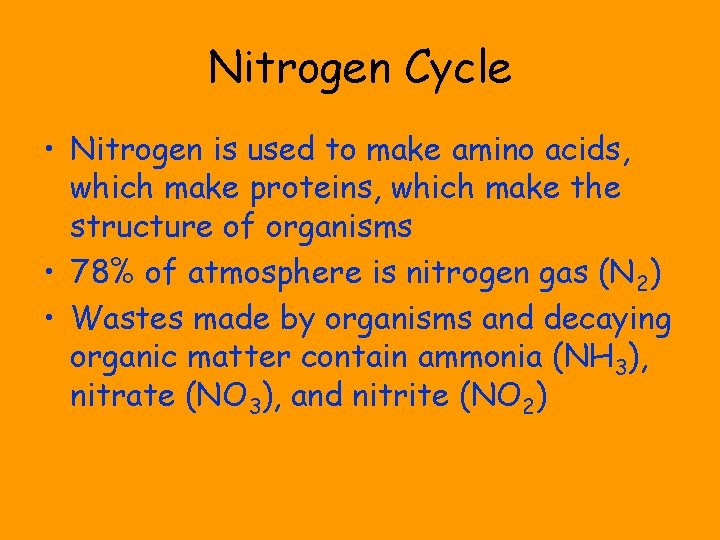
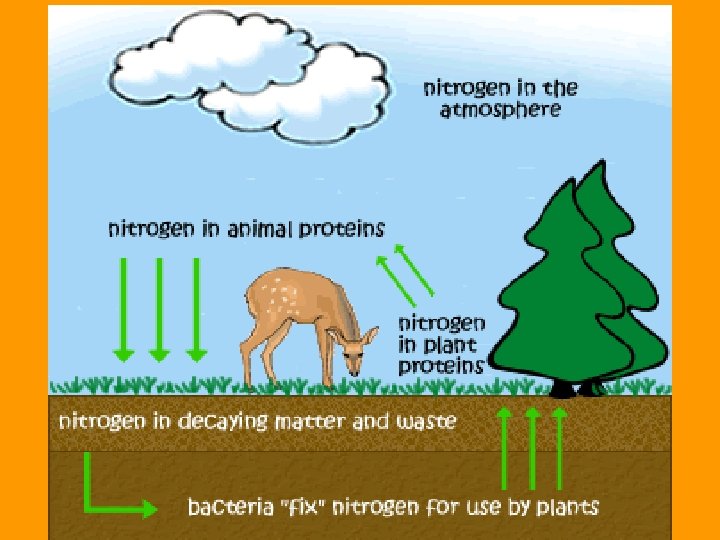
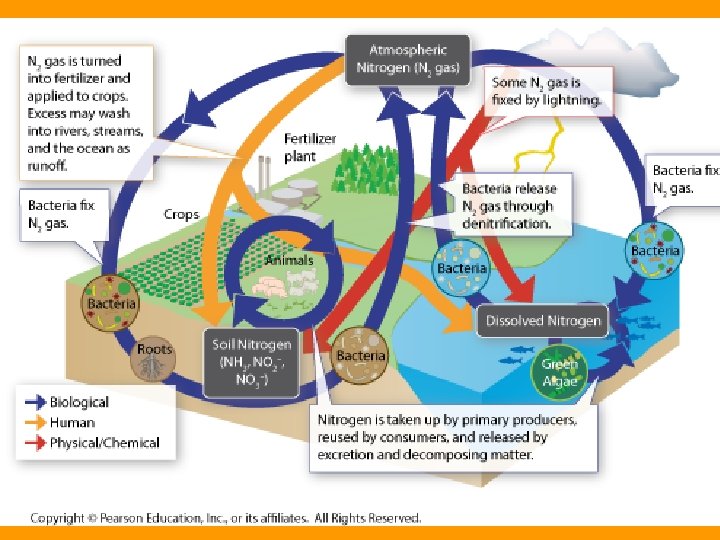
Nitrogen Cycle • Nitrogen is used to make amino acids, which make proteins, which make the structure of organisms • 78% of atmosphere is nitrogen gas (N 2) • Wastes made by organisms and decaying organic matter contain ammonia (NH 3), nitrate (NO 3), and nitrite (NO 2)
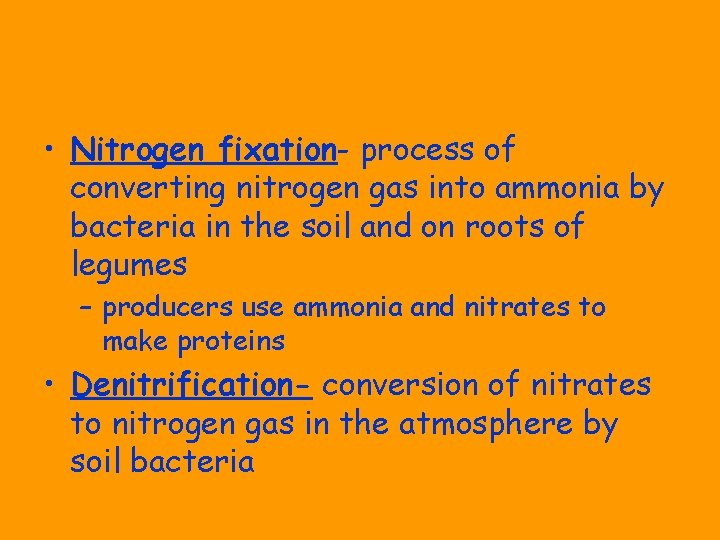
• Nitrogen fixation- process of converting nitrogen gas into ammonia by bacteria in the soil and on roots of legumes – producers use ammonia and nitrates to make proteins • Denitrification- conversion of nitrates to nitrogen gas in the atmosphere by soil bacteria
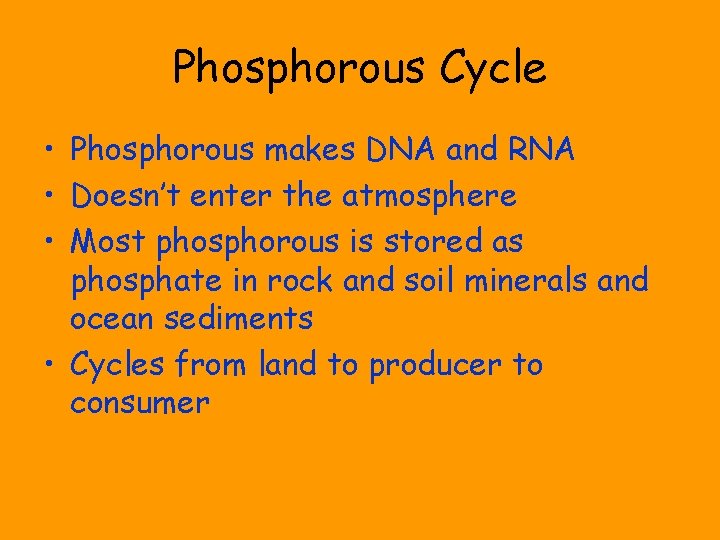
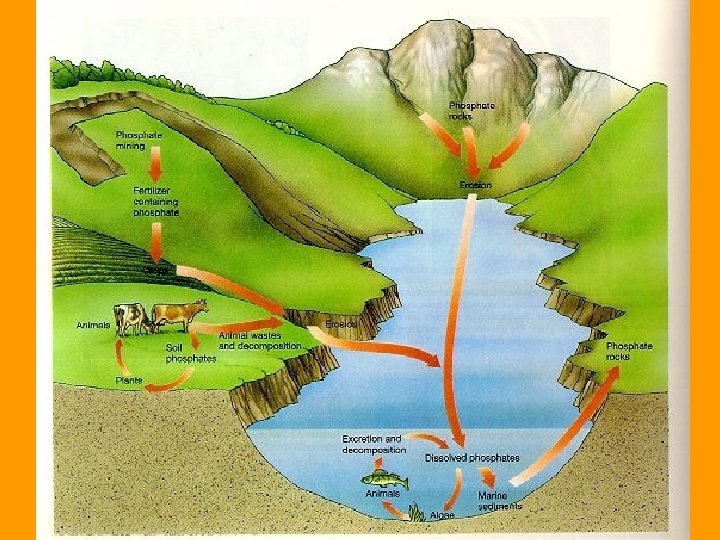
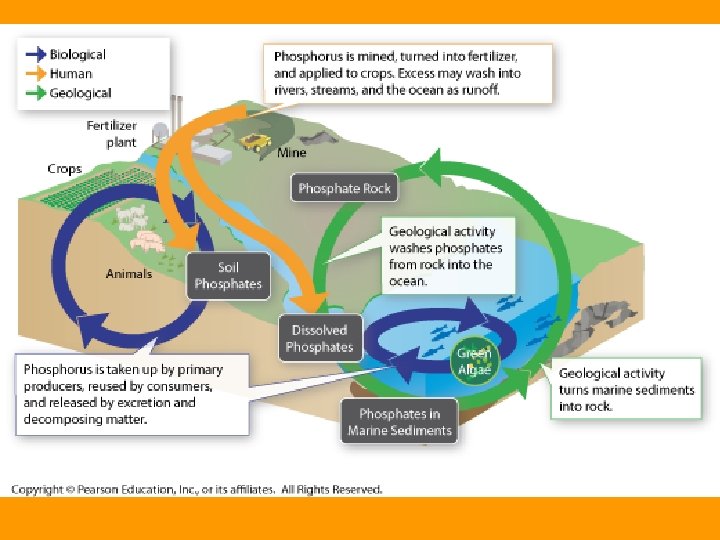
Phosphorous Cycle • Phosphorous makes DNA and RNA • Doesn’t enter the atmosphere • Most phosphorous is stored as phosphate in rock and soil minerals and ocean sediments • Cycles from land to producer to consumer
Nutrient Limitation • Primary productivity- rate at which organic matter (food) is created by producers • Limiting nutrient- single nutrient that is either scarce or cycles very slowly, limiting the growth of organisms in an ecosystem (slows primary productivity) • Fertilizers help because they add nitrogen, phosphorous, and potassium
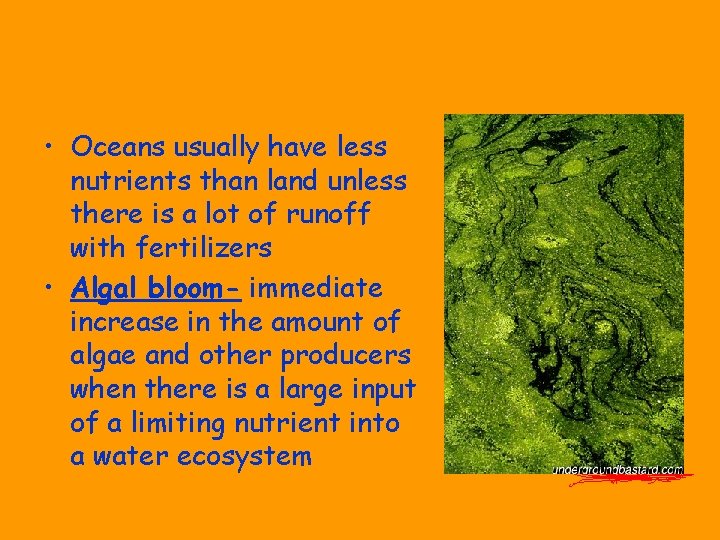
• Oceans usually have less nutrients than land unless there is a lot of runoff with fertilizers • Algal bloom- immediate increase in the amount of algae and other producers when there is a large input of a limiting nutrient into a water ecosystem
- Slides: 47