
Chapter 3 The Biosphere 3 1 What is
Chapter 3 The Biosphere
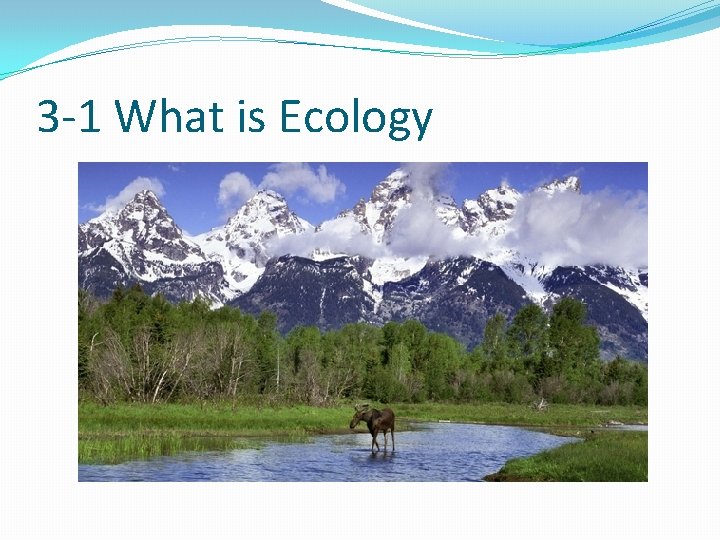
3 -1 What is Ecology �Ecology is the scientific study of interaction between organisms and their environment
3 -1 What is Ecology
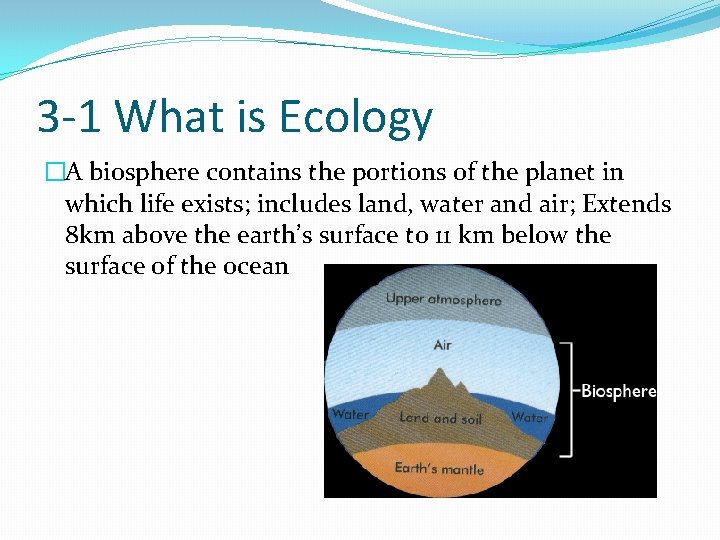
3 -1 What is Ecology �A biosphere contains the portions of the planet in which life exists; includes land, water and air; Extends 8 km above the earth’s surface to 11 km below the surface of the ocean
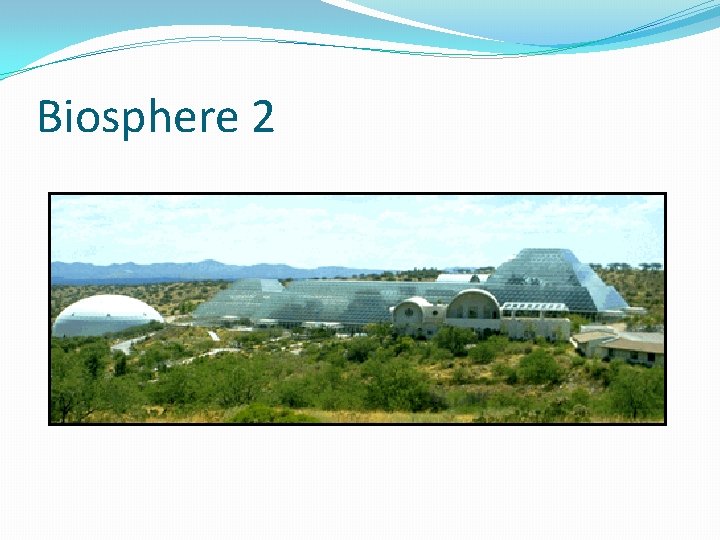
Biosphere 2
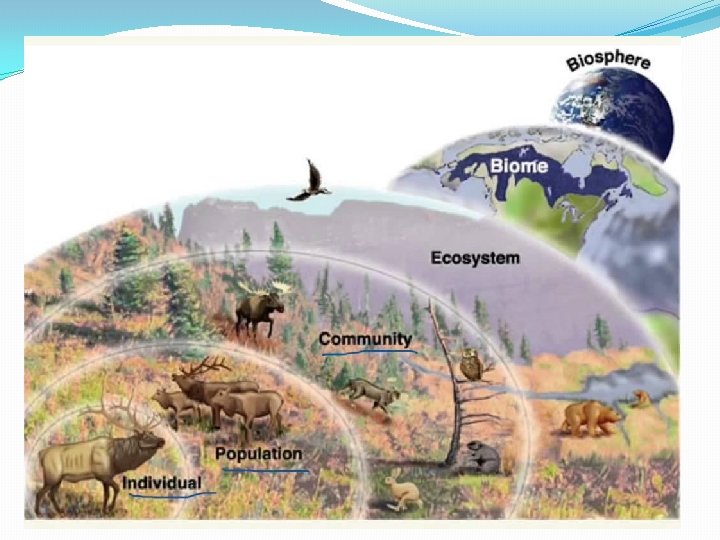
3 -1 What is Ecology �Levels of organization of the biosphere �Species-group of organisms that can interbreed because they are so similar to each other �Populations-a group of individuals that belong to the same species and live in the same area �Communities-a collection of different populations that live together in a defined area �Ecosystem-a collection of organisms that live in a particular place together with the non-living environment �Biome-a group of ecosystems that have the same climate and similar dominant communities
3 -1 What is Ecology � Ecological methods � Three approaches: � Observing � For example, what species live here, how many individuals are there. � May be a first step in designing an experiment � Experimenting � Used to test hypotheses � Ecologists may set up an artificial environment in a lab or in a natural ecosystem � Modeling � Events that occur over a long period of time (a pond turning into a meadow) are difficult to study. � Ecologists make models to study things like global warming effects on ecosystems. � Many are based on mathematical formulas based on data collected through observation and experimentation
3 -2 Energy Flow �Producers �Sunlight is the main energy source for life on Earth �Plants, algae and certain bacteria can capture energy from the sun or chemical are called producers �In a few ecosystems, some types of organisms rely on stored energy in organic chemical compounds �Chemosynthesis-use chemical compounds to produce carbohydrates
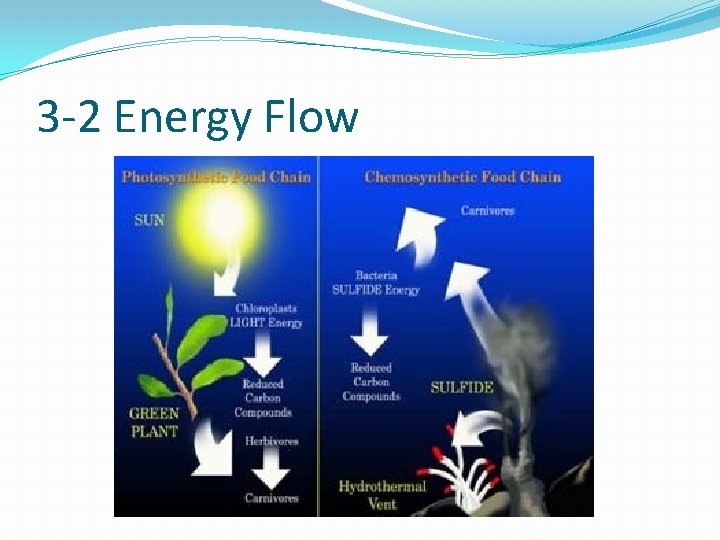
3 -2 Energy Flow
3 -2 Energy Flow �Consumers cannot obtain energy directly from their environment and must consume other organisms for energy �Called heterotrophs or consumers � Herbivores-eat plants; cows, caterpillars, deer � Carnivores-eat animals; humans, dogs, snakes, owls � Detritivores-get energy from dead and decaying matter; worms, snails, crabs � Decomposers-break down organic matter; bacteria and fungi
3 -2 Energy Flow �Feeding relationships-Energy flows in an ecosystem in one direction from the sun or inorganic compounds to autotrophs (producers) and then to various heterotrophs (consumers) �Energy stored in producers is passed through the ecosystem along a food chain, a series of steps in which organisms transfer energy by eating and being eaten
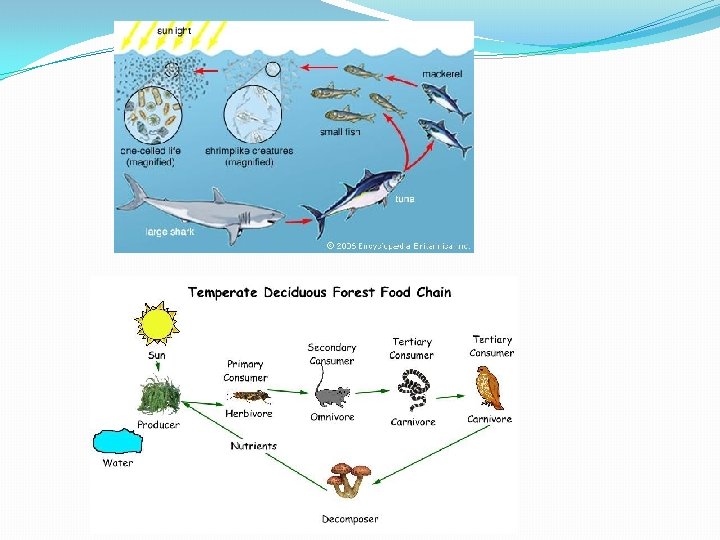

Energy Flow
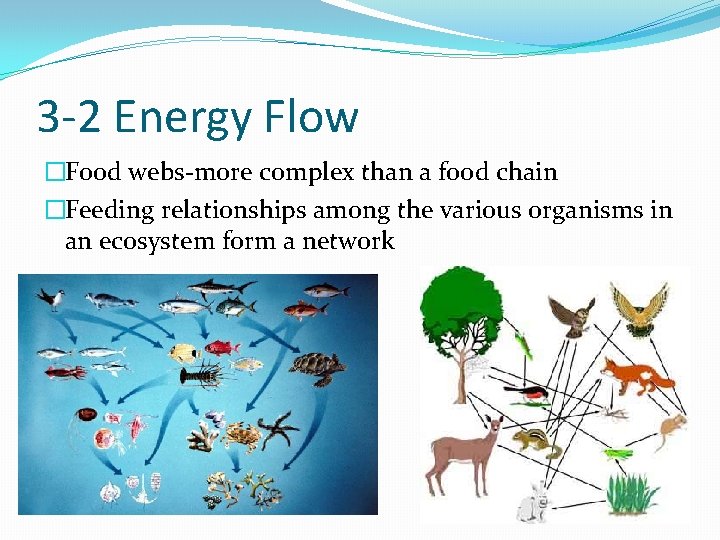
3 -2 Energy Flow �Food webs-more complex than a food chain �Feeding relationships among the various organisms in an ecosystem form a network
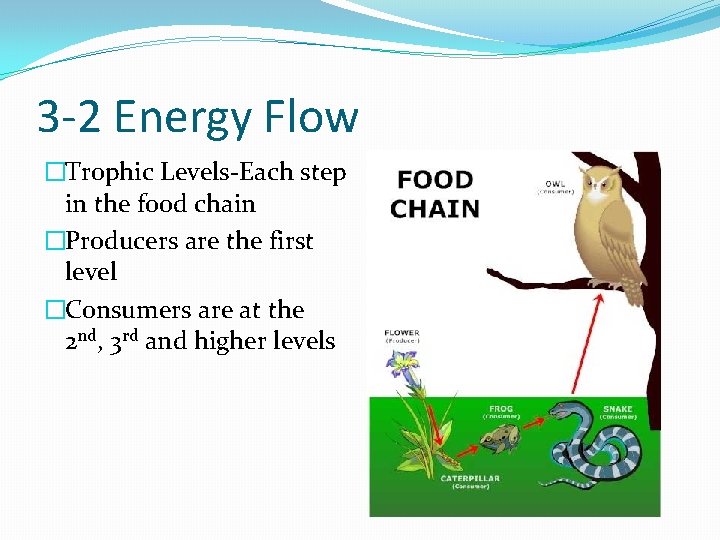
3 -2 Energy Flow �Trophic Levels-Each step in the food chain �Producers are the first level �Consumers are at the 2 nd, 3 rd and higher levels
3 -2 Energy Flow �Ecological pyramids represent the amount of energy in an ecosystem �Three types of pyramids �Energy-only 10% of the energy at one trophic level is transferred to the next trophic level; much is used or released into the environment as heat �Biomass-usually expressed in terms of grams of organic material per unit area; represents the amount of potential food available at each trophic level �Pyramid of numbers-Based on the number of individual organisms at each trophic level
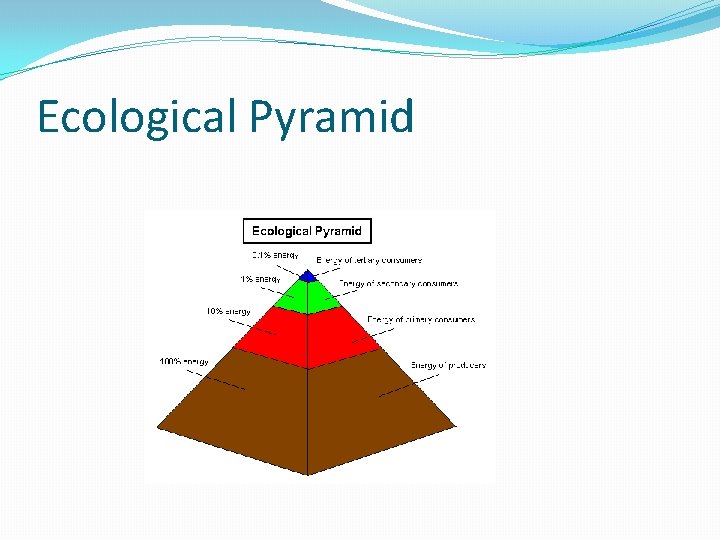
Ecological Pyramid
3 -3 Cycles of Matter �Recycling in the Biosphere �Energy is recycled within and between ecosystems �Elements, chemical compounds and other forms of matter are passed from one organism to another and from one biosphere to another through biogeochemical cycles (biological, geological and chemical)
3 -3 Cycles of Matter �The water cycle �Water moves between the ocean, the atmosphere and land �When water changes from liquid to vapor, it is called evaporation. Water evaporates from the land waterways to the atmosphere �Water also enters the atmosphere by transpiration by plants �Water gets back to land waterways by precipitation (rain or snow), where the water vapor becomes liquid water again
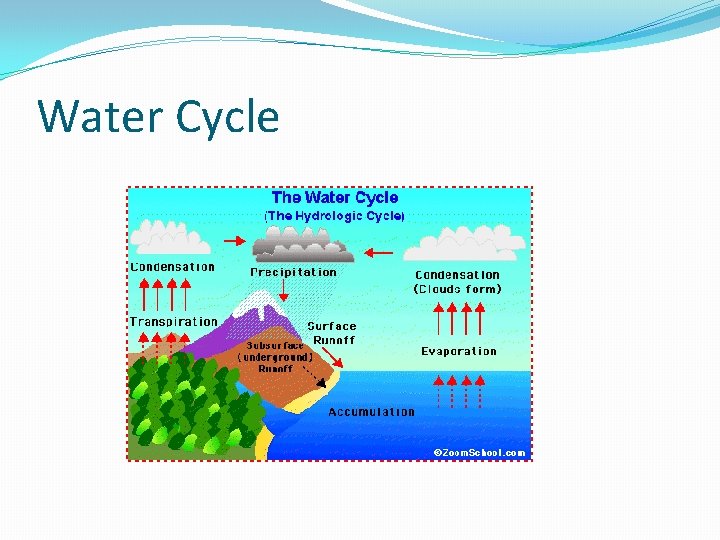
Water Cycle
3 -3 Cycles of Matter �Nutrient cycles �Nutrients are required for life functions. They are passed between organisms and the environment in biogeochemical cycles. �Carbon is the element that life is based on. �It is captured in the form of CO 2 from the atmosphere by plants in photosynthesis �It is eaten by animals during feeding �It goes to the soil as organisms decompose �It becomes trees and oil and coal and is released by burning or is released in volcanic eruptions
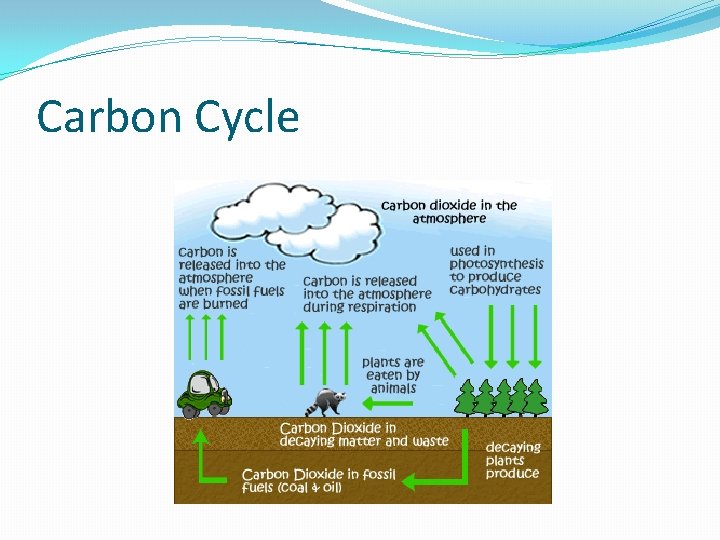
Carbon Cycle
3 -3 Cycles of Matter �Nitrogen cycle �Nitrogen required to make amino acids and DNA �Makes up 78% of the atmosphere �Found in waste of animals-ammonia (NH 3) and nitrates and nitrites(NO 3 -, NO 2 -) �N 2 in the atmosphere can’t be used directly by most organisms, needs to be “fixed” �Some soil bacteria fix nitrogen (N 2) and turn it into usable forms-Nitrogen fixation �Nitrogen is returned to the soil by dentrification (decomposition) of living things, and the N 2 is released into the atmosphere again
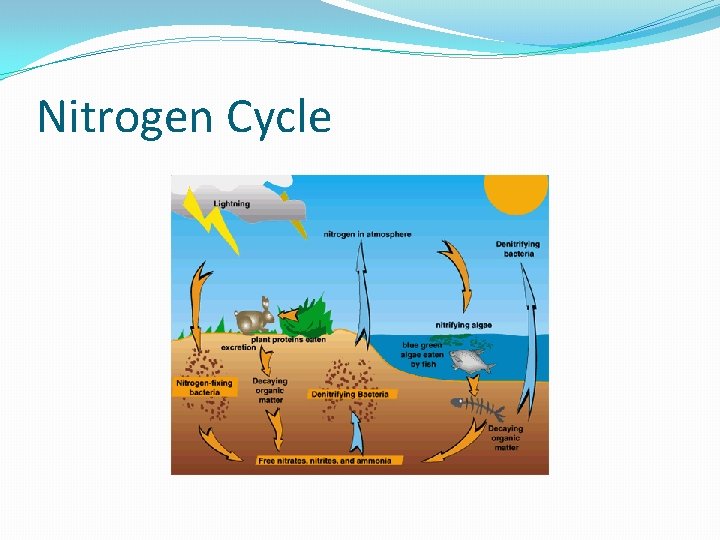
Nitrogen Cycle
3 -3 Cycles of Matter �Phosphorus cycle �P is part of DNA, RNA and most proteins �Not common in the biosphere �Does not enter the atmosphere, but remains in the soil and rocks in the form of inorganic phosphate �Gets washed into water from the rocks and soil by precipitation where it is used by marine organisms �Some cycles between the soil and land plants and animals
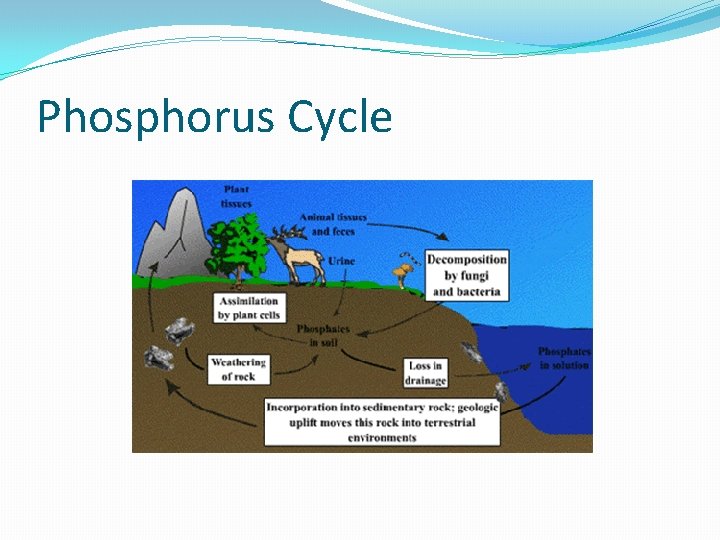
Phosphorus Cycle
3 -3 Cycles of Matter �Nutrient Limitation �Primary productivity is the rate at which organic matter is created by the producers �Controlled by available nutrients �When an ecosystem is limited by the availability of a single nutrient, it is called a limiting nutrient �This why farmers use fertilizers �Oceans are nutrient poor; often N 2 is the limiting nutrient
3 -3 Cycles of Matter �When an ecosystem receives an excess of a nutrient, can lead to uncontrolled growth �Example-When phosphates or nitrates from the soil of detergents run unto a lake, it causes an algae bloom. �This can upset the balance in the ecosystem. The algae grows so fast that it takes O 2 away from the other organisms that live in the water, like fish, leading to a decline in the populations of other organisms
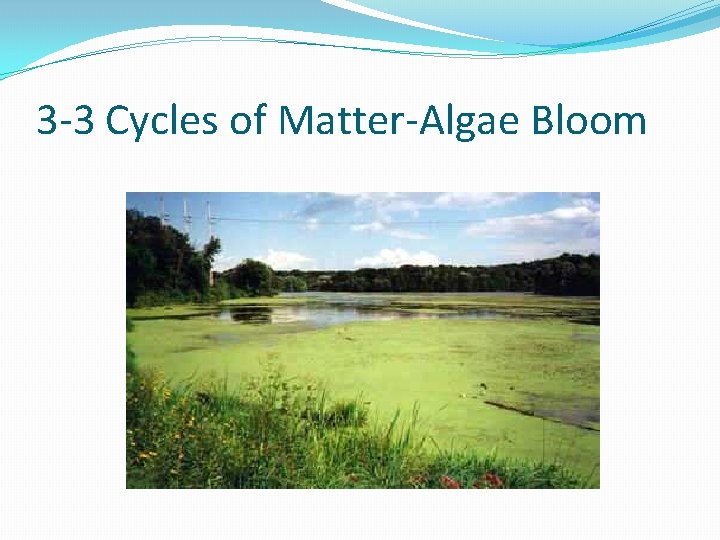
3 -3 Cycles of Matter-Algae Bloom
- Slides: 30