
Chapter 3 The American Colonies Take Shape 1607
- Slides: 38
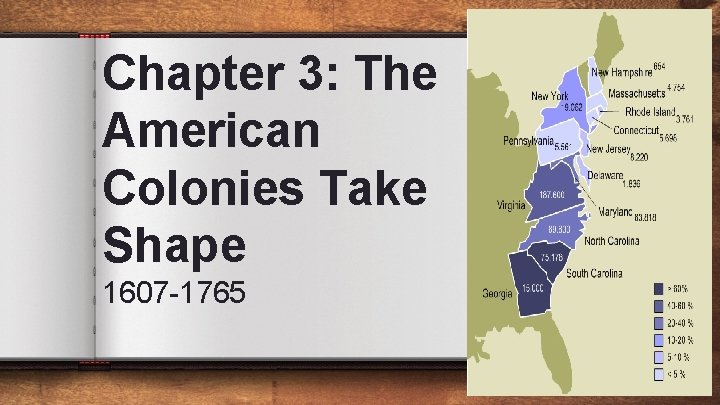
Chapter 3: The American Colonies Take Shape 1607 -1765
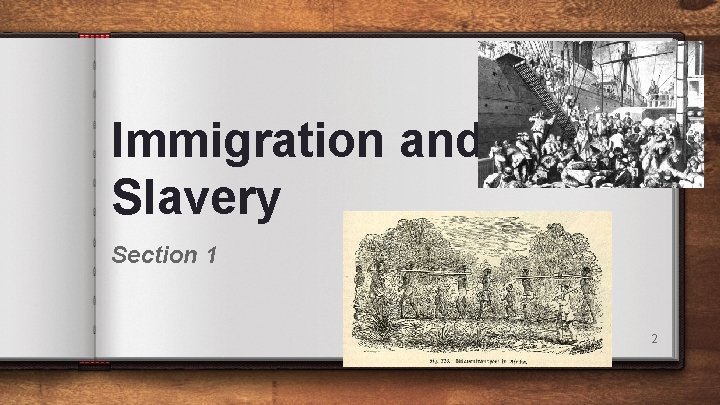
Immigration and Slavery Section 1 2
Part 1: Immigration
How did immigrants get here? ◈ Indentured Servants ◆ About half of all immigrants came over as indentured servants ◆ These were poor immigrants that paid for their passage by agreeing to work for a term of 4 -7 years ◇ Instead of wages they received their basic needs 4
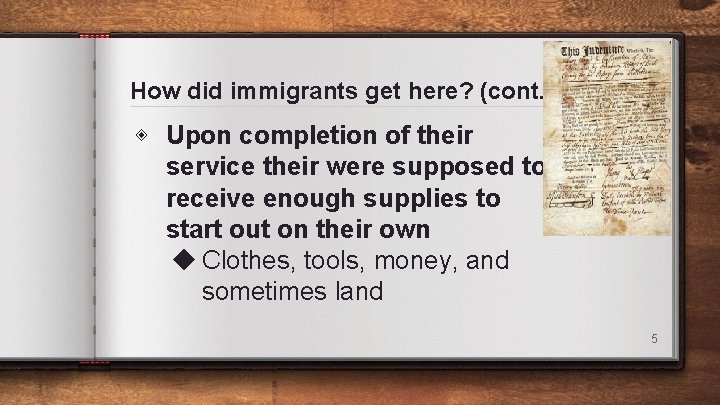
How did immigrants get here? (cont. ) ◈ Upon completion of their service their were supposed to receive enough supplies to start out on their own ◆ Clothes, tools, money, and sometimes land 5
Who made up the immigrants? ◈ Pre 1660 - mostly English ◈ Post 1660 ◆ Conditions in England improved that not many English wanted to leave ◇ Scots-Irish ◇ Germans 6
Why come to the colonies? ◈ For the English (Pre 1660) ◆ Political Conflict ◆ Religious Conflict ◆ High unemployment ◆ Post 1660 ◇ The English economy stabilized ◇ Conflict subsided ◇ English emigration shrank 7
Why come to the colonies? ? “(cont. ) ◈ Scots ◆ From Scotland ◆ 1707 - Great Britain was formed ◇ Allowed the Scots to have greater rights and opportunity ◇ Colonial officials, royal governors ◇ Merchants 8
Why come to the colonies? (cont. ) ◈ Scots-Irish ◆ From the Ulster region, Northern Ireland ◆ 1700 s-250, 000 ◇ Wanted land ◇ Settled in the “back countries” of the colonies 9
Why come to the colonies? (cont. ) ◈ Germans ◆ 1700 s (18 th Century)- 100, 000 ◆ Fled war, heavy taxes, forced military service and religious persecution ◆ 1682 - William Penn recruited German to help settle PA ◇ Given massive land holding compared to normal peasants 10
Part 2: Slavery
Warning: Some of the following pictures may be considered graphic 12
Who were the unwilling immigrants? ◈ English immigration declining ◆ Colonist looked to enslaved Africans for labor ◈ Early 1600 s, treated as indentured servants ◆ Freedom after years of service ◆ Could: own land, vote, and even own enslaved Africans of their own 13
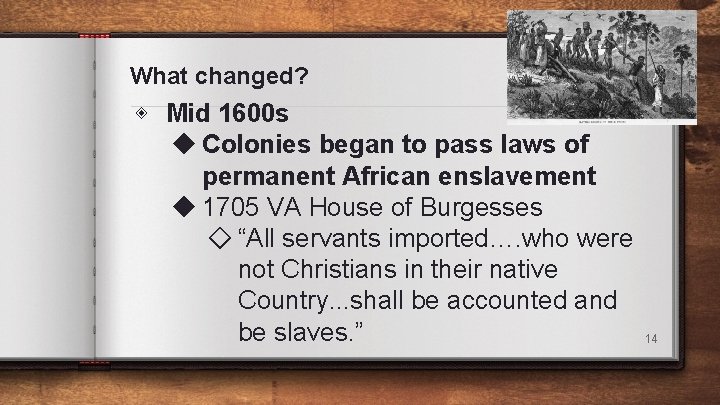
What changed? ◈ Mid 1600 s ◆ Colonies began to pass laws of permanent African enslavement ◆ 1705 VA House of Burgesses ◇ “All servants imported…. who were not Christians in their native Country. . . shall be accounted and be slaves. ” 14
What changed? (cont. ) ◈ Children of enslaved Africans also were born slaves ◈ began to promote the idea of Africans were inferior to whites ◆ Codified by law as well 15
What was the Transatlantic Slave Trade? ◈ Expanded rapidly once the slave trade was established ◈ 1700 s, imported, 1, 500, 000 enslaved Africans ◆ At least 250, 000 of them found their way to the 13 colonies 16
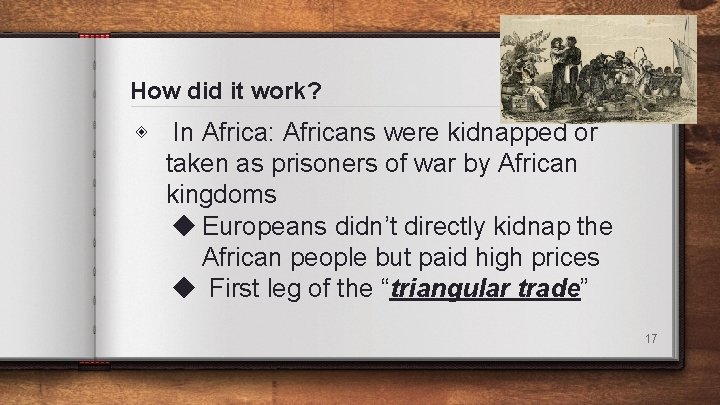
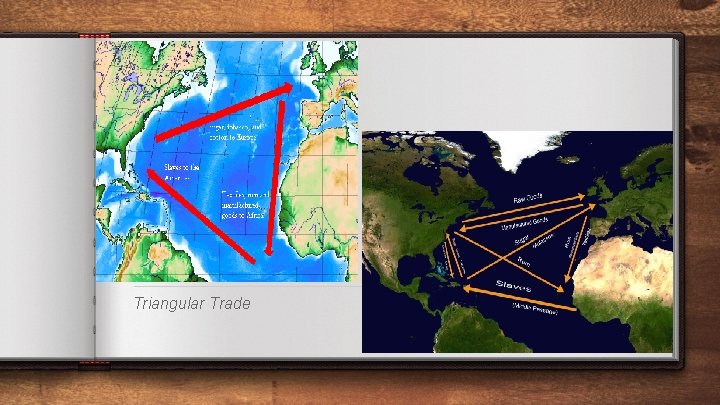
How did it work? ◈ In Africa: Africans were kidnapped or taken as prisoners of war by African kingdoms ◆ Europeans didn’t directly kidnap the African people but paid high prices ◆ First leg of the “triangular trade” 17
What was the “Triangular Trade? ” ◈ First leg: European slave traders came from Europe to Africa ◆ Brought manufactured goods ◆ Traded them for slaves ◈ Second leg: The Middle Passage ◆ Carried the enslaved Africans across the Atlantic to the American Colonies 18
What was the “Triangular Trade? ” ➔ Second leg: The Middle Passage ◆ From Africa to the New World ◆ Carried slaves to the new world ◆ Exchanged slaves for raw colonial goods (sugar, tobacco, timber, fish, etc. ) 19
What was the “Triangular Trade? ” ◈ Last leg: Colonies back to Europe (back to their mother countries ◇ Raw goods for manufactured goods � Sugar � Tobacco � Cotton � Wood 20
Triangular Trade 21
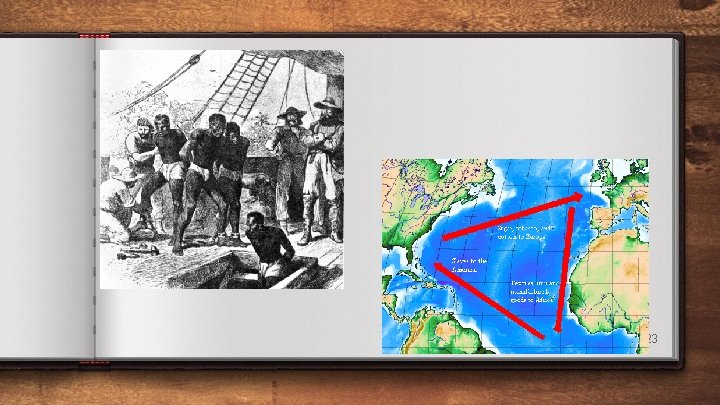
What is it like on the Middle Passage? ◈ Extremely Brutal ◆ 2 months or more ◆ Psychological/Emotional trauma ◇ Seperated from families ◇ Off to a strange new land, unknown future 22
23
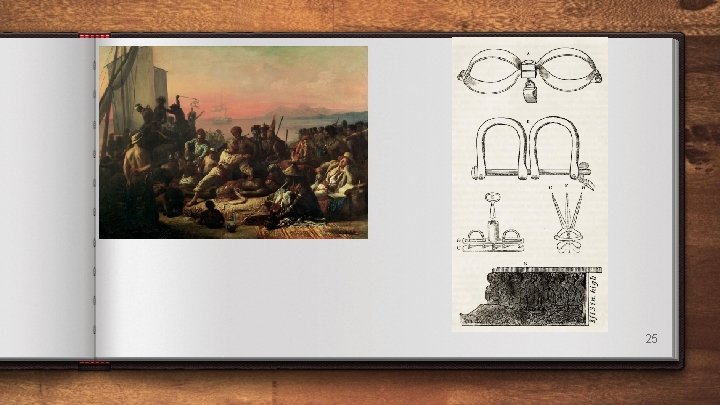
What was life like on the Middle Passage? (cont. ) ◈ Branded with hot irons (to mark who owned them) ◈ Shackled so that the slaves could barely move ◆ Sometimes even shackled into place ◇ Couldn’t move at all 24
25
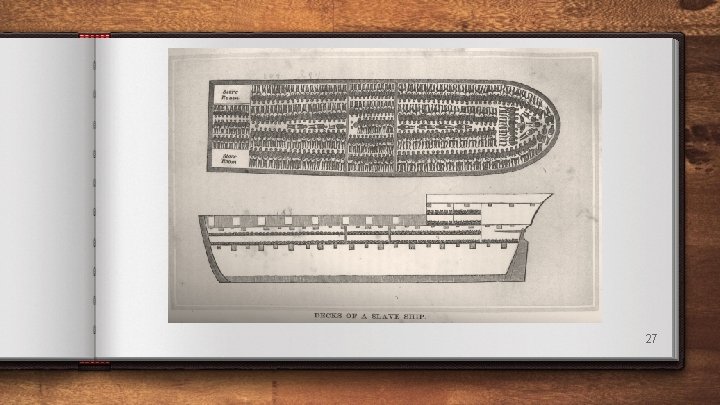
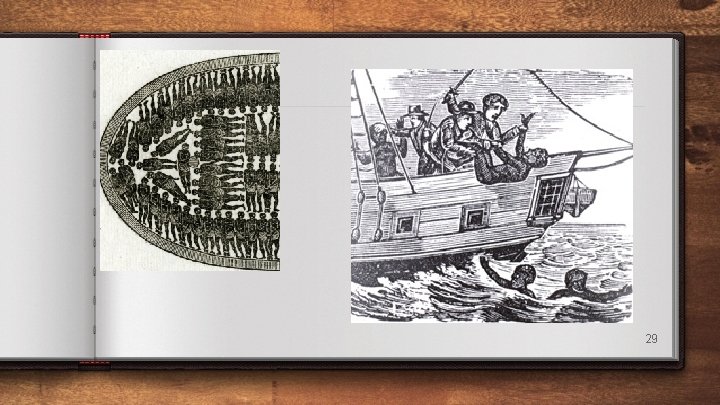
What was life like on the middle passage? (cont. ) ◈ Slaves were jammed into the hulls of ships ◆ Even if they were not shackled they would not be able to move ◆ Hulls were kept purposefully dark 26
27
What was life like on the Middle Passage? (cont. ) ◈ Many slaves refused to eat, hoping for death ◈ Close quarters, no sanitation, darkness, foul air were perfect conditions for disease and death ◆ If the sick were noticed thrown overboard ◆ Dead also thrown overboard, if noticed ◆ 10% mortality rate 28
29
“ “Upon the Negroes refusing to take sustenance {food}, I have seen coals of fire, glowing hot, put on a shovel and placed so near their lips as to scorch and burn them. And this has been accompanied with threats of forcing them to swallow coals if they longer perisited in refusing to eat. ” 30 Alexander Falconbridge, 1788
How did the Africans adapt? ◈ Families broken up ◆ Easier to control ◈ Worked next to strangers from all over the African continent ◈ Began to forge a new culture ◆ African-American 31
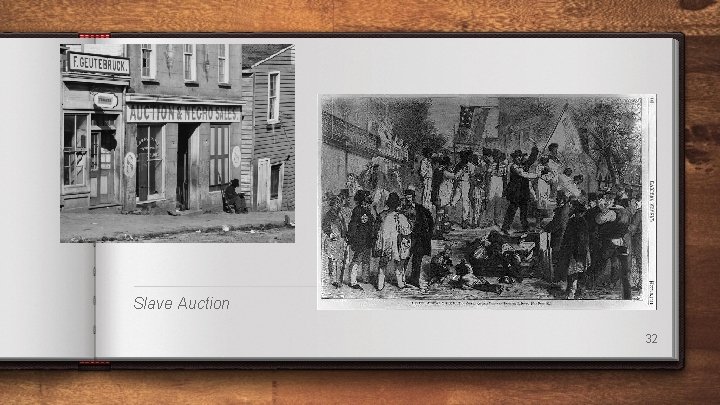
Slave Auction 32
Northern v. Southern Slavery ◈ Northern ◆ Small minorities ◆ Worked as ◇ House servants ◇ Dockhand ◇ Farmhands ◇ Sailors ◆ Presence in both New England Middle Colonies ◈ Southern ◆ Much larger population ◇ Ex. South Carolina slaves actually outnumbered white “majority” ◆ Plantation workers ◇ Labor intensive crops ◇ 12 hours/6 days a week ◆ Slave holder maximized profit ◇ Provided barely any basic needs 33
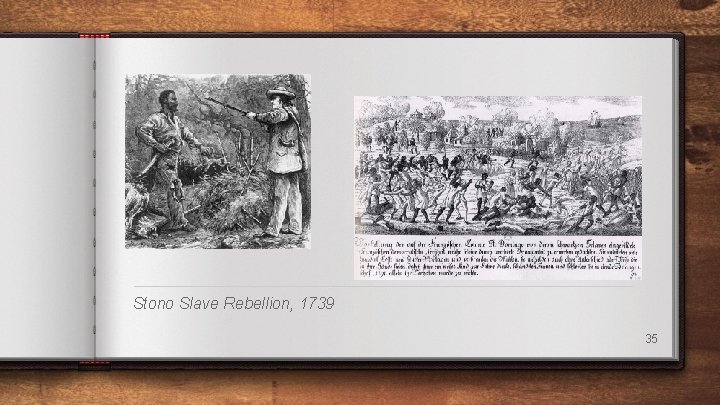
What about runaways and rebels? ◈ 1739, Stono, South Carolina ◆ Slave rebellion ◇ 100 Africans and 20 whites were killed ◇ Ended in defeat, remaining rebels executed 34
Stono Slave Rebellion, 1739 35
What about runaways and rebels? ◈ More common than rebellions ◆ Most ran to the Spanish or tried to live with Native Americans ◈ Most slaves opted for more forms of passive resistance ◆ Working slowly, breaking tool, feigning illness, pretending 36 ignorance
Freedom? ◈ Very rare ◆ Some Africans managed to get freedom ◇ Purchasing it, if they were able to earn money ◇ Set free by owner ◆ Lived in cities, few managed to distinguish themselves ◇ Phillis Wheatley-poet 37
Credits Background-slidescarnival. com Animations-animationfactory. com Photos-Google Images 38