
Chapter 3 Telescopes Chapter 3 Telescopes Goals Describe
Chapter 3: Telescopes
Chapter 3: Telescopes Goals • Describe basic types of optical telescopes • Explain why bigger is better for telescopes • Describe how the Earth’s atmosphere effects observations • Review benefits of radio astronomy • Explain interferometry • Explain the why telescopes for different parts of the spectrum have different designs and some need outer space. • Discuss advantages of different regions of the spectrum
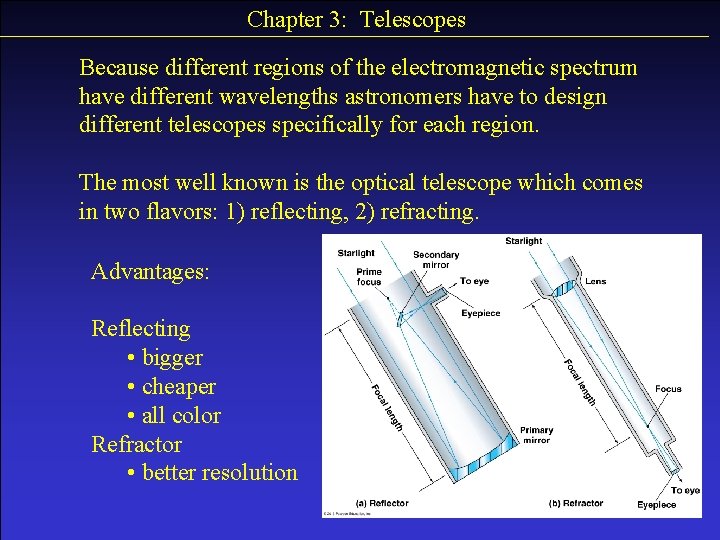
Chapter 3: Telescopes Because different regions of the electromagnetic spectrum have different wavelengths astronomers have to design different telescopes specifically for each region. The most well known is the optical telescope which comes in two flavors: 1) reflecting, 2) refracting. Advantages: Reflecting • bigger • cheaper • all color Refractor • better resolution
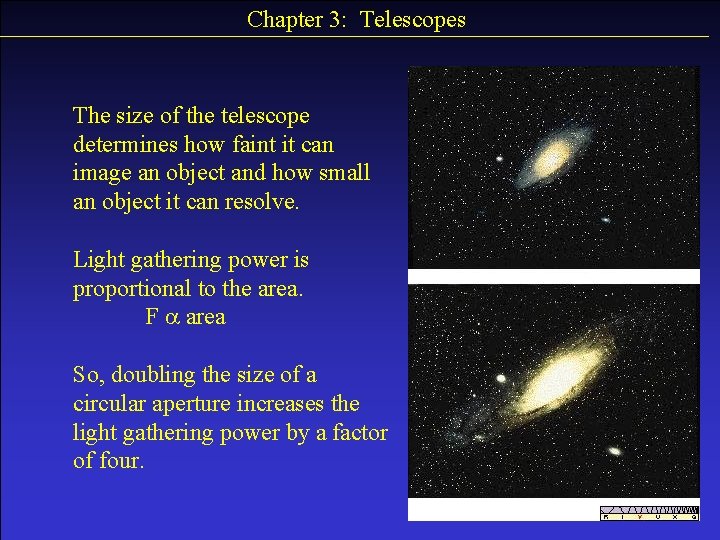
Chapter 3: Telescopes The size of the telescope determines how faint it can image an object and how small an object it can resolve. Light gathering power is proportional to the area. F a area So, doubling the size of a circular aperture increases the light gathering power by a factor of four.
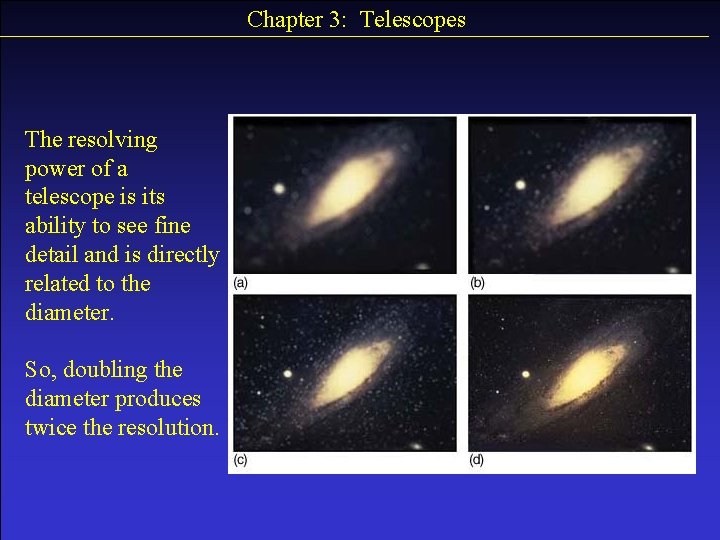
Chapter 3: Telescopes The resolving power of a telescope is its ability to see fine detail and is directly related to the diameter. So, doubling the diameter produces twice the resolution.

Chapter 3: Telescopes Since ground based telescopes are larger than space based ones, they should have higher resolution. But, they are limited by atmospheric seeing. Various techniques try to increase the angular resolution of telescopes including interferometry, adaptive optics, and space based instruments.
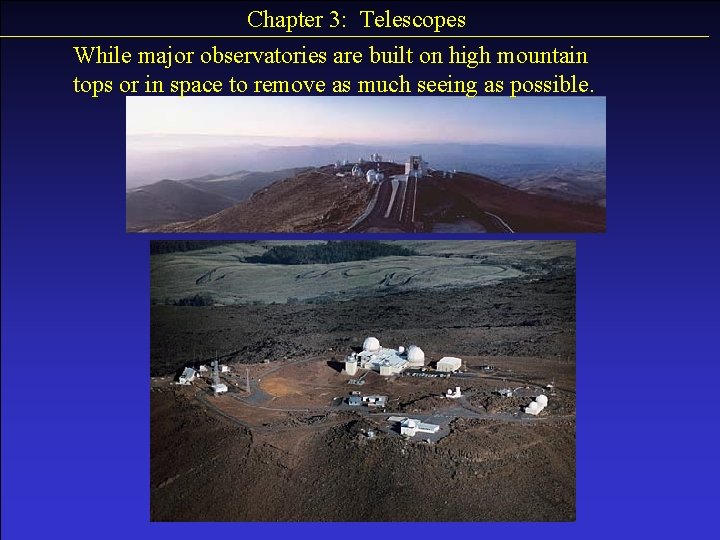
Chapter 3: Telescopes While major observatories are built on high mountain tops or in space to remove as much seeing as possible.
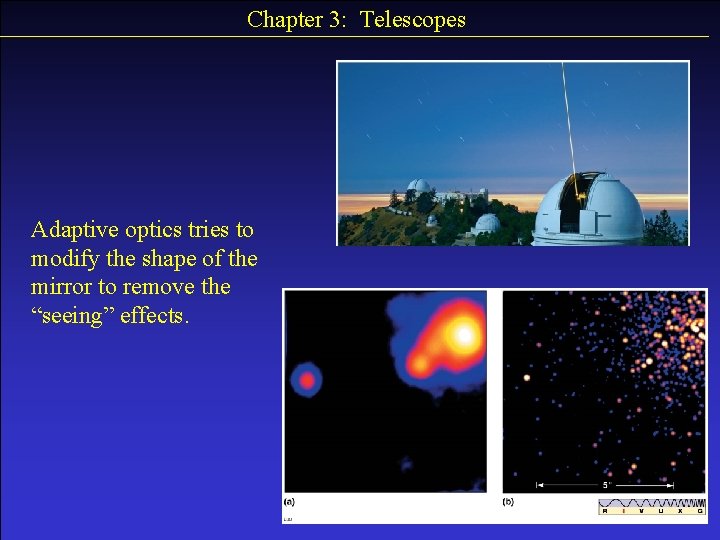
Chapter 3: Telescopes Adaptive optics tries to modify the shape of the mirror to remove the “seeing” effects.
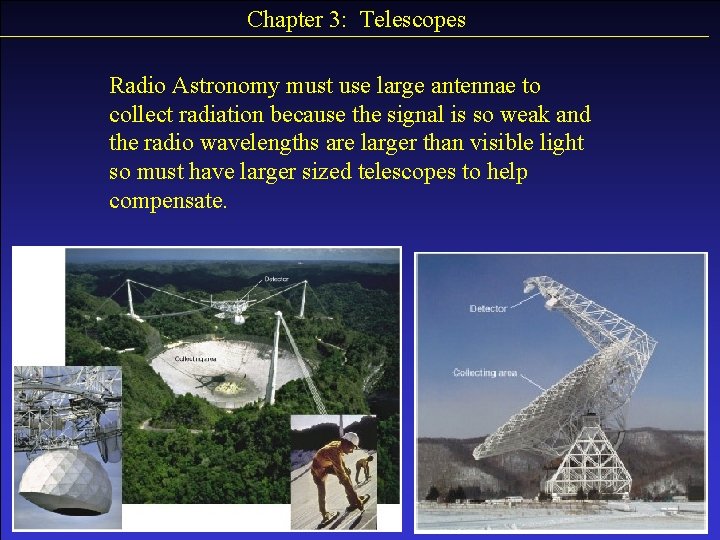
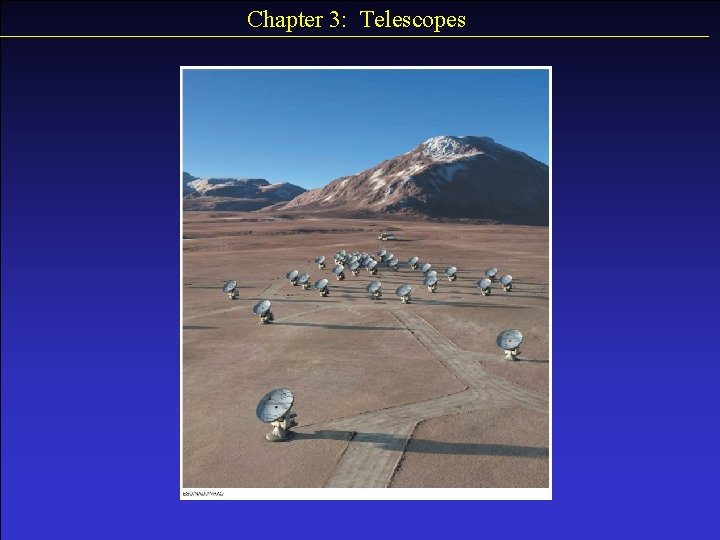
Chapter 3: Telescopes Radio Astronomy must use large antennae to collect radiation because the signal is so weak and the radio wavelengths are larger than visible light so must have larger sized telescopes to help compensate.
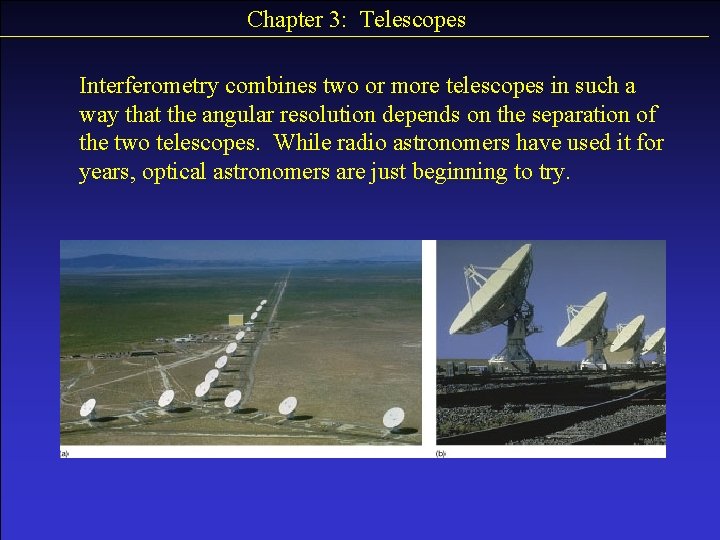
Chapter 3: Telescopes Interferometry combines two or more telescopes in such a way that the angular resolution depends on the separation of the two telescopes. While radio astronomers have used it for years, optical astronomers are just beginning to try.
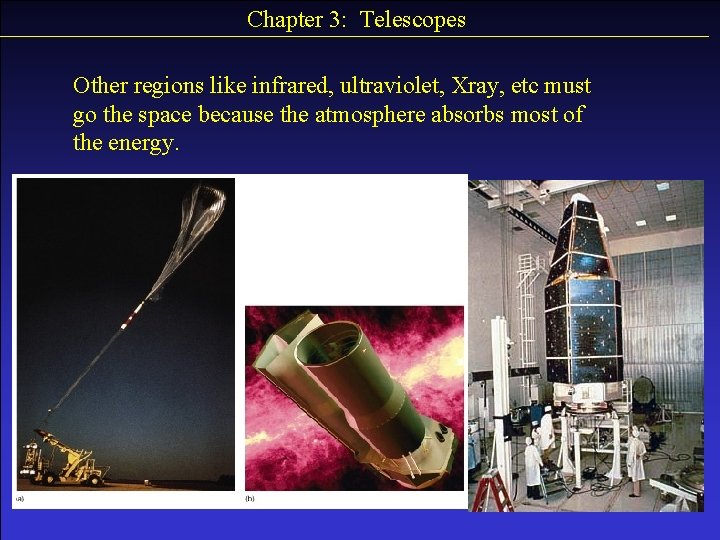
Chapter 3: Telescopes Other regions like infrared, ultraviolet, Xray, etc must go the space because the atmosphere absorbs most of the energy.
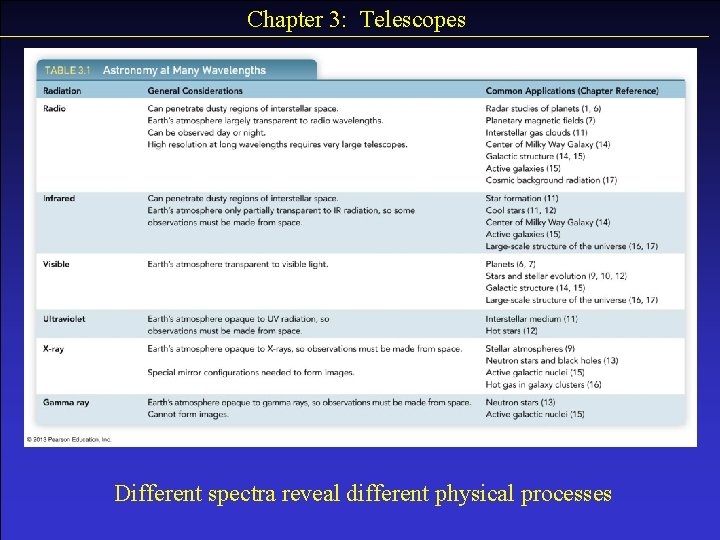
Chapter 3: Telescopes Different spectra reveal different physical processes
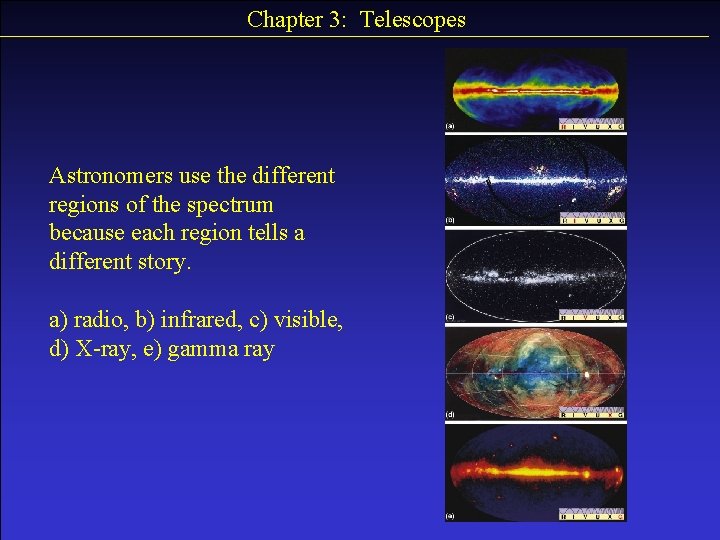
Chapter 3: Telescopes Astronomers use the different regions of the spectrum because each region tells a different story. a) radio, b) infrared, c) visible, d) X-ray, e) gamma ray
- Slides: 13