
Chapter 3 Synapses Synaptic Transmission Overview Link to

- Slides: 47
Chapter 3 Synapses
Synaptic Transmission Overview • Link to Animated Video
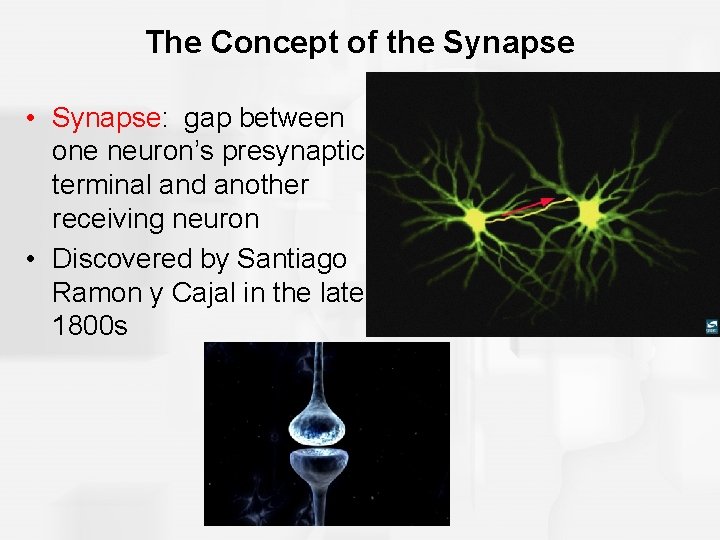
The Concept of the Synapse • Synapse: gap between one neuron’s presynaptic terminal and another receiving neuron • Discovered by Santiago Ramon y Cajal in the late 1800 s
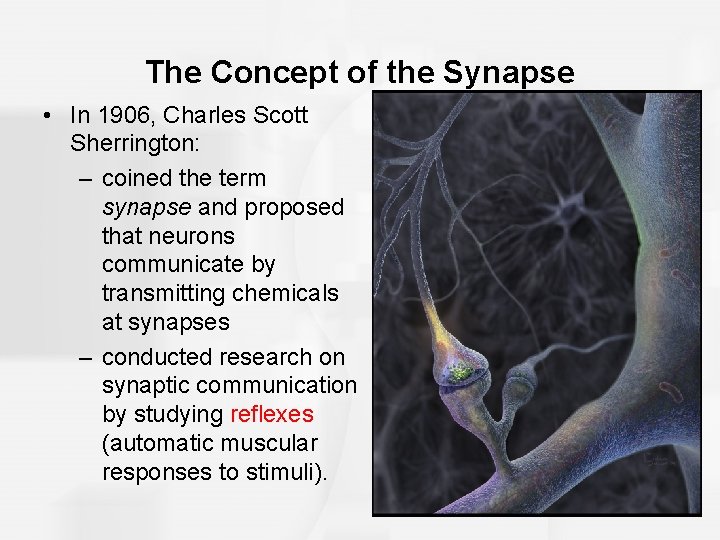
The Concept of the Synapse • In 1906, Charles Scott Sherrington: – coined the term synapse and proposed that neurons communicate by transmitting chemicals at synapses – conducted research on synaptic communication by studying reflexes (automatic muscular responses to stimuli).
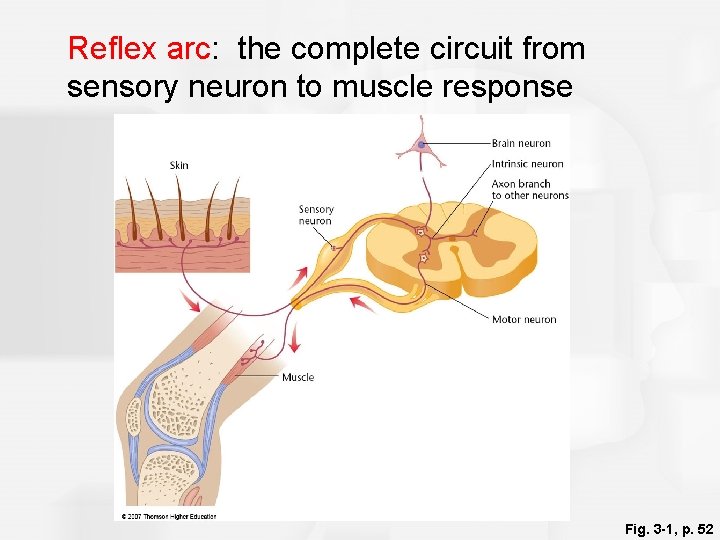
Reflex arc: the complete circuit from sensory neuron to muscle response Fig. 3 -1, p. 52
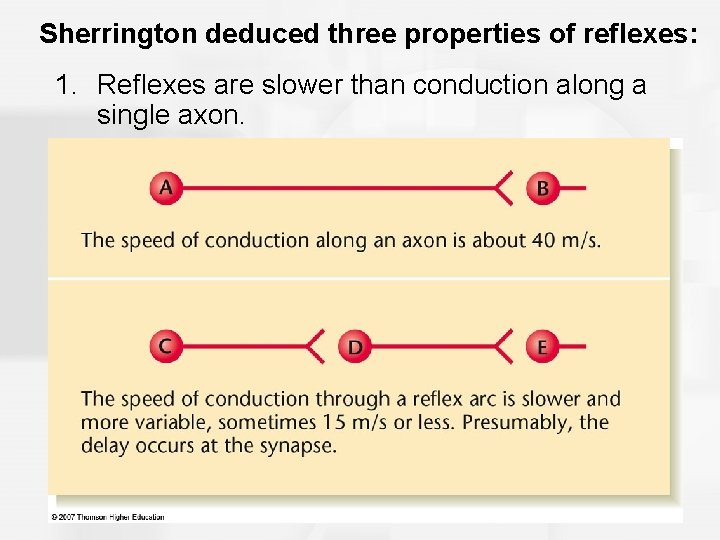
Sherrington deduced three properties of reflexes: 1. Reflexes are slower than conduction along a single axon.
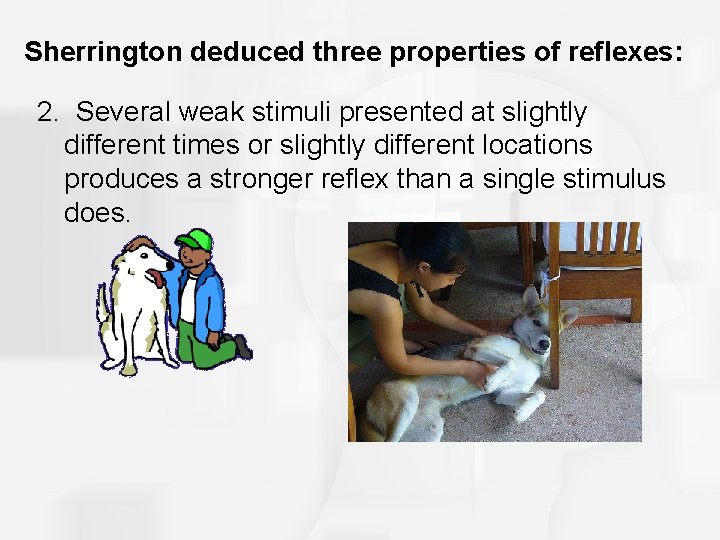
Sherrington deduced three properties of reflexes: 2. Several weak stimuli presented at slightly different times or slightly different locations produces a stronger reflex than a single stimulus does.
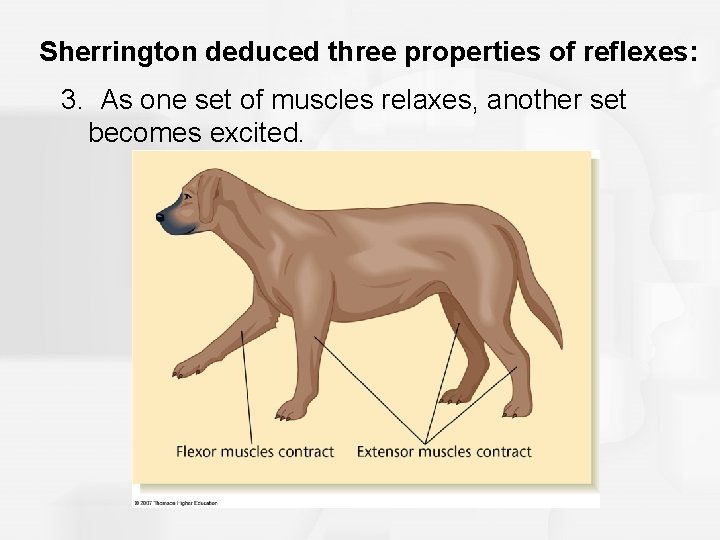
Sherrington deduced three properties of reflexes: 3. As one set of muscles relaxes, another set becomes excited.
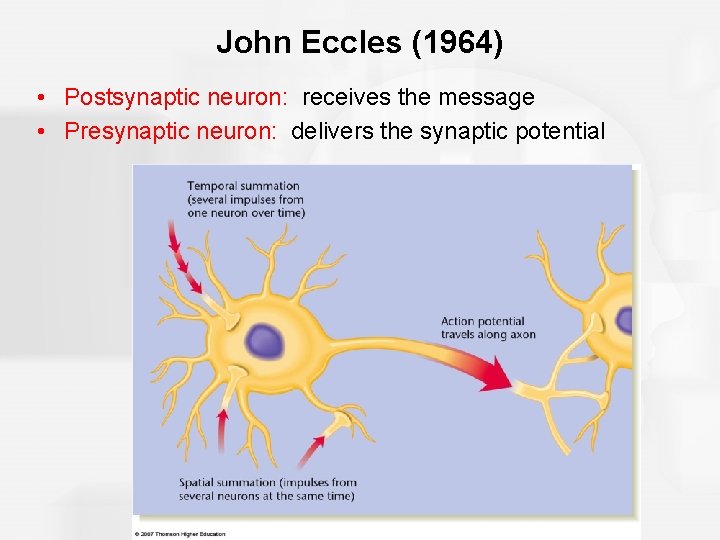
John Eccles (1964) • Postsynaptic neuron: receives the message • Presynaptic neuron: delivers the synaptic potential
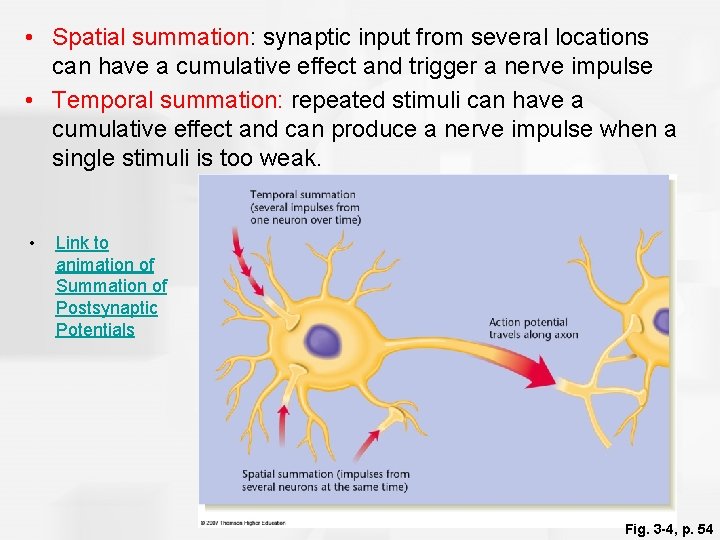
• Spatial summation: synaptic input from several locations can have a cumulative effect and trigger a nerve impulse • Temporal summation: repeated stimuli can have a cumulative effect and can produce a nerve impulse when a single stimuli is too weak. • Link to animation of Summation of Postsynaptic Potentials Fig. 3 -4, p. 54
Graded potentials • either depolarize (excite) or hyperpolarize (inhibit) the postsynaptic neuron • decay over time and space
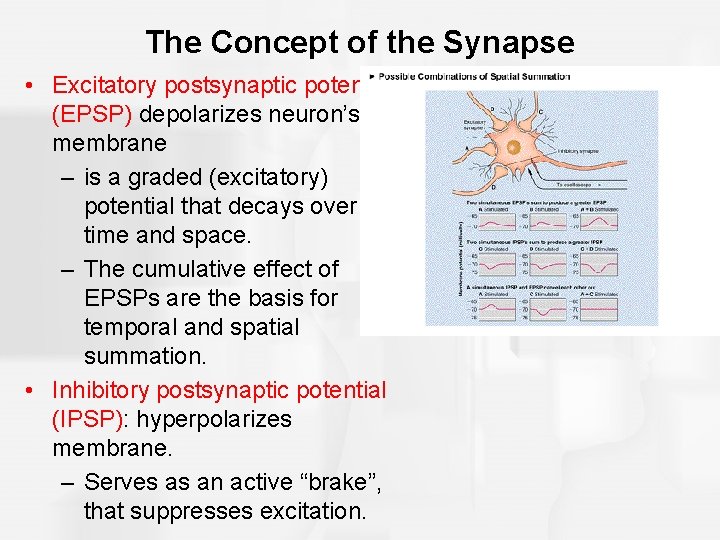
The Concept of the Synapse • Excitatory postsynaptic potential (EPSP) depolarizes neuron’s membrane – is a graded (excitatory) potential that decays over time and space. – The cumulative effect of EPSPs are the basis for temporal and spatial summation. • Inhibitory postsynaptic potential (IPSP): hyperpolarizes membrane. – Serves as an active “brake”, that suppresses excitation.
The Concept of the Synapse • The spontaneous firing rate refers to the periodic production of action potentials despite synaptic input. • EPSPs increase the nerve cell’s spontaneous firing rate. • IPSPs decrease the nerve cell’s spontaneous firing rate.
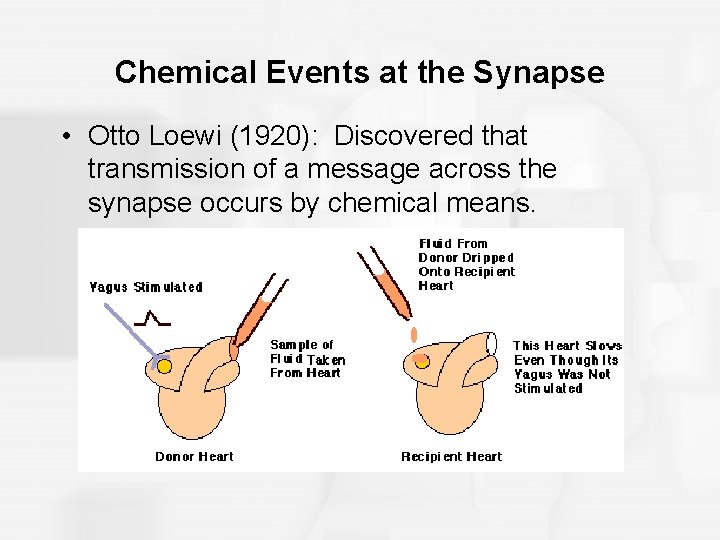
Chemical Events at the Synapse • Otto Loewi (1920): Discovered that transmission of a message across the synapse occurs by chemical means.
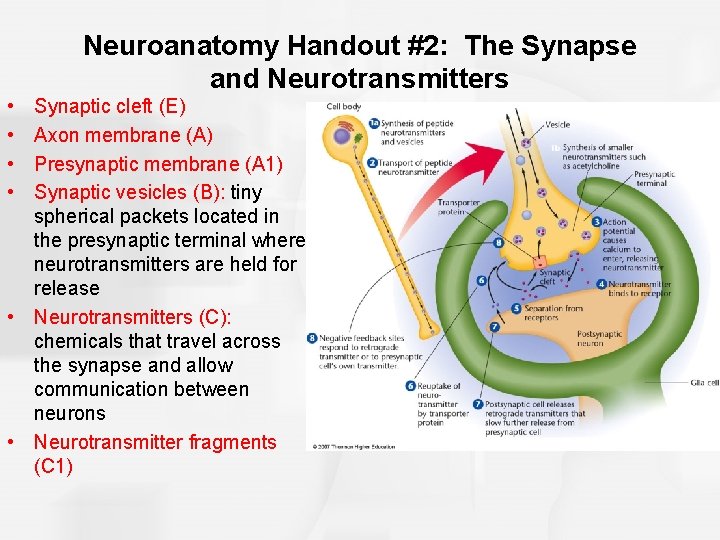
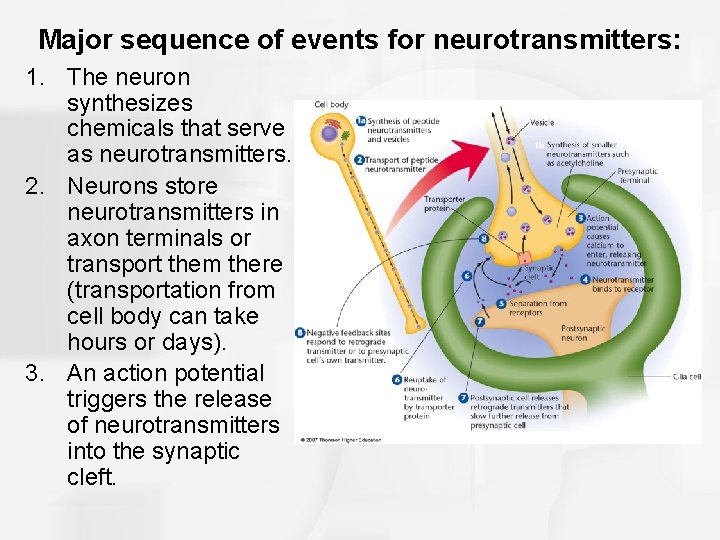
Neuroanatomy Handout #2: The Synapse and Neurotransmitters • • Synaptic cleft (E) Axon membrane (A) Presynaptic membrane (A 1) Synaptic vesicles (B): tiny spherical packets located in the presynaptic terminal where neurotransmitters are held for release • Neurotransmitters (C): chemicals that travel across the synapse and allow communication between neurons • Neurotransmitter fragments (C 1)
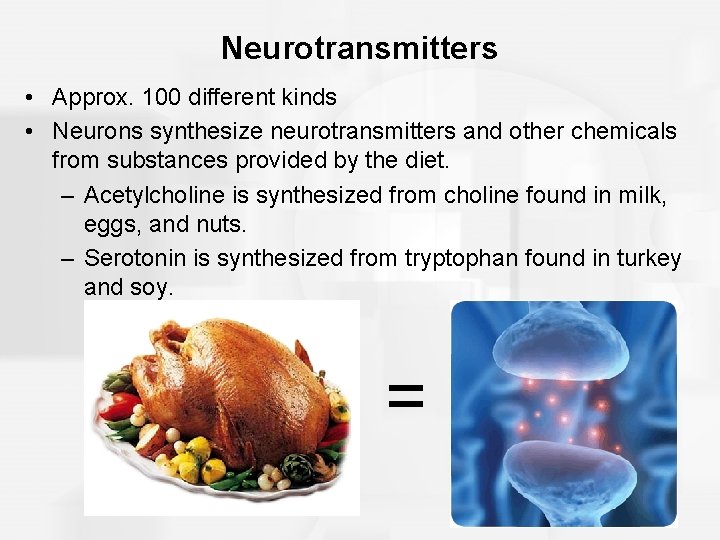
Neurotransmitters • Approx. 100 different kinds • Neurons synthesize neurotransmitters and other chemicals from substances provided by the diet. – Acetylcholine is synthesized from choline found in milk, eggs, and nuts. – Serotonin is synthesized from tryptophan found in turkey and soy. =
Major sequence of events for neurotransmitters: 1. The neuron synthesizes chemicals that serve as neurotransmitters. 2. Neurons store neurotransmitters in axon terminals or transport them there (transportation from cell body can take hours or days). 3. An action potential triggers the release of neurotransmitters into the synaptic cleft.
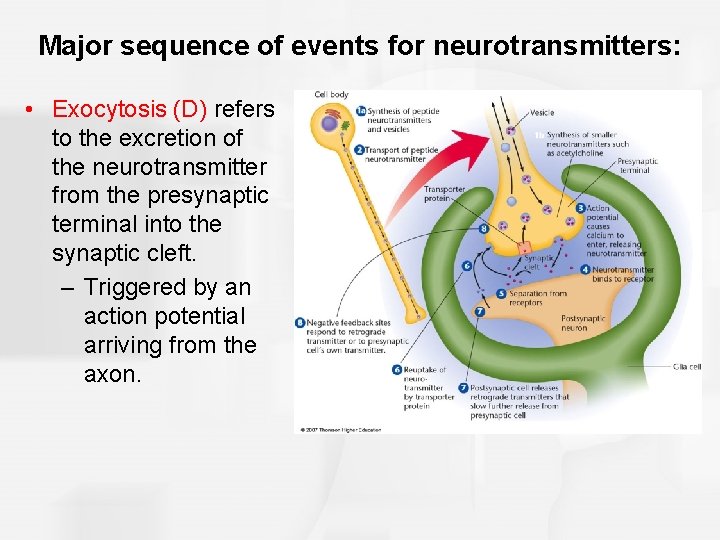
Major sequence of events for neurotransmitters: • Exocytosis (D) refers to the excretion of the neurotransmitter from the presynaptic terminal into the synaptic cleft. – Triggered by an action potential arriving from the axon.
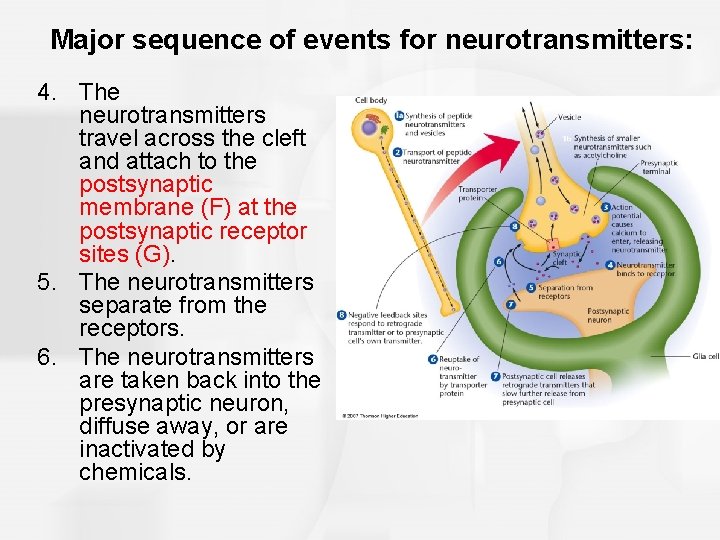
Major sequence of events for neurotransmitters: 4. The neurotransmitters travel across the cleft and attach to the postsynaptic membrane (F) at the postsynaptic receptor sites (G). 5. The neurotransmitters separate from the receptors. 6. The neurotransmitters are taken back into the presynaptic neuron, diffuse away, or are inactivated by chemicals.
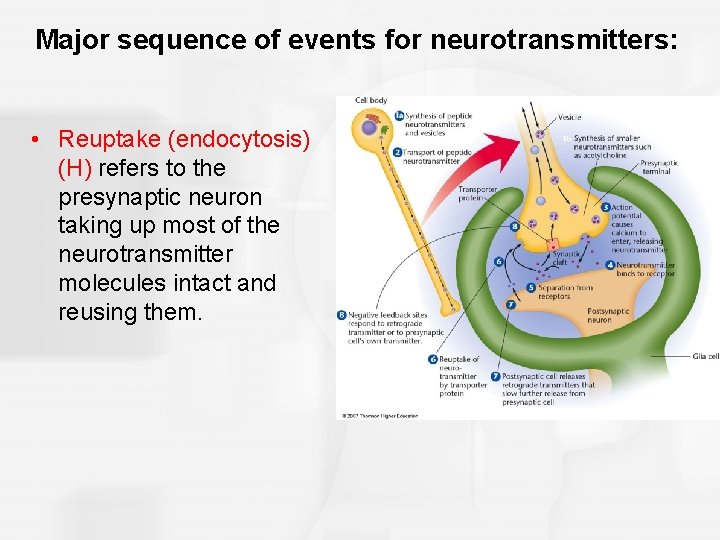
Major sequence of events for neurotransmitters: • Reuptake (endocytosis) (H) refers to the presynaptic neuron taking up most of the neurotransmitter molecules intact and reusing them.
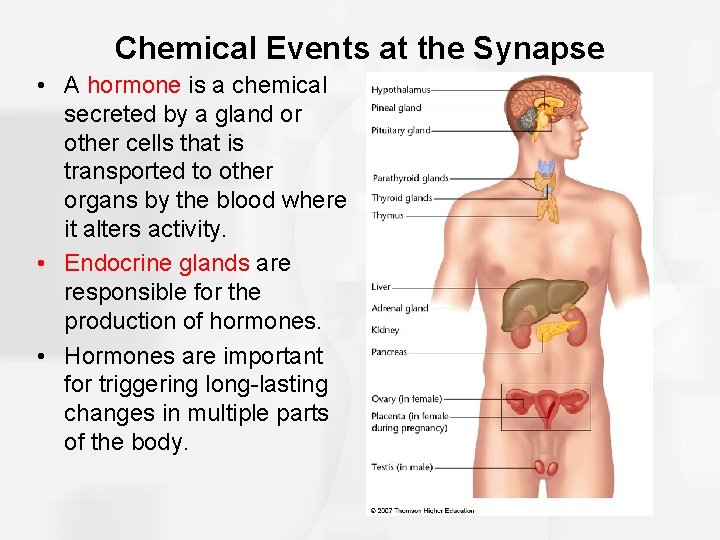
Chemical Events at the Synapse • A hormone is a chemical secreted by a gland or other cells that is transported to other organs by the blood where it alters activity. • Endocrine glands are responsible for the production of hormones. • Hormones are important for triggering long-lasting changes in multiple parts of the body.
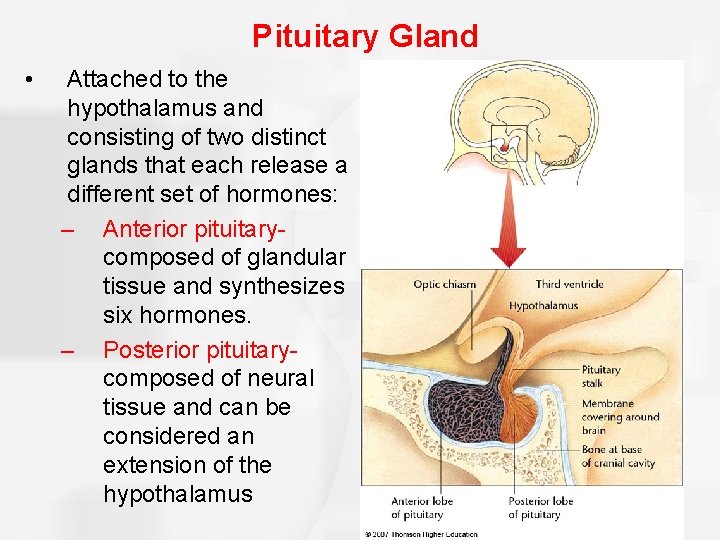
Pituitary Gland • Attached to the hypothalamus and consisting of two distinct glands that each release a different set of hormones: – Anterior pituitarycomposed of glandular tissue and synthesizes six hormones. – Posterior pituitarycomposed of neural tissue and can be considered an extension of the hypothalamus
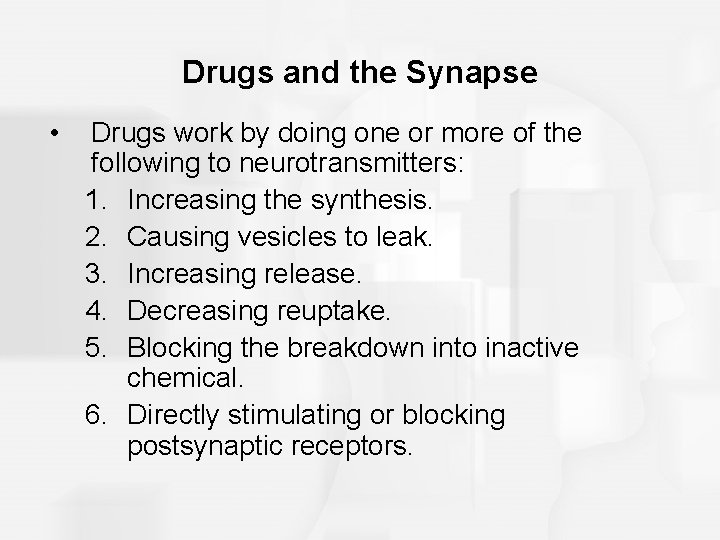
Drugs and the Synapse • Drugs work by doing one or more of the following to neurotransmitters: 1. Increasing the synthesis. 2. Causing vesicles to leak. 3. Increasing release. 4. Decreasing reuptake. 5. Blocking the breakdown into inactive chemical. 6. Directly stimulating or blocking postsynaptic receptors.
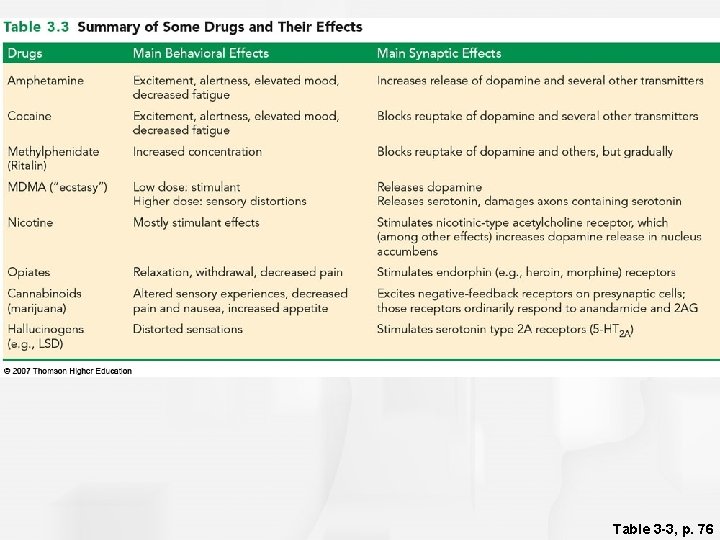
Table 3 -3, p. 76
Link to Mouse Party
Drugs and the Synapse • Drugs either facilitate or inhibit activity at the synapse. – Antagonistic drugs block the effects of neurotransmitters. – Agonist drugs mimic or increase the effects of neurotransmitters.
Drugs and the Synapse • A drug has an affinity for a particular type of receptor if it binds to that receptor. – Can vary from strong to weak. • The efficacy of the drug is its tendency to activate the receptor. • Drugs can have a high affinity but low efficacy.
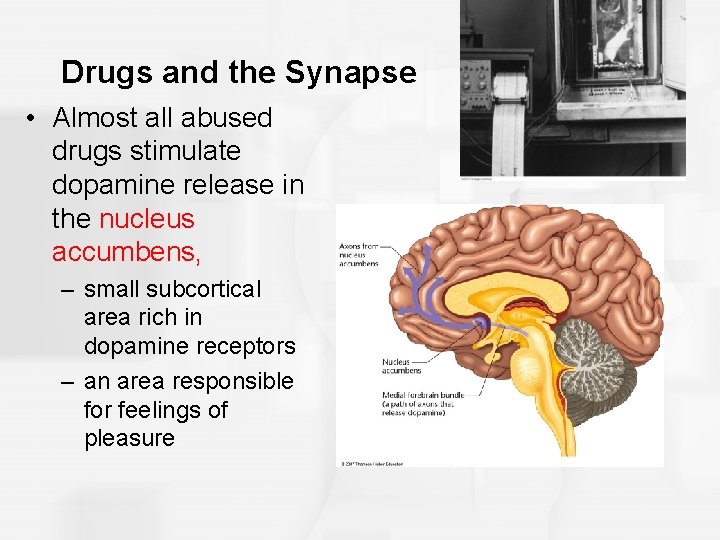
Drugs and the Synapse • Almost all abused drugs stimulate dopamine release in the nucleus accumbens, – small subcortical area rich in dopamine receptors – an area responsible for feelings of pleasure
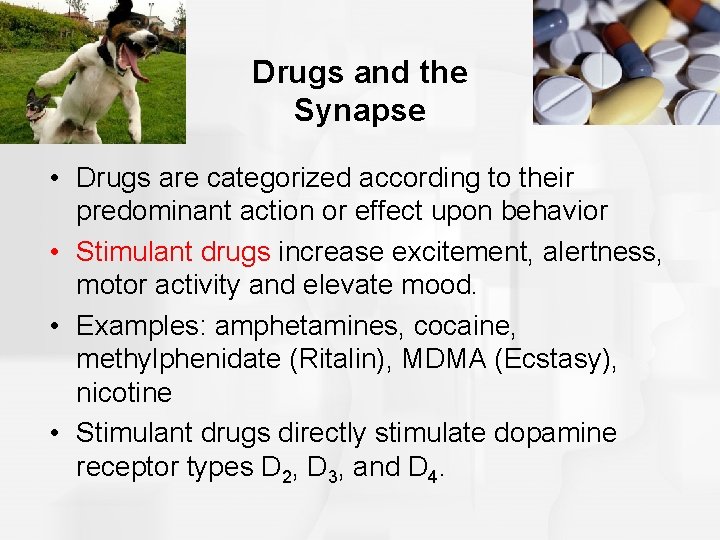
Drugs and the Synapse • Drugs are categorized according to their predominant action or effect upon behavior • Stimulant drugs increase excitement, alertness, motor activity and elevate mood. • Examples: amphetamines, cocaine, methylphenidate (Ritalin), MDMA (Ecstasy), nicotine • Stimulant drugs directly stimulate dopamine receptor types D 2, D 3, and D 4.
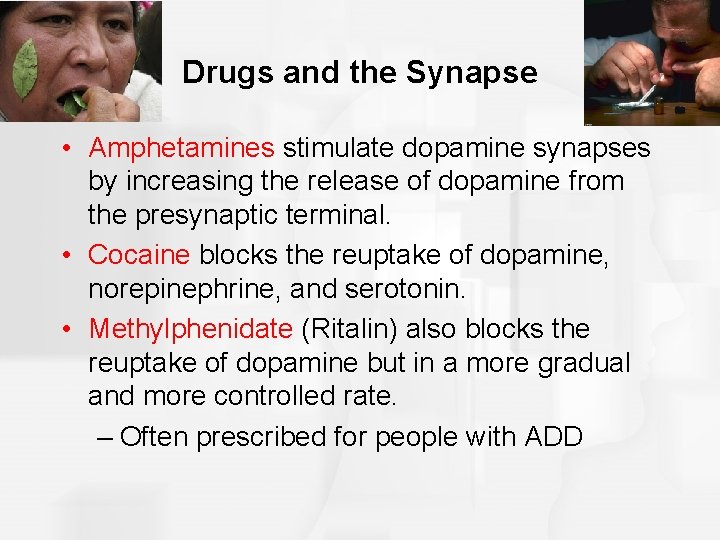
Drugs and the Synapse • Amphetamines stimulate dopamine synapses by increasing the release of dopamine from the presynaptic terminal. • Cocaine blocks the reuptake of dopamine, norepinephrine, and serotonin. • Methylphenidate (Ritalin) also blocks the reuptake of dopamine but in a more gradual and more controlled rate. – Often prescribed for people with ADD
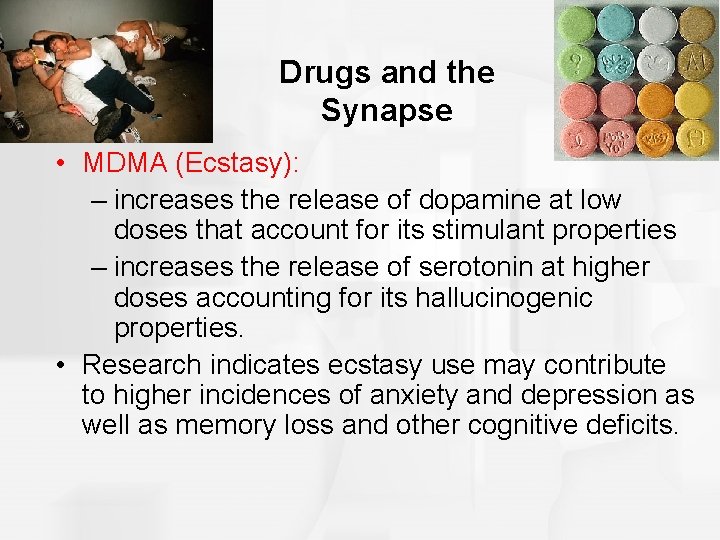
Drugs and the Synapse • MDMA (Ecstasy): – increases the release of dopamine at low doses that account for its stimulant properties – increases the release of serotonin at higher doses accounting for its hallucinogenic properties. • Research indicates ecstasy use may contribute to higher incidences of anxiety and depression as well as memory loss and other cognitive deficits.
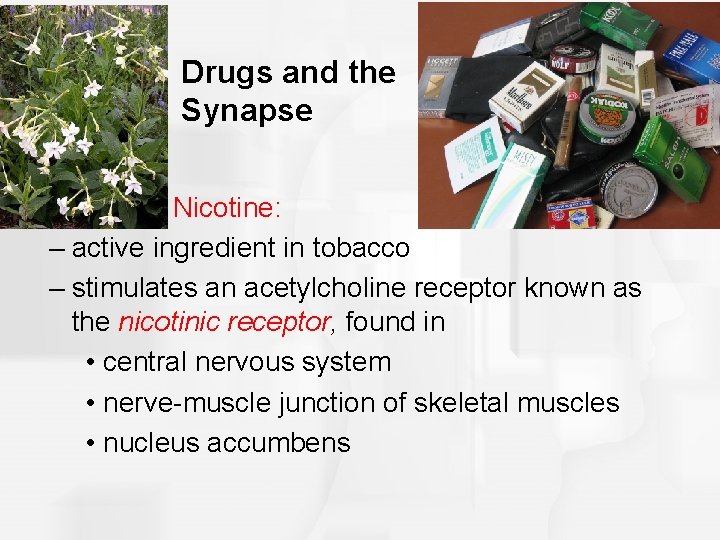
Drugs and the Synapse Nicotine: – active ingredient in tobacco – stimulates an acetylcholine receptor known as the nicotinic receptor, found in • central nervous system • nerve-muscle junction of skeletal muscles • nucleus accumbens
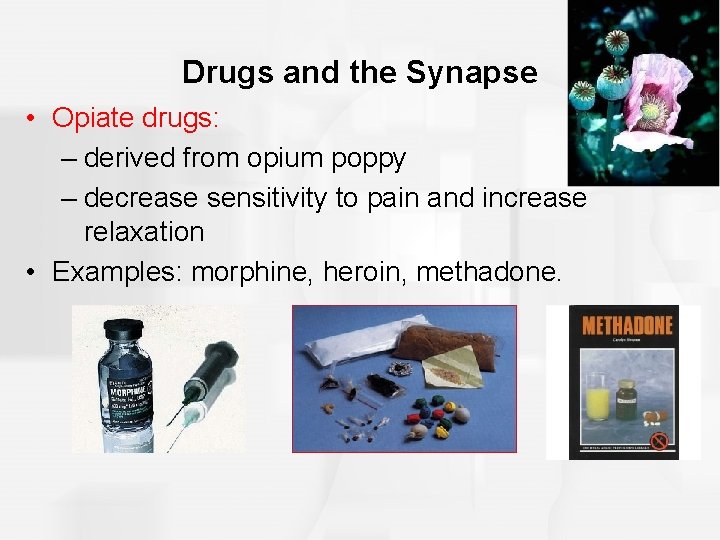
Drugs and the Synapse • Opiate drugs: – derived from opium poppy – decrease sensitivity to pain and increase relaxation • Examples: morphine, heroin, methadone.
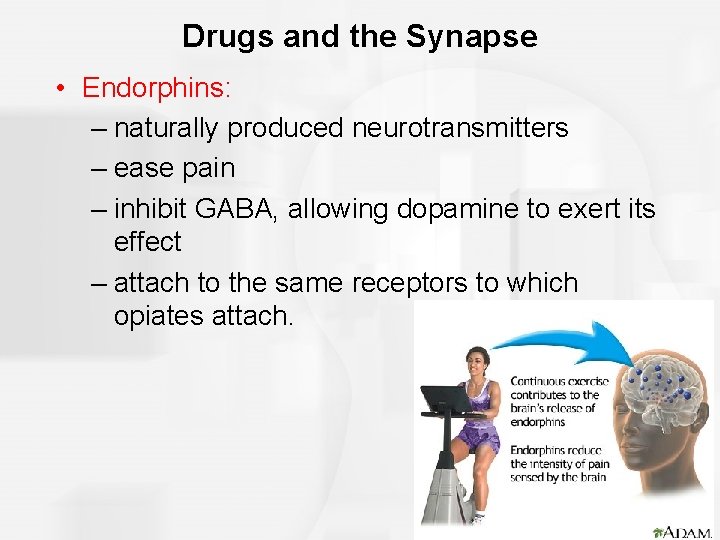
Drugs and the Synapse • Endorphins: – naturally produced neurotransmitters – ease pain – inhibit GABA, allowing dopamine to exert its effect – attach to the same receptors to which opiates attach.
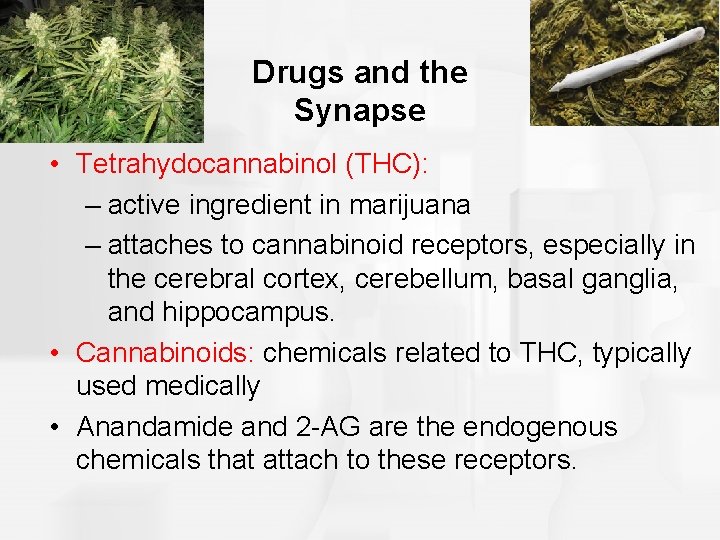
Drugs and the Synapse • Tetrahydocannabinol (THC): – active ingredient in marijuana – attaches to cannabinoid receptors, especially in the cerebral cortex, cerebellum, basal ganglia, and hippocampus. • Cannabinoids: chemicals related to THC, typically used medically • Anandamide and 2 -AG are the endogenous chemicals that attach to these receptors.
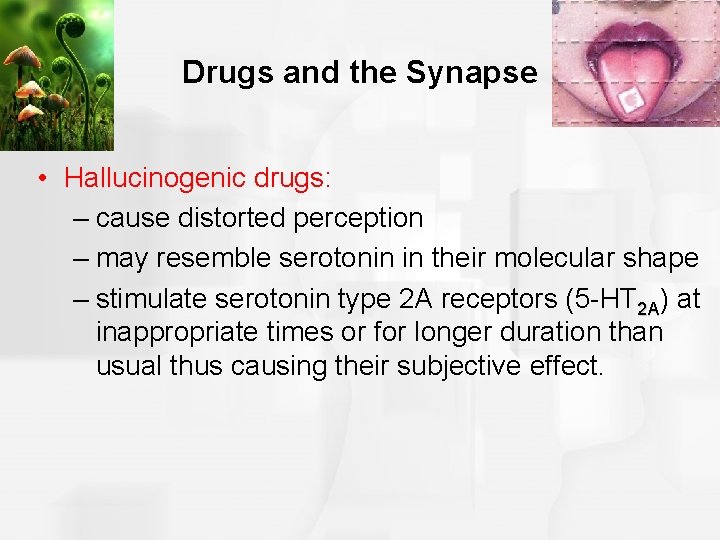
Drugs and the Synapse • Hallucinogenic drugs: – cause distorted perception – may resemble serotonin in their molecular shape – stimulate serotonin type 2 A receptors (5 -HT 2 A) at inappropriate times or for longer duration than usual thus causing their subjective effect.
Alcohol and Alcoholism • Alcohol: – is associated with relaxation – in greater amounts impairs judgment and damages the liver and other organs – dependence (alcoholism) is the habitual use of alcohol despite medical or social harm
Alcohol and Alcoholism • Alcohol has a number of diverse physiological effects, including: – Enhanced response by the GABAA receptor – Blockage of glutamate receptors – Increased dopamine activity
Alcohol and Alcoholism • Strong influence of genetics on alcoholism – The genetic basis for early-onset alcoholism is stronger than for later-onset, especially in men • Researchers distinguish between two types of alcoholism – Type I/Type A – Type II/Type B
Alcohol and Alcoholism • Type I/Type A characteristics include: – Later onset (usually after 25) – Gradual onset – Fewer genetic relatives with alcoholism – Equal quantity between men and women
Alcohol and Alcoholism • Type II/Type B characteristics include: – Earlier onset (usually before 25) – More rapid onset – More genetic relatives with alcoholism – Men outnumber women
Alcohol and Alcoholism • Genes influence the likelihood of alcoholism in many ways, such as: – being more sensitive and needing more alcohol to provide reinforcement – being linked with impulsivity – influencing responses to stress and anxiety -inducing experiences – likelihood of prenatal exposure to alcohol
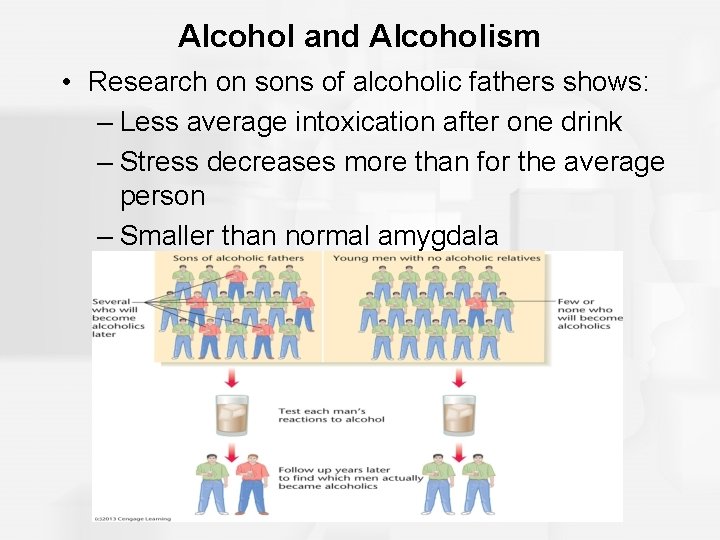
Alcohol and Alcoholism • Research on sons of alcoholic fathers shows: – Less average intoxication after one drink – Stress decreases more than for the average person – Smaller than normal amygdala
Addiction • Various factors contribute to continued substance abuse: – Tolerance: The body’s decrease in response to a drug with repeated use – Withdrawal: Uncomfortable/painful symptoms once drug use is discontinued – Cravings develop in response to cues – Brain reorganization (nucleus accumbens and prefrontal cortex)
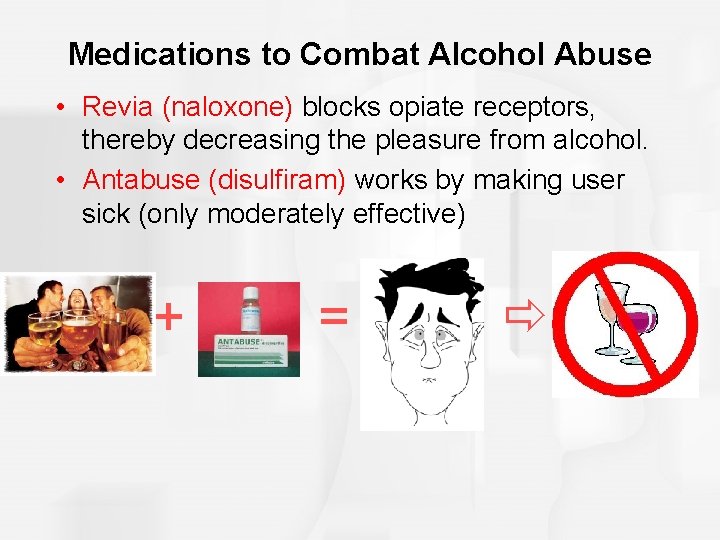
Medications to Combat Alcohol Abuse • Revia (naloxone) blocks opiate receptors, thereby decreasing the pleasure from alcohol. • Antabuse (disulfiram) works by making user sick (only moderately effective) + =
Medications to Combat Opiate Abuse • Methadone is an opiate similar to heroin and morphine but is absorbed and metabolized slowly – Perceived to be less harmful than other drugs • Assumed to satisfy cravings associated with previous drug use • Levomethadyl acetate (LAAM) is similar to morphine but can be taken three times a week rather than daily