
Chapter 3 Supply and Demand In Introduction Basic
Chapter 3 Supply and Demand: In Introduction
Basic Economic Questions to Answer n What: variety and quantity n How: technology n For whom: distribution
To answer the questions: n Economic Systems: – Centrally Planned Economy – Free Market Economy – Mixed Economy
Market Economy n the allocation for resources is determined by supply and demand n Demand: the buying force n Supply: the selling force
Demand: the definition n The quantity of a good or service consumers’ are willing and able to buy at various prices n willingness and ability to buy – willingness: need - necessity – want – desire – ability: purchasing power

Demand: the model n Variables: prices, quantity demanded n Assumption: other things equal n Hypothesis: (the law of demand) – Other things equal, a higher price leads to a smaller quantity demanded and a lower price results in a larger quantity demanded n Forecast / test / accept – the law
Demand: key points Demand is a relationship between quantity demanded and product price n Qd = f (P) n – quantity demanded is a function of price – quantity demanded is determined by price n The law of demand: – Qd and P are negatively related Demand Curve: downward sloping n Market demand: the sum of individual demand n
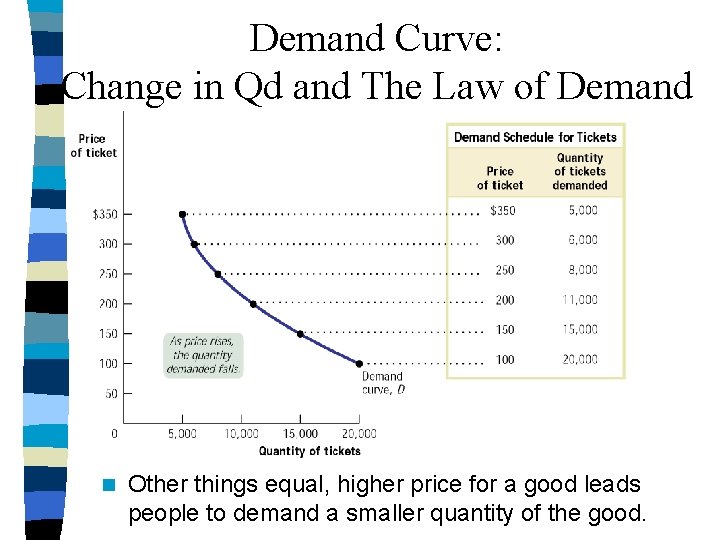
Demand Curve: Change in Qd and The Law of Demand n Other things equal, higher price for a good leads people to demand a smaller quantity of the good.
Assumption: Other Things Equal n the other things: factors affecting D – --price of related goods • complements vs. substitutes – – – --income: normal vs. inferior --preference --expectations (prices, income, …) --population --others
Qd vs. D n Qd: a number, a corresponding point on the curve n Change in Qd: movement along a curve, caused by change in price only n D: a relationship, a curve n Change in D: a shift of the entire curve, caused by change in other things
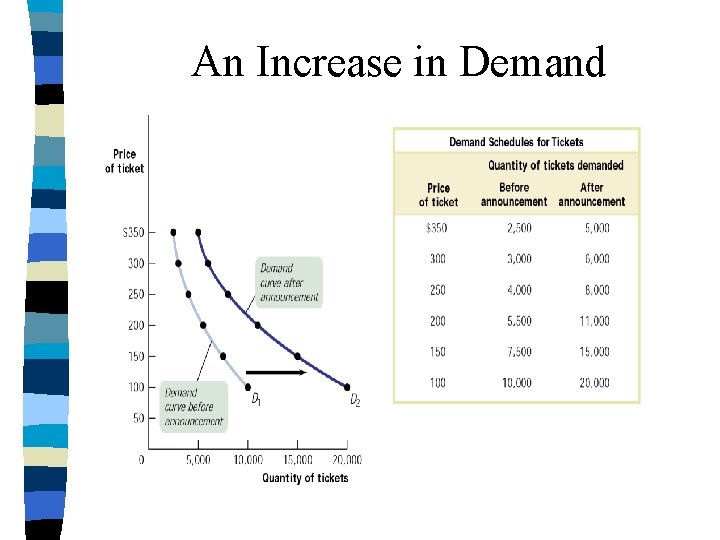
An Increase in Demand

Movement Along the Demand Curve vs. Shift of the Demand Curve
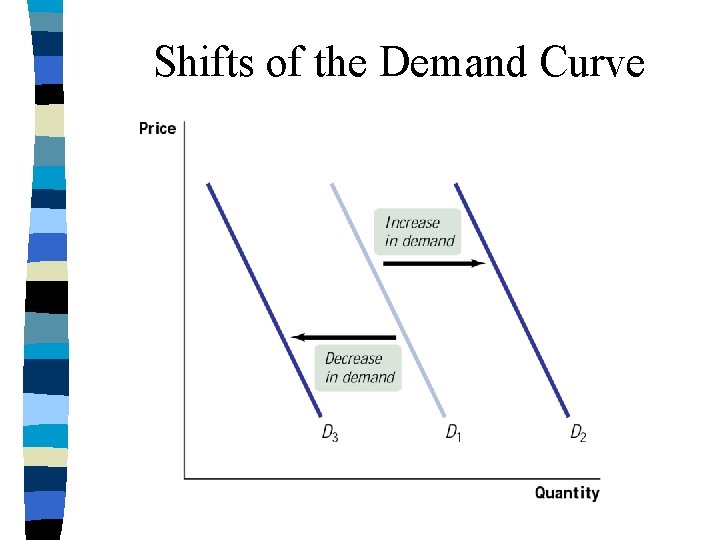
Shifts of the Demand Curve
Supply: the definition The quantity of a good or service producers are willing and able to sell at various prices n willingness and ability to sell willingness: profitability: production capacity n
Supply: the model n Variables: prices, quantity supplied n Assumption: other things equal n Hypothesis: (the law of supply) – Other things equal, a higher price leads to a larger quantity supplied and a lower price results in a smaller quantity supplied n Forecast / test / accept the law
Supply: Key Points n n n Supply is a relationship between price and quantity supplied Qs = f (P) – Quantity supplied is a function of price – quantity supplied is determined by price The Law of Supply: Qs and P are positively related Supply Curve: upward sloping Market supply: the sum of individual supply
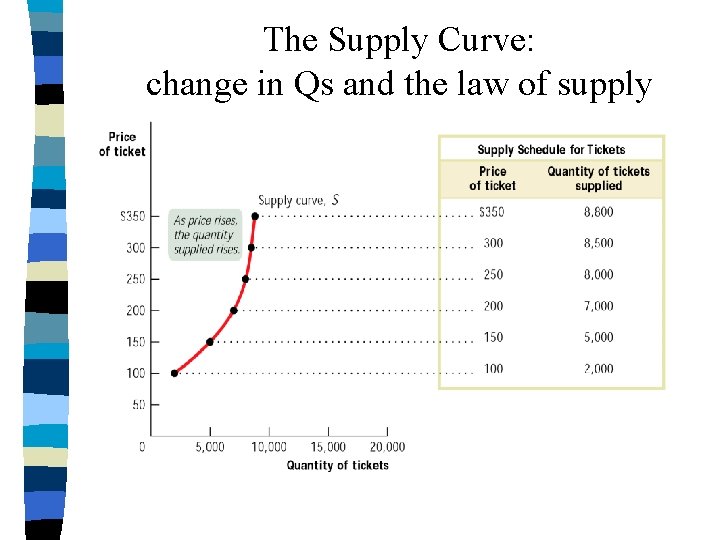
The Supply Curve: change in Qs and the law of supply
Assumption: Other Things Equal n the other things: factors affecting S --prices of inputs goods used to produce other goods --price of related goods that use the same resources --technology --expectations --others
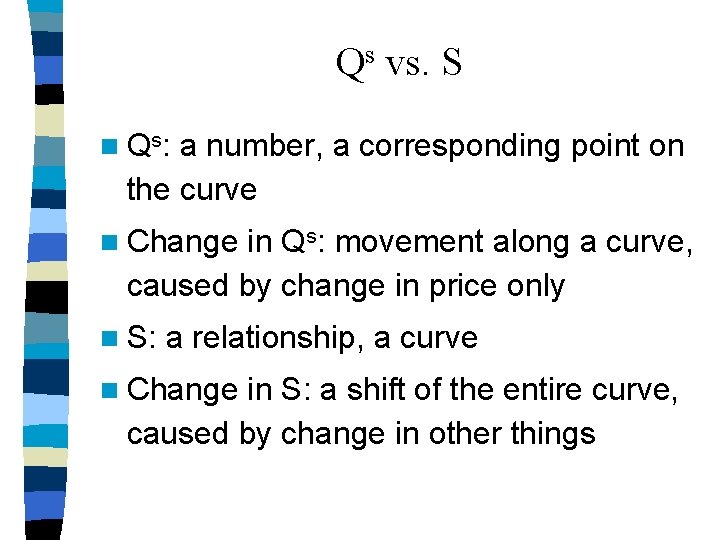
Qs vs. S n Qs: a number, a corresponding point on the curve n Change in Qs: movement along a curve, caused by change in price only n S: a relationship, a curve n Change in S: a shift of the entire curve, caused by change in other things
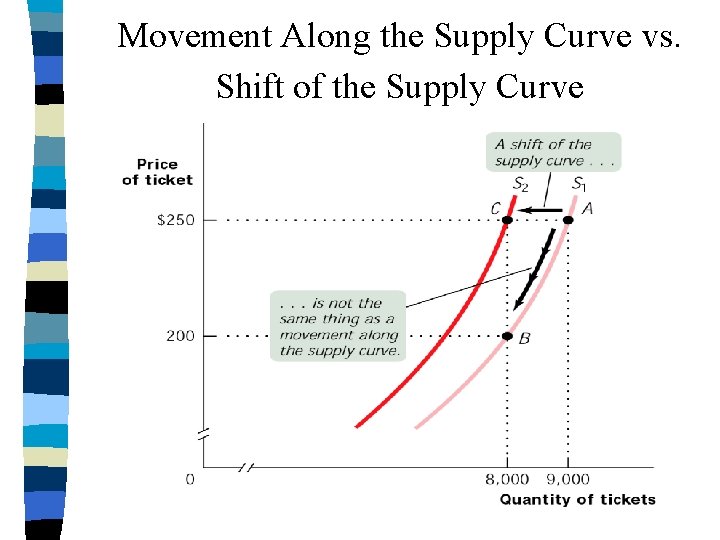
Movement Along the Supply Curve vs. Shift of the Supply Curve
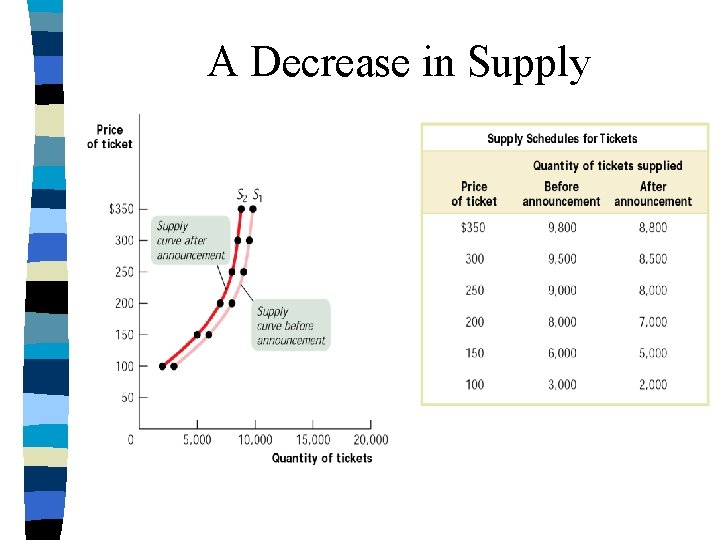
A Decrease in Supply
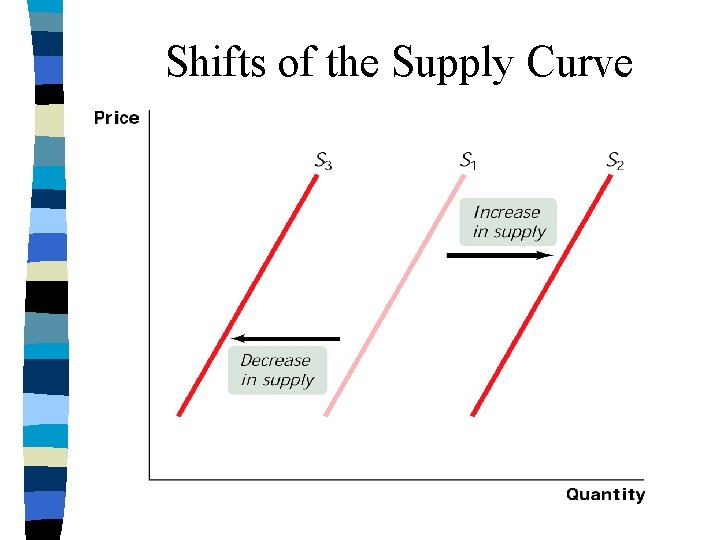
Shifts of the Supply Curve
The Market: n Equilibrium n Change in D and impacts on Pe and Qe n Change in S and impacts on Pe and Qe
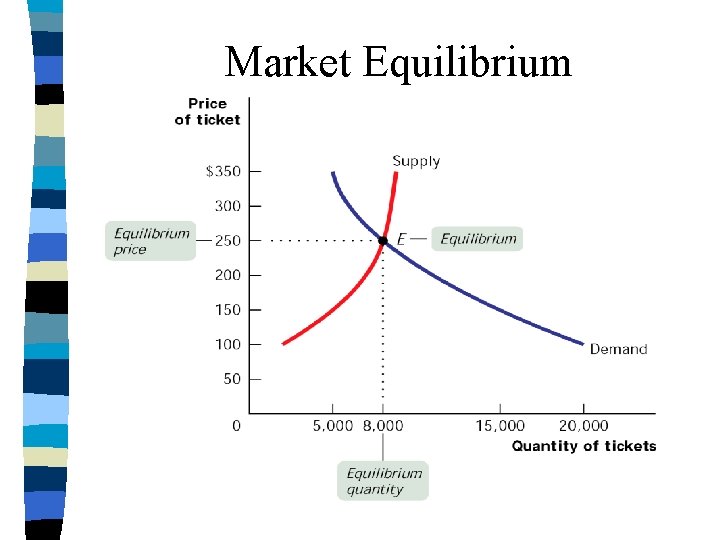
Market Equilibrium
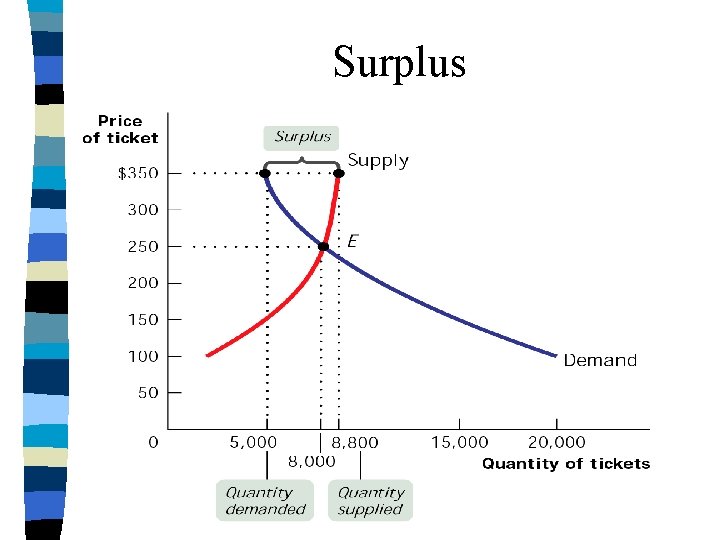
Surplus

Shortage
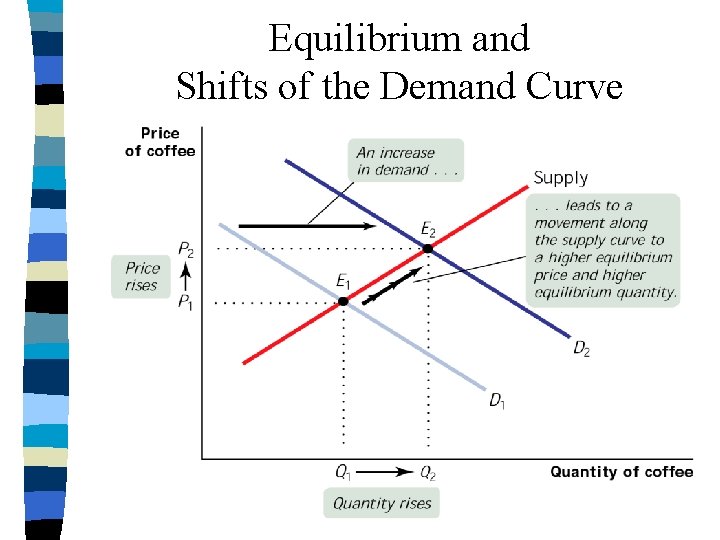
Equilibrium and Shifts of the Demand Curve
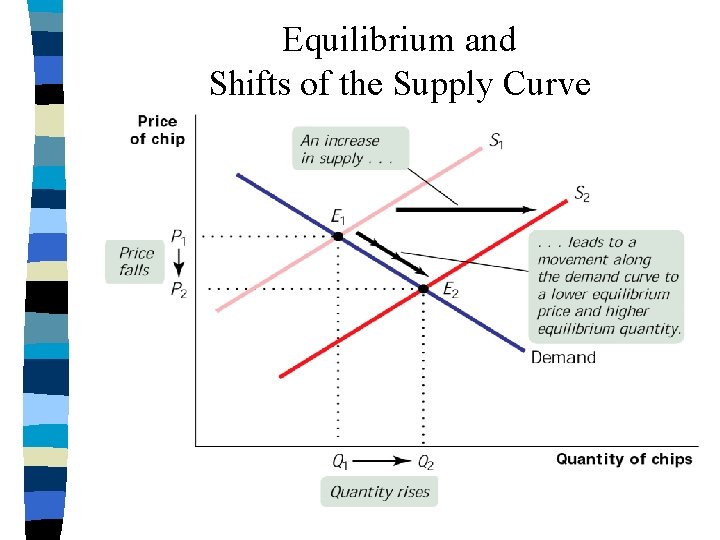
Equilibrium and Shifts of the Supply Curve
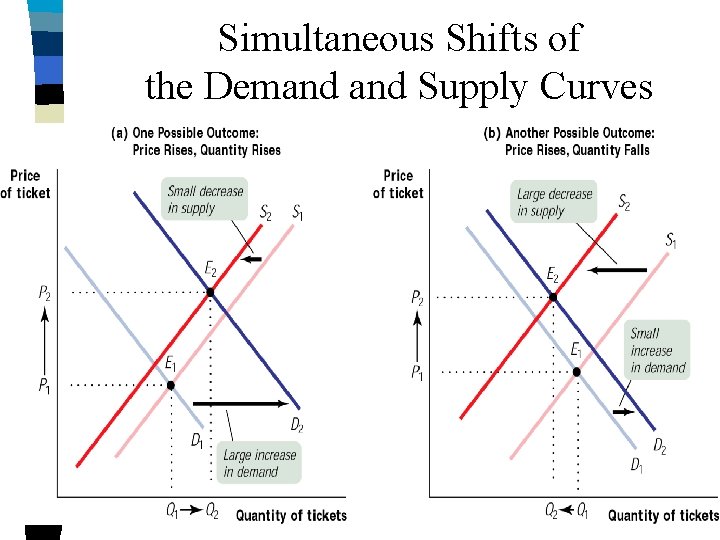
Simultaneous Shifts of the Demand Supply Curves
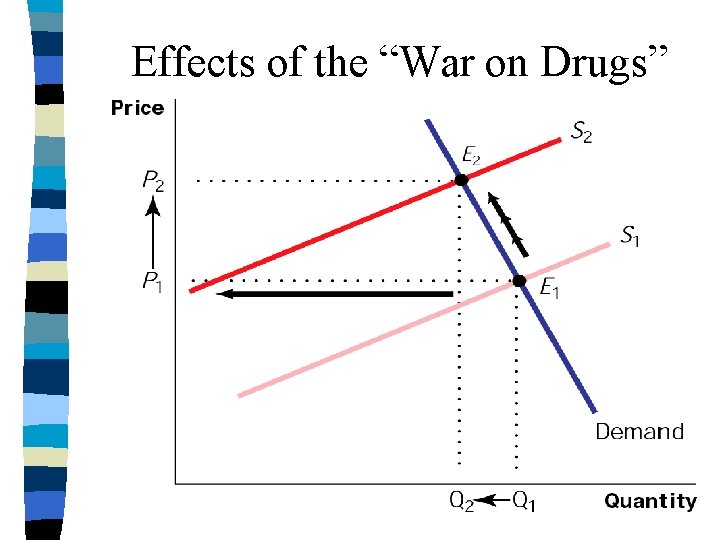
Effects of the “War on Drugs”
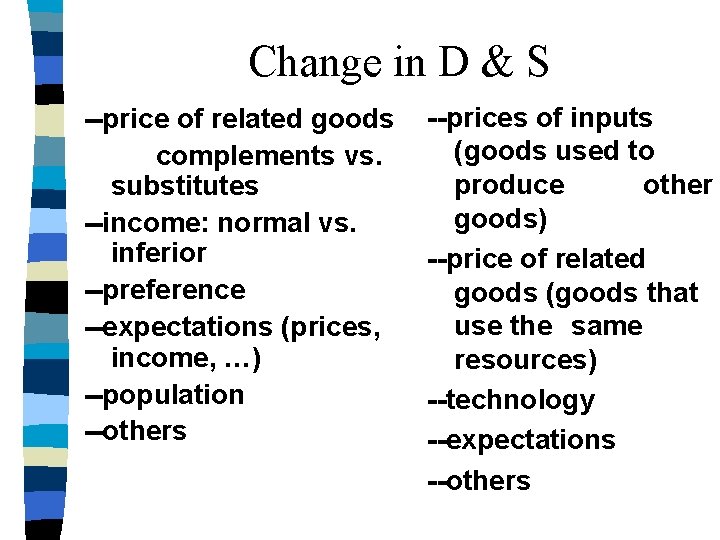
Change in D & S --price of related goods complements vs. substitutes --income: normal vs. inferior --preference --expectations (prices, income, …) --population --others --prices of inputs (goods used to produce other goods) --price of related goods (goods that use the same resources) --technology --expectations --others
- Slides: 31