
Chapter 3 Structure of a C Program Objectives
Chapter 3 Structure of a C Program Objectives ❏ To be able to list and describe the six expression categories ❏ To understand the rules of precedence and associativity in evaluating expressions ❏ To understand the result of side effects in expression evaluation ❏ To be able to predict the results when an expression is evaluated ❏ To understand implicit and explicit type conversion ❏ To understand use the first four statement types: null, expression, return, and compound 1
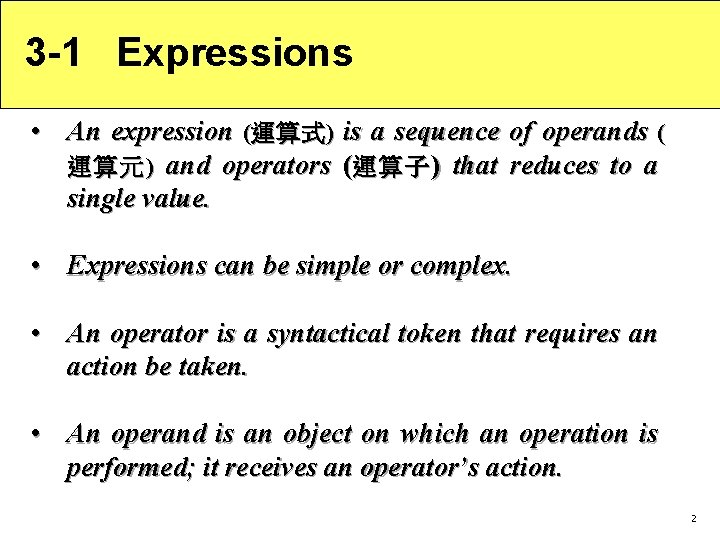
3 -1 Expressions • An expression (運 算 式 ) is a sequence of operands ( 運 算 元 ) and operators (運 算 子 ) that reduces to a single value. • Expressions can be simple or complex. • An operator is a syntactical token that requires an action be taken. • An operand is an object on which an operation is performed; it receives an operator’s action. 2
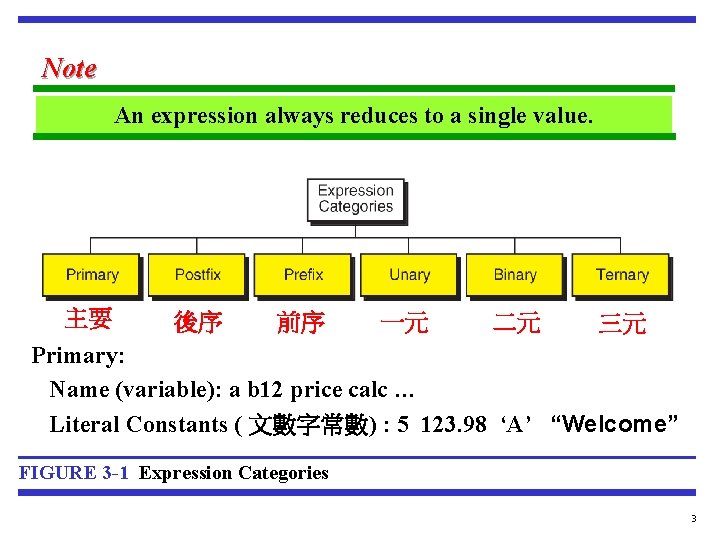
Note An expression always reduces to a single value. 主要 後序 前序 一元 二元 三元 Primary: Name (variable): a b 12 price calc … Literal Constants ( 文數字常數) : 5 123. 98 ‘A’ “Welcome” FIGURE 3 -1 Expression Categories 3
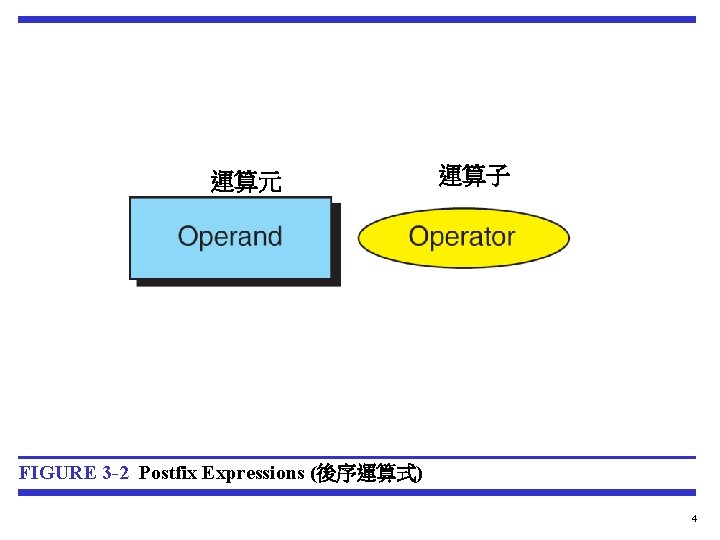
運算元 運算子 FIGURE 3 -2 Postfix Expressions (後序運算式) 4
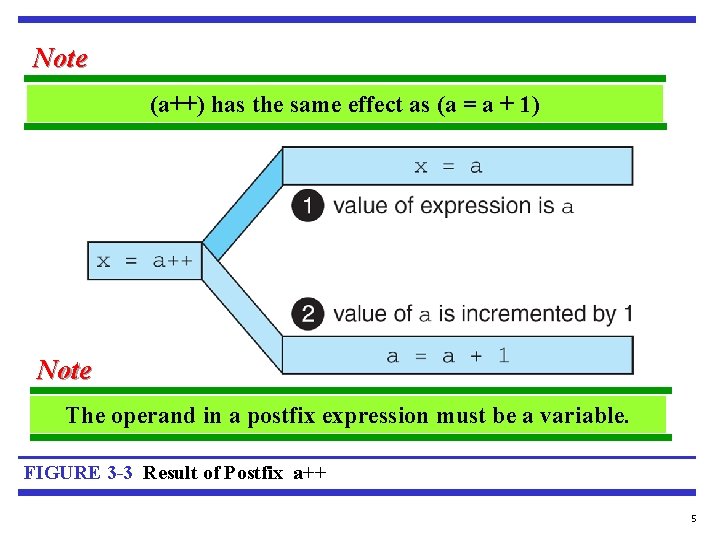
Note (a++) has the same effect as (a = a + 1) Note The operand in a postfix expression must be a variable. FIGURE 3 -3 Result of Postfix a++ 5
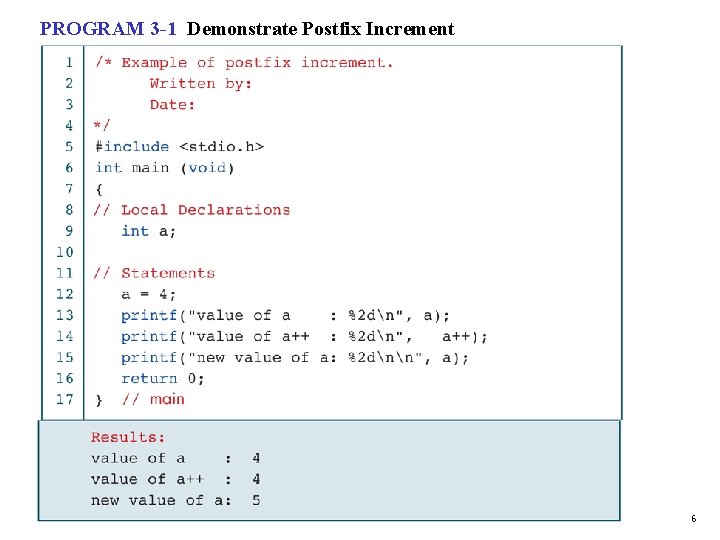
PROGRAM 3 -1 Demonstrate Postfix Increment 6
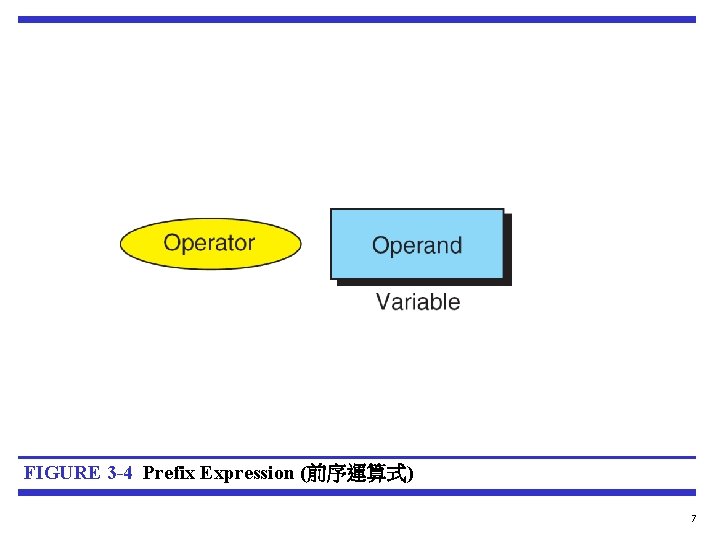
FIGURE 3 -4 Prefix Expression (前序運算式) 7
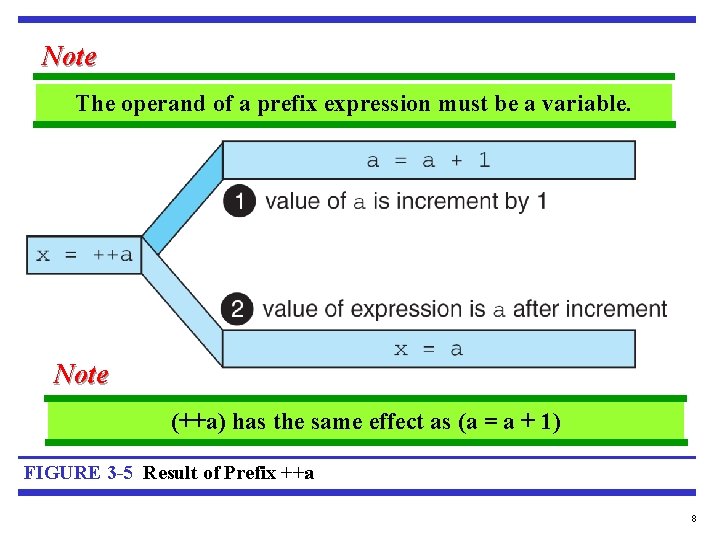
Note The operand of a prefix expression must be a variable. Note (++a) has the same effect as (a = a + 1) FIGURE 3 -5 Result of Prefix ++a 8
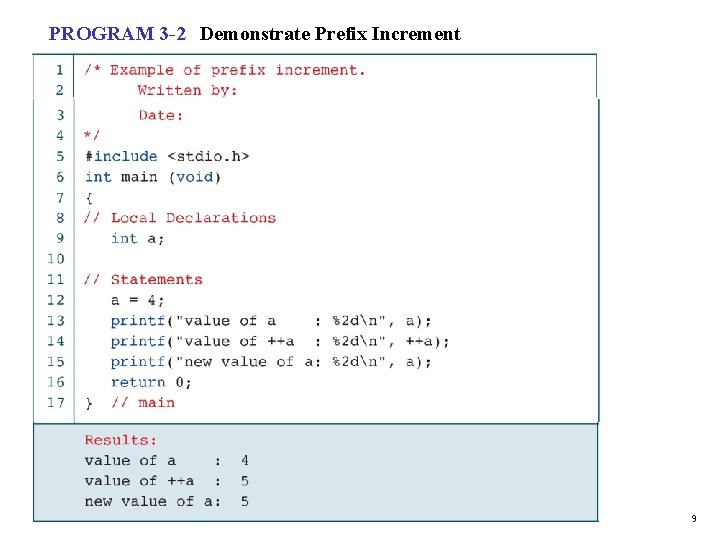
PROGRAM 3 -2 Demonstrate Prefix Increment 9
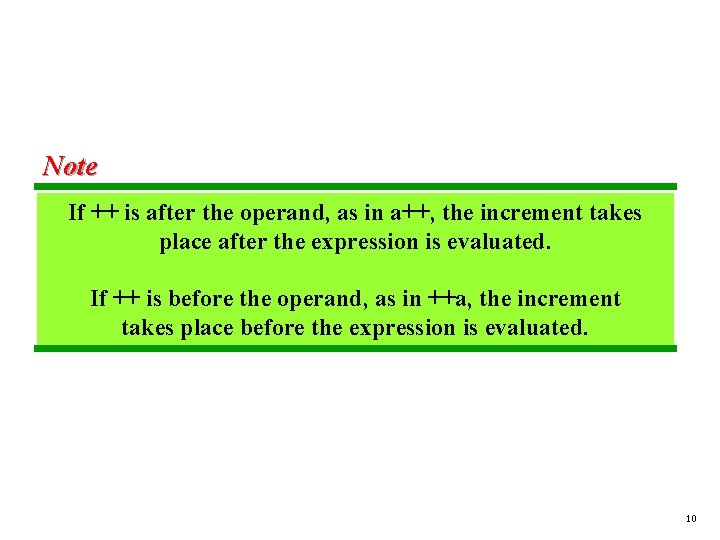
Note If ++ is after the operand, as in a++, the increment takes place after the expression is evaluated. If ++ is before the operand, as in ++a, the increment takes place before the expression is evaluated. 10
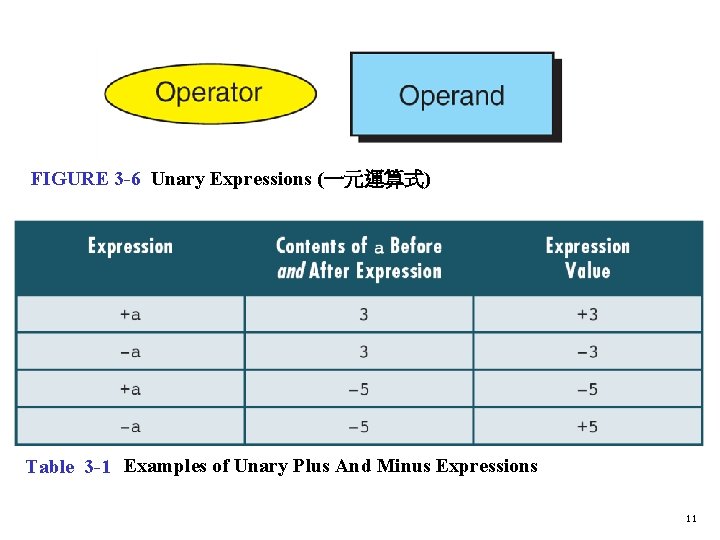
FIGURE 3 -6 Unary Expressions (一元運算式) Table 3 -1 Examples of Unary Plus And Minus Expressions 11
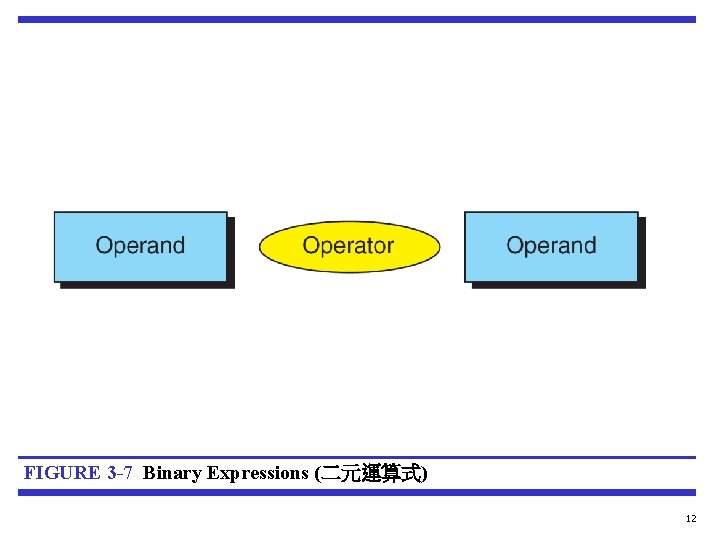
FIGURE 3 -7 Binary Expressions (二元運算式) 12
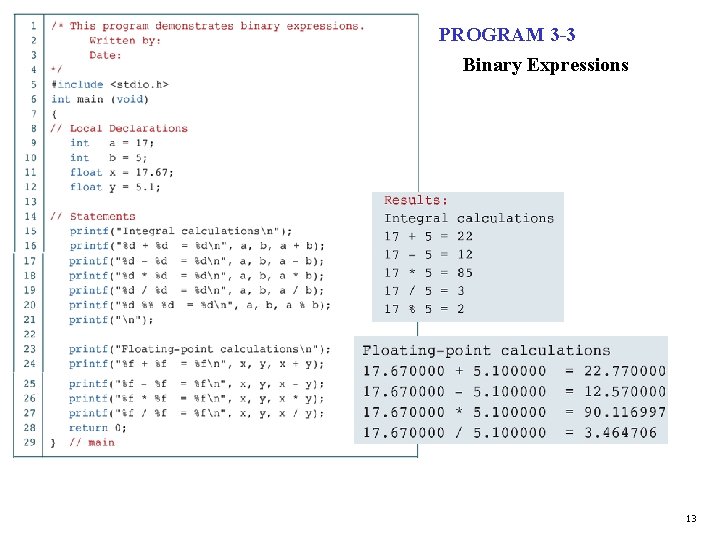
PROGRAM 3 -3 Binary Expressions 13
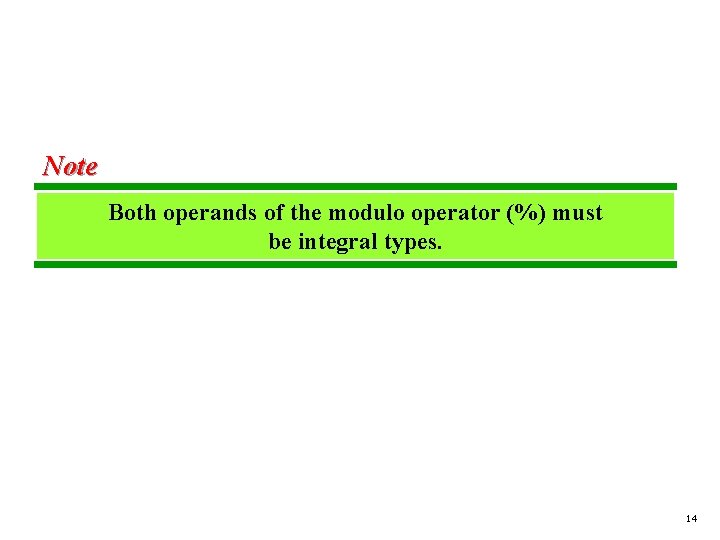
Note Both operands of the modulo operator (%) must be integral types. 14
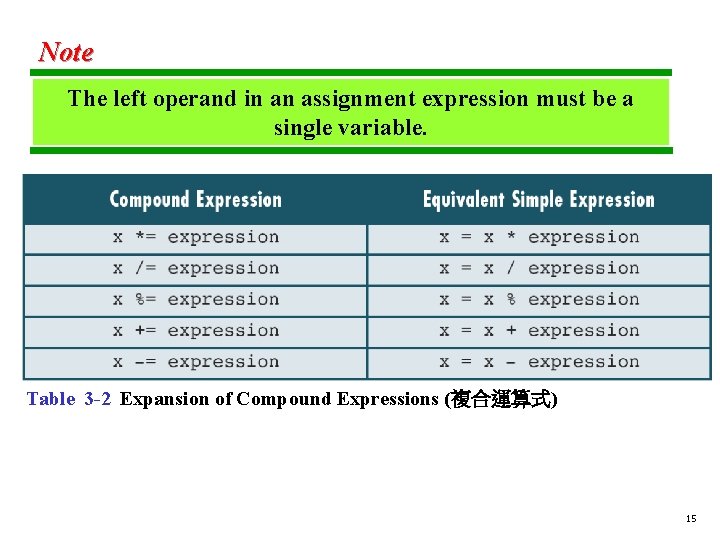
Note The left operand in an assignment expression must be a single variable. Table 3 -2 Expansion of Compound Expressions (複合運算式) 15
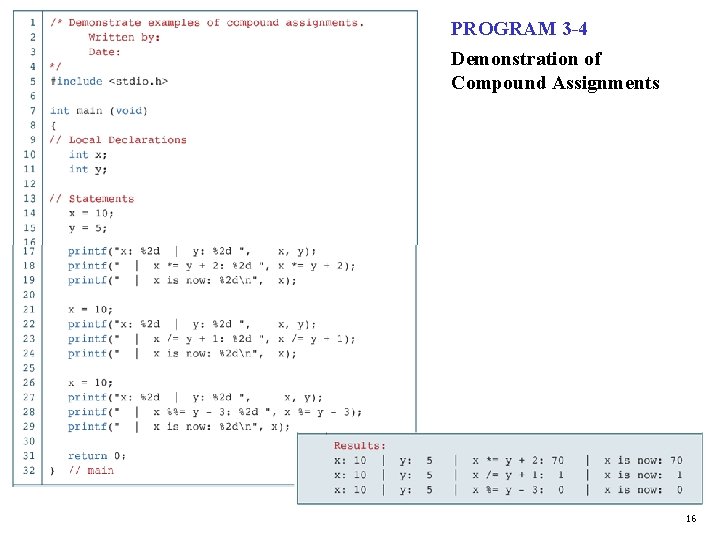
PROGRAM 3 -4 Demonstration of Compound Assignments 16
3 -2 Precedence and Associativity Precedence is used to determine the order in which different operators in a complex expression are evaluated. Associativity is used to determine the order in which operators with the same precedence are evaluated in a complex expression. Topics discussed in this section: Precedence (優先順序) Associativity (結合性) 17
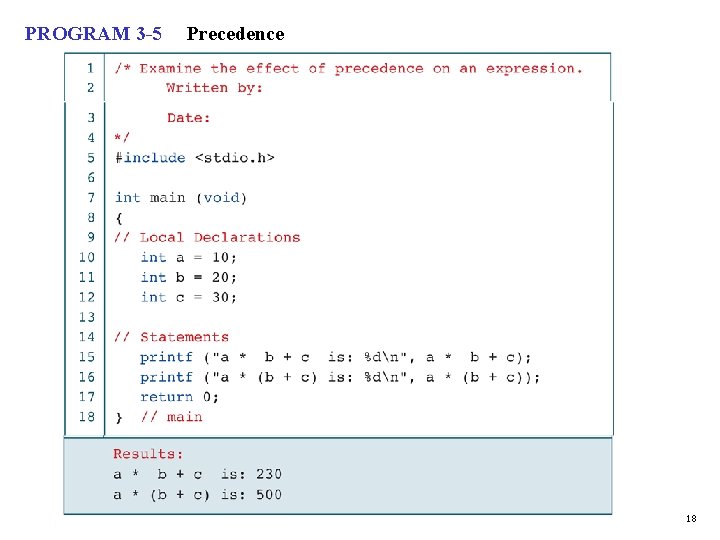
PROGRAM 3 -5 Precedence 18
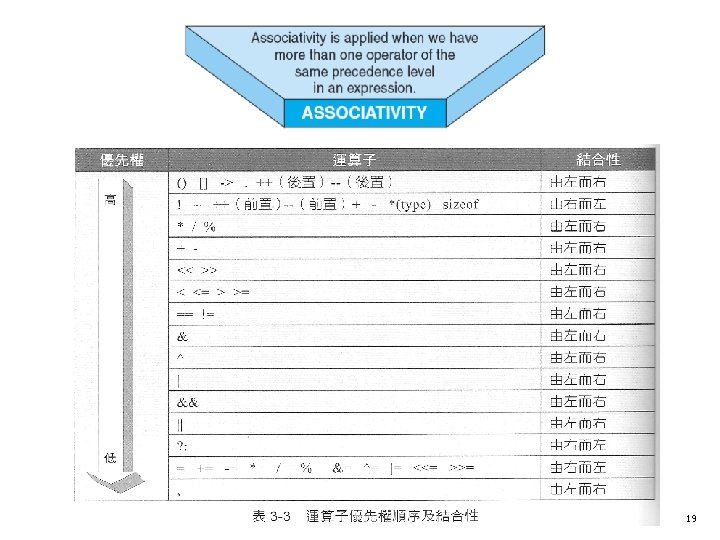
19
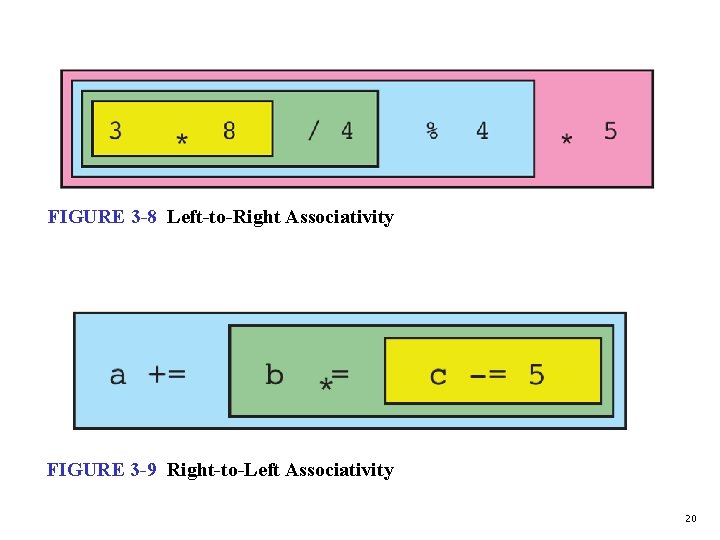
FIGURE 3 -8 Left-to-Right Associativity FIGURE 3 -9 Right-to-Left Associativity 20
3 -3 Side Effects A side effect is an action that results from the evaluation of an expression. For example, in an assignment, C first evaluates the expression on the right of the assignment operator and then places the value in the left variable. Changing the value of the left variable is a side effect. 21
3 -4 Evaluating Expressions Now that we have introduced the concepts of precedence, associativity, and side effects, let’s work through some examples. Topics discussed in this section: Expressions without Side Effects Expressions with Side Effects 22

PROGRAM 3 -6 Evaluating Expressions OK Computer Science: A Structured Programming Approach Using C 23
3 -5 Type Conversion Up to this point, we have assumed that all of our expressions involved data of the same type. But, what happens when we write an expression that involves two different data types, such as multiplying an integer and a floating-point number? To perform these evaluations, one of the types must be converted. Topics discussed in this section: Implicit Type Conversion Explicit Type Conversion (Cast) 24
FIGURE 3 -10 Conversion Rank 25

PROGRAM 3 -7 Implicit Type Conversion Visual C++ 不支援 bool型態 Computer Science: A Structured Programming Approach Using C 26

PROGRAM 3 -8 Explicit Casts Computer Science: A Structured Programming Approach Using C 27
3 -6 Statements A statement (敘 述 ) causes an action to be performed by the program. It translates directly into one or more executable computer instructions. You may have noticed that we have used a semicolon at the end of the statements in our programs. Most statements need a semicolon at the end; some do not. Topics discussed in this section: Statement Type The Role of the Semicolon Statements and Defined Constants 28
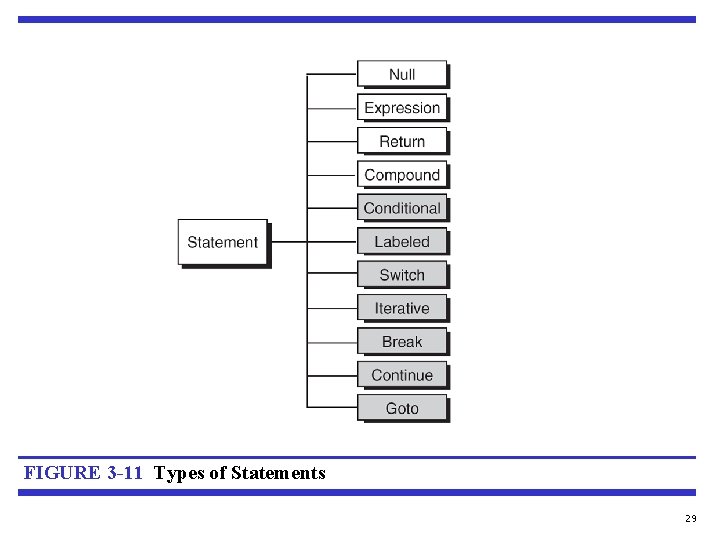
FIGURE 3 -11 Types of Statements 29
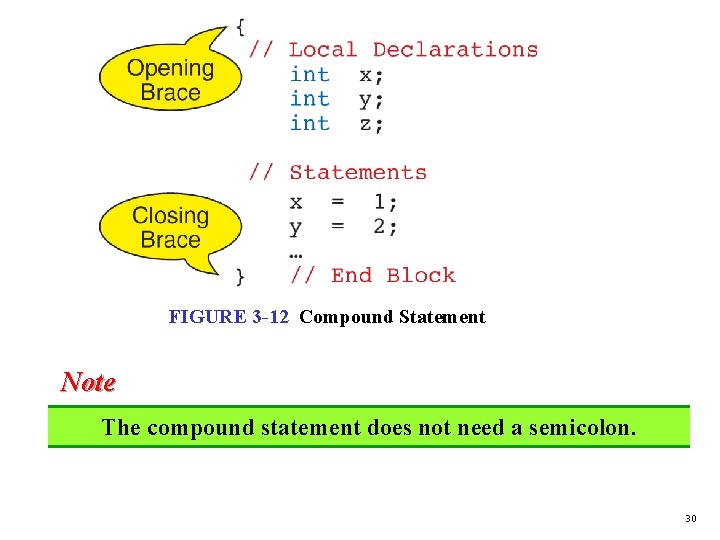
FIGURE 3 -12 Compound Statement Note The compound statement does not need a semicolon. 30
3 -7 Sample Programs This section contains several programs that you should study for programming technique and style. 31
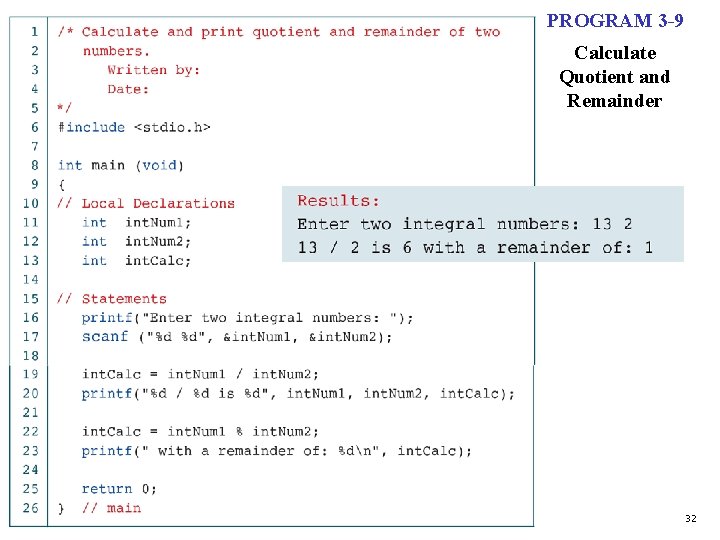
PROGRAM 3 -9 Calculate Quotient and Remainder Computer Science: A Structured Programming Approach Using C 32
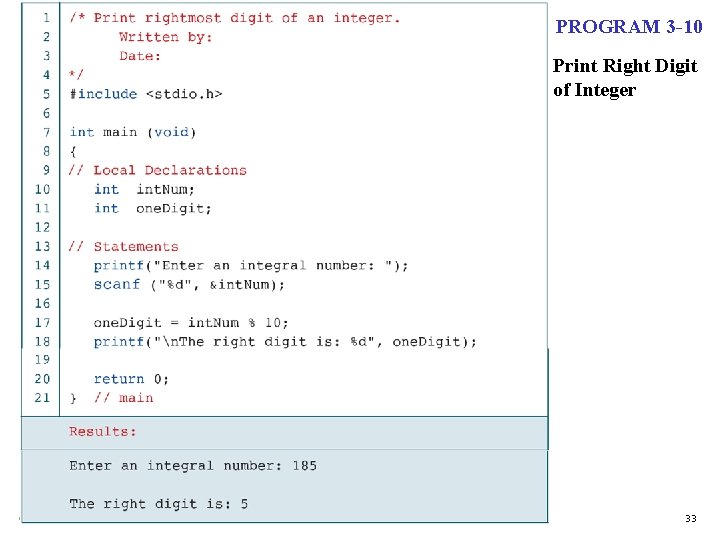
PROGRAM 3 -10 Print Right Digit of Integer Computer Science: A Structured Programming Approach Using C 33
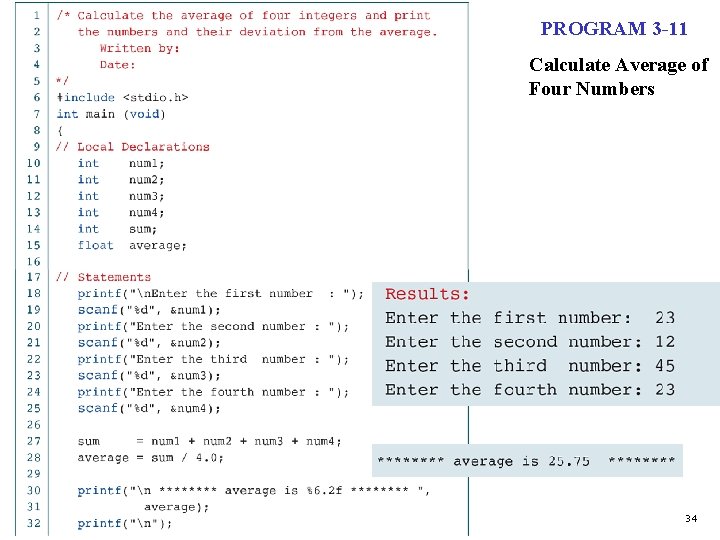
PROGRAM 3 -11 Calculate Average of Four Numbers Computer Science: A Structured Programming Approach Using C 34
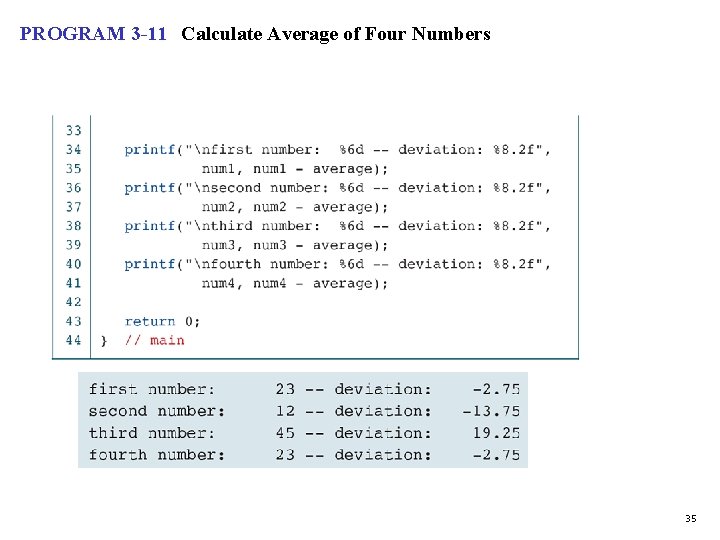
PROGRAM 3 -11 Calculate Average of Four Numbers 35
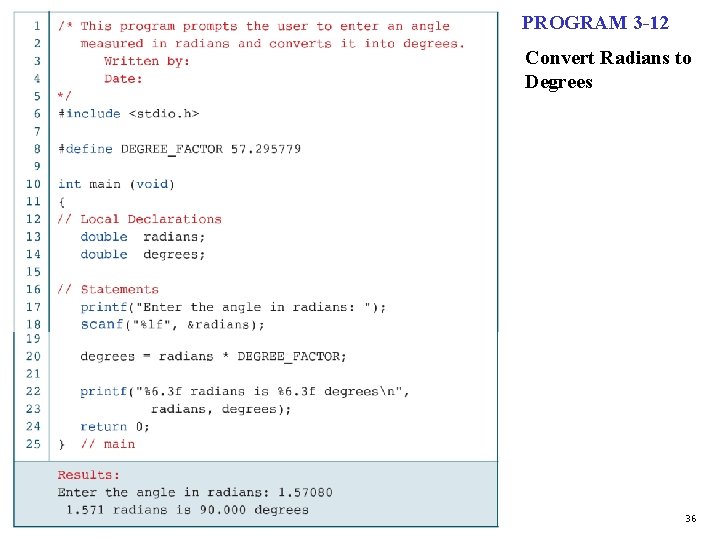
PROGRAM 3 -12 Convert Radians to Degrees Computer Science: A Structured Programming Approach Using C 36
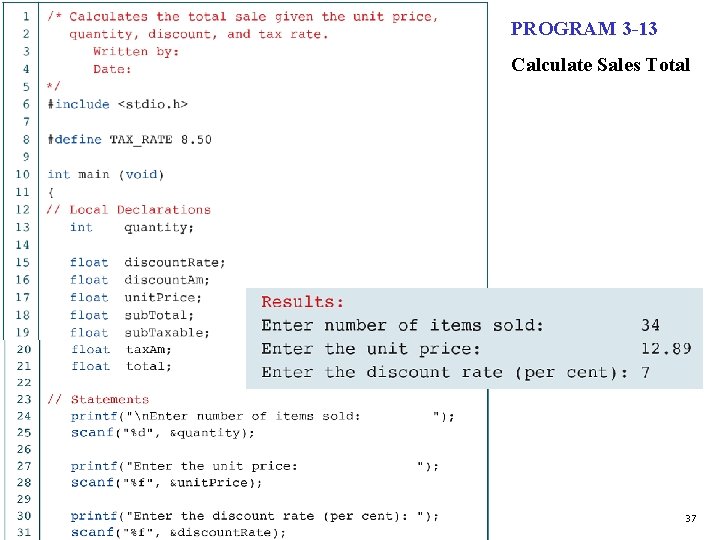
PROGRAM 3 -13 Calculate Sales Total 37
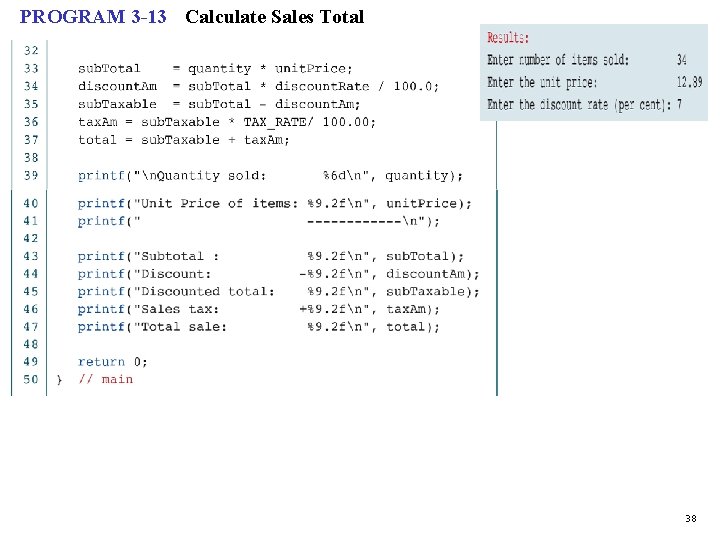
PROGRAM 3 -13 Calculate Sales Total 38
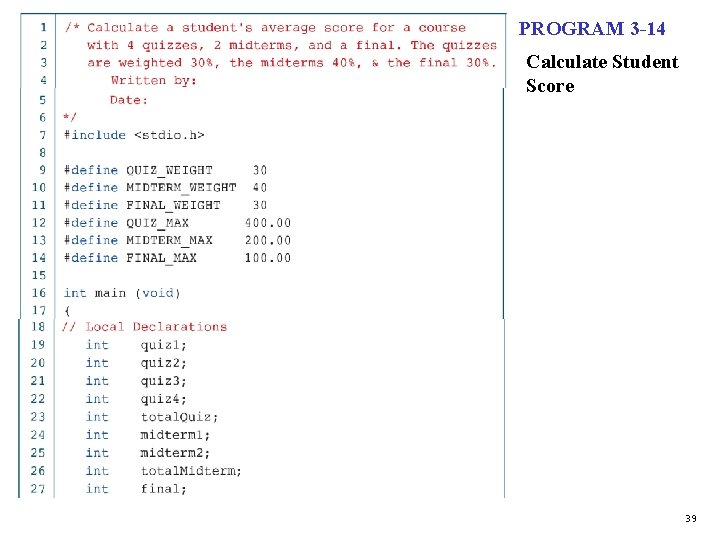
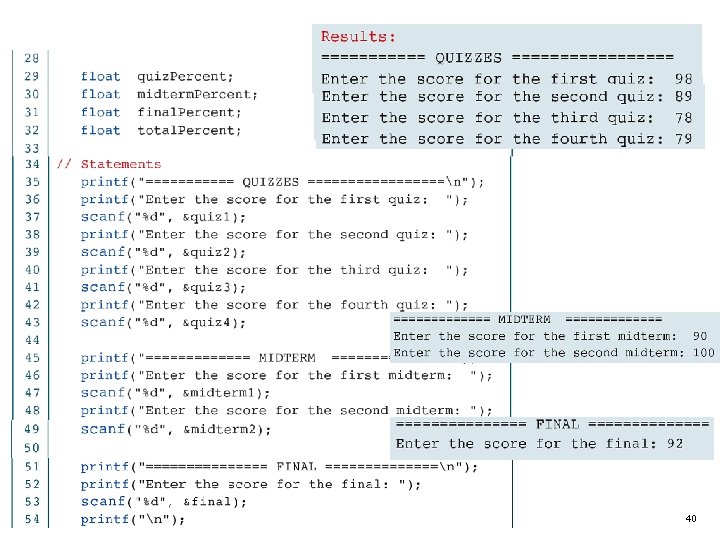
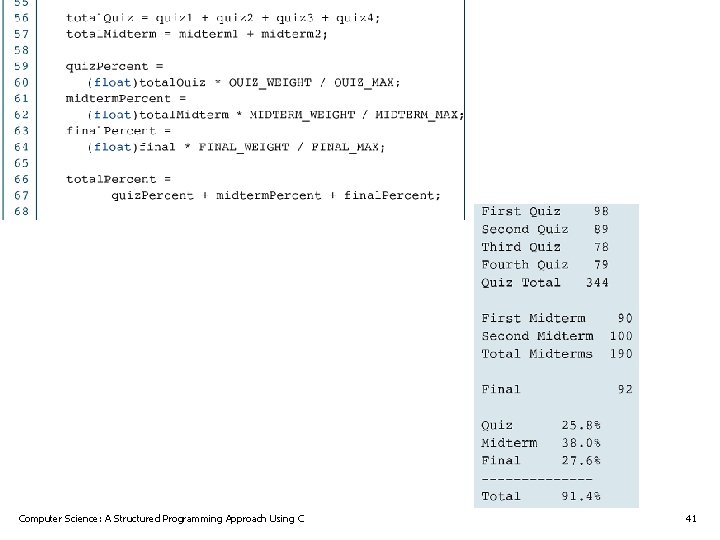
PROGRAM 3 -14 Calculate Student Score 39
Computer Science: A Structured Programming Approach Using C 40
Computer Science: A Structured Programming Approach Using C 41
- Slides: 41