
Chapter 3 Stakeholder Management and Communication Corporate Communication
- Slides: 19
Chapter 3: Stakeholder Management and Communication Corporate Communication: A Guide to Theory & Practice
Overview – Introduction to the concept of stakeholders – Overview of models used by organizations for communicating and collaborating with stakeholders
Stakeholder initiatives • Range of schemes and initiatives have developed at industry, national and transnational level – UN Global Compact Initiative – Global Reporting Initiative – World Bank’s Business Partners for Development – OECD’s Guidelines for Multinational Companies
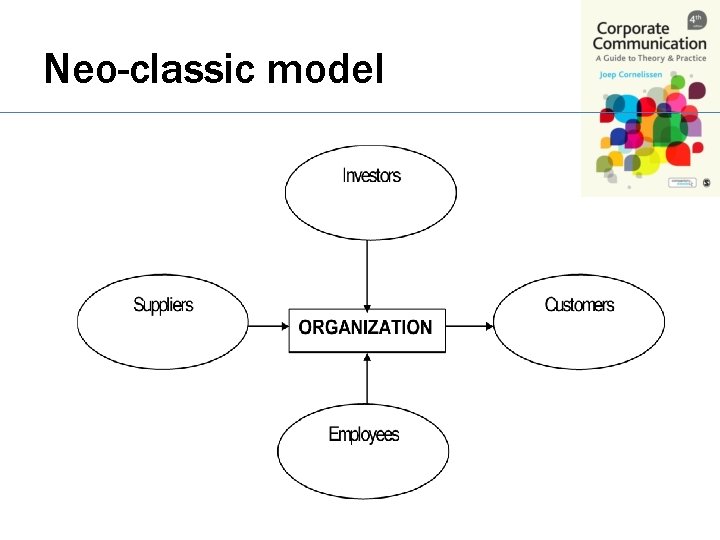
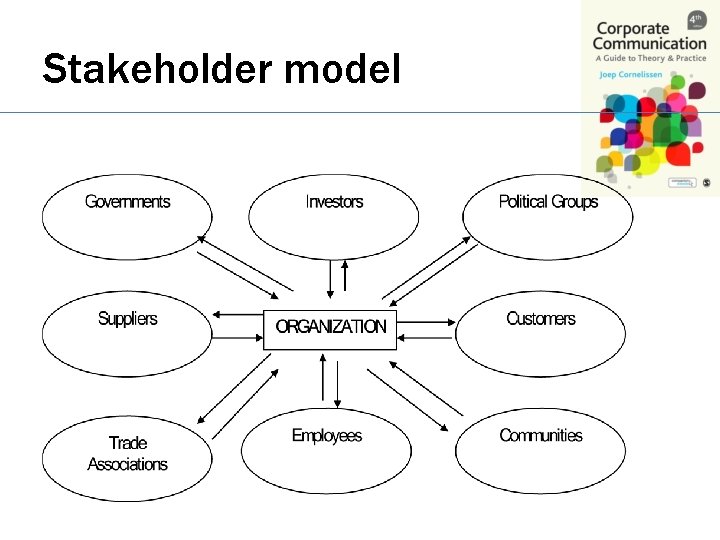
Stakeholder Management • Neo-classical theory: – purpose of organizations is to make profits – accountable to themselves and shareholders • Socio-economic theory: – other groups besides shareholders count – accountability extends to groups considered to be important for the continuity of the organization and the welfare of society
Neo-classic model
Stakeholder model
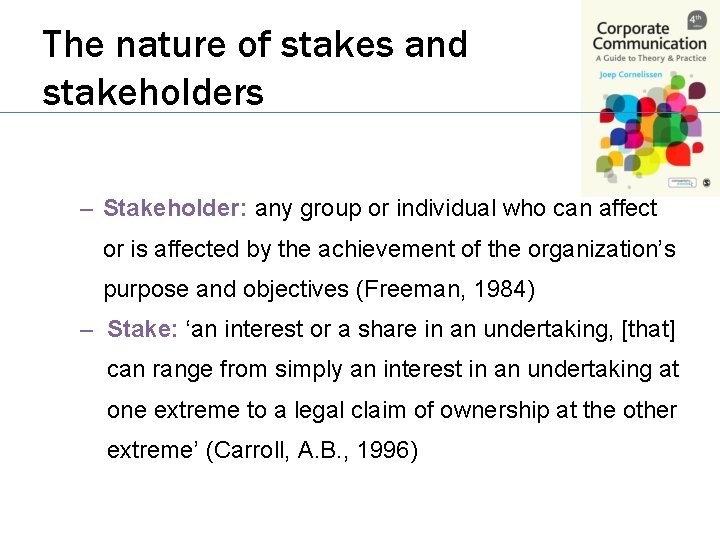
The nature of stakes and stakeholders – Stakeholder: any group or individual who can affect or is affected by the achievement of the organization’s purpose and objectives (Freeman, 1984) – Stake: ‘an interest or a share in an undertaking, [that] can range from simply an interest in an undertaking at one extreme to a legal claim of ownership at the other extreme’ (Carroll, A. B. , 1996)
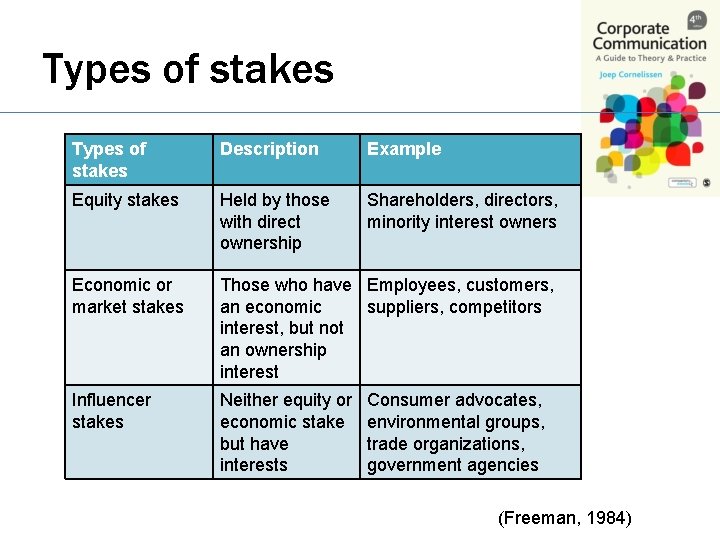
Types of stakes Description Example Equity stakes Held by those with direct ownership Shareholders, directors, minority interest owners Economic or market stakes Those who have Employees, customers, an economic suppliers, competitors interest, but not an ownership interest Influencer stakes Neither equity or economic stake but have interests Consumer advocates, environmental groups, trade organizations, government agencies (Freeman, 1984)
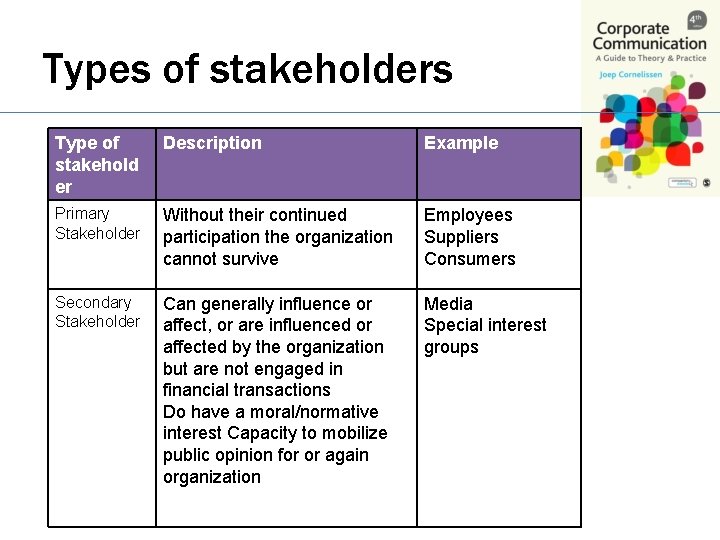
Types of stakeholders Type of stakehold er Description Example Primary Stakeholder Without their continued participation the organization cannot survive Employees Suppliers Consumers Secondary Stakeholder Can generally influence or affect, or are influenced or affected by the organization but are not engaged in financial transactions Do have a moral/normative interest Capacity to mobilize public opinion for or again organization Media Special interest groups
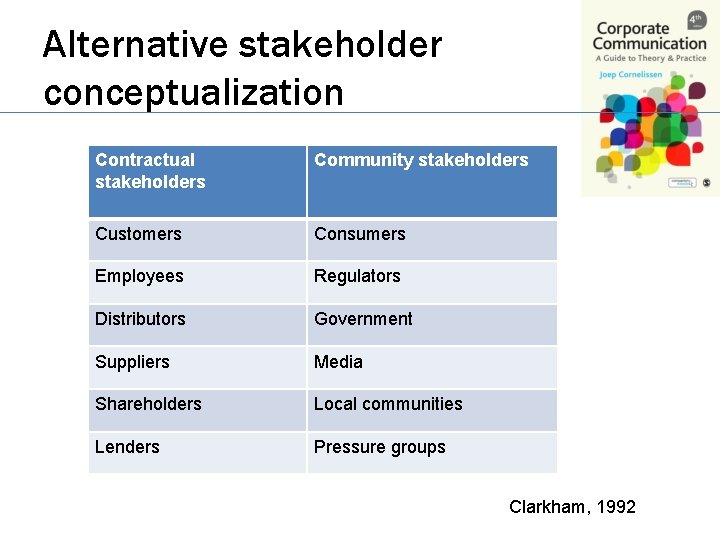
Alternative stakeholder conceptualization Contractual stakeholders Community stakeholders Customers Consumers Employees Regulators Distributors Government Suppliers Media Shareholders Local communities Lenders Pressure groups Clarkham, 1992
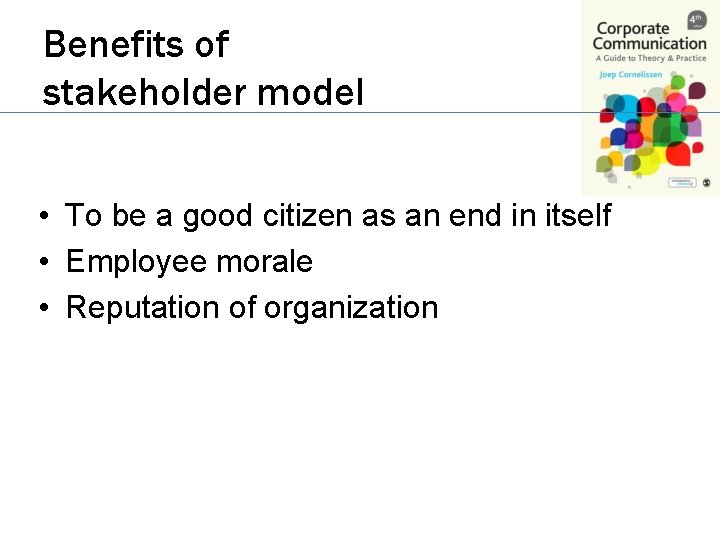
Benefits of stakeholder model • To be a good citizen as an end in itself • Employee morale • Reputation of organization
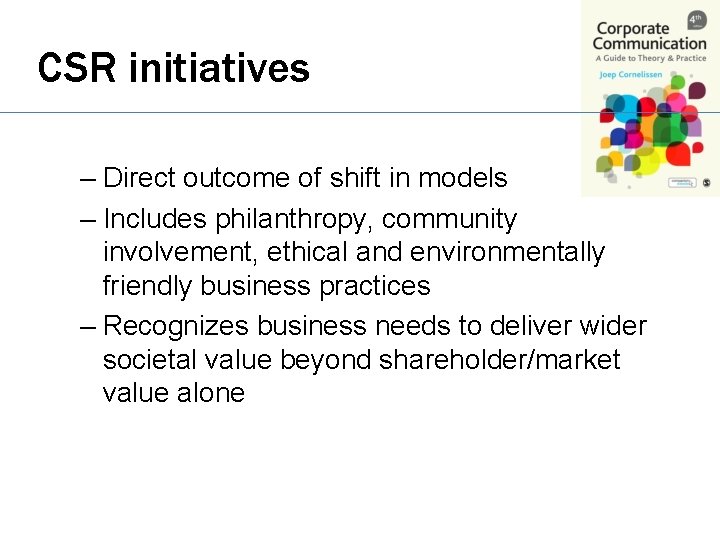
CSR initiatives – Direct outcome of shift in models – Includes philanthropy, community involvement, ethical and environmentally friendly business practices – Recognizes business needs to deliver wider societal value beyond shareholder/market value alone
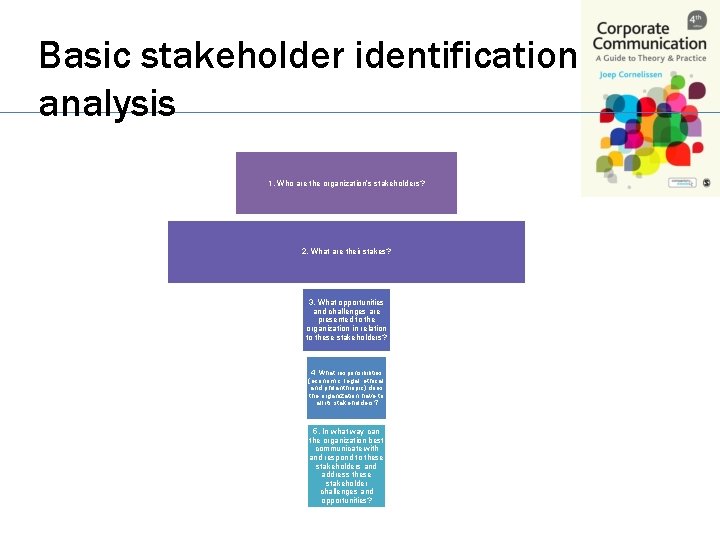
Basic stakeholder identification analysis 1. Who are the organization’s stakeholders? 2. What are their stakes? 3. What opportunities and challenges are presented to the organization in relation to these stakeholders? 4. What responsibilities (economic, legal, ethical, and philanthropic) does the organization have to all its stakeholders? 5. In what way can the organization best communicate with and respond to these stakeholders and address these stakeholder challenges and opportunities?
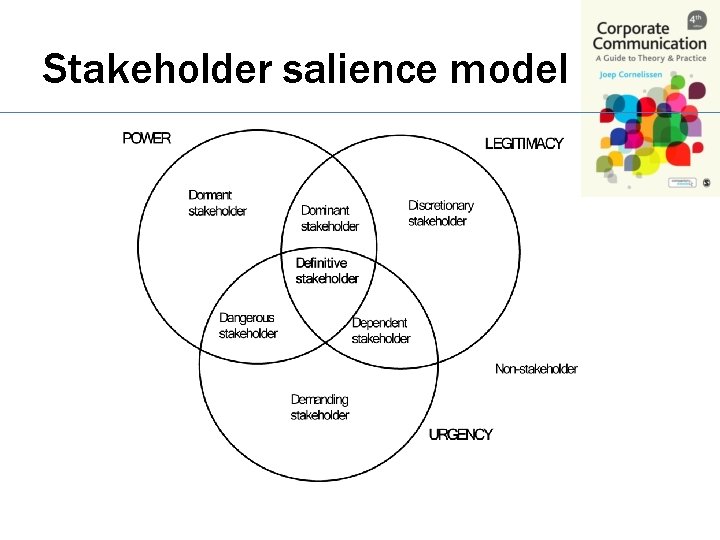
Stakeholder salience model
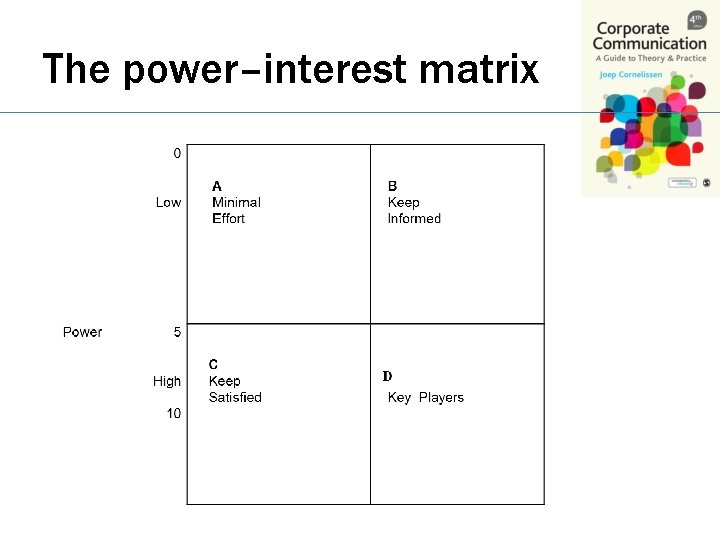
The power–interest matrix
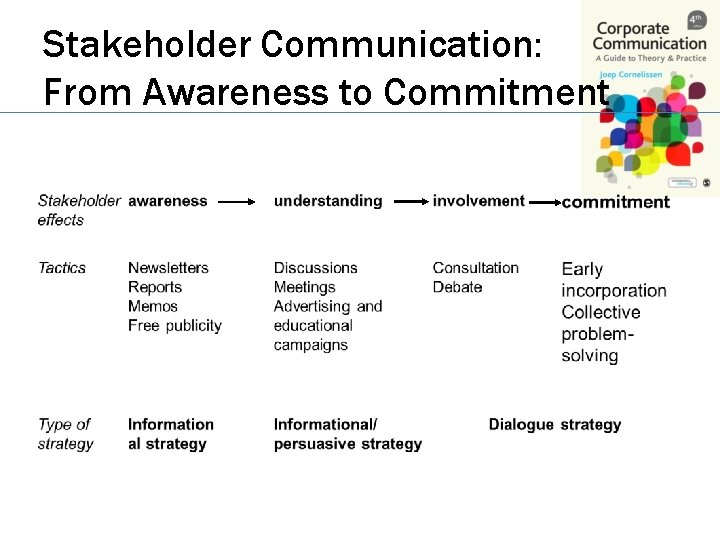
Stakeholder Communication: From Awareness to Commitment
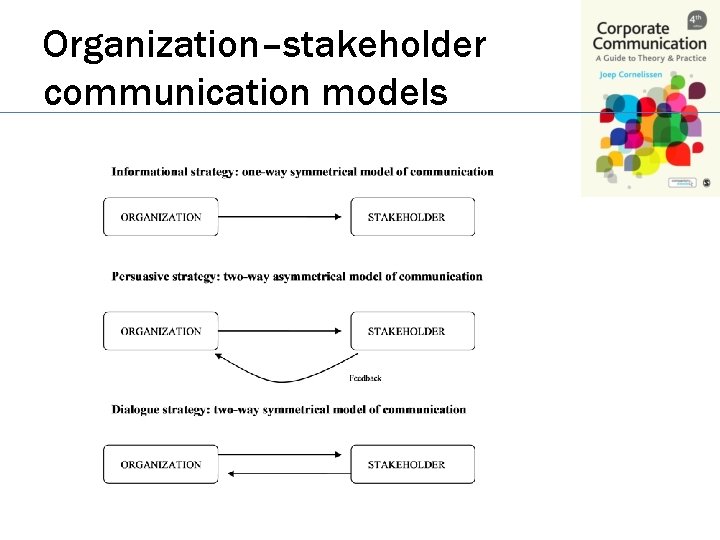
Organization–stakeholder communication models
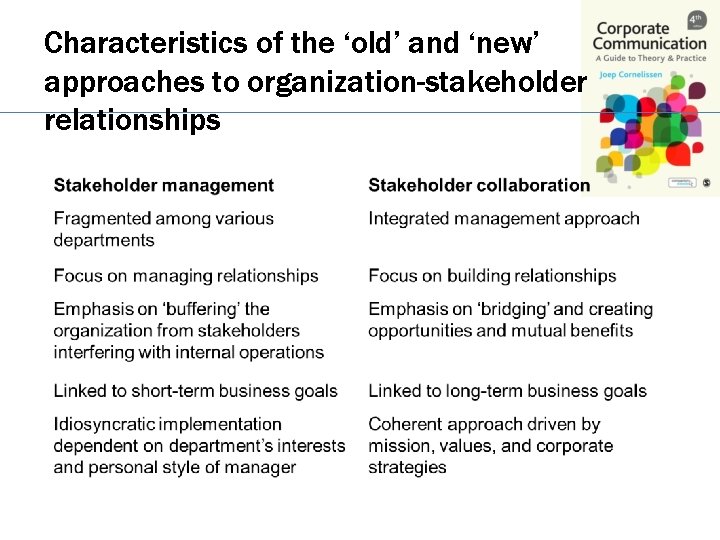
Characteristics of the ‘old’ and ‘new’ approaches to organization-stakeholder relationships
Collaboration and Engagement – Focus on changing the relationship between the organization and its stakeholders from ‘management’ to ‘collaboration’ and from ‘exchange’ to ‘long-term relationships’. – 'Collaboration’ implies a two-way symmetrical model of dialogue and consultation