
Chapter 3 Review Cells The Basic Unit of
Chapter 3 Review Cells: The Basic Unit of Life

1 What is the smallest unit that can perform all processes necessary for life? (The basic unit of life)
1 - Answer What is the smallest unit that can perform all processes necessary for life? (The basic unit of life) A: The Cell
2 List the 3 parts to the Cell Theory
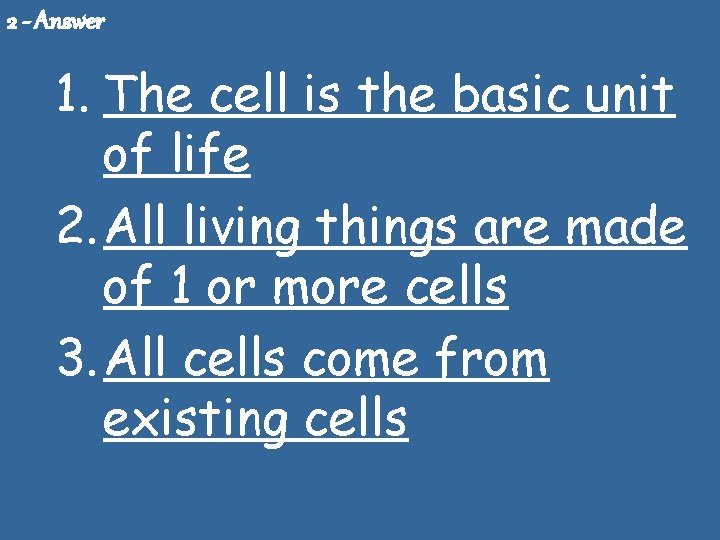
2 - Answer 1. The cell is the basic unit of life 2. All living things are made of 1 or more cells 3. All cells come from existing cells
3 List the 5 building blocks of life.
3 - Answer List the 5 building blocks of life. A: “PLANC” Proteins, Lipids, ATP, Nucleic Acids, Carbohydrates
4 The cell would collapse without this structure.
4 The cell would collapse without this structure. A: The Cytoskeleton
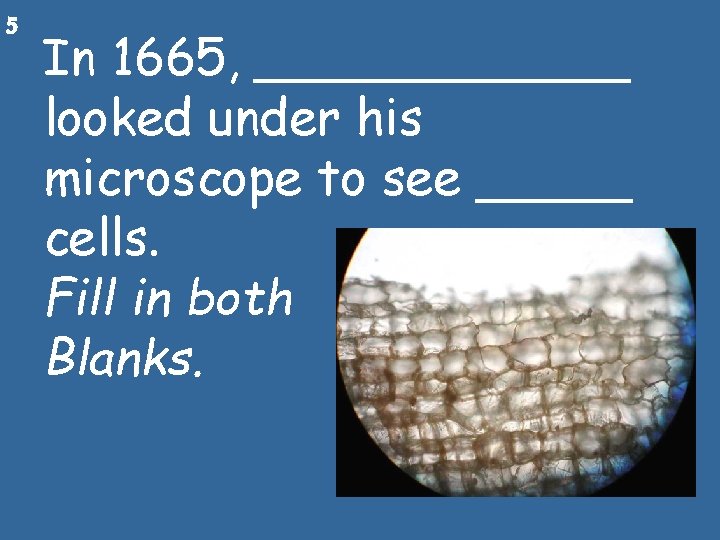
5 In 1665, ______ looked under his microscope to see _____ cells. Fill in both Blanks.
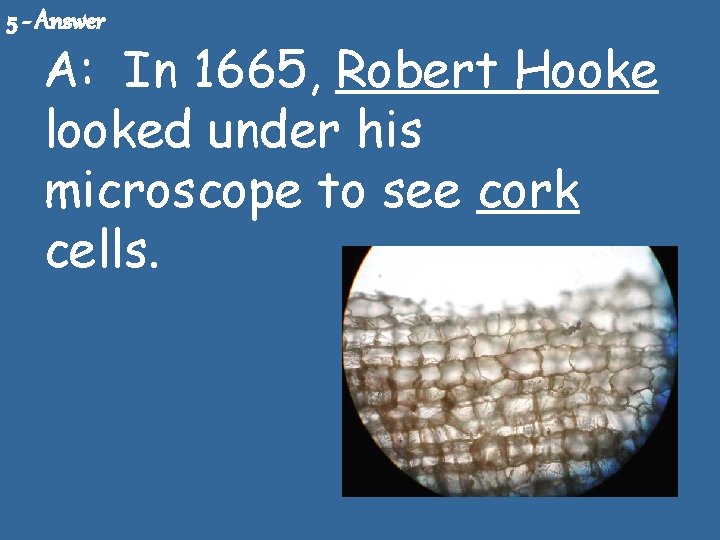
5 - Answer A: In 1665, Robert Hooke looked under his microscope to see cork cells.
6 What organelle allows plants (and some protists) to make their own food?
6 -Answer What organelle allows plants (and some protists) to make their own food? A: The Chloroplast
7 Carbohydrates and Lipids are converted to ATP in this organelle.
7 -Answer Carbohydrates and Lipids are converted to ATP in this organelle. A. Mitochondria
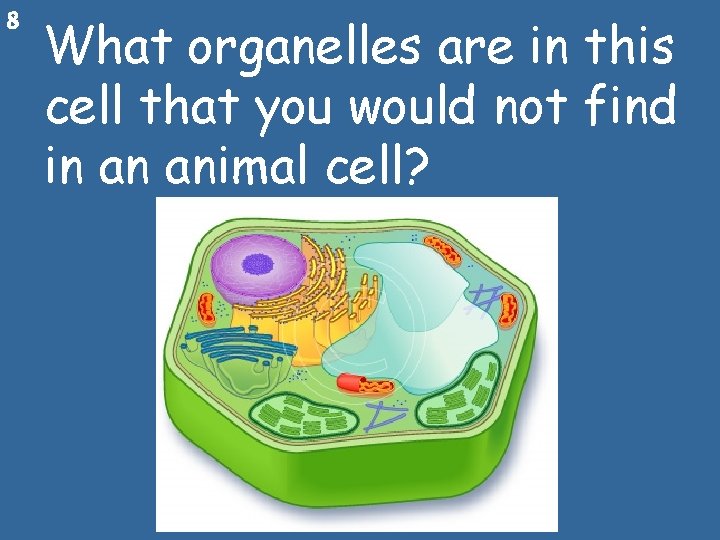
8 What organelles are in this cell that you would not find in an animal cell?
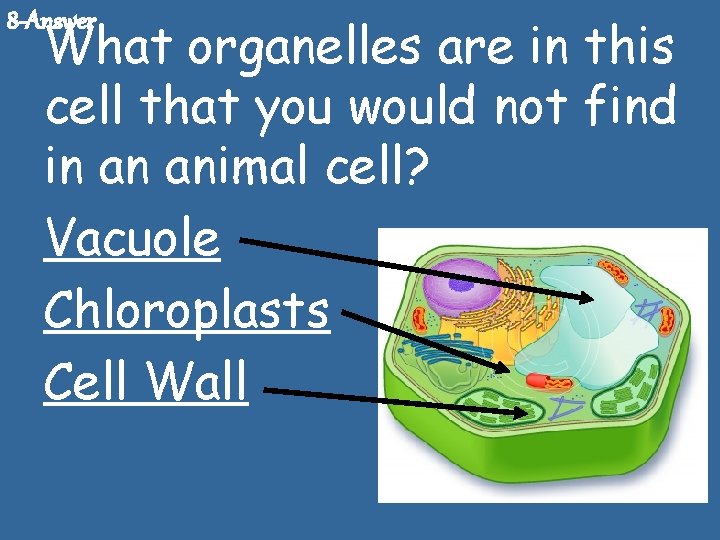
8 -Answer What organelles are in this cell that you would not find in an animal cell? Vacuole Chloroplasts Cell Wall
9 What are the 3 benefits of being multicellular?
9 -Answer Humans are multicellular organisms. What are the 3 benefits of being multicellular? A: Larger Size, Longer Life, Specialization
10 Starting with the lowest level of organization, list the 5 levels of organization for multicellular organisms.
10 - Answer 1. Cell 2. Tissue 3. Organ 4. Organ System 5. Organism
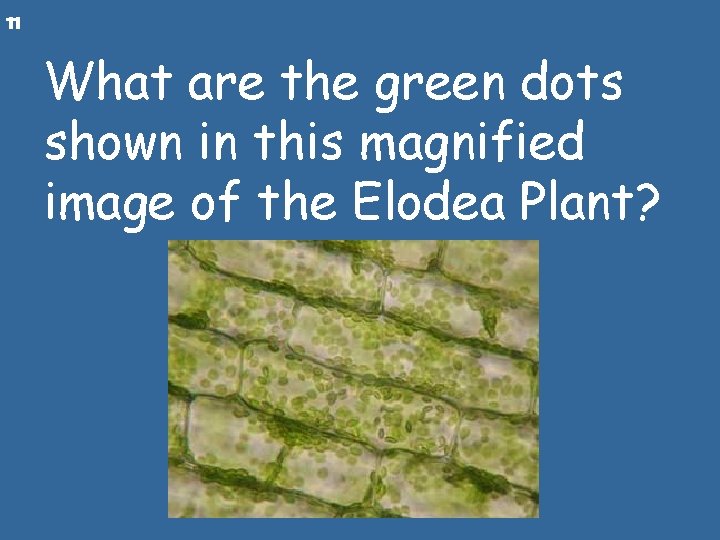
11 What are the green dots shown in this magnified image of the Elodea Plant?
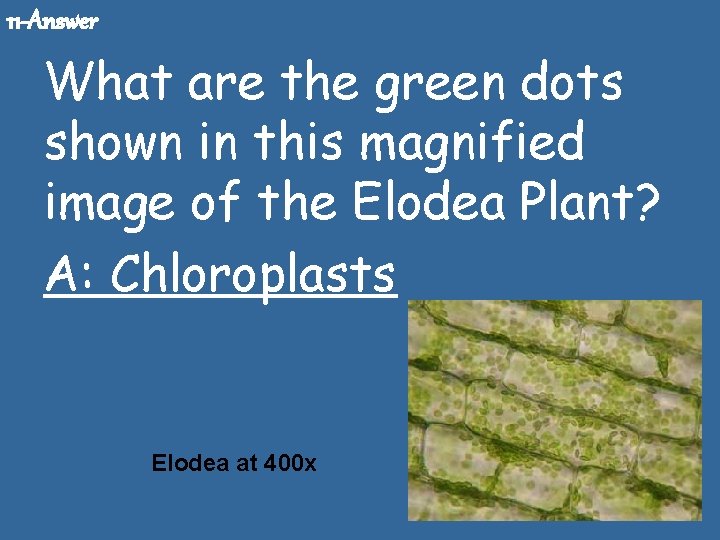
11 -Answer What are the green dots shown in this magnified image of the Elodea Plant? A: Chloroplasts Elodea at 400 x
12 List the two basic types of cells.
12 -Answer List the two basic types of cells. A: Prokaryotic and Eukaryotic
13 This type of cell has no nucleus or membranebound organelles
13 -Answer This type of cell has no nucleus or membranebound organelles A: Prokaryotic
14 List the 3 scientists that helped develop the cell theory.
14 -Answer List the 3 scientists that helped develop the cell theory. A: Schleiden, Schwann, Virchow
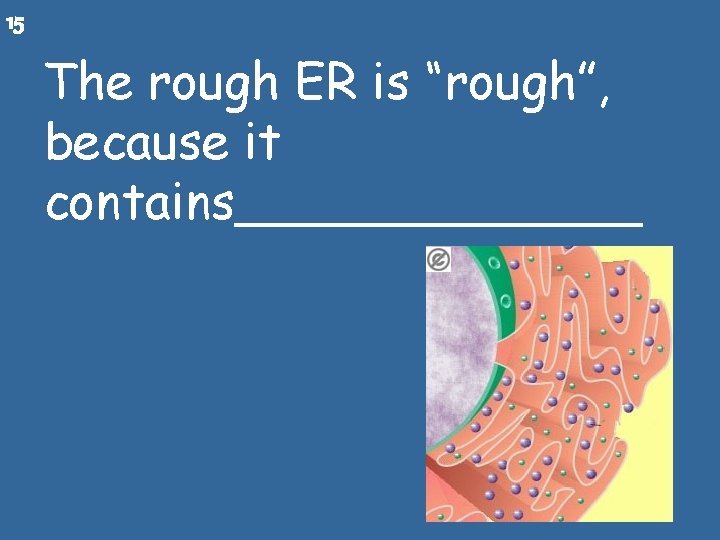
15 The rough ER is “rough”, because it contains_______
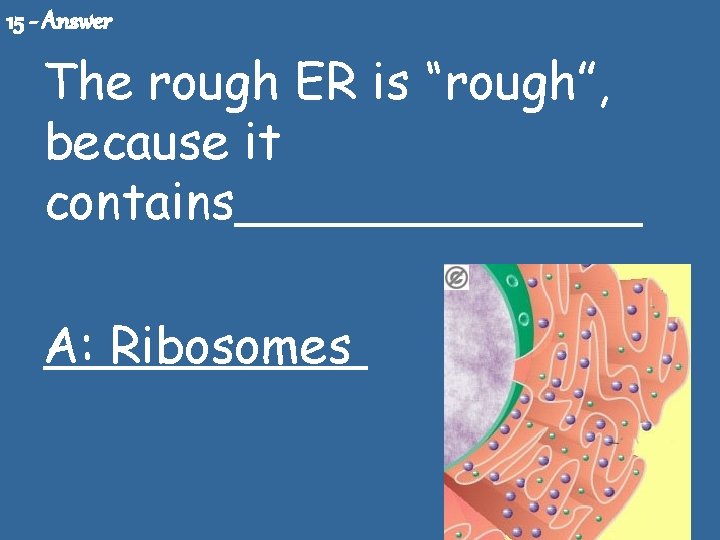
15 - Answer The rough ER is “rough”, because it contains_______ A: Ribosomes
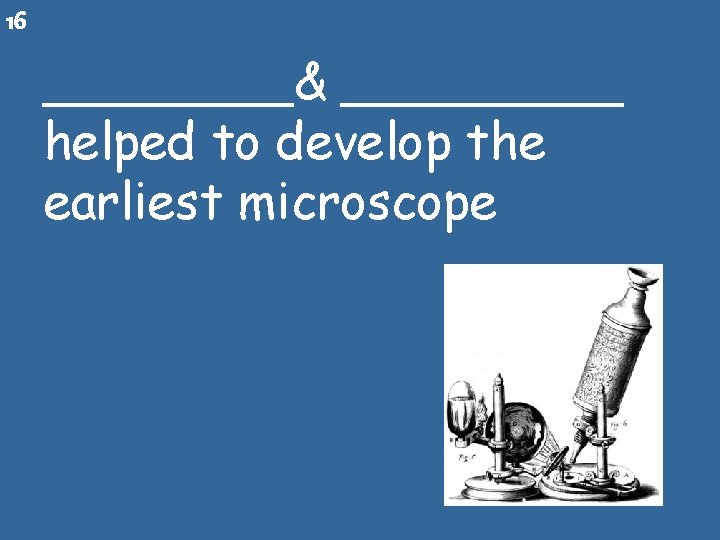
16 ____& _____ helped to develop the earliest microscope
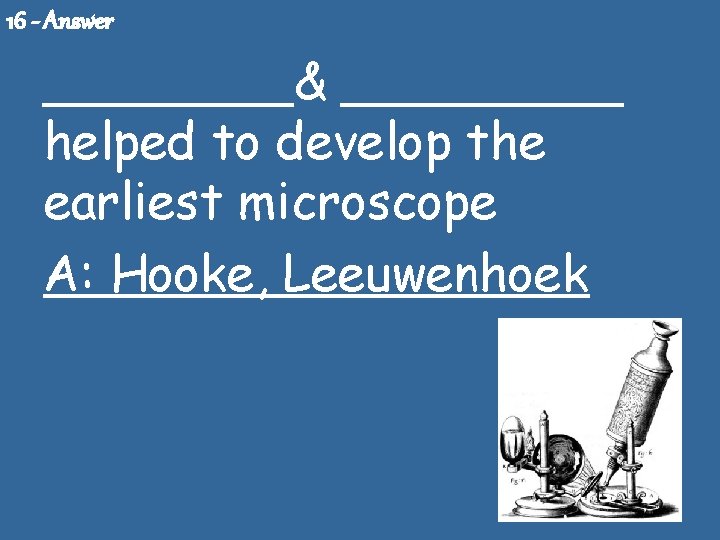
16 - Answer ____& _____ helped to develop the earliest microscope A: Hooke, Leeuwenhoek
17 Muscle cells contain more of this organelle than fat cells because they require more energy.
17 - Answer Muscle cells contain more of this organelle than fat cells because they require more energy. A: Mitochondria
18 If this organelle does not contain enough water, a plant will wilt.
18 -Answer If this organelle does not contain enough water, a plant will wilt. A: Vacuole
19 This is only found in plant cells. It is the outermost layer that gives a plant cell structure and support.
19 - Answer This is only found in plant cells. It is the outermost layer that gives a plant cell structure and support. A: Cell Wall
20 Plants, Animals, Protists, and Fungi are organisms that contain these types of cells that have a nucleus and membrane-bound organelles.
20 - Answer Plants, Animals, Protists, and Fungi are organisms that contain these types of cells that have a nucleus and membrane-bound organelles. A. Eukaryotic Cells
21 Our bodies break down carbohydrates and lipids into this useable form of energy.
21 - Answer Our bodies break down carbohydrates and lipids into this useable form of energy. A: ATP
22 This is made in the ribosomes.
22 - Answer This is made in the ribosomes. A: Protein
23 Cells that are like each other and do the same job form_______
23 - Answer Cells that are like each other and do the same job form_______ A. Tissues
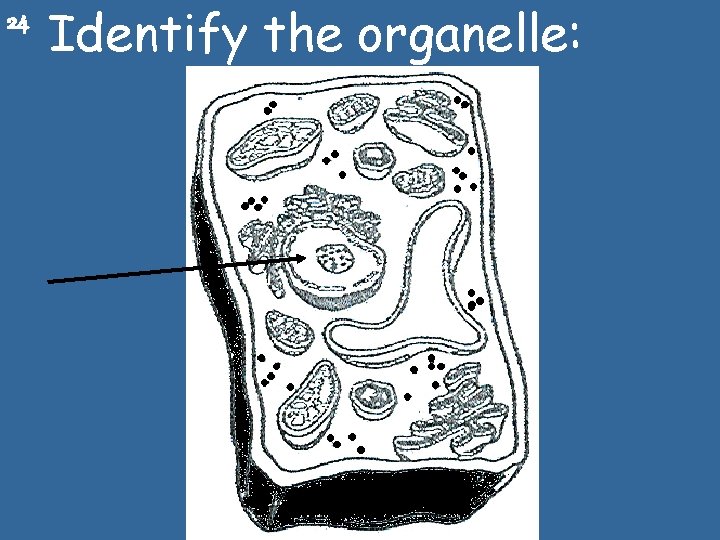
24 Identify the organelle:
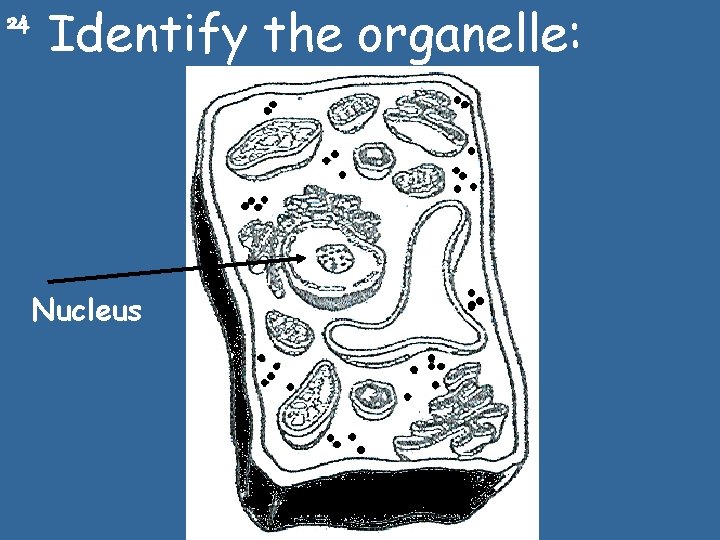
24 Identify the organelle: Nucleus
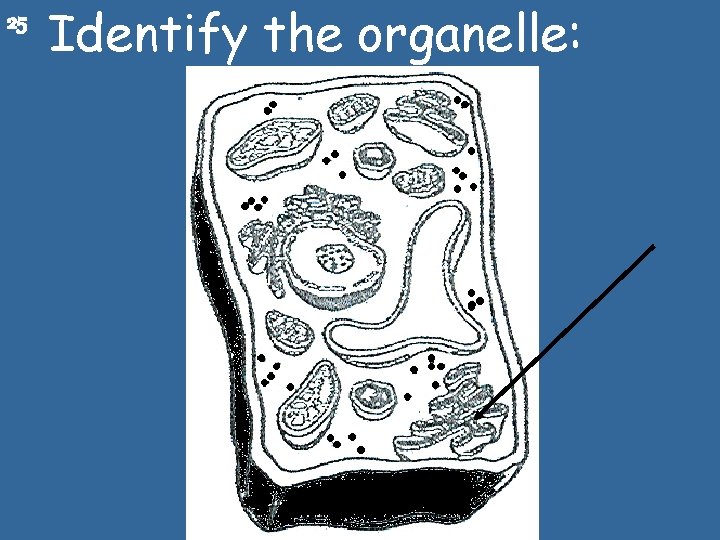
25 Identify the organelle:
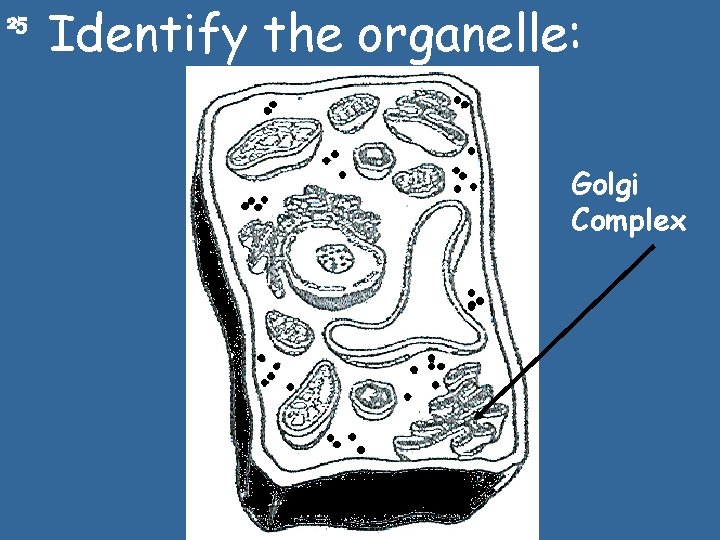
25 Identify the organelle: Golgi Complex
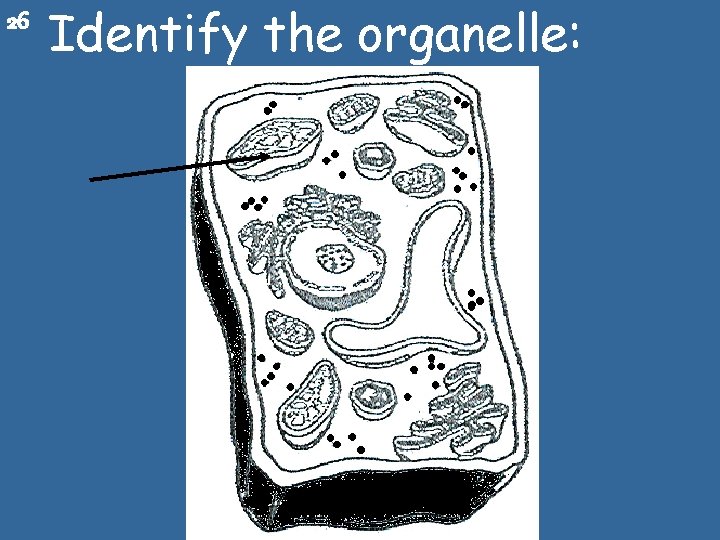
26 Identify the organelle:
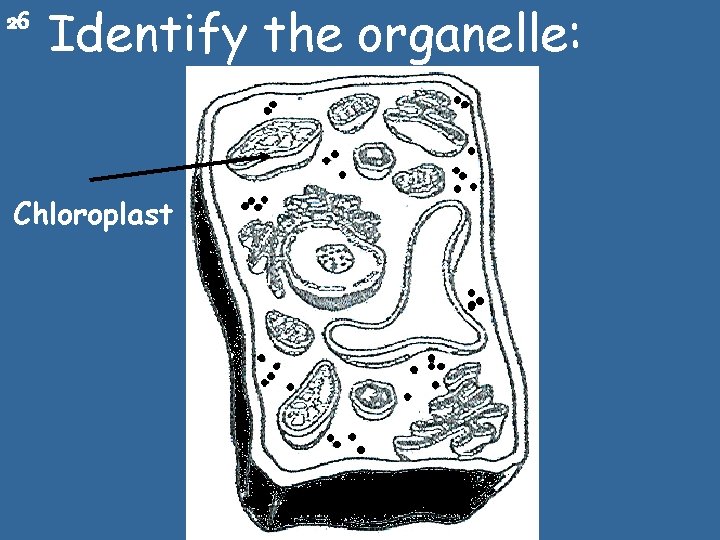
26 Identify the organelle: Chloroplast
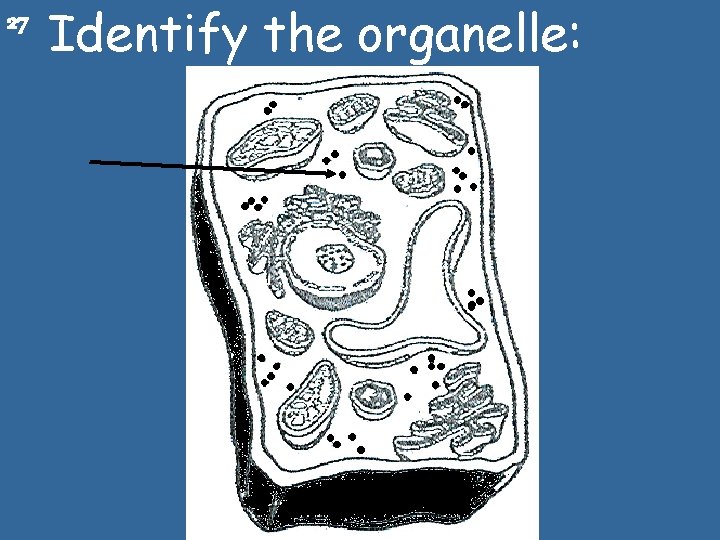
27 Identify the organelle:
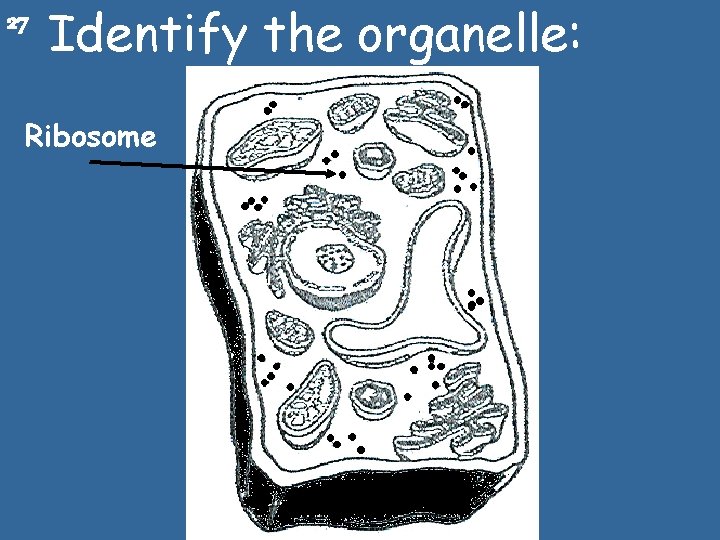
27 Identify the organelle: Ribosome
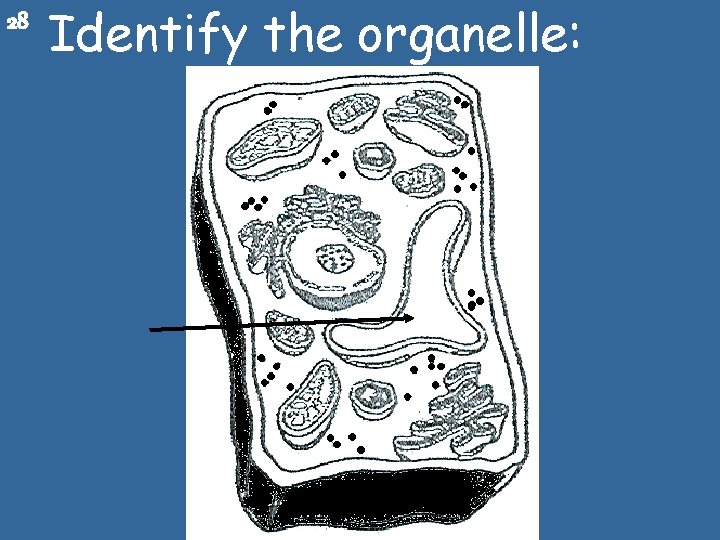
28 Identify the organelle:
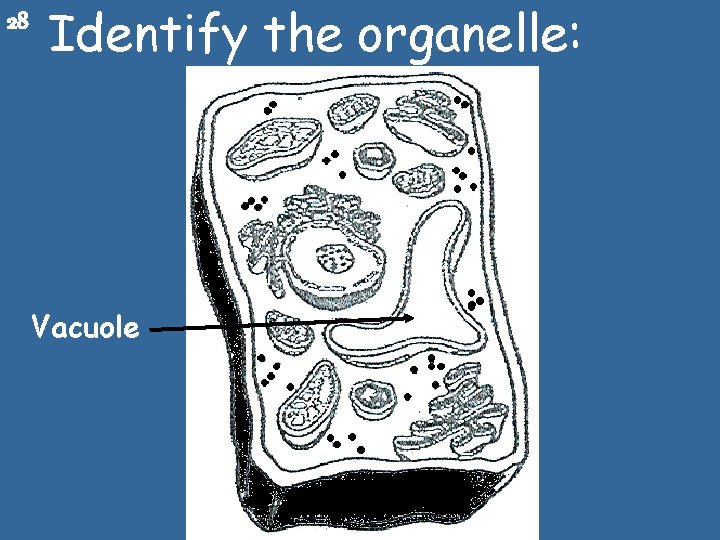
28 Identify the organelle: Vacuole
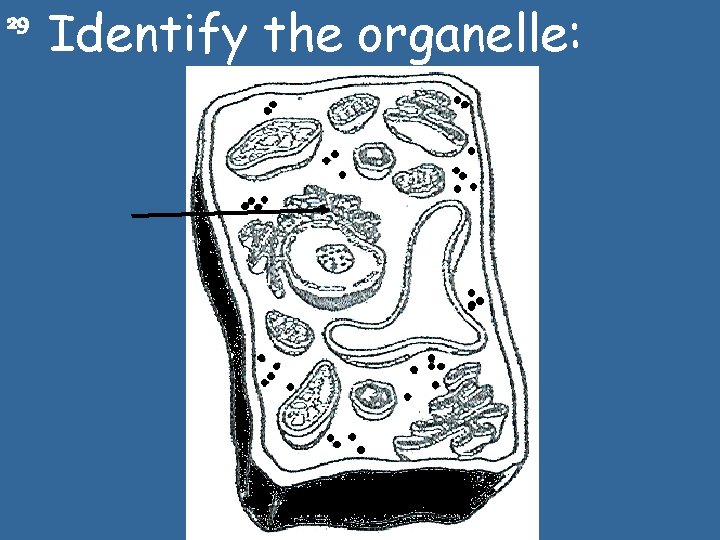
29 Identify the organelle:
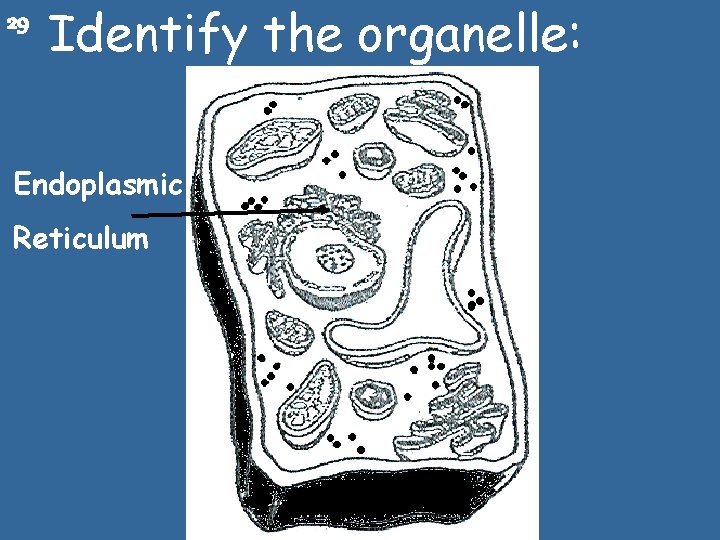
29 Identify the organelle: Endoplasmic Reticulum
30 List the 6 characteristics of living things.
30 - Answer List the 6 characteristics of living things. 1. Have 1 or more cells 2. Sense and respond to change 3. Reproduce 4. Have DNA 5. Need energy 6. Grow and Develop
EXTRA CREDIT Thank you for playing the review game to study for the test! To receive 3 points of extra credit on the test, write down the following on a piece of notebook paper. Turn it in on Monday before the test. • The names of the scientists who helped develop the cell theory • The 3 parts of the cell theory
- Slides: 62