
Chapter 3 Pulmonary Function Study Assessments Mosby items

Chapter 3 Pulmonary Function Study Assessments Mosby items and derived items © 2011, 2006 by Mosby, Inc. , an affiliate of Elsevier Inc. 1
Introduction Pulmonary function studies are used to: Evaluate pulmonary causes of dyspnea Differentiate between obstructive and restrictive pulmonary disorders Ø Assess severity of the pathophysiologic impairment Ø Follow the course of a particular disease Ø Evaluate the effectiveness of therapy Ø Assess the patient’s preoperative status Ø Ø Mosby items and derived items © 2011, 2006 by Mosby, Inc. , an affiliate of Elsevier Inc. 2
Normal Lung Volumes and Capacities Mosby items and derived items © 2011, 2006 by Mosby, Inc. , an affiliate of Elsevier Inc. 3
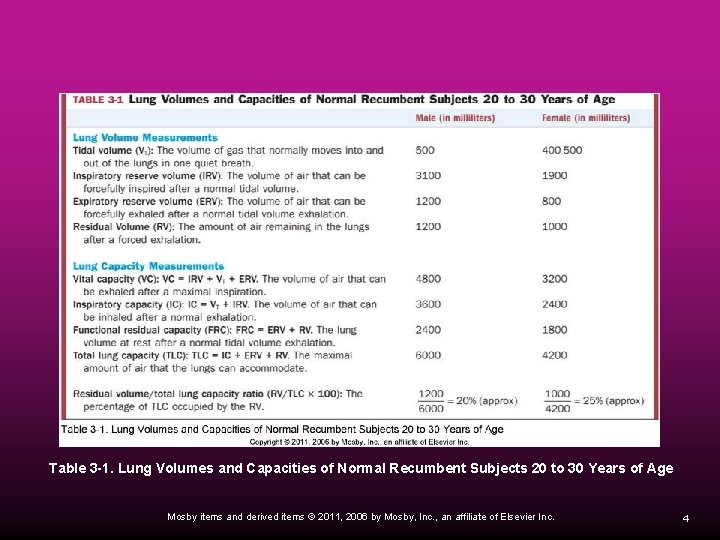
Table 3 -1. Lung Volumes and Capacities of Normal Recumbent Subjects 20 to 30 Years of Age Mosby items and derived items © 2011, 2006 by Mosby, Inc. , an affiliate of Elsevier Inc. 4
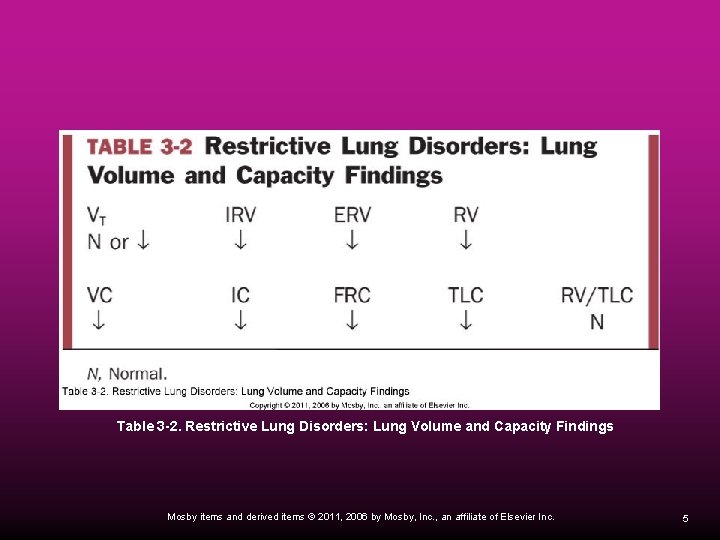
Table 3 -2. Restrictive Lung Disorders: Lung Volume and Capacity Findings Mosby items and derived items © 2011, 2006 by Mosby, Inc. , an affiliate of Elsevier Inc. 5
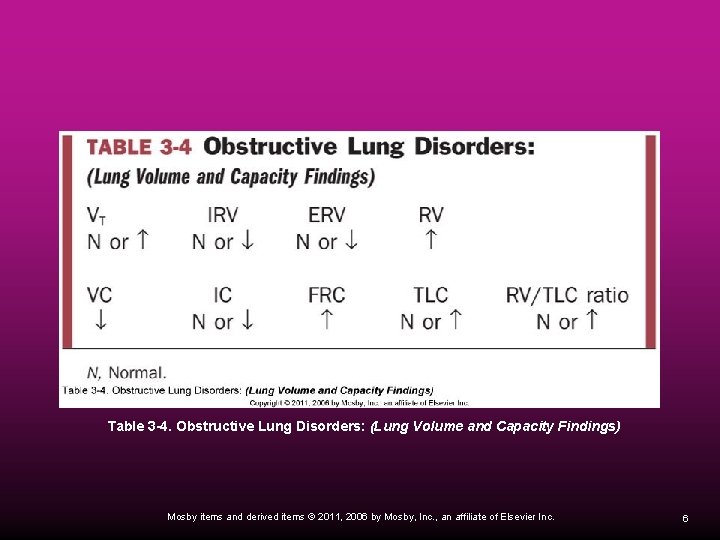
Table 3 -4. Obstructive Lung Disorders: (Lung Volume and Capacity Findings) Mosby items and derived items © 2011, 2006 by Mosby, Inc. , an affiliate of Elsevier Inc. 6
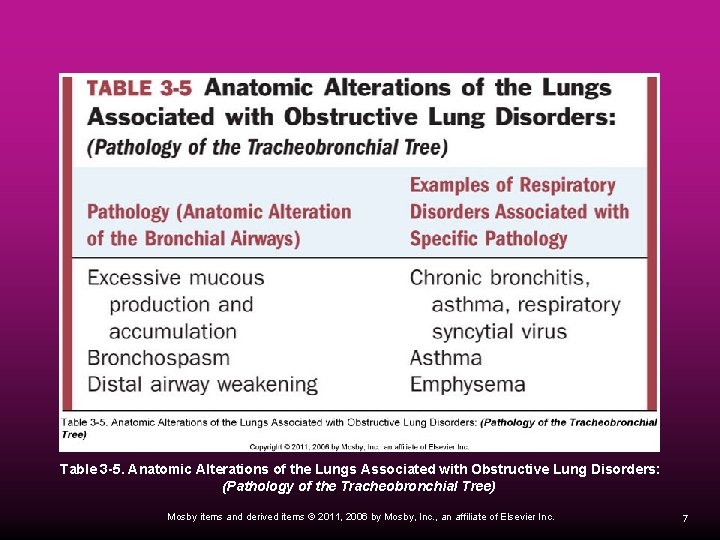
Table 3 -5. Anatomic Alterations of the Lungs Associated with Obstructive Lung Disorders: (Pathology of the Tracheobronchial Tree) Mosby items and derived items © 2011, 2006 by Mosby, Inc. , an affiliate of Elsevier Inc. 7
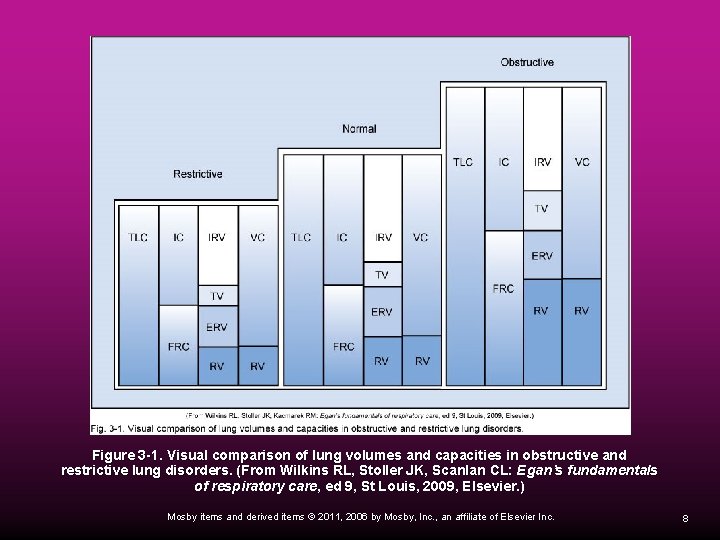
Figure 3 -1. Visual comparison of lung volumes and capacities in obstructive and restrictive lung disorders. (From Wilkins RL, Stoller JK, Scanlan CL: Egan’s fundamentals of respiratory care, ed 9, St Louis, 2009, Elsevier. ) Mosby items and derived items © 2011, 2006 by Mosby, Inc. , an affiliate of Elsevier Inc. 8
Indirect Measurements of the Residual Volume and Capacities Containing the Residual Volume Closed-circuit helium dilution test Open-circuit nitrogen washout test Body plethysmography Mosby items and derived items © 2011, 2006 by Mosby, Inc. , an affiliate of Elsevier Inc. 9
Forced Expiratory Flow Rate and Volume Measurements Mosby items and derived items © 2011, 2006 by Mosby, Inc. , an affiliate of Elsevier Inc. 10
Forced Vital Capacity (FVC) The FVC is the total volume of gas that can be exhaled as forcefully and rapidly as possible after a maximal inspiration. Mosby items and derived items © 2011, 2006 by Mosby, Inc. , an affiliate of Elsevier Inc. 11
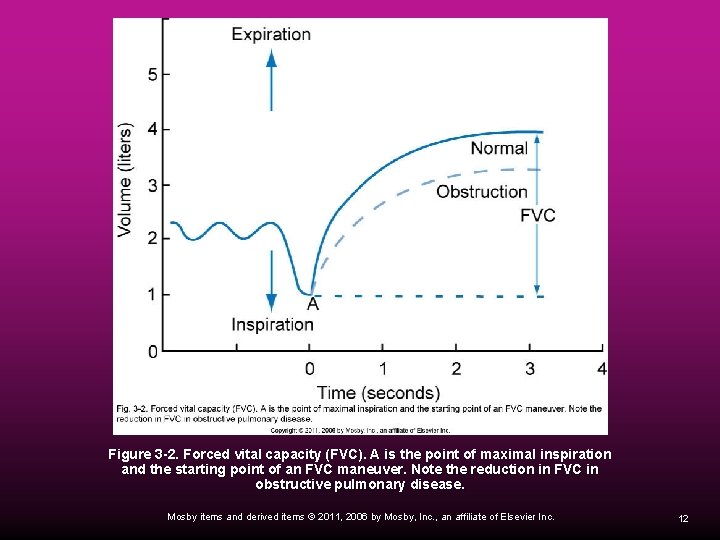
Figure 3 -2. Forced vital capacity (FVC). A is the point of maximal inspiration and the starting point of an FVC maneuver. Note the reduction in FVC in obstructive pulmonary disease. Mosby items and derived items © 2011, 2006 by Mosby, Inc. , an affiliate of Elsevier Inc. 12
Forced Expiratory Volume (FEVT) The maximum volume of gas that can be exhaled over a specific period is the FEVT. This measurement is obtained from an FVC measurement. Commonly used time periods are 0. 5, 1. 0, 2. 0, 3. 0, and 6. 0 seconds The most commonly used time is 1 second (FEV 1 ). Mosby items and derived items © 2011, 2006 by Mosby, Inc. , an affiliate of Elsevier Inc. 13
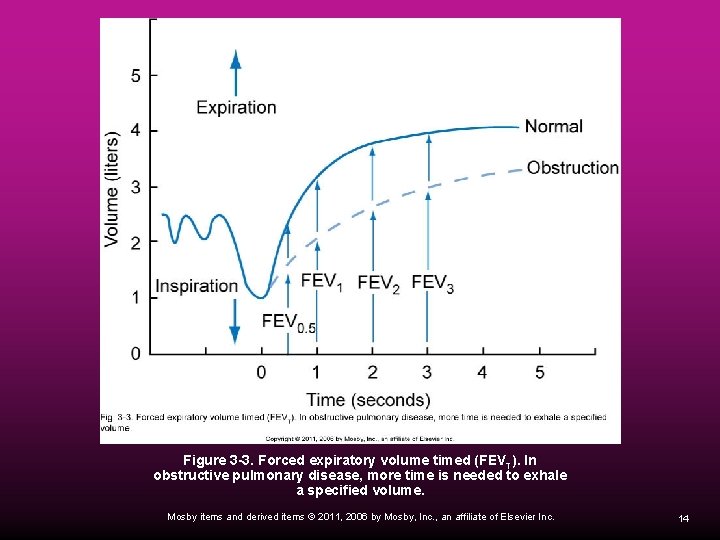
Figure 3 -3. Forced expiratory volume timed (FEVT). In obstructive pulmonary disease, more time is needed to exhale a specified volume. Mosby items and derived items © 2011, 2006 by Mosby, Inc. , an affiliate of Elsevier Inc. 14
Forced Expiratory Volume (FEVT) (Cont’d) In the normal adult, the percentage of total volume exhaled during these time periods: Ø Ø FEV 0. 5: 60% FEV 1: 80% FEV 2: 94% FEV 3: 97% Mosby items and derived items © 2011, 2006 by Mosby, Inc. , an affiliate of Elsevier Inc. 15
Forced Expiratory Volume in 1 Second/Forced Vital Capacity Ratio (FEV 1/FVC Ratio) (also abbreviated as FEV 1%) Mosby items and derived items © 2011, 2006 by Mosby, Inc. , an affiliate of Elsevier Inc. 16
FEV 1/FVC Ratio or FEV 1% The FEV 1/FVC ratio compares the amount of air exhaled in 1 second with the total amount exhaled during an FVC maneuver. Mosby items and derived items © 2011, 2006 by Mosby, Inc. , an affiliate of Elsevier Inc. 17
FVC, FEV 1, and FEV 1% Clinically, the FVC, FEV 1, and FEV 1% are commonly used to: 1. Assess the severity of a patient’s pulmonary disorder and 2. Determine whether the patient has an obstructive or a restrictive disease Mosby items and derived items © 2011, 2006 by Mosby, Inc. , an affiliate of Elsevier Inc. 18
FVC, FEV 1, and FEV 1% (Cont’d) The primary pulmonary function study difference between an obstructive and a restrictive lung disorder are as follows: In an obstructive disorder, the FEV 1 and FEV 1% are both decreased. Ø In a restrictive disorder, the FEV 1 is decreased and FEV 1% is normal or increased. Ø Mosby items and derived items © 2011, 2006 by Mosby, Inc. , an affiliate of Elsevier Inc. 19
Forced Expiratory Flow 25%-75% The FEF 25%-75% is the average flow rate generated by the patient during the middle 50% of an FVC measurement. FEF 25%-75% is used to evaluate the status of medium-to-small airways in obstructive lung disorders. Mosby items and derived items © 2011, 2006 by Mosby, Inc. , an affiliate of Elsevier Inc. 20
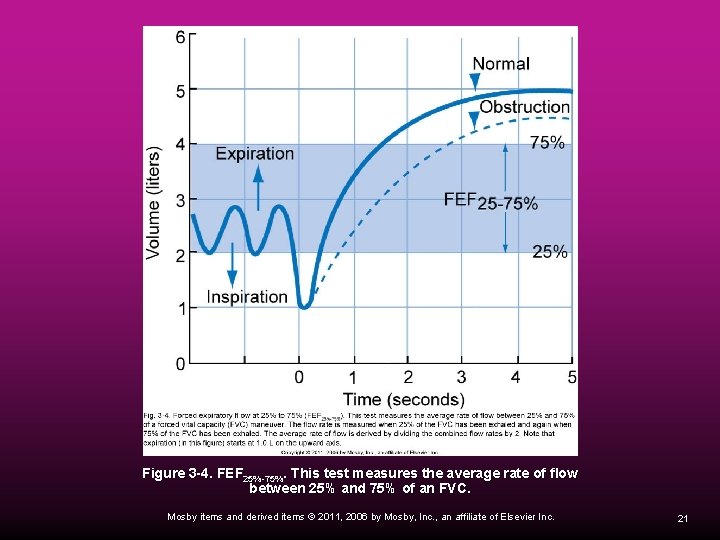
Figure 3 -4. FEF 25%-75%. This test measures the average rate of flow between 25% and 75% of an FVC. Mosby items and derived items © 2011, 2006 by Mosby, Inc. , an affiliate of Elsevier Inc. 21
Forced Expiratory Flow 200 -1200 The FEF 200 -1200 measures the average flow rate between 200 and 1200 m. L of an FVC. The FEF 200 -1200 provides a good assessment of the large upper airways. Mosby items and derived items © 2011, 2006 by Mosby, Inc. , an affiliate of Elsevier Inc. 22
Forced Expiratory Flow 200 -1200 (Cont’d) The FEF 200 -1200 measures the average flow rate between 200 and 1200 m. L of an FVC. The FEF 200 -1200 provides a good assessment of the large upper airways. Mosby items and derived items © 2011, 2006 by Mosby, Inc. , an affiliate of Elsevier Inc. 23
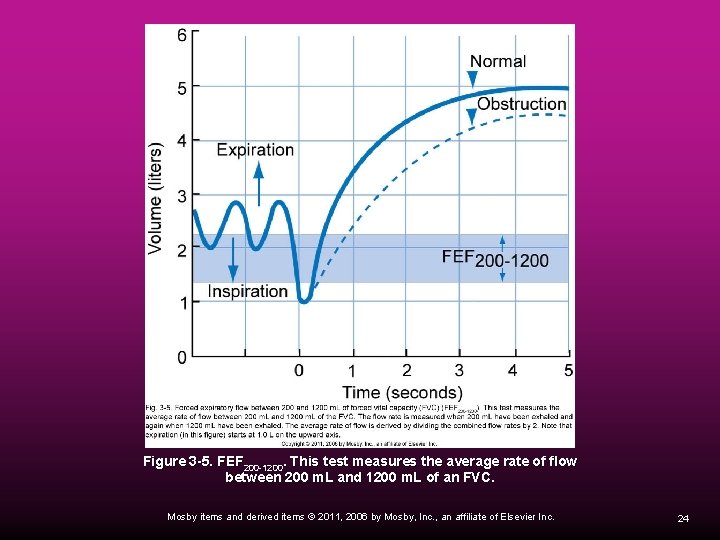
Figure 3 -5. FEF 200 -1200. This test measures the average rate of flow between 200 m. L and 1200 m. L of an FVC. Mosby items and derived items © 2011, 2006 by Mosby, Inc. , an affiliate of Elsevier Inc. 24
Peak Expiratory Flow Rate The PEFR is the maximum flow rate generated during an FVC maneuver. Mosby items and derived items © 2011, 2006 by Mosby, Inc. , an affiliate of Elsevier Inc. 25
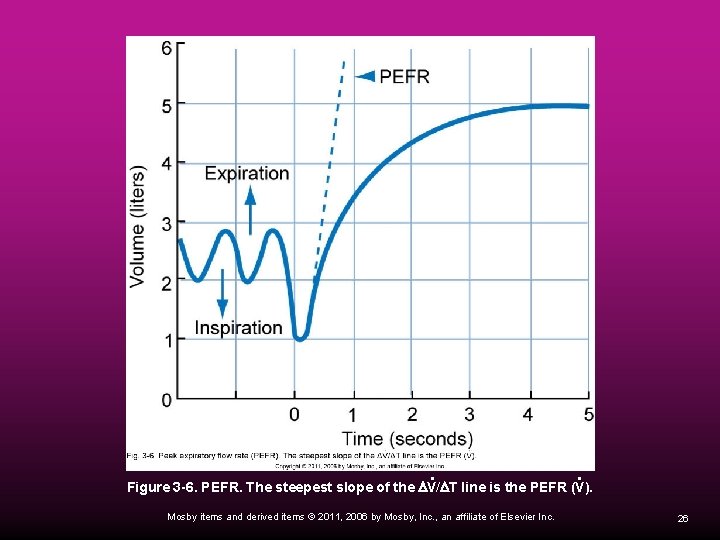
˙ ˙ Figure 3 -6. PEFR. The steepest slope of the DV/DT line is the PEFR (V). Mosby items and derived items © 2011, 2006 by Mosby, Inc. , an affiliate of Elsevier Inc. 26
Maximum Voluntary Ventilation (MVV) The MVV is the largest volume of gas that can be breathed voluntarily in and out of the lungs in 1 minute. Ø Note: The patient effort during the MVV is for only 12 to 15 seconds. The total 1 minute MVV is extrapolated from these data. Mosby items and derived items © 2011, 2006 by Mosby, Inc. , an affiliate of Elsevier Inc. 27
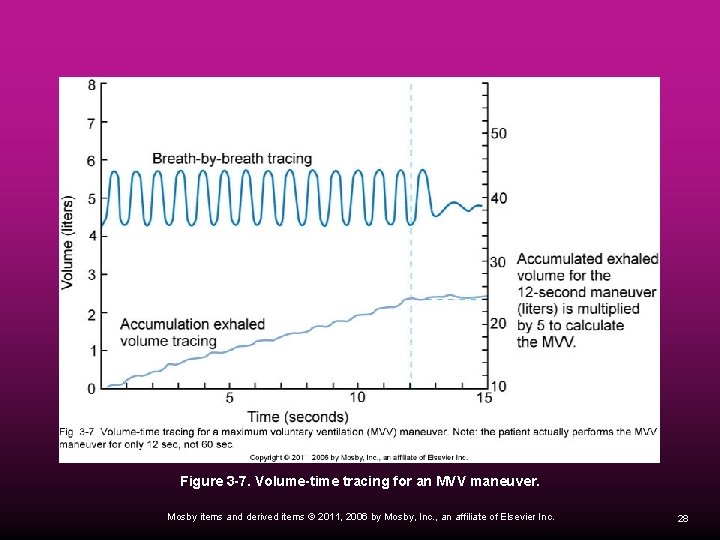
Figure 3 -7. Volume-time tracing for an MVV maneuver. Mosby items and derived items © 2011, 2006 by Mosby, Inc. , an affiliate of Elsevier Inc. 28
Flow-Volume Loop The flow-volume loop is a graphic illustration of both a forced vital capacity (FVC) maneuver and a forced inspiration volume (FIV) maneuver. Mosby items and derived items © 2011, 2006 by Mosby, Inc. , an affiliate of Elsevier Inc. 29
Flow-Volume Loop (Cont’d) Depending of the sophistication of equipment, several important pulmonary function study values can be obtained, including: • • FVC FEVT FEF 25%-75% FEF 200 -1200 PEFR Peak inspiratory flow rate (PIFR) FEF 50% Instantaneous flow at any given lung volume during forced inhalation and exhalation Mosby items and derived items © 2011, 2006 by Mosby, Inc. , an affiliate of Elsevier Inc. 30
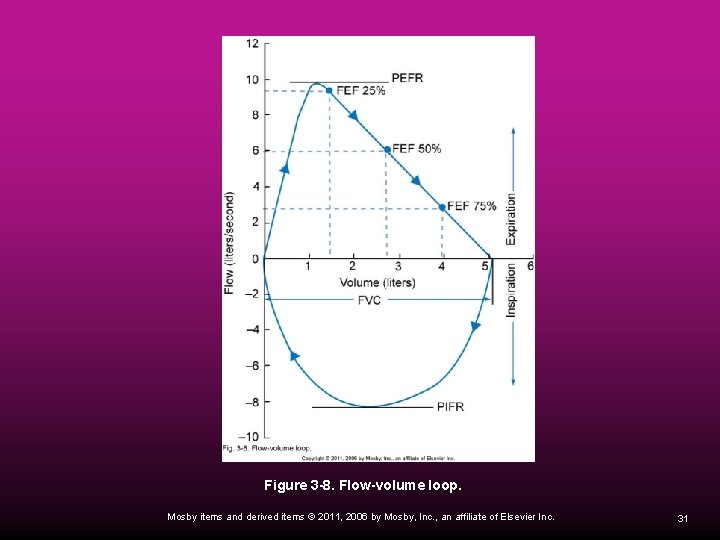
Figure 3 -8. Flow-volume loop. Mosby items and derived items © 2011, 2006 by Mosby, Inc. , an affiliate of Elsevier Inc. 31
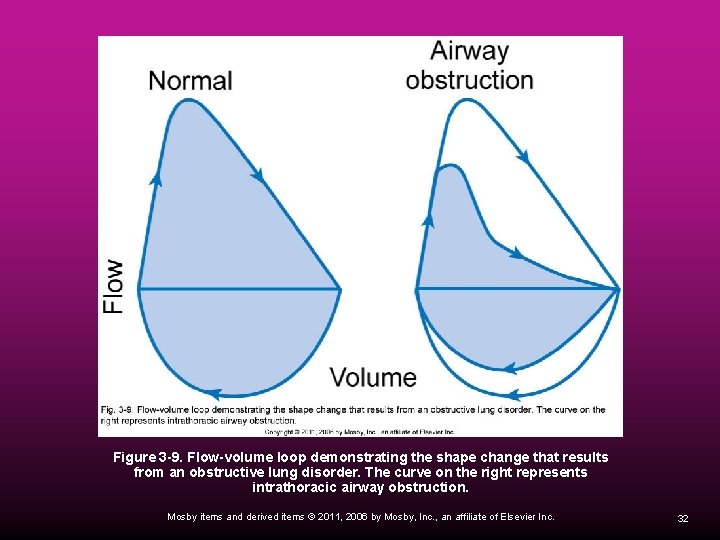
Figure 3 -9. Flow-volume loop demonstrating the shape change that results from an obstructive lung disorder. The curve on the right represents intrathoracic airway obstruction. Mosby items and derived items © 2011, 2006 by Mosby, Inc. , an affiliate of Elsevier Inc. 32
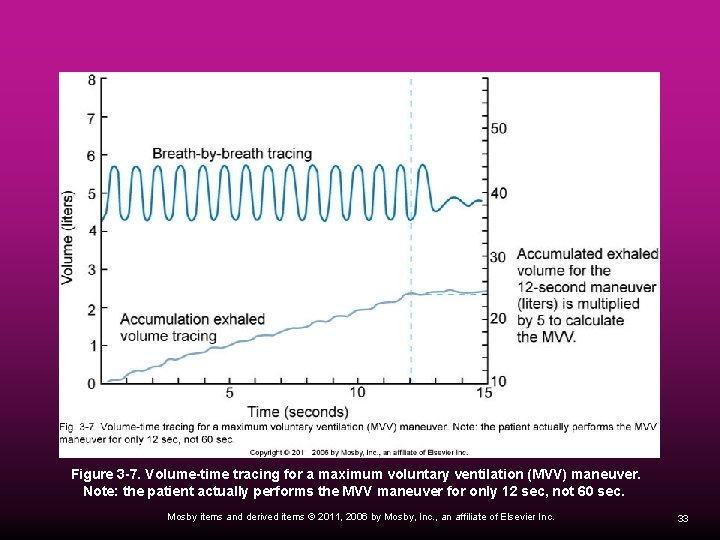
Figure 3 -7. Volume-time tracing for a maximum voluntary ventilation (MVV) maneuver. Note: the patient actually performs the MVV maneuver for only 12 sec, not 60 sec. Mosby items and derived items © 2011, 2006 by Mosby, Inc. , an affiliate of Elsevier Inc. 33
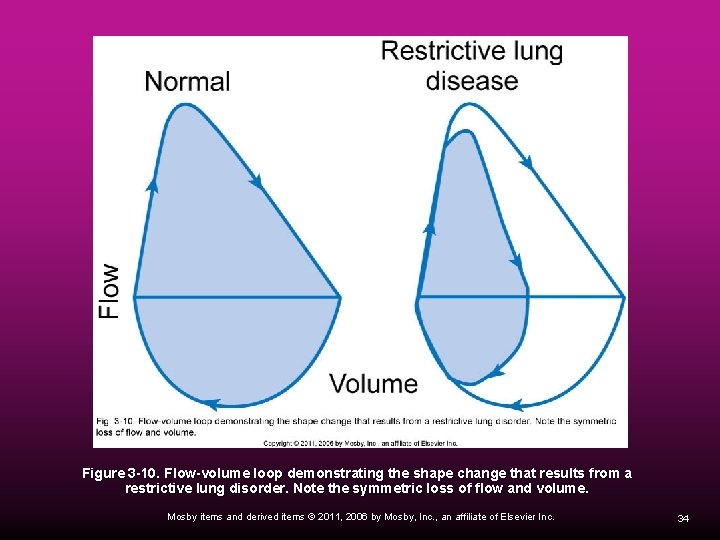
Figure 3 -10. Flow-volume loop demonstrating the shape change that results from a restrictive lung disorder. Note the symmetric loss of flow and volume. Mosby items and derived items © 2011, 2006 by Mosby, Inc. , an affiliate of Elsevier Inc. 34
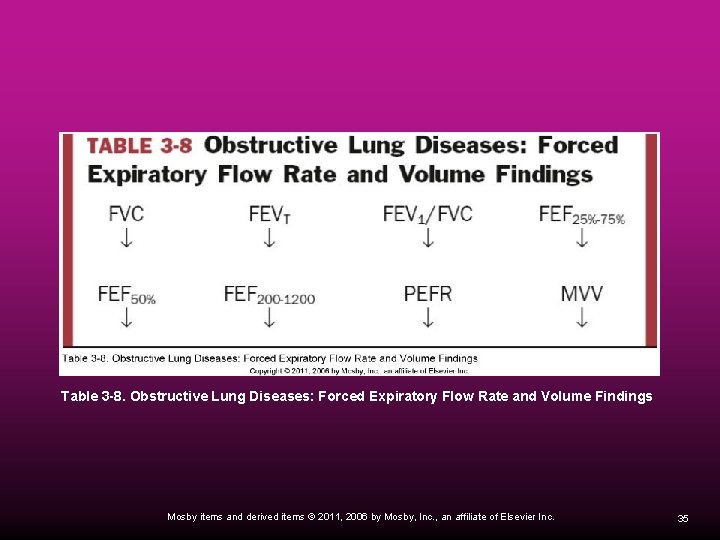
Table 3 -8. Obstructive Lung Diseases: Forced Expiratory Flow Rate and Volume Findings Mosby items and derived items © 2011, 2006 by Mosby, Inc. , an affiliate of Elsevier Inc. 35
Pulmonary Diffusion Capacity The pulmonary diffusion capacity of carbon monoxide (DLCO) measures the amount of carbon monoxide (CO) that moves across the alveolar-capillary membrane. Mosby items and derived items © 2011, 2006 by Mosby, Inc. , an affiliate of Elsevier Inc. 36
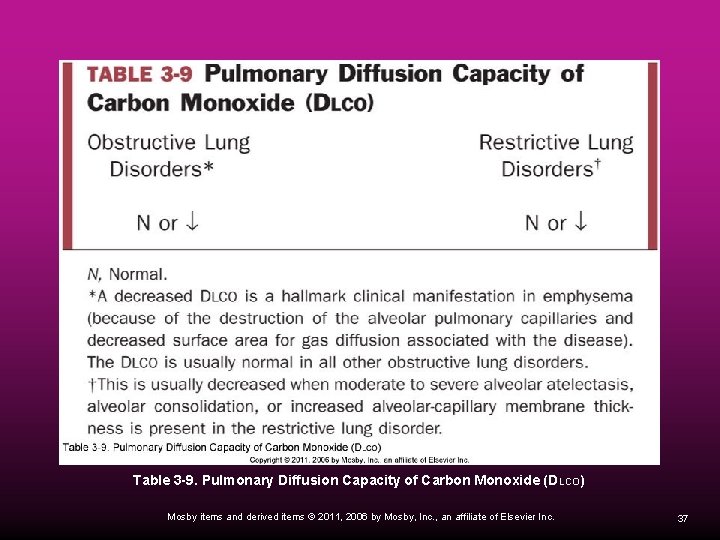
Table 3 -9. Pulmonary Diffusion Capacity of Carbon Monoxide (D LCO) Mosby items and derived items © 2011, 2006 by Mosby, Inc. , an affiliate of Elsevier Inc. 37
- Slides: 37