
Chapter 3 Paradigms and Communication Theory Paradigms and
- Slides: 19
Chapter 3 Paradigms and Communication Theory
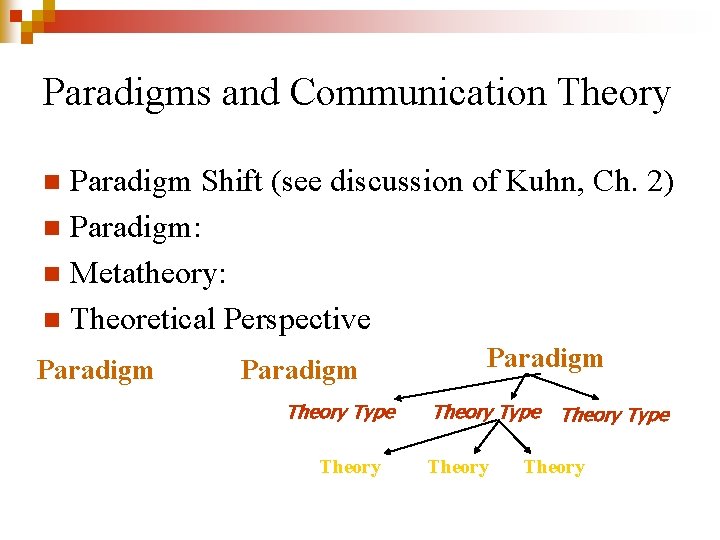
Paradigms and Communication Theory Paradigm Shift (see discussion of Kuhn, Ch. 2) n Paradigm: n Metatheory: n Theoretical Perspective n Paradigm Theory Type Theory
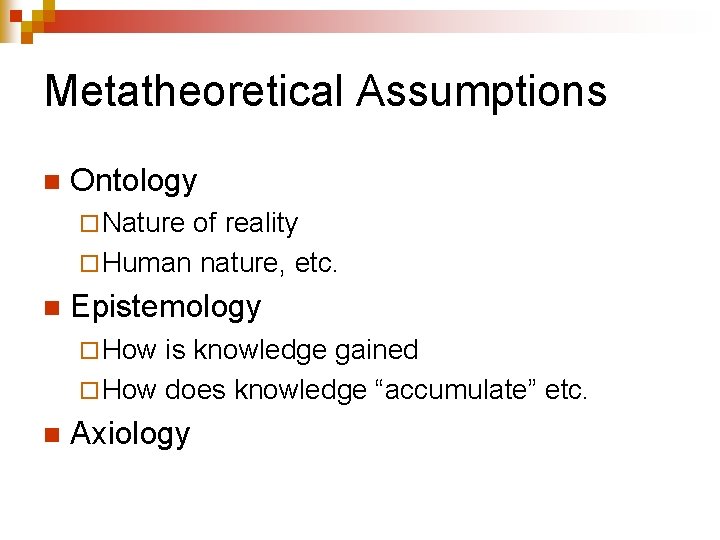
Metatheoretical Assumptions n Ontology ¨ Nature of reality ¨ Human nature, etc. n Epistemology ¨ How is knowledge gained ¨ How does knowledge “accumulate” etc. n Axiology
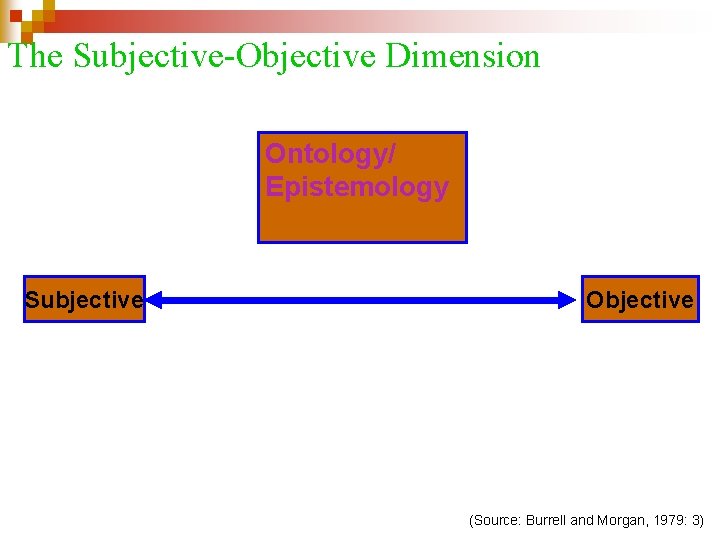
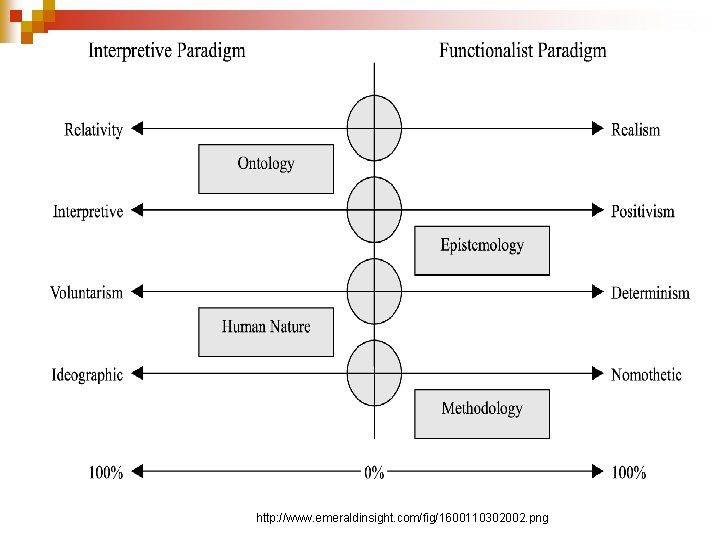
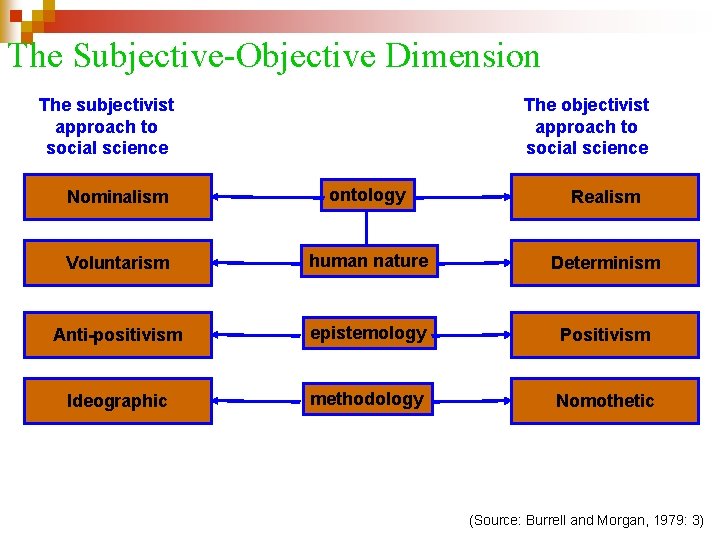
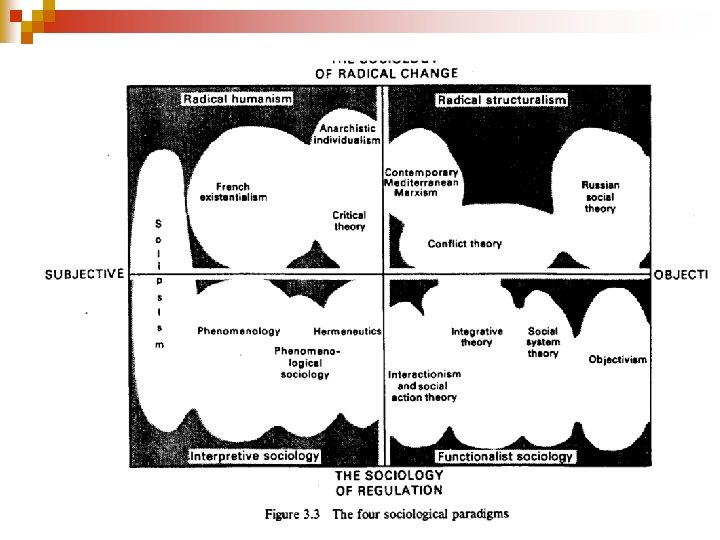
The Subjective-Objective Dimension Ontology/ Epistemology Subjective Objective (Source: Burrell and Morgan, 1979: 3)
http: //www. emeraldinsight. com/fig/1600110302002. png
The Subjective-Objective Dimension The subjectivist approach to social science The objectivist approach to social science Nominalism ontology Realism Voluntarism human nature Determinism Anti-positivism epistemology Positivism Ideographic methodology Nomothetic (Source: Burrell and Morgan, 1979: 3)
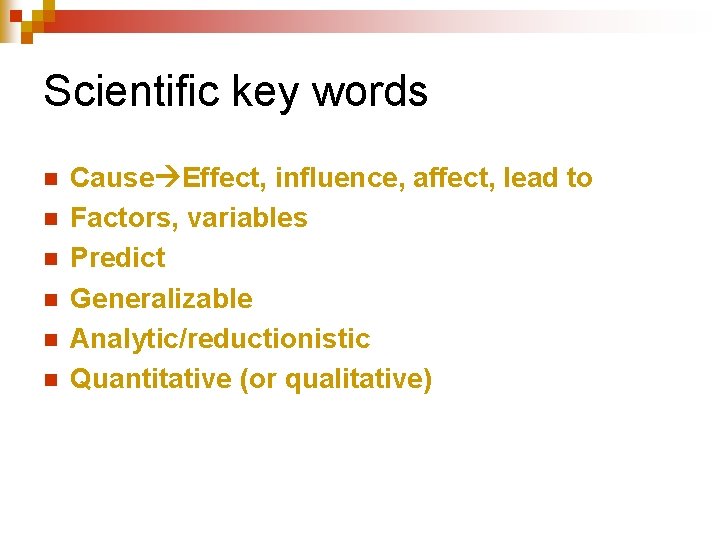
Scientific key words n n n Cause Effect, influence, affect, lead to Factors, variables Predict Generalizable Analytic/reductionistic Quantitative (or qualitative)
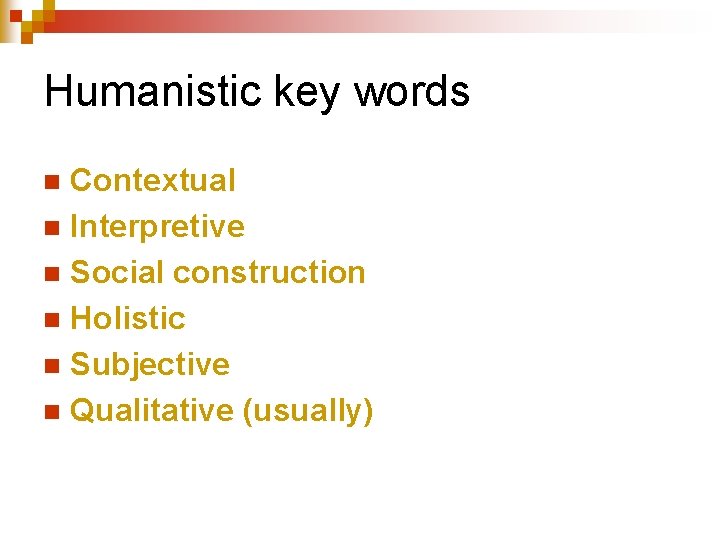
Humanistic key words Contextual n Interpretive n Social construction n Holistic n Subjective n Qualitative (usually) n
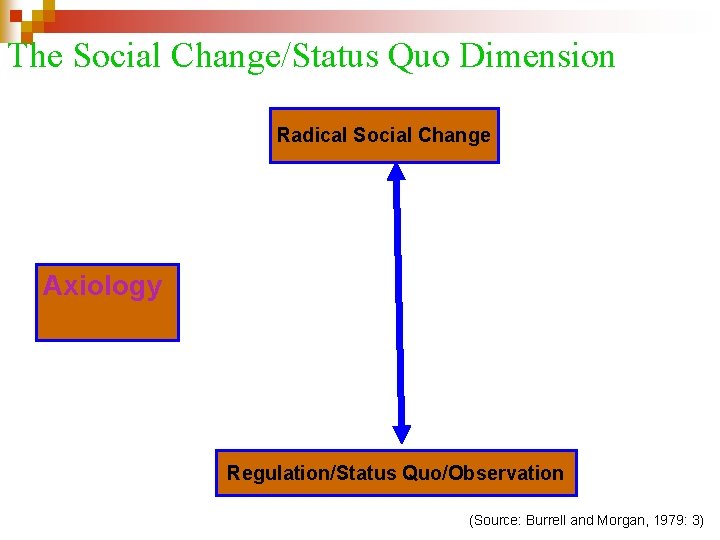
The Social Change/Status Quo Dimension Radical Social Change Axiology Regulation/Status Quo/Observation (Source: Burrell and Morgan, 1979: 3)
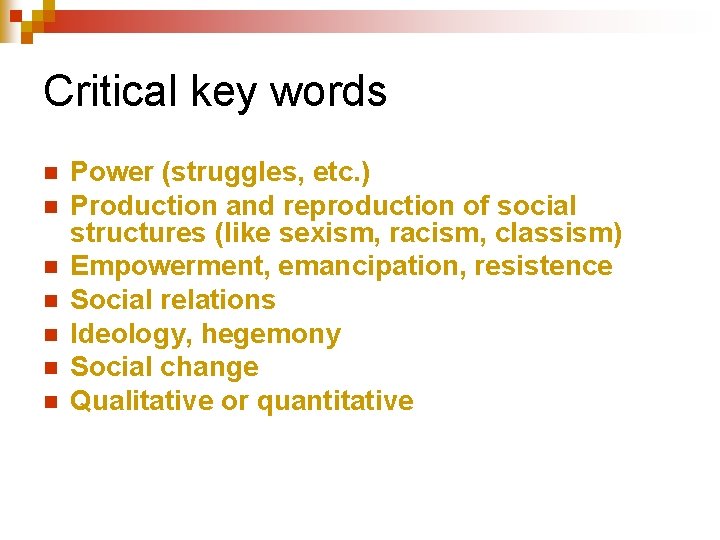
Critical key words n n n n Power (struggles, etc. ) Production and reproduction of social structures (like sexism, racism, classism) Empowerment, emancipation, resistence Social relations Ideology, hegemony Social change Qualitative or quantitative
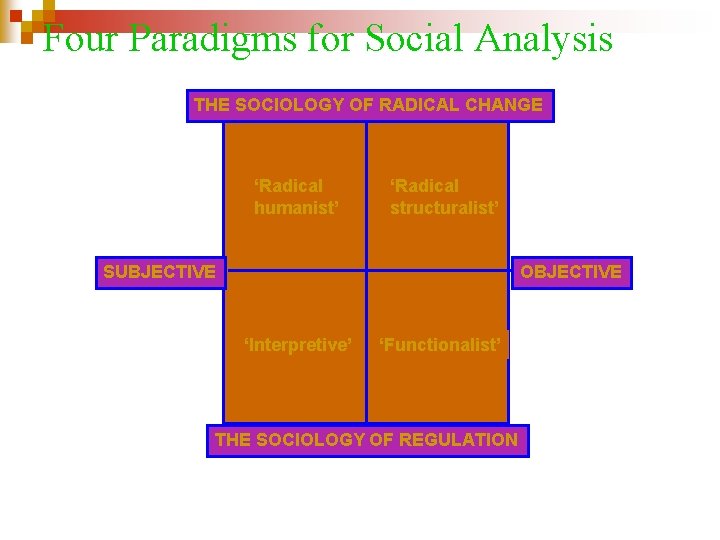
Four Paradigms for Social Analysis THE SOCIOLOGY OF RADICAL CHANGE ‘Radical humanist’ ‘Radical structuralist’ SUBJECTIVE OBJECTIVE ‘Interpretive’ ‘Functionalist’ THE SOCIOLOGY OF REGULATION (Source: Burrell and Morgan, 1979: 22)
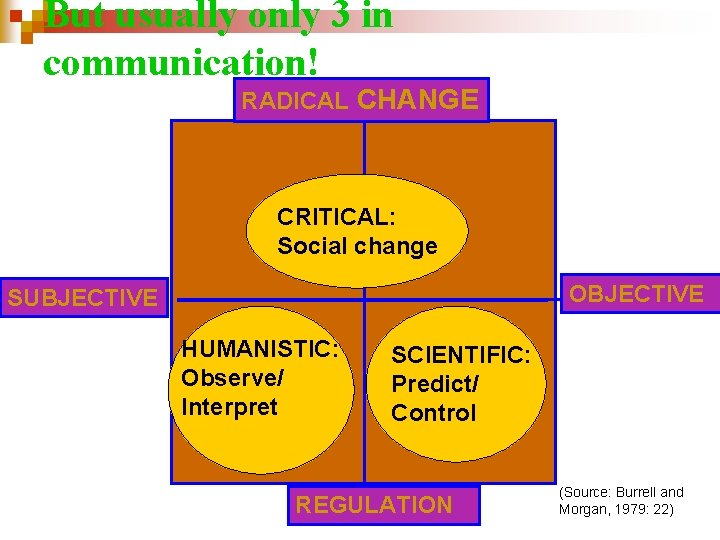
But usually only 3 in communication! RADICAL CHANGE CRITICAL: Social change OBJECTIVE SUBJECTIVE HUMANISTIC: Observe/ Interpret SCIENTIFIC: Predict/ Control REGULATION (Source: Burrell and Morgan, 1979: 22)
Building Communication Theory Chapter 3
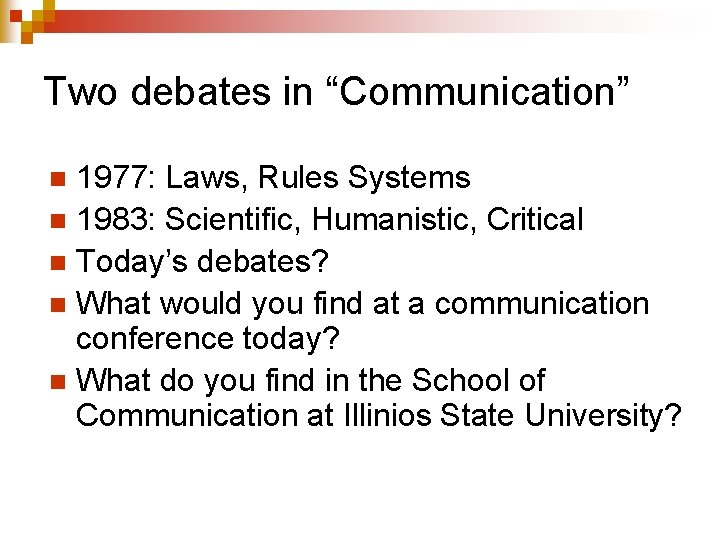
Two debates in “Communication” 1977: Laws, Rules Systems n 1983: Scientific, Humanistic, Critical n Today’s debates? n What would you find at a communication conference today? n What do you find in the School of Communication at Illinios State University? n
BREAK
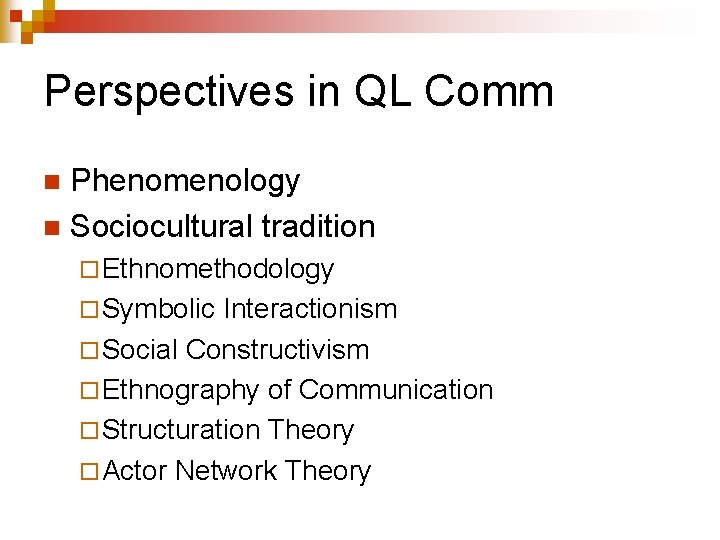
Perspectives in QL Comm Phenomenology n Sociocultural tradition n ¨ Ethnomethodology ¨ Symbolic Interactionism ¨ Social Constructivism ¨ Ethnography of Communication ¨ Structuration Theory ¨ Actor Network Theory
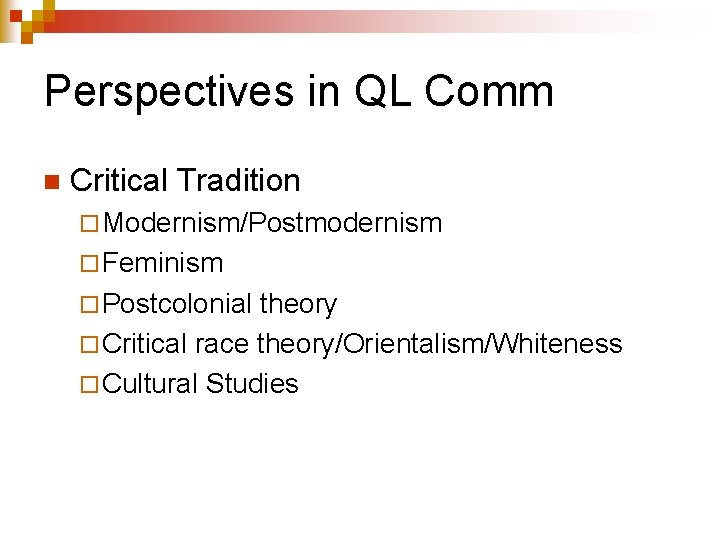
Perspectives in QL Comm n Critical Tradition ¨ Modernism/Postmodernism ¨ Feminism ¨ Postcolonial theory ¨ Critical race theory/Orientalism/Whiteness ¨ Cultural Studies
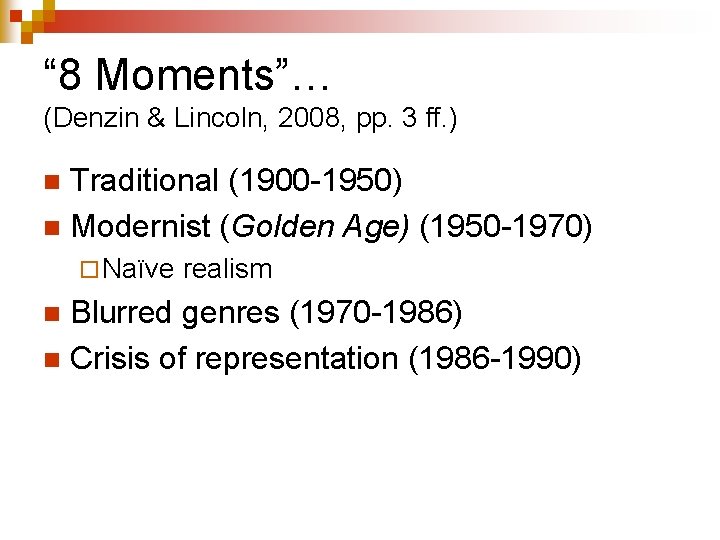
“ 8 Moments”… (Denzin & Lincoln, 2008, pp. 3 ff. ) Traditional (1900 -1950) n Modernist (Golden Age) (1950 -1970) n ¨ Naïve realism Blurred genres (1970 -1986) n Crisis of representation (1986 -1990) n
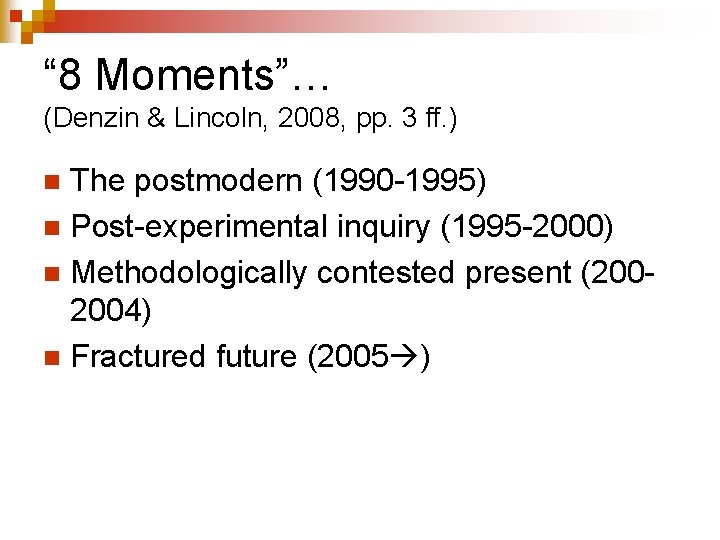
“ 8 Moments”… (Denzin & Lincoln, 2008, pp. 3 ff. ) The postmodern (1990 -1995) n Post-experimental inquiry (1995 -2000) n Methodologically contested present (2002004) n Fractured future (2005 ) n