
Chapter 3 Notes Cells and Tissues 4 main
- Slides: 25
Chapter 3 Notes Cells and Tissues
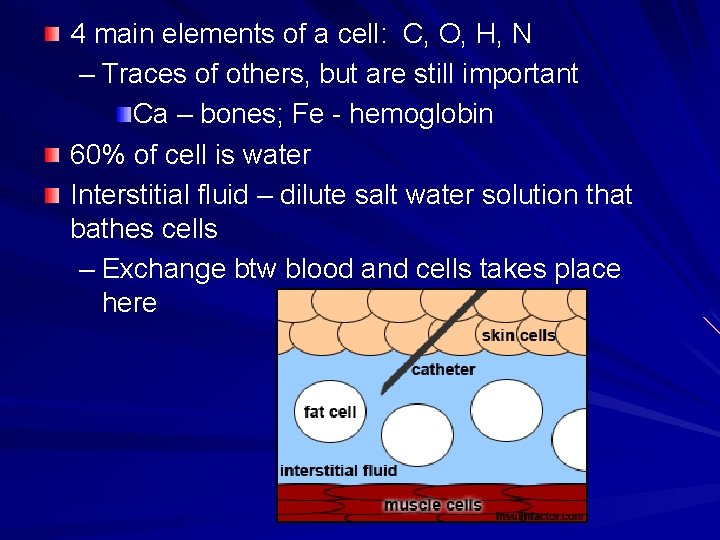
4 main elements of a cell: C, O, H, N – Traces of others, but are still important Ca – bones; Fe - hemoglobin 60% of cell is water Interstitial fluid – dilute salt water solution that bathes cells – Exchange btw blood and cells takes place here
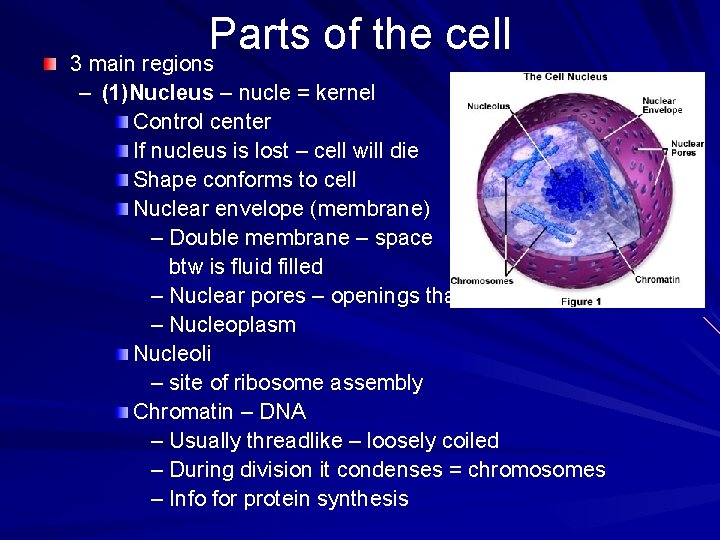
Parts of the cell 3 main regions – (1)Nucleus – nucle = kernel Control center If nucleus is lost – cell will die Shape conforms to cell Nuclear envelope (membrane) – Double membrane – space btw is fluid filled – Nuclear pores – openings that penetrate both layers – Nucleoplasm Nucleoli – site of ribosome assembly Chromatin – DNA – Usually threadlike – loosely coiled – During division it condenses = chromosomes – Info for protein synthesis
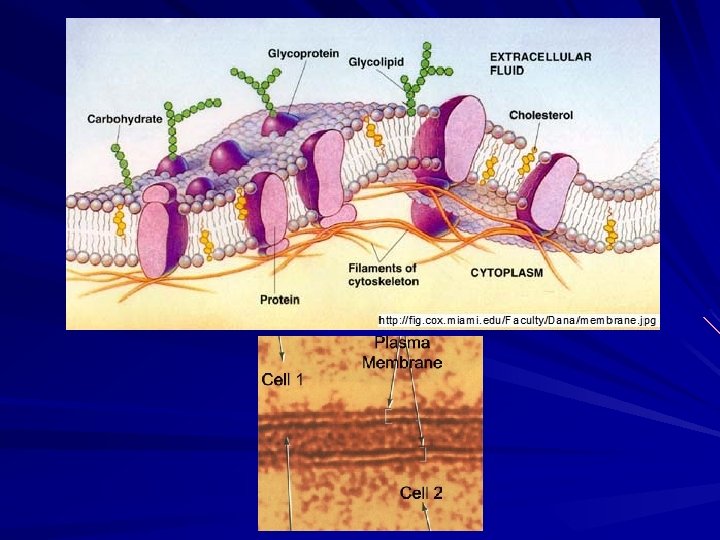
– (2)Plasma membrane – selective permeability Phospholipids bilayer – Heads – hydrophilic – Tails – hydrophobic – keeps the membrane impermeable to most water soluble molecules Cholesterol – found throughout – stabilizes Proteins – specialized functions – Receptors – cell exterior – Binding sites – Transport Protein channels – opening through membrane Carriers – bind to & carry material in/out – Glycoproteins – have sugars attached Determine blood type
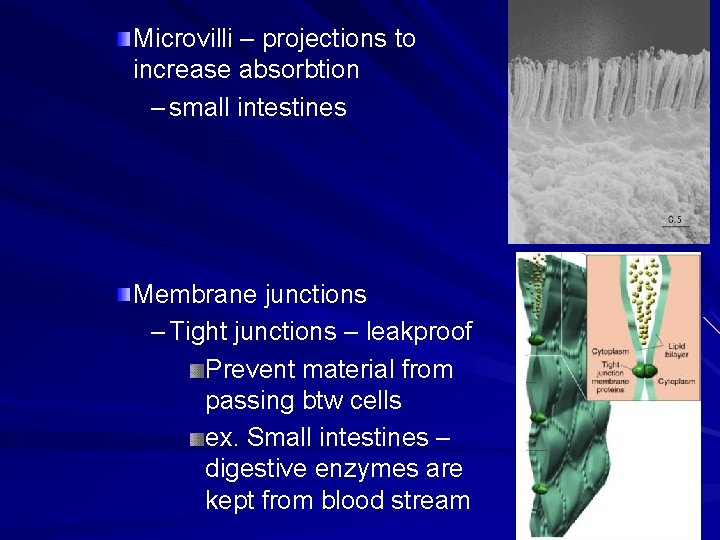
Microvilli – projections to increase absorbtion – small intestines Membrane junctions – Tight junctions – leakproof Prevent material from passing btw cells ex. Small intestines – digestive enzymes are kept from blood stream
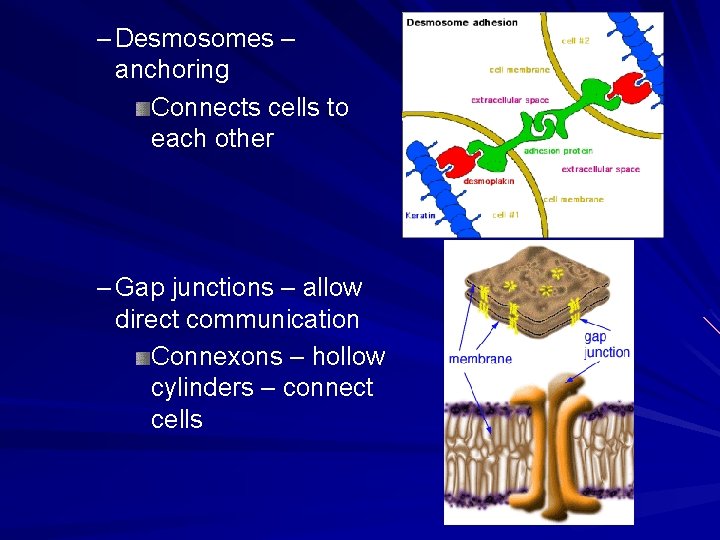
– Desmosomes – anchoring Connects cells to each other – Gap junctions – allow direct communication Connexons – hollow cylinders – connect cells
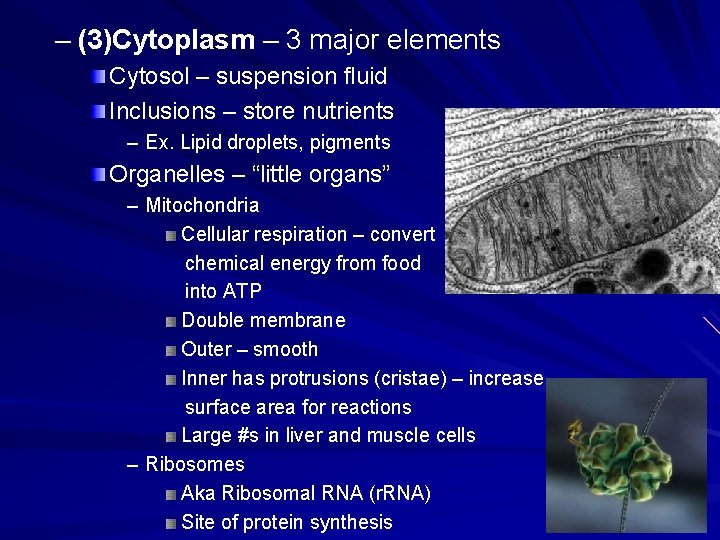
– (3)Cytoplasm – 3 major elements Cytosol – suspension fluid Inclusions – store nutrients – Ex. Lipid droplets, pigments Organelles – “little organs” – Mitochondria Cellular respiration – convert chemical energy from food into ATP Double membrane Outer – smooth Inner has protrusions (cristae) – increase surface area for reactions Large #s in liver and muscle cells – Ribosomes Aka Ribosomal RNA (r. RNA) Site of protein synthesis
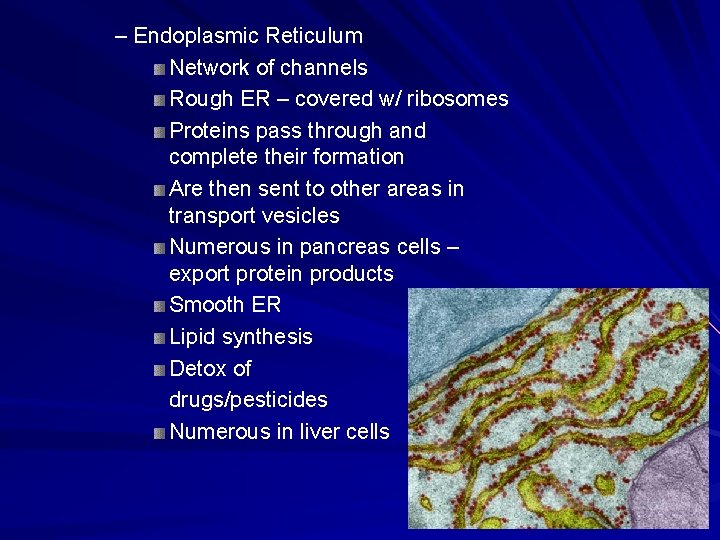
– Endoplasmic Reticulum Network of channels Rough ER – covered w/ ribosomes Proteins pass through and complete their formation Are then sent to other areas in transport vesicles Numerous in pancreas cells – export protein products Smooth ER Lipid synthesis Detox of drugs/pesticides Numerous in liver cells
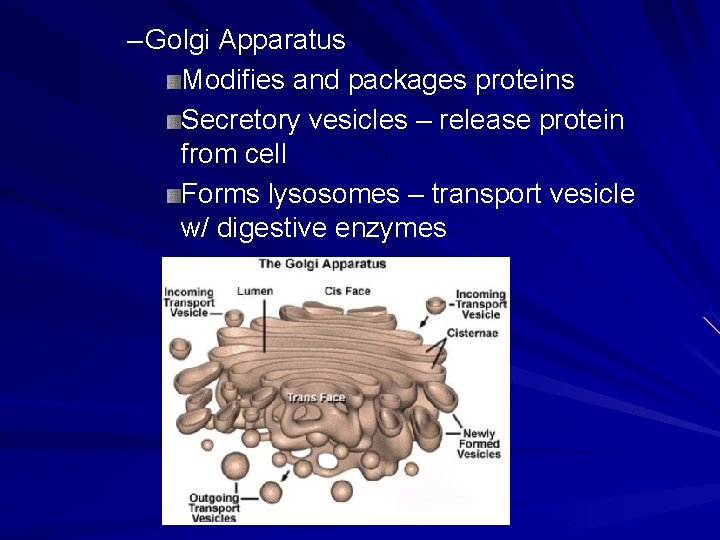
– Golgi Apparatus Modifies and packages proteins Secretory vesicles – release protein from cell Forms lysosomes – transport vesicle w/ digestive enzymes
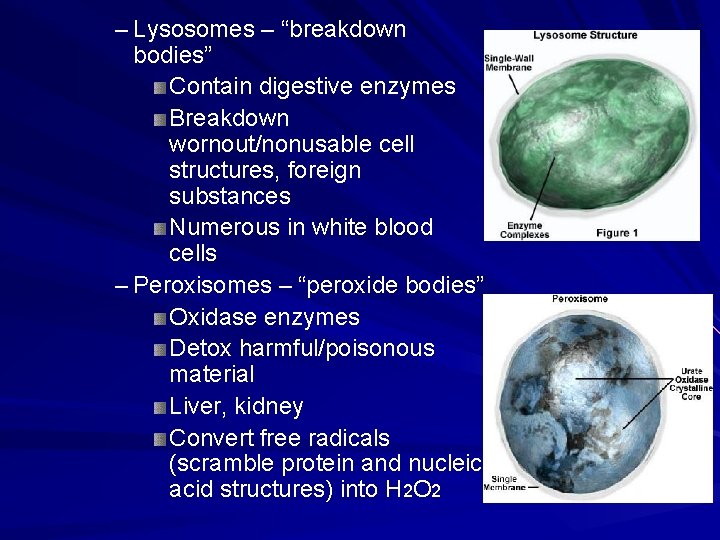
– Lysosomes – “breakdown bodies” Contain digestive enzymes Breakdown wornout/nonusable cell structures, foreign substances Numerous in white blood cells – Peroxisomes – “peroxide bodies” Oxidase enzymes Detox harmful/poisonous material Liver, kidney Convert free radicals (scramble protein and nucleic acid structures) into H 2 O 2
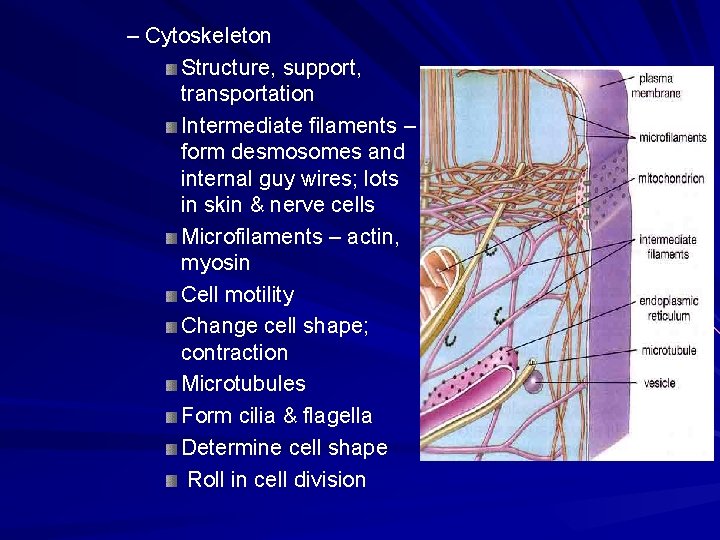
– Cytoskeleton Structure, support, transportation Intermediate filaments – form desmosomes and internal guy wires; lots in skin & nerve cells Microfilaments – actin, myosin Cell motility Change cell shape; contraction Microtubules Form cilia & flagella Determine cell shape Roll in cell division
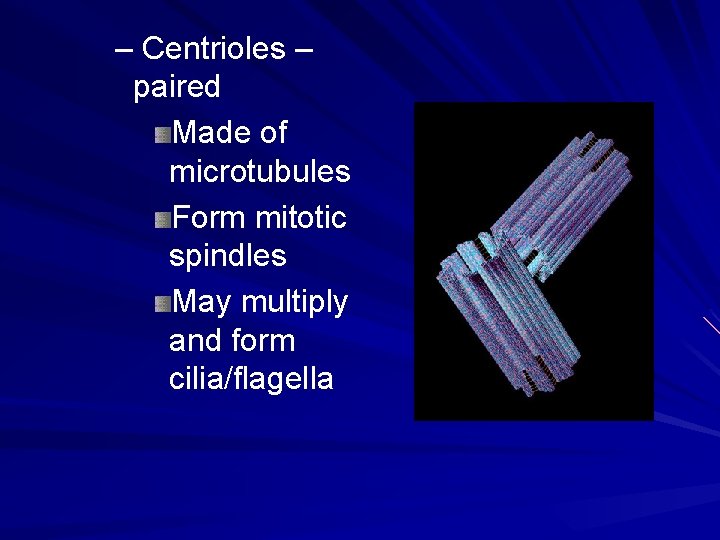
– Centrioles – paired Made of microtubules Form mitotic spindles May multiply and form cilia/flagella
Cell Diversity Connect body parts – Fibroblasts, erythrocytes Covers and lines body organs – Epithelial cells Move organs and body parts – Skeletal muscle and smooth muscle cells Store nutrients – Fat cells Fight disease – Macrophage Gathers info and controls body function – Nerve cells Reproduction – Oocyte – largest cell in body – Sperm
Membrane Transport – Solution – homogenous mixture of 2 or more components – Solvent – dissolving medium – water – Solutes – particles found in water – Intracellular fluid – nucleoplasm and cytosol Contains gases, nutrients, salts – Interstitial fluid – exterior of cells Nutrients, hormones, neurotransmitters, salts, waste products – Plasma membrane – has selective permeability
Passive transport – no energy input from cell – random molecular movement causes change – Diffusion (Simple diffusion) – particles move down their concentration gradient – O 2/CO 2 exchange Must be small enough to pass through pores or dissolve in the fatty portion of the membrane (lipid soluble) – Osmosis – diffusion of water – passes through aquaporins Hypotonic, Isotonic, Hypertonic – prefixes refer to the solute compared to the amount of water – Facilitated diffusion For large particles or lipid insoluble (glucose) Uses protein channels or protein carriers – Allows continual movement of oxygen and glucose into cell and carbon dioxide out – Filtration – water/solutes pushed through by hydrostatic pressure Caused by blood Used by kidneys
Active transport – uses energy – Solute pumping Uses solute (protein) pumps - carriers Allow movement against concentration gradient Amino acids Sodium-potassium pump – nerve cells – Bulk transport Exocytosis – out – Hormone secretion; neurotransmitter release – Packaged by golgi apparatus Endocytosis – in – Surround w/ pseudopods – Phagocytosis – cell eating – white blood cells – Pinocytosis – cell drinking Cell absorption of dissolved nutrients – Receptor-mediated – specific targets
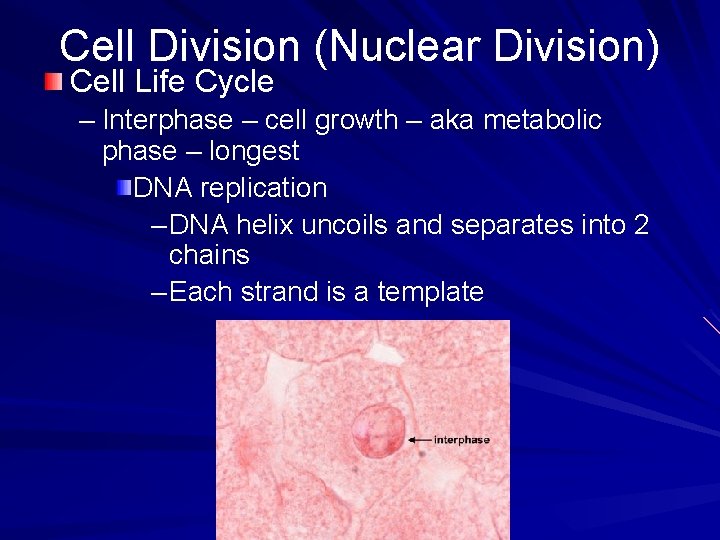
Cell Division (Nuclear Division) Cell Life Cycle – Interphase – cell growth – aka metabolic phase – longest DNA replication – DNA helix uncoils and separates into 2 chains – Each strand is a template
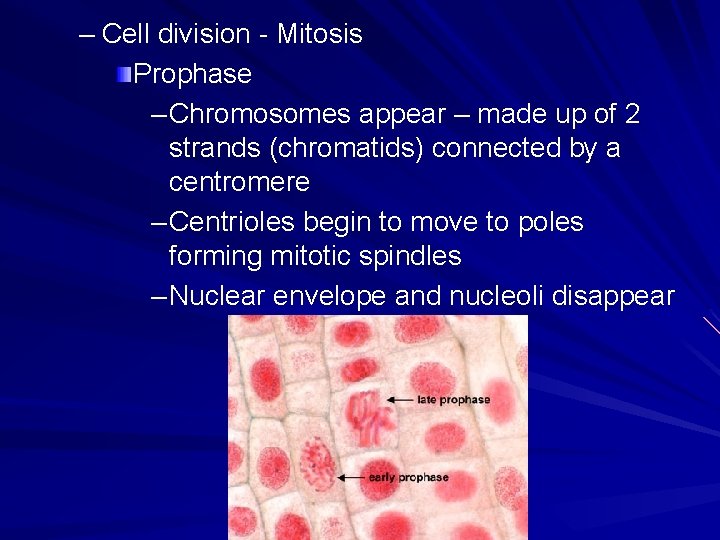
– Cell division - Mitosis Prophase – Chromosomes appear – made up of 2 strands (chromatids) connected by a centromere – Centrioles begin to move to poles forming mitotic spindles – Nuclear envelope and nucleoli disappear
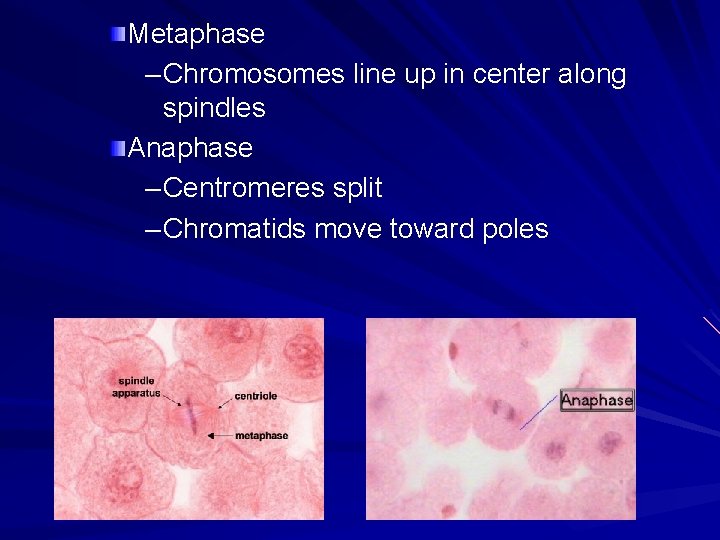
Metaphase – Chromosomes line up in center along spindles Anaphase – Centromeres split – Chromatids move toward poles
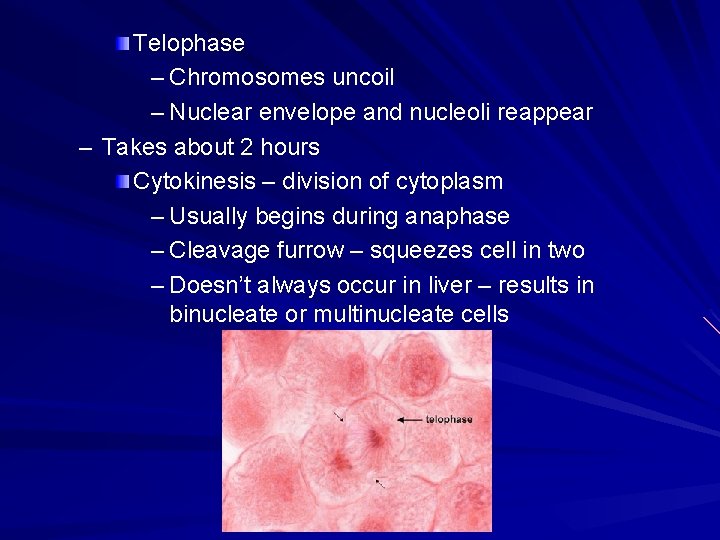
Telophase – Chromosomes uncoil – Nuclear envelope and nucleoli reappear – Takes about 2 hours Cytokinesis – division of cytoplasm – Usually begins during anaphase – Cleavage furrow – squeezes cell in two – Doesn’t always occur in liver – results in binucleate or multinucleate cells
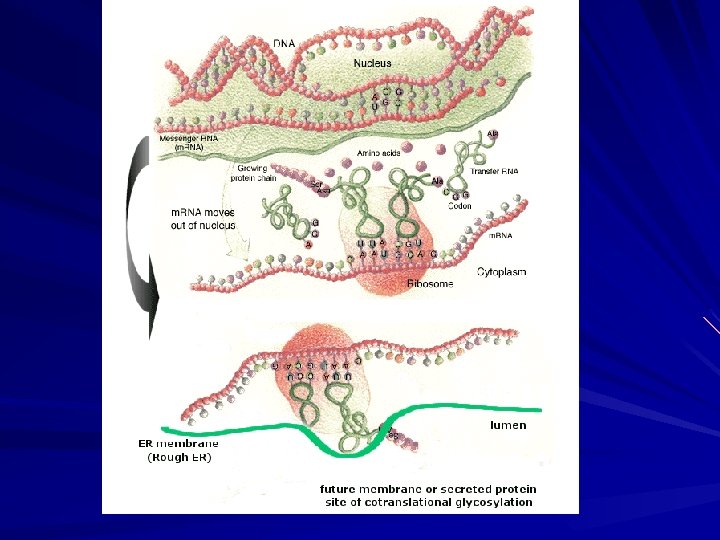
Protein Synthesis DNA – blueprint for protein synthesis Gene – DNA segment that carries instructions for building protein Each sequence of 3 bases (triplet) codes for an amino acid – AAA – phenylalanine; CCT – glycine Btw 300 – 3000 base pairs in a single gene RNA – Transfer RNA – takes amino acids to ribosomes – Messenger RNA – takes instructions from nucleus to ribosomes – Ribosomal RNA (ribosomes) – uses instructions to place amino acids in correct order
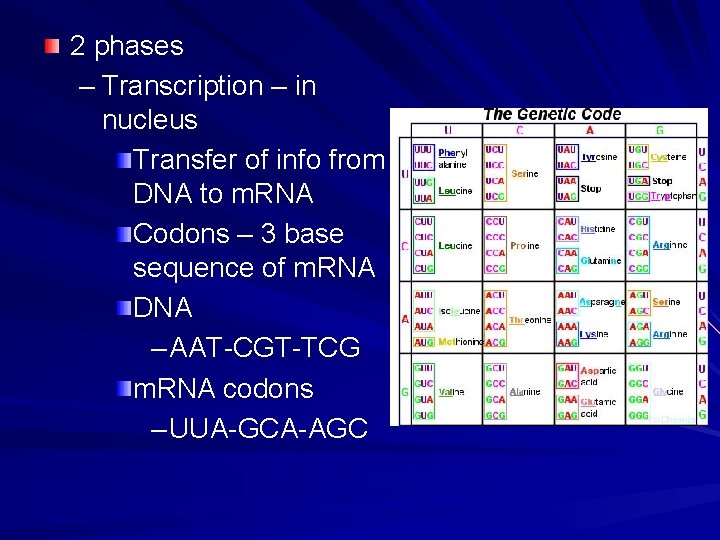
2 phases – Transcription – in nucleus Transfer of info from DNA to m. RNA Codons – 3 base sequence of m. RNA DNA – AAT-CGT-TCG m. RNA codons – UUA-GCA-AGC
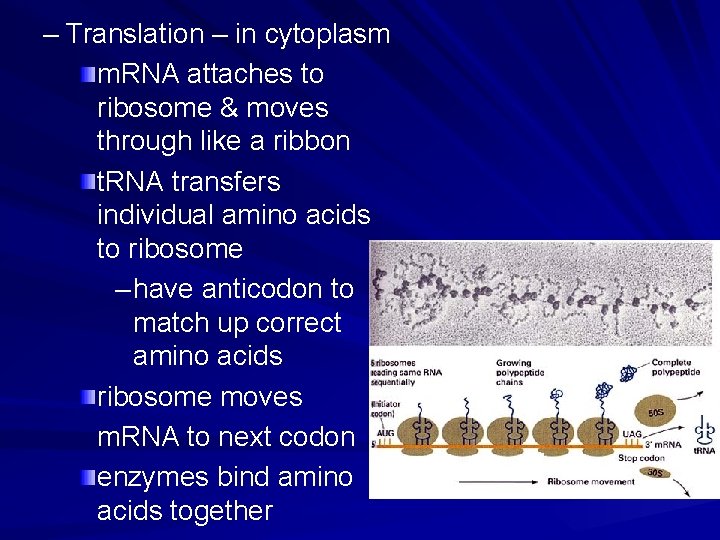
– Translation – in cytoplasm m. RNA attaches to ribosome & moves through like a ribbon t. RNA transfers individual amino acids to ribosome – have anticodon to match up correct amino acids ribosome moves m. RNA to next codon enzymes bind amino acids together