
Chapter 3 Matter and Atomic Structure An element
- Slides: 31
Chapter 3! Matter and Atomic Structure!
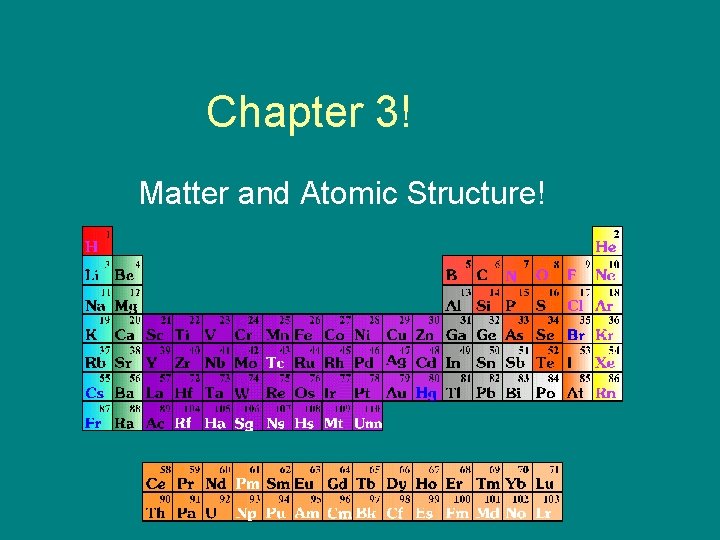
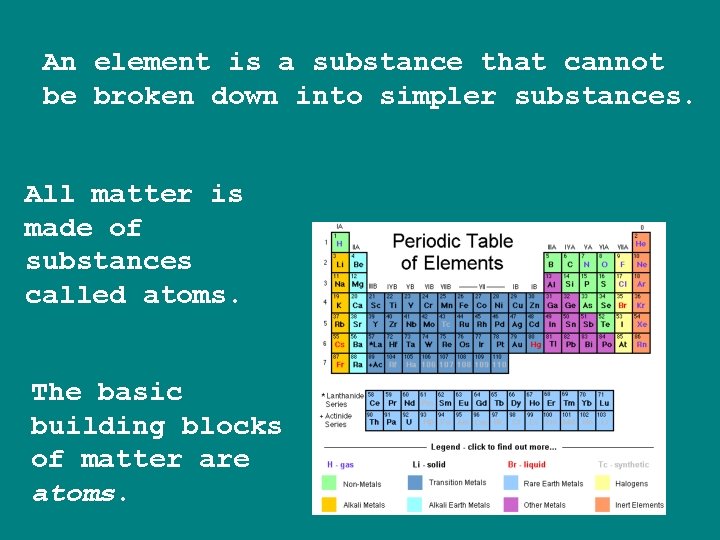
An element is a substance that cannot be broken down into simpler substances. All matter is made of substances called atoms. The basic building blocks of matter are atoms.
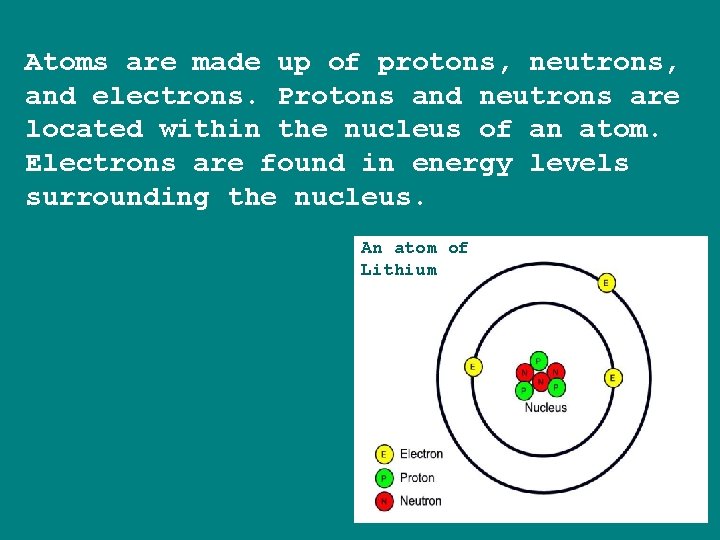
Atoms are made up of protons, neutrons, and electrons. Protons and neutrons are located within the nucleus of an atom. Electrons are found in energy levels surrounding the nucleus. An atom of Lithium
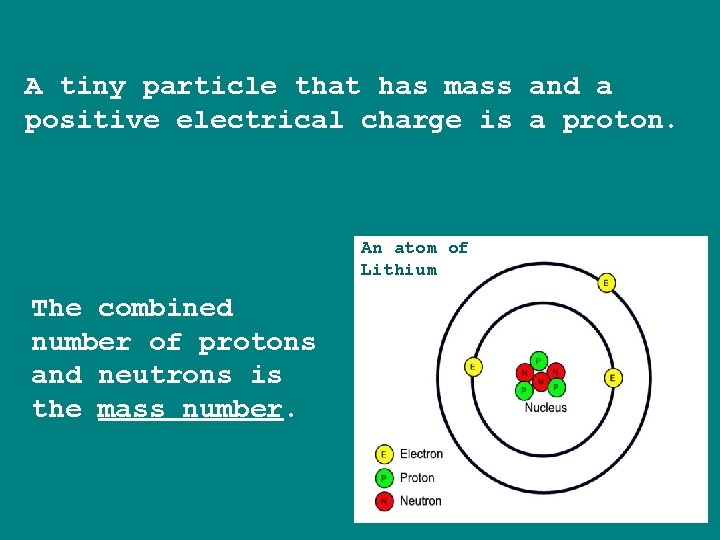
A tiny particle that has mass and a positive electrical charge is a proton. An atom of Lithium The combined number of protons and neutrons is the mass number.
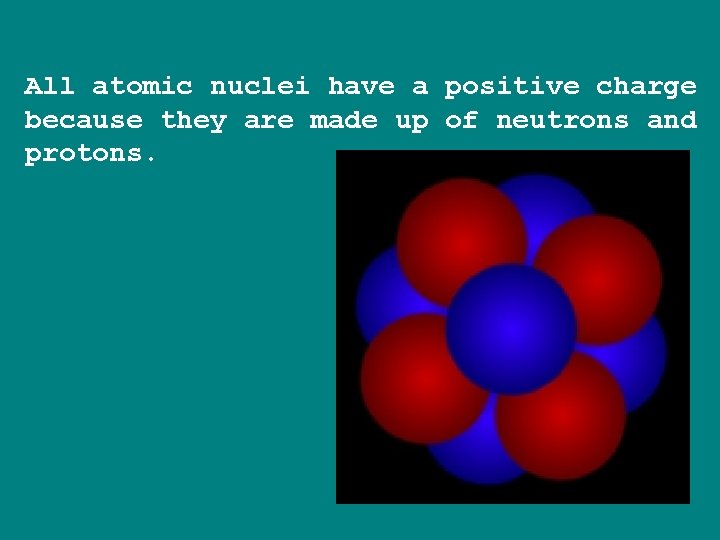
All atomic nuclei have a positive charge because they are made up of neutrons and protons.
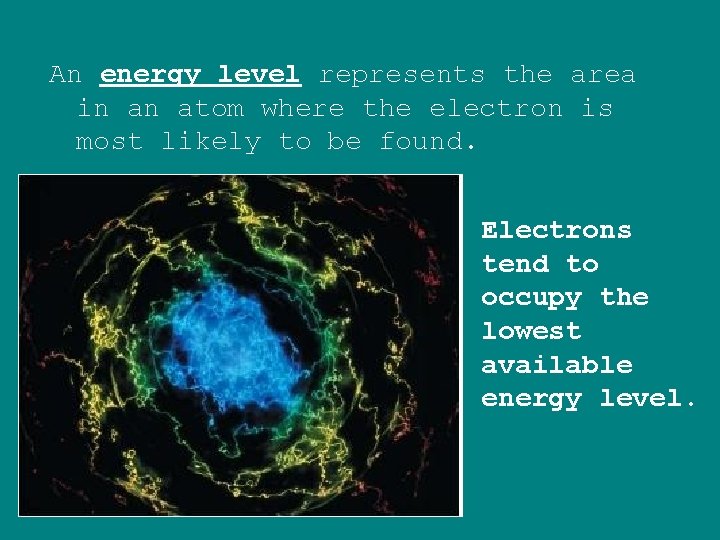
An energy level represents the area in an atom where the electron is most likely to be found. Electrons tend to occupy the lowest available energy level.
Isotopes are different types of atoms of the same chemical element, each having a different number of neutrons. All elements are mixtures of isotopes.
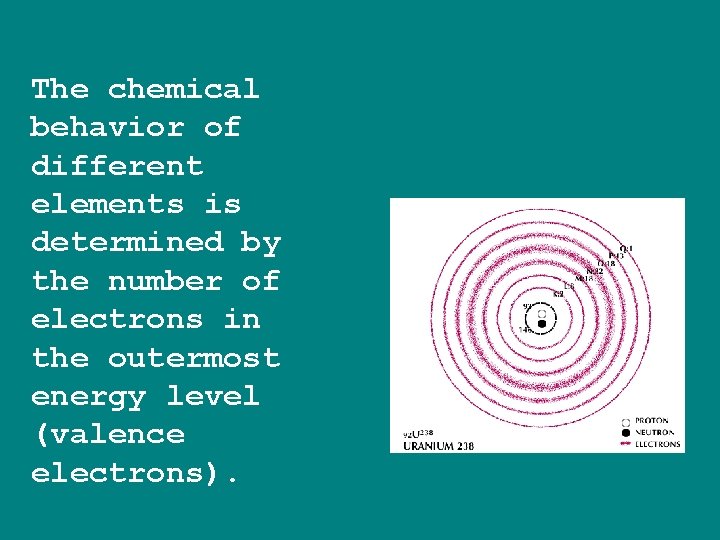
The chemical behavior of different elements is determined by the number of electrons in the outermost energy level (valence electrons).
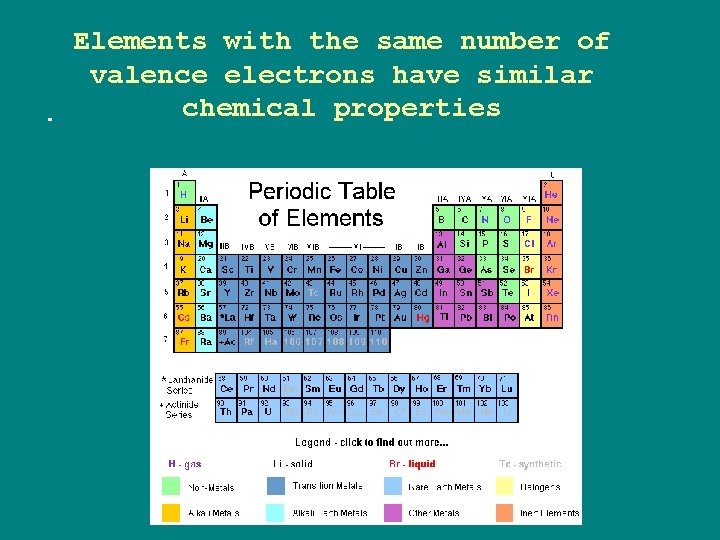
Elements with the same number of valence electrons have similar chemical properties.
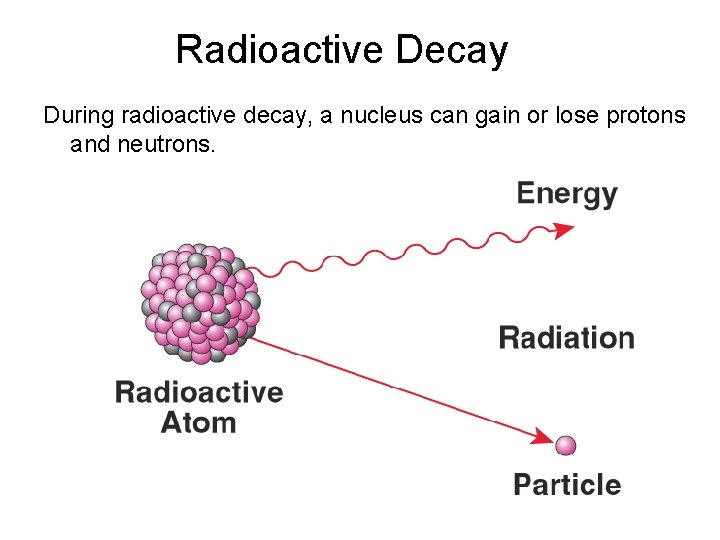
Radioactive Decay During radioactive decay, a nucleus can gain or lose protons and neutrons.
Half-Life Half-life refers to the time it takes for approximately half of radioactive material to decay to a lighter more stable nuclei. The materials we refer to are unstable radioactive elements.
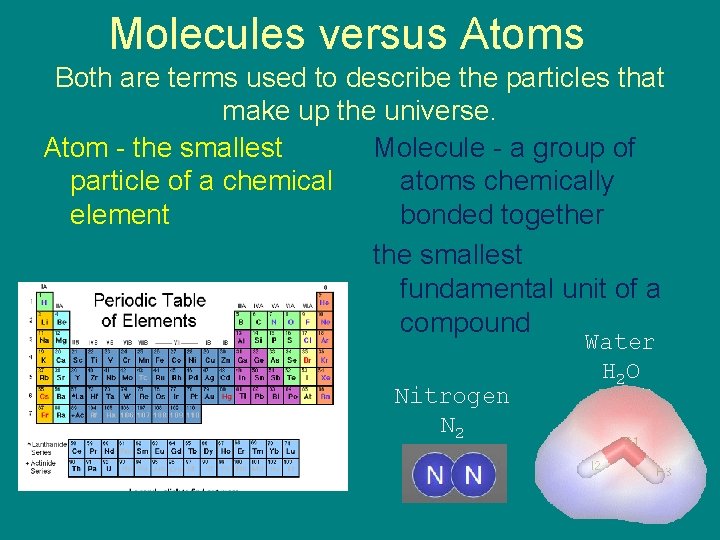
Molecules versus Atoms Both are terms used to describe the particles that make up the universe. Atom - the smallest Molecule - a group of particle of a chemical atoms chemically element bonded together the smallest fundamental unit of a compound Nitrogen N 2 Water H 2 O
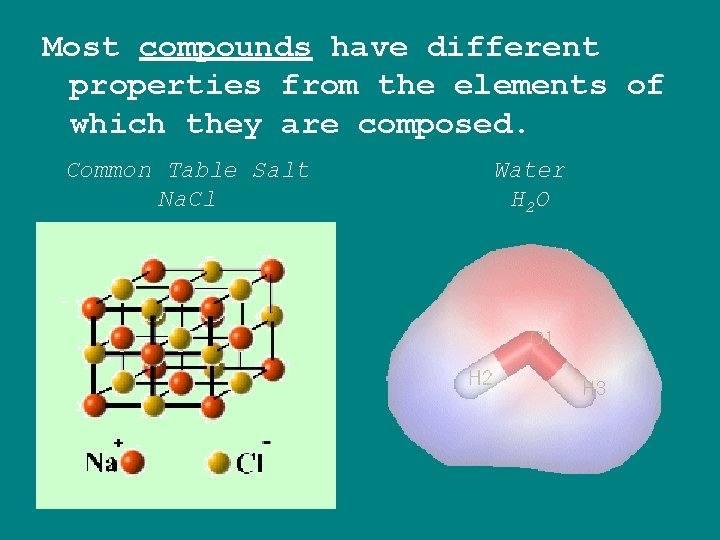
Most compounds have different properties from the elements of which they are composed. Common Table Salt Na. Cl Water H 2 O
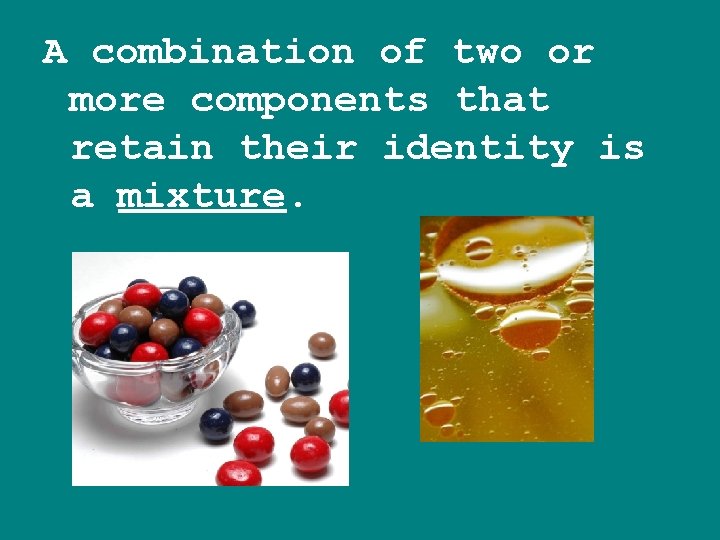
A combination of two or more components that retain their identity is a mixture.
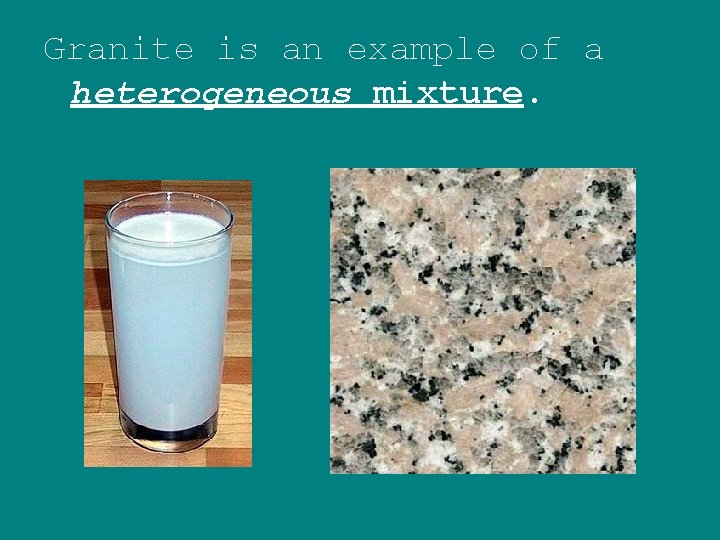
Granite is an example of a heterogeneous mixture.
In a heterogeneous mixture the components are still recognizable.
In a homogeneous mixture, also called a solution, the component particles cannot be distinguished
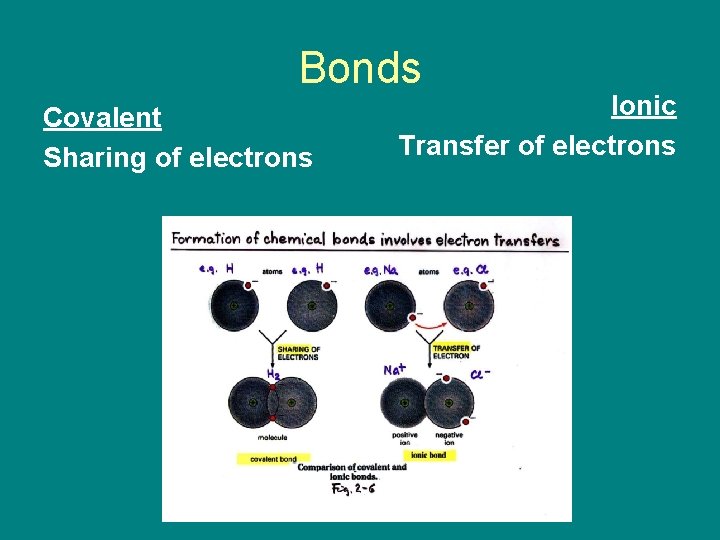
Bonds Covalent Sharing of electrons Ionic Transfer of electrons
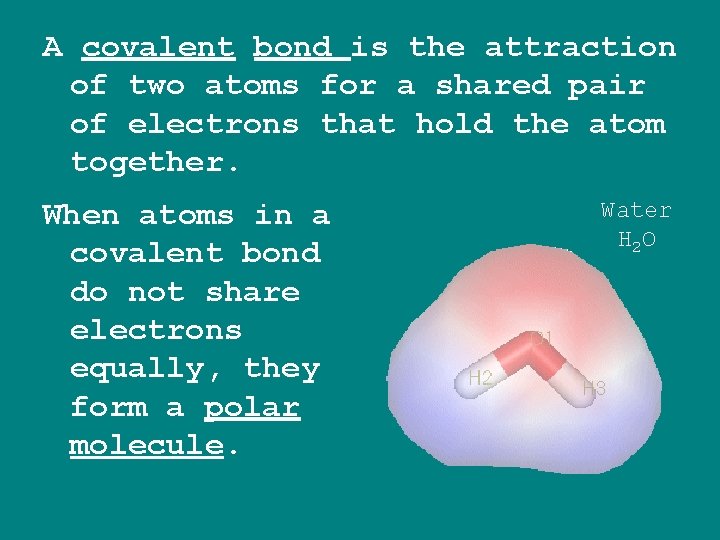
A covalent bond is the attraction of two atoms for a shared pair of electrons that hold the atom together. When atoms in a covalent bond do not share electrons equally, they form a polar molecule. Water H 2 O
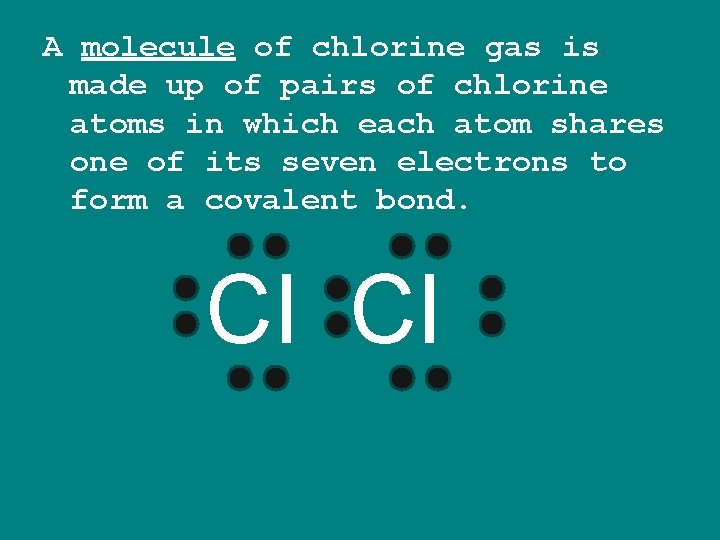
A molecule of chlorine gas is made up of pairs of chlorine atoms in which each atom shares one of its seven electrons to form a covalent bond. Cl Cl
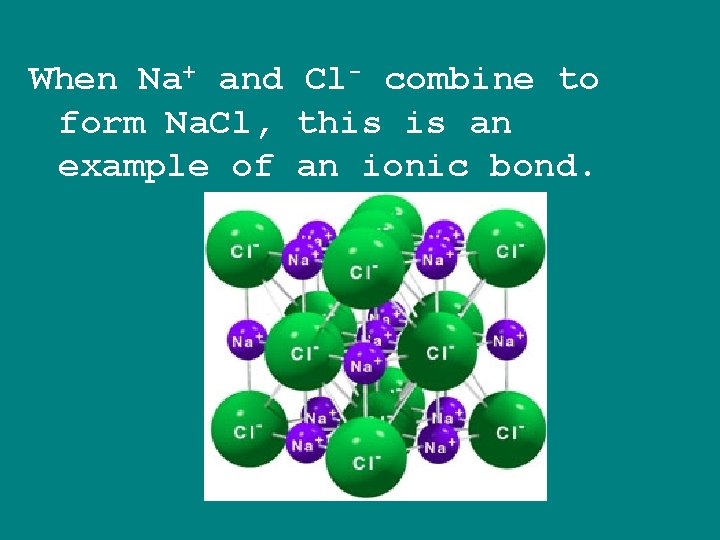
When Na+ and Cl- combine to form Na. Cl, this is an example of an ionic bond.
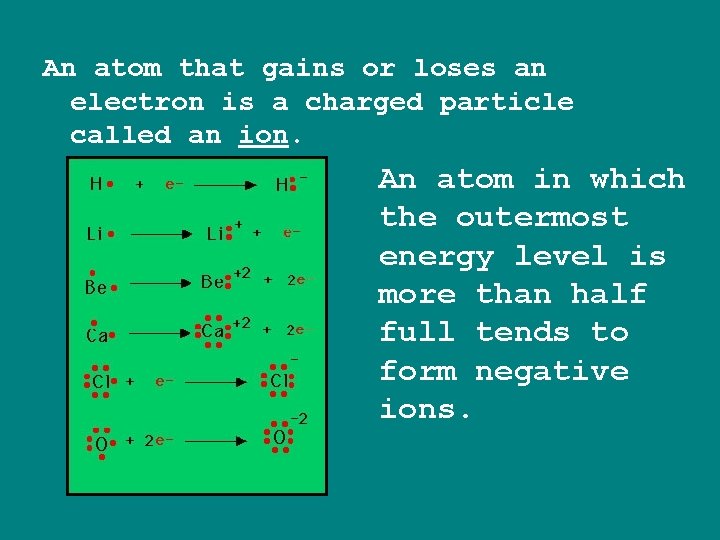
An atom that gains or loses an electron is a charged particle called an ion. An atom in which the outermost energy level is more than half full tends to form negative ions.
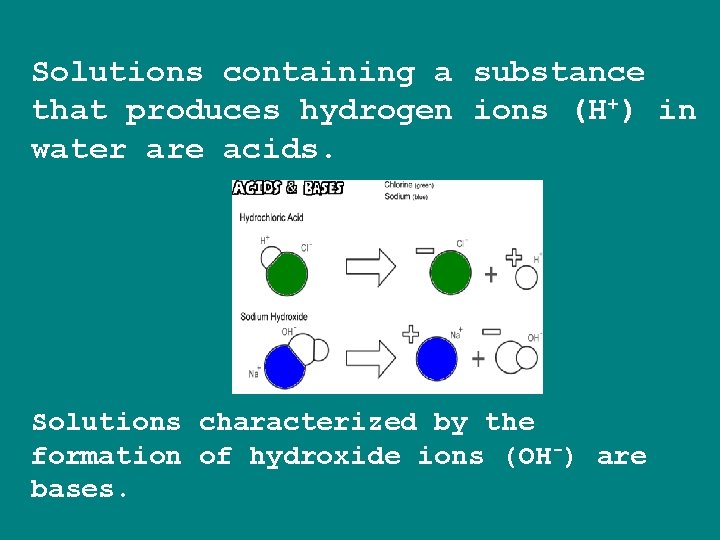
Solutions containing a substance that produces hydrogen ions (H+) in water are acids. Solutions characterized by the formation of hydroxide ions (OH-) are bases.
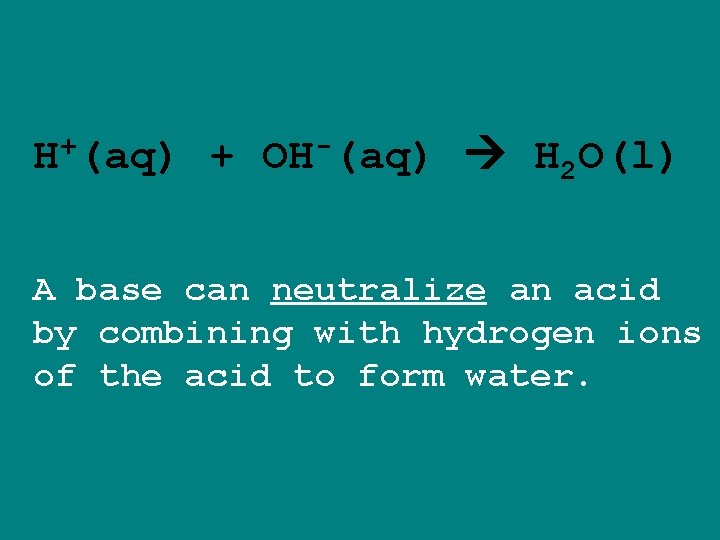
+ H (aq) + OH (aq) H 2 O(l) A base can neutralize an acid by combining with hydrogen ions of the acid to form water.
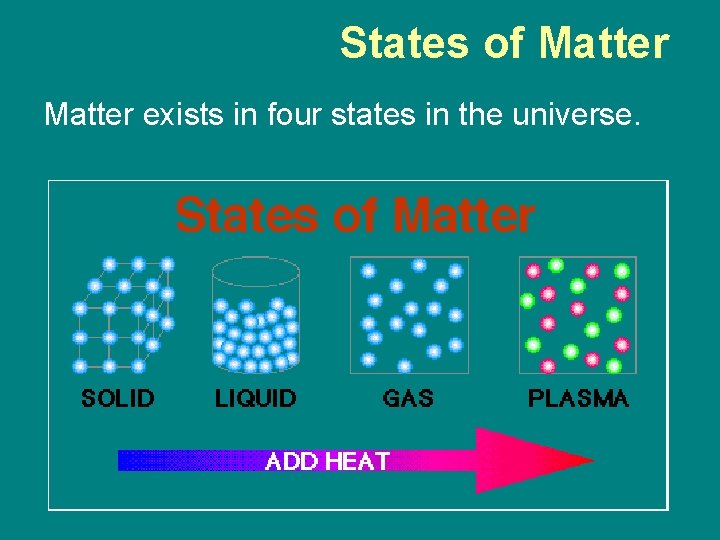
States of Matter exists in four states in the universe.
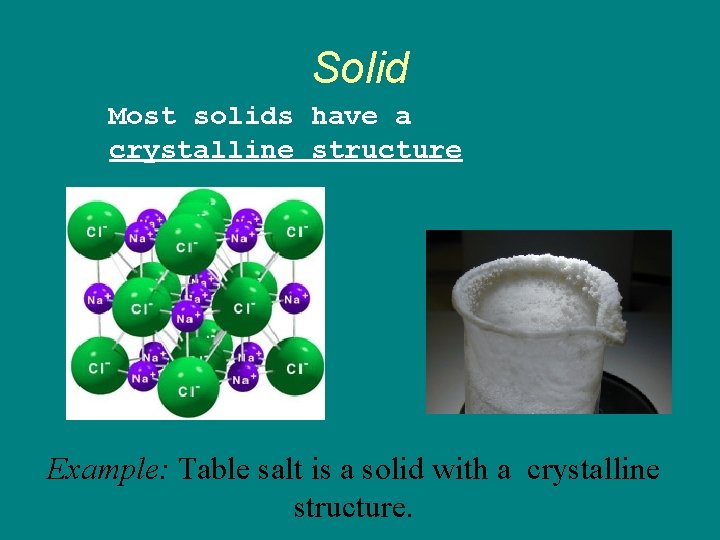
Solid Most solids have a crystalline structure Example: Table salt is a solid with a crystalline structure.
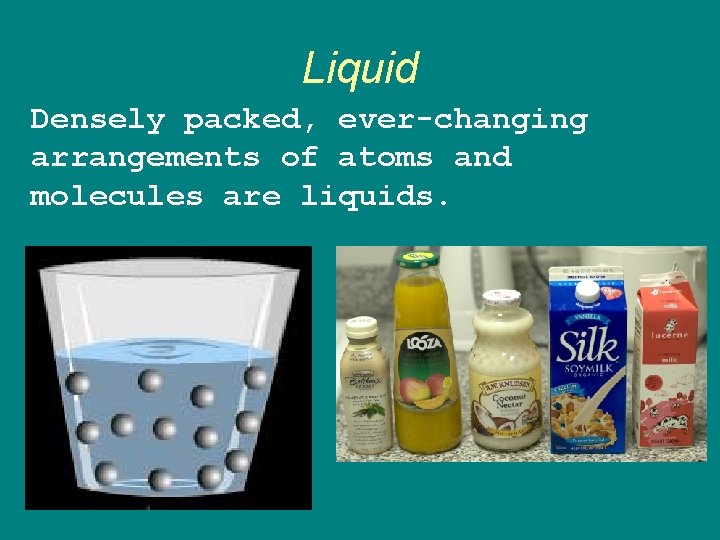
Liquid Densely packed, ever-changing arrangements of atoms and molecules are liquids.
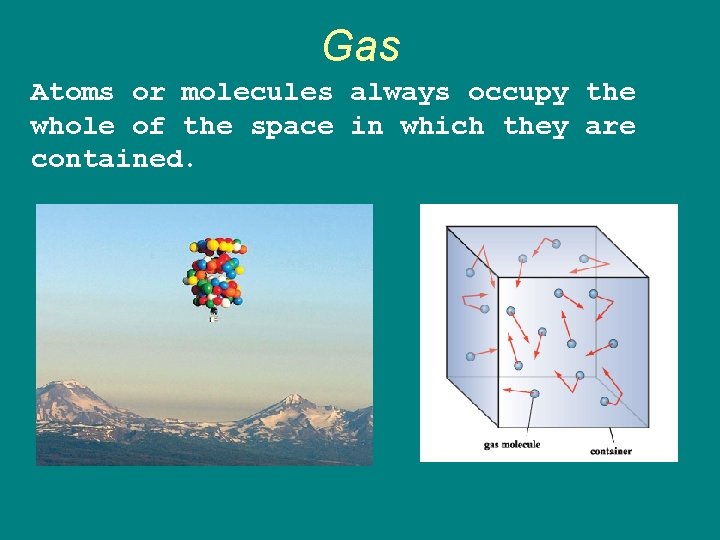
Gas Atoms or molecules always occupy the whole of the space in which they are contained.
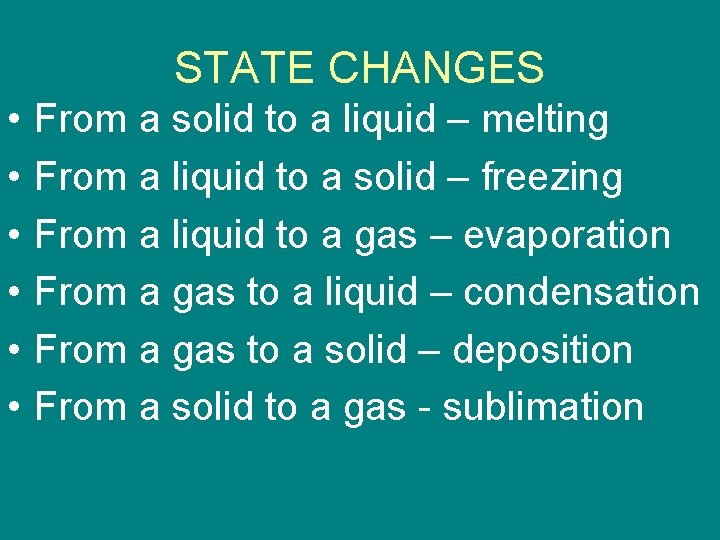
STATE CHANGES • • • From a solid to a liquid – melting From a liquid to a solid – freezing From a liquid to a gas – evaporation From a gas to a liquid – condensation From a gas to a solid – deposition From a solid to a gas - sublimation
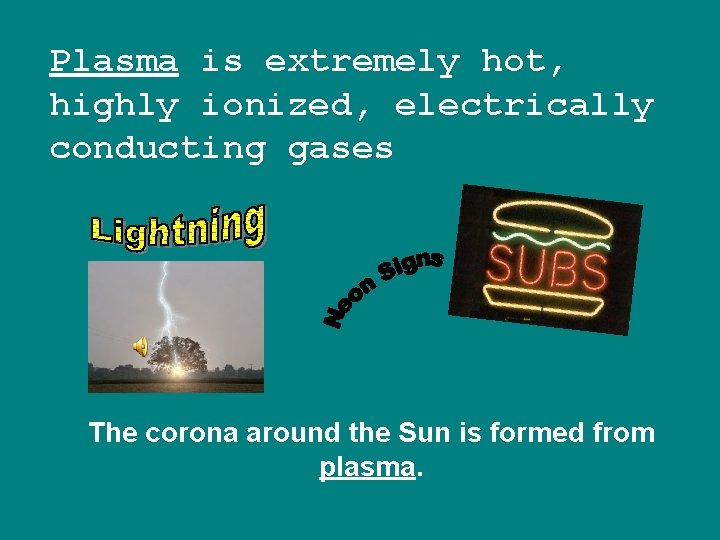
Plasma is extremely hot, highly ionized, electrically conducting gases The corona around the Sun is formed from plasma.
• Conservation of energy – Matter can be changed from one form to another but cannot be created or destroyed.