
Chapter 3 Lipids Mmmmmfat The good the bad
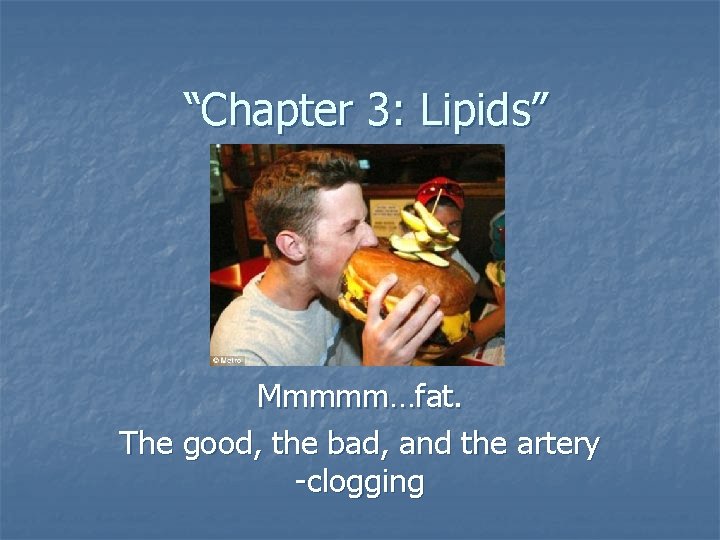
“Chapter 3: Lipids” Mmmmm…fat. The good, the bad, and the artery -clogging
Do You Ever… Think of fats as unhealthy foods that are best eliminated from the diet? n Wonder about the differences between “good” and “bad” cholesterol? n Choose fish for health’s sake without fully knowing why? n Recognize invisible fats in your foods? n
Let’s say… n Your bill from a lab reads “Blood lipid profile: $250. ” n Your doctor tells you that your blood cholesterol is high. n The doc also tells you to cut down on saturated fats. n But what does it all mean?
Intro to the Lipids n “The lipids in foods and in the human body fall into three classes. ” n Each of these are stored in different parts of the body, and found in different foods.
n “About 95% are triglycerides. ” n “The rest are phospholipids and sterols. ” n (Cholesterol is the best known) n Some of these names may sound familiar…we’ll discuss them in more detail later.
What are fat’s uses in the body? n “Fat is the body’s chief storage for the energy from food eaten in excess of need. ” n Evolutionarily, if you didn’t know where your next meal was coming from, it made sense to store extra.
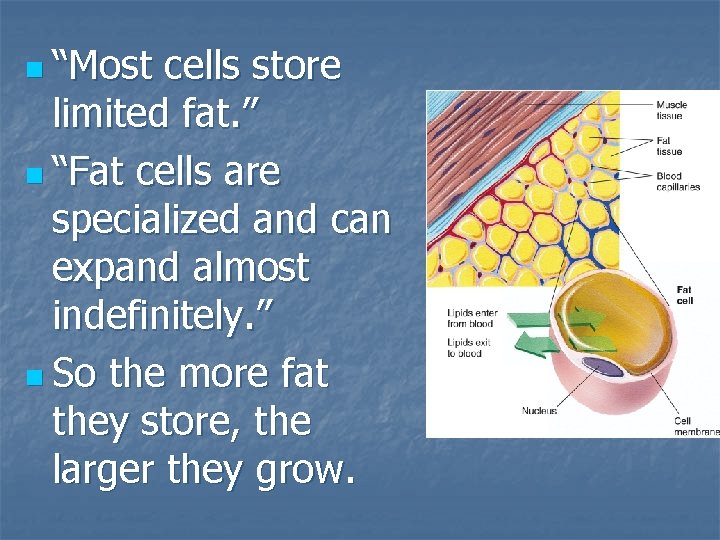
n “Most cells store limited fat. ” n “Fat cells are specialized and can expand almost indefinitely. ” n So the more fat they store, the larger they grow.
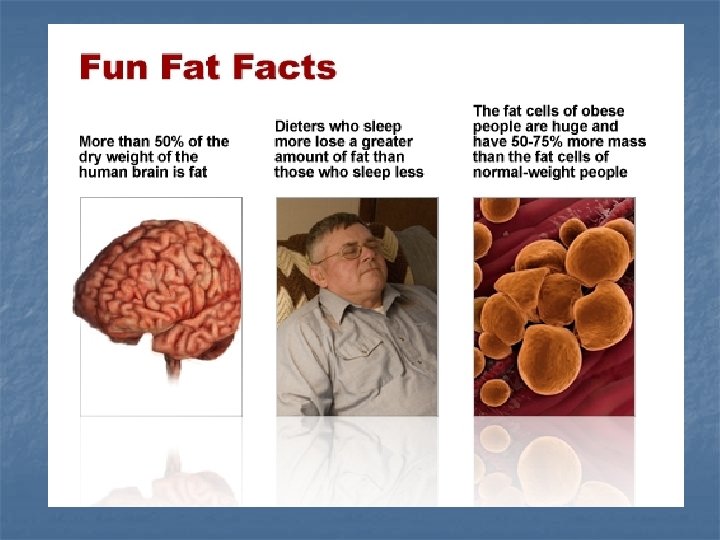
n These aren’t just sacks of fat, though! n “Adipose (fat) tissue secretes hormones that regulate appetite and influence other body functions. ” n So these cells are, indeed, important to our health.
Why not just store energy in carbs? n Glycogen (sugar storage) holds a great deal of water, so it is a bulky, heavy molecule. n Fats pack tightly together, and store more energy in a small space.
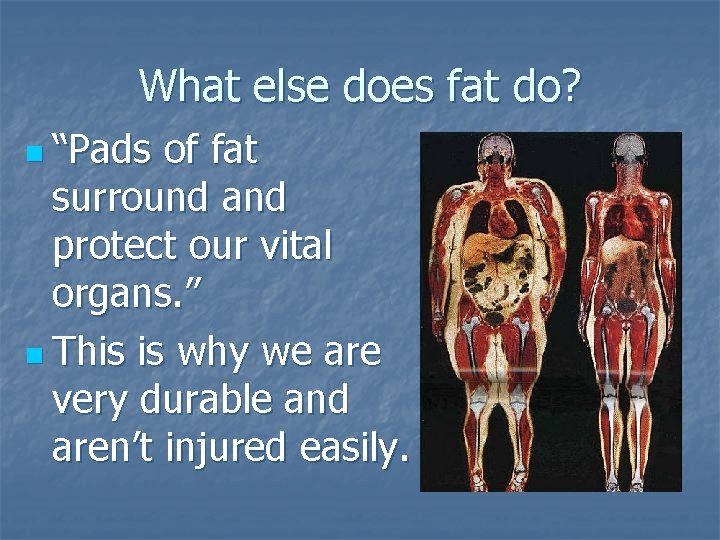
What else does fat do? n “Pads of fat surround and protect our vital organs. ” n This is why we are very durable and aren’t injured easily.
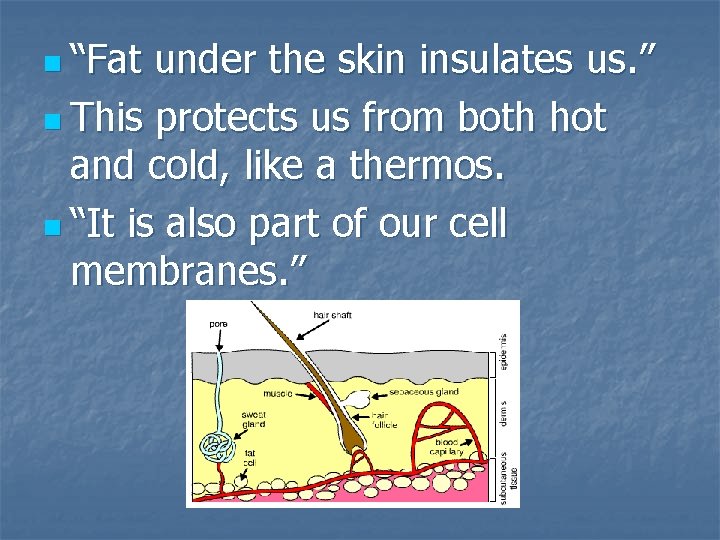
n “Fat under the skin insulates us. ” n This protects us from both hot and cold, like a thermos. n “It is also part of our cell membranes. ”
n “Fat is needed to absorb vitamins A, D, E, and K, which are fatsoluble. ” n This means that they only dissolve into fat. n “Our bodies make molecules from essential fatty acids (part of fat). ” n So our fat is absolutely vital!
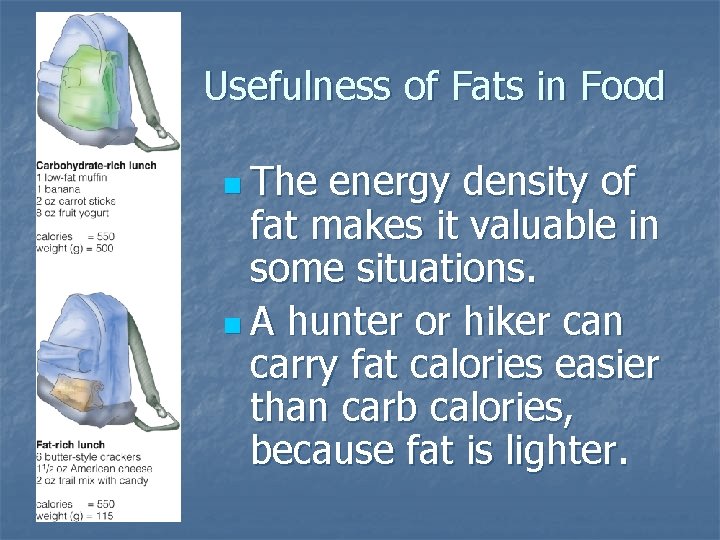
Usefulness of Fats in Food n The energy density of fat makes it valuable in some situations. n A hunter or hiker can carry fat calories easier than carb calories, because fat is lighter.
n Fat is naturally appealing to us, because evolutionarily, we needed calories! n Fat also adds tenderness to meats and baked goods. n “Fat contributes to satiety, feeling full after a meal. ” n The fat triggers a physiological response that slows digestion and stops us from eating more.
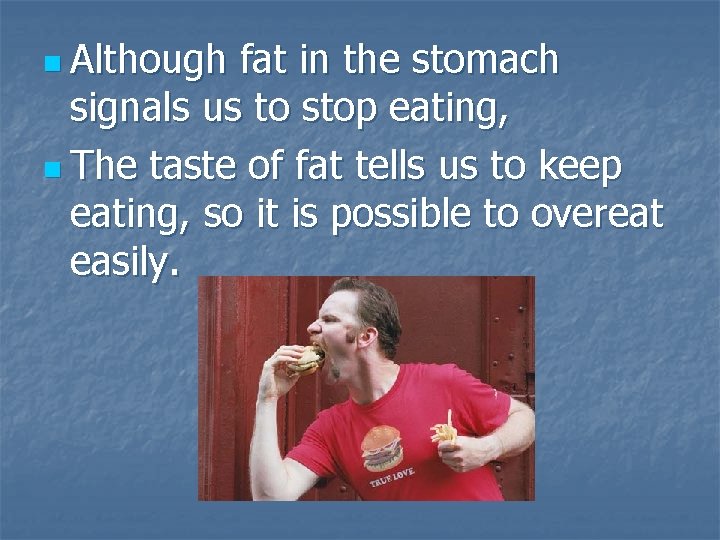
n Although fat in the stomach signals us to stop eating, n The taste of fat tells us to keep eating, so it is possible to overeat easily.
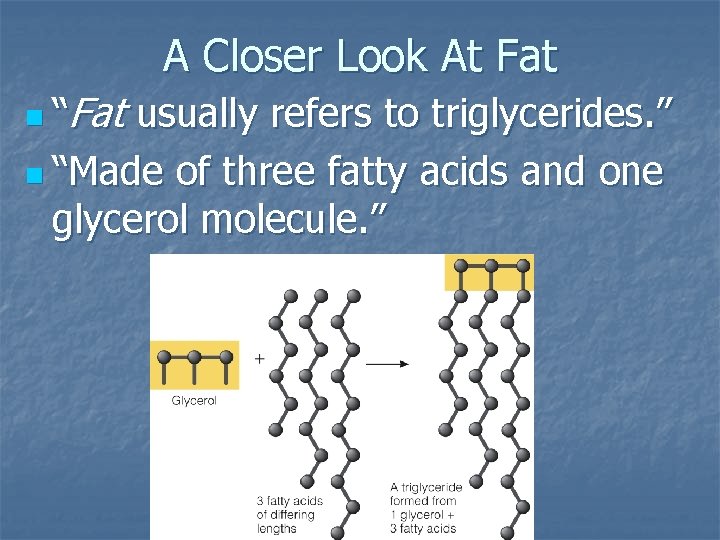
A Closer Look At Fat n “Fat usually refers to triglycerides. ” n “Made of three fatty acids and one glycerol molecule. ”
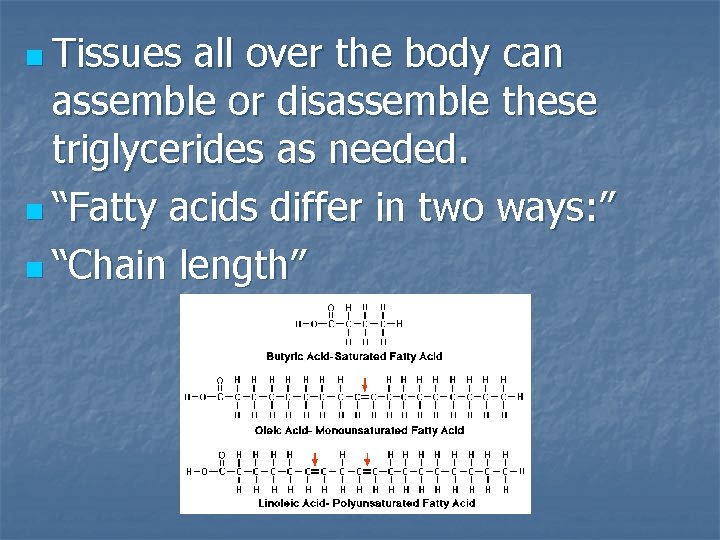
n Tissues all over the body can assemble or disassemble these triglycerides as needed. n “Fatty acids differ in two ways: ” n “Chain length”
n “and degree of saturation. ” n Saturated, unsaturated…more about that in a minute. n Usually, triglycerides contain a mixture of different fatty acids.
n “The shorter the chain, the softer and more liquid the fat. ” n So vegetable oils have shorter molecule chains; n Beef fat has a longer chain of fatty acids. n This does matter!
n “Each species of animal makes different triglycerides. ” n This is governed by genetics. n Fats in the diet can affect which triglycerides are made, because the fatty acids we eat are often incorporated into our triglycerides in the body. n Remember, you are what you eat!
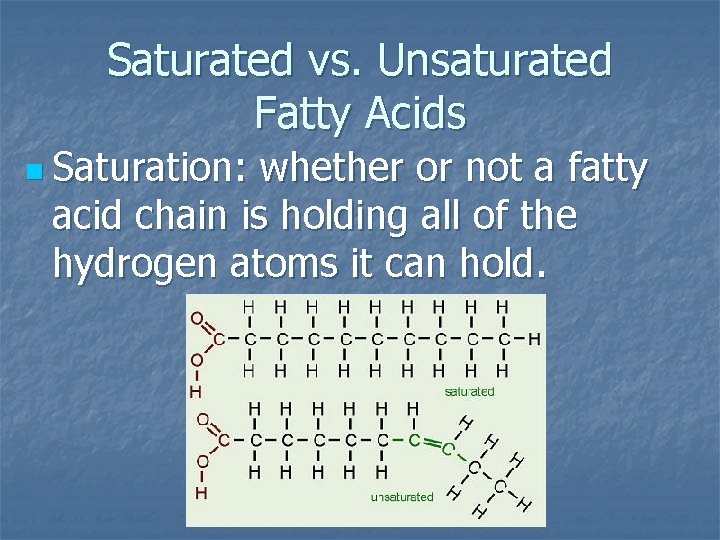
Saturated vs. Unsaturated Fatty Acids n Saturation: whether or not a fatty acid chain is holding all of the hydrogen atoms it can hold.
n “If every available bond is holding a hydrogen molecule, that chain is a saturated fatty acid. ”
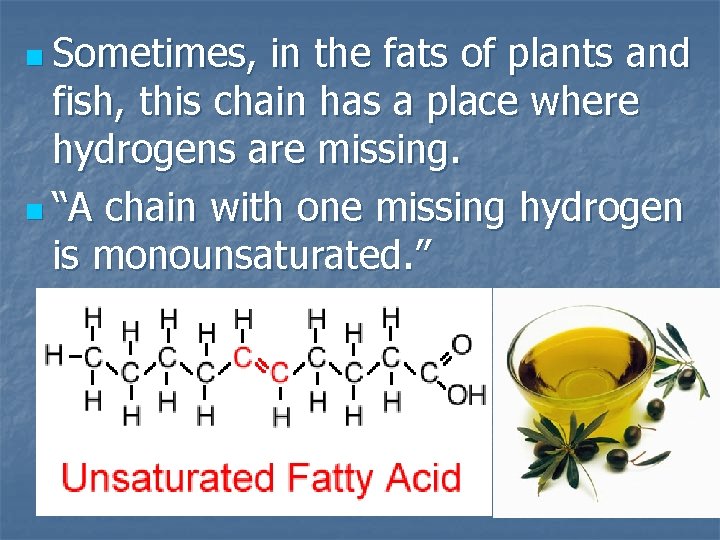
n Sometimes, in the fats of plants and fish, this chain has a place where hydrogens are missing. n “A chain with one missing hydrogen is monounsaturated. ”
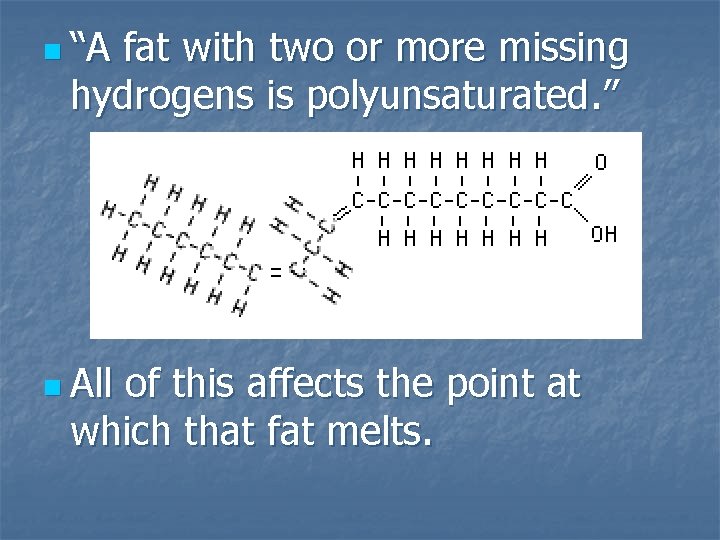
n “A fat with two or more missing hydrogens is polyunsaturated. ” n All of this affects the point at which that fat melts.
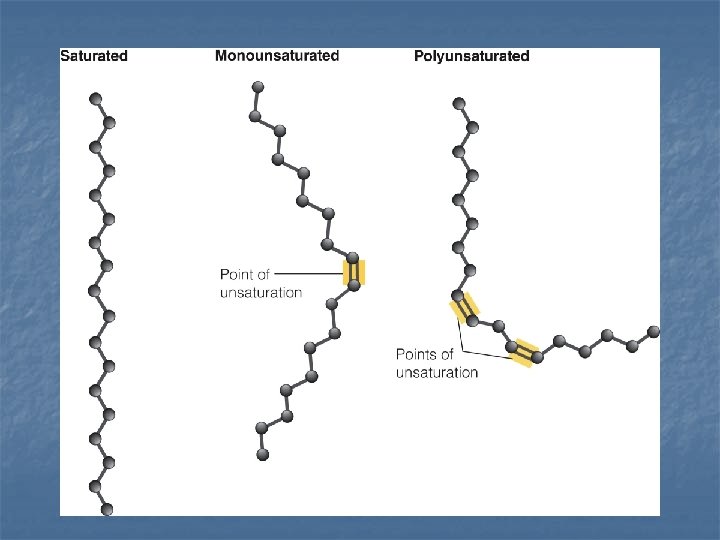
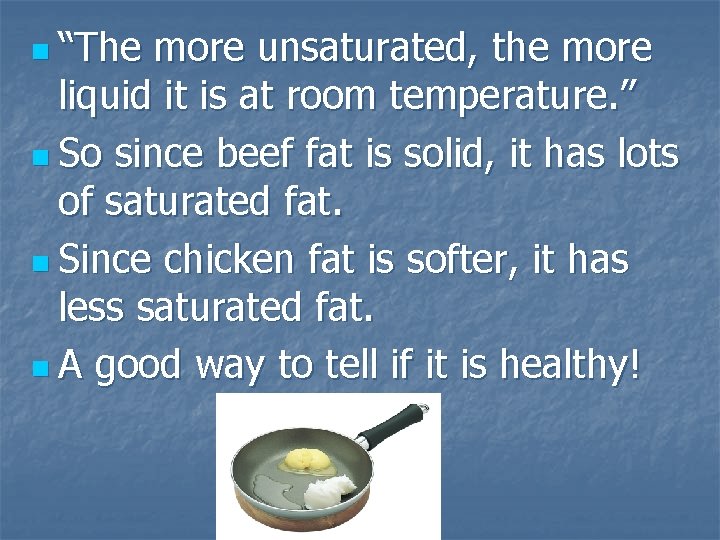
n “The more unsaturated, the more liquid it is at room temperature. ” n So since beef fat is solid, it has lots of saturated fat. n Since chicken fat is softer, it has less saturated fat. n A good way to tell if it is healthy!
The Catch n Some liquid plant oils are still high in saturated fat. (coconut, palm) n How do we tell? n “Refrigerate oil: if it turns cloudy, it has more saturated fat. ” n One exception is olive oil: although only mono-, good for you!
Where the Fatty Acids are Found n “fish, veggies: polyunsaturated” n “some veggies (canola, olive): monounsaturated” n “meat: most saturated” n Beware: veggie fat can contain trans fat…dangerous! (More later)
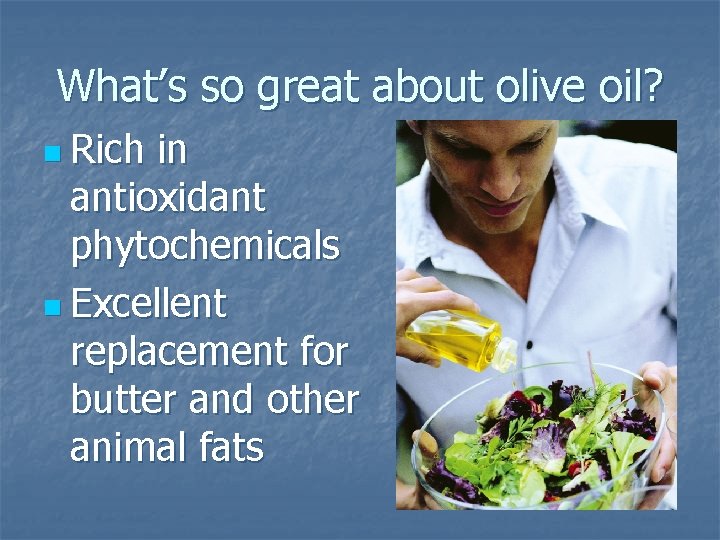
What’s so great about olive oil? n Rich in antioxidant phytochemicals n Excellent replacement for butter and other animal fats
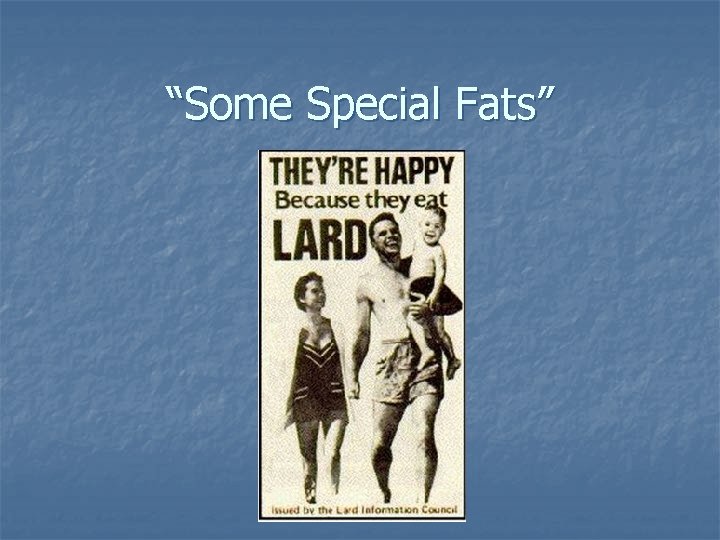
“Some Special Fats”
“Phospholipids (PPLs) and Sterols” n “PPLs have two fatty acid chains instead of three, and a phosphorus molecule. ” n Why does this matter? n “It is water- and also fat-soluble. ” n So it dissolves in both water and fat. Why do we care? . .
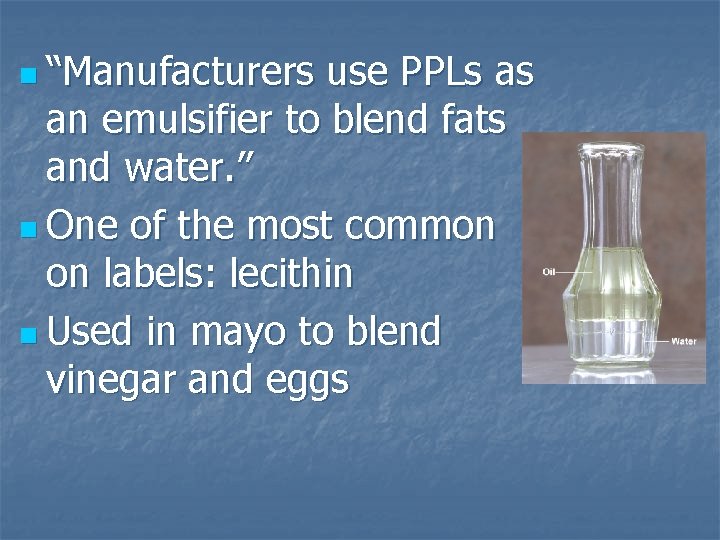
n “Manufacturers use PPLs as an emulsifier to blend fats and water. ” n One of the most common on labels: lecithin n Used in mayo to blend vinegar and eggs
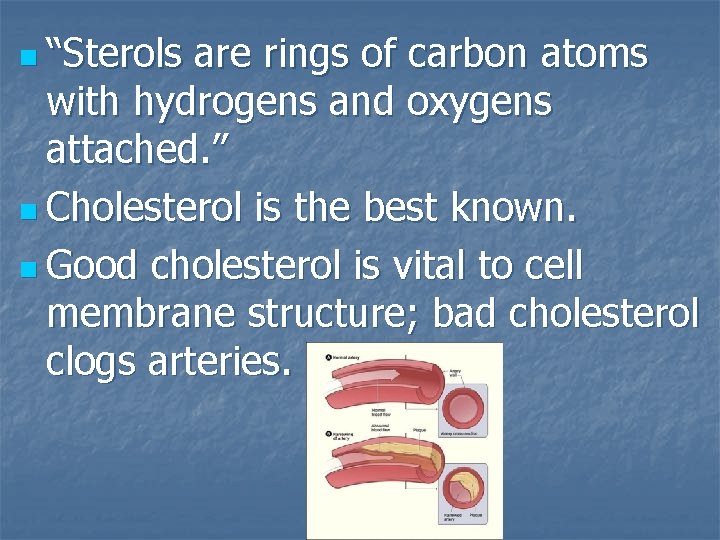
n “Sterols are rings of carbon atoms with hydrogens and oxygens attached. ” n Cholesterol is the best known. n Good cholesterol is vital to cell membrane structure; bad cholesterol clogs arteries.
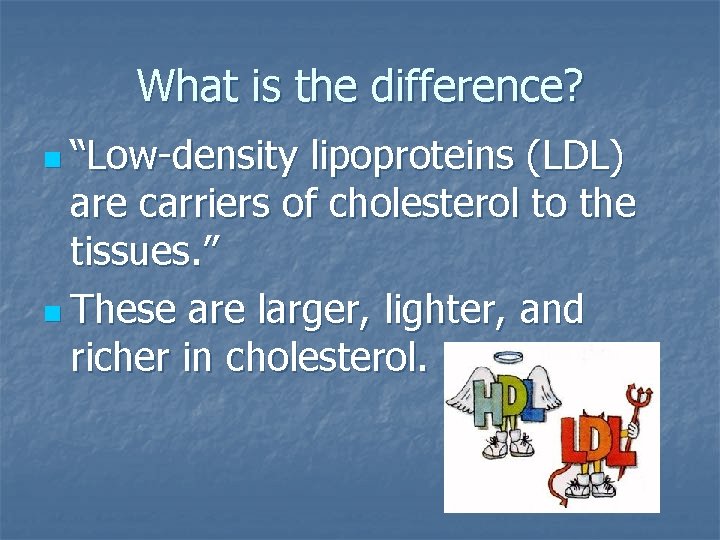
What is the difference? n “Low-density lipoproteins (LDL) are carriers of cholesterol to the tissues. ” n These are larger, lighter, and richer in cholesterol.
n “High-density lipoproteins (HDL) carry cholesterol away from tissues, to the liver for disposal. ” n These are lighter, smaller, and contain more protein. n So both contain the same cholesterol…what’s with the good and bad?
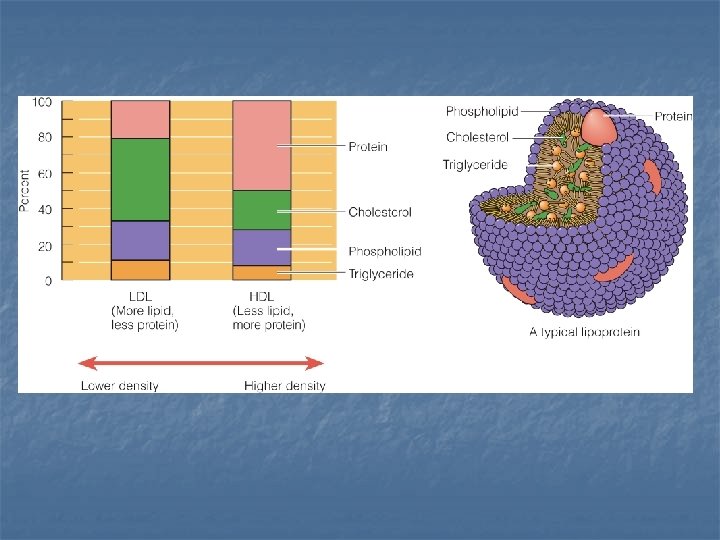
n We’ve come to call them good and bad cholesterols, when cholesterol is cholesterol. n The key is, “LDL carries lipids that trigger inflammation and contribute to heart disease. ” n “HDL proteins oppose inflammation and protect against heart attack. ”
n Therefore, elevated LDL in the blood warns of an increased heart attack risk; n Elevated HDL points to a reduced risk. n These numbers are SO important to health! n So how do we change our numbers?
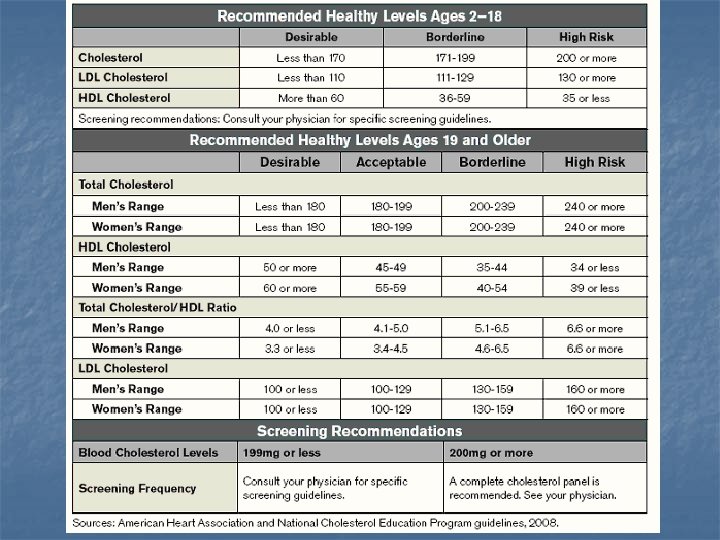
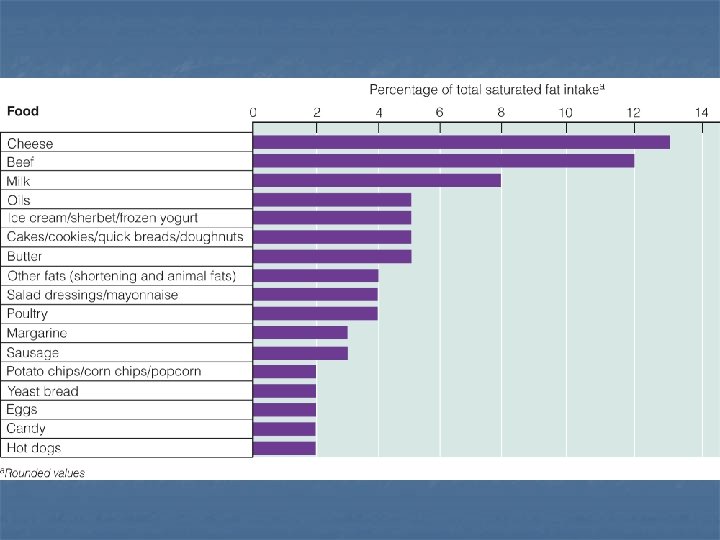
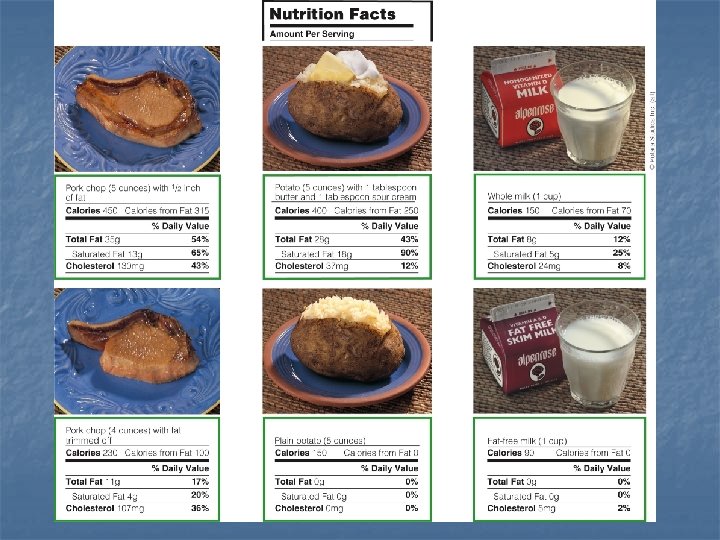
n “LDL can be lowered by avoiding saturated fat and trans fat. ” n Happily, the national cholesterol level is dropping! n But heart disease is still this country’s top killer. n “We should choose a diet with less than 10% of calories from saturated fat. ”
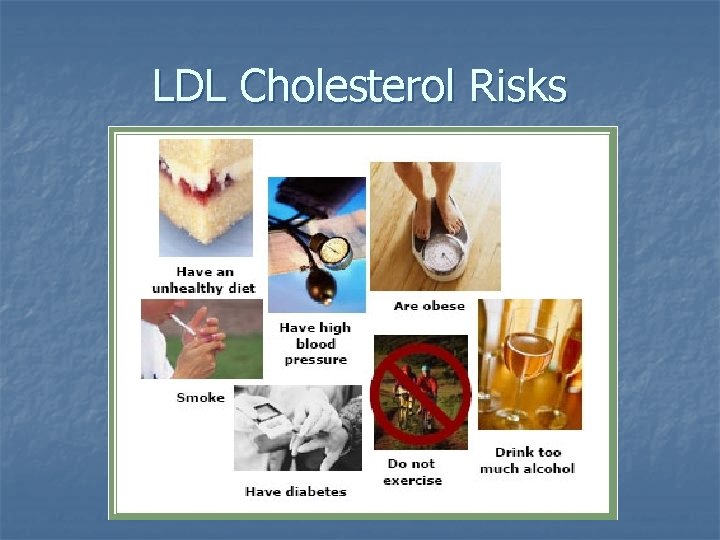
LDL Cholesterol Risks
How do we raise HDL? n “Diet rarely raises HDL; regular exercise works better. ” n Although some foods, like olive oil, fiber, fish, and nuts can help. n Remember HDL = Happy DL
Coming soon… n More about fat!
- Slides: 46