
Chapter 3 Linear Motion Description of Motion Kinematics

- Slides: 16
Chapter 3 Linear Motion
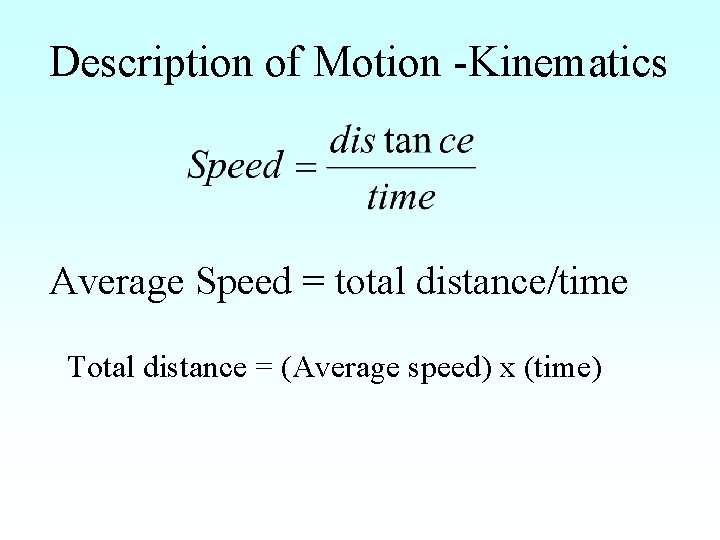
Description of Motion -Kinematics Average Speed = total distance/time Total distance = (Average speed) x (time)
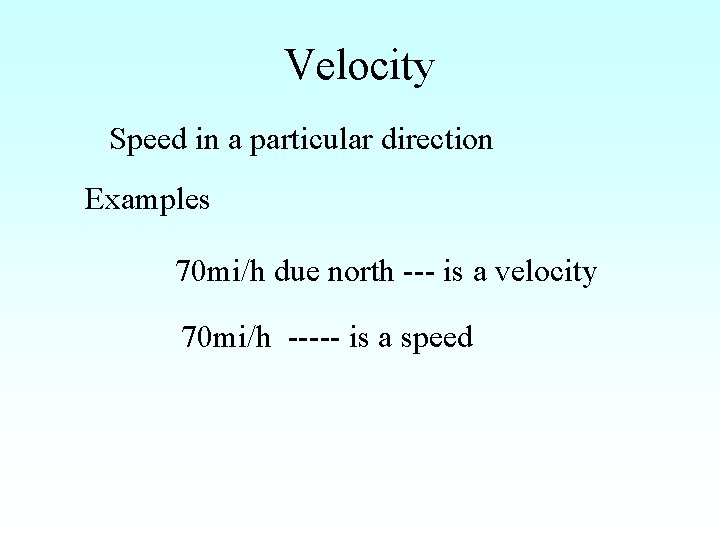
Velocity Speed in a particular direction Examples 70 mi/h due north --- is a velocity 70 mi/h ----- is a speed
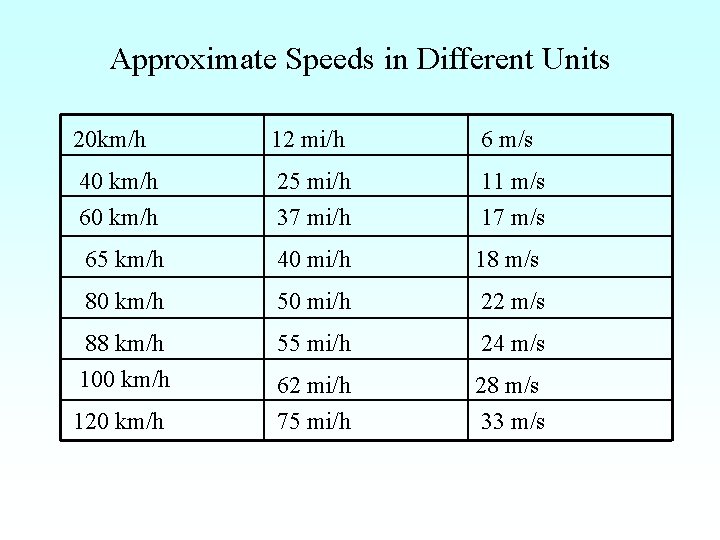
Approximate Speeds in Different Units 20 km/h 12 mi/h 6 m/s 40 km/h 60 km/h 25 mi/h 37 mi/h 11 m/s 17 m/s 65 km/h 40 mi/h 18 m/s 80 km/h 50 mi/h 22 m/s 88 km/h 100 km/h 55 mi/h 24 m/s 62 mi/h 75 mi/h 28 m/s 33 m/s 120 km/h
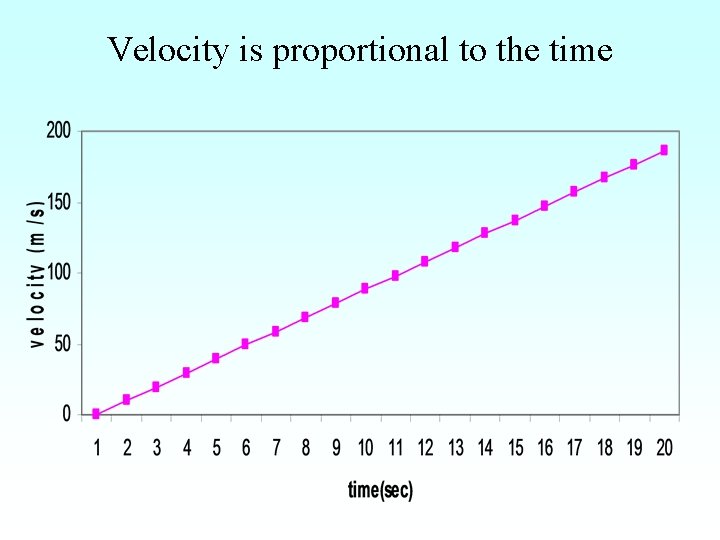
Velocity is proportional to the time
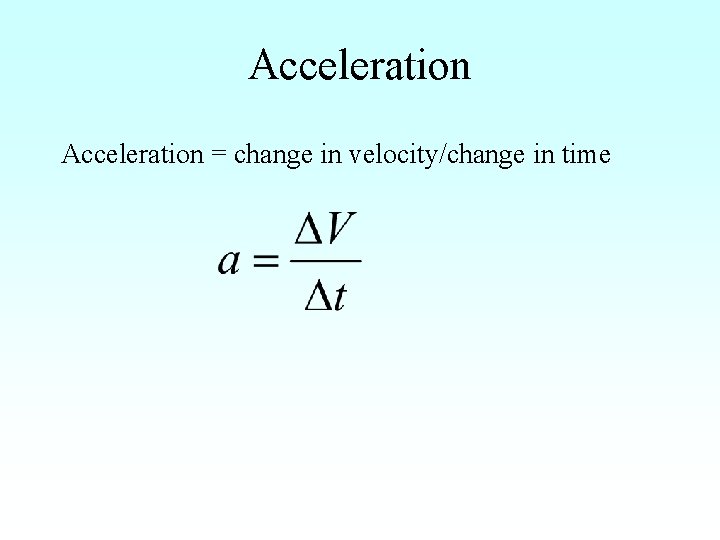
Acceleration = change in velocity/change in time
Constant Acceleration – Free Fall Near the surface of the earth, all objects fall with the same acceleration baring effects from air friction. In this case, a = g = 9. 8 m/s/s or 32 ft/s/s or a = g = 9. 8 m/s 2 or 32 ft/s 2
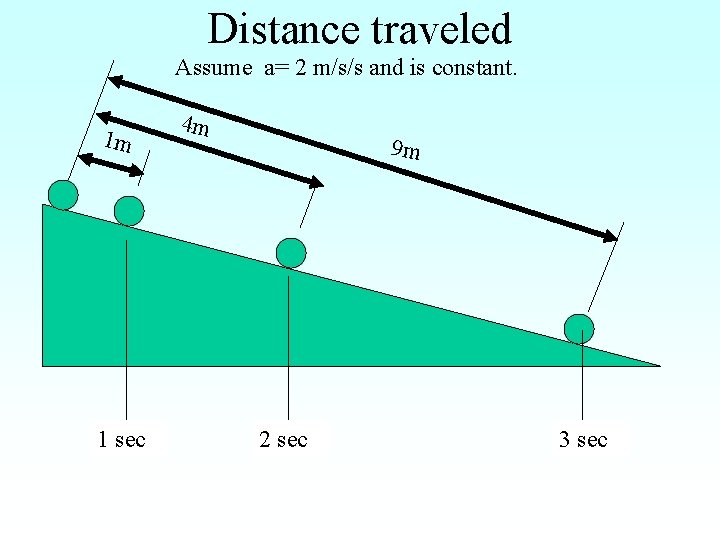
Distance traveled Assume a= 2 m/s/s and is constant. 1 m 1 sec 4 m 9 m 2 sec 3 sec
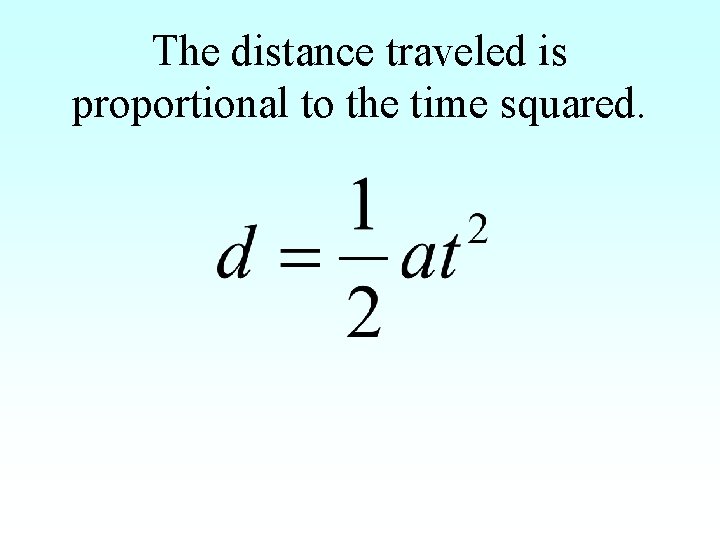
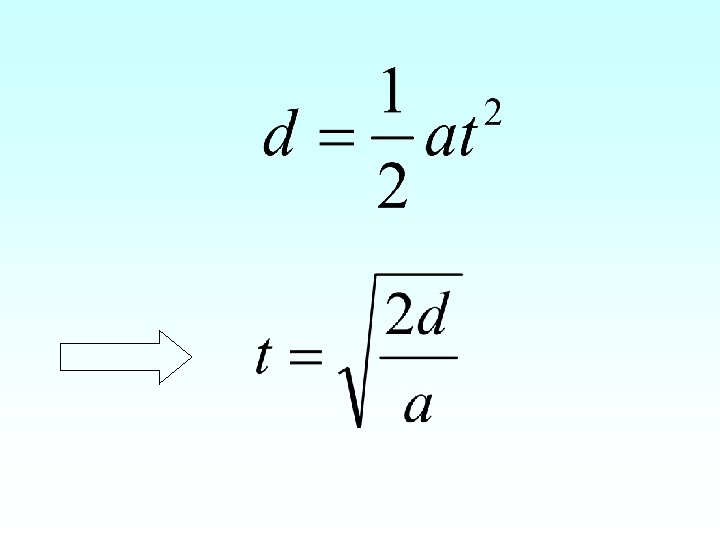
The distance traveled is proportional to the time squared.
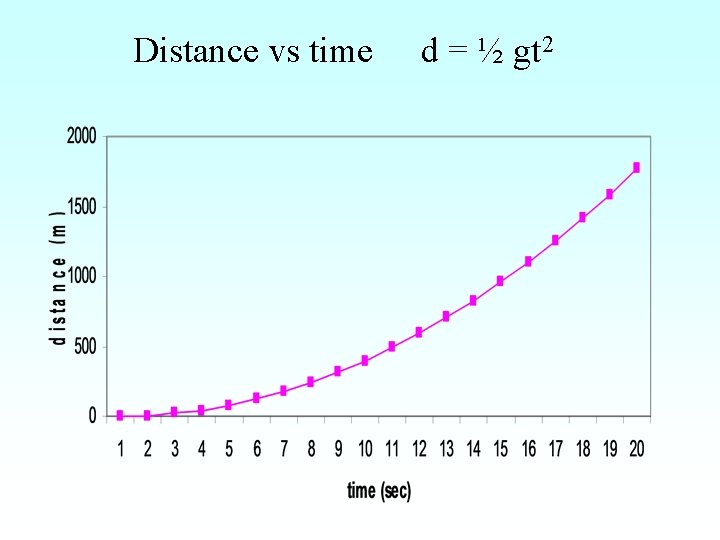
Distance vs time d = ½ gt 2
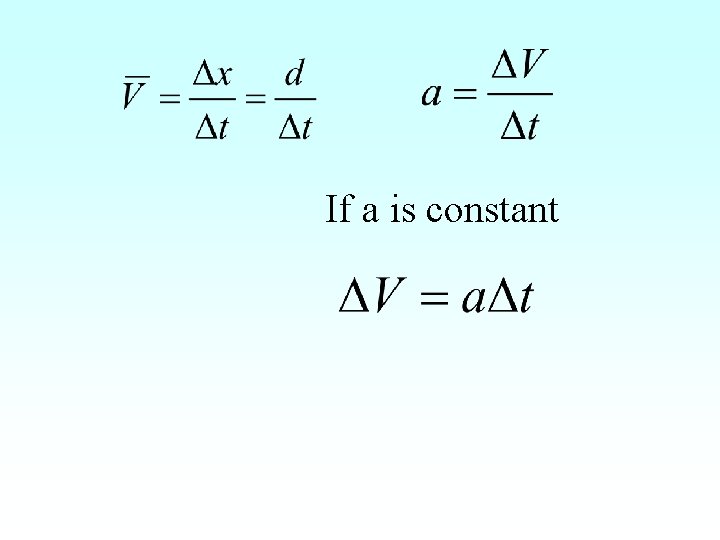
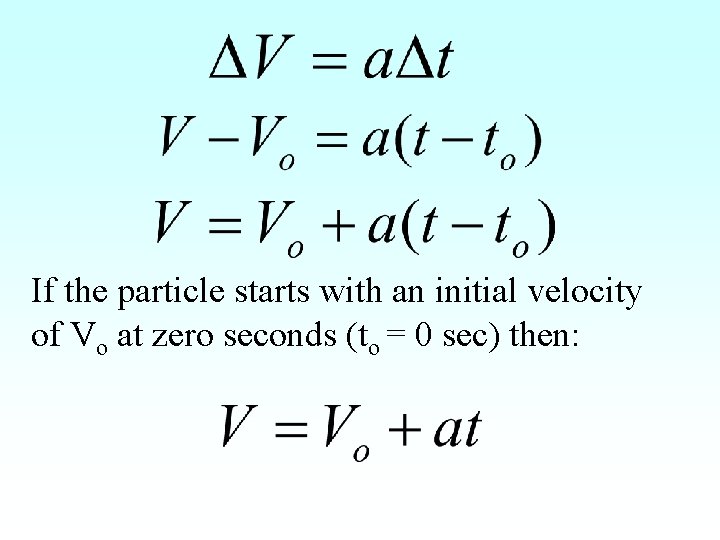
If a is constant
If the particle starts with an initial velocity of Vo at zero seconds (to = 0 sec) then:
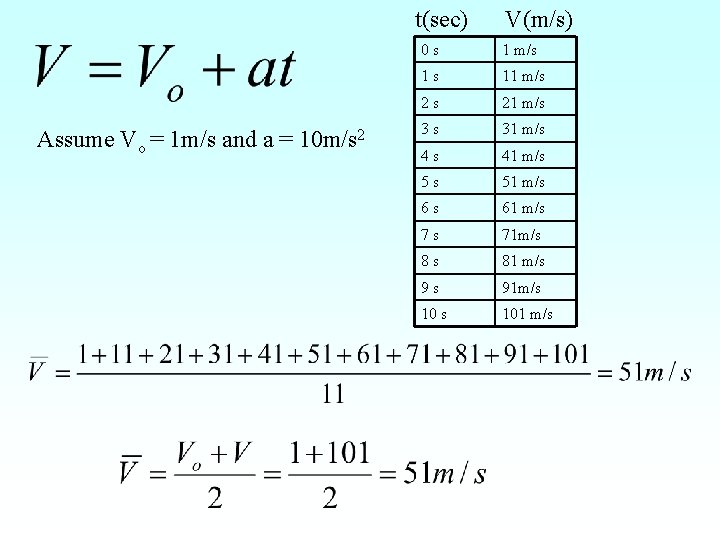
t(sec) Assume Vo = 1 m/s and a = 10 m/s 2 V(m/s) 0 s 1 m/s 1 s 11 m/s 2 s 21 m/s 3 s 31 m/s 4 s 41 m/s 5 s 51 m/s 6 s 61 m/s 7 s 71 m/s 8 s 81 m/s 9 s 91 m/s 101 m/s
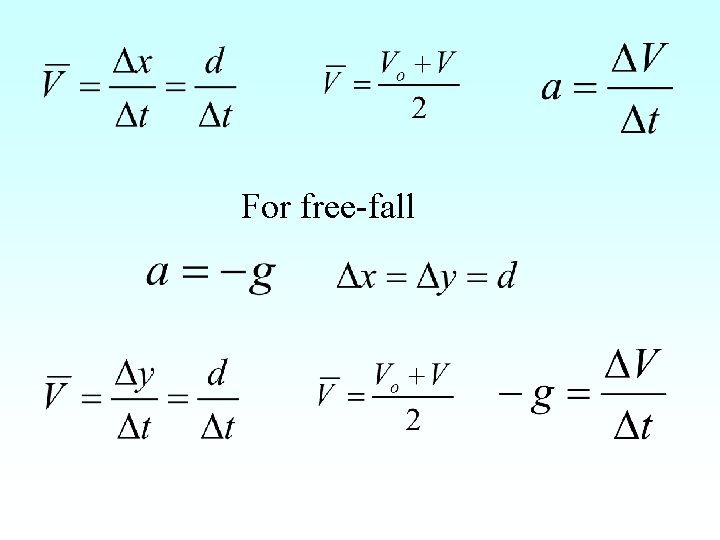
For free-fall