
Chapter 3 Lesson 1 Roanoke and Jamestown Mystery

- Slides: 9
Chapter 3 Lesson 1 Roanoke and Jamestown
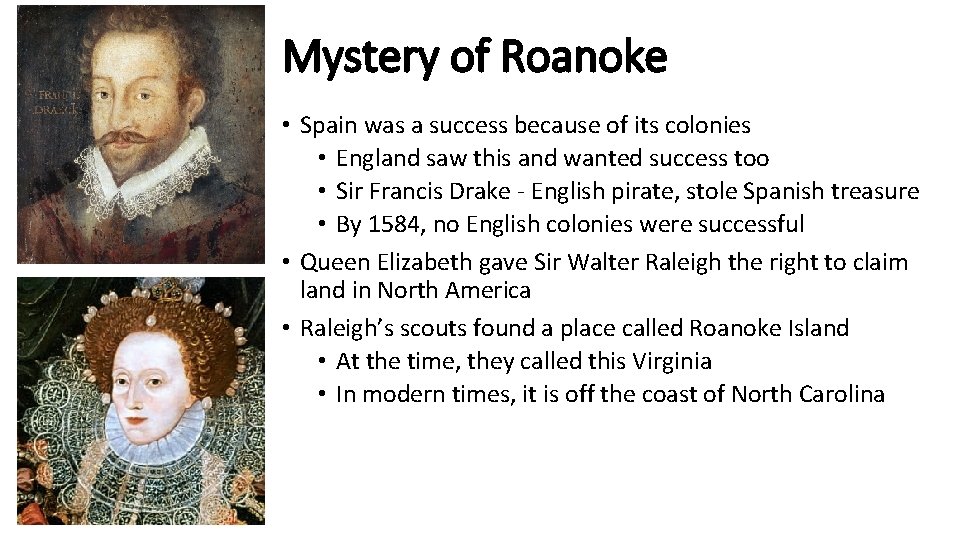
Mystery of Roanoke • Spain was a success because of its colonies • England saw this and wanted success too • Sir Francis Drake - English pirate, stole Spanish treasure • By 1584, no English colonies were successful • Queen Elizabeth gave Sir Walter Raleigh the right to claim land in North America • Raleigh’s scouts found a place called Roanoke Island • At the time, they called this Virginia • In modern times, it is off the coast of North Carolina
Mystery of Roanoke (cont. ) • Raleigh sent settlers to Roanoke Island twice • First group: 1585 • Colony did not survive, after a hard winter, the colonists gave up and returned to England • Valuable information about Native American tribes was gathered • Second group: 1587 • 91 men, 17 women, and 9 children • John White led the group • White’s daughter Virginia Dare was born, she is the first English child born in North America
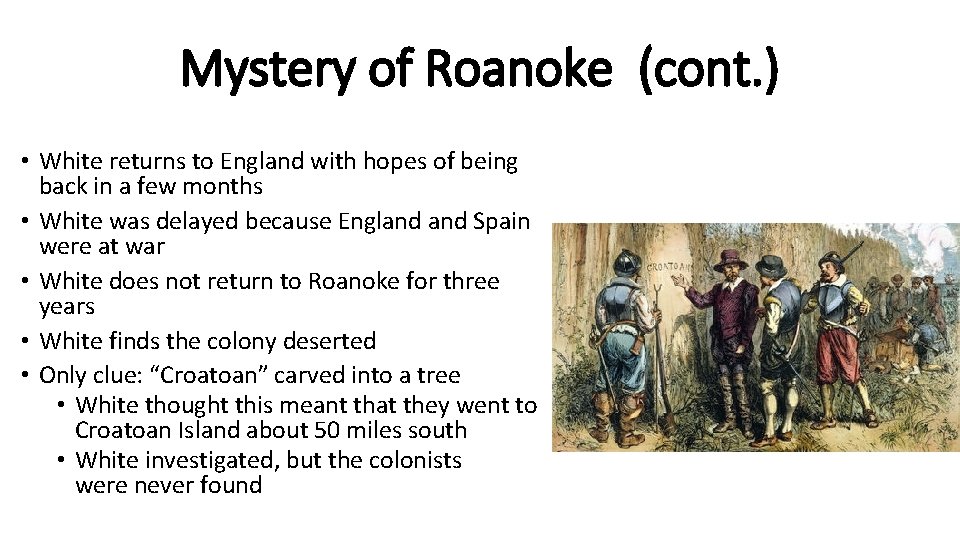
Mystery of Roanoke (cont. ) • White returns to England with hopes of being back in a few months • White was delayed because England Spain were at war • White does not return to Roanoke for three years • White finds the colony deserted • Only clue: “Croatoan” carved into a tree • White thought this meant that they went to Croatoan Island about 50 miles south • White investigated, but the colonists were never found
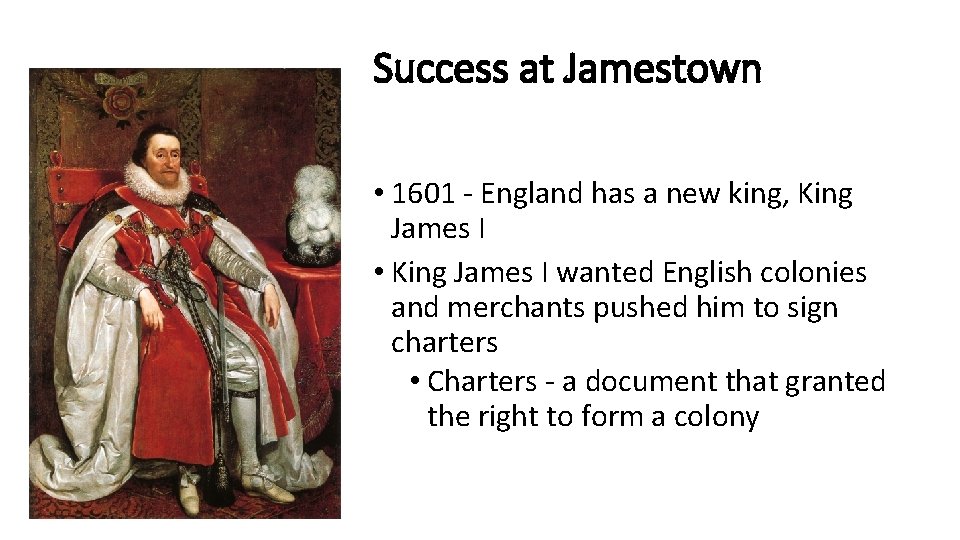
Success at Jamestown • 1601 - England has a new king, King James I • King James I wanted English colonies and merchants pushed him to sign charters • Charters - a document that granted the right to form a colony
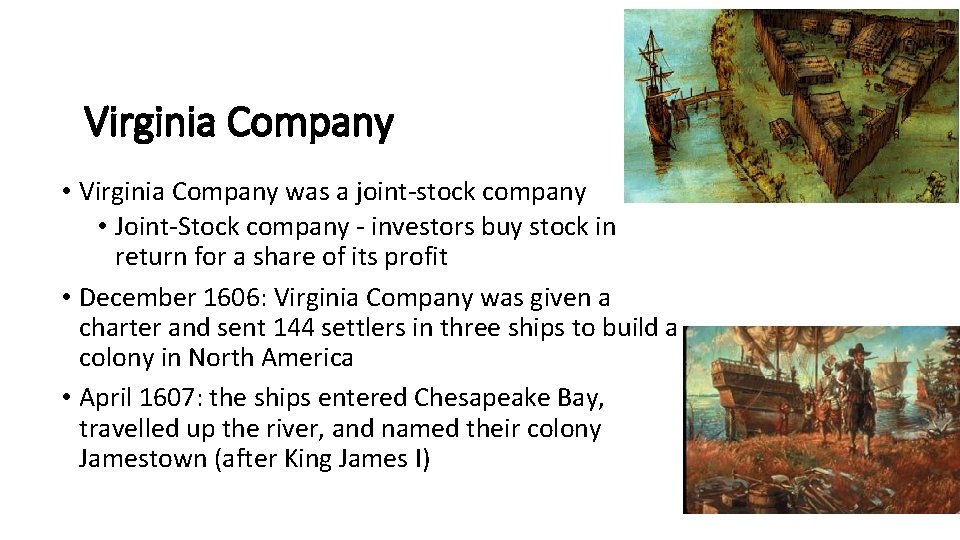
Virginia Company • Virginia Company was a joint-stock company • Joint-Stock company - investors buy stock in return for a share of its profit • December 1606: Virginia Company was given a charter and sent 144 settlers in three ships to build a colony in North America • April 1607: the ships entered Chesapeake Bay, travelled up the river, and named their colony Jamestown (after King James I)
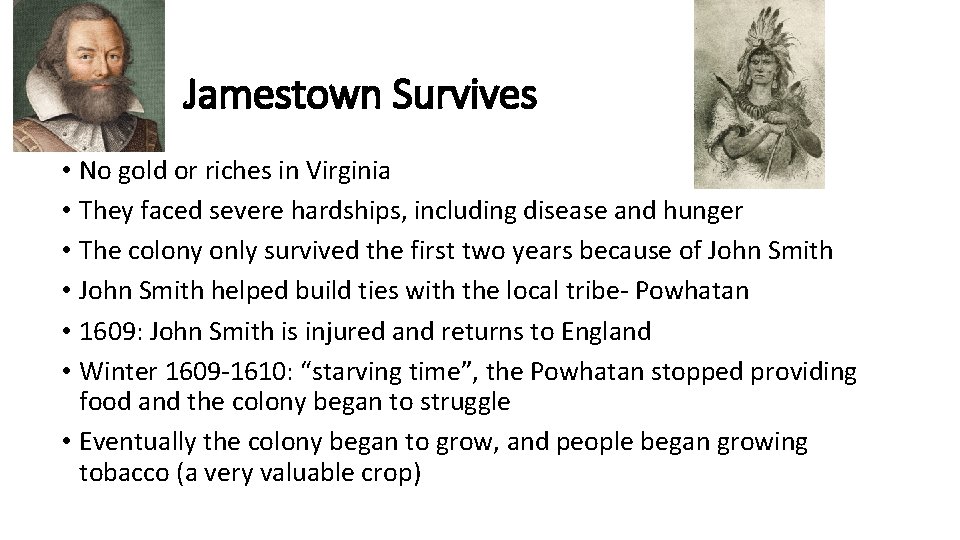
Jamestown Survives • No gold or riches in Virginia • They faced severe hardships, including disease and hunger • The colony only survived the first two years because of John Smith • John Smith helped build ties with the local tribe- Powhatan • 1609: John Smith is injured and returns to England • Winter 1609 -1610: “starving time”, the Powhatan stopped providing food and the colony began to struggle • Eventually the colony began to grow, and people began growing tobacco (a very valuable crop)
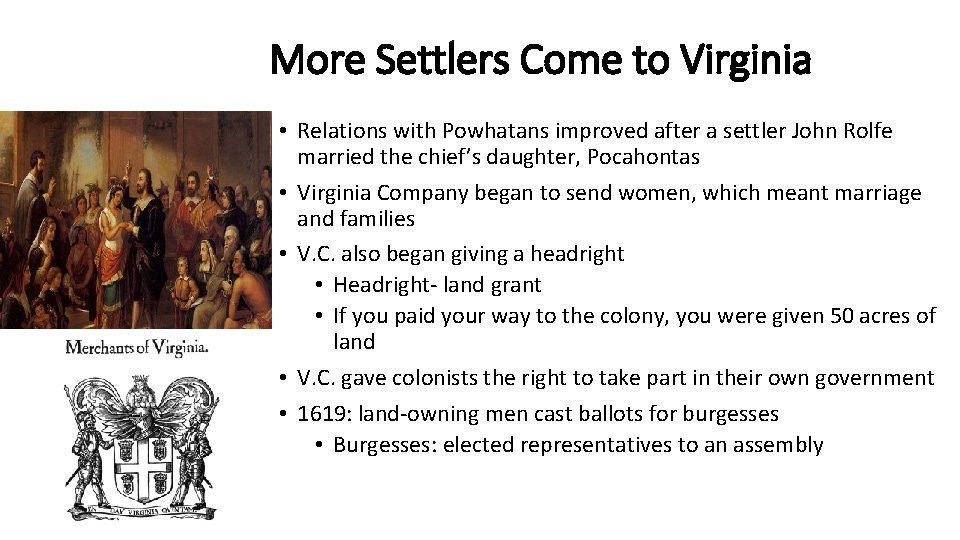
More Settlers Come to Virginia • Relations with Powhatans improved after a settler John Rolfe married the chief’s daughter, Pocahontas • Virginia Company began to send women, which meant marriage and families • V. C. also began giving a headright • Headright- land grant • If you paid your way to the colony, you were given 50 acres of land • V. C. gave colonists the right to take part in their own government • 1619: land-owning men cast ballots for burgesses • Burgesses: elected representatives to an assembly
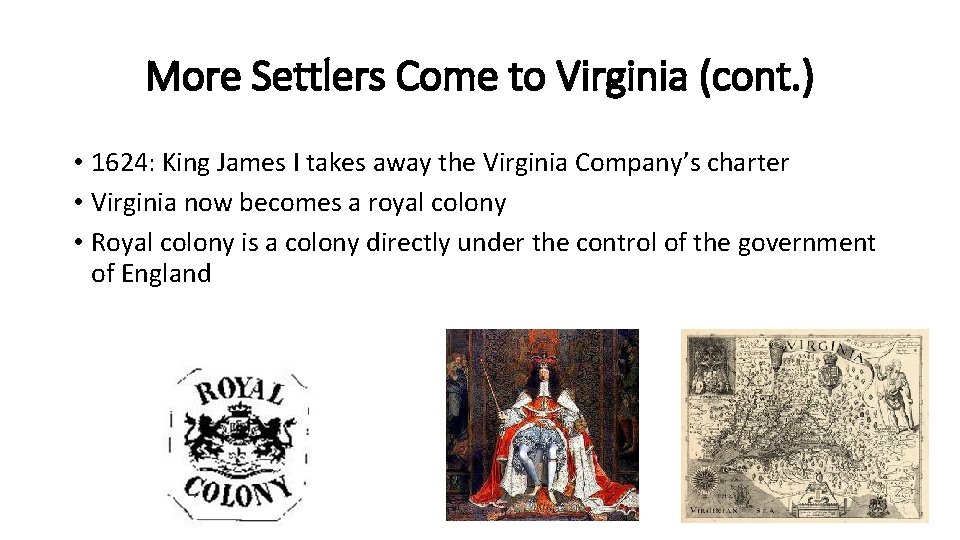
More Settlers Come to Virginia (cont. ) • 1624: King James I takes away the Virginia Company’s charter • Virginia now becomes a royal colony • Royal colony is a colony directly under the control of the government of England