
Chapter 3 Lecture Chapter 1 Lecture HUMAN ANATOMY

- Slides: 47
Chapter 3 Lecture Chapter 1 Lecture HUMAN ANATOMY Chapter 3 The Tissue Level of Organization
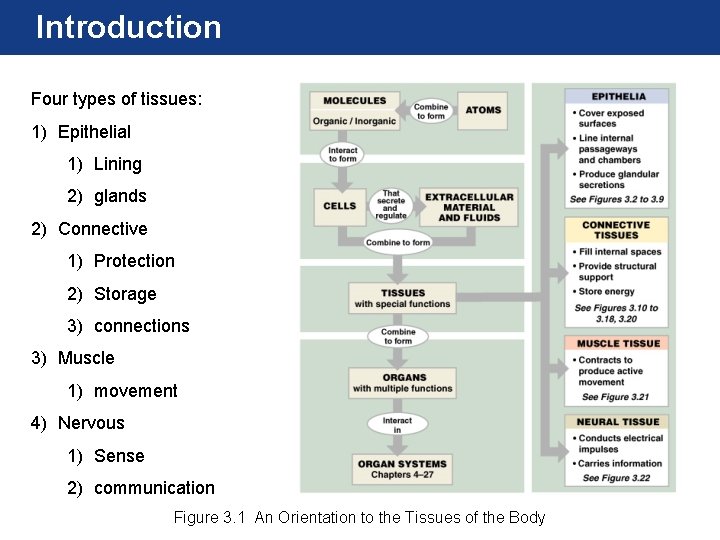
Introduction Four types of tissues: 1) Epithelial 1) Lining 2) glands 2) Connective 1) Protection 2) Storage 3) connections 3) Muscle 1) movement 4) Nervous 1) Sense 2) communication Figure 3. 1 An Orientation to the Tissues of the Body
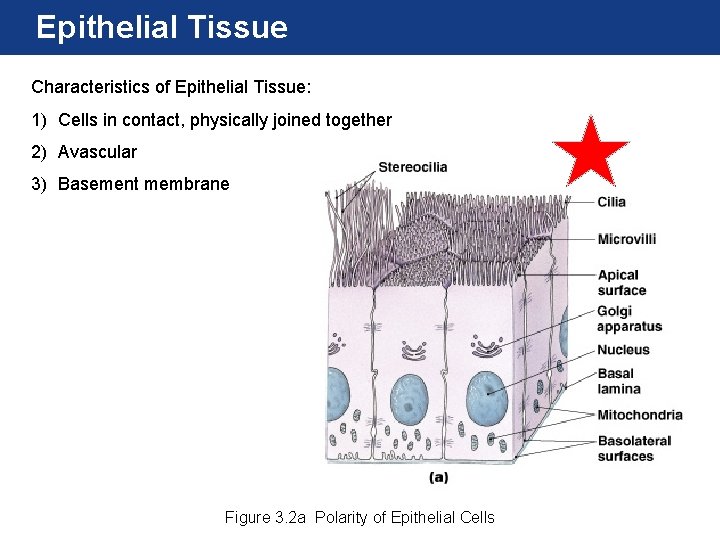
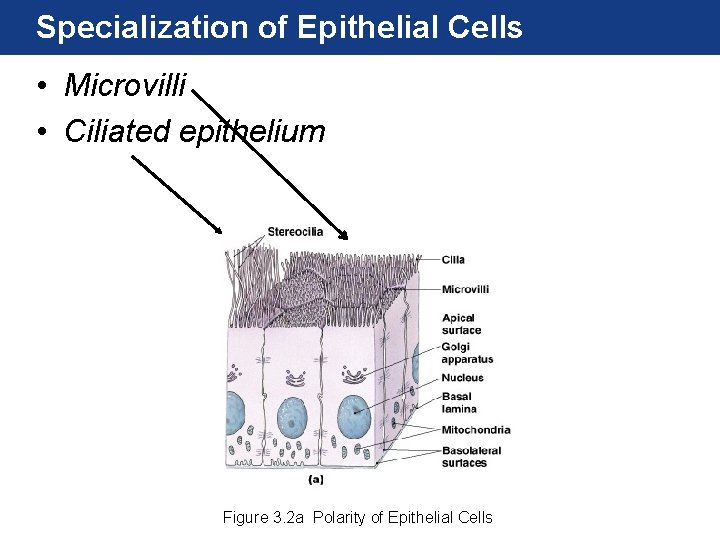
Epithelial Tissue Characteristics of Epithelial Tissue: 1) Cells in contact, physically joined together 2) Avascular 3) Basement membrane Figure 3. 2 a Polarity of Epithelial Cells
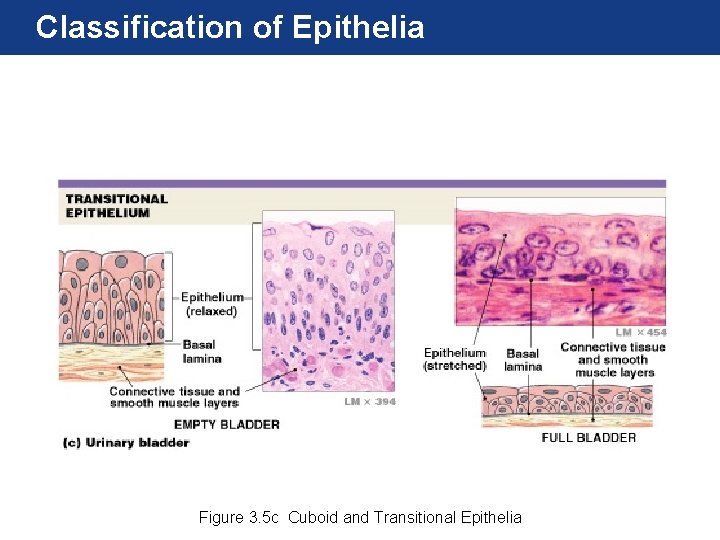
Functions of Epithelial Tissue Based on cell shape and number of layers Simple - one layer Stratified - many layers Pseudostratified - appears to be many layers Transitional
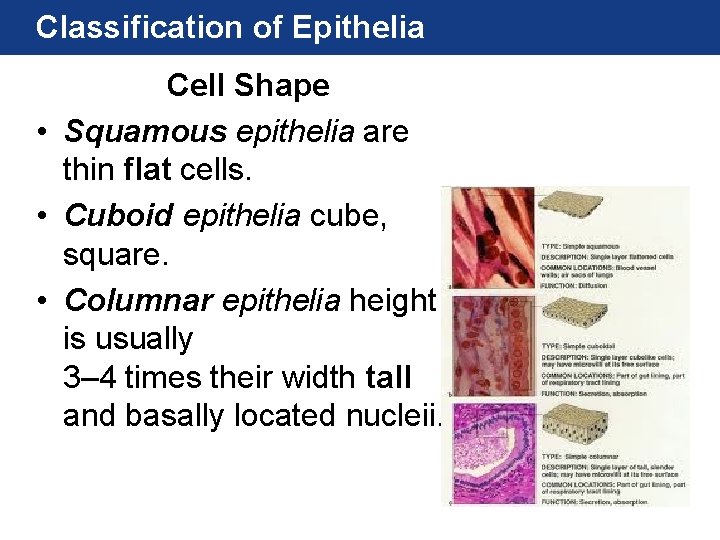
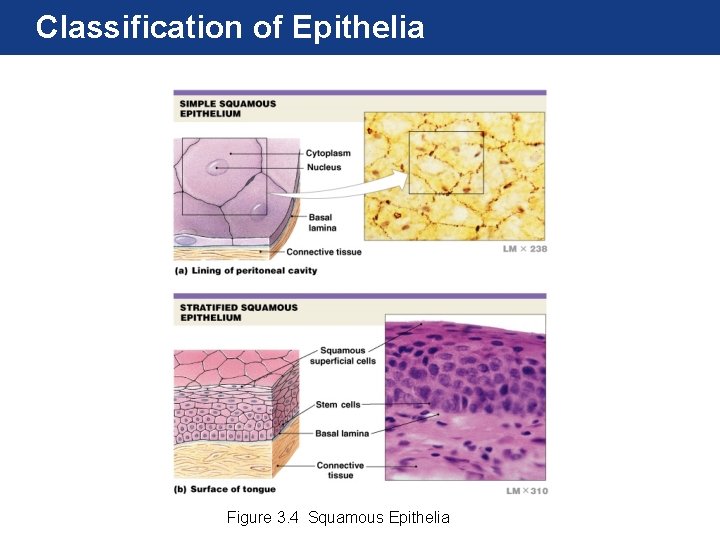
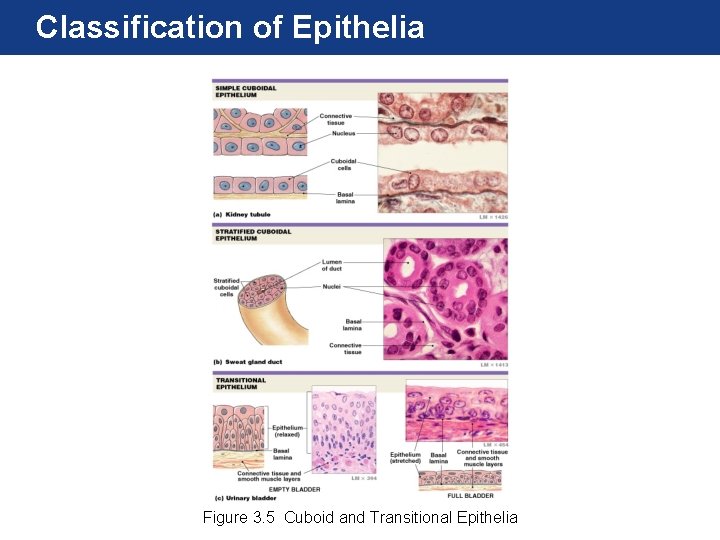
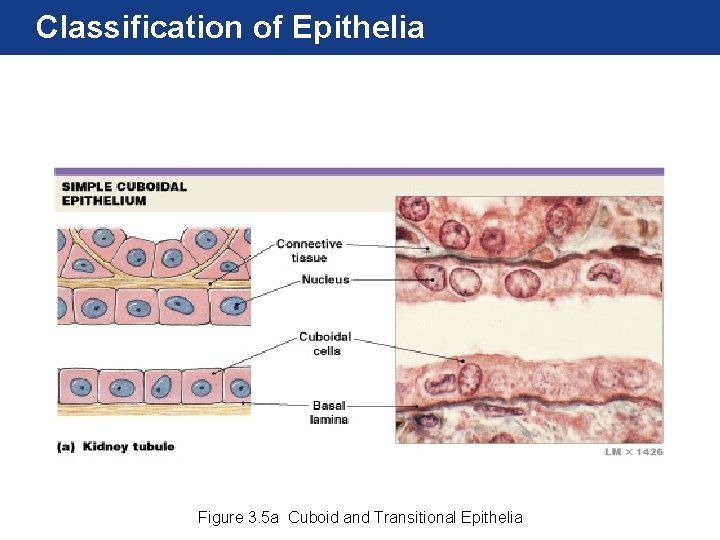
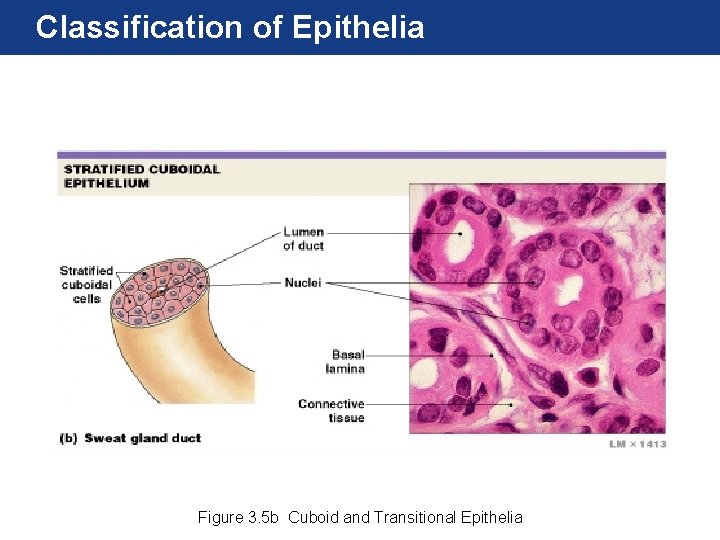
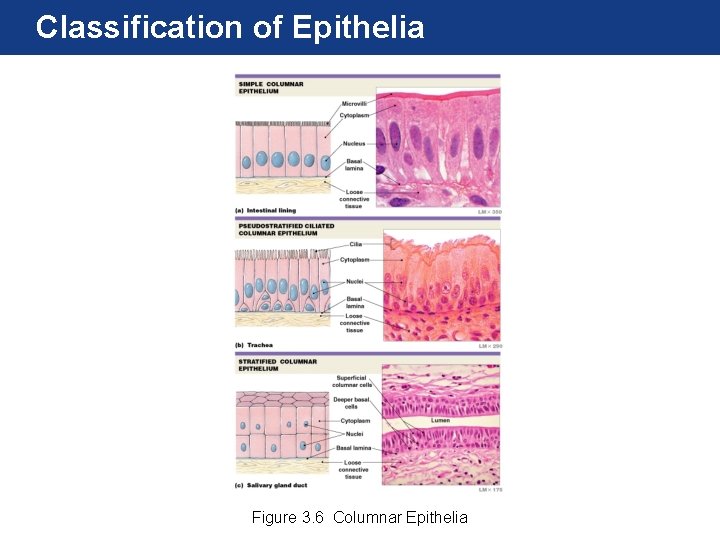
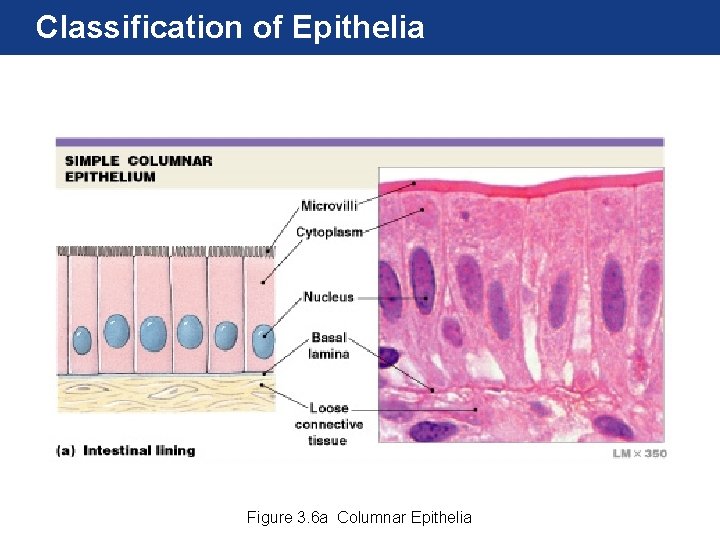
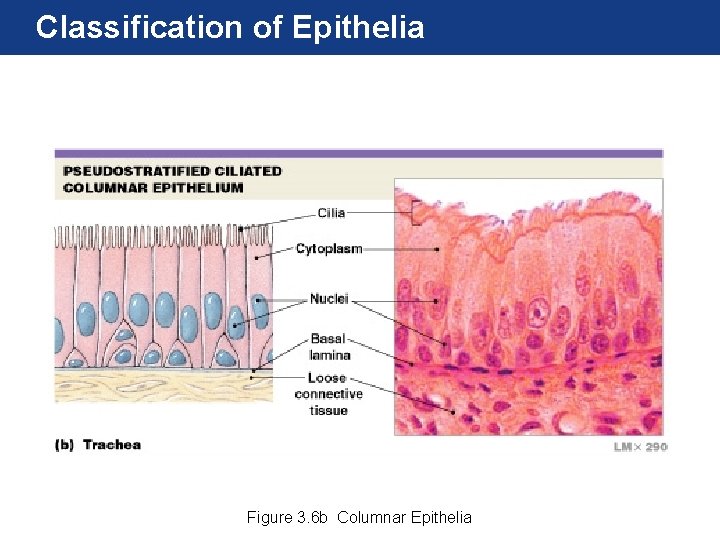
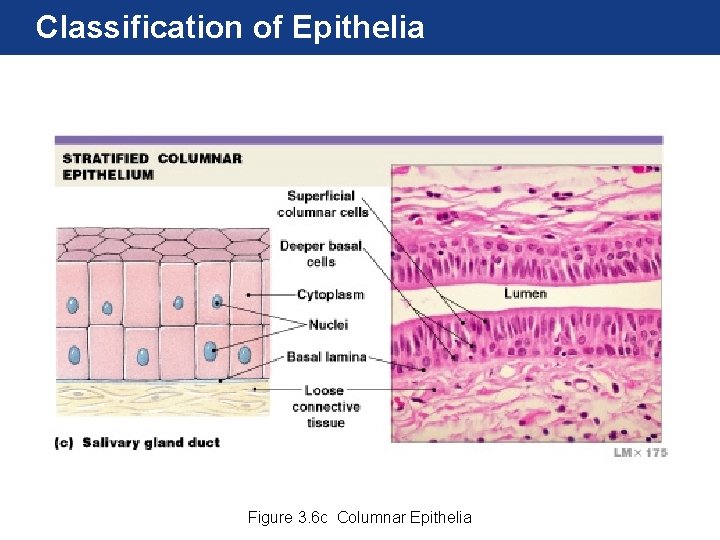
Classification of Epithelia Cell Shape • Squamous epithelia are thin flat cells. • Cuboid epithelia cube, square. • Columnar epithelia height is usually 3– 4 times their width tall and basally located nucleii.
Specialization of Epithelial Cells • Microvilli • Ciliated epithelium Figure 3. 2 a Polarity of Epithelial Cells
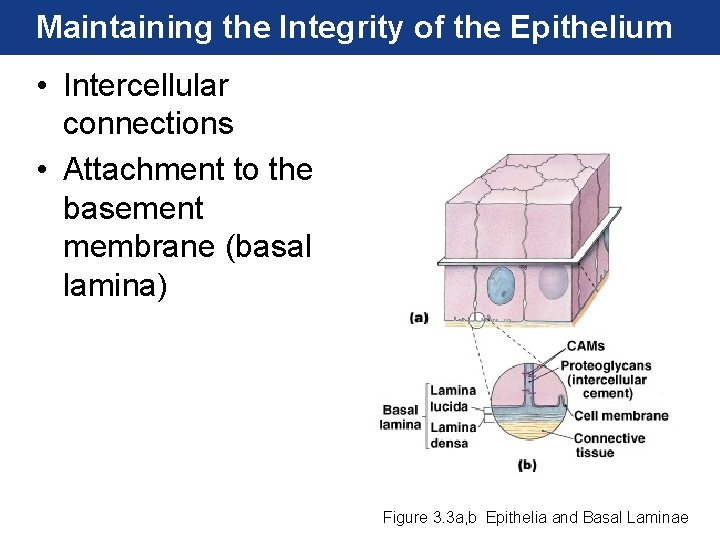
Maintaining the Integrity of the Epithelium • Intercellular connections • Attachment to the basement membrane (basal lamina) Figure 3. 3 a, b Epithelia and Basal Laminae
Classification of Epithelia Figure 3. 4 Squamous Epithelia
Classification of Epithelia Figure 3. 5 Cuboid and Transitional Epithelia
Classification of Epithelia Figure 3. 5 a Cuboid and Transitional Epithelia
Classification of Epithelia Figure 3. 5 b Cuboid and Transitional Epithelia
Classification of Epithelia Figure 3. 5 c Cuboid and Transitional Epithelia
Classification of Epithelia Figure 3. 6 Columnar Epithelia
Classification of Epithelia Figure 3. 6 a Columnar Epithelia
Classification of Epithelia Figure 3. 6 b Columnar Epithelia
Classification of Epithelia Figure 3. 6 c Columnar Epithelia
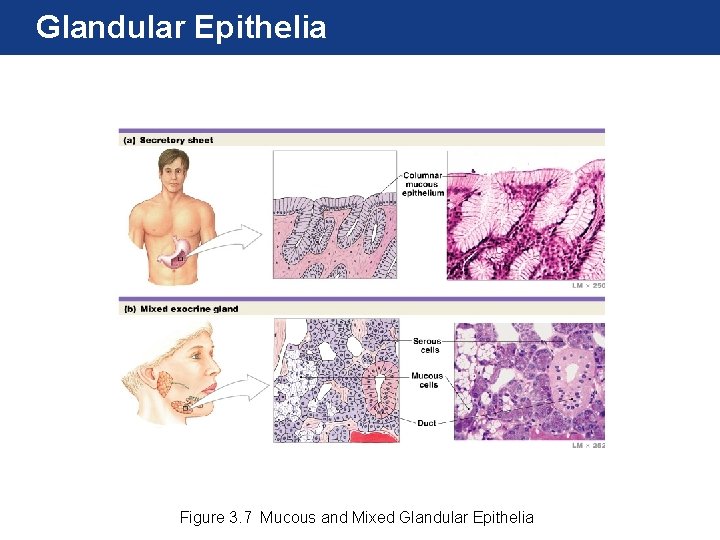
Glandular Epithelia • Serous glands secrete enzymes. • Mucous glands secrete mucins that absorb water to form mucus. • Mixed exocrine glands are capable of both serous and mucous secretions.
Glandular Epithelia Figure 3. 7 Mucous and Mixed Glandular Epithelia
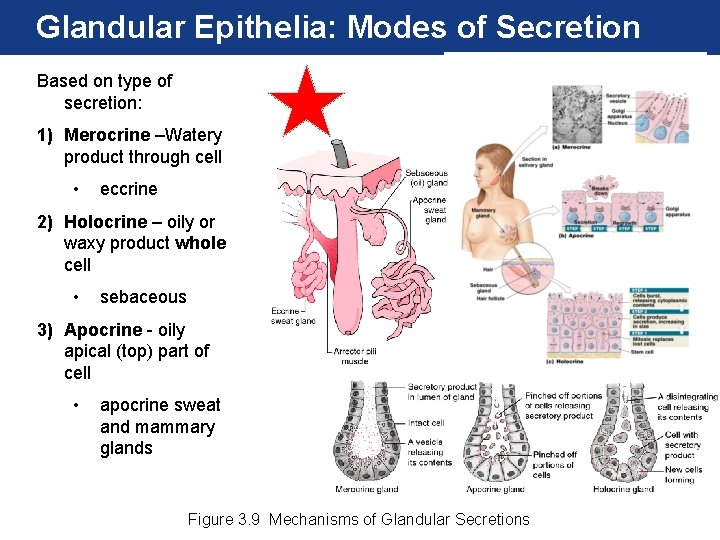
Glandular Epithelia: Modes of Secretion Based on type of secretion: 1) Merocrine –Watery product through cell • eccrine 2) Holocrine – oily or waxy product whole cell • sebaceous 3) Apocrine - oily apical (top) part of cell • apocrine sweat and mammary glands Figure 3. 9 Mechanisms of Glandular Secretions
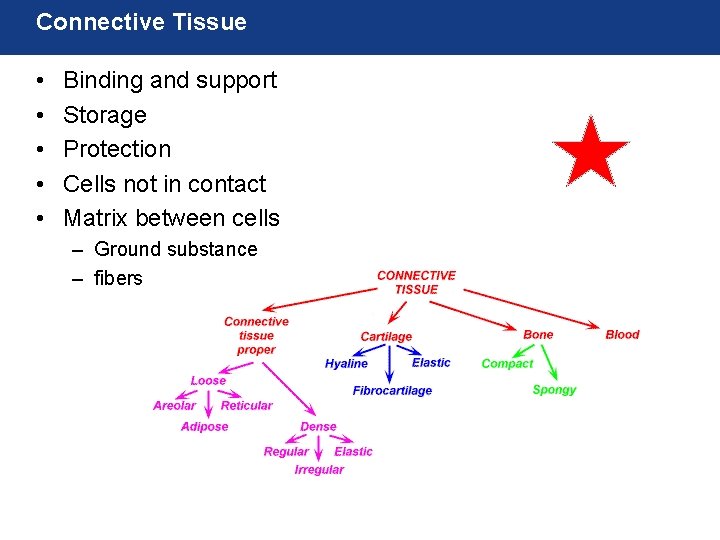
Connective Tissue • • • Binding and support Storage Protection Cells not in contact Matrix between cells – Ground substance – fibers
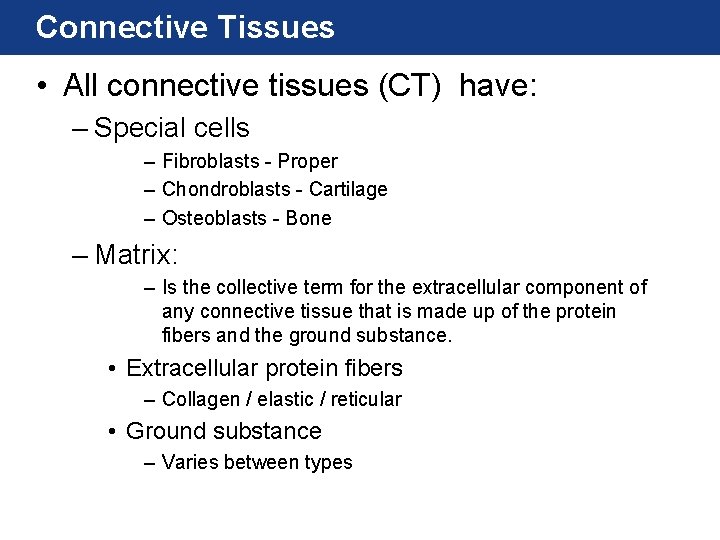
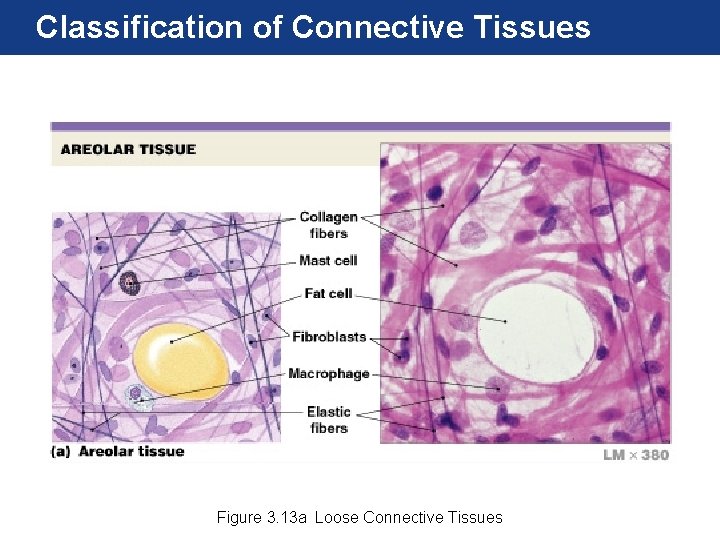
Connective Tissues • All connective tissues (CT) have: – Special cells – Fibroblasts - Proper – Chondroblasts - Cartilage – Osteoblasts - Bone – Matrix: – Is the collective term for the extracellular component of any connective tissue that is made up of the protein fibers and the ground substance. • Extracellular protein fibers – Collagen / elastic / reticular • Ground substance – Varies between types
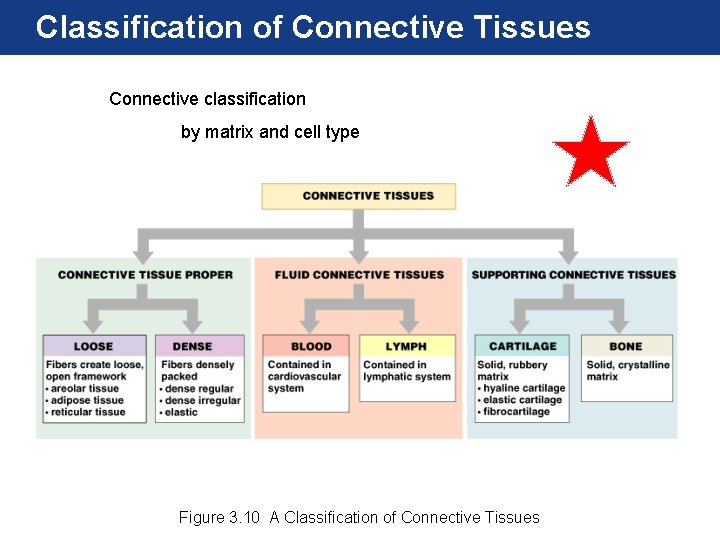
Classification of Connective Tissues Connective classification by matrix and cell type Figure 3. 10 A Classification of Connective Tissues
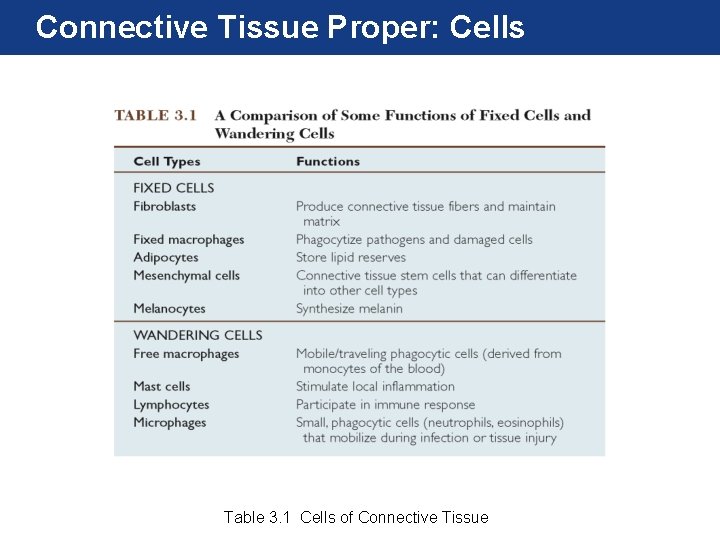
Connective Tissue Proper: Cells Table 3. 1 Cells of Connective Tissue
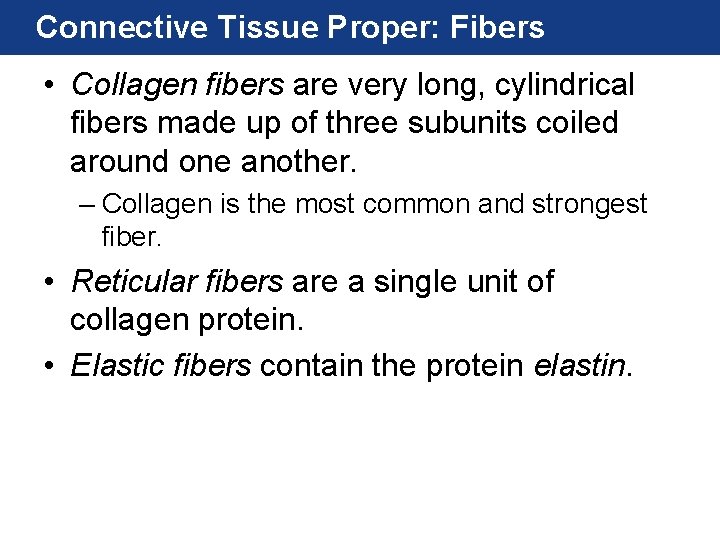
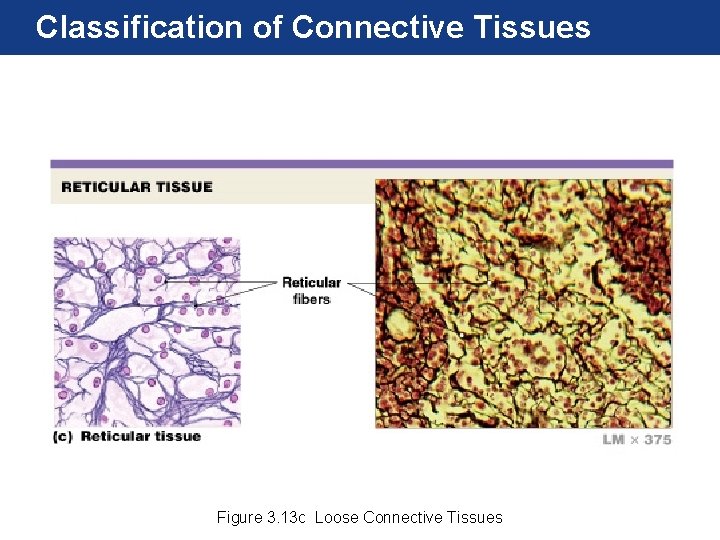
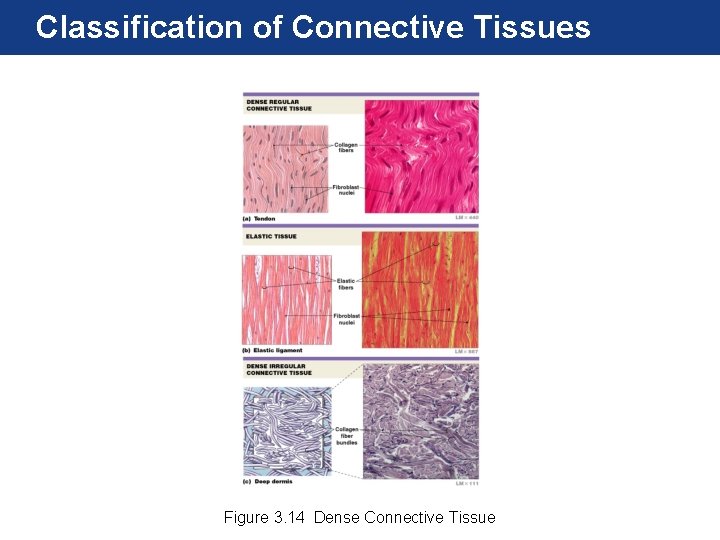
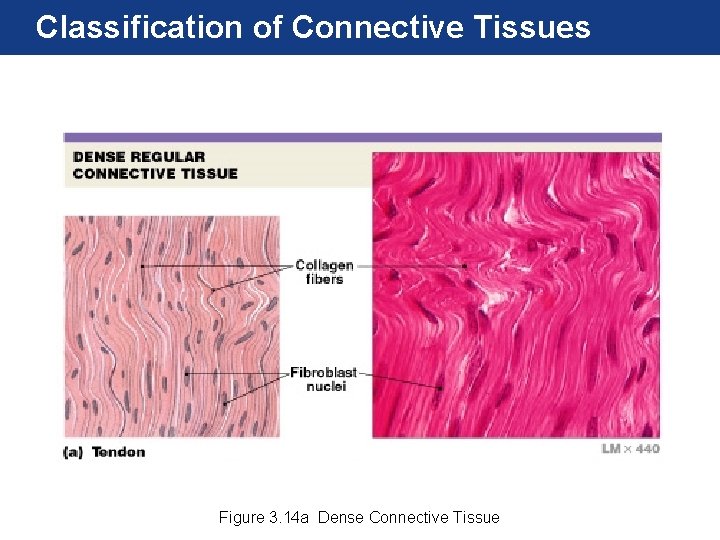
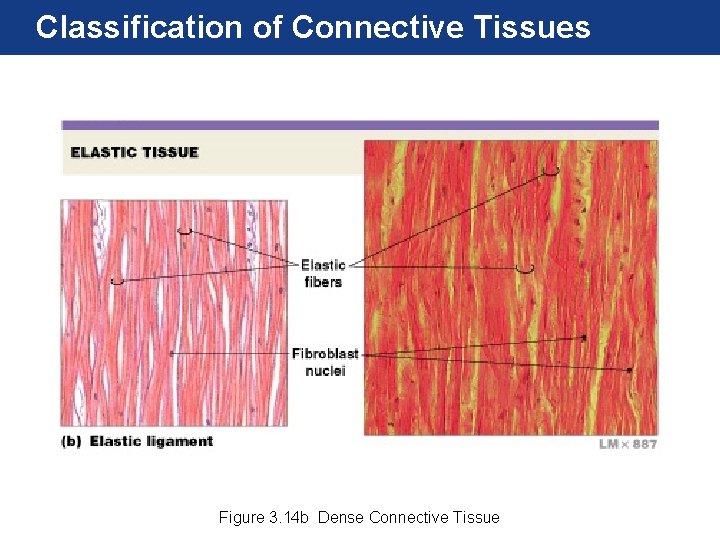
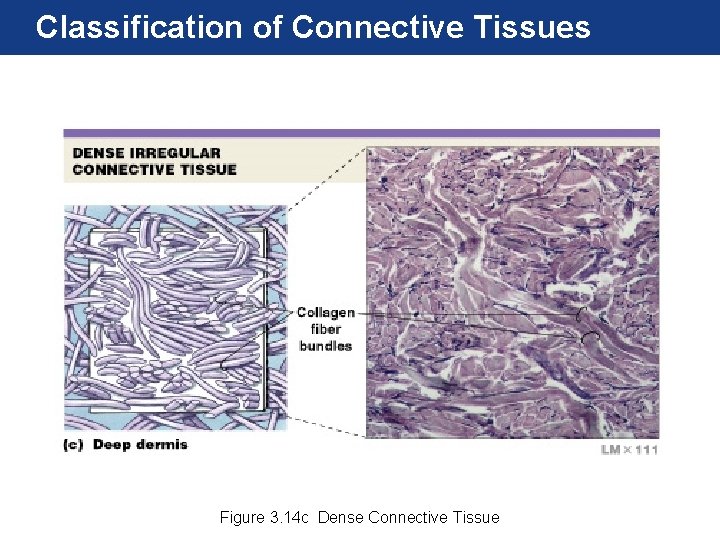
Connective Tissue Proper: Fibers • Collagen fibers are very long, cylindrical fibers made up of three subunits coiled around one another. – Collagen is the most common and strongest fiber. • Reticular fibers are a single unit of collagen protein. • Elastic fibers contain the protein elastin.
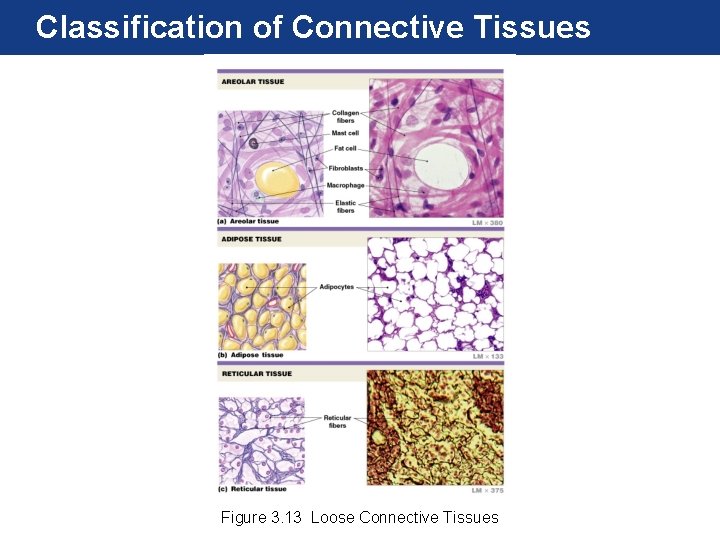
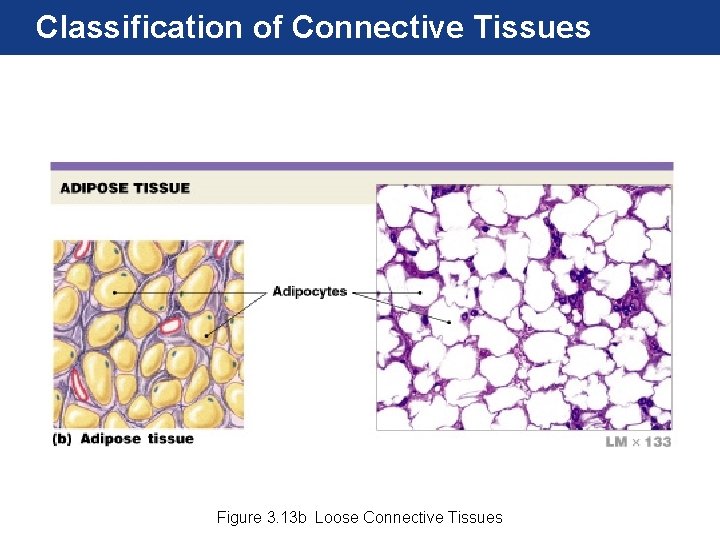
Classification of Connective Tissues Figure 3. 13 Loose Connective Tissues
Classification of Connective Tissues Figure 3. 13 a Loose Connective Tissues
Classification of Connective Tissues Figure 3. 13 b Loose Connective Tissues
Classification of Connective Tissues Figure 3. 13 c Loose Connective Tissues
Classification of Connective Tissues Figure 3. 14 Dense Connective Tissue
Classification of Connective Tissues Figure 3. 14 a Dense Connective Tissue
Classification of Connective Tissues Figure 3. 14 b Dense Connective Tissue
Classification of Connective Tissues Figure 3. 14 c Dense Connective Tissue
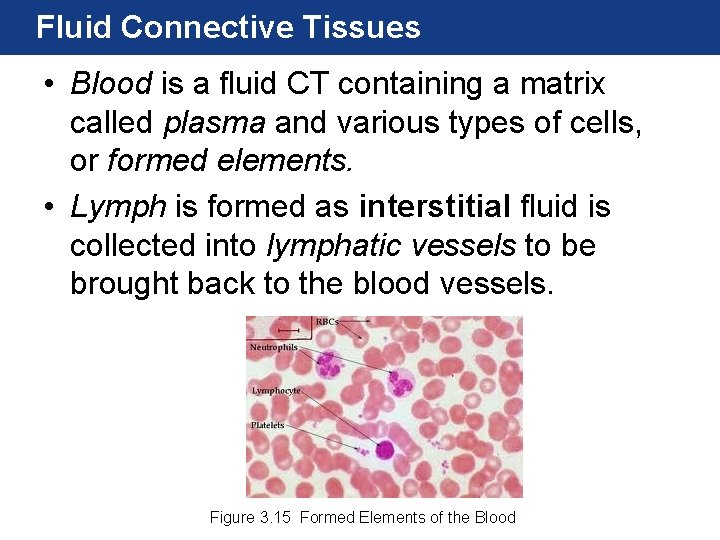
Fluid Connective Tissues • Blood is a fluid CT containing a matrix called plasma and various types of cells, or formed elements. • Lymph is formed as interstitial fluid is collected into lymphatic vessels to be brought back to the blood vessels. Figure 3. 15 Formed Elements of the Blood
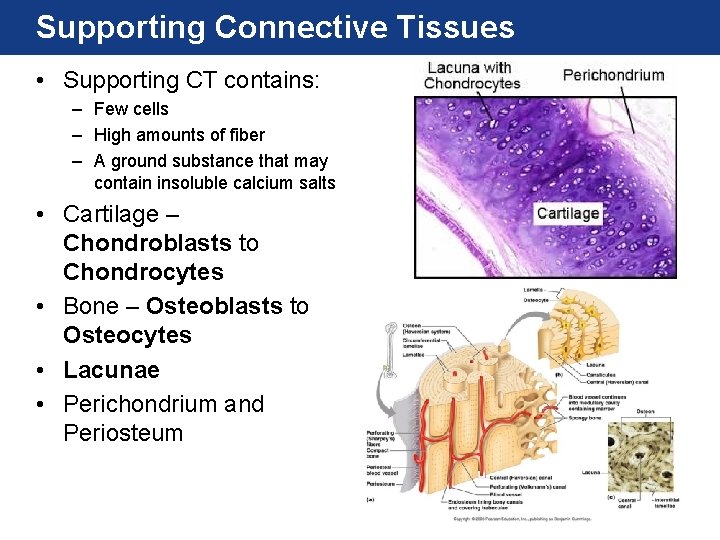
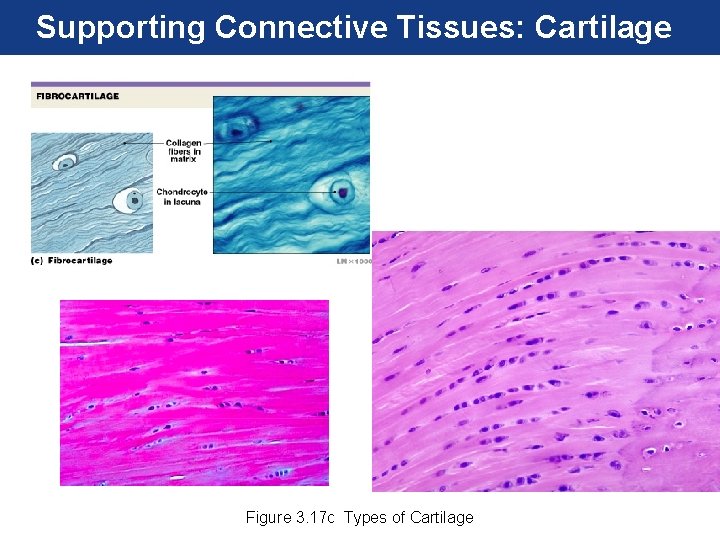
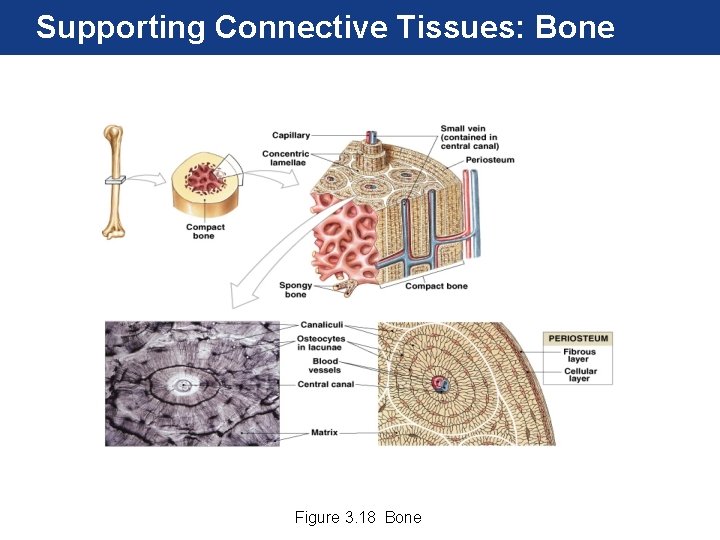
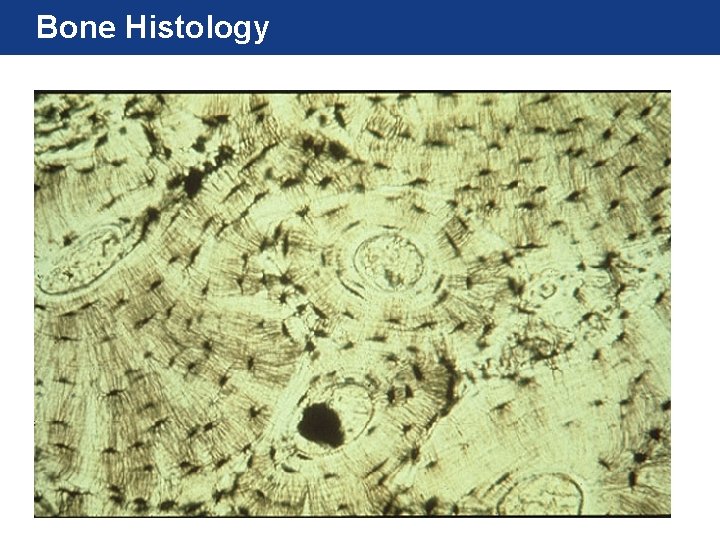
Supporting Connective Tissues • Supporting CT contains: – Few cells – High amounts of fiber – A ground substance that may contain insoluble calcium salts • Cartilage – Chondroblasts to Chondrocytes • Bone – Osteoblasts to Osteocytes • Lacunae • Perichondrium and Periosteum
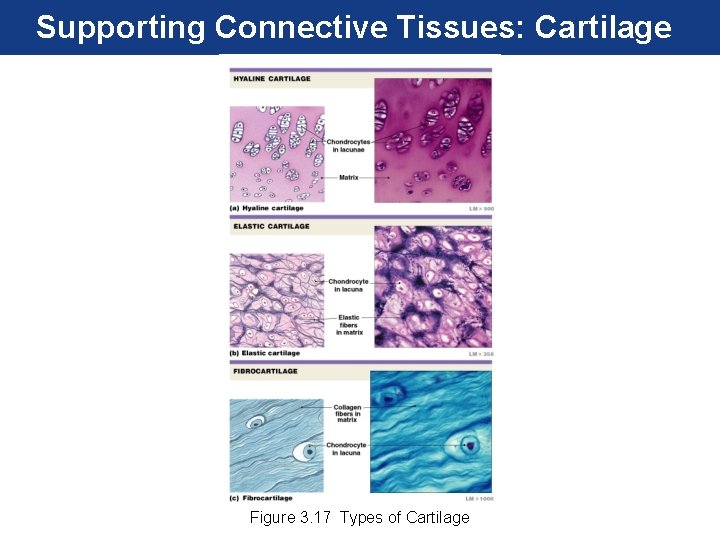
Supporting Connective Tissues: Cartilage Figure 3. 17 Types of Cartilage
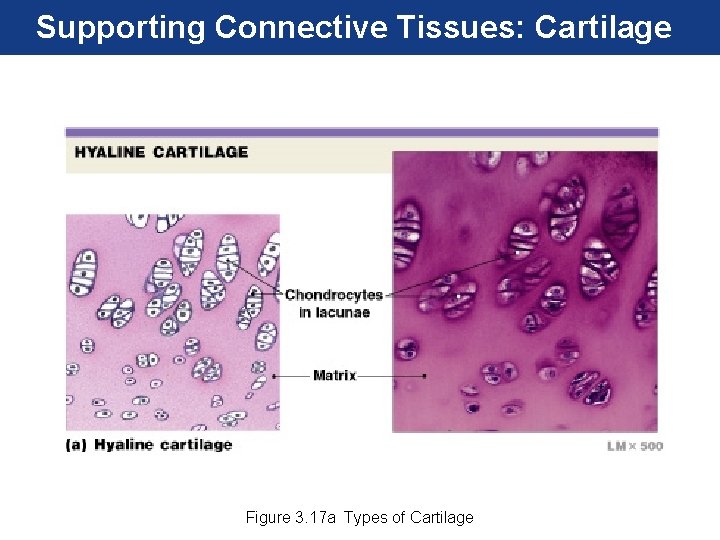
Supporting Connective Tissues: Cartilage Figure 3. 17 a Types of Cartilage
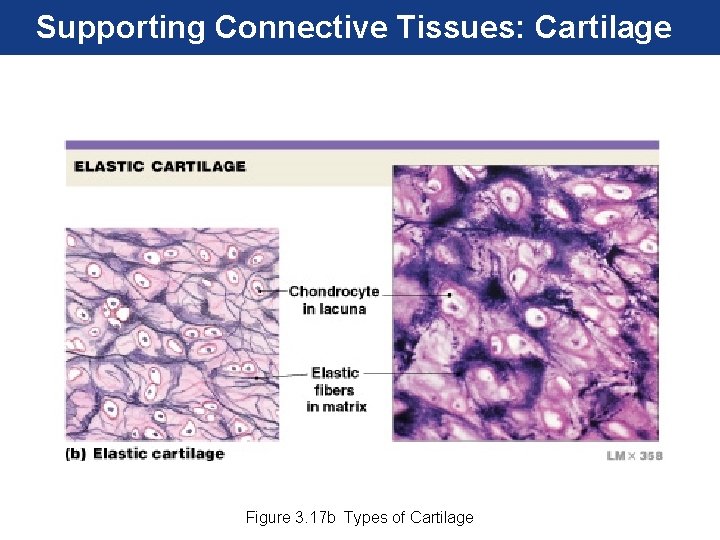
Supporting Connective Tissues: Cartilage Figure 3. 17 b Types of Cartilage
Supporting Connective Tissues: Cartilage Figure 3. 17 c Types of Cartilage
Supporting Connective Tissues: Bone Figure 3. 18 Bone
Bone Histology
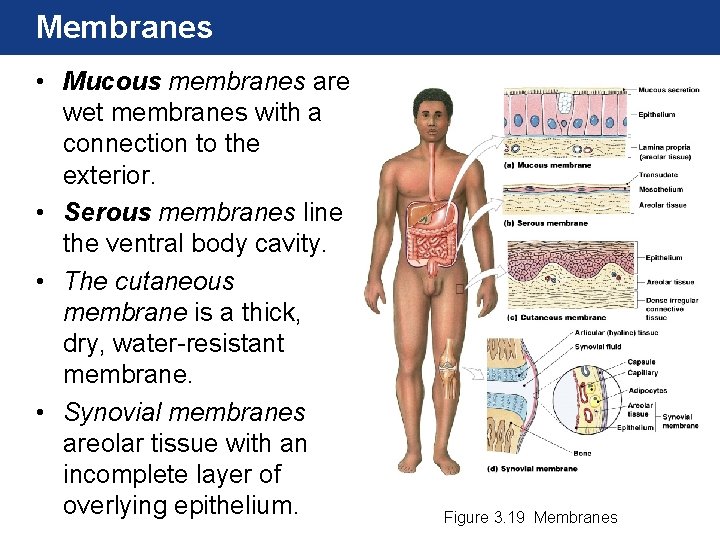
Membranes • Mucous membranes are wet membranes with a connection to the exterior. • Serous membranes line the ventral body cavity. • The cutaneous membrane is a thick, dry, water-resistant membrane. • Synovial membranes areolar tissue with an incomplete layer of overlying epithelium. Figure 3. 19 Membranes
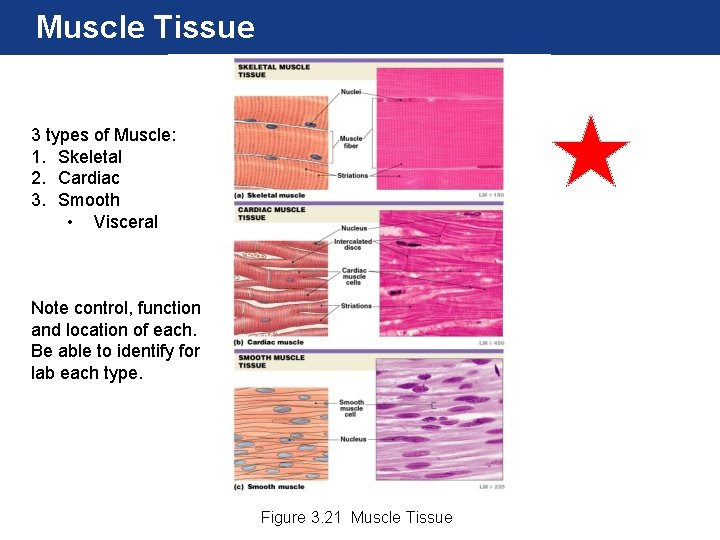
Muscle Tissue 3 types of Muscle: 1. Skeletal 2. Cardiac 3. Smooth • Visceral Note control, function and location of each. Be able to identify for lab each type. Figure 3. 21 Muscle Tissue
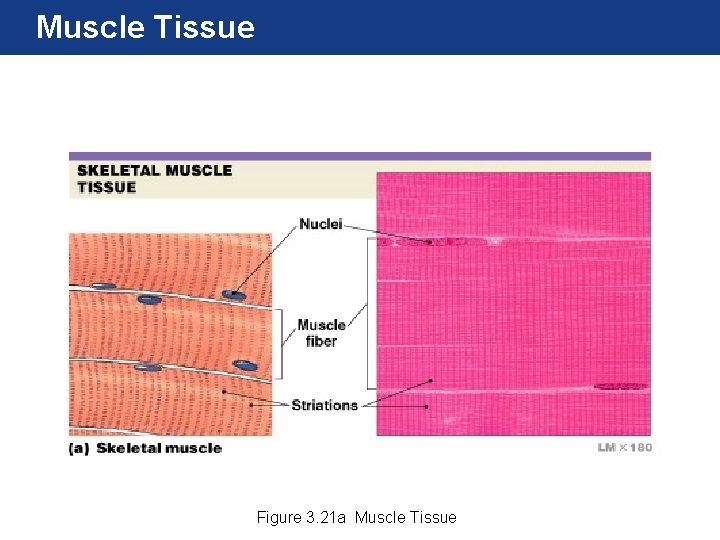
Muscle Tissue Figure 3. 21 a Muscle Tissue
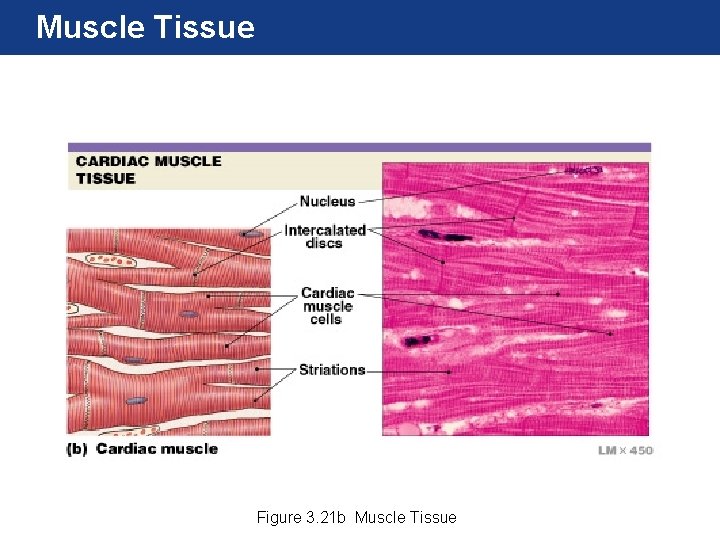
Muscle Tissue Figure 3. 21 b Muscle Tissue
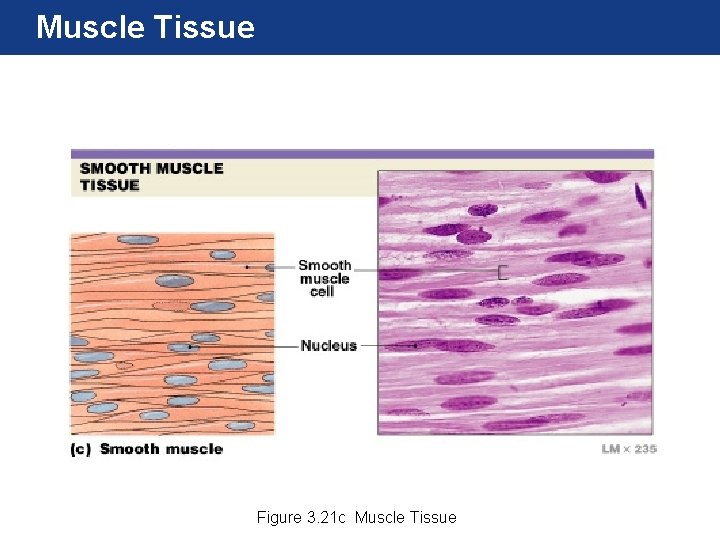
Muscle Tissue Figure 3. 21 c Muscle Tissue
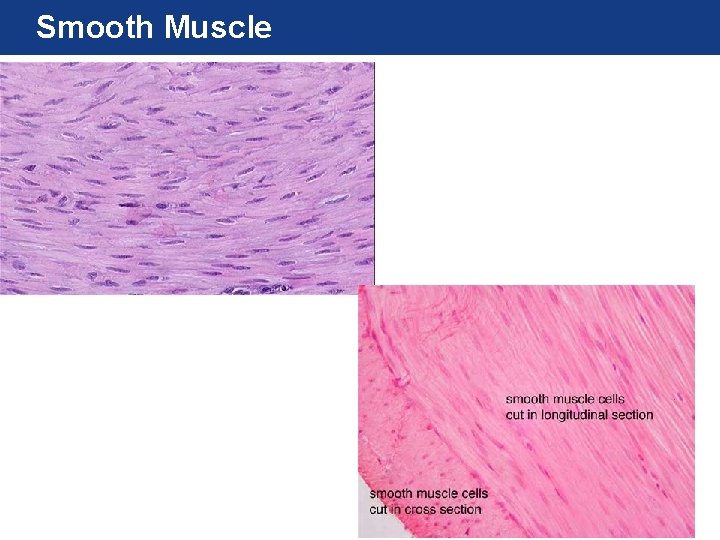
Smooth Muscle
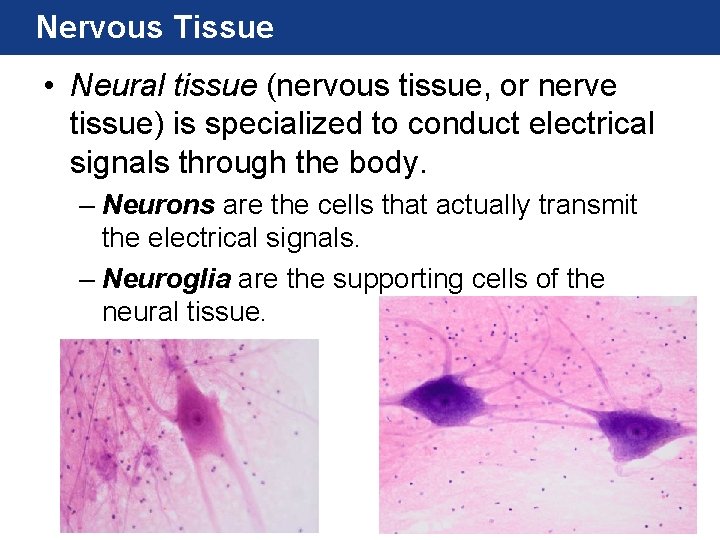
Nervous Tissue • Neural tissue (nervous tissue, or nerve tissue) is specialized to conduct electrical signals through the body. – Neurons are the cells that actually transmit the electrical signals. – Neuroglia are the supporting cells of the neural tissue. Figure 3. 22 Neural Tissue