
Chapter 3 Kinematics in Two Dimensions Position The


- Slides: 17
Chapter 3 Kinematics in Two Dimensions
Position The position of an object is described by its position vector,
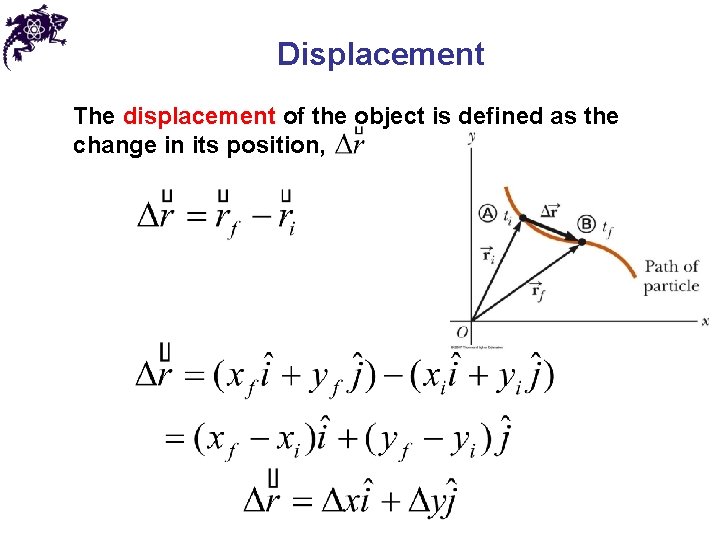
Displacement The displacement of the object is defined as the change in its position,
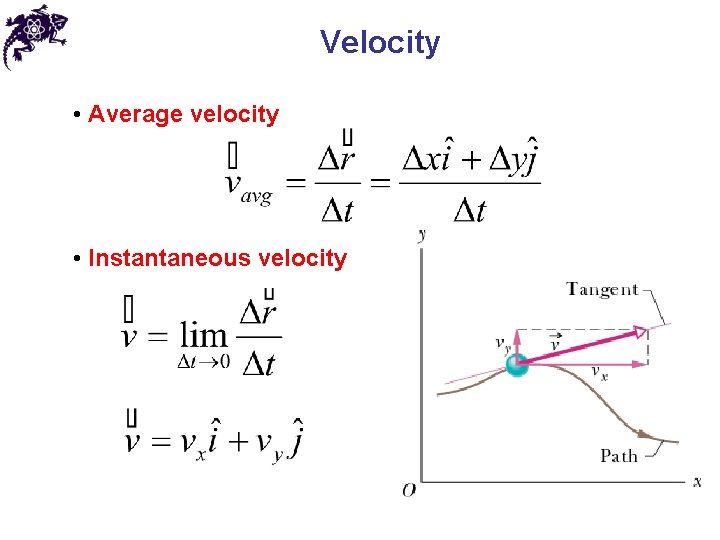
Velocity • Average velocity • Instantaneous velocity
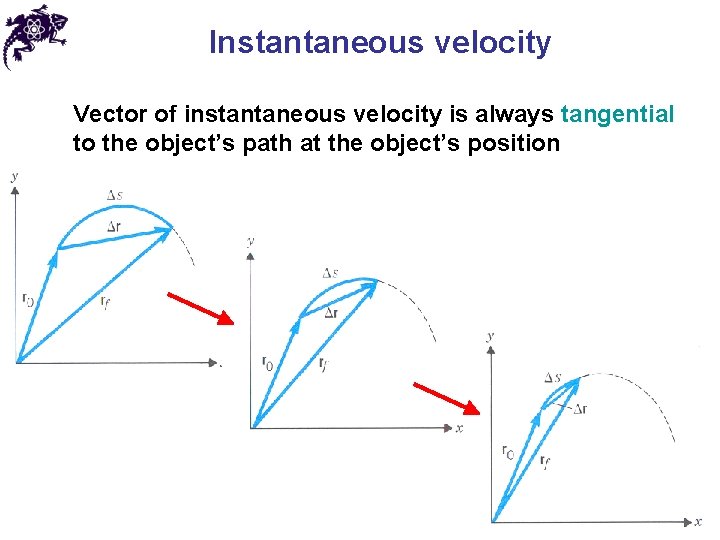
Instantaneous velocity Vector of instantaneous velocity is always tangential to the object’s path at the object’s position
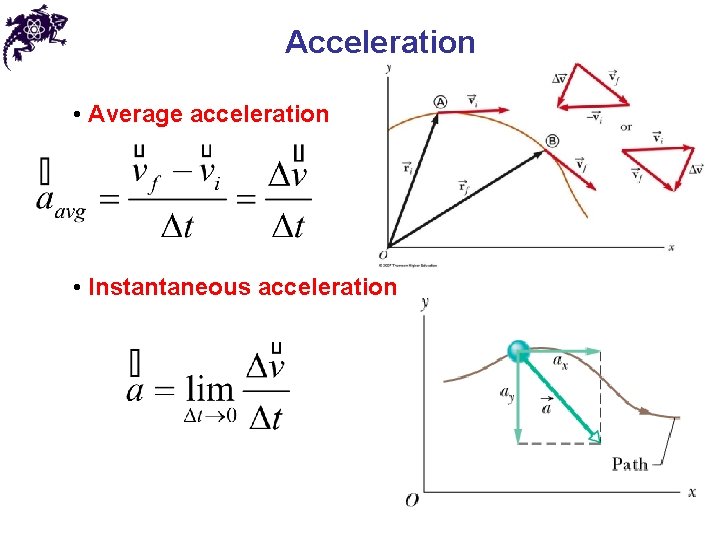
Acceleration • Average acceleration • Instantaneous acceleration
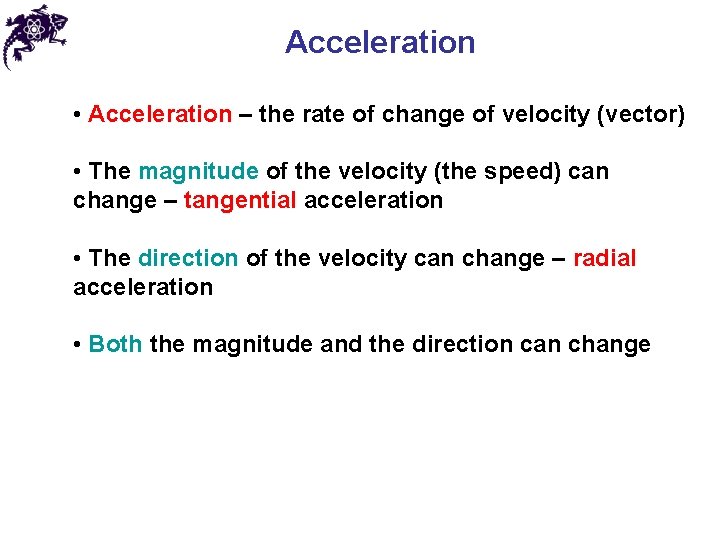
Acceleration • Acceleration – the rate of change of velocity (vector) • The magnitude of the velocity (the speed) can change – tangential acceleration • The direction of the velocity can change – radial acceleration • Both the magnitude and the direction can change
Projectile motion • A special case of 2 D motion • An object moves in the presence of Earth’s gravity • We neglect the air friction and the rotation of the Earth • As a result, the object moves in a vertical plane and follows a parabolic path • The x and y directions of motion are treated independently
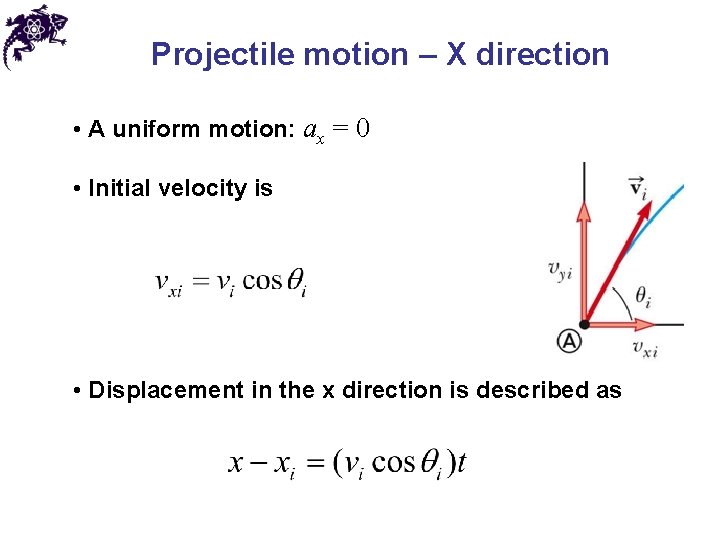
Projectile motion – X direction • A uniform motion: ax = 0 • Initial velocity is • Displacement in the x direction is described as
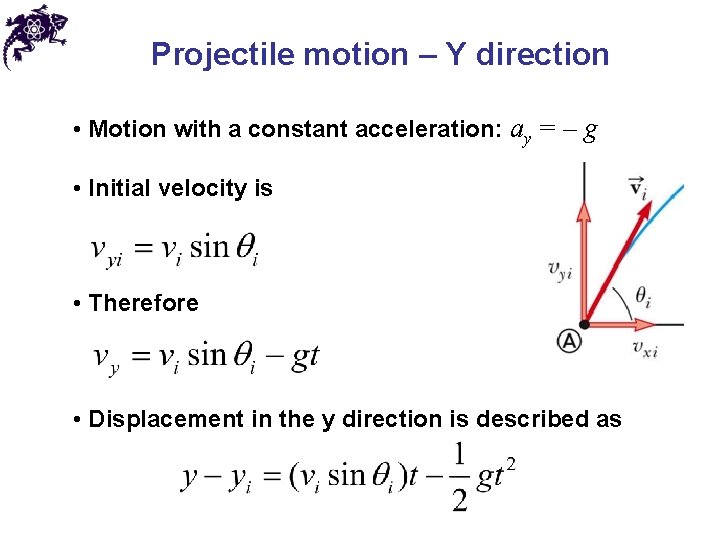
Projectile motion – Y direction • Motion with a constant acceleration: ay = – g • Initial velocity is • Therefore • Displacement in the y direction is described as
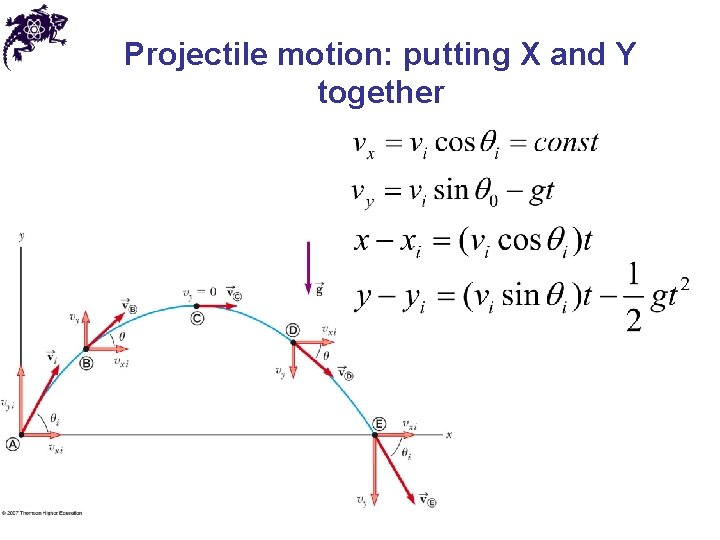
Projectile motion: putting X and Y together
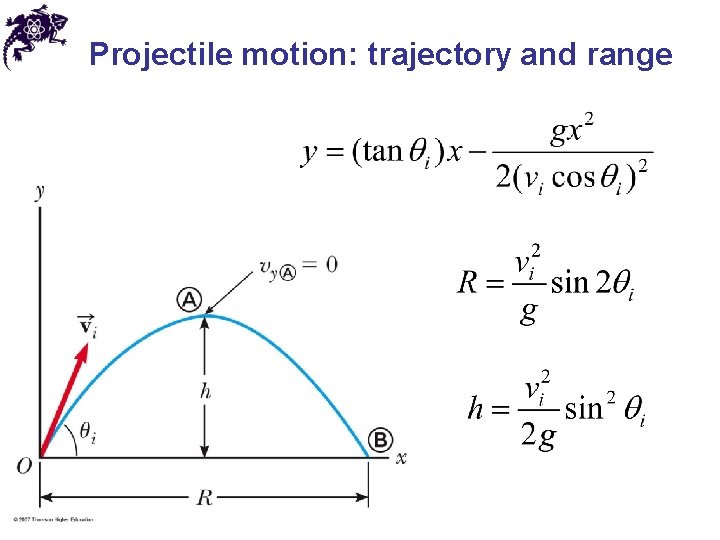
Projectile motion: trajectory and range
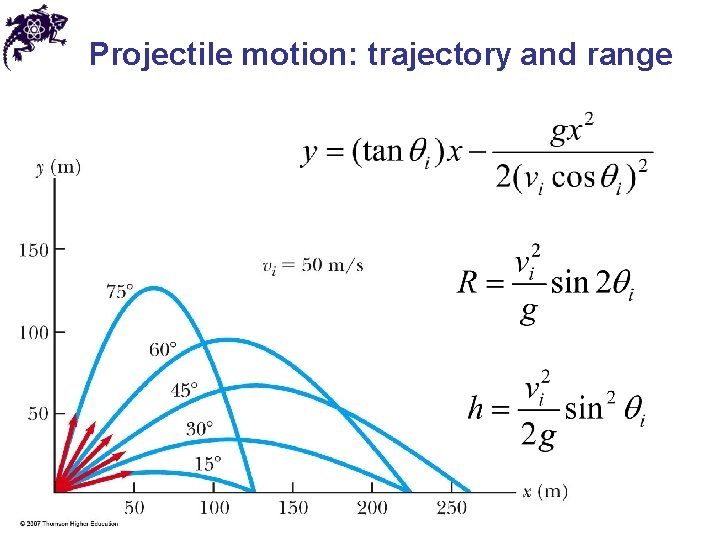
Projectile motion: trajectory and range
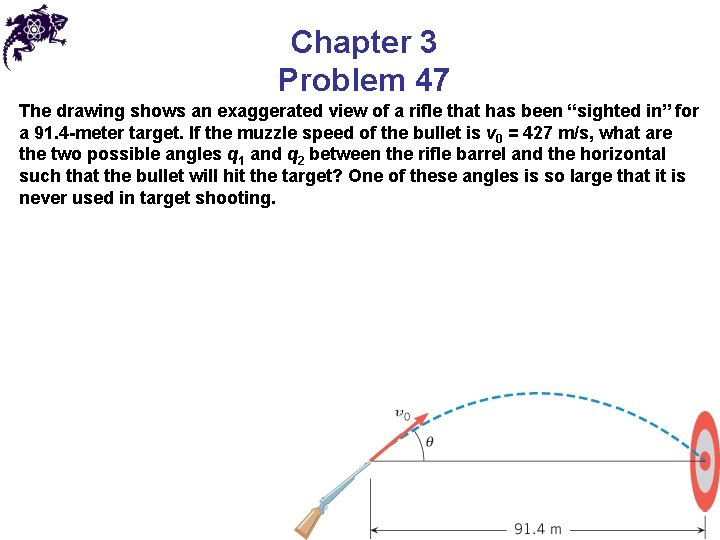
Chapter 3 Problem 47 The drawing shows an exaggerated view of a rifle that has been “sighted in” for a 91. 4 -meter target. If the muzzle speed of the bullet is v 0 = 427 m/s, what are the two possible angles q 1 and q 2 between the rifle barrel and the horizontal such that the bullet will hit the target? One of these angles is so large that it is never used in target shooting.
Relative motion • Reference frame: physical object and a coordinate system attached to it • Reference frames can move relative to each other • We can measure displacements, velocities, accelerations, etc. separately in different reference frames
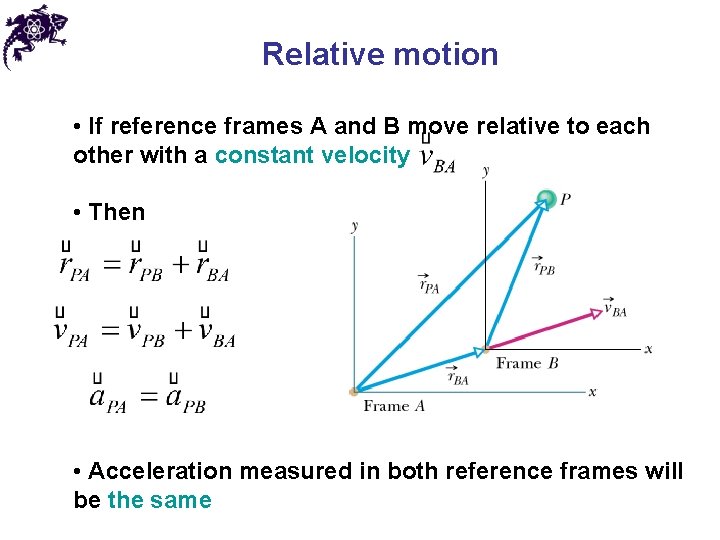
Relative motion • If reference frames A and B move relative to each other with a constant velocity • Then • Acceleration measured in both reference frames will be the same
Questions?