
Chapter 3 Kinematics in Two Dimensions Ch 2
- Slides: 32
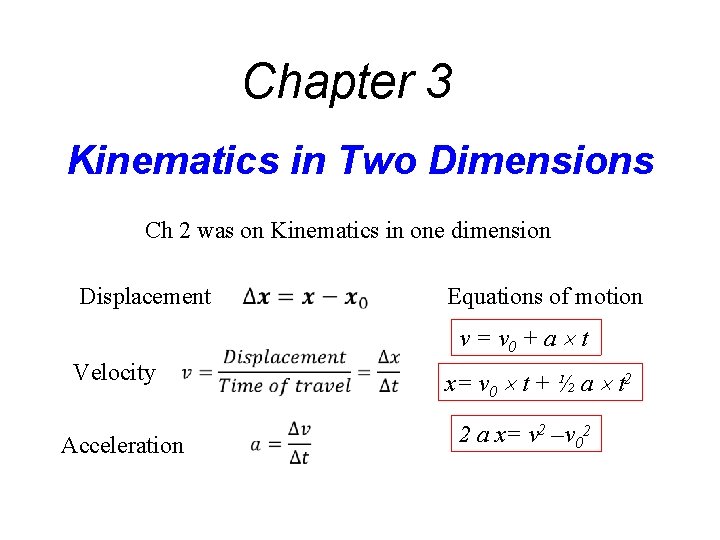
Chapter 3 Kinematics in Two Dimensions Ch 2 was on Kinematics in one dimension Displacement Equations of motion v = v 0 + a t Velocity Acceleration x= v 0 t + ½ a t 2 2 a x= v 2 –v 02
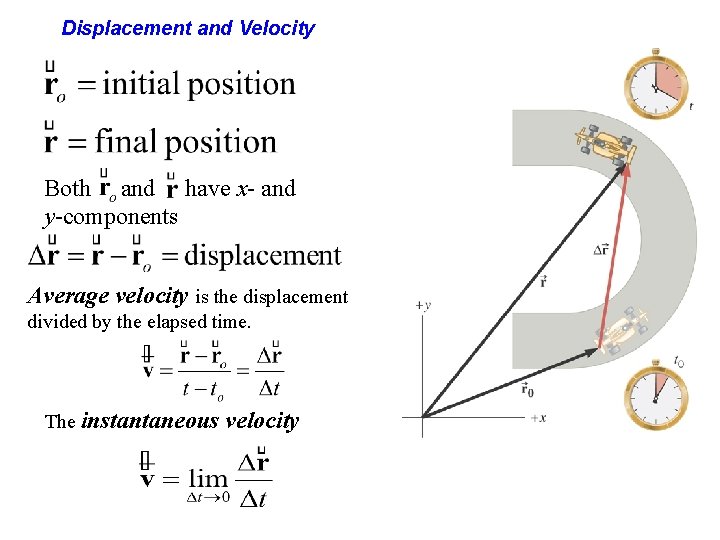
Displacement and Velocity Both and have x- and y-components Average velocity is the displacement divided by the elapsed time. The instantaneous velocity
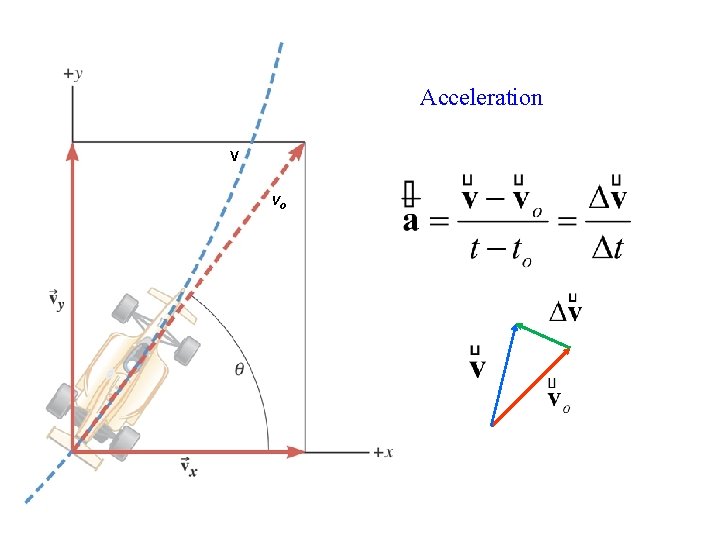
Acceleration V vo
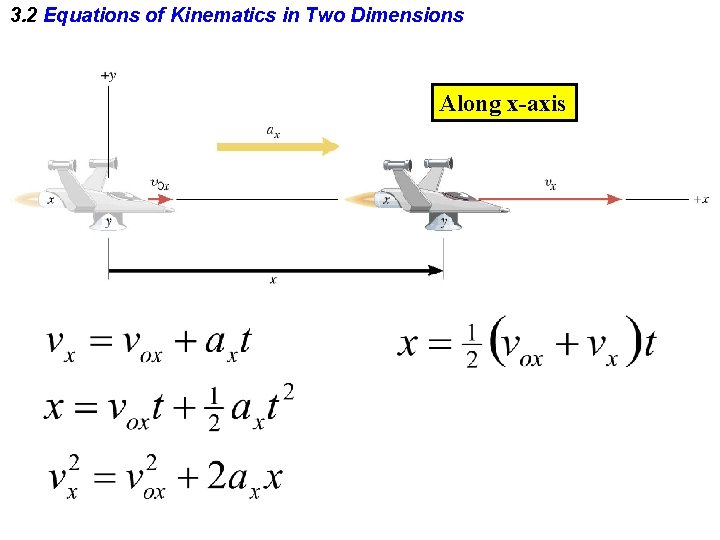
3. 2 Equations of Kinematics in Two Dimensions Along x-axis
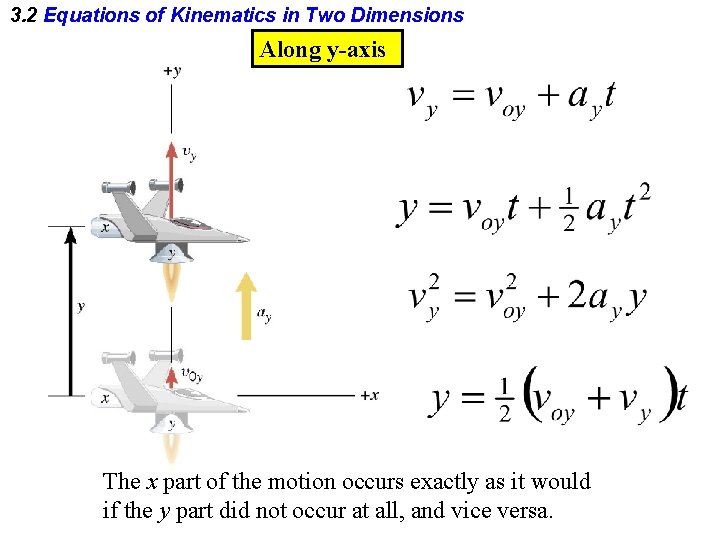
3. 2 Equations of Kinematics in Two Dimensions Along y-axis The x part of the motion occurs exactly as it would if the y part did not occur at all, and vice versa.
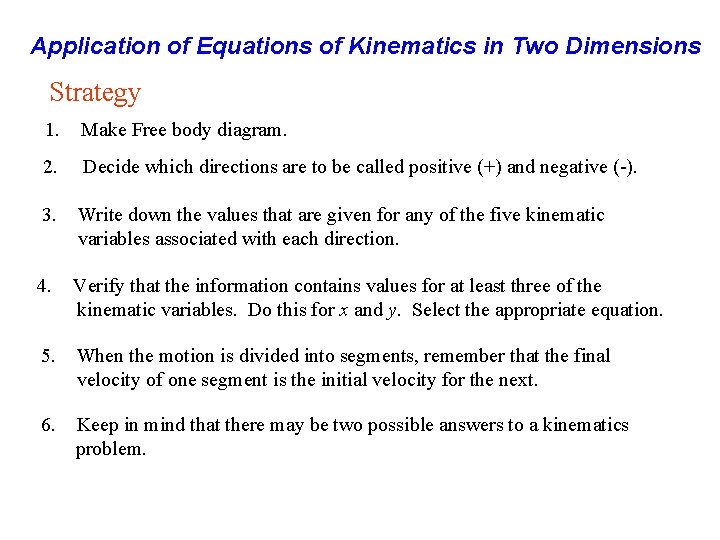
Application of Equations of Kinematics in Two Dimensions Strategy 1. Make Free body diagram. 2. Decide which directions are to be called positive (+) and negative (-). 3. Write down the values that are given for any of the five kinematic variables associated with each direction. 4. Verify that the information contains values for at least three of the kinematic variables. Do this for x and y. Select the appropriate equation. 5. When the motion is divided into segments, remember that the final velocity of one segment is the initial velocity for the next. 6. Keep in mind that there may be two possible answers to a kinematics problem.
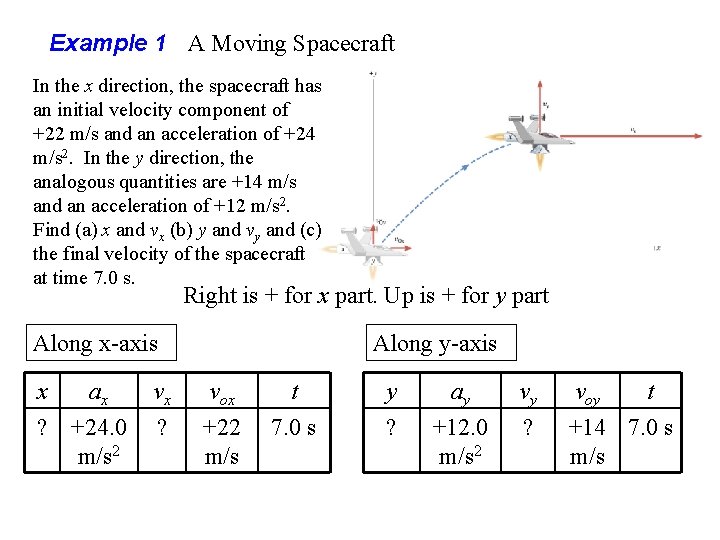
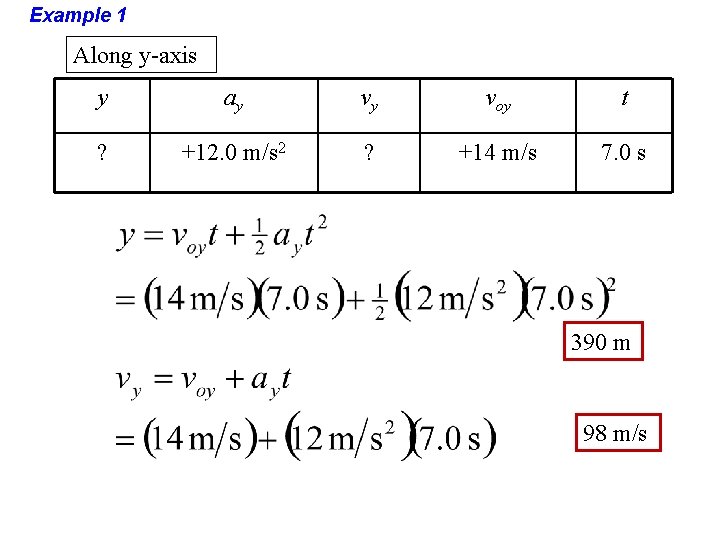
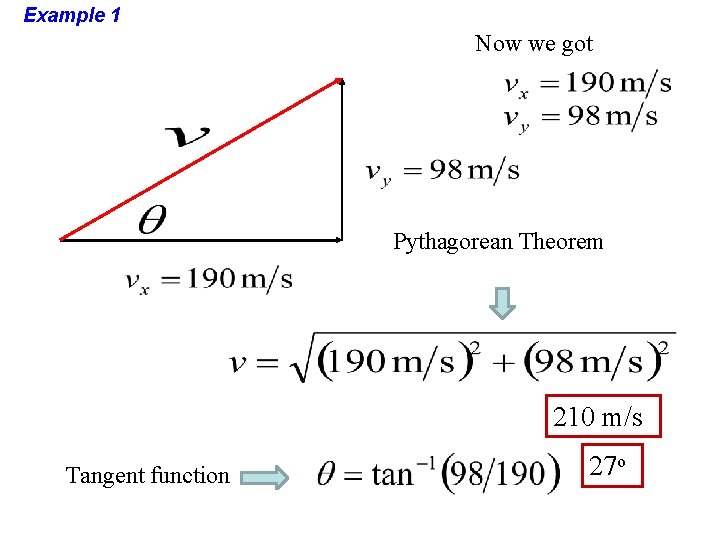
Example 1 A Moving Spacecraft In the x direction, the spacecraft has an initial velocity component of +22 m/s and an acceleration of +24 m/s 2. In the y direction, the analogous quantities are +14 m/s and an acceleration of +12 m/s 2. Find (a) x and vx (b) y and vy and (c) the final velocity of the spacecraft at time 7. 0 s. Right is + for x part. Up is + for y part Along x-axis x ax ? +24. 0 m/s 2 vx ? Along y-axis vox +22 m/s t 7. 0 s y ? ay +12. 0 m/s 2 vy ? voy t +14 7. 0 s m/s
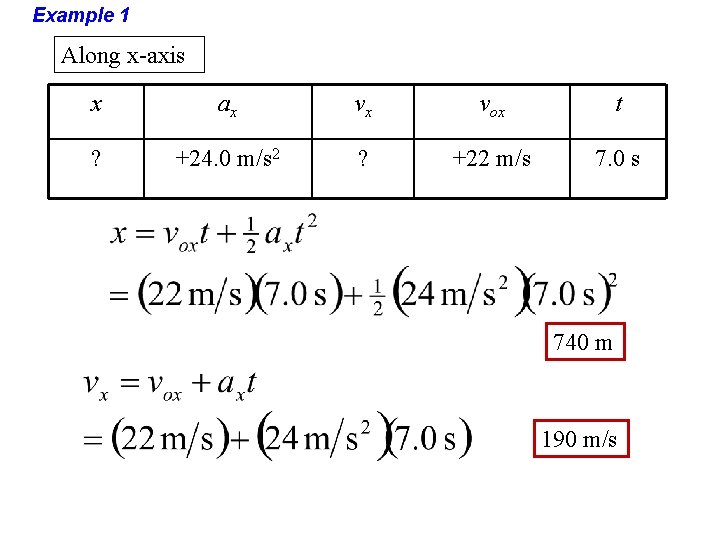
Example 1 Along x-axis x ax vx vox t ? +24. 0 m/s 2 ? +22 m/s 7. 0 s 740 m 190 m/s
Example 1 Along y-axis y ay vy voy t ? +12. 0 m/s 2 ? +14 m/s 7. 0 s 390 m 98 m/s
Example 1 Now we got Pythagorean Theorem 210 m/s Tangent function 27 o
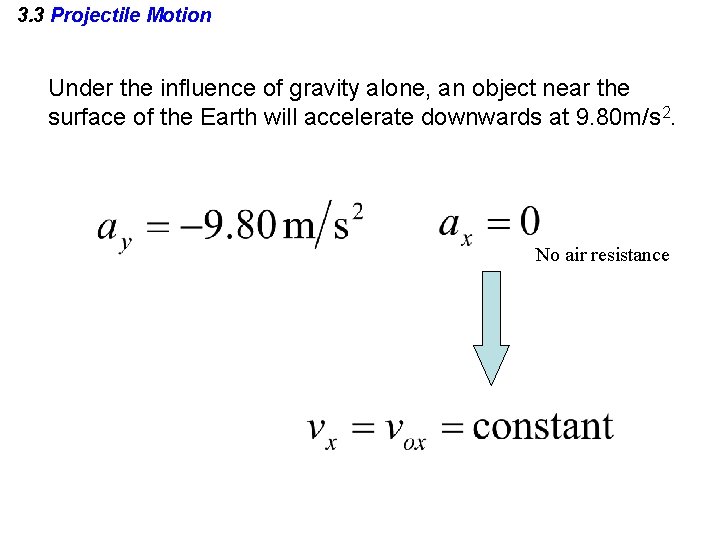
3. 3 Projectile Motion Under the influence of gravity alone, an object near the surface of the Earth will accelerate downwards at 9. 80 m/s 2. No air resistance
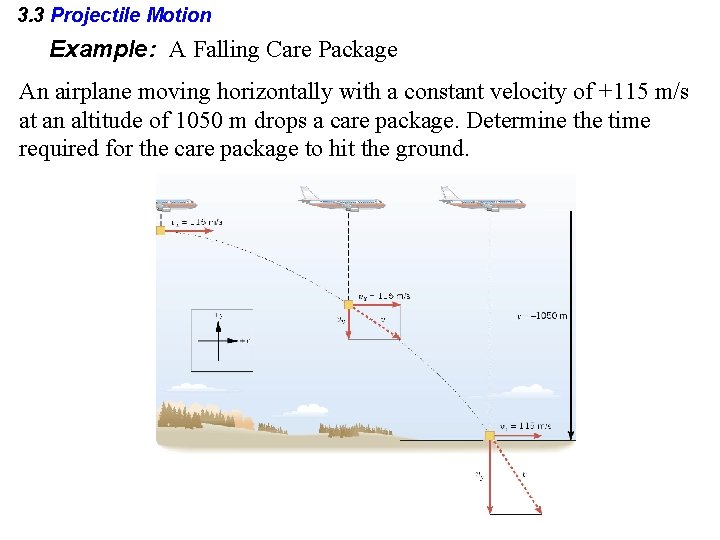
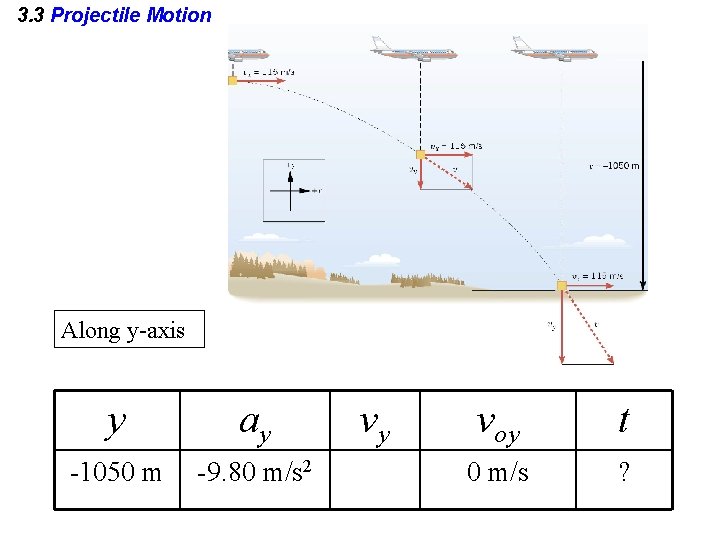
3. 3 Projectile Motion Example: A Falling Care Package An airplane moving horizontally with a constant velocity of +115 m/s at an altitude of 1050 m drops a care package. Determine the time required for the care package to hit the ground.
3. 3 Projectile Motion Along y-axis y ay -1050 m -9. 80 m/s 2 vy voy t 0 m/s ?
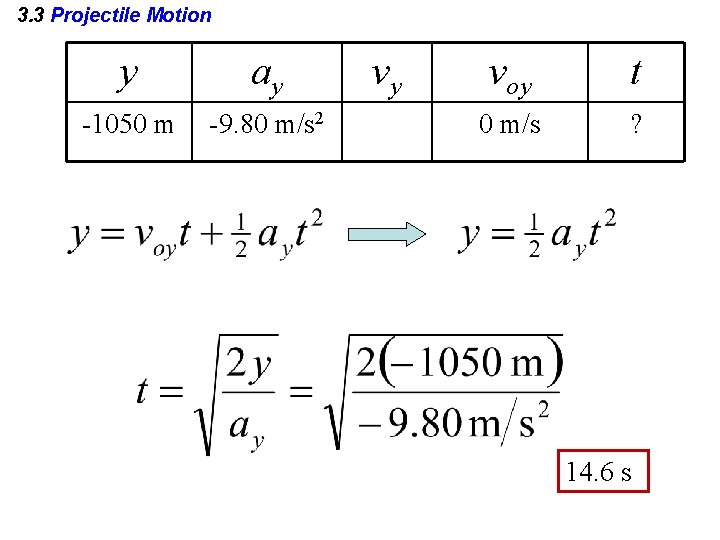
3. 3 Projectile Motion y ay -1050 m -9. 80 m/s 2 vy voy t 0 m/s ? 14. 6 s
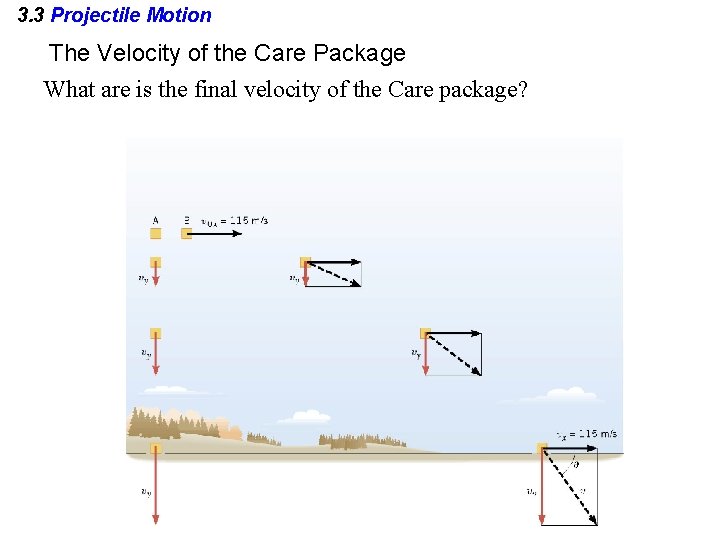
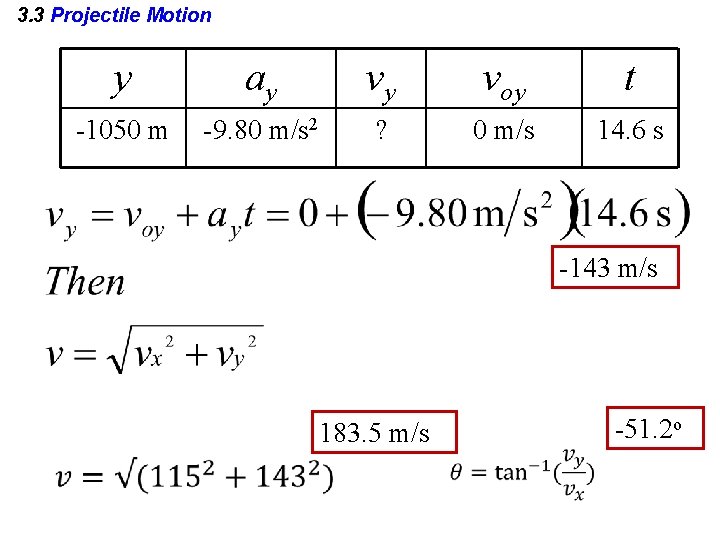
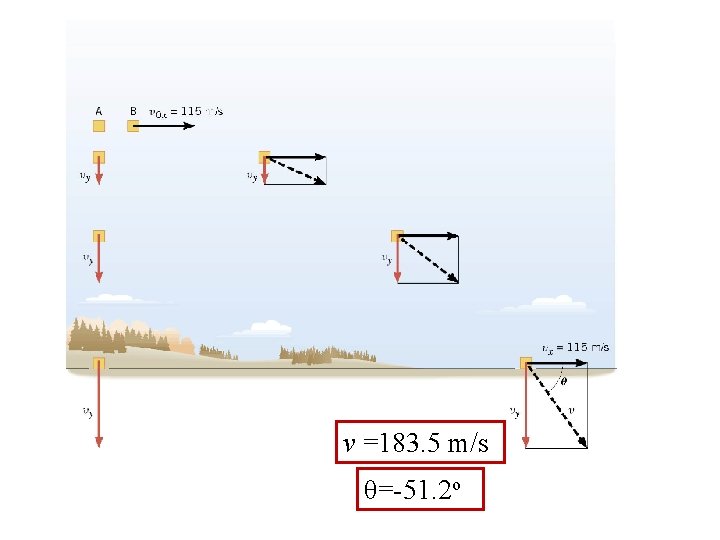
3. 3 Projectile Motion The Velocity of the Care Package What are is the final velocity of the Care package?
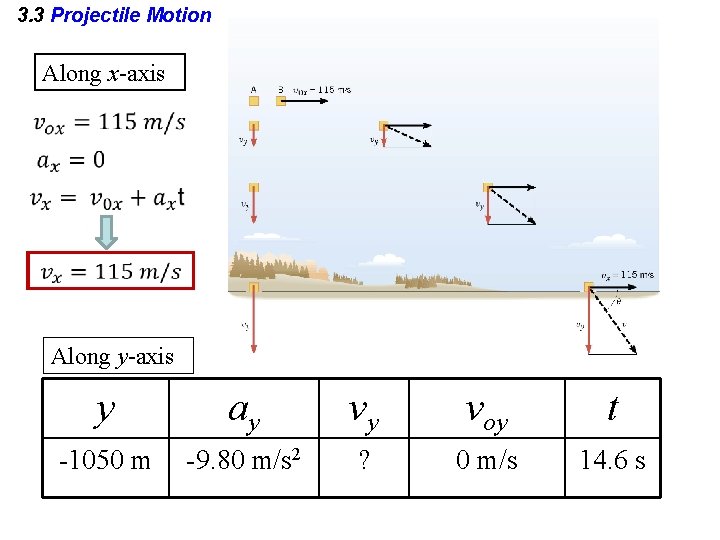
3. 3 Projectile Motion Along x-axis Along y-axis y ay vy voy t -1050 m -9. 80 m/s 2 ? 0 m/s 14. 6 s
3. 3 Projectile Motion y ay vy voy t -1050 m -9. 80 m/s 2 ? 0 m/s 14. 6 s -143 m/s 183. 5 m/s -51. 2 o
v =183. 5 m/s θ=-51. 2 o
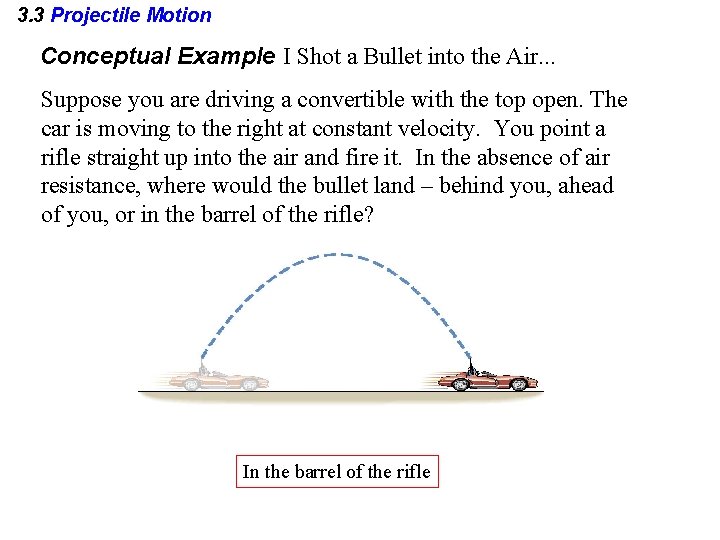
3. 3 Projectile Motion Conceptual Example I Shot a Bullet into the Air. . . Suppose you are driving a convertible with the top open. The car is moving to the right at constant velocity. You point a rifle straight up into the air and fire it. In the absence of air resistance, where would the bullet land – behind you, ahead of you, or in the barrel of the rifle? In the barrel of the rifle
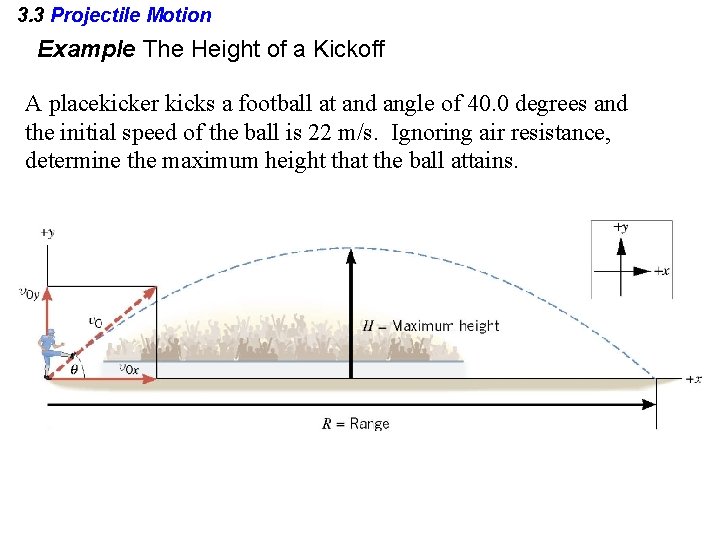
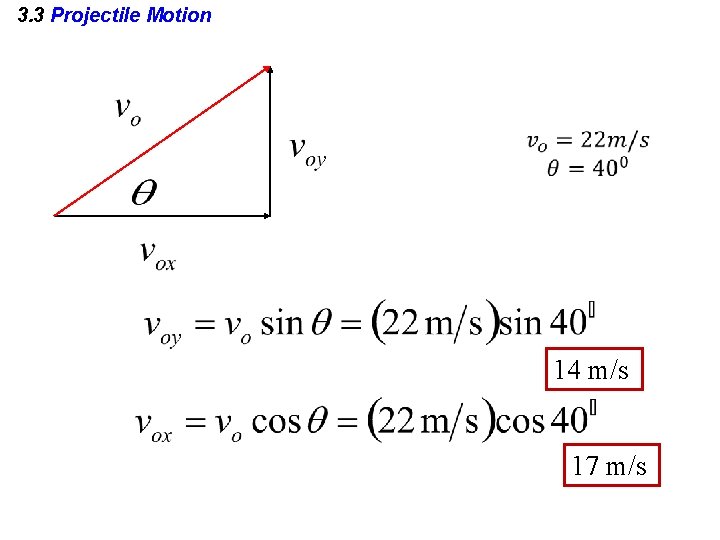
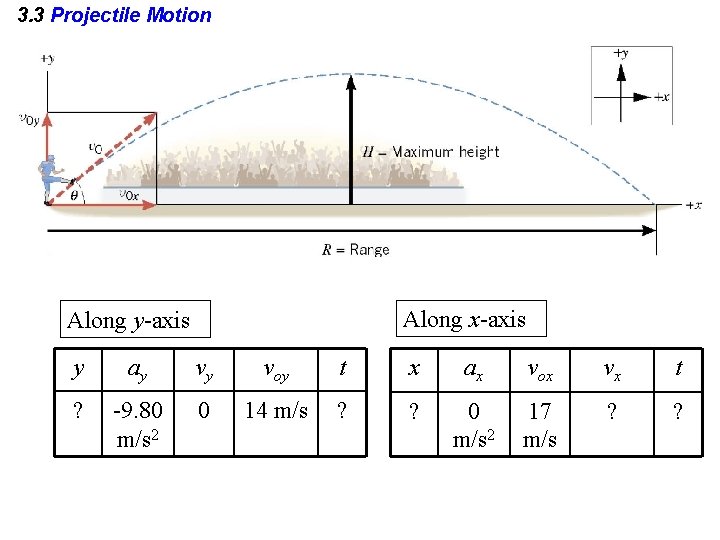
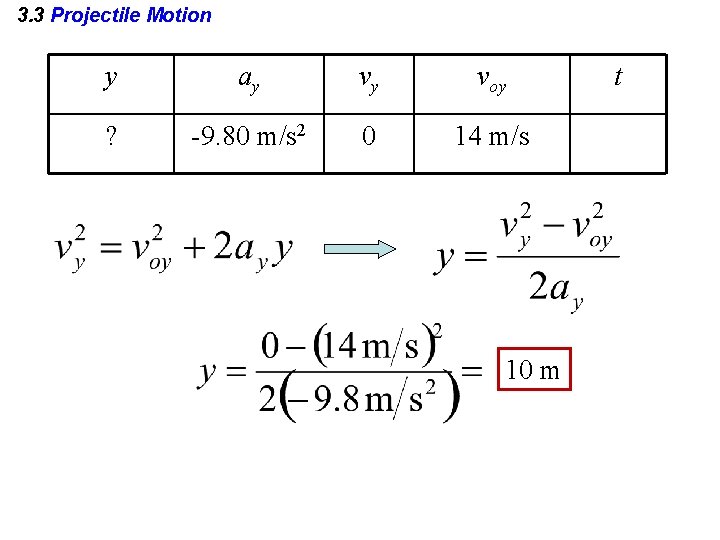
3. 3 Projectile Motion Example The Height of a Kickoff A placekicker kicks a football at and angle of 40. 0 degrees and the initial speed of the ball is 22 m/s. Ignoring air resistance, determine the maximum height that the ball attains.
3. 3 Projectile Motion 14 m/s 17 m/s
3. 3 Projectile Motion Along x-axis Along y-axis y ay vy voy t x ax vox vx t ? -9. 80 m/s 2 0 14 m/s ? ? 0 m/s 2 17 m/s ? ?
3. 3 Projectile Motion y ay vy voy ? -9. 80 m/s 2 0 14 m/s 10 m t
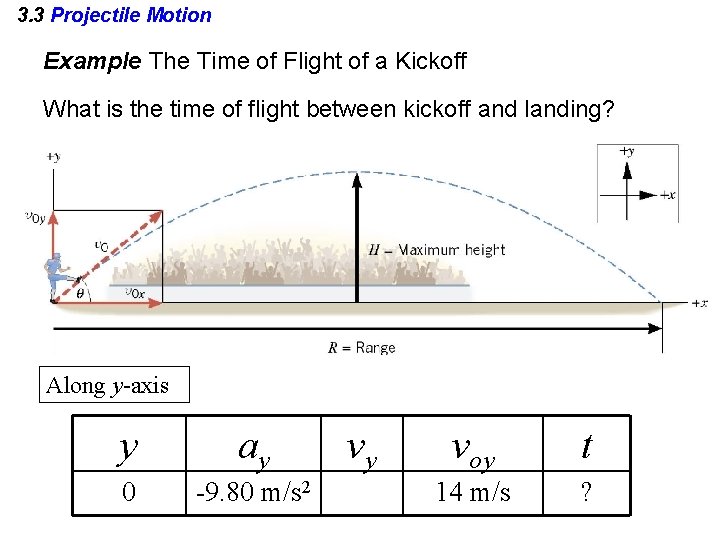
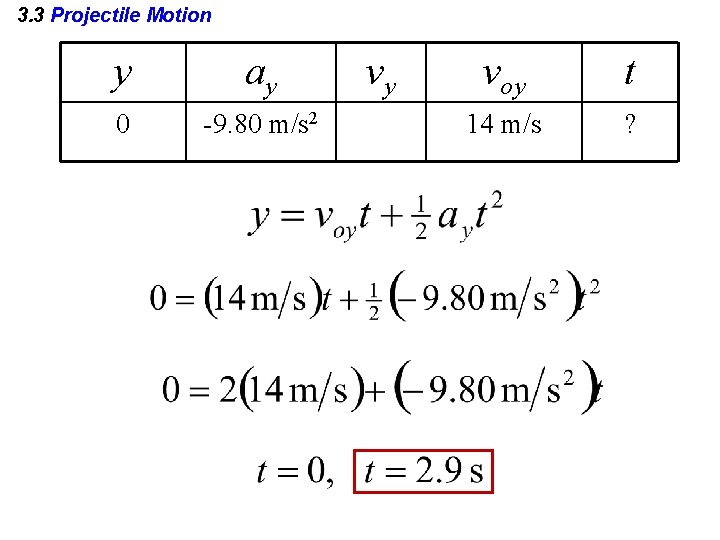
3. 3 Projectile Motion Example The Time of Flight of a Kickoff What is the time of flight between kickoff and landing? Along y-axis y ay 0 -9. 80 m/s 2 vy voy t 14 m/s ?
3. 3 Projectile Motion y ay 0 -9. 80 m/s 2 vy voy t 14 m/s ?
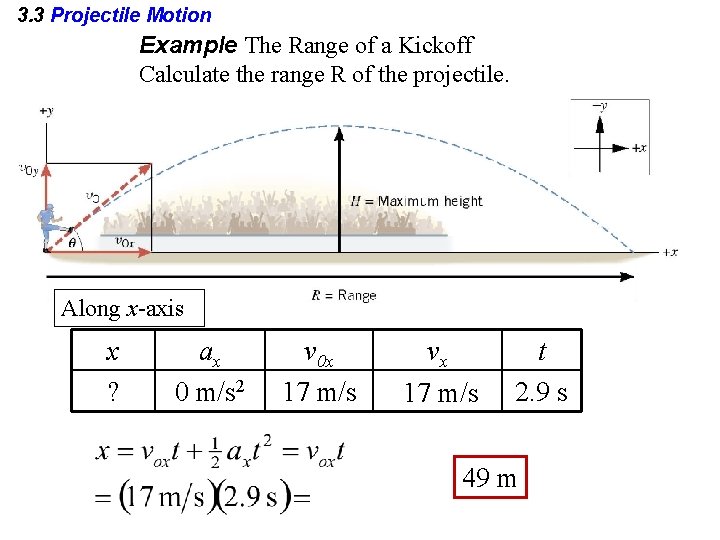
3. 3 Projectile Motion Example The Range of a Kickoff Calculate the range R of the projectile. Along x-axis x ? ax 0 m/s 2 v 0 x 17 m/s vx 17 m/s t 2. 9 s 49 m
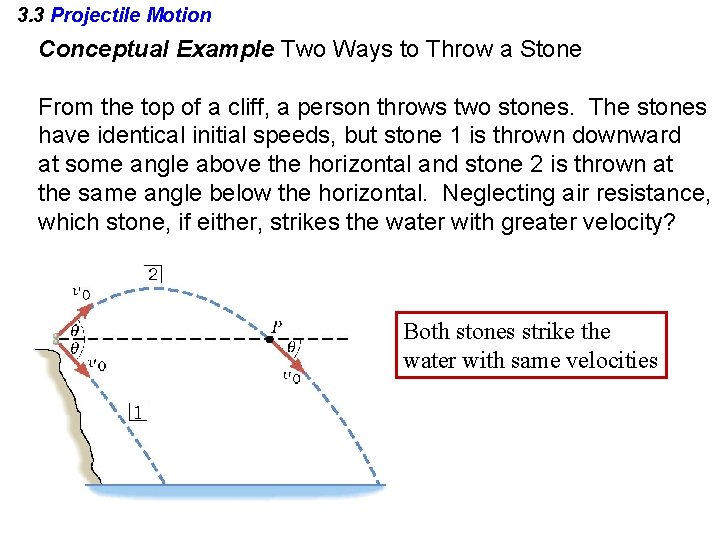
3. 3 Projectile Motion Conceptual Example Two Ways to Throw a Stone From the top of a cliff, a person throws two stones. The stones have identical initial speeds, but stone 1 is thrown downward at some angle above the horizontal and stone 2 is thrown at the same angle below the horizontal. Neglecting air resistance, which stone, if either, strikes the water with greater velocity? Both stones strike the water with same velocities
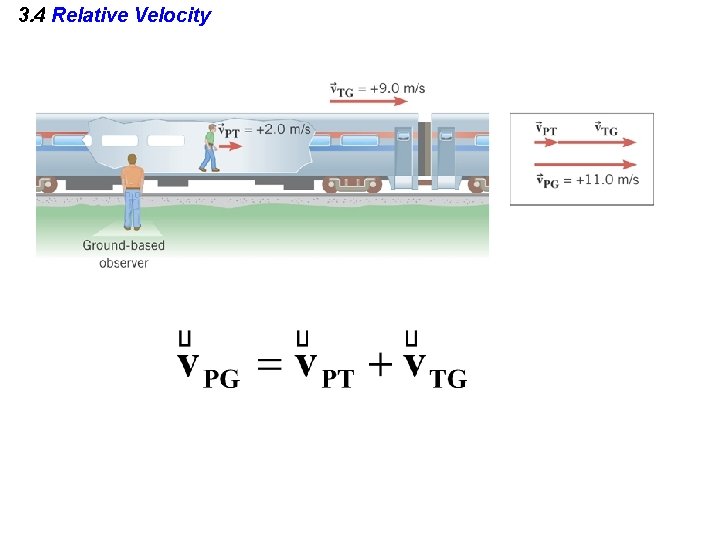
3. 4 Relative Velocity
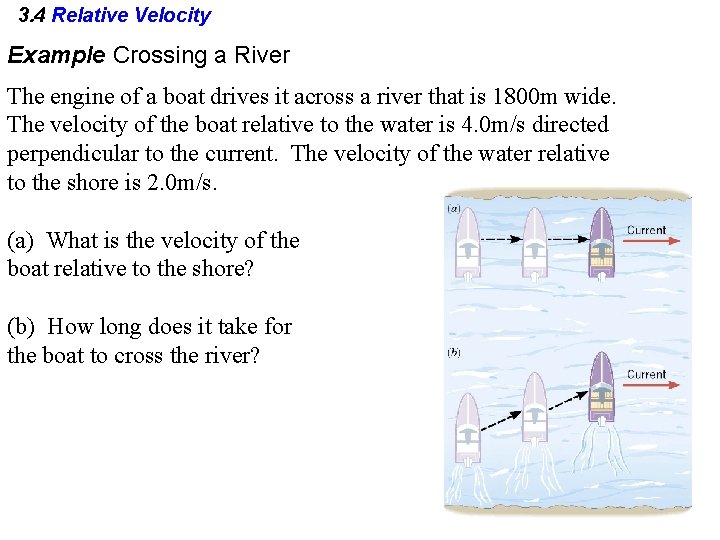
3. 4 Relative Velocity Example Crossing a River The engine of a boat drives it across a river that is 1800 m wide. The velocity of the boat relative to the water is 4. 0 m/s directed perpendicular to the current. The velocity of the water relative to the shore is 2. 0 m/s. (a) What is the velocity of the boat relative to the shore? (b) How long does it take for the boat to cross the river?
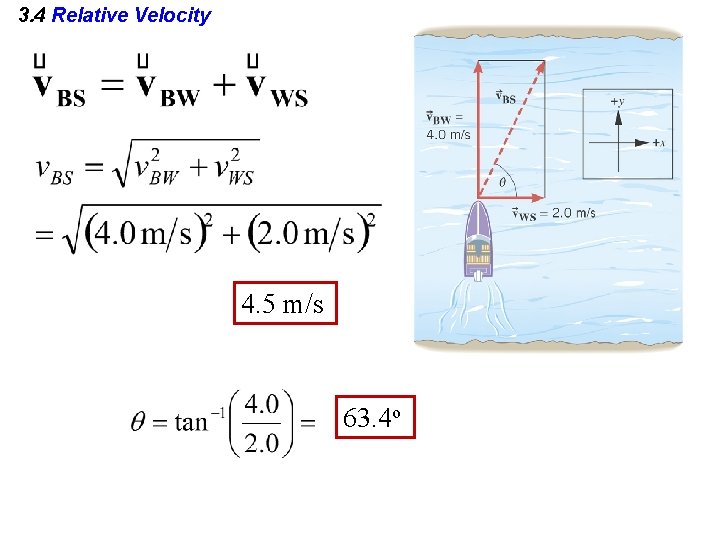
3. 4 Relative Velocity 4. 5 m/s 63. 4 o
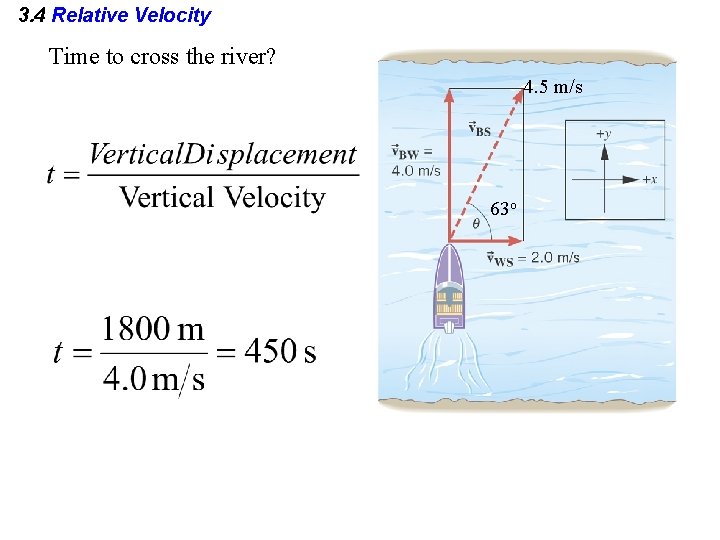
3. 4 Relative Velocity Time to cross the river? 4. 5 m/s 63 o
Summary • In 2 -Dimension, x and y components of the motion are dealt independent of each other. • Equation of motions are same. • Relative motion. For Recitation Practice • Chapter 3: FOC 1, 3, 6 & 14. Problems: 12, 16, 29, 41 & 71.