
CHAPTER 3 Introduction to Automotive Safety Identifying Hazardous


- Slides: 15
CHAPTER 3 Introduction to Automotive Safety
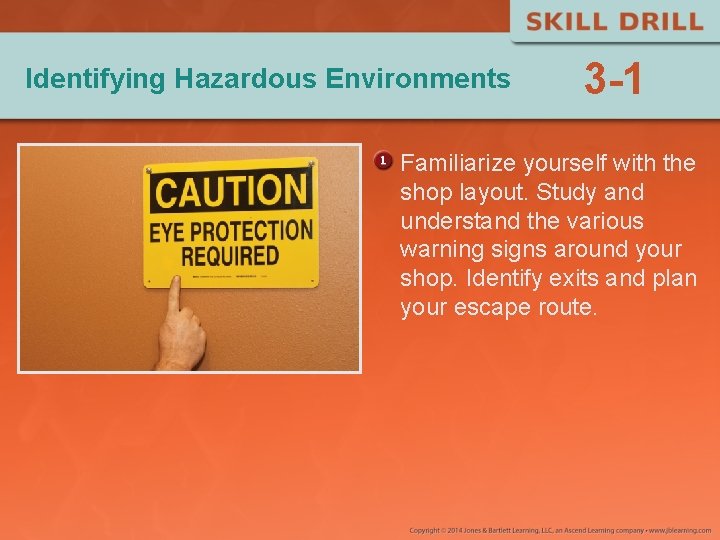
Identifying Hazardous Environments 3 -1 Familiarize yourself with the shop layout. Study and understand the various warning signs around your shop. Identify exits and plan your escape route.
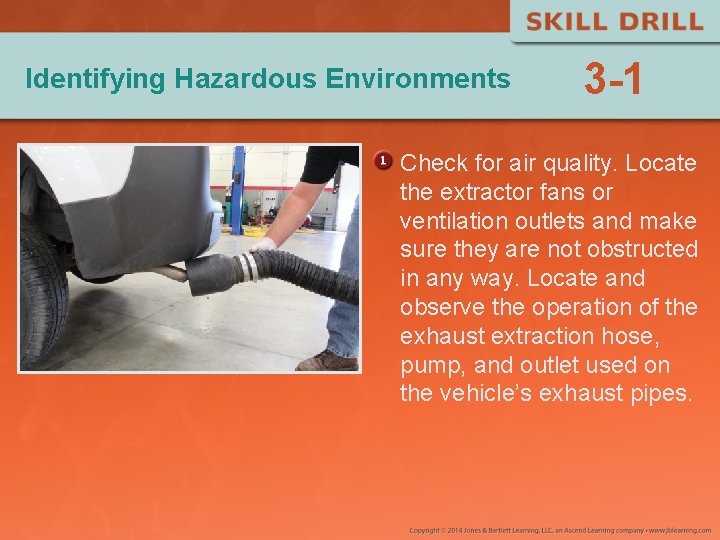
Identifying Hazardous Environments 3 -1 Check for air quality. Locate the extractor fans or ventilation outlets and make sure they are not obstructed in any way. Locate and observe the operation of the exhaust extraction hose, pump, and outlet used on the vehicle’s exhaust pipes.
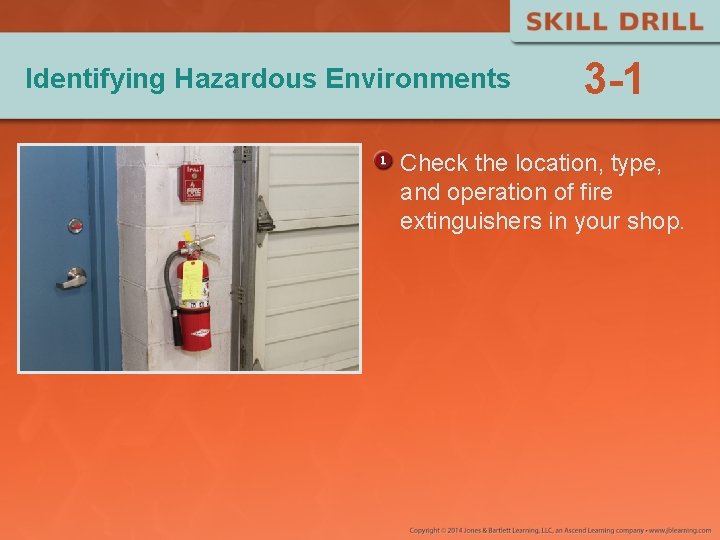
Identifying Hazardous Environments 3 -1 Check the location, type, and operation of fire extinguishers in your shop.
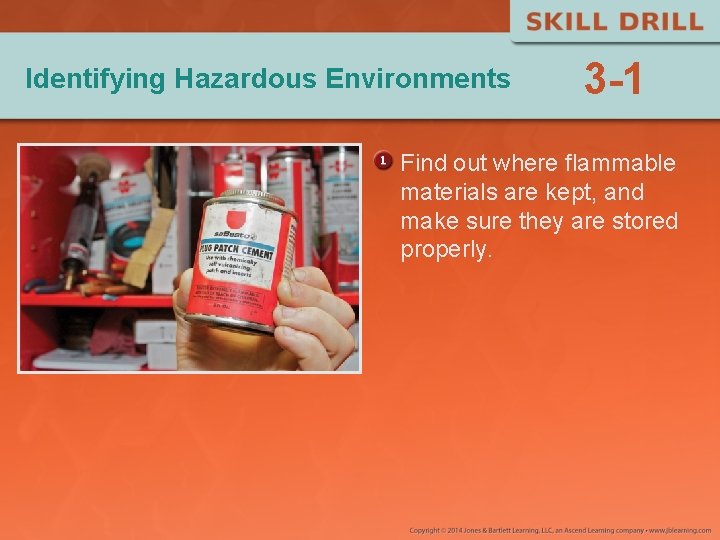
Identifying Hazardous Environments 3 -1 Find out where flammable materials are kept, and make sure they are stored properly.
Identifying Hazardous Environments 3 -1 Check the hoses and fittings on the air compressor and air guns for any damage or excessive wear.
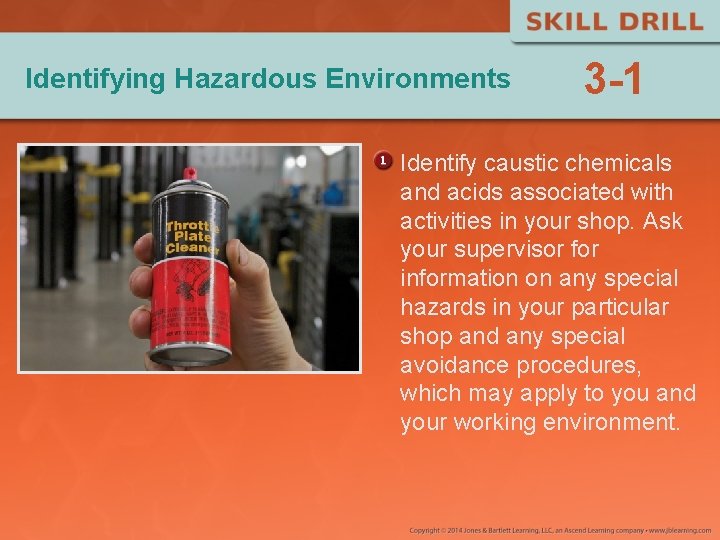
Identifying Hazardous Environments 3 -1 Identify caustic chemicals and acids associated with activities in your shop. Ask your supervisor for information on any special hazards in your particular shop and any special avoidance procedures, which may apply to you and your working environment.
Identifying Information Found on an MSDS 3 -2 Once you have studied the information on the container label, find the MSDS for that particular material. Always check the revision date to ensure that you are reading the most recent update. Note the chemical and trade names for the material, its manufacturer, and the emergency telephone number to call.
Identifying Information Found on an MSDS 3 -2 Find out why this material is potentially hazardous. It may be flammable, it may explode, or it may be poisonous if inhaled or touched with your bare skin. Check the threshold limit values (TLVs). The concentration of this material in the air you breathe in your shop must not exceed these figures. There could be physical symptoms associated with breathing harmful chemicals. Find out what will happen to you if you suffer overexposure to the material, either through breathing it or by coming into physical contact with it. This will help you take safety precautions, such as eye, face, or skin protection, wearing a mask or respirator while using the material, or washing your skin afterwards.
Identifying Information Found on an MSDS 3 -2 Note the flash point for this material so that you know at what temperature it may catch fire. Also note what kind of fire extinguisher you would use to fight a fire involving this material. The wrong fire extinguisher could make the emergency even worse. Study the reactivity for this material to identify the physical conditions or other materials that you should avoid when using this material. It could be heat, moisture, or some other chemical.
Identifying Information Found on an MSDS 3 -2 Find out what special precautions you should take when working with this material. This will include personal protection for your skin, eyes, or lungs and storage and use of the material. Be sure to refresh your knowledge of your MSDS from time to time. Be confident that you know how to handle and use the material and what action to take in an emergency, should one occur.
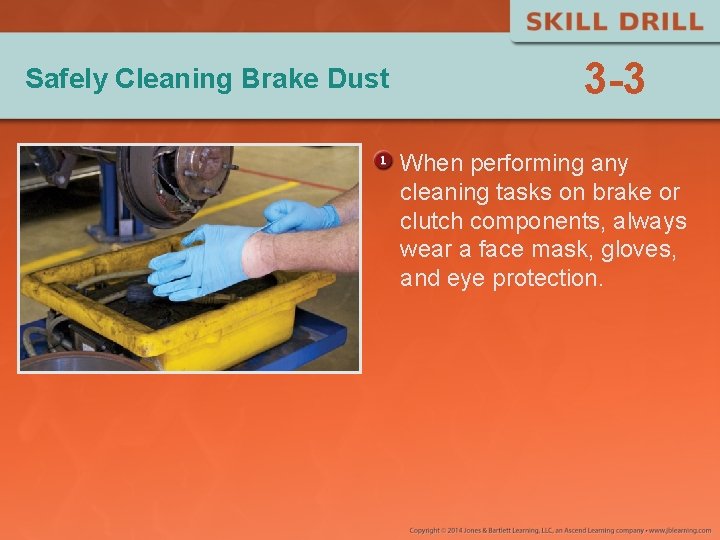
Safely Cleaning Brake Dust 3 -3 When performing any cleaning tasks on brake or clutch components, always wear a face mask, gloves, and eye protection.
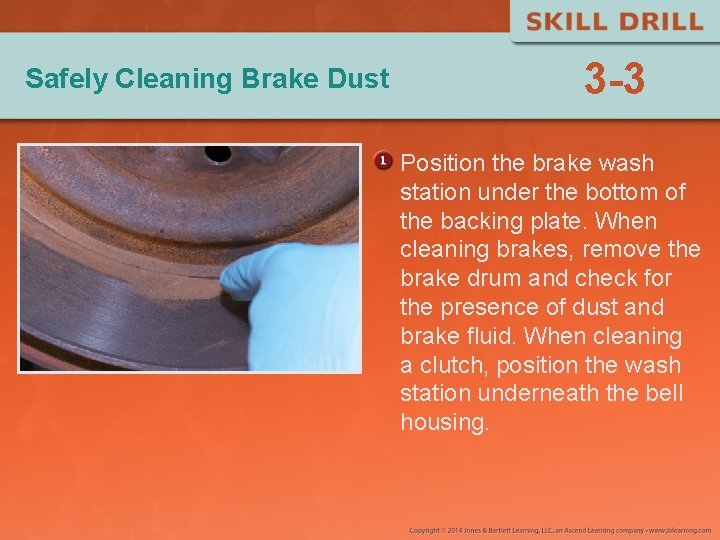
Safely Cleaning Brake Dust 3 -3 Position the brake wash station under the bottom of the backing plate. When cleaning brakes, remove the brake drum and check for the presence of dust and brake fluid. When cleaning a clutch, position the wash station underneath the bell housing.
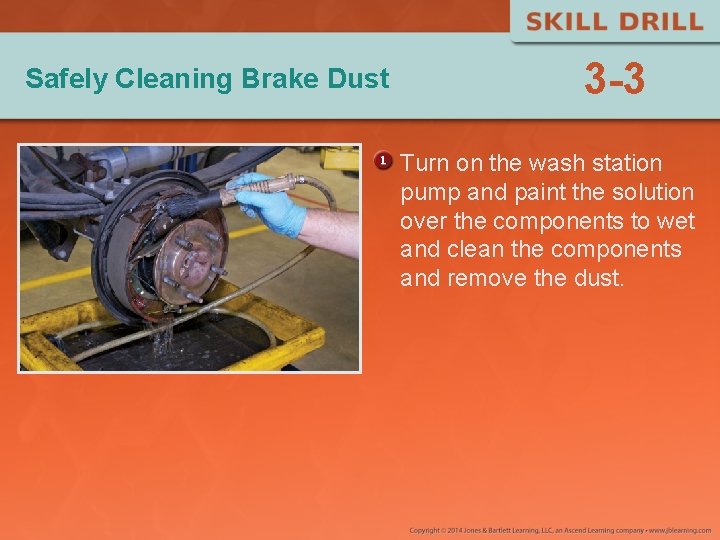
Safely Cleaning Brake Dust 3 -3 Turn on the wash station pump and paint the solution over the components to wet and clean the components and remove the dust.
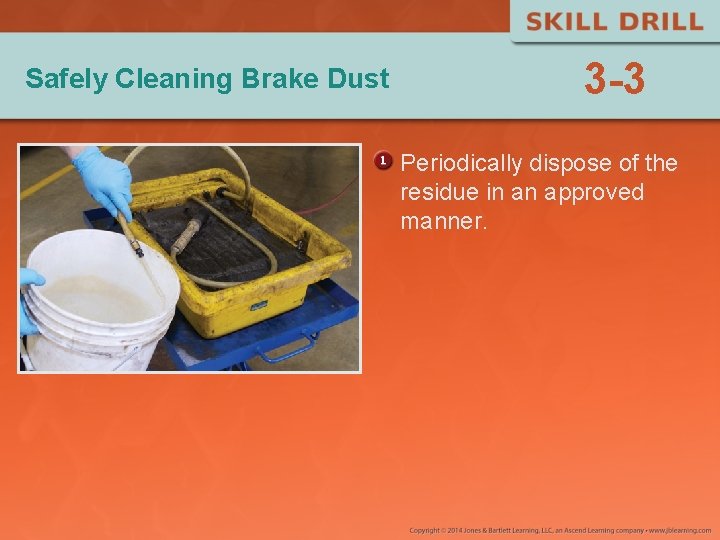
Safely Cleaning Brake Dust 3 -3 Periodically dispose of the residue in an approved manner.