
CHAPTER 3 HEALTH CAREERS TODAY SAFETY PRACTICES INFECTION
- Slides: 29
CHAPTER 3 HEALTH CAREERS TODAY SAFETY PRACTICES – INFECTION CONTROL AND HAND WASHING Copyright © 2007 by Mosby, Inc. , an affiliate of Elsevier Inc. 1
OBJECTIVES Protect ourselves, patients, peers, family members and others from cross contamination and transmission of disease Learn to demonstrate proper hand washing according to CDC guidelines Multiple body fluids Close physical contact throughout the 2 year Program Temperature, pulse, respiration, B/P Occupied bed making EKG’s CPR Copyright © 2007 by Mosby, Inc. , an affiliate of Elsevier Inc. 2
BACTERIA, VIRUSES, PROTOZOA, FUNGI Bacteria: bacteria can cause trouble, too — ever had a cavity, urinary tract infection, or strep throat? These infections are all caused by bacteria. Viruses: Most viruses can only live for a very short time outside other living cells. Stay on surfaces like a countertop or toilet seat in infected bodily fluids for a short period of time, but they quickly die there unless a live host comes along. But some viruses, such as the kind that cause hepatitis (an infection of the liver), can survive on surfaces for a week or longer and still be able to cause infections. Once viruses move into your body, spread easily and can make you quite sick. Viruses are responsible for not-so-serious diseases like colds as well as extremely serious diseases like smallpox. Copyright © 2007 by Mosby, Inc. , an affiliate of Elsevier Inc. 3
Fungi: Two common fungal infections include athlete's foot and yeast infections. Like damp, warm environments Protozoa love moisture, so intestinal infections and other diseases they cause are often spread through contaminated water. Protozoa draws all their energy from you! They damage or destroy your own healthy cells. As they use up your nutrients and energy, most will produce waste products, known as toxins. Copyright © 2007 by Mosby, Inc. , an affiliate of Elsevier Inc. 4
DISEASE TRANSMISSION • Infection requires three elements: Source of microorganisms A susceptible host A means of transmission to the host Copyright © 2007 by Mosby, Inc. , an affiliate of Elsevier Inc. 5
QUESTIONS Why is hand washing important to you? What are germs? When should you wash your hands? When are we at an increased risk of spreading germs to ourselves or another? Where do germs hide? Copyright © 2007 by Mosby, Inc. , an affiliate of Elsevier Inc. 6
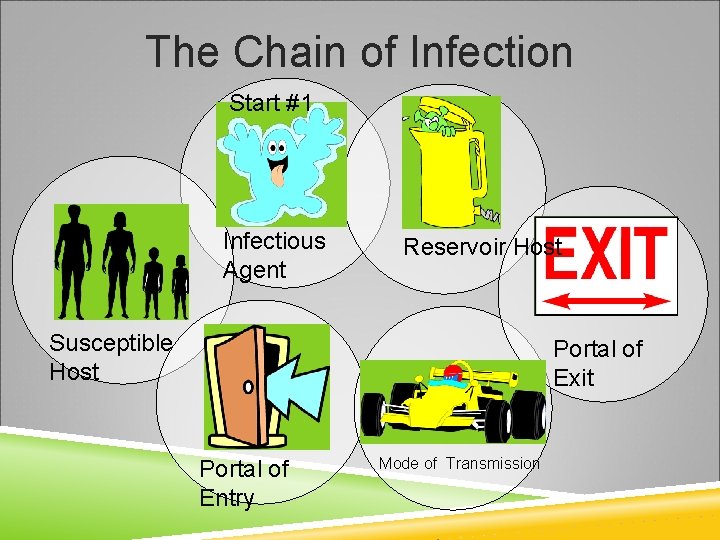
The Chain of Infection Start #1 Infectious Agent Reservoir Host Susceptible Host Portal of Exit Portal of Entry Mode of Transmission Copyright © 2007 by Mosby, Inc. , an affiliate of Elsevier Inc. 7
OCCUPATIONAL SAFETY AND HEALTH ADMINISTRATION (OSHA) REGULATIONS To establish standards of safety for the workplace and to enforce the standards To research and provide documentation to OSHA regarding the safe level of exposure to hazards in the workplace Copyright © 2007 by Mosby, Inc. , an affiliate of Elsevier Inc. 8
METHODS OF TRANSMISSION Contact Direct or indirect through an inanimate object Droplet Airborne Common vehicle Water, food, contaminated equipment Through vectors Mosquitoes, flies, rats, and other such vermin Copyright © 2007 by Mosby, Inc. , an affiliate of Elsevier Inc. 9
INFECTION Symptomatic Asymptomatic Local infection Limited to a small area of the body Systemic infection Located throughout the body Copyright © 2007 by Mosby, Inc. , an affiliate of Elsevier Inc. 10
SIGNS AND SYMPTOMS OF A GENERAL INFECTION Fever Chills Pain An ache or tenderness General feeling of tiredness Night sweats Copyright © 2007 by Mosby, Inc. , an affiliate of Elsevier Inc. 11
SIGNS AND SYMPTOMS OF A LOCAL INFECTION Redness Heat Swelling Pain Fluid Copyright © 2007 by Mosby, Inc. , an affiliate of Elsevier Inc. 12
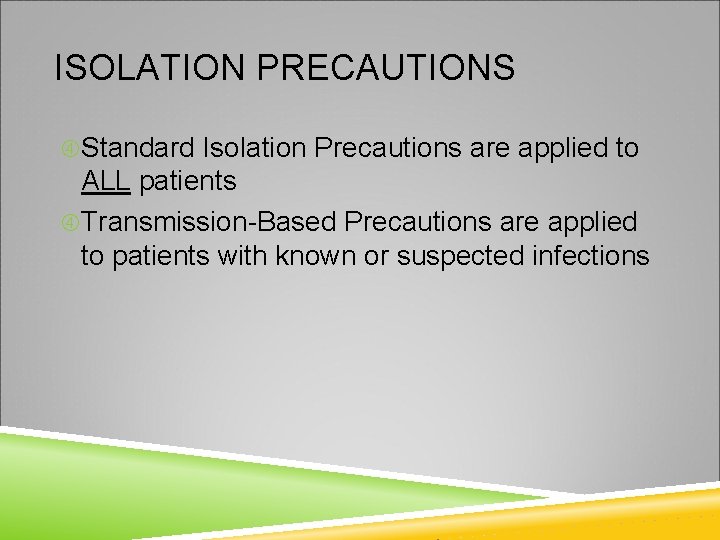
ISOLATION PRECAUTIONS Standard Isolation Precautions are applied to ALL patients Transmission-Based Precautions are applied to patients with known or suspected infections Copyright © 2007 by Mosby, Inc. , an affiliate of Elsevier Inc. 13
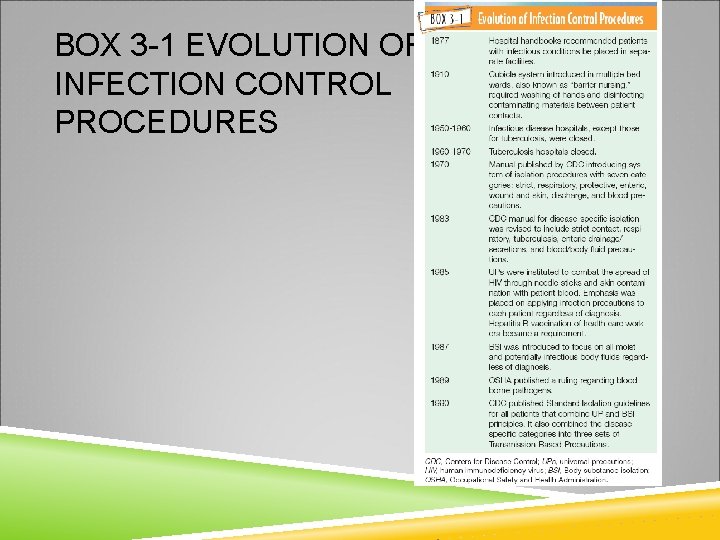
BOX 3 -1 EVOLUTION OF INFECTION CONTROL PROCEDURES Copyright © 2007 by Mosby, Inc. , an affiliate of Elsevier Inc. 14
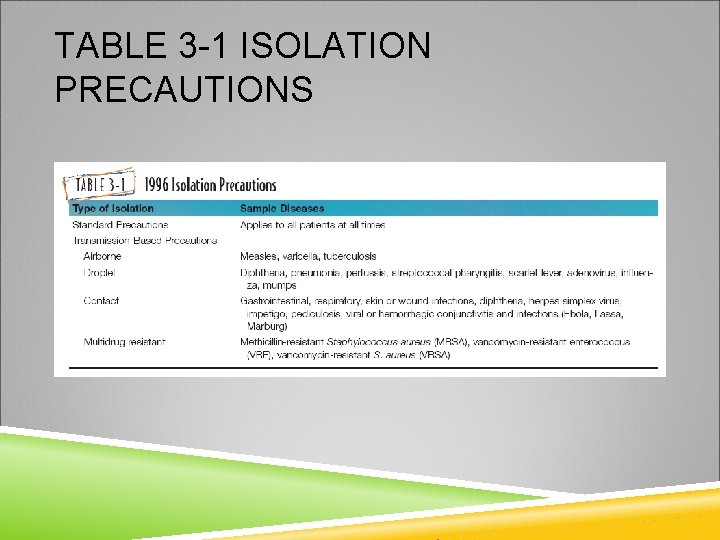
TABLE 3 -1 ISOLATION PRECAUTIONS Copyright © 2007 by Mosby, Inc. , an affiliate of Elsevier Inc. 15
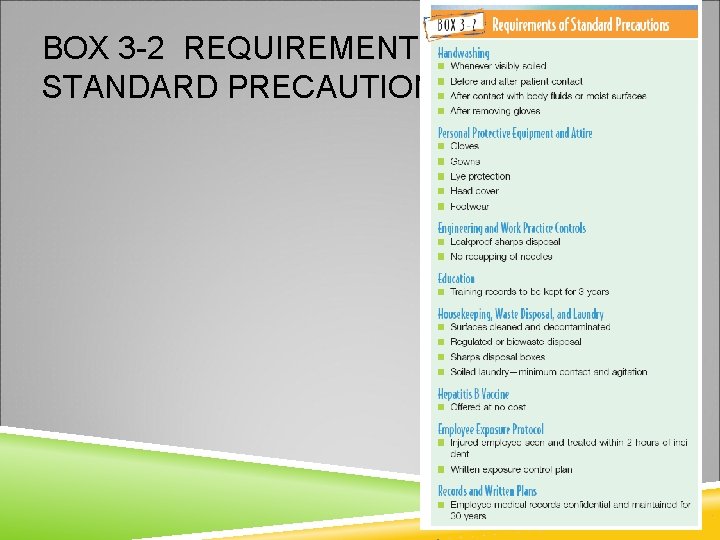
BOX 3 -2 REQUIREMENTS STANDARD PRECAUTIONS Copyright © 2007 by Mosby, Inc. , an affiliate of Elsevier Inc. 16
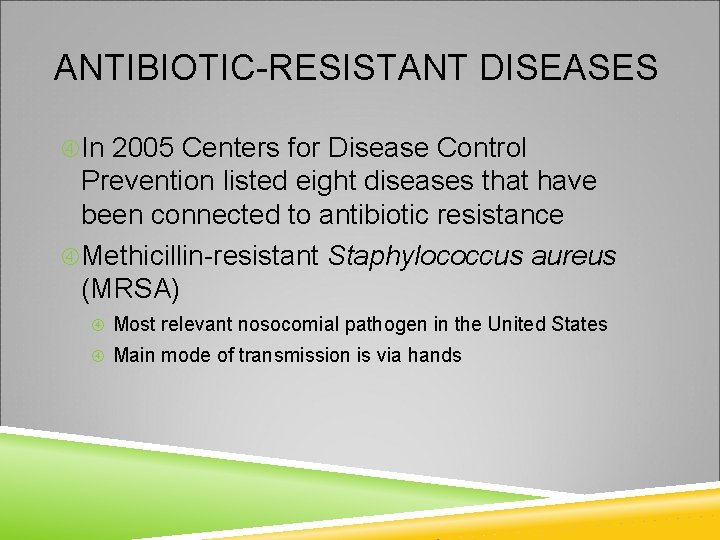
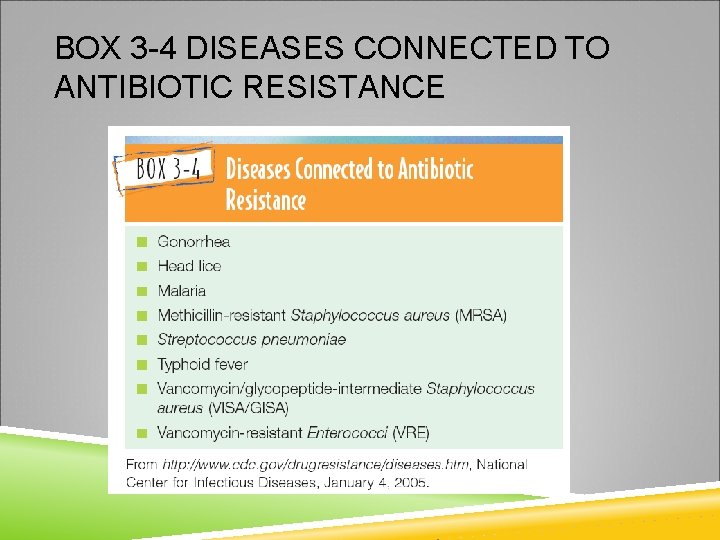
ANTIBIOTIC-RESISTANT DISEASES In 2005 Centers for Disease Control Prevention listed eight diseases that have been connected to antibiotic resistance Methicillin-resistant Staphylococcus aureus (MRSA) Most relevant nosocomial pathogen in the United States Main mode of transmission is via hands Copyright © 2007 by Mosby, Inc. , an affiliate of Elsevier Inc. 17
BOX 3 -4 DISEASES CONNECTED TO ANTIBIOTIC RESISTANCE Copyright © 2007 by Mosby, Inc. , an affiliate of Elsevier Inc. 18
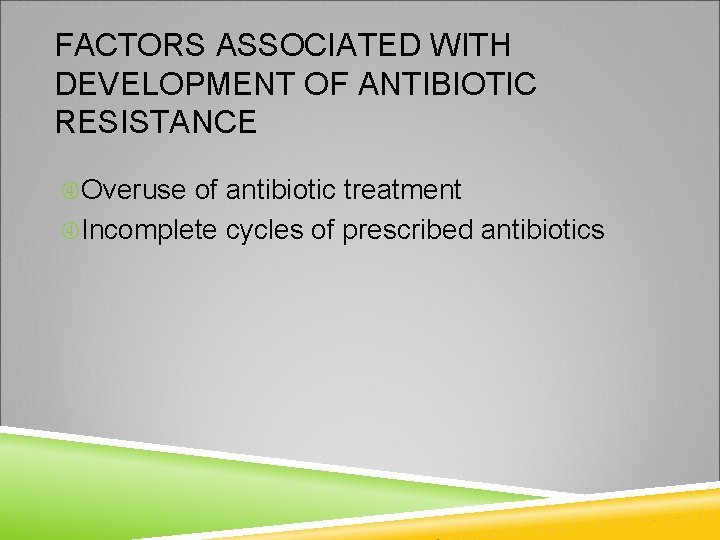
FACTORS ASSOCIATED WITH DEVELOPMENT OF ANTIBIOTIC RESISTANCE Overuse of antibiotic treatment Incomplete cycles of prescribed antibiotics Copyright © 2007 by Mosby, Inc. , an affiliate of Elsevier Inc. 19
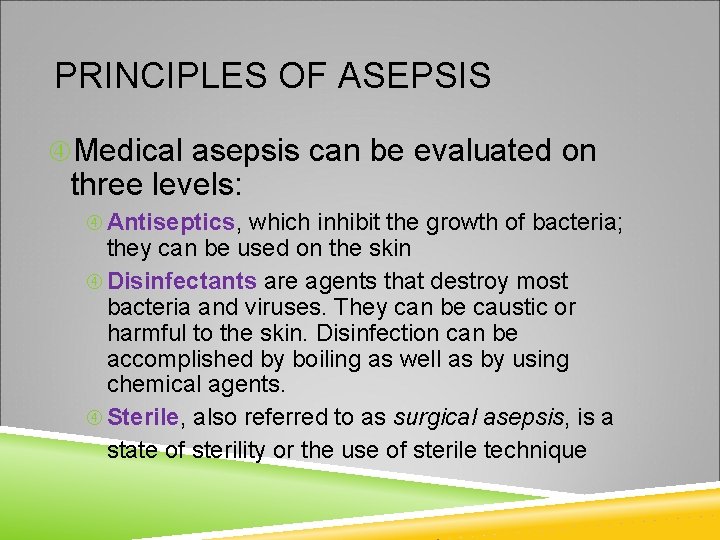
PRINCIPLES OF ASEPSIS Medical asepsis can be evaluated on three levels: Antiseptics, which inhibit the growth of bacteria; they can be used on the skin Disinfectants are agents that destroy most bacteria and viruses. They can be caustic or harmful to the skin. Disinfection can be accomplished by boiling as well as by using chemical agents. Sterile, also referred to as surgical asepsis, is a state of sterility or the use of sterile technique Copyright © 2007 by Mosby, Inc. , an affiliate of Elsevier Inc. 20
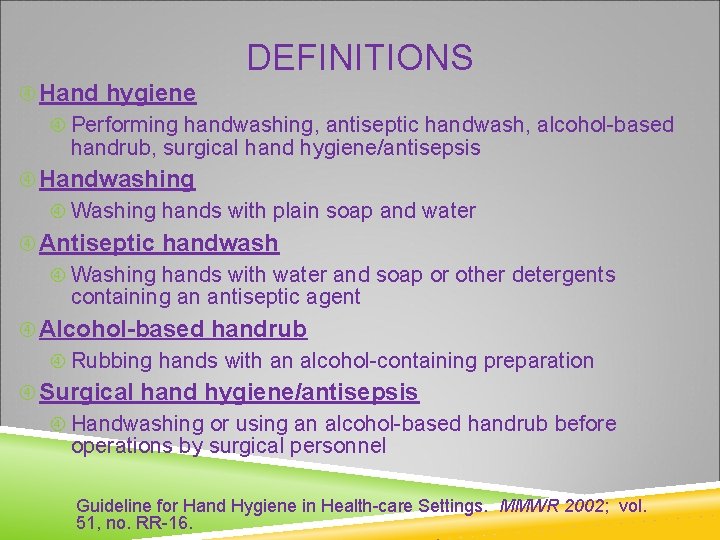
DEFINITIONS Hand hygiene Performing handwashing, antiseptic handwash, alcohol-based handrub, surgical hand hygiene/antisepsis Handwashing Washing hands with plain soap and water Antiseptic handwash Washing hands with water and soap or other detergents containing an antiseptic agent Alcohol-based handrub Rubbing hands with an alcohol-containing preparation Surgical hand hygiene/antisepsis Handwashing or using an alcohol-based handrub before operations by surgical personnel Guideline for Hand Hygiene in Health-care Settings. MMWR 2002; vol. 51, no. RR-16. Copyright © 2007 by Mosby, Inc. , an affiliate of Elsevier Inc. 21
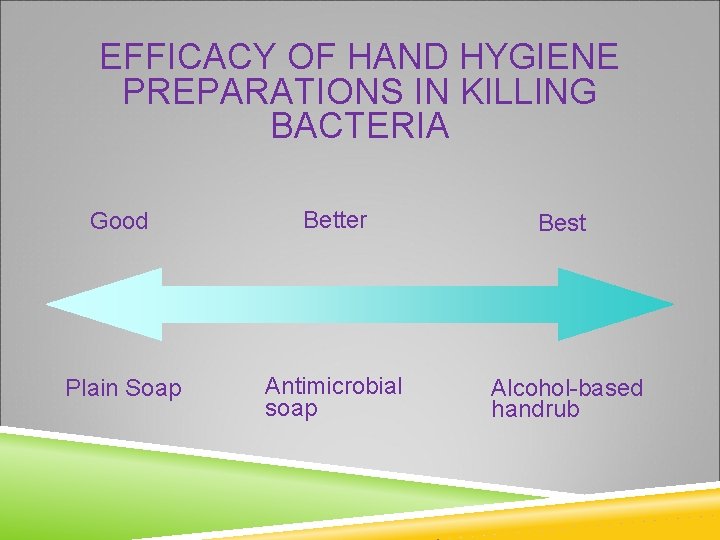
EFFICACY OF HAND HYGIENE PREPARATIONS IN KILLING BACTERIA Good Better Best Plain Soap Antimicrobial soap Alcohol-based handrub Copyright © 2007 by Mosby, Inc. , an affiliate of Elsevier Inc. 22
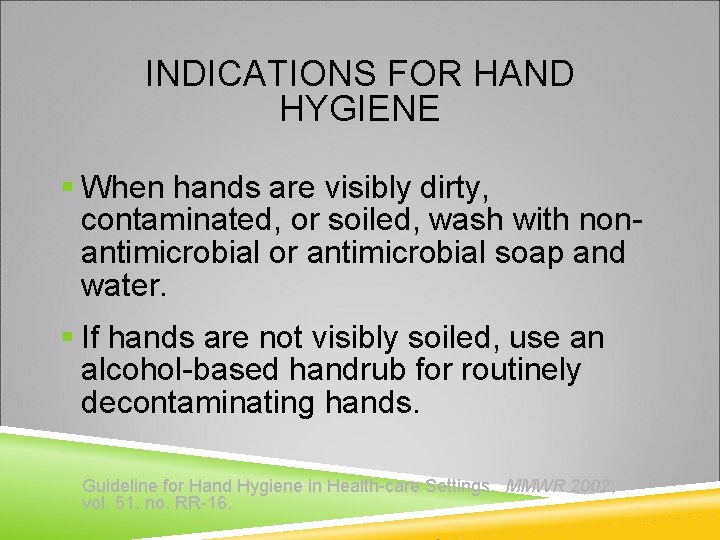
INDICATIONS FOR HAND HYGIENE § When hands are visibly dirty, contaminated, or soiled, wash with nonantimicrobial or antimicrobial soap and water. § If hands are not visibly soiled, use an alcohol-based handrub for routinely decontaminating hands. Guideline for Hand Hygiene in Health-care Settings. MMWR 2002; vol. 51, no. RR-16. Copyright © 2007 by Mosby, Inc. , an affiliate of Elsevier Inc. 23
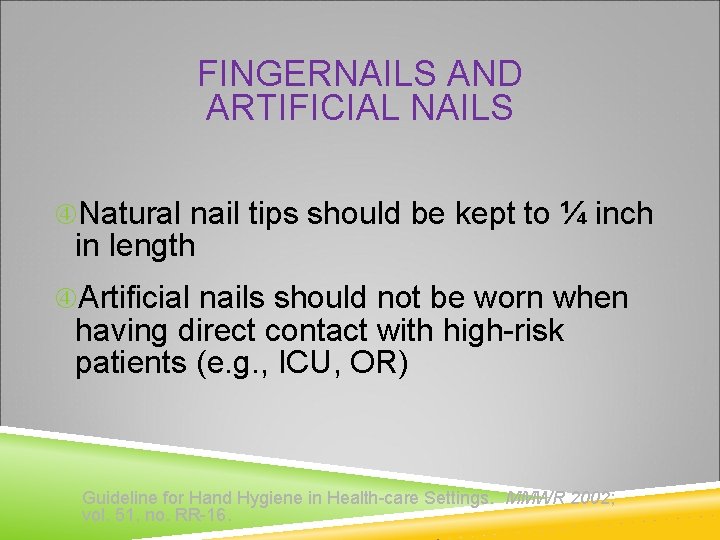
FINGERNAILS AND ARTIFICIAL NAILS Natural nail tips should be kept to ¼ inch in length Artificial nails should not be worn when having direct contact with high-risk patients (e. g. , ICU, OR) Guideline for Hand Hygiene in Health-care Settings. MMWR 2002; vol. 51, no. RR-16. Copyright © 2007 by Mosby, Inc. , an affiliate of Elsevier Inc. 24
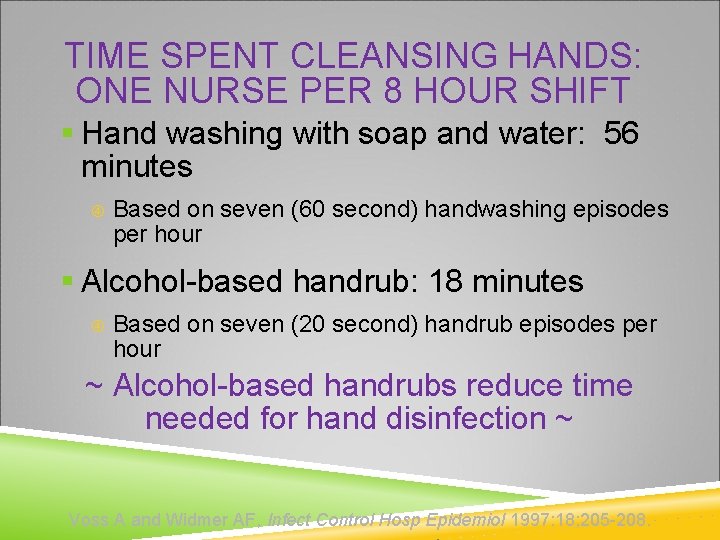
TIME SPENT CLEANSING HANDS: ONE NURSE PER 8 HOUR SHIFT § Hand washing with soap and water: 56 minutes Based on seven (60 second) handwashing episodes per hour § Alcohol-based handrub: 18 minutes Based on seven (20 second) handrub episodes per hour ~ Alcohol-based handrubs reduce time needed for hand disinfection ~ Voss A and Widmer. Copyright AF, Infect 1997: 18; 205 -208. © 2007 by. Control Mosby, Inc. , Hosp an affiliate Epidemiol of Elsevier Inc. 25
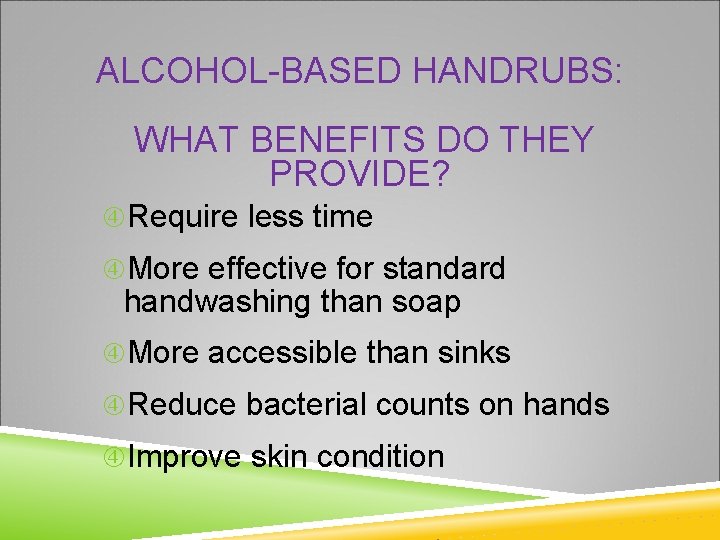
ALCOHOL-BASED HANDRUBS: WHAT BENEFITS DO THEY PROVIDE? Require less time More effective for standard handwashing than soap More accessible than sinks Reduce bacterial counts on hands Improve skin condition Copyright © 2007 by Mosby, Inc. , an affiliate of Elsevier Inc. 26
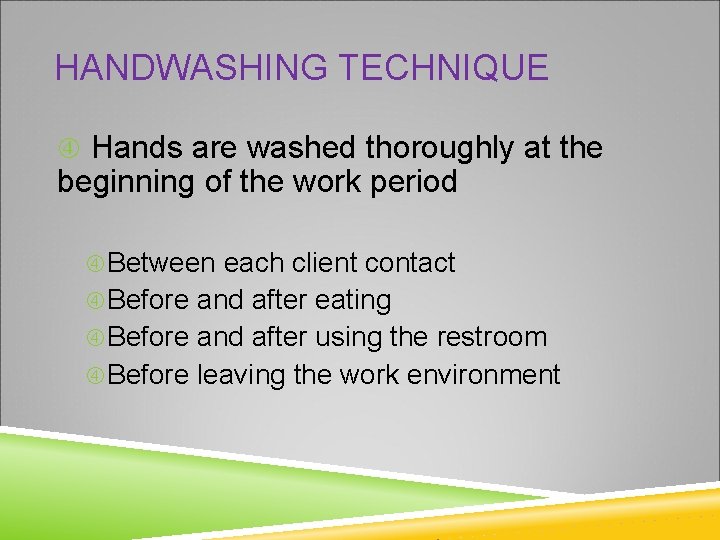
HANDWASHING TECHNIQUE Hands are washed thoroughly at the beginning of the work period Between each client contact Before and after eating Before and after using the restroom Before leaving the work environment Copyright © 2007 by Mosby, Inc. , an affiliate of Elsevier Inc. 27
Hand Rub Poster CDC How to Wash Hands Skill Video for Medical Asepsis Handwashing LINK: http: //evolvels. elsevier. com/section/default. asp ? id=1201_global_0001&mode= Copyright © 2007 by Mosby, Inc. , an affiliate of Elsevier Inc. 28
PREVENTION IS PRIMARY! Protect patients…protect healthcare personnel… promote quality healthcare! Copyright © 2007 by Mosby, Inc. , an affiliate of Elsevier Inc. 29