
Chapter 3 External Analysis Industry Structure Competitive Forces


- Slides: 46
Chapter 3 External Analysis: Industry Structure, Competitive Forces, and Strategic Groups Copyright © 2015 Mc. Graw-Hill Education. All rights reserved. No reproduction or distribution without the prior written consent of Mc. Graw-Hill Education.
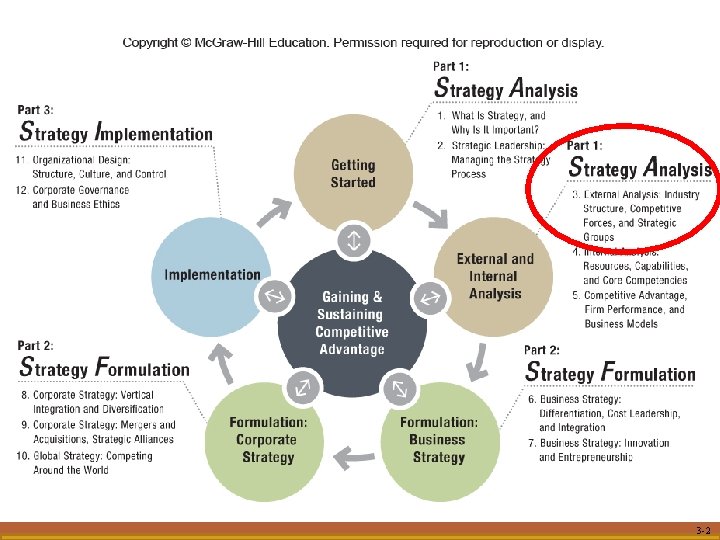
3 -2
Chapter Outline 3. 1 The PESTEL Framework 3. 2 Industry Structure and Firm Strategy: The Five Forces Model 3. 3 Changes over Time: Industry Dynamics 3. 4 Explaining Performance Differences within the Same Industry: Strategic Groups 3. 5 Implications for the Strategist 3 -3
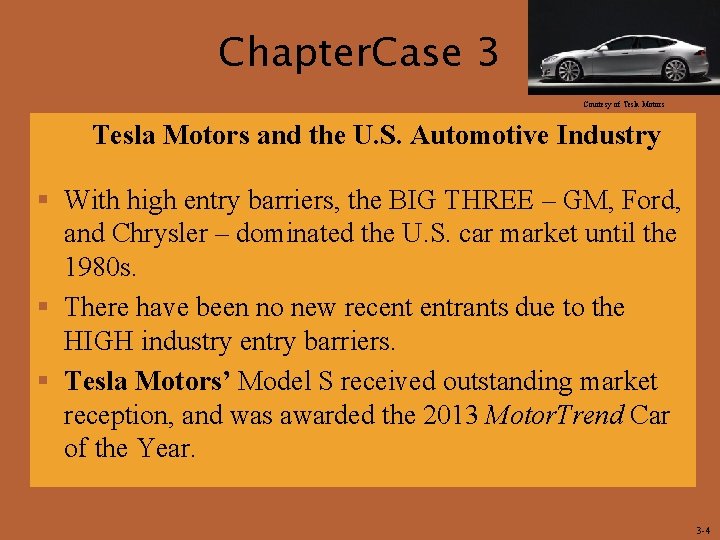
Chapter. Case 3 Courtesy of Tesla Motors and the U. S. Automotive Industry § With high entry barriers, the BIG THREE – GM, Ford, and Chrysler – dominated the U. S. car market until the 1980 s. § There have been no new recent entrants due to the HIGH industry entry barriers. § Tesla Motors’ Model S received outstanding market reception, and was awarded the 2013 Motor. Trend Car of the Year. 3 -4
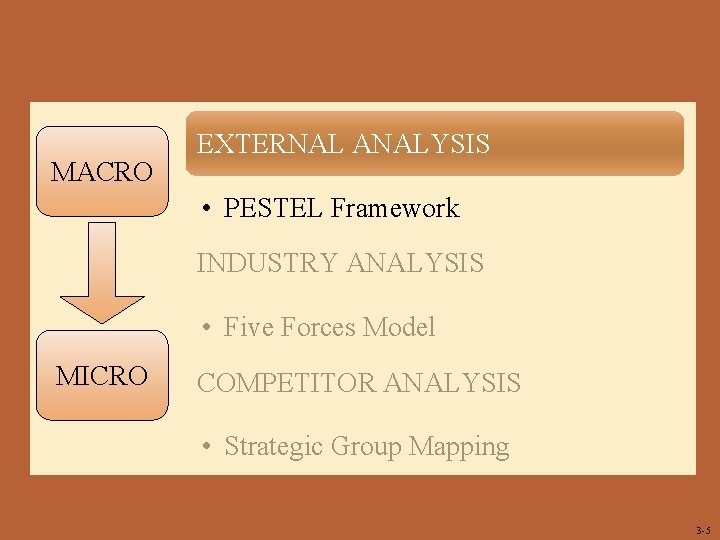
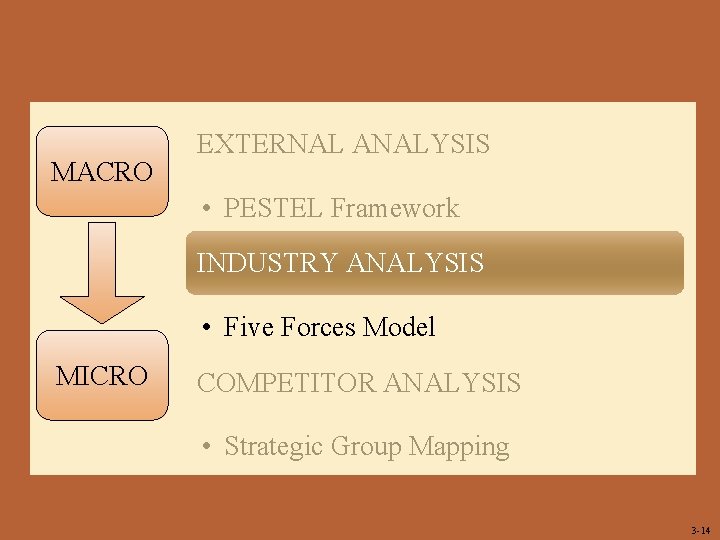
MACRO EXTERNAL ANALYSIS • PESTEL Framework INDUSTRY ANALYSIS • Five Forces Model MICRO COMPETITOR ANALYSIS • Strategic Group Mapping 3 -5
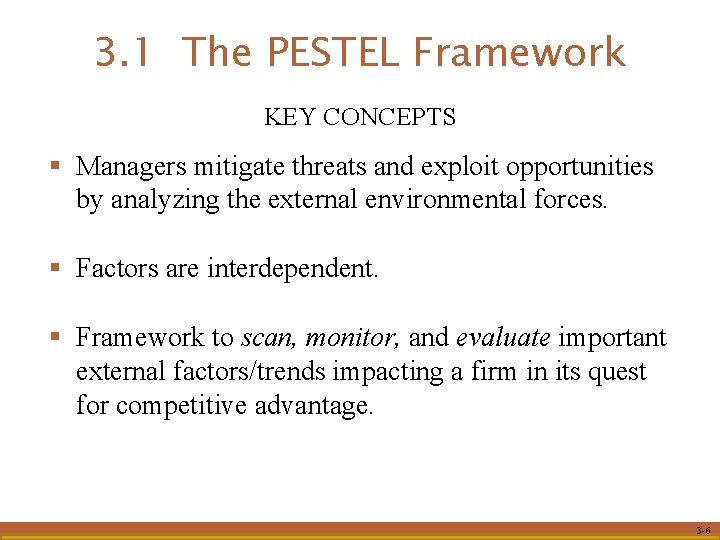
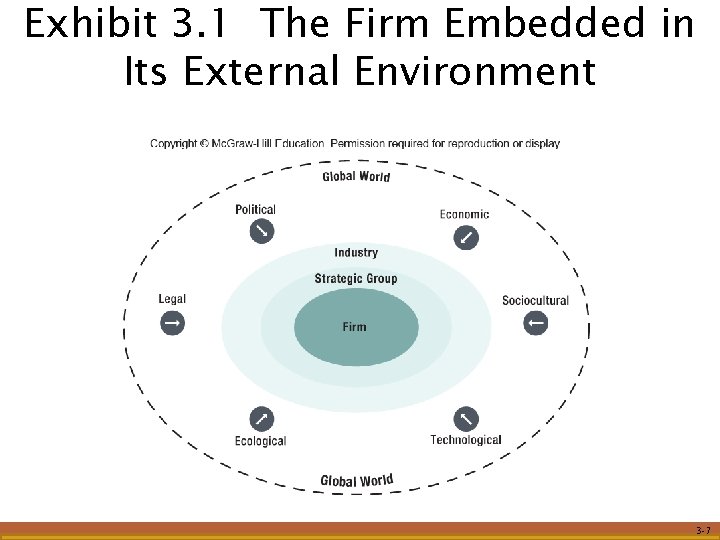
3. 1 The PESTEL Framework KEY CONCEPTS § Managers mitigate threats and exploit opportunities by analyzing the external environmental forces. § Factors are interdependent. § Framework to scan, monitor, and evaluate important external factors/trends impacting a firm in its quest for competitive advantage. 3 -6
Exhibit 3. 1 The Firm Embedded in Its External Environment 3 -7
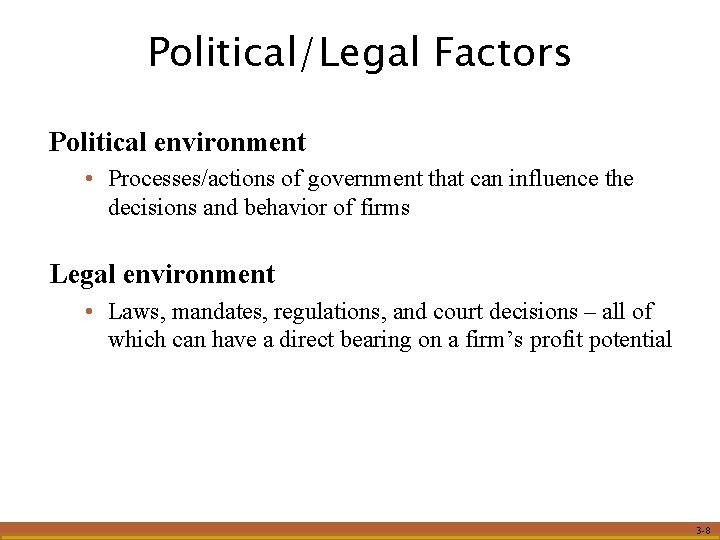
Political/Legal Factors Political environment • Processes/actions of government that can influence the decisions and behavior of firms Legal environment • Laws, mandates, regulations, and court decisions – all of which can have a direct bearing on a firm’s profit potential 3 -8
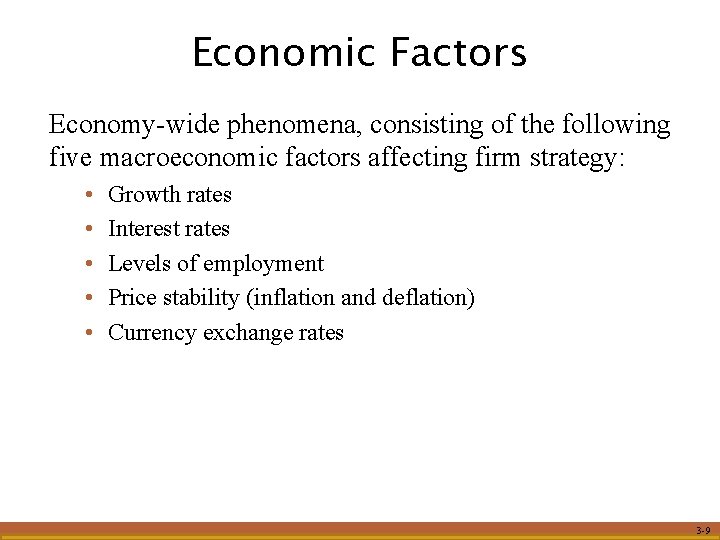
Economic Factors Economy-wide phenomena, consisting of the following five macroeconomic factors affecting firm strategy: • • • Growth rates Interest rates Levels of employment Price stability (inflation and deflation) Currency exchange rates 3 -9
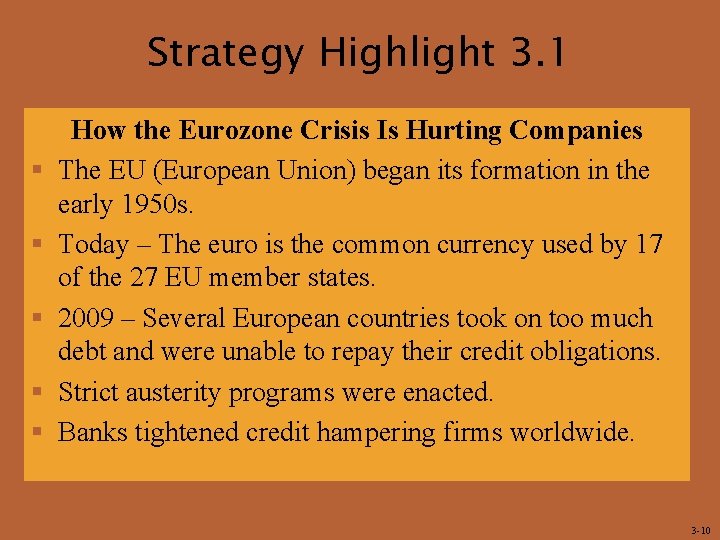
Strategy Highlight 3. 1 § § § How the Eurozone Crisis Is Hurting Companies The EU (European Union) began its formation in the early 1950 s. Today – The euro is the common currency used by 17 of the 27 EU member states. 2009 – Several European countries took on too much debt and were unable to repay their credit obligations. Strict austerity programs were enacted. Banks tightened credit hampering firms worldwide. 3 -10
Sociocultural Factors Sociocultural factors • Capture cultures, norms, and values for society; are dynamic and differ across groups. • Implications for firm strategy must be considered. Demographic trends • Capture population characteristics related to age, gender, family size, ethnicity, sexual orientation, religion, and socioeconomic class. 3 -11
Technological Factors Technological factors • Capture the application of knowledge to create new processes and products. § Innovations in process technology • Lean manufacturing, Six Sigma quality, and biotechnology. § Nanotechnology revolution • (Initial stages) Major upheaval for several industries – medical devices to new-age materials for earthquakeresistant buildings. 3 -12
Ecological Factors § Broad environmental issues, e. g. , the natural environment, global warming, and sustainable economic growth § Business and natural worlds are interdependent and inextricably linked. § Managing these relationships in a sustainable manner directly influences the continued existence of human societies and the organizations we create. 3 -13
MACRO EXTERNAL ANALYSIS • PESTEL Framework INDUSTRY ANALYSIS • Five Forces Model MICRO COMPETITOR ANALYSIS • Strategic Group Mapping 3 -14
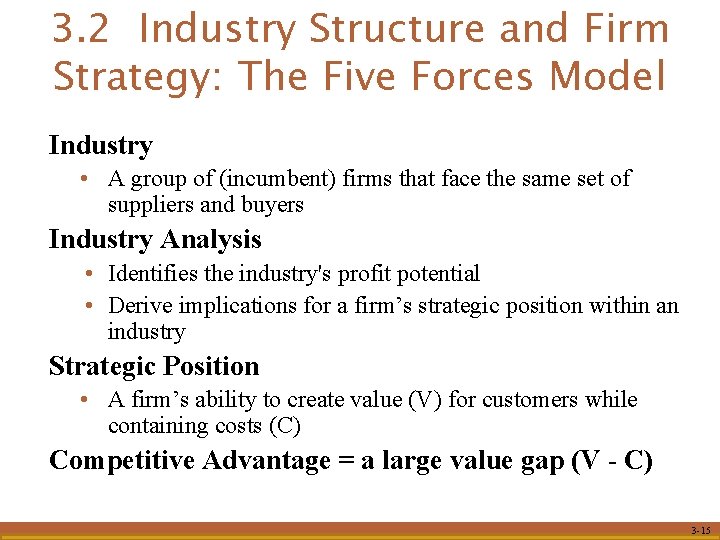
3. 2 Industry Structure and Firm Strategy: The Five Forces Model Industry • A group of (incumbent) firms that face the same set of suppliers and buyers Industry Analysis • Identifies the industry's profit potential • Derive implications for a firm’s strategic position within an industry Strategic Position • A firm’s ability to create value (V) for customers while containing costs (C) Competitive Advantage = a large value gap (V - C) 3 -15
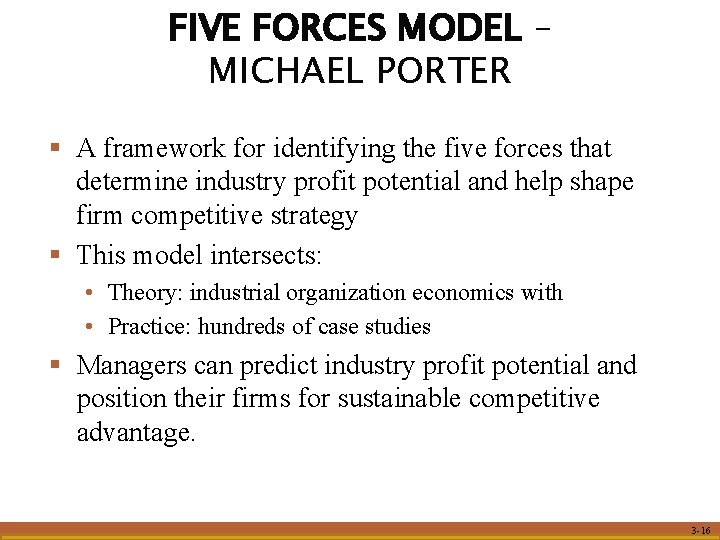
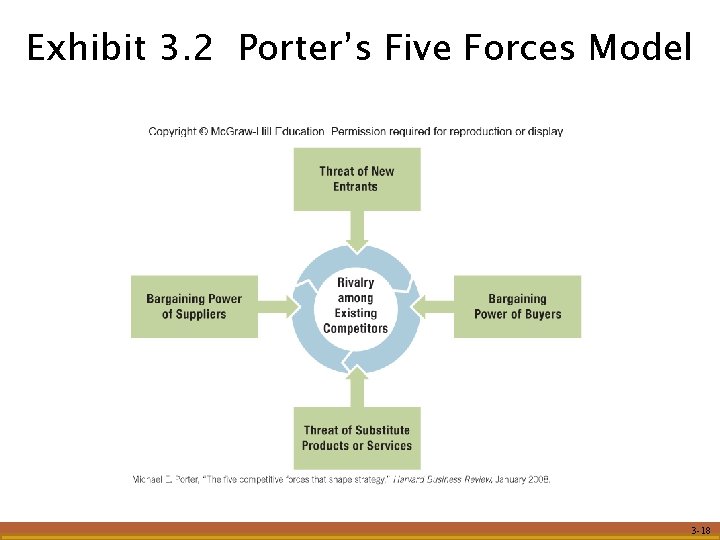
FIVE FORCES MODEL – MICHAEL PORTER § A framework for identifying the five forces that determine industry profit potential and help shape firm competitive strategy § This model intersects: • Theory: industrial organization economics with • Practice: hundreds of case studies § Managers can predict industry profit potential and position their firms for sustainable competitive advantage. 3 -16
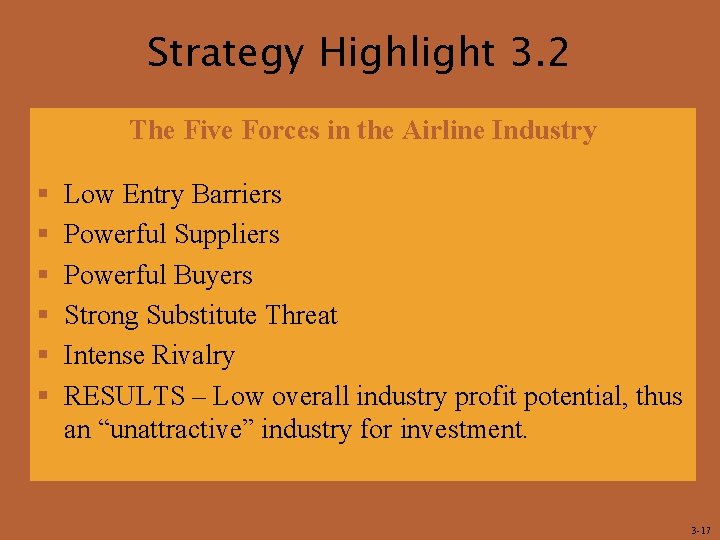
Strategy Highlight 3. 2 The Five Forces in the Airline Industry § § § Low Entry Barriers Powerful Suppliers Powerful Buyers Strong Substitute Threat Intense Rivalry RESULTS – Low overall industry profit potential, thus an “unattractive” industry for investment. 3 -17
Exhibit 3. 2 Porter’s Five Forces Model 3 -18
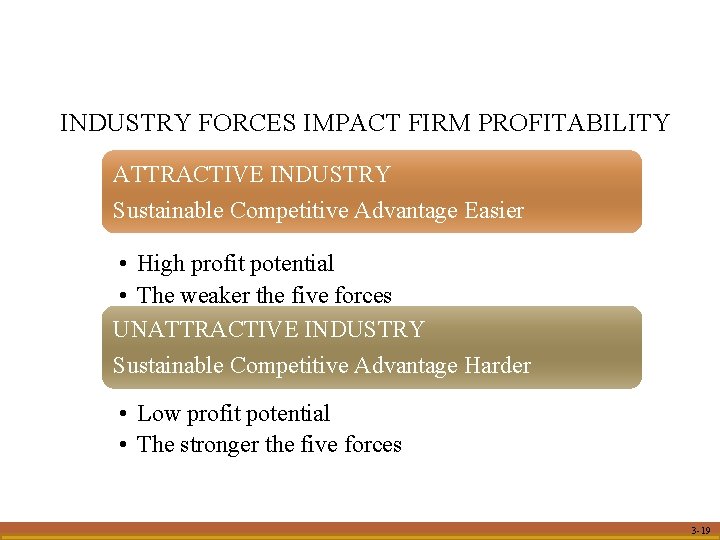
INDUSTRY FORCES IMPACT FIRM PROFITABILITY ATTRACTIVE INDUSTRY Sustainable Competitive Advantage Easier • High profit potential • The weaker the five forces UNATTRACTIVE INDUSTRY Sustainable Competitive Advantage Harder • Low profit potential • The stronger the five forces 3 -19
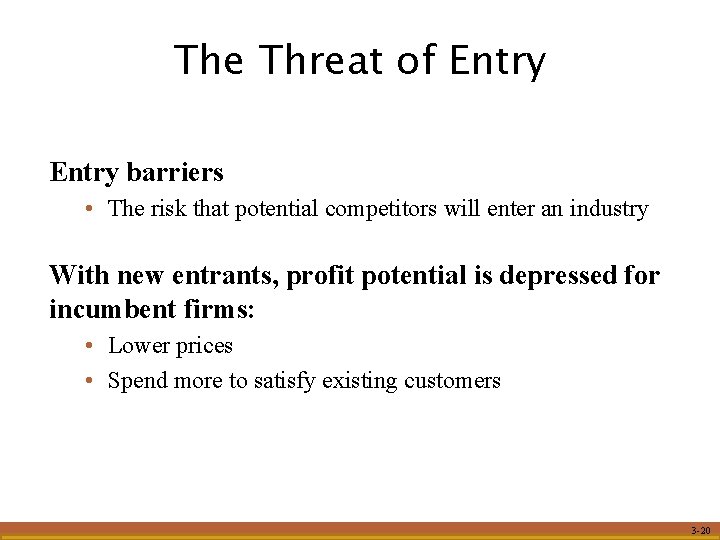
The Threat of Entry barriers • The risk that potential competitors will enter an industry With new entrants, profit potential is depressed for incumbent firms: • Lower prices • Spend more to satisfy existing customers 3 -20
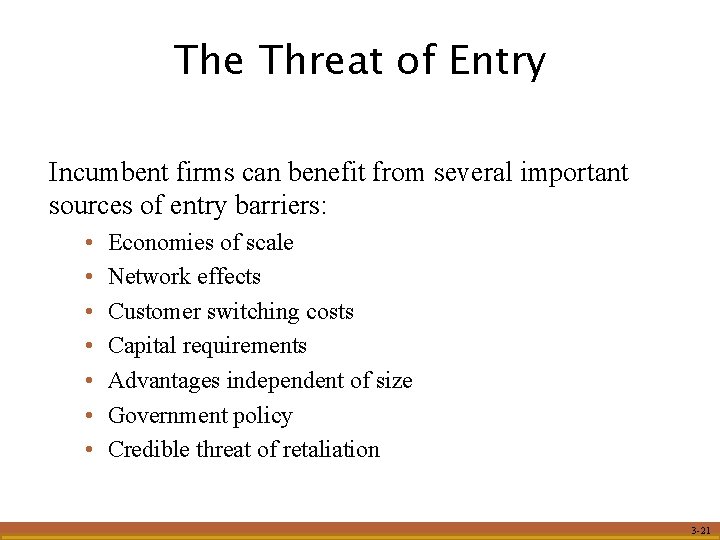
The Threat of Entry Incumbent firms can benefit from several important sources of entry barriers: • • Economies of scale Network effects Customer switching costs Capital requirements Advantages independent of size Government policy Credible threat of retaliation 3 -21
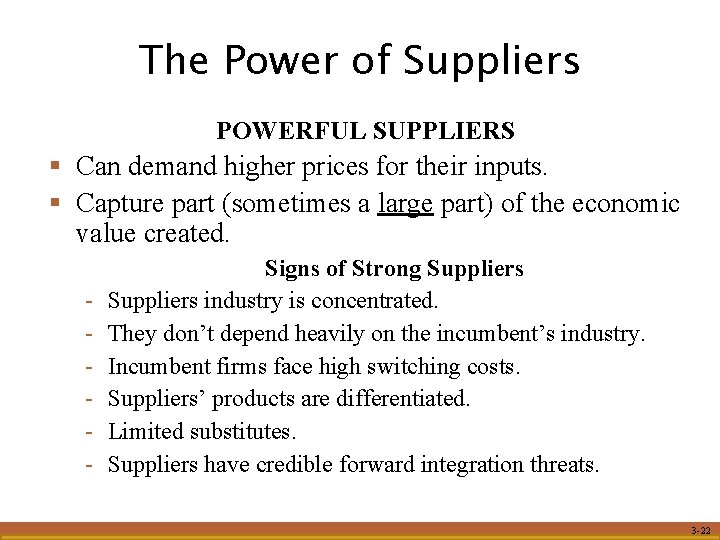
The Power of Suppliers POWERFUL SUPPLIERS § Can demand higher prices for their inputs. § Capture part (sometimes a large part) of the economic value created. - Signs of Strong Suppliers industry is concentrated. They don’t depend heavily on the incumbent’s industry. Incumbent firms face high switching costs. Suppliers’ products are differentiated. Limited substitutes. Suppliers have credible forward integration threats. 3 -22
The Power of Buyers The bargaining power of buyers impacts industry profit potential. POWERFUL BUYERS § Can demand a lower price or higher product quality § Reduce industry profit potential: • Through price discounts (limited revenue) • Through increased quality / better service (higher costs) • As they capture part of the economic value created 3 -23
THE POWER OF BUYERS EXAMPLES Google • Faces strong buyer power from Samsung who has 40% of Android-operated smartphones Walmart • As the world’s largest retailer, it leverages huge buyer power from its suppliers. CEMEX • Strong buyer power in the U. S. leaves it very small profits • Weaker buyer power in Mexico yields much higher profits. 3 -24
The Threat of Substitutes This threat derives from products/services fulfilling the needs of current customers from outside the industry. POWERFUL SUBSTITUTES: THE POWER OF SUBSTITUTES is HIGH when: • Price-performance: Has an attractive trade-off. • The buyer’s switching cost is low. Substitutes limit the price that industry competitors can charge for their products/services. 3 -25
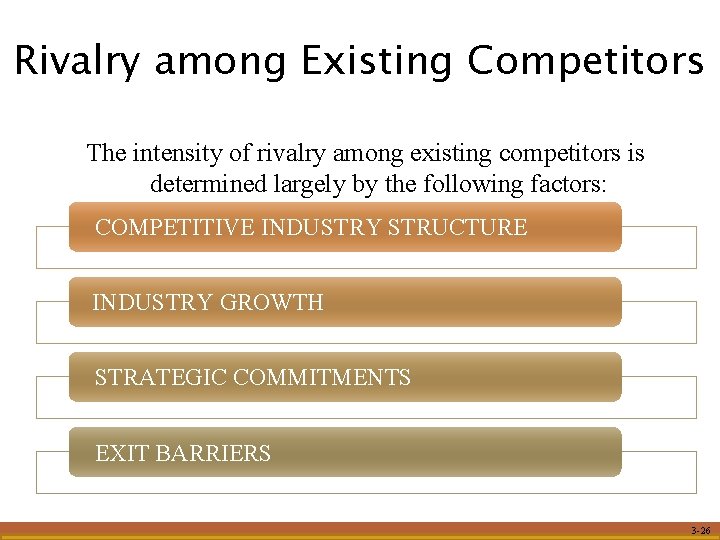
Rivalry among Existing Competitors The intensity of rivalry among existing competitors is determined largely by the following factors: COMPETITIVE INDUSTRY STRUCTURE INDUSTRY GROWTH STRATEGIC COMMITMENTS EXIT BARRIERS 3 -26
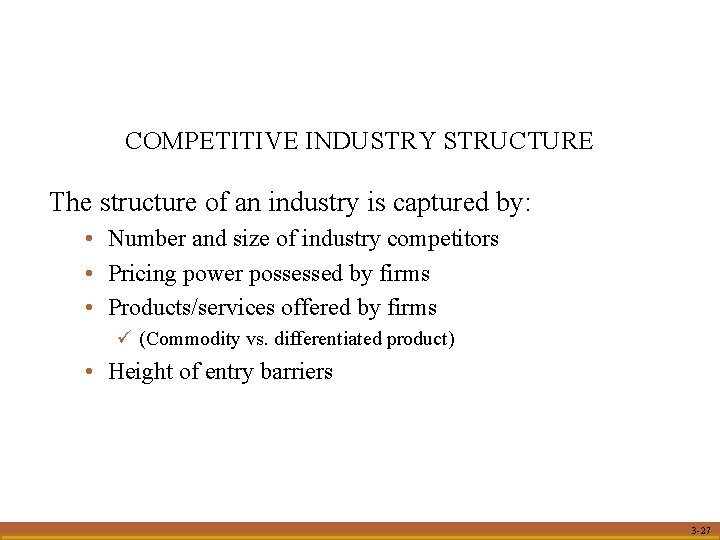
COMPETITIVE INDUSTRY STRUCTURE The structure of an industry is captured by: • Number and size of industry competitors • Pricing power possessed by firms • Products/services offered by firms ü (Commodity vs. differentiated product) • Height of entry barriers 3 -27
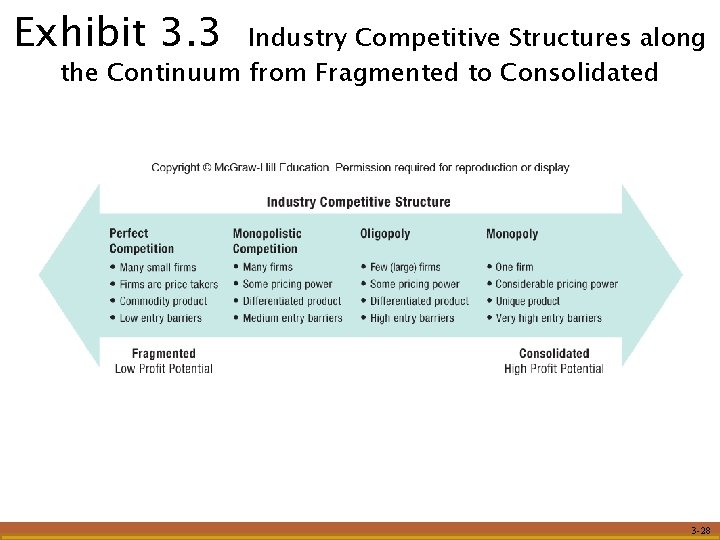
Exhibit 3. 3 Industry Competitive Structures along the Continuum from Fragmented to Consolidated 3 -28
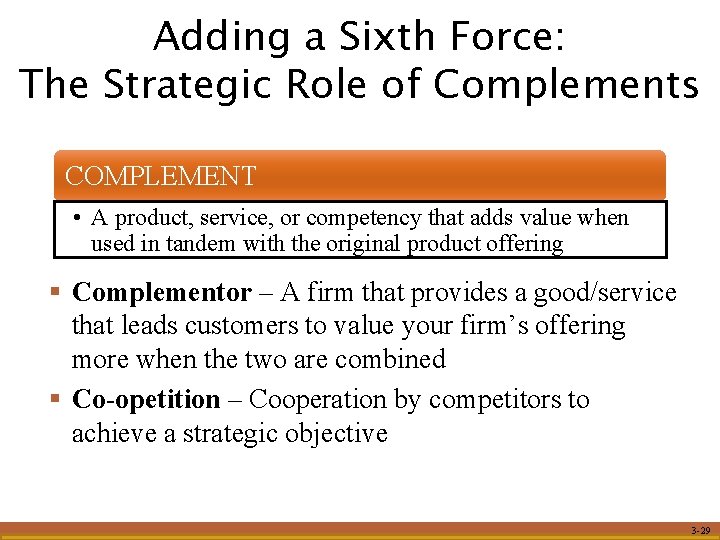
Adding a Sixth Force: The Strategic Role of Complements COMPLEMENT • A product, service, or competency that adds value when used in tandem with the original product offering § Complementor – A firm that provides a good/service that leads customers to value your firm’s offering more when the two are combined § Co-opetition – Cooperation by competitors to achieve a strategic objective 3 -29
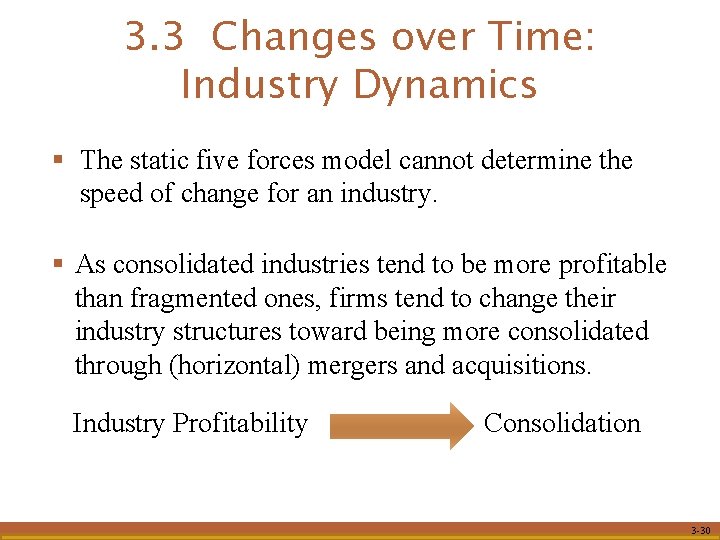
3. 3 Changes over Time: Industry Dynamics § The static five forces model cannot determine the speed of change for an industry. § As consolidated industries tend to be more profitable than fragmented ones, firms tend to change their industry structures toward being more consolidated through (horizontal) mergers and acquisitions. Industry Profitability Consolidation 3 -30
INDUSTRY CONVERGENCE • A process whereby formerly unrelated industries begin to satisfy the same customer need § Driver: Technological advances § Example: Convergence of media industries due to technological progress in IT, telecommunications, and digital media 3 -31
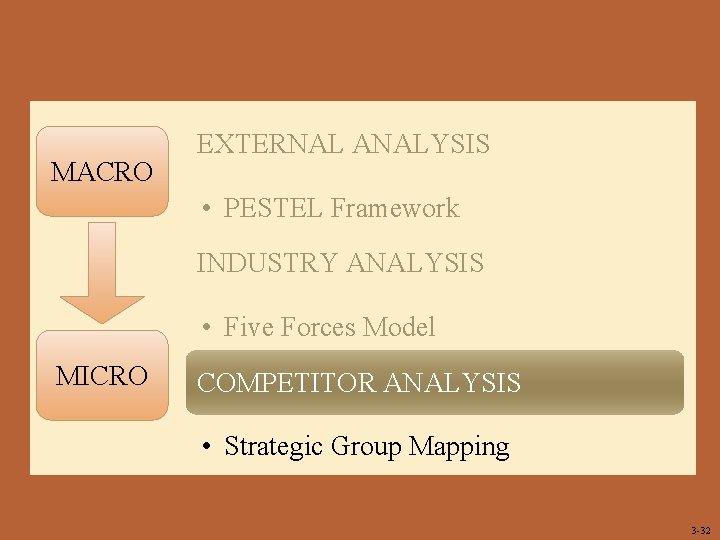
MACRO EXTERNAL ANALYSIS • PESTEL Framework INDUSTRY ANALYSIS • Five Forces Model MICRO COMPETITOR ANALYSIS • Strategic Group Mapping 3 -32
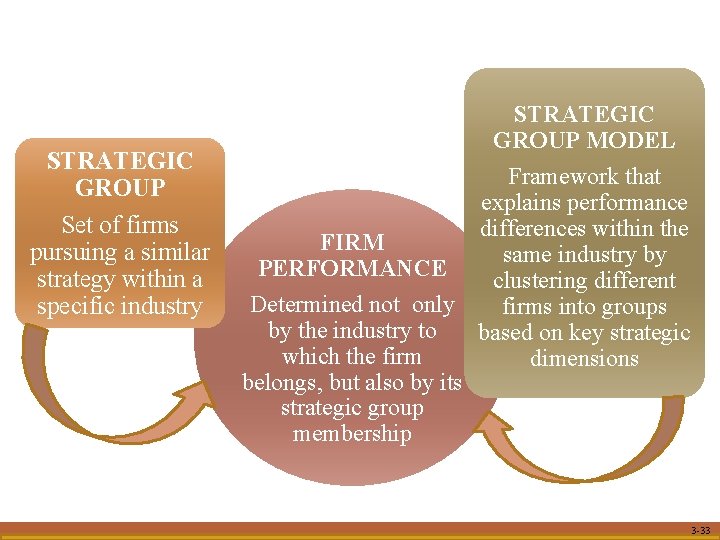
STRATEGIC GROUP Set of firms pursuing a similar strategy within a specific industry STRATEGIC GROUP MODEL Framework that explains performance differences within the FIRM same industry by PERFORMANCE clustering different Determined not only firms into groups by the industry to based on key strategic which the firm dimensions belongs, but also by its strategic group membership 3 -33
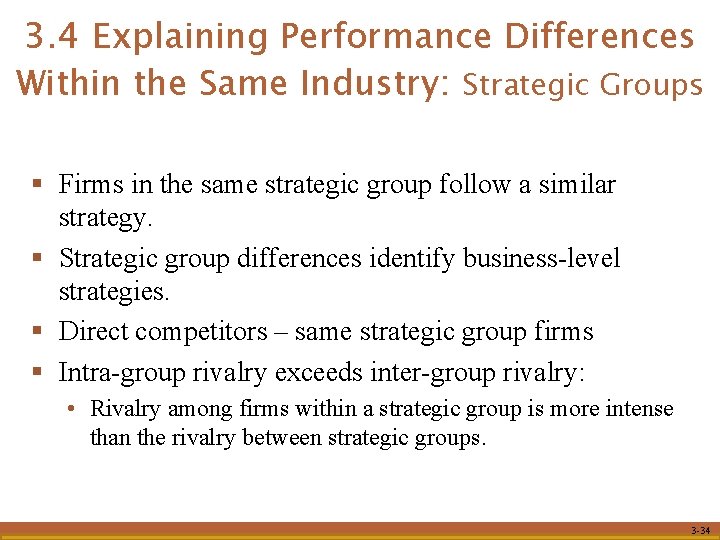
3. 4 Explaining Performance Differences Within the Same Industry: Strategic Groups § Firms in the same strategic group follow a similar strategy. § Strategic group differences identify business-level strategies. § Direct competitors – same strategic group firms § Intra-group rivalry exceeds inter-group rivalry: • Rivalry among firms within a strategic group is more intense than the rivalry between strategic groups. 3 -34
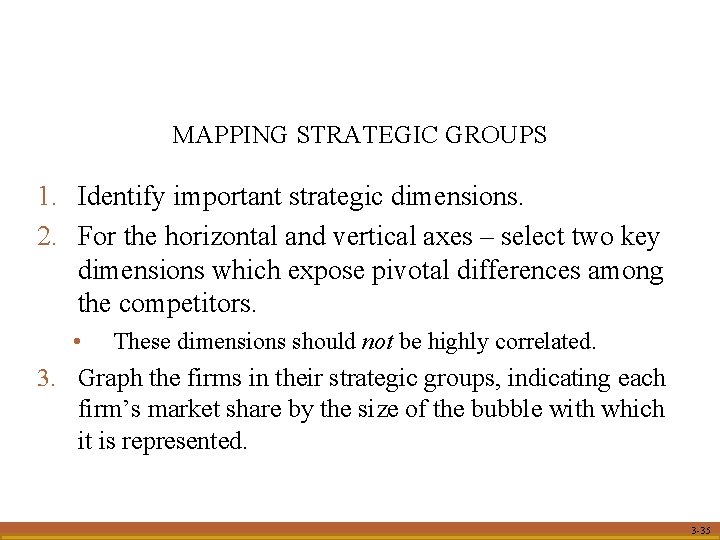
MAPPING STRATEGIC GROUPS 1. Identify important strategic dimensions. 2. For the horizontal and vertical axes – select two key dimensions which expose pivotal differences among the competitors. • These dimensions should not be highly correlated. 3. Graph the firms in their strategic groups, indicating each firm’s market share by the size of the bubble with which it is represented. 3 -35
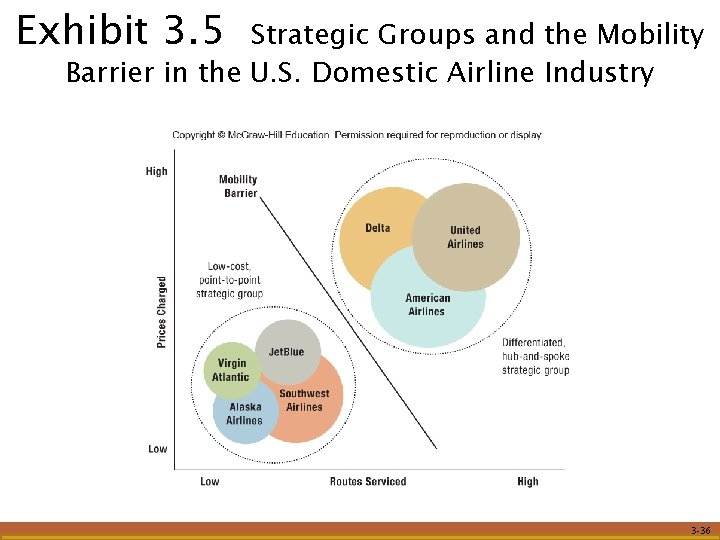
Exhibit 3. 5 Strategic Groups and the Mobility Barrier in the U. S. Domestic Airline Industry 3 -36
Mobility Barriers Mobility barriers • Restricts movement between groups; industry-specific factors that separate one strategic group from another Exhibit 3. 5 – Airline industry strategic groups: • Hub-and-spoke group with international routes • Point-to-point airline groups do not 3 -37
3. 5 Implications for the Strategist § PESTEL analysis guiding consideration: How the external factors identified affect the firm’s industry environment. § Porter’s five forces model identifies industry profit potential and firm positioning for gaining and sustaining competitive advantage. § Strategic group map helps to find performance differences within the focal industry. 3 -38
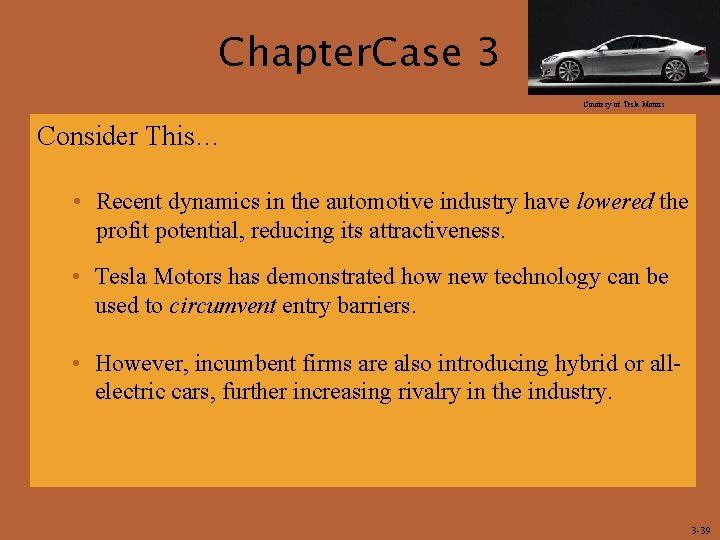
Chapter. Case 3 Courtesy of Tesla Motors Consider This… • Recent dynamics in the automotive industry have lowered the profit potential, reducing its attractiveness. • Tesla Motors has demonstrated how new technology can be used to circumvent entry barriers. • However, incumbent firms are also introducing hybrid or allelectric cars, further increasing rivalry in the industry. 3 -39
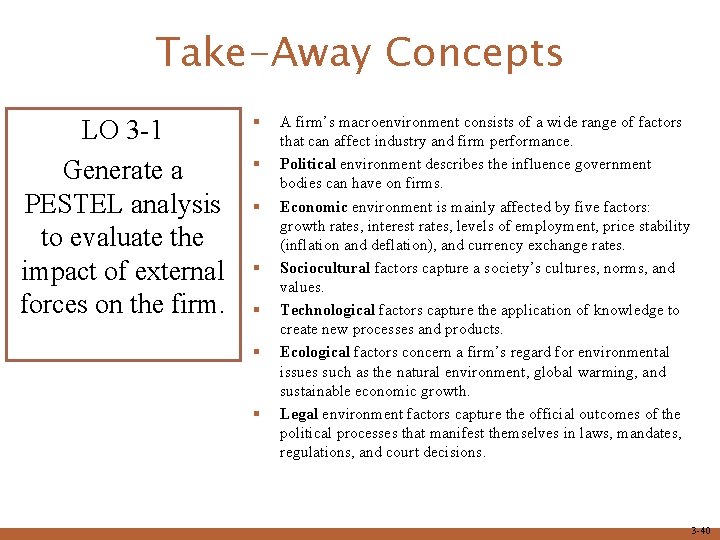
Take-Away Concepts LO 3 -1 Generate a PESTEL analysis to evaluate the impact of external forces on the firm. § § § § A firm’s macroenvironment consists of a wide range of factors that can affect industry and firm performance. Political environment describes the influence government bodies can have on firms. Economic environment is mainly affected by five factors: growth rates, interest rates, levels of employment, price stability (inflation and deflation), and currency exchange rates. Sociocultural factors capture a society’s cultures, norms, and values. Technological factors capture the application of knowledge to create new processes and products. Ecological factors concern a firm’s regard for environmental issues such as the natural environment, global warming, and sustainable economic growth. Legal environment factors capture the official outcomes of the political processes that manifest themselves in laws, mandates, regulations, and court decisions. 3 -40
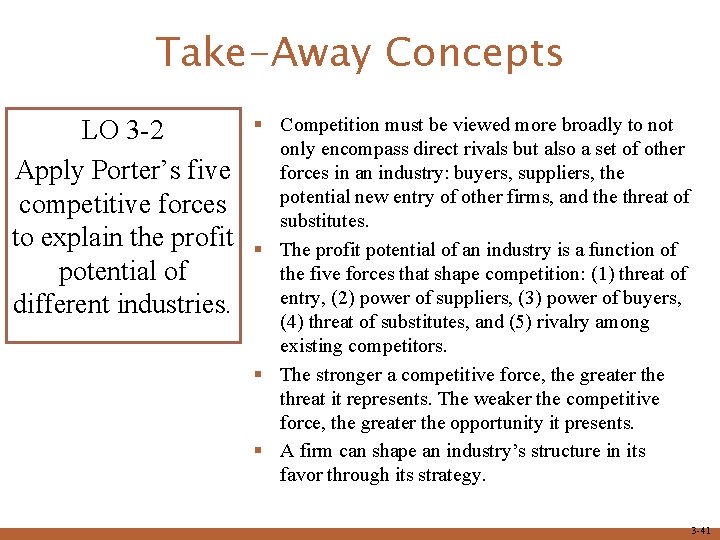
Take-Away Concepts LO 3 -2 Apply Porter’s five competitive forces to explain the profit potential of different industries. § Competition must be viewed more broadly to not only encompass direct rivals but also a set of other forces in an industry: buyers, suppliers, the potential new entry of other firms, and the threat of substitutes. § The profit potential of an industry is a function of the five forces that shape competition: (1) threat of entry, (2) power of suppliers, (3) power of buyers, (4) threat of substitutes, and (5) rivalry among existing competitors. § The stronger a competitive force, the greater the threat it represents. The weaker the competitive force, the greater the opportunity it presents. § A firm can shape an industry’s structure in its favor through its strategy. 3 -41
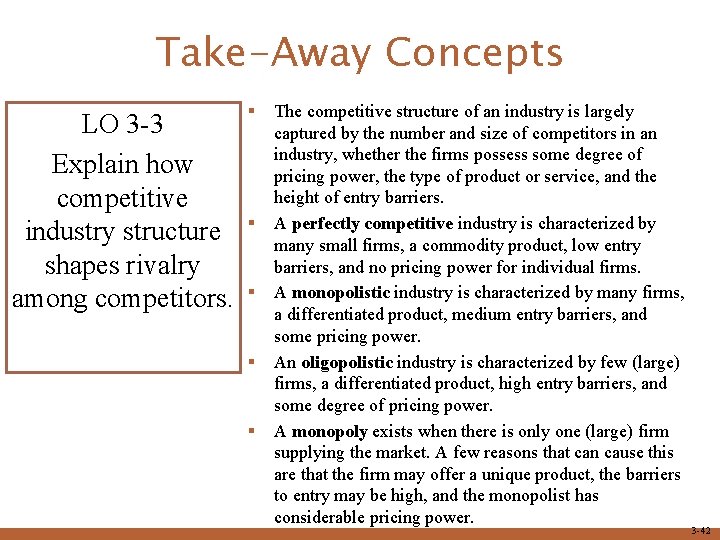
Take-Away Concepts LO 3 -3 Explain how competitive industry structure shapes rivalry among competitors. § § § The competitive structure of an industry is largely captured by the number and size of competitors in an industry, whether the firms possess some degree of pricing power, the type of product or service, and the height of entry barriers. A perfectly competitive industry is characterized by many small firms, a commodity product, low entry barriers, and no pricing power for individual firms. A monopolistic industry is characterized by many firms, a differentiated product, medium entry barriers, and some pricing power. An oligopolistic industry is characterized by few (large) firms, a differentiated product, high entry barriers, and some degree of pricing power. A monopoly exists when there is only one (large) firm supplying the market. A few reasons that can cause this are that the firm may offer a unique product, the barriers to entry may be high, and the monopolist has considerable pricing power. 3 -42
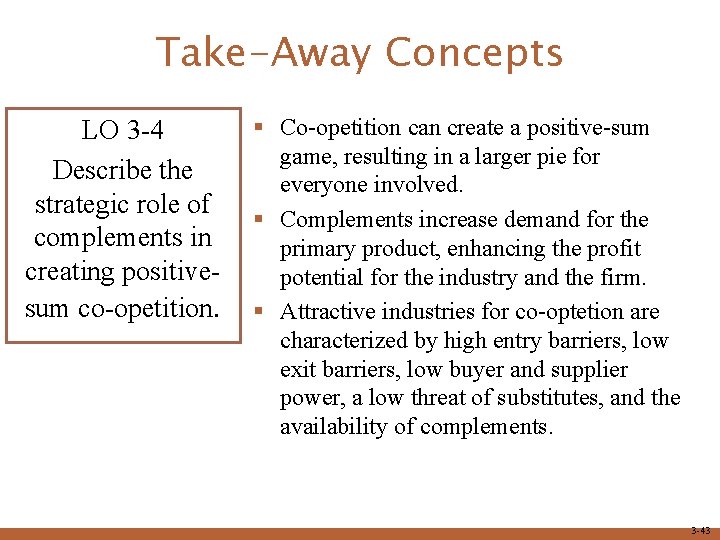
Take-Away Concepts LO 3 -4 Describe the strategic role of complements in creating positivesum co-opetition. § Co-opetition can create a positive-sum game, resulting in a larger pie for everyone involved. § Complements increase demand for the primary product, enhancing the profit potential for the industry and the firm. § Attractive industries for co-optetion are characterized by high entry barriers, low exit barriers, low buyer and supplier power, a low threat of substitutes, and the availability of complements. 3 -43
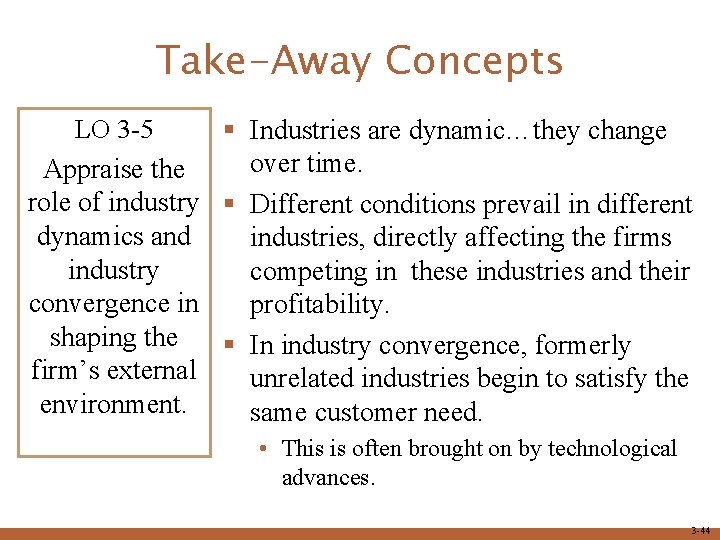
Take-Away Concepts LO 3 -5 § Industries are dynamic…they change over time. Appraise the role of industry § Different conditions prevail in different dynamics and industries, directly affecting the firms industry competing in these industries and their convergence in profitability. shaping the § In industry convergence, formerly firm’s external unrelated industries begin to satisfy the environment. same customer need. • This is often brought on by technological advances. 3 -44
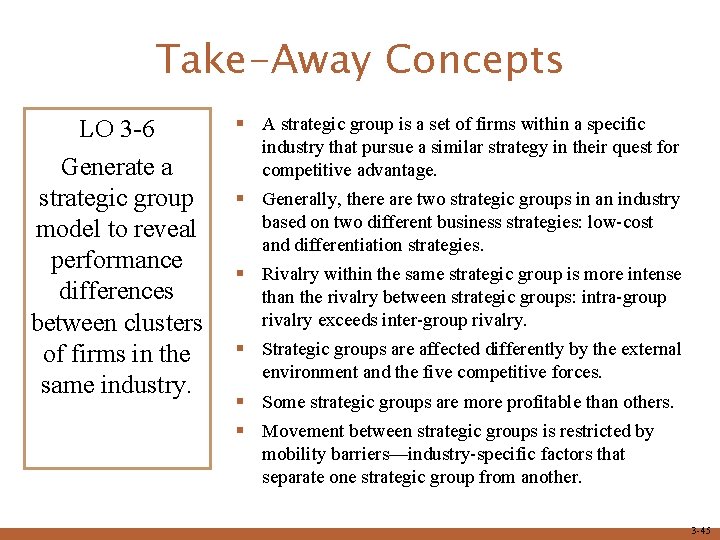
Take-Away Concepts LO 3 -6 Generate a strategic group model to reveal performance differences between clusters of firms in the same industry. § A strategic group is a set of firms within a specific industry that pursue a similar strategy in their quest for competitive advantage. § Generally, there are two strategic groups in an industry based on two different business strategies: low-cost and differentiation strategies. § Rivalry within the same strategic group is more intense than the rivalry between strategic groups: intra-group rivalry exceeds inter-group rivalry. § Strategic groups are affected differently by the external environment and the five competitive forces. § Some strategic groups are more profitable than others. § Movement between strategic groups is restricted by mobility barriers—industry-specific factors that separate one strategic group from another. 3 -45
3 -46