
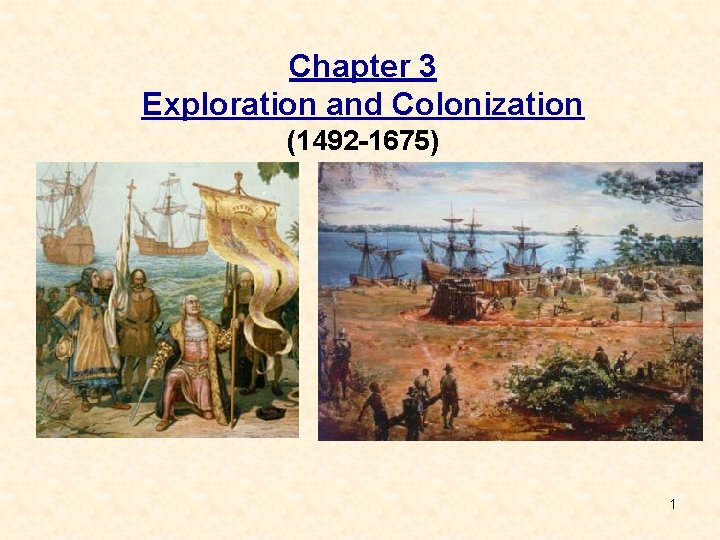
Chapter 3 Exploration and Colonization 1492 1675 1
- Slides: 11
Chapter 3 Exploration and Colonization (1492 -1675) 1
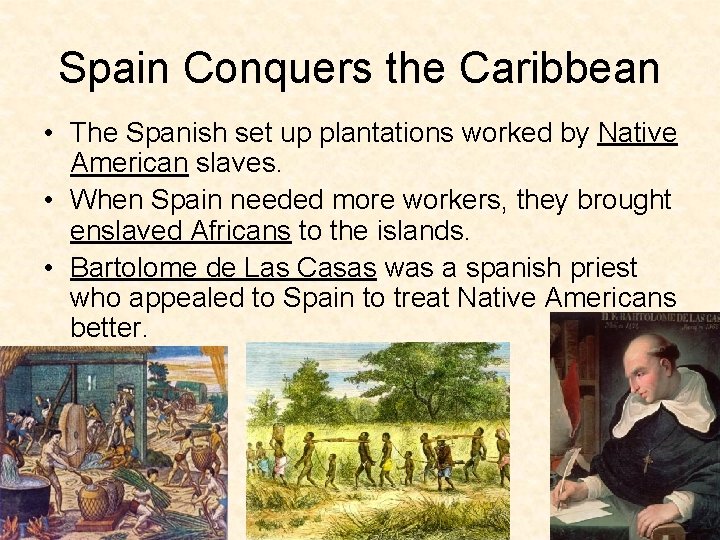
Spain Conquers the Caribbean • The Spanish set up plantations worked by Native American slaves. • When Spain needed more workers, they brought enslaved Africans to the islands. • Bartolome de Las Casas was a spanish priest who appealed to Spain to treat Native Americans better.
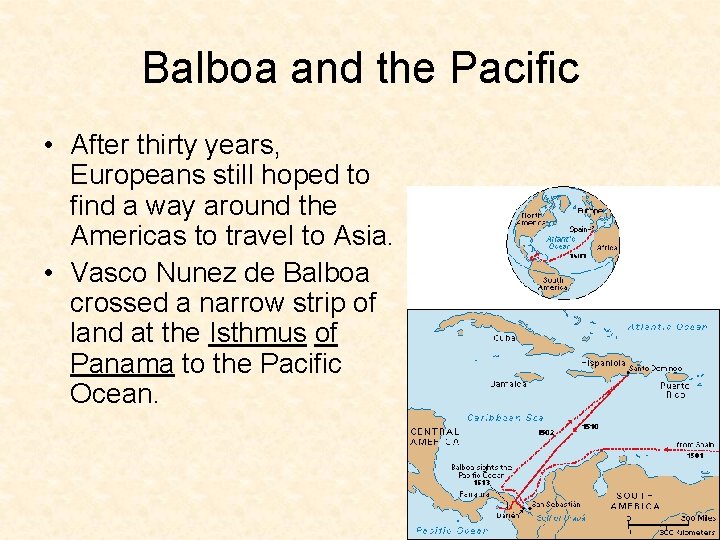
Balboa and the Pacific • After thirty years, Europeans still hoped to find a way around the Americas to travel to Asia. • Vasco Nunez de Balboa crossed a narrow strip of land at the Isthmus of Panama to the Pacific Ocean.
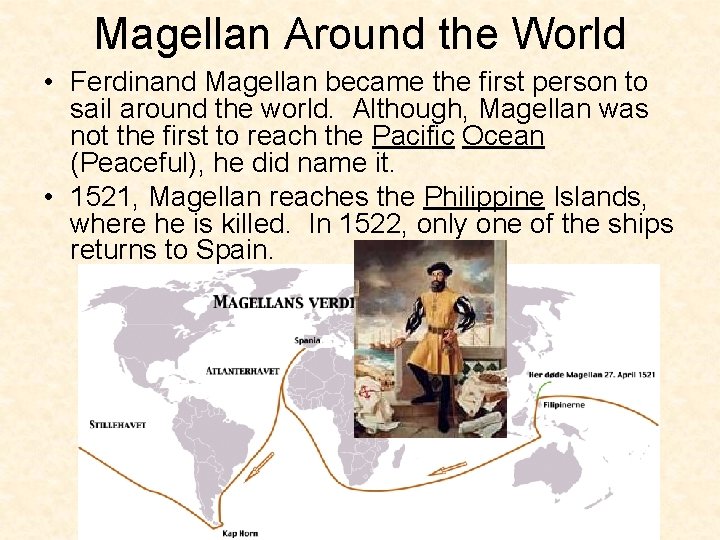
Magellan Around the World • Ferdinand Magellan became the first person to sail around the world. Although, Magellan was not the first to reach the Pacific Ocean (Peaceful), he did name it. • 1521, Magellan reaches the Philippine Islands, where he is killed. In 1522, only one of the ships returns to Spain.
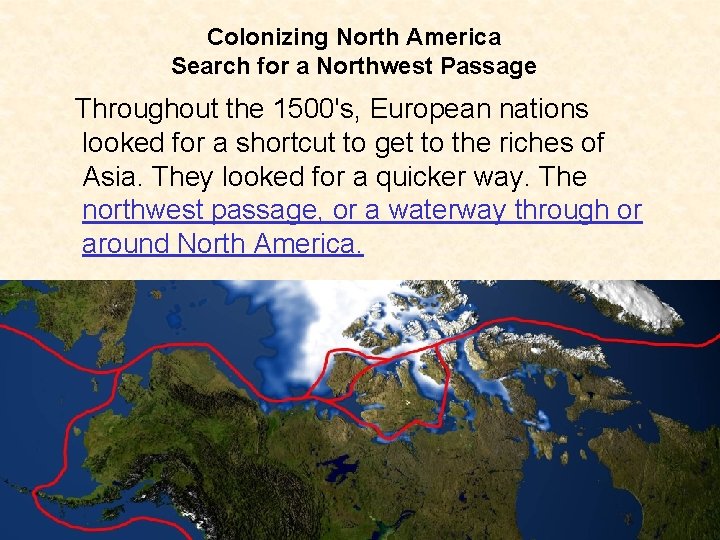
Colonizing North America Search for a Northwest Passage Throughout the 1500's, European nations looked for a shortcut to get to the riches of Asia. They looked for a quicker way. The northwest passage, or a waterway through or around North America. 5
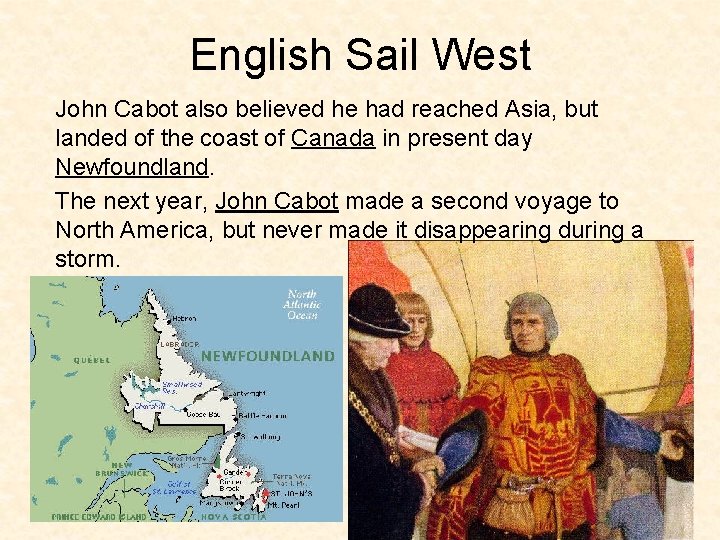
English Sail West John Cabot also believed he had reached Asia, but landed of the coast of Canada in present day Newfoundland. The next year, John Cabot made a second voyage to North America, but never made it disappearing during a storm.
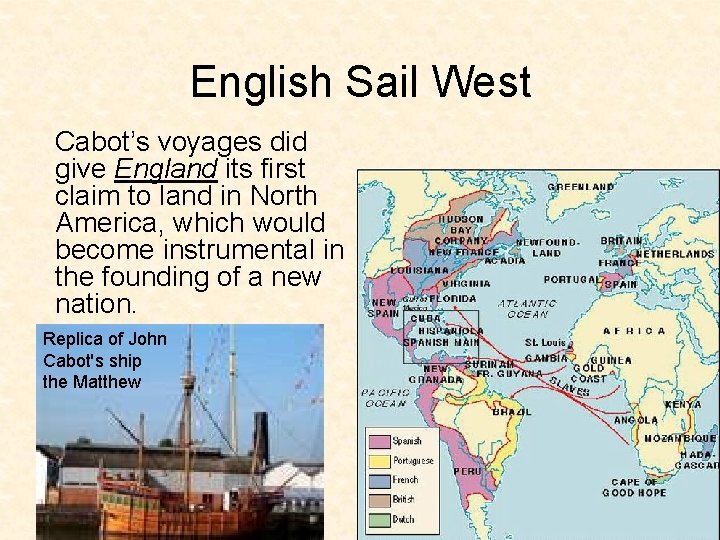
English Sail West Cabot’s voyages did give England its first claim to land in North America, which would become instrumental in the founding of a new nation. Replica of John Cabot's ship the Matthew
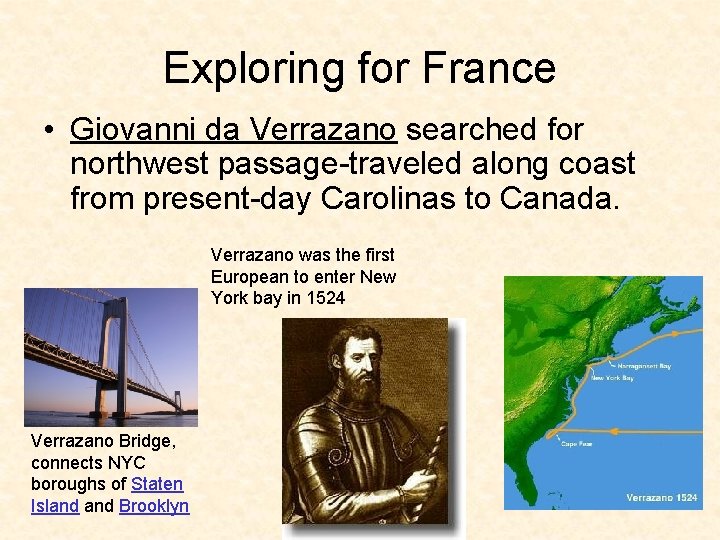
Exploring for France • Giovanni da Verrazano searched for northwest passage-traveled along coast from present-day Carolinas to Canada. Verrazano was the first European to enter New York bay in 1524 Verrazano Bridge, connects NYC boroughs of Staten Island Brooklyn
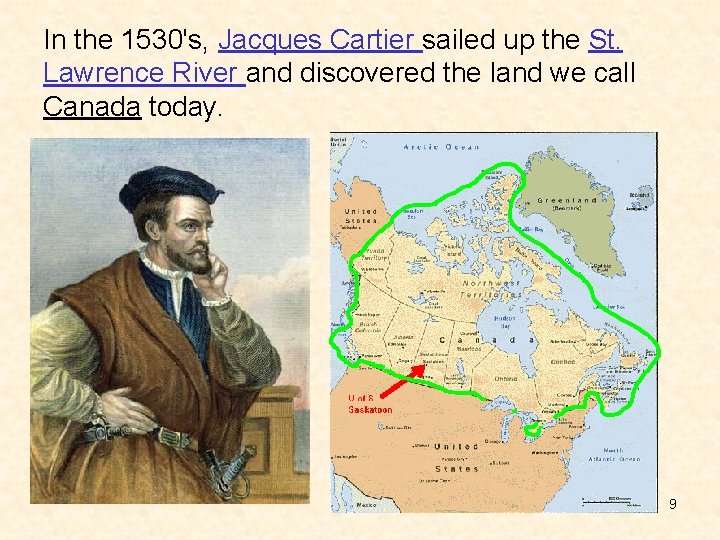
In the 1530's, Jacques Cartier sailed up the St. Lawrence River and discovered the land we call Canada today. 9
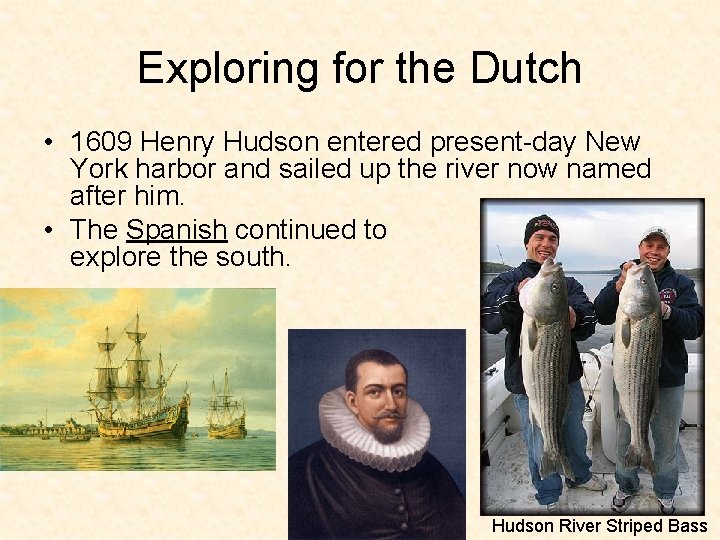
Exploring for the Dutch • 1609 Henry Hudson entered present-day New York harbor and sailed up the river now named after him. • The Spanish continued to explore the south. Hudson River Striped Bass
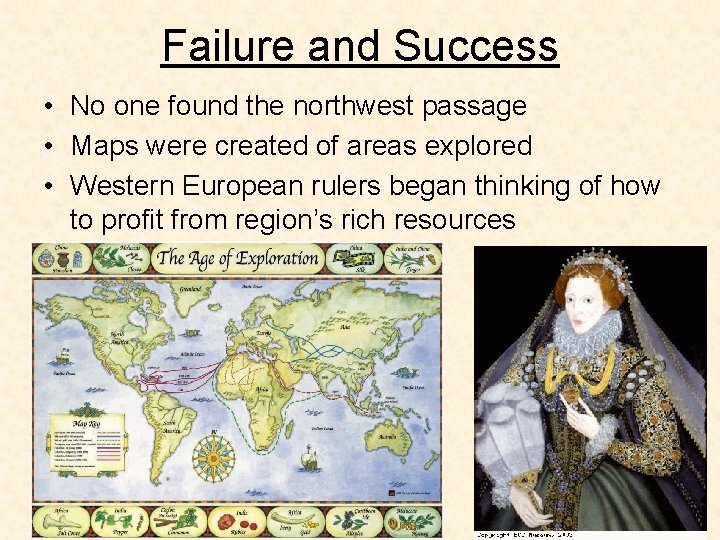
Failure and Success • No one found the northwest passage • Maps were created of areas explored • Western European rulers began thinking of how to profit from region’s rich resources