
Chapter 3 Evolution Biodiversity and Population Ecology Evolution
Chapter 3 Evolution, Biodiversity, and Population Ecology
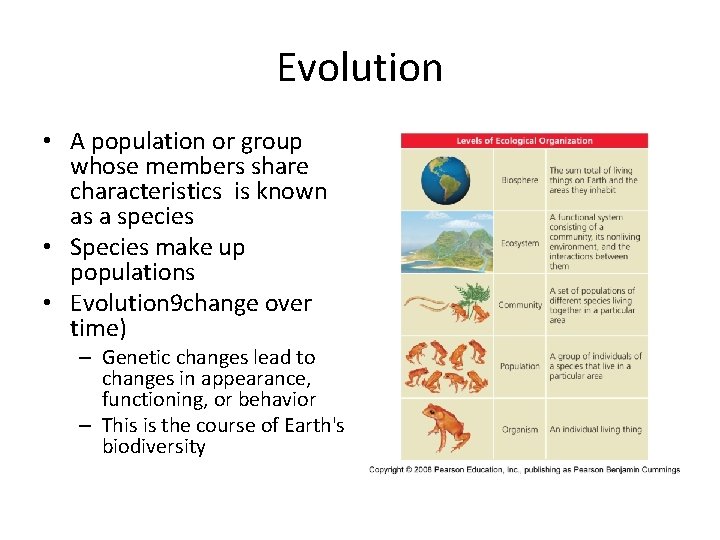
Evolution • A population or group whose members share characteristics is known as a species • Species make up populations • Evolution 9 change over time) – Genetic changes lead to changes in appearance, functioning, or behavior – This is the course of Earth's biodiversity
Evolution • Genetic changes are random – May be directed by natural selection • Natural selection- is the process in which traits that enhance survival and reproduction are passed on more frequently to future generations • Genetic makeup of future populations is changed
Evolution • Understanding of the concept of evolution is important to environmental science • How species change over time and adapt to surroundings help to understand ecology • Evolutionary processes influence pesticide resistance, agriculture, medicine, health, ect.

Evolution • In 1858, both Darwin and Wallace proposed natural selection as the mechanism of evolution • Premises of natural selection: – Organisms struggle to survive and reproduce – Organisms produce more offspring than can survive – Individuals of a species vary in their characteristics due to genes and the environment – Some individuals are better suited to their environment and reproduce more effectively • Organisms with better adapted traits will produce more offspring
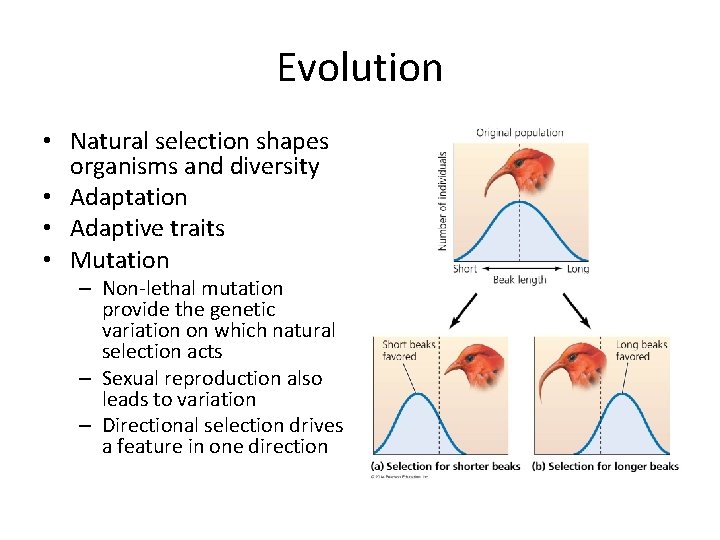
Evolution • Natural selection shapes organisms and diversity • Adaptation • Adaptive traits • Mutation – Non-lethal mutation provide the genetic variation on which natural selection acts – Sexual reproduction also leads to variation – Directional selection drives a feature in one direction
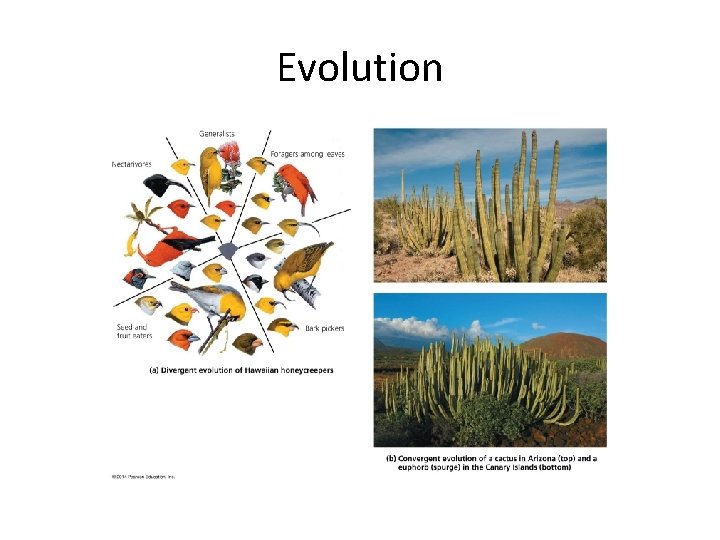
Evolution • Selective pressures from the environment influence adaptation – Related species in different environments experience different pressures and evolve different traits • Divergent evolution – Sometimes unrelated species acquire similar traits because they live in similar environments • Convergent evolution
Evolution
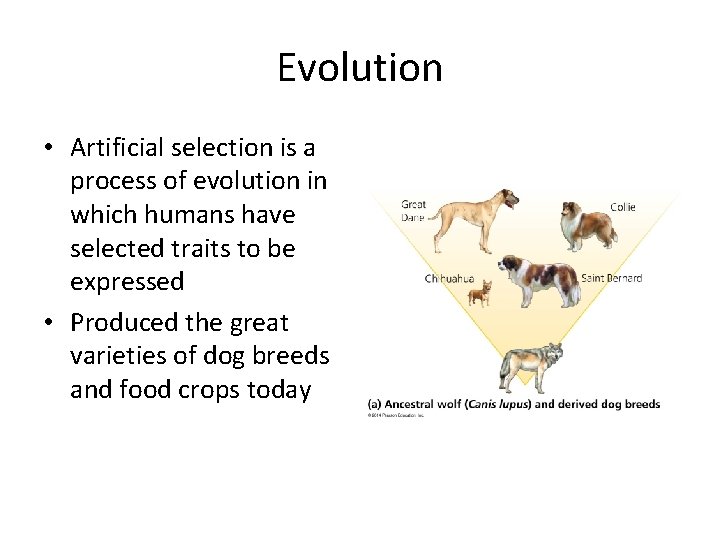
Evolution • Artificial selection is a process of evolution in which humans have selected traits to be expressed • Produced the great varieties of dog breeds and food crops today
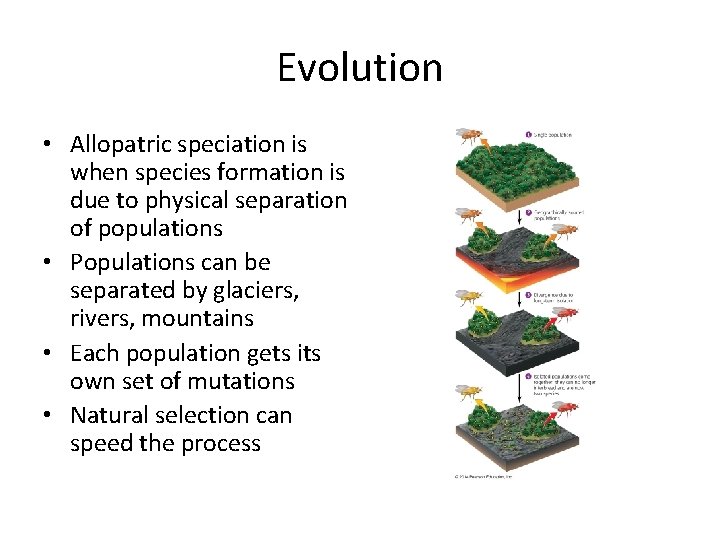
Evolution • Allopatric speciation is when species formation is due to physical separation of populations • Populations can be separated by glaciers, rivers, mountains • Each population gets its own set of mutations • Natural selection can speed the process
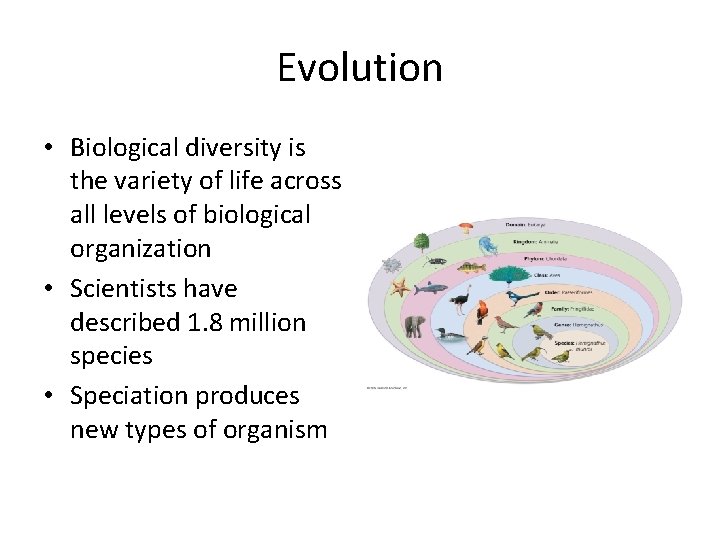
Evolution • Biological diversity is the variety of life across all levels of biological organization • Scientists have described 1. 8 million species • Speciation produces new types of organism
Evolution • The fossil record shows: – – – Life has existed on Earth for at least 3. 5 billion years Earlier types of organisms evolved into later ones The number of species has increased over time Most species have gone extinct There have been several mass extinctions in the past • Extinction = the disappearance of a species from Earth – Species last 1– 10 million years • Extinction has historically been a natural occurrence – The loss of a species is irreversible
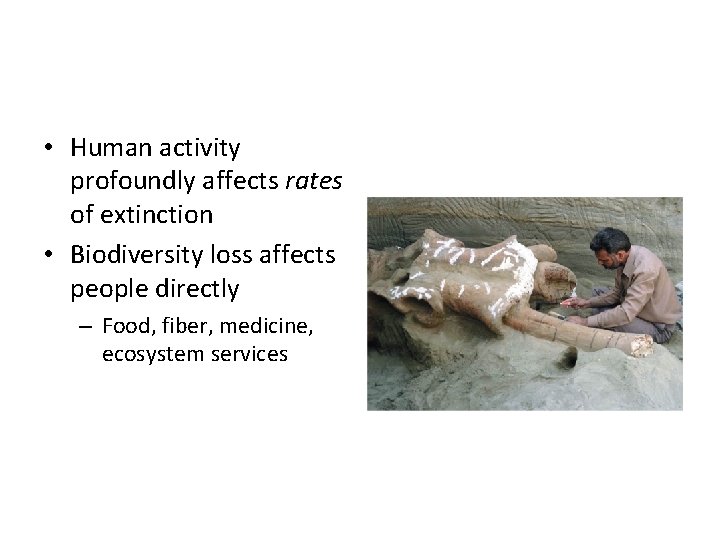
• Human activity profoundly affects rates of extinction • Biodiversity loss affects people directly – Food, fiber, medicine, ecosystem services
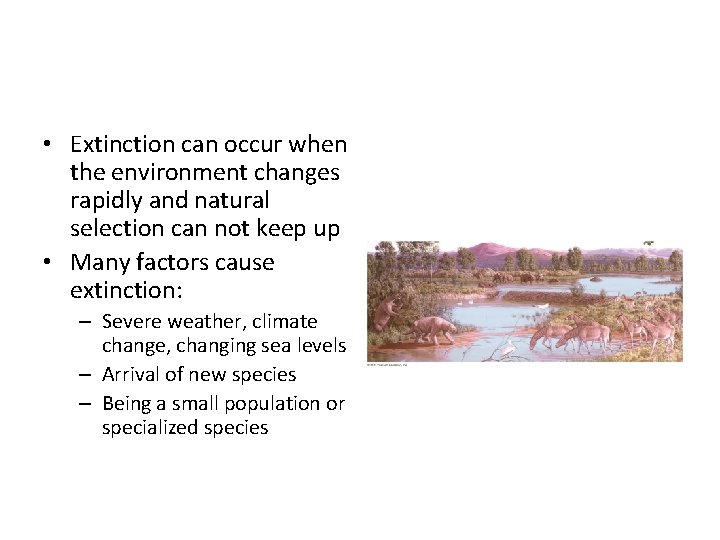
• Extinction can occur when the environment changes rapidly and natural selection can not keep up • Many factors cause extinction: – Severe weather, climate change, changing sea levels – Arrival of new species – Being a small population or specialized species
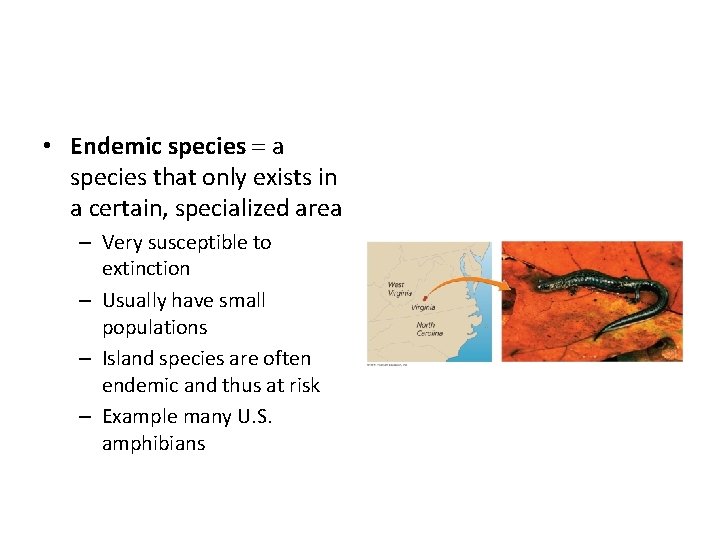
• Endemic species = a species that only exists in a certain, specialized area – Very susceptible to extinction – Usually have small populations – Island species are often endemic and thus at risk – Example many U. S. amphibians
Mass Extinction • Background extinction rate = a constant, slow rate of extinction that occurs as a part of evolution • Mass extinction events = episodes that killed off massive numbers of species at once – Occurred five times in Earth’s history – 50– 95% of all species go extinct at one time • Cretaceous–Tertiary (K–T) event: 65 million years ago – Dinosaurs went extinct • End-Permian event: 250 million years ago – 75– 95% of all species went extinct
Mass Extinction • Humans are causing the sixth mass extinction event – Resource depletion, population growth, development – Destruction of natural habitats – Hunting and harvesting of species – Introduction of non-native species • Today’s extinction rate is 100– 1000 times higher than the background rate and rising • It will take millions of years for life to recover
- Slides: 17