
Chapter 3 Energy Transformation 3 1 Obtaining Energy
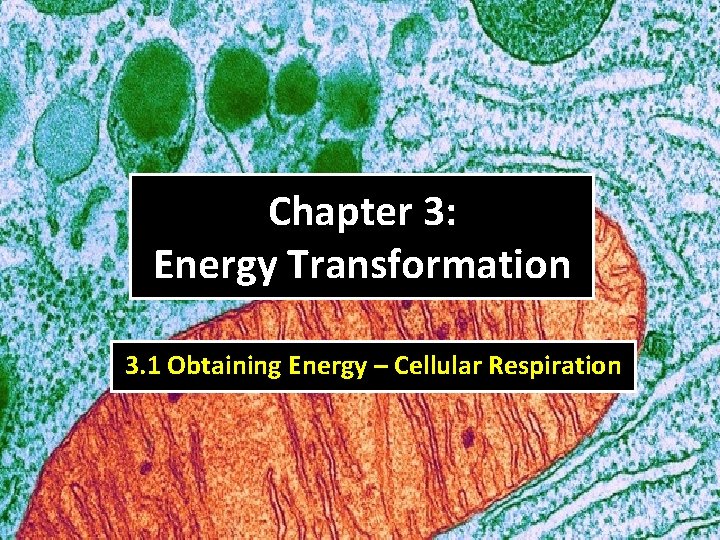
Chapter 3: Energy Transformation 3. 1 Obtaining Energy – Cellular Respiration
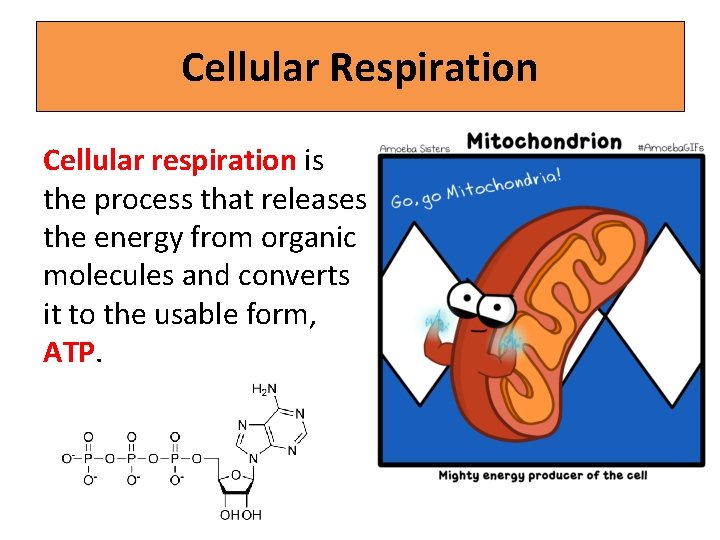
Cellular Respiration Cellular respiration is the process that releases the energy from organic molecules and converts it to the usable form, ATP.
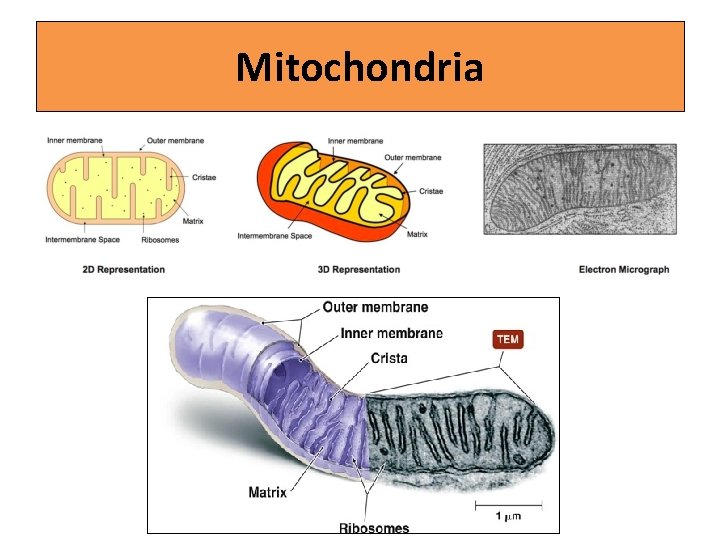
Mitochondria
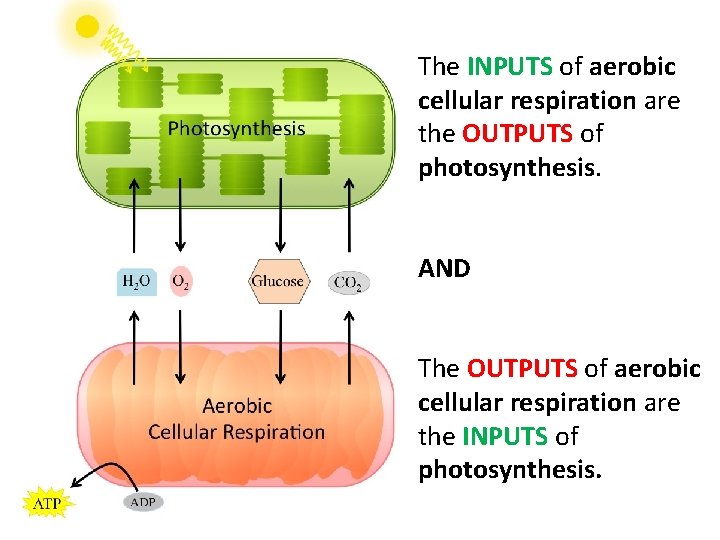
The INPUTS of aerobic cellular respiration are the OUTPUTS of photosynthesis. AND The OUTPUTS of aerobic cellular respiration are the INPUTS of photosynthesis.
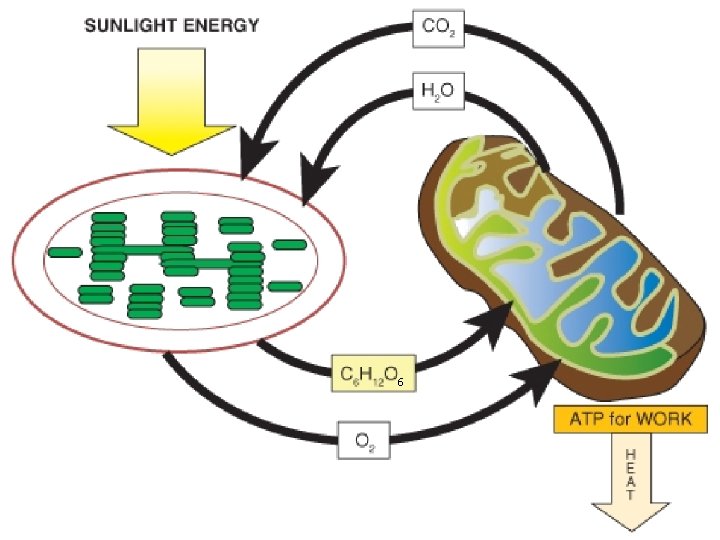
6
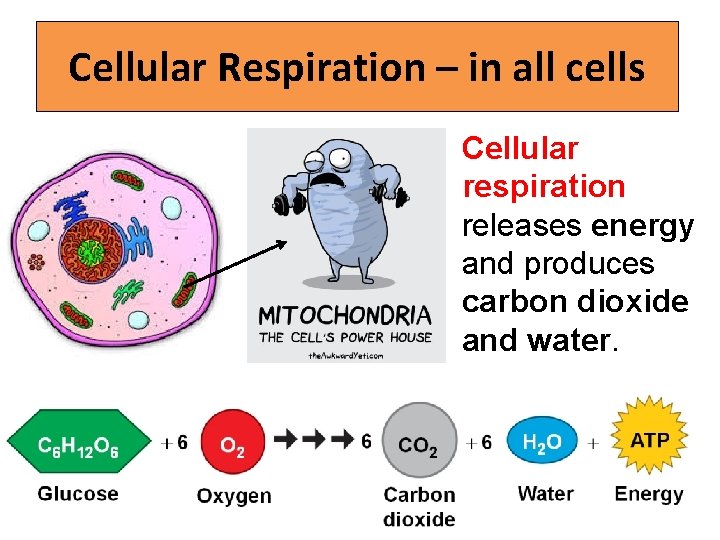
Cellular Respiration – in all cells Cellular respiration releases energy and produces carbon dioxide and water.
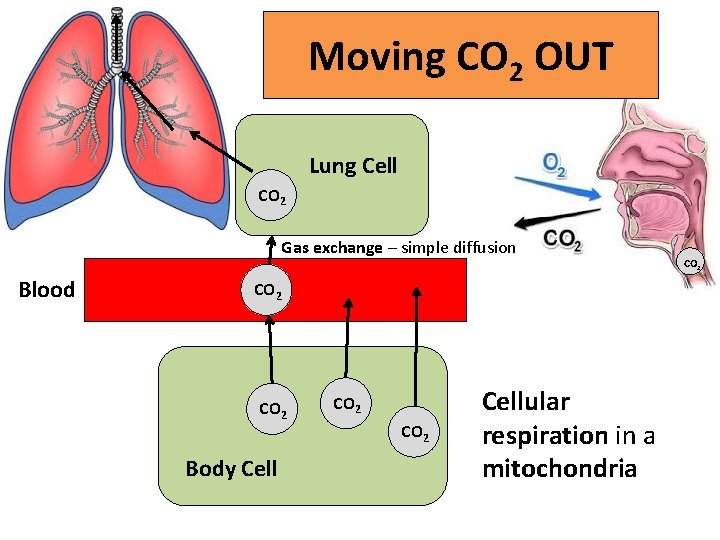
Moving CO 2 OUT Lung Cell CO 2 Gas exchange – simple diffusion Blood CO 2 Body Cell CO 2 Cellular respiration in a mitochondria CO 2
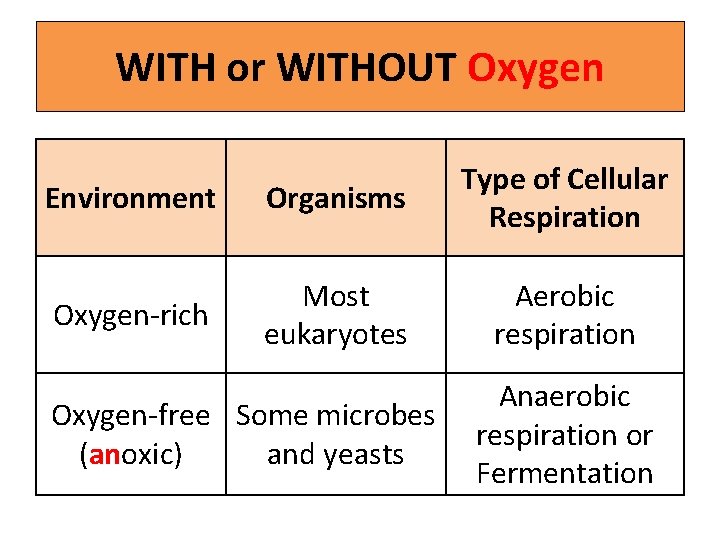
WITH or WITHOUT Oxygen Environment Organisms Type of Cellular Respiration Oxygen-rich Most eukaryotes Aerobic respiration Oxygen-free Some microbes (anoxic) and yeasts Anaerobic respiration or Fermentation
Aerobic Cellular Respiration Aer- = air Cellular respiration in the presence of oxygen. • Yields 36 molecules of ATP per 1 molecule of glucose
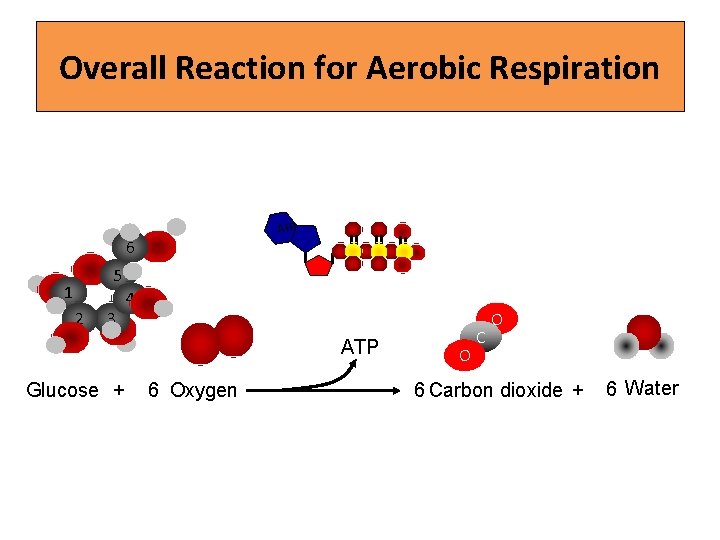
Overall Reaction for Aerobic Respiration ATP 6 5 1 2 3 4 ATP Glucose + 6 Oxygen O C O 6 Carbon dioxide + 6 Water
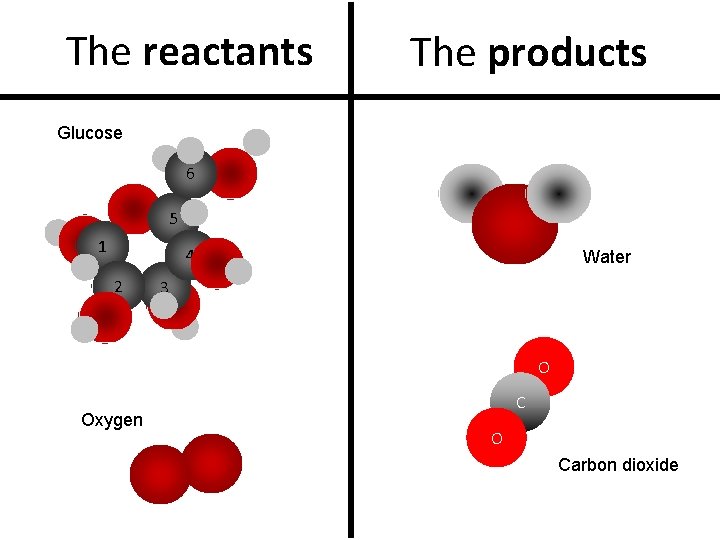
The reactants The products Glucose 6 5 1 4 2 Water 3 O Oxygen C O Carbon dioxide
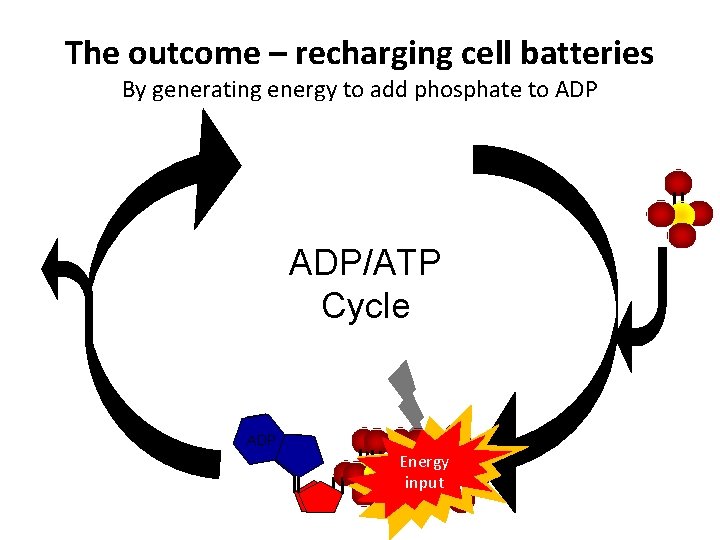
The outcome – recharging cell batteries By generating energy to add phosphate to ADP/ATP Cycle ATP ADP Energy input released
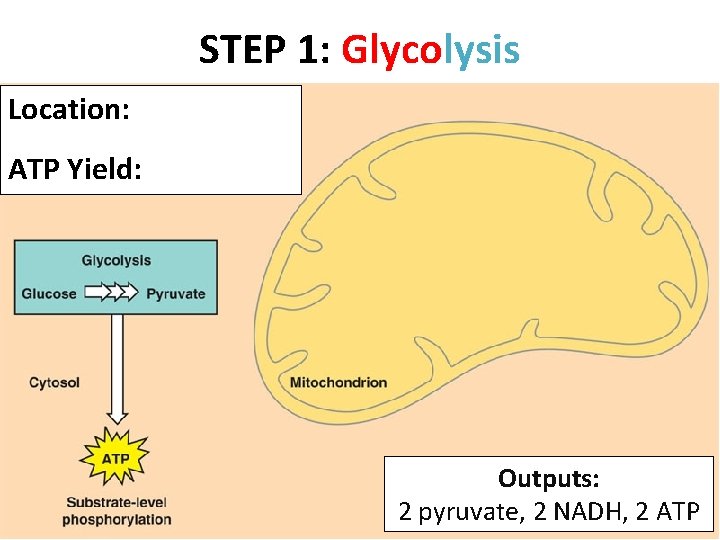
STEP 1: Glycolysis Location: ATP Yield: Outputs: 2 pyruvate, 2 NADH, 2 ATP
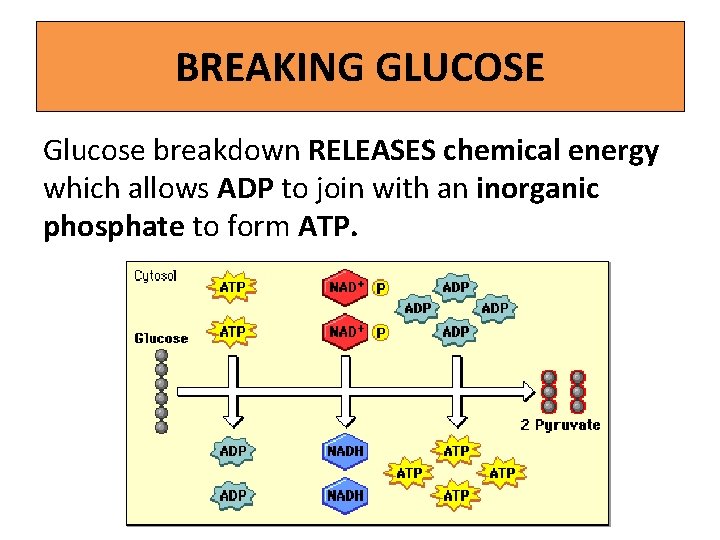
BREAKING GLUCOSE Glucose breakdown RELEASES chemical energy which allows ADP to join with an inorganic phosphate to form ATP.
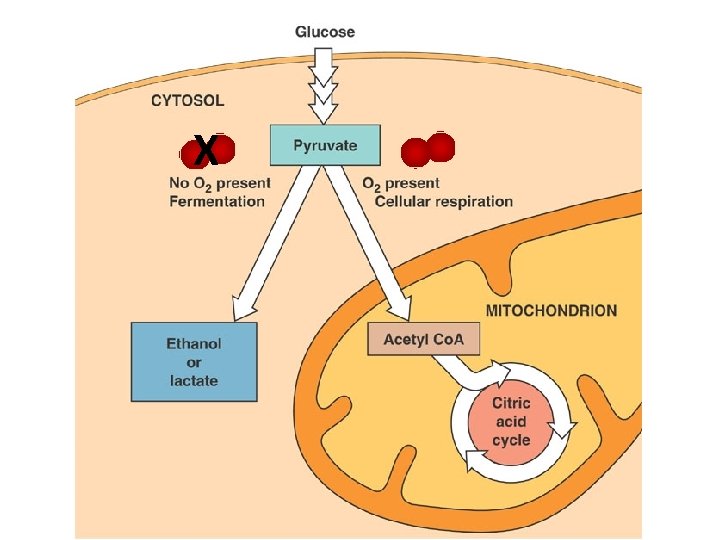
X
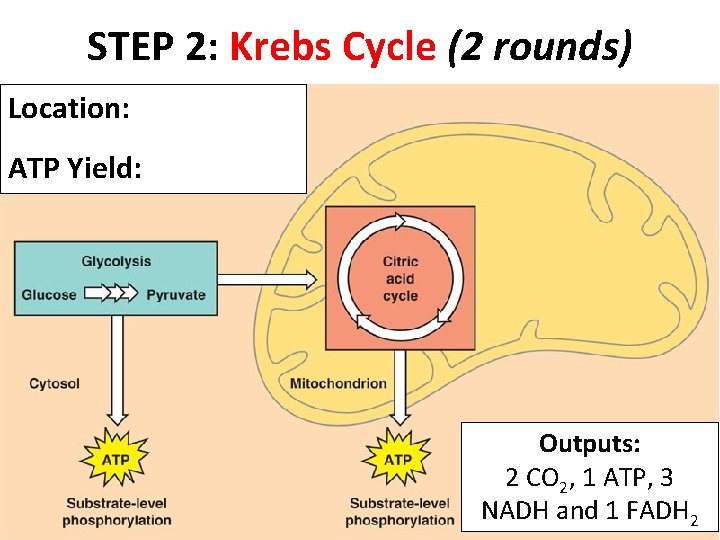
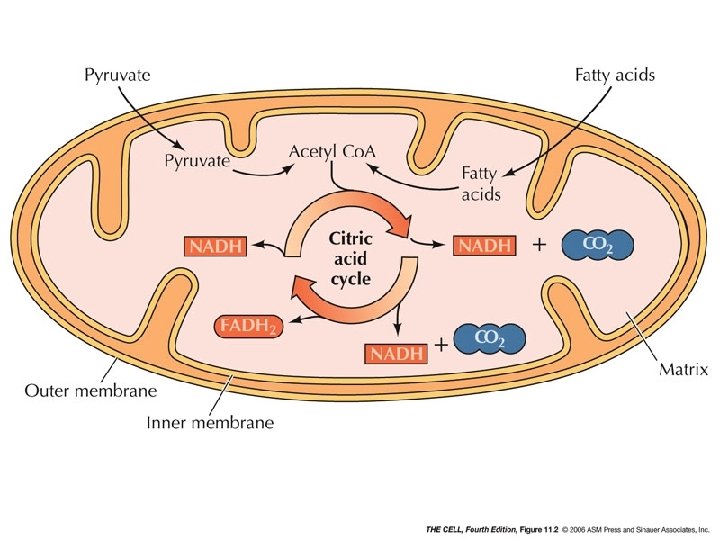
STEP 2: Krebs Cycle (2 rounds) Location: ATP Yield: Outputs: 2 CO 2, 1 ATP, 3 NADH and 1 FADH 2
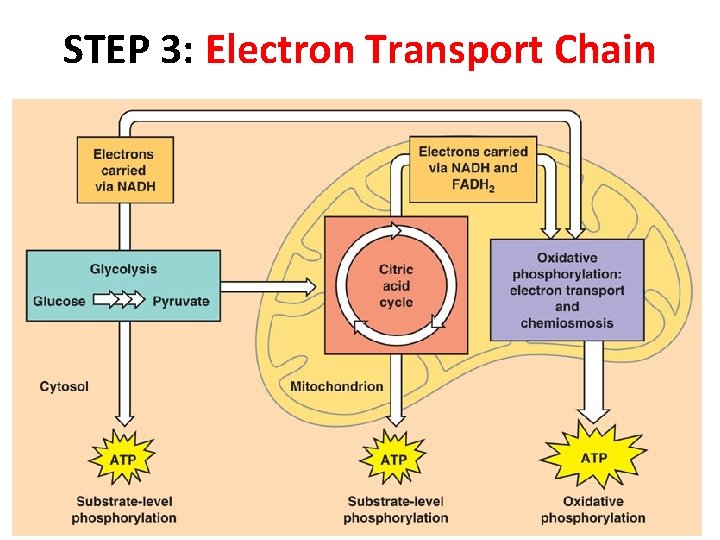
STEP 3: Electron Transport Chain
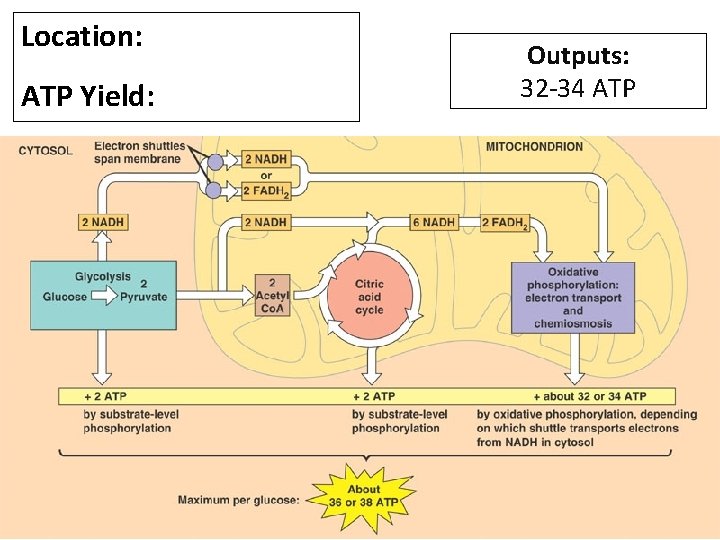
Location: ATP Yield: Outputs: 32 -34 ATP
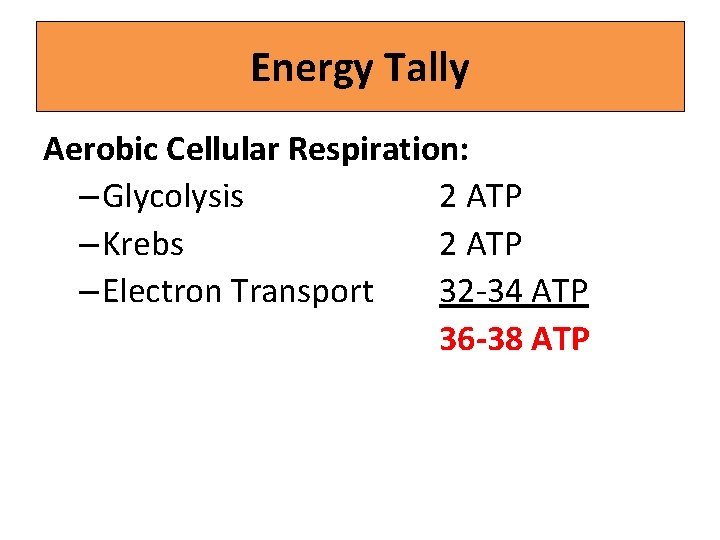
Energy Tally Aerobic Cellular Respiration: – Glycolysis 2 ATP – Krebs 2 ATP – Electron Transport 32 -34 ATP 36 -38 ATP
- Slides: 20