
Chapter 3 Ecosystems What Are They and How
- Slides: 65
Chapter 3 Ecosystems: What Are They and How Do They Work?
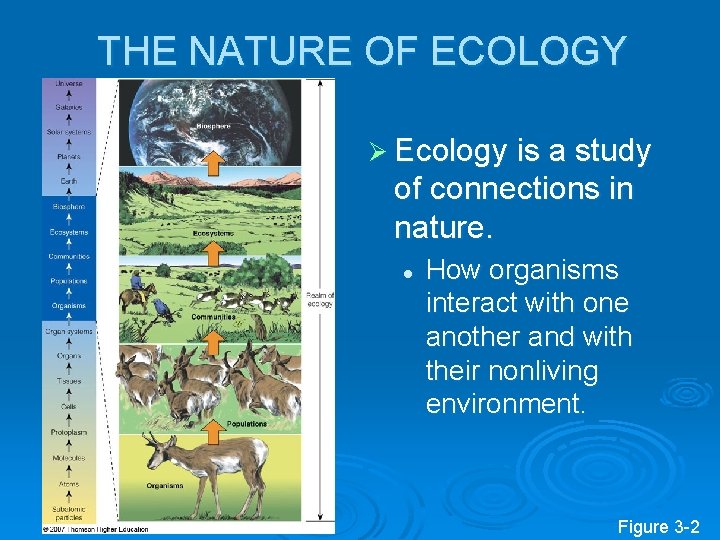
THE NATURE OF ECOLOGY Ø Ecology is a study of connections in nature. l How organisms interact with one another and with their nonliving environment. Figure 3 -2
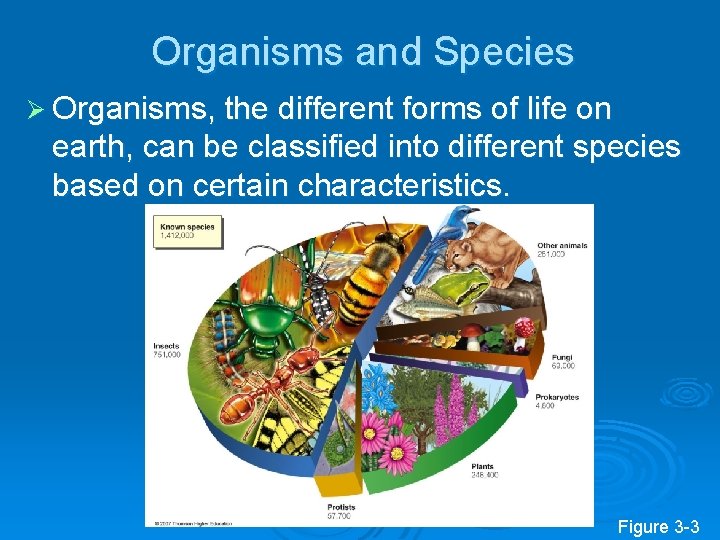
Organisms and Species Ø Organisms, the different forms of life on earth, can be classified into different species based on certain characteristics. Figure 3 -3
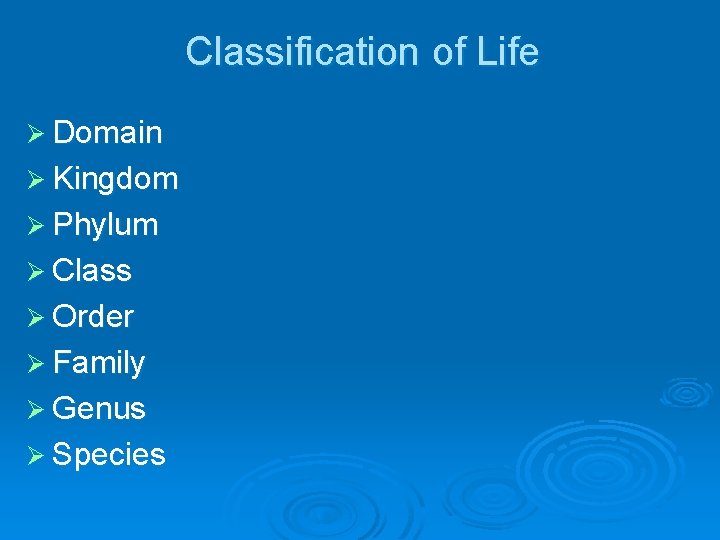
Classification of Life Ø Domain Ø Kingdom Ø Phylum Ø Class Ø Order Ø Family Ø Genus Ø Species
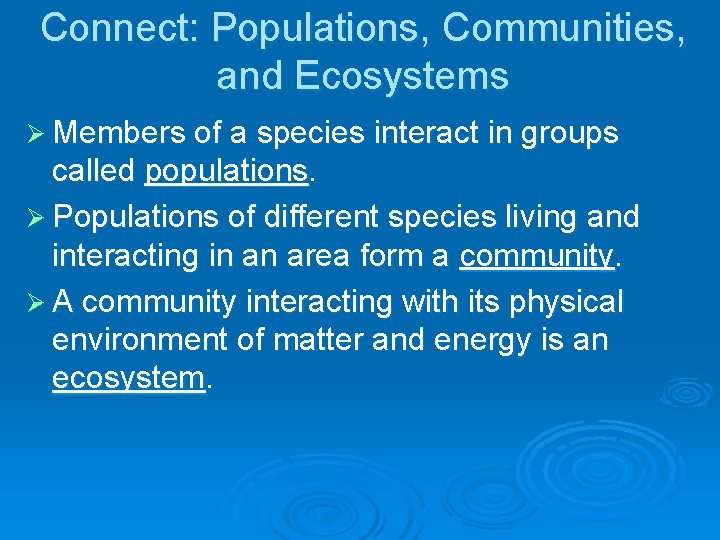
Connect: Populations, Communities, and Ecosystems Ø Members of a species interact in groups called populations. Ø Populations of different species living and interacting in an area form a community. Ø A community interacting with its physical environment of matter and energy is an ecosystem.
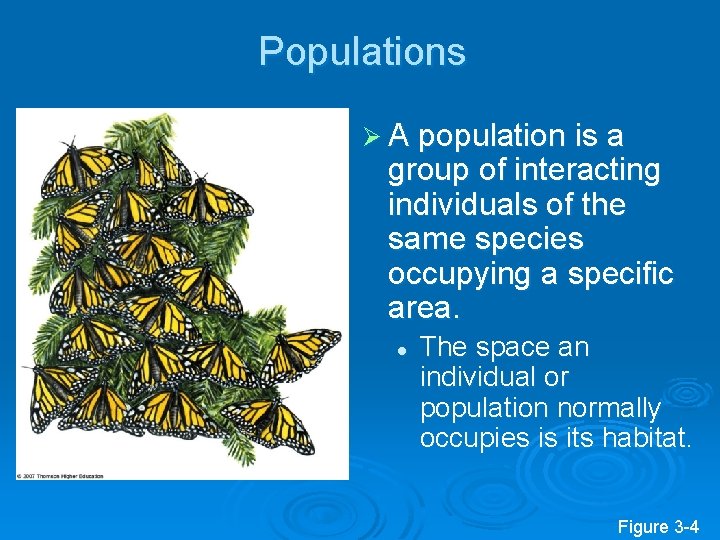
Populations Ø A population is a group of interacting individuals of the same species occupying a specific area. l The space an individual or population normally occupies is its habitat. Figure 3 -4
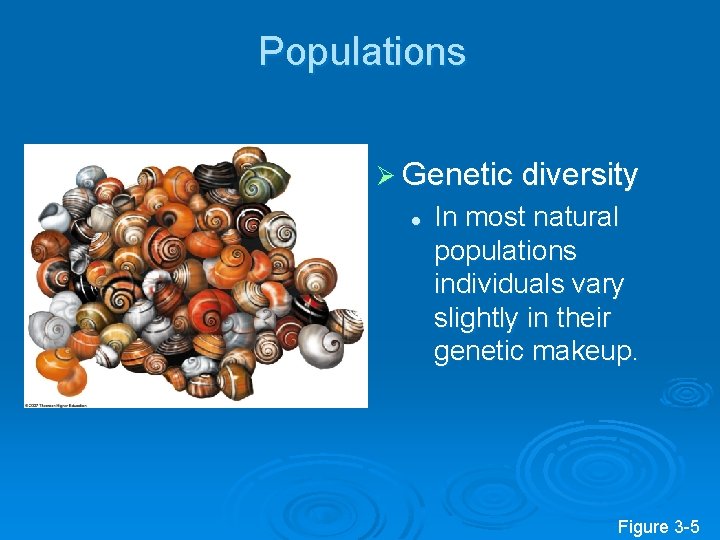
Populations Ø Genetic diversity l In most natural populations individuals vary slightly in their genetic makeup. Figure 3 -5
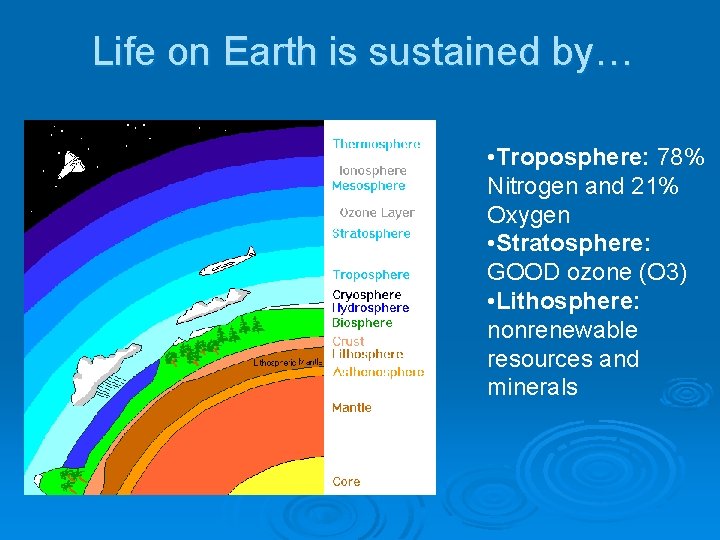
Life on Earth is sustained by… • Troposphere: 78% Nitrogen and 21% Oxygen • Stratosphere: GOOD ozone (O 3) • Lithosphere: nonrenewable resources and minerals
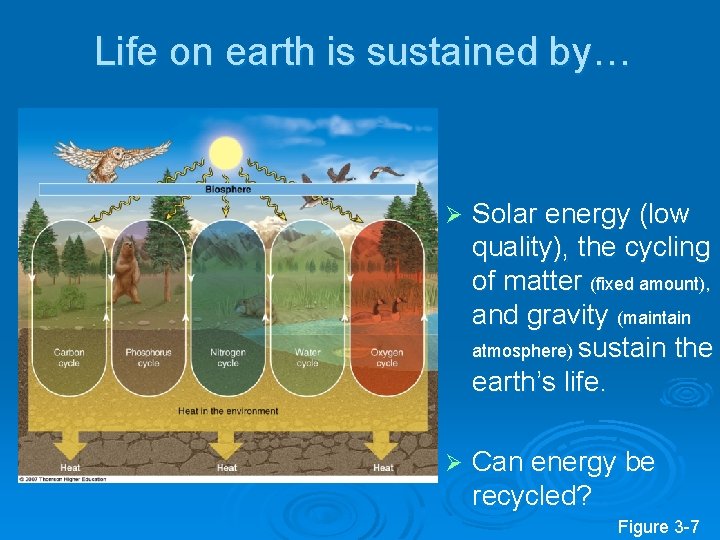
Life on earth is sustained by… Ø Solar energy (low quality), the cycling of matter (fixed amount), and gravity (maintain atmosphere) sustain the earth’s life. Ø Can energy be recycled? Figure 3 -7
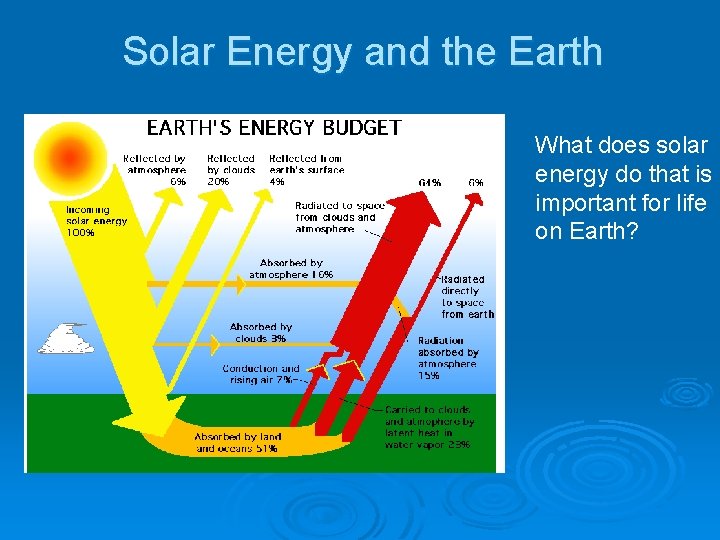
Solar Energy and the Earth What does solar energy do that is important for life on Earth?
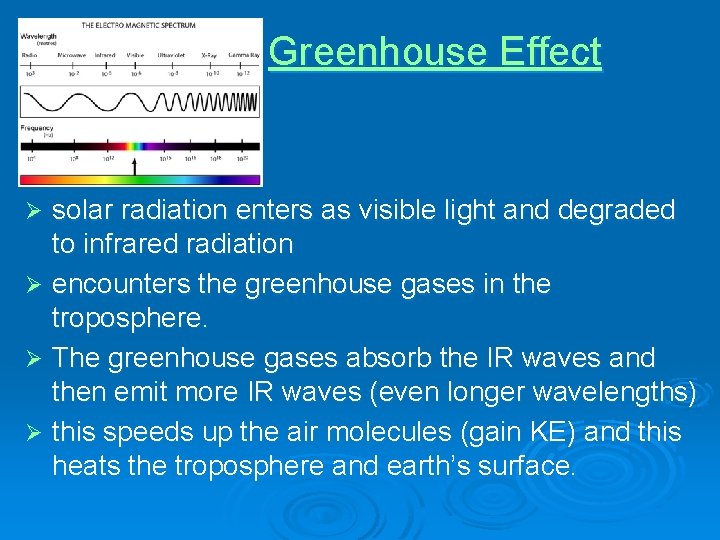
Greenhouse Effect solar radiation enters as visible light and degraded to infrared radiation Ø encounters the greenhouse gases in the troposphere. Ø The greenhouse gases absorb the IR waves and then emit more IR waves (even longer wavelengths) Ø this speeds up the air molecules (gain KE) and this heats the troposphere and earth’s surface. Ø
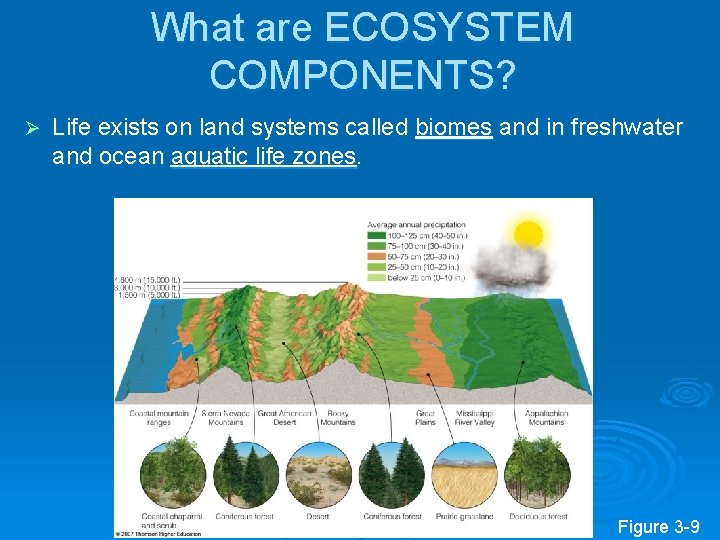
What are ECOSYSTEM COMPONENTS? Ø Life exists on land systems called biomes and in freshwater and ocean aquatic life zones. Figure 3 -9
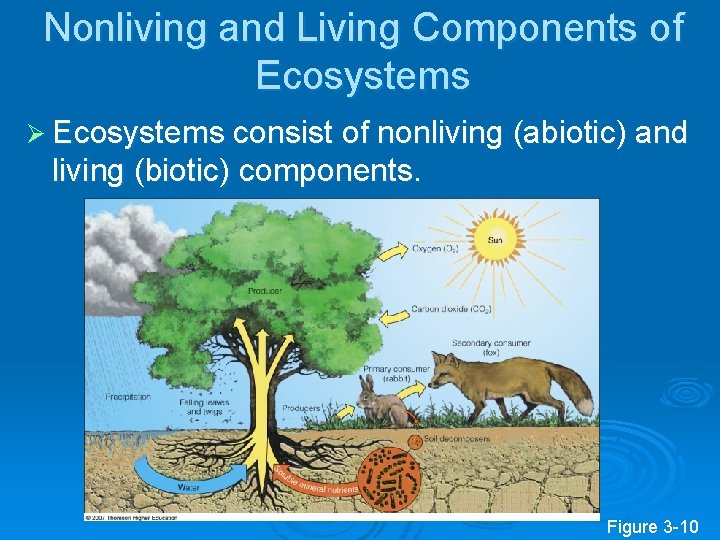
Nonliving and Living Components of Ecosystems Ø Ecosystems consist of nonliving (abiotic) and living (biotic) components. Figure 3 -10
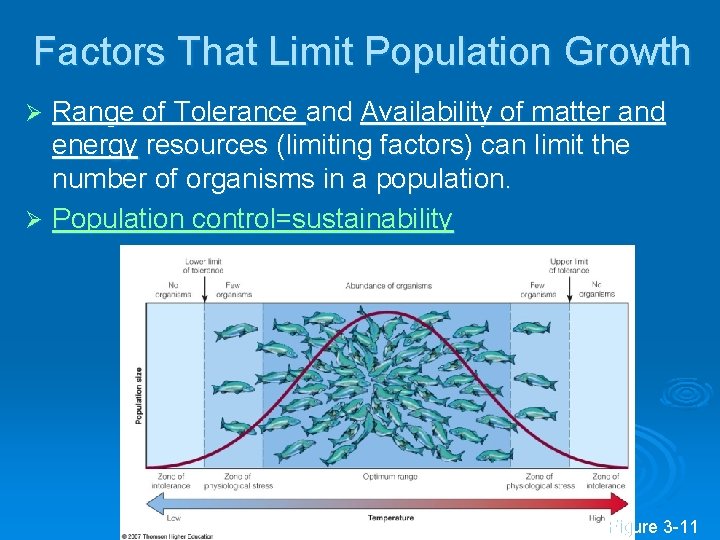
Factors That Limit Population Growth Range of Tolerance and Availability of matter and energy resources (limiting factors) can limit the number of organisms in a population. Ø Population control=sustainability Ø Figure 3 -11
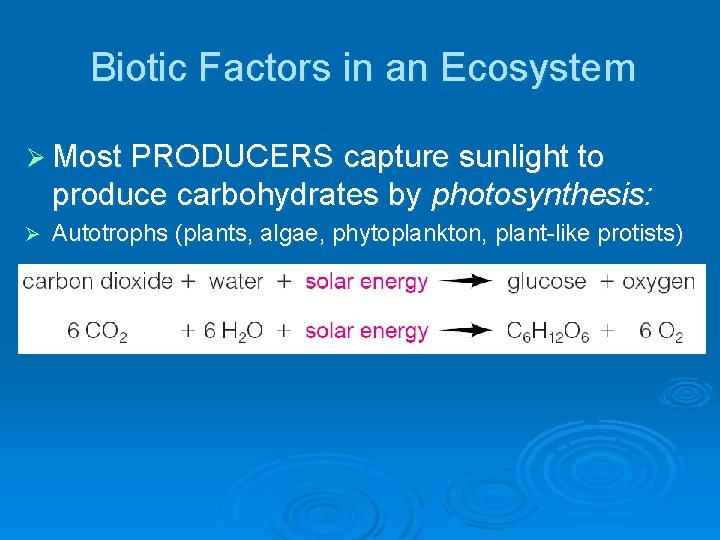
Biotic Factors in an Ecosystem Ø Most PRODUCERS capture sunlight to produce carbohydrates by photosynthesis: Ø Autotrophs (plants, algae, phytoplankton, plant-like protists)
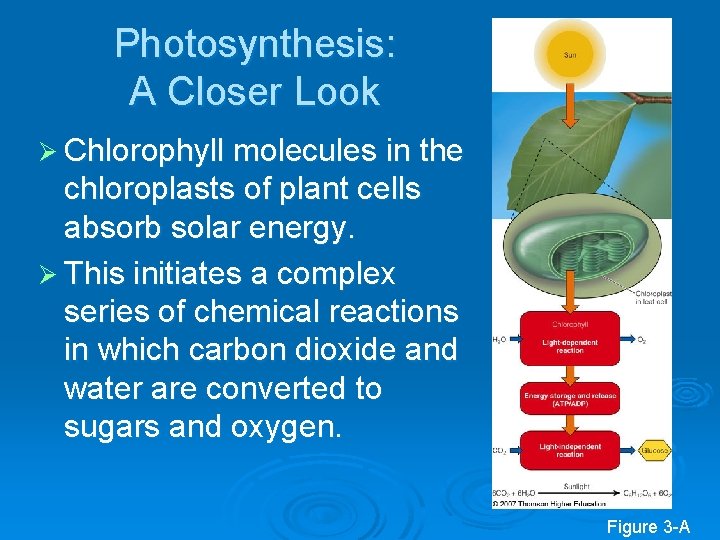
Photosynthesis: A Closer Look Ø Chlorophyll molecules in the chloroplasts of plant cells absorb solar energy. Ø This initiates a complex series of chemical reactions in which carbon dioxide and water are converted to sugars and oxygen. Figure 3 -A
Producers: cont. Ø Chemosynthesis: l Some organisms such as deep ocean bacteria draw energy from hydrothermal vents and produce carbohydrates from hydrogen sulfide (H 2 S) gas.
Consumers: Eating and Recycling to Survive Ø Consumers (heterotrophs) get their food by eating or breaking down all or parts of other organisms or their remains. l Herbivores • Primary consumers that eat producers l Carnivores • Primary consumers eat primary consumers • Third and higher level consumers: carnivores that eat carnivores. l Omnivores • Feed on both plant and animals.
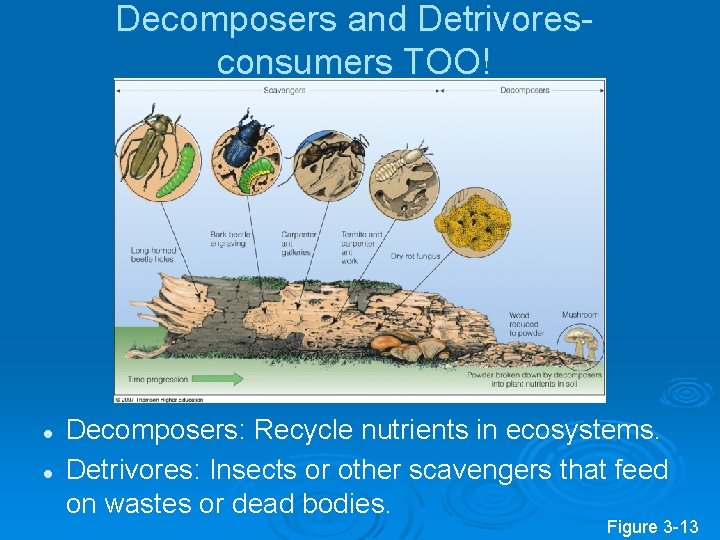
Decomposers and Detrivoresconsumers TOO! l l Decomposers: Recycle nutrients in ecosystems. Detrivores: Insects or other scavengers that feed on wastes or dead bodies. Figure 3 -13
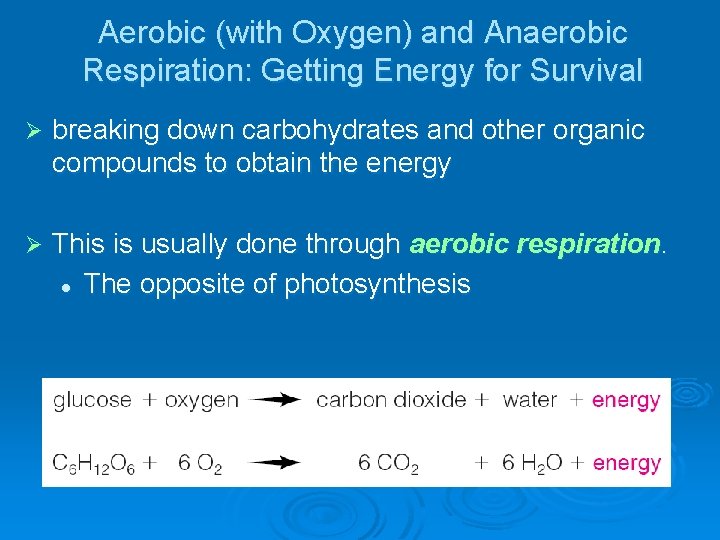
Aerobic (with Oxygen) and Anaerobic Respiration: Getting Energy for Survival Ø breaking down carbohydrates and other organic compounds to obtain the energy Ø This is usually done through aerobic respiration. l The opposite of photosynthesis
Cont. Ø Anaerobic respiration or fermentation: l l Some decomposers get energy by breaking down glucose without oxygen. The end products vary based on the chemical reaction: • • Methane gas Ethyl alcohol Acetic acid Hydrogen sulfide
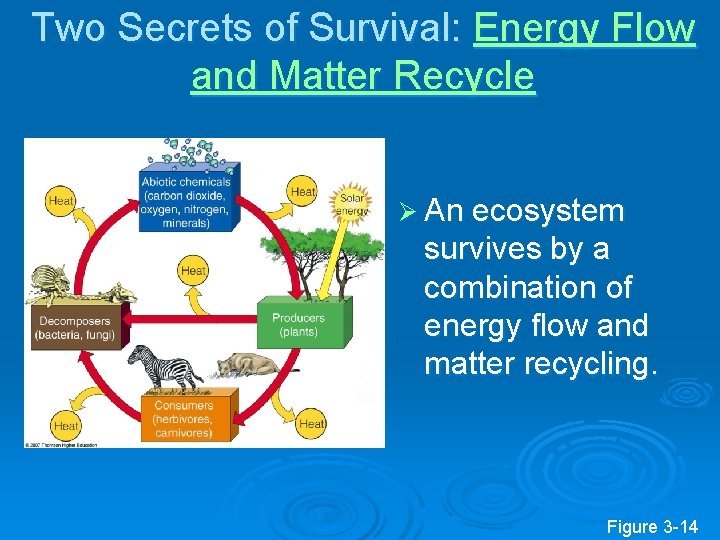
Two Secrets of Survival: Energy Flow and Matter Recycle Ø An ecosystem survives by a combination of energy flow and matter recycling. Figure 3 -14
Biodiversity maintains Ecosystems Ø We are losing biodiversity due to HIPPO: l H for habitat destruction and degradation-leading cause l l I for invasive species- 2 nd leading cause P for pollution leading to global climate change. P for human population growth that leads to resource consumption O for overexploitation- overhunting and overconsumption • Who is Aldo Leopold?
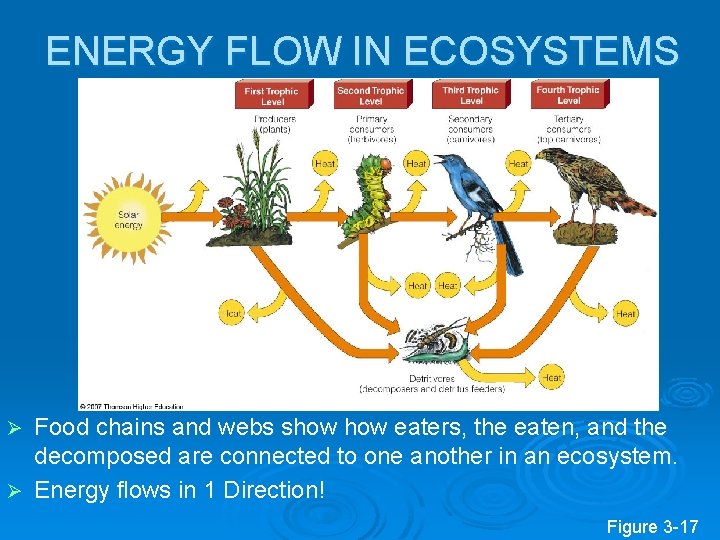
ENERGY FLOW IN ECOSYSTEMS Food chains and webs show eaters, the eaten, and the decomposed are connected to one another in an ecosystem. Ø Energy flows in 1 Direction! Ø Figure 3 -17
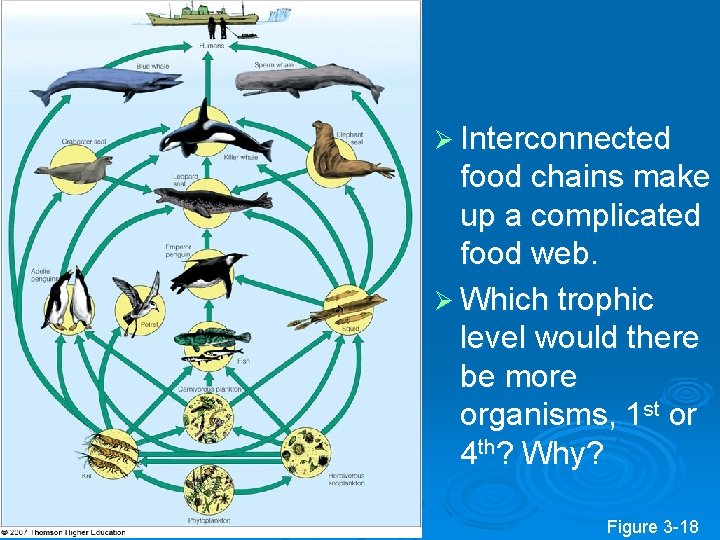
Ø Interconnected food chains make up a complicated food web. Ø Which trophic level would there be more organisms, 1 st or 4 th? Why? Figure 3 -18
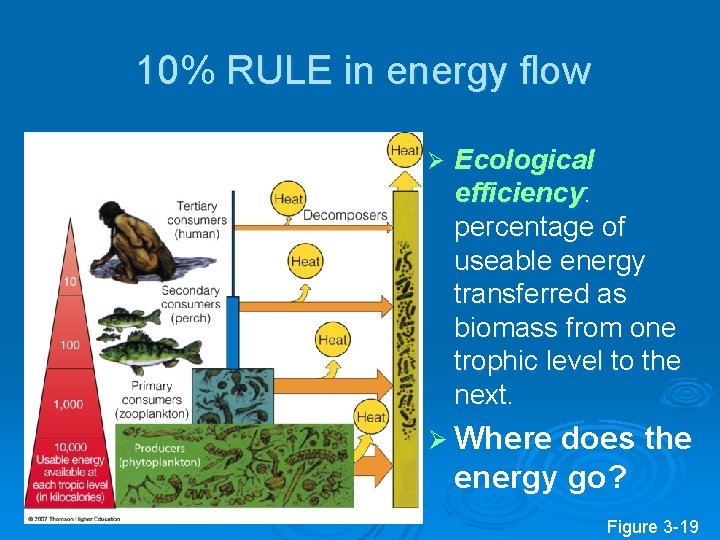
Energy Flow in an Ecosystem: Losing Energy in Food Chains and Webs Ø In accordance with the 2 nd law of thermodynamics, there is a decrease in the amount of energy available to each succeeding organism in a food chain or web.
10% RULE in energy flow Ø Ecological efficiency: percentage of useable energy transferred as biomass from one trophic level to the next. Ø Where does the energy go? Figure 3 -19
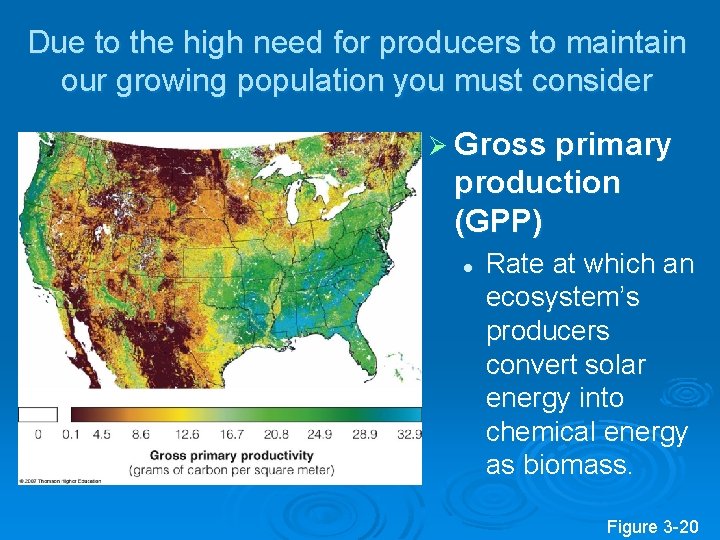
Due to the high need for producers to maintain our growing population you must consider Ø Gross primary production (GPP) l Rate at which an ecosystem’s producers convert solar energy into chemical energy as biomass. Figure 3 -20
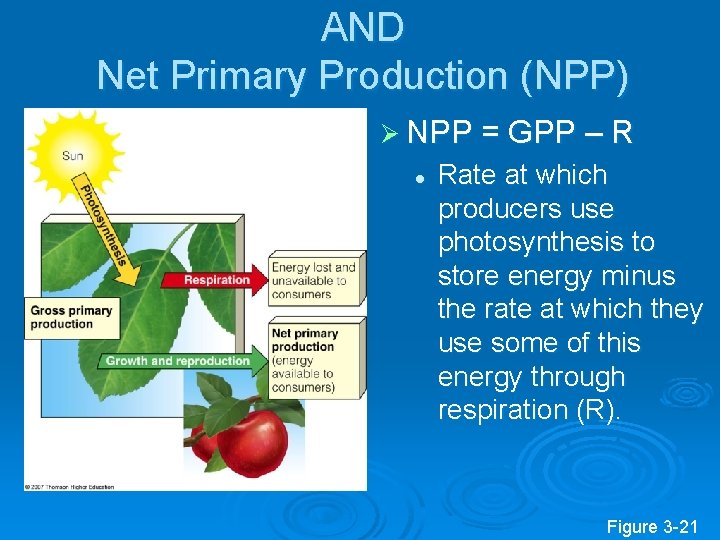
AND Net Primary Production (NPP) Ø NPP = GPP – R l Rate at which producers use photosynthesis to store energy minus the rate at which they use some of this energy through respiration (R). Figure 3 -21
Why does GPP and NPP matter? l As humans take up more land degrade more forest ecosystems, we lower the earth’s possible GPP and NPP. • Estimates say that humans and domesticated animals take up 98% of earth’s biomass and wildlife only 2%. OUT OF BALANCE!
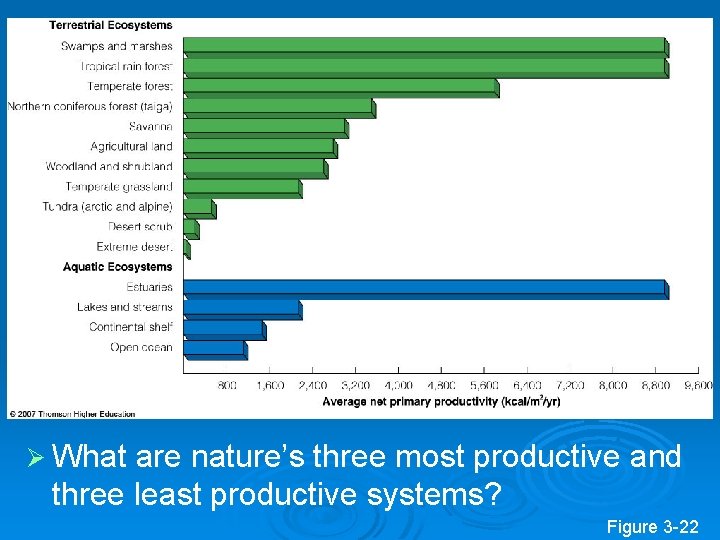
Ø What are nature’s three most productive and three least productive systems? Figure 3 -22
MATTER CYCLING IN ECOSYSTEMS Ø Nutrient Cycles: Global Recycling l l l Global Cycles recycle nutrients through the earth’s air, land, water, and living organisms. Nutrients are the elements and compounds that organisms need to live, grow, and reproduce. Biogeochemical cycles move these substances through air, water, soil, rock and living organisms.
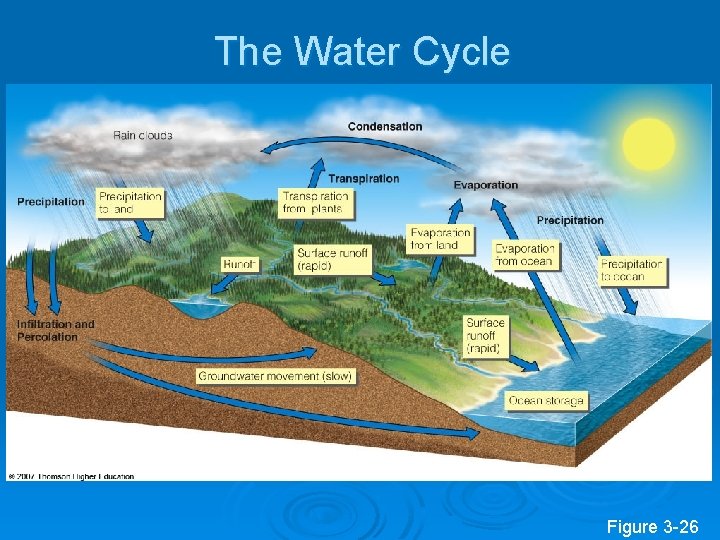
The Water Cycle Figure 3 -26
Water’ Unique Properties Ø There are strong forces of attraction between molecules of water. Ø Water exists as a liquid over a wide temperature range. Ø Liquid water changes temperature slowly. Ø It takes a large amount of energy for water to evaporate. Ø Liquid water can dissolve a variety of compounds. Ø Water expands when it freezes.
Effects of Human Activities on Water Cycle Ø We alter the water cycle by: l l Withdrawing large amounts of freshwater. Clearing vegetation and eroding soils. Polluting surface and underground water. Contributing to climate change.
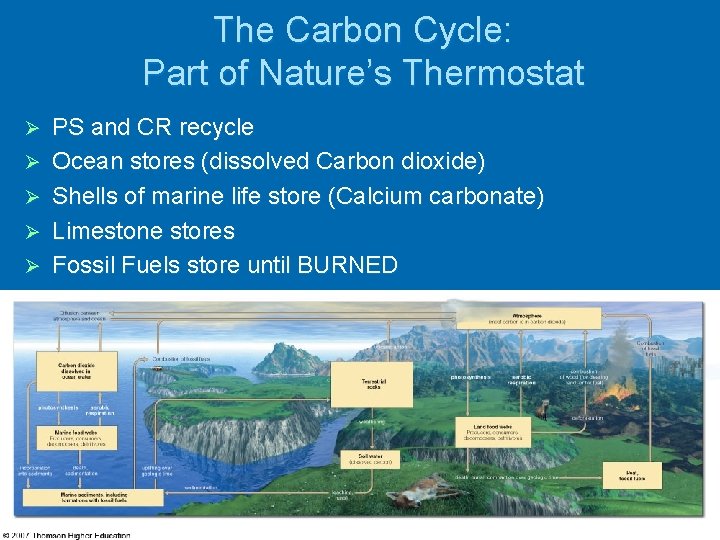
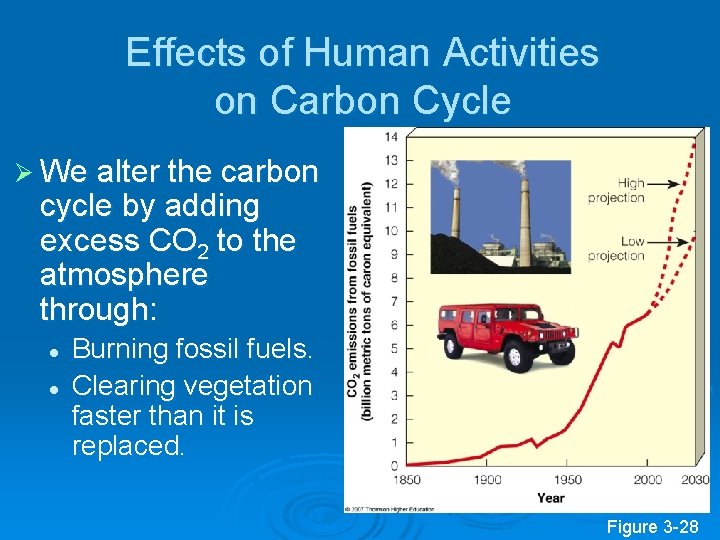
The Carbon Cycle: Part of Nature’s Thermostat Ø Ø Ø PS and CR recycle Ocean stores (dissolved Carbon dioxide) Shells of marine life store (Calcium carbonate) Limestone stores Fossil Fuels store until BURNED Figure 3 -27
Effects of Human Activities on Carbon Cycle Ø We alter the carbon cycle by adding excess CO 2 to the atmosphere through: l l Burning fossil fuels. Clearing vegetation faster than it is replaced. Figure 3 -28
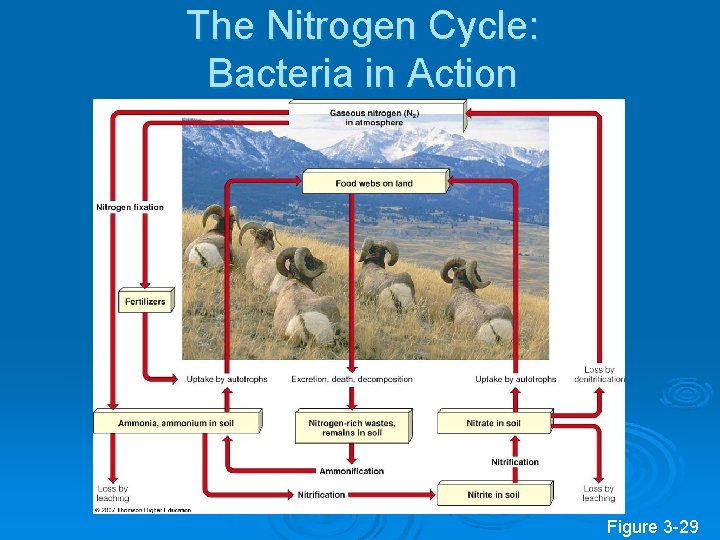
The Nitrogen Cycle: Bacteria in Action Figure 3 -29
Explanation of the chart Ø 2 processes FIX atmospheric nitrogen into a usable form: • Lightning • Nitrogen-fixing bacteria in soil l l NITROGEN FIXATION: • FIX N 2 NH 3 (ammonia) NH 4+ (ammonium) that can be taken up by plants NITRIFICATION • NH 3 and NH 4+ is converted to nitrite, NO 2 - TOXIC TO PLANTS and then nitrate, NO 3 - GOOD FOR PLANTS AND ANIMALS WHO EAT PLANTS
Cont. Ø Plants and animals put nitrogen back into environment through wastes and when they die. l l AMMONIFICATION is when decomposer bacteria convert this organic material from their death into simpler nitrogen -containing inorganic compounds like ammonia (NH 3) and ammonium (NH 4+). DENITRIFICATION is when specialized bacteria in wet areas convert ammonia and ammonium back into nitrogen gas and nitrous oxide gas (both GHG’s).
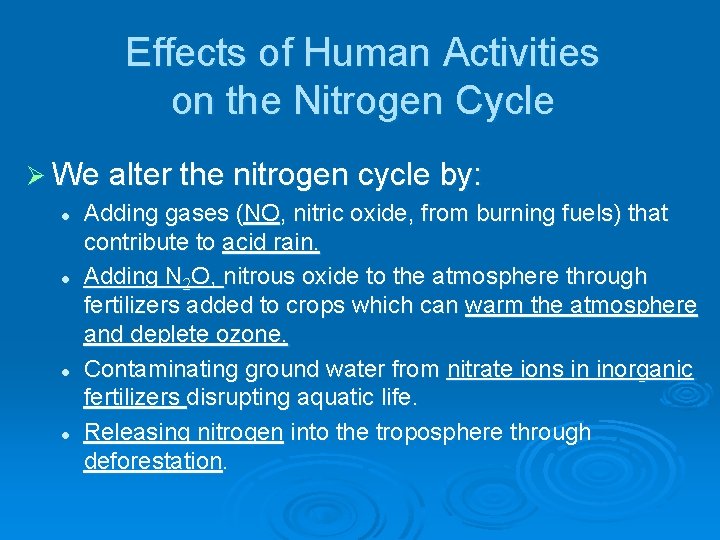
Effects of Human Activities on the Nitrogen Cycle Ø We alter the nitrogen cycle by: l l Adding gases (NO, nitric oxide, from burning fuels) that contribute to acid rain. Adding N 2 O, nitrous oxide to the atmosphere through fertilizers added to crops which can warm the atmosphere and deplete ozone. Contaminating ground water from nitrate ions in inorganic fertilizers disrupting aquatic life. Releasing nitrogen into the troposphere through deforestation.
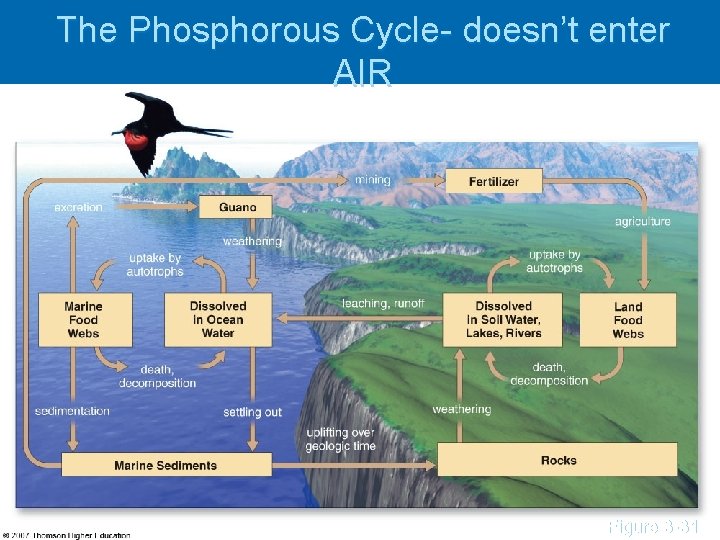
The Phosphorous Cycle- doesn’t enter AIR Figure 3 -31
Explanation of chart Ø Phosphorus is found as phosphate ions (PO 43 -) in rock and soil. As water runs over rocks the phosphates mix into the water and ends up in the ocean where it settles to the ocean floor. l l l Plants take phosphates directly from the soil or water and build macromolecules with it. Animals take in plants and excrete extra phosphorus in urine. Phosphorus is often a LIMITING FACTOR for plants because there is little in soil (unless added from fertilizer) and is only slightly soluble in water.
Effects of Human Activities on the Phosphorous Cycle Ø We remove large amounts of phosphate from the earth to make fertilizer. Ø We reduce phosphorous in tropical soils by clearing forests. Ø We add excess phosphates to aquatic systems from runoff of animal wastes and fertilizers.
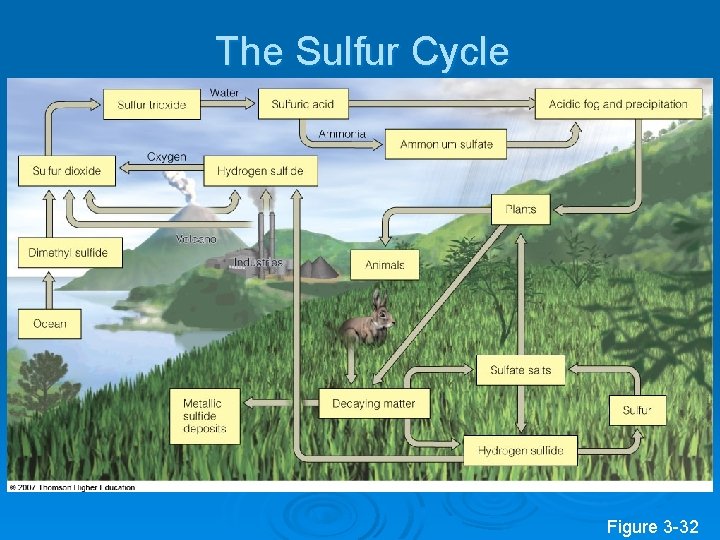
The Sulfur Cycle Figure 3 -32
Explanation of chart Ø Ø Ø Found as sulfate (SO 42 -)in rocks and minerals and salts buried deep under ocean sediments Released from volcanoes as hydrogen gas (H 2 S) and sulfur dioxide (SO 2) Sulfate salts like ammonium sulfate are released by sea spray, dust storms, and forest fires Plants absorb sulfate ions and incorporate them into their macromolecules Marine bacteria produce dimethyl sulfide (DMS) which begins condensation thus can affect climate l DMS is converted to SO 2 and SO 3 and then to sulfuric acid (H 2 SO 4)= ACID RAIN
Effects of Human Activities on the Sulfur Cycle Ø We add sulfur dioxide to the atmosphere by: l l l Burning coal and oil Refining sulfur containing petroleum. Convert sulfur-containing metallic ores into free metals such as copper, lead, and zinc releasing sulfur dioxide into the environment.
What is the Gaia Hypothesis?
Chapter 7 Community Ecology
What are important characteristics of a community? l l l Species diversity- the number of different species it contains (species richness) combined with the abundance of individuals within each of those species (species evenness) Niche structure- # of niches, differences in niches, and how individuals in different niches interact Geographical location- closer to equator= more diversity usually due to constant conditions near tropics
What are the types of species in a community? l l Native species- normally live and thrive in a particular community Nonnative species, invasive and alien species are introduced into a community. • NOT ALWAYS BAD (chickens, cattle) but CAN BE (African “killer” bee intended to help honey production increase)
l Indicator species- serve as early warnings of damage to a community • Example: trout for water quality because they need clean water with lots of dissolved oxygen • Ex. Birds and butterflies: greatly affected by habitat loss and chemical exposure • Ex. Amphibians: GOOD INDICATOR SPECIES
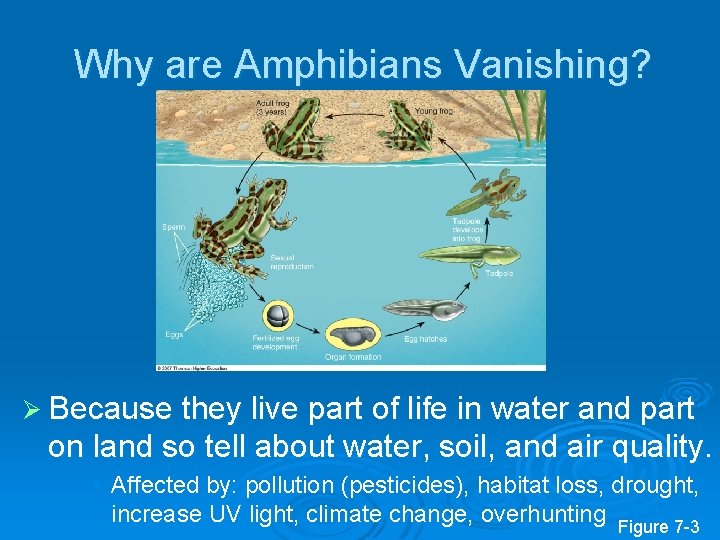
Why are Amphibians Vanishing? Ø Because they live part of life in water and part on land so tell about water, soil, and air quality. • Affected by: pollution (pesticides), habitat loss, drought, increase UV light, climate change, overhunting Figure 7 -3
Ø Keystone species- a species that greatly affects other species in the community. • Ex. Pollinators like bees and butterflies • Ex. Top predators like wolves, lions, alligators, some sharks Ø Foundation species- play a major role in shaping communities by creating and enhancing their habitats in ways that benefit other species. • Ex. Elephants that push over trees and allow smaller grasses to grow that allow grazers like antelope to eat. • Ex. Bats and birds that move seeds around by eating and dropping them in feces to re-grow a forest that has been depleted.
What types of interactions do species have? Ø Interspecific competition- ability of one species to become more efficient in acquiring resources than another. POPULATION SIZE CONTROL 1. Resource partitioning- adaptations evolved that reduce competition that allow species to share resources by evolving specialized traits. l l Example: hawks feed during day, owls at night Ex. Lions take larger prey, leopards take smaller
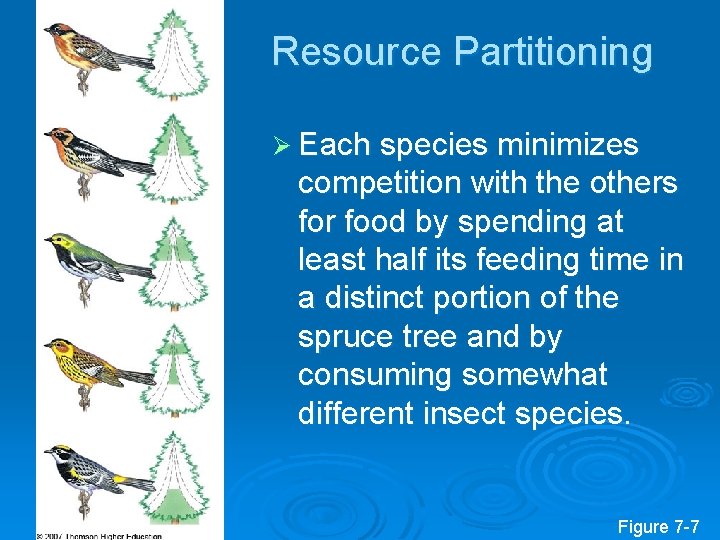
Resource Partitioning Ø Each species minimizes competition with the others for food by spending at least half its feeding time in a distinct portion of the spruce tree and by consuming somewhat different insect species. Figure 7 -7
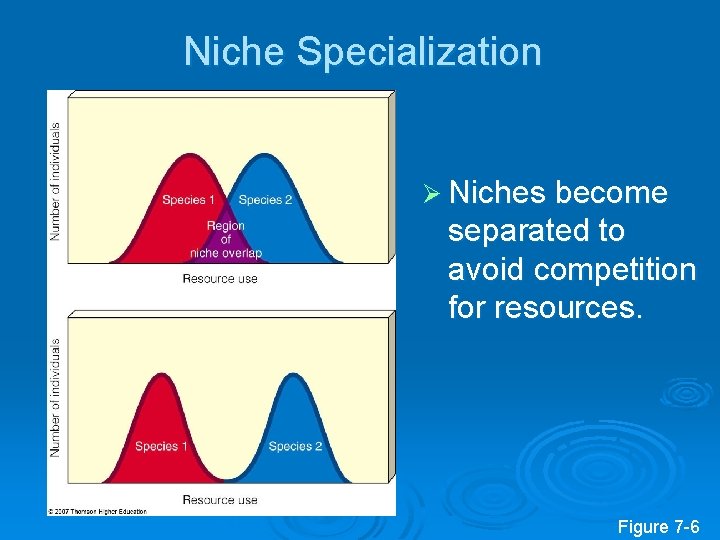
Niche Specialization Ø Niches become separated to avoid competition for resources. Figure 7 -6
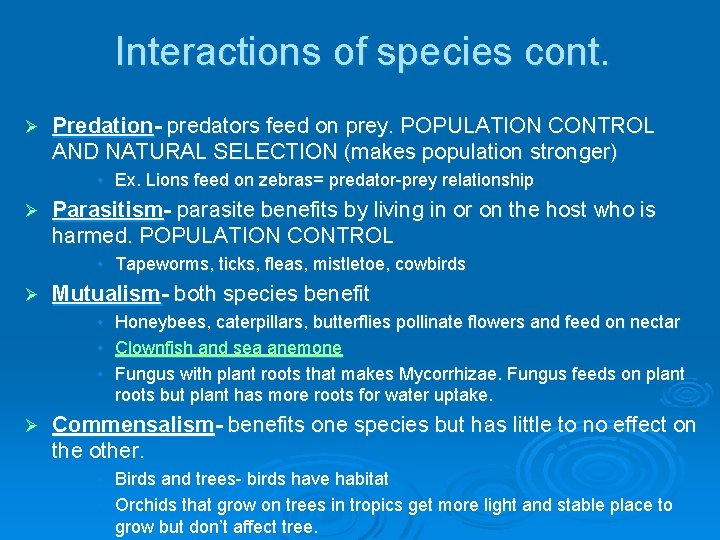
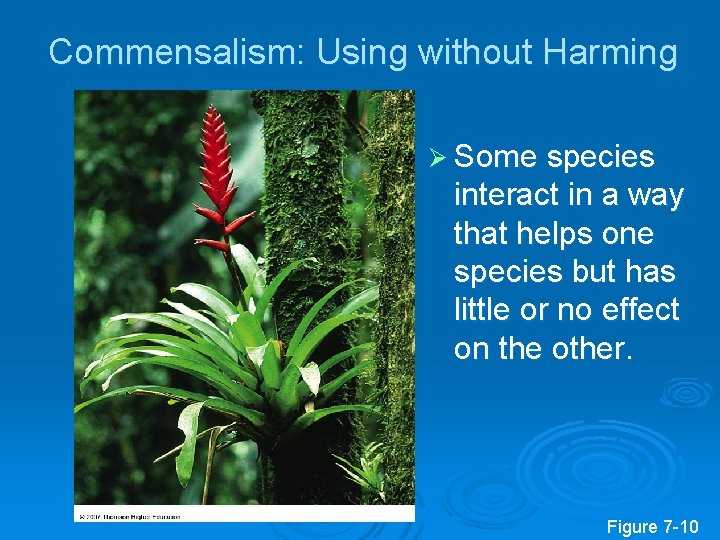
Interactions of species cont. Ø Predation- predators feed on prey. POPULATION CONTROL AND NATURAL SELECTION (makes population stronger) • Ex. Lions feed on zebras= predator-prey relationship Ø Parasitism- parasite benefits by living in or on the host who is harmed. POPULATION CONTROL • Tapeworms, ticks, fleas, mistletoe, cowbirds Ø Mutualism- both species benefit • • • Ø Honeybees, caterpillars, butterflies pollinate flowers and feed on nectar Clownfish and sea anemone Fungus with plant roots that makes Mycorrhizae. Fungus feeds on plant roots but plant has more roots for water uptake. Commensalism- benefits one species but has little to no effect on the other. • Birds and trees- birds have habitat • Orchids that grow on trees in tropics get more light and stable place to grow but don’t affect tree.
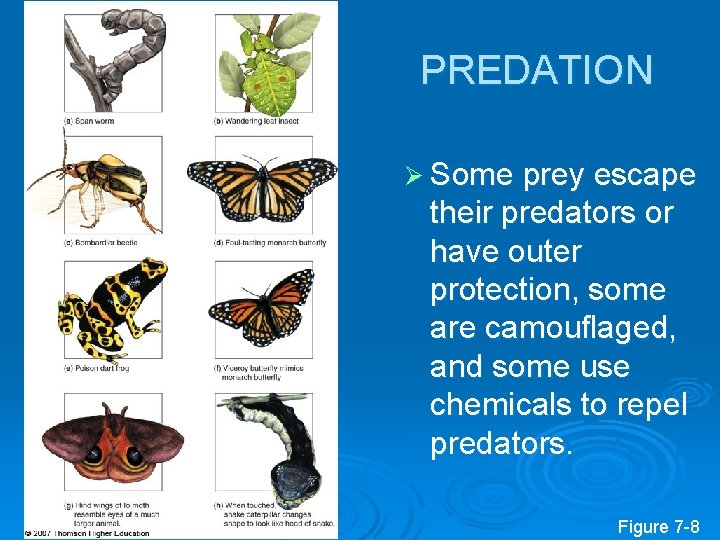
PREDATION Ø Some prey escape their predators or have outer protection, some are camouflaged, and some use chemicals to repel predators. Figure 7 -8
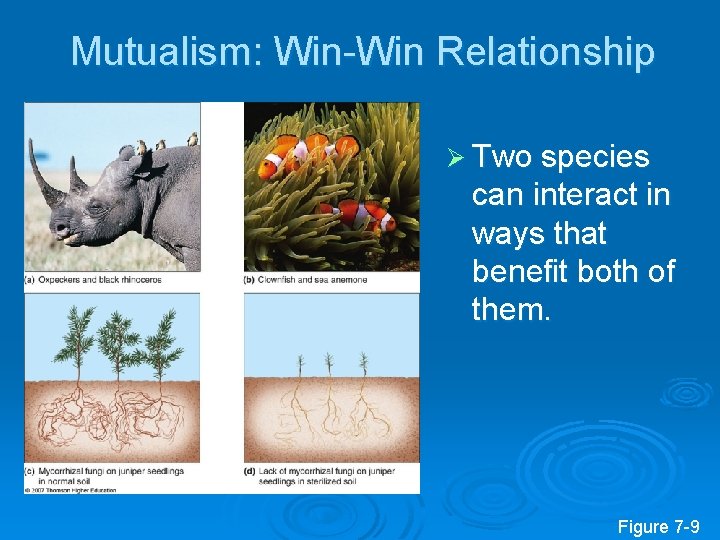
Mutualism: Win-Win Relationship Ø Two species can interact in ways that benefit both of them. Figure 7 -9
Commensalism: Using without Harming Ø Some species interact in a way that helps one species but has little or no effect on the other. Figure 7 -10
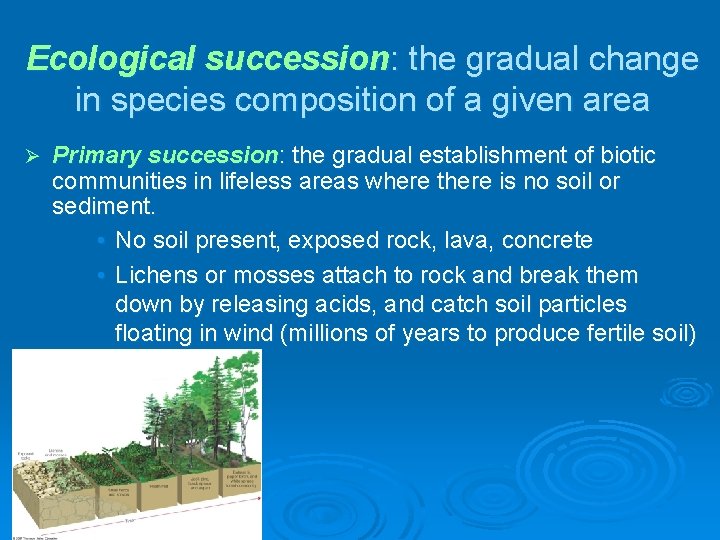
Ecological succession: the gradual change in species composition of a given area Ø Primary succession: the gradual establishment of biotic communities in lifeless areas where there is no soil or sediment. • No soil present, exposed rock, lava, concrete • Lichens or mosses attach to rock and break them down by releasing acids, and catch soil particles floating in wind (millions of years to produce fertile soil)
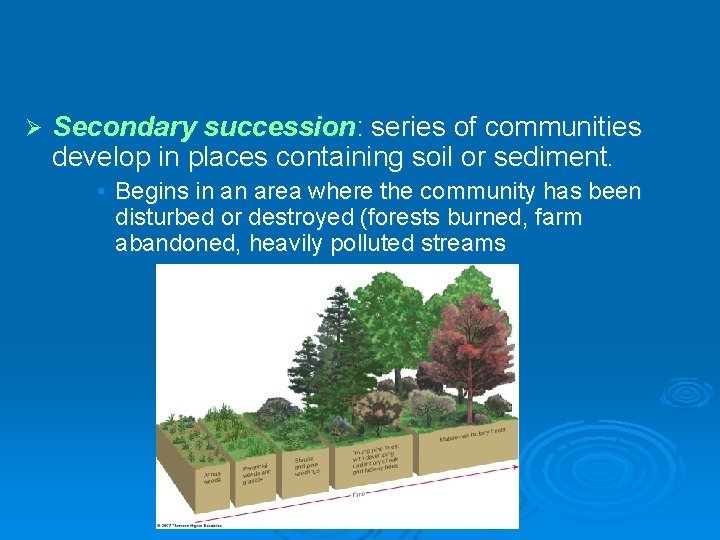
Ø Secondary succession: series of communities develop in places containing soil or sediment. • Begins in an area where the community has been disturbed or destroyed (forests burned, farm abandoned, heavily polluted streams
How do living systems maintain stability? l l l Adaptations in response to changing environments (not within an individual’s lifetime but over generations) Persistence- ability of a living system to resist being disturbed Constancy- ability of a living system to keep its numbers within the limits imposed by natural resources Resilience- ability of living system to bounce back and repair damage after a disturbance that it not too drastic Diversity
Function within the 4 scientific principles of sustainability: • • Depend on solar energy Participate in chemical cycling Have a diversity of types and species Populations are controlled by interactions among their species