
Chapter 3 Ecosystem Ecology Part 2 Bio Geo
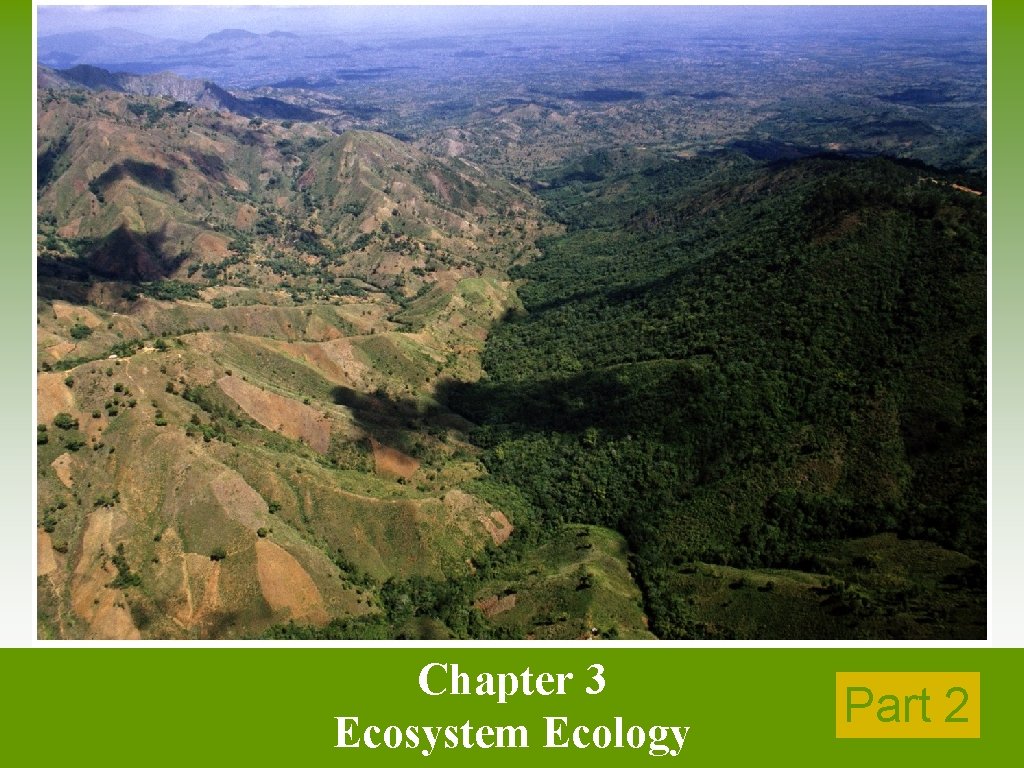
Chapter 3 Ecosystem Ecology Part 2
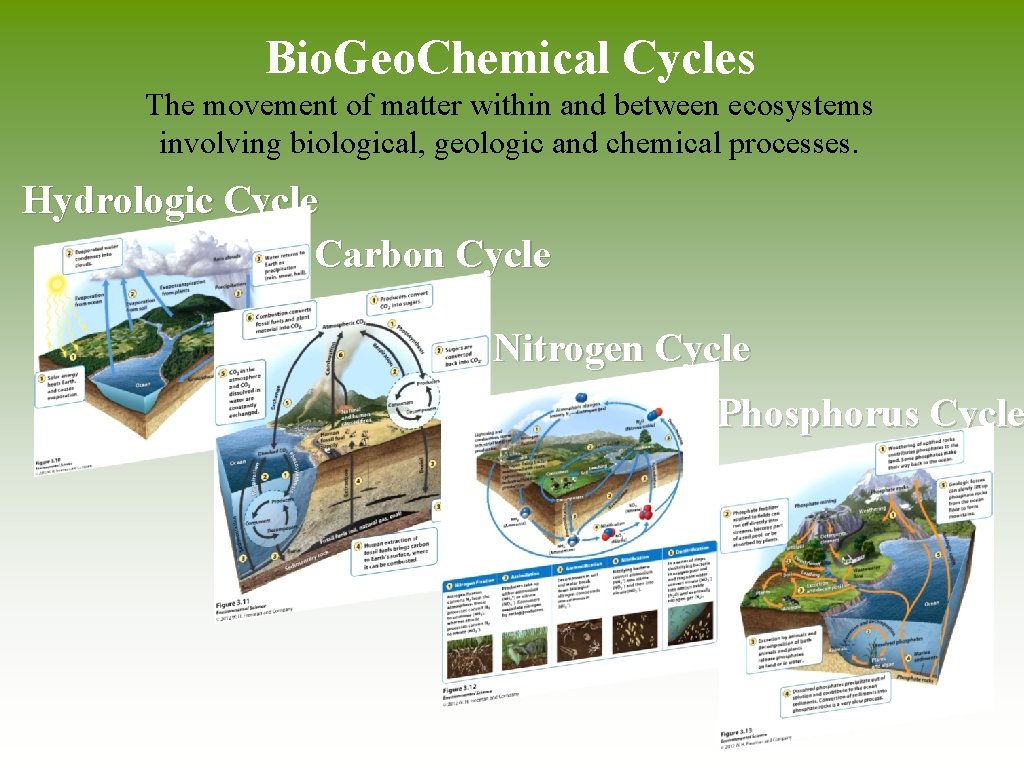
Bio. Geo. Chemical Cycles The movement of matter within and between ecosystems involving biological, geologic and chemical processes. Hydrologic Cycle Carbon Cycle Nitrogen Cycle Phosphorus Cycle
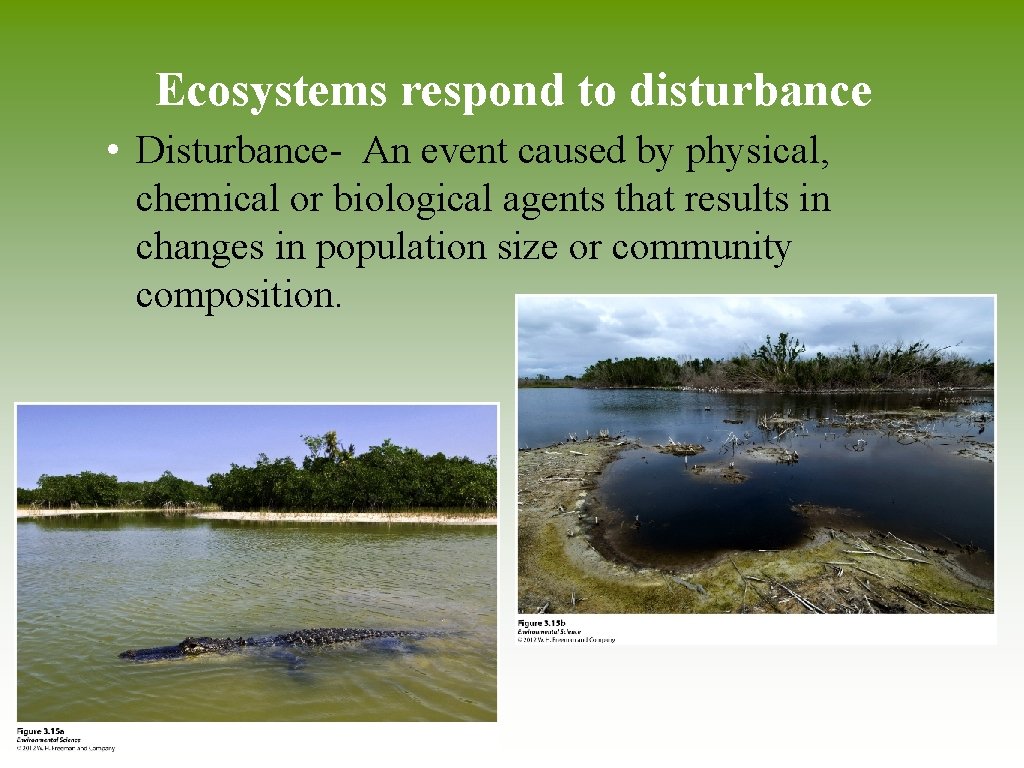
Ecosystems respond to disturbance • Disturbance- An event caused by physical, chemical or biological agents that results in changes in population size or community composition.
Resistance versus Resilience • Resistance- A measure of how much a disturbance can affect its flows of energy and matter. • Resilience- The rate at which an ecosystem returns to its original state after a disturbance. Resilience of an ecosystem ensures that it will continue to provide benefits to humans. This greatly depends on species diversity. • Restoration ecology- A new scientific discipline that is interested in restoring damaged ecosystems • Ecological Succession (chapter 6) - The replacement of one group of species by another group of species over time. p. 168 • Even without human activity, natural communities do not stay the same forever. Change in the species composition of communities over time is a perpetual process in nature.
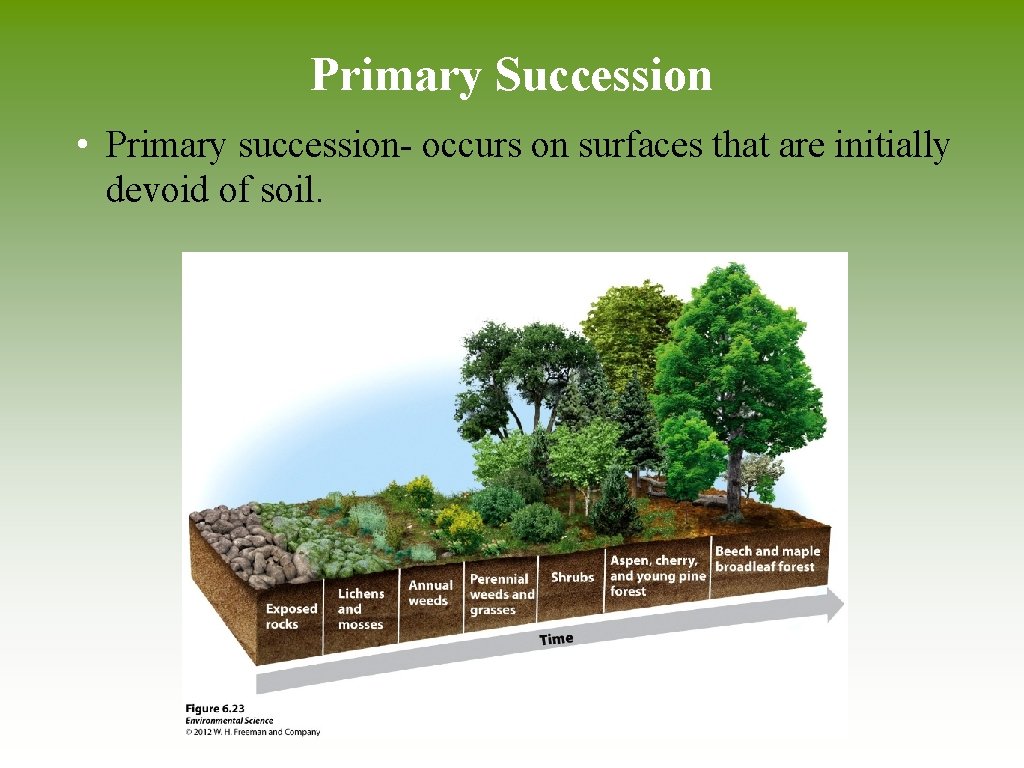
Primary Succession • Primary succession- occurs on surfaces that are initially devoid of soil.
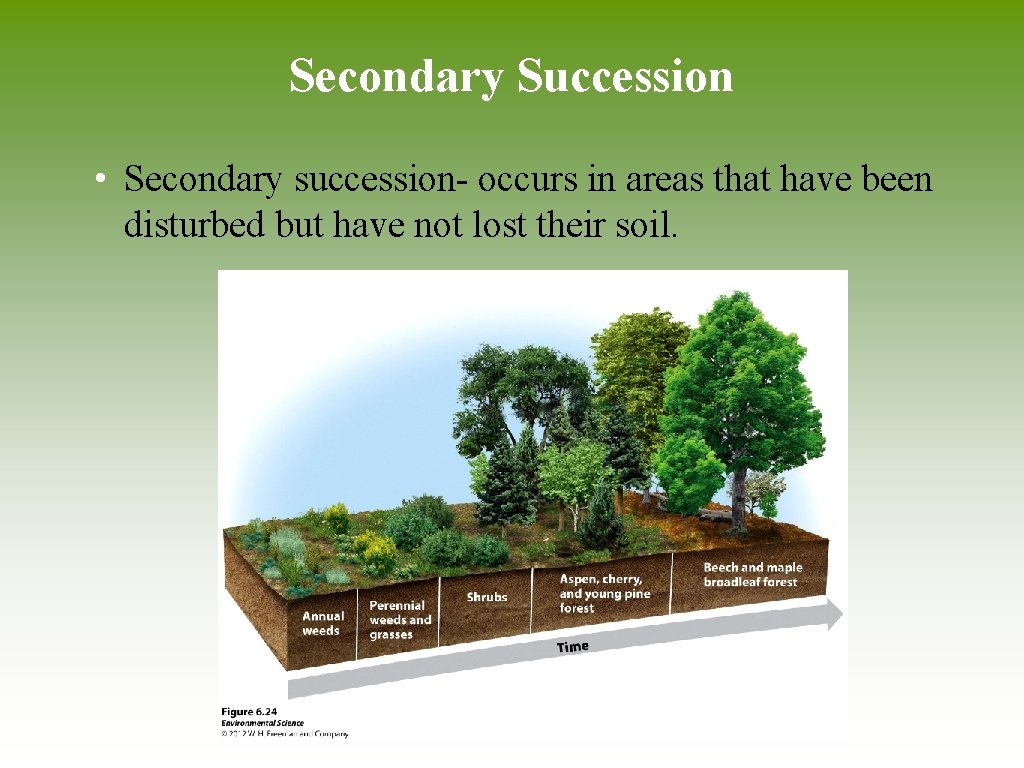
Secondary Succession • Secondary succession- occurs in areas that have been disturbed but have not lost their soil.
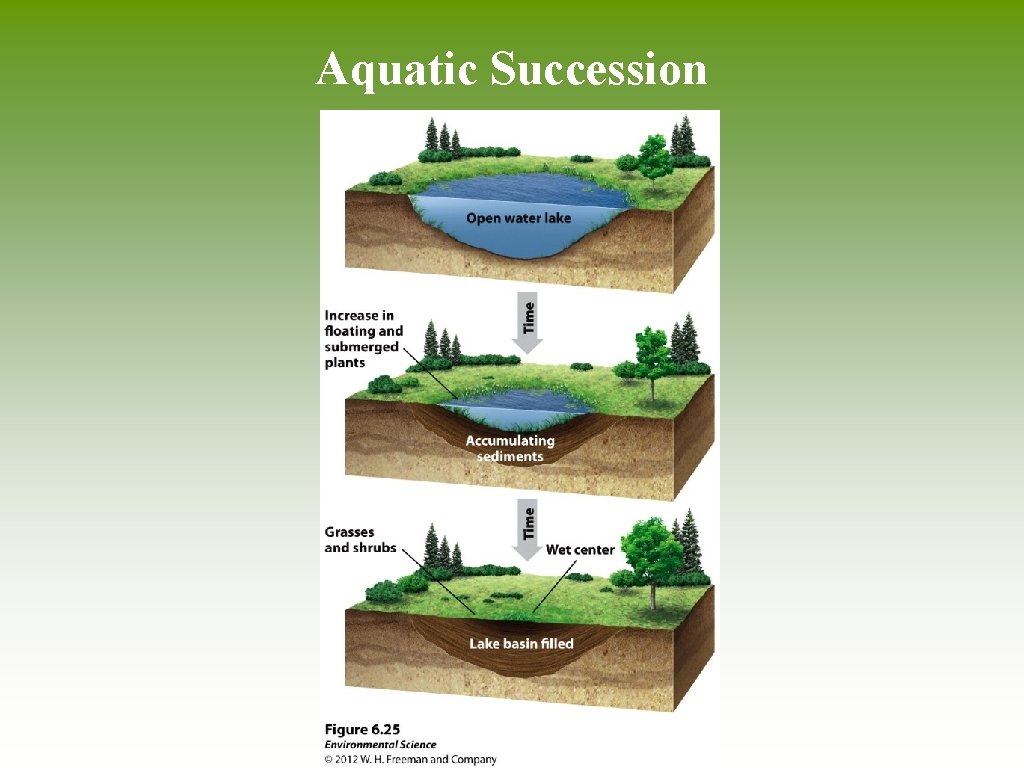
Aquatic Succession
Instrumental Values of Ecosystems • Provisions- Goods that humans can use directly. • Regulating services- The service provided by natural systems that helps regulate environmental conditions. • Support systems- The support services that natural ecosystems provide such as pollination, natural filters and pest control. • Cultural services- Ecosystems provide cultural or aesthetic benefits to many people.
- Slides: 8