
Chapter 3 Ecosystem Ecology Ecosystem Boundaries Figure 6
Chapter 3 Ecosystem Ecology

Ecosystem Boundaries Figure 6. 2 Large and small ecosystems. (a) The Greater Yellowstone Ecosystem includes the land within Yellowstone National Park and many adjacent properties. (b) Some ecosystems are very small, such as a rain-filled tree hole that houses a diversity of microbes and aquatic insects.
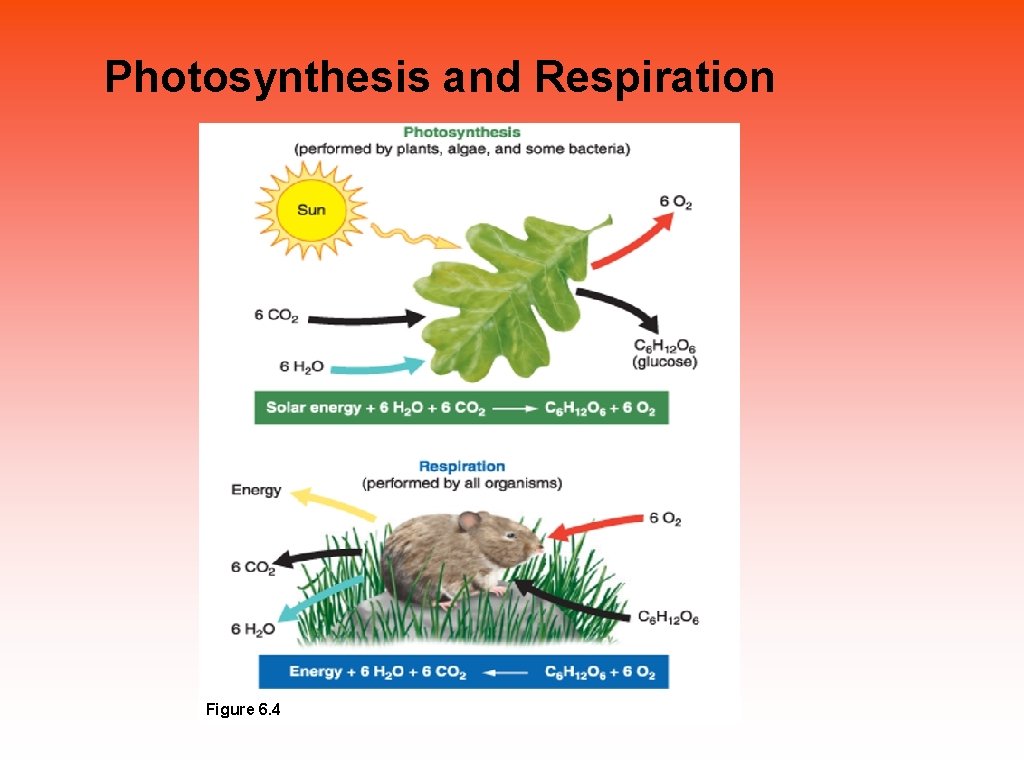
Photosynthesis and Respiration Figure 6. 4
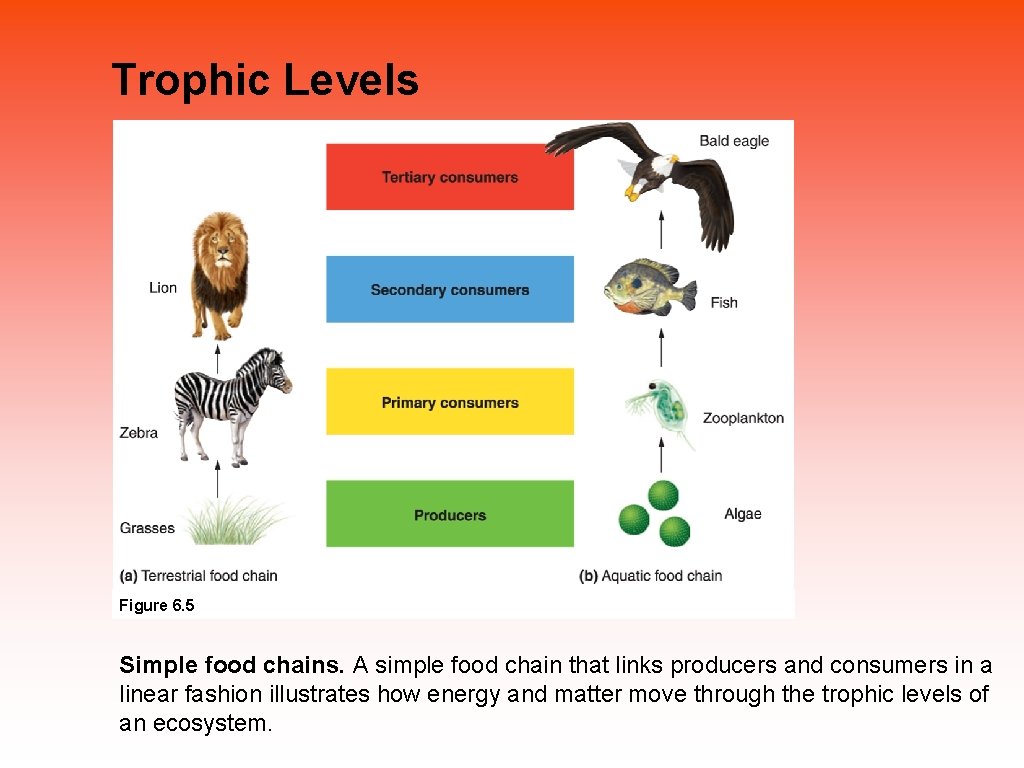
Trophic Levels Figure 6. 5 Simple food chains. A simple food chain that links producers and consumers in a linear fashion illustrates how energy and matter move through the trophic levels of an ecosystem.
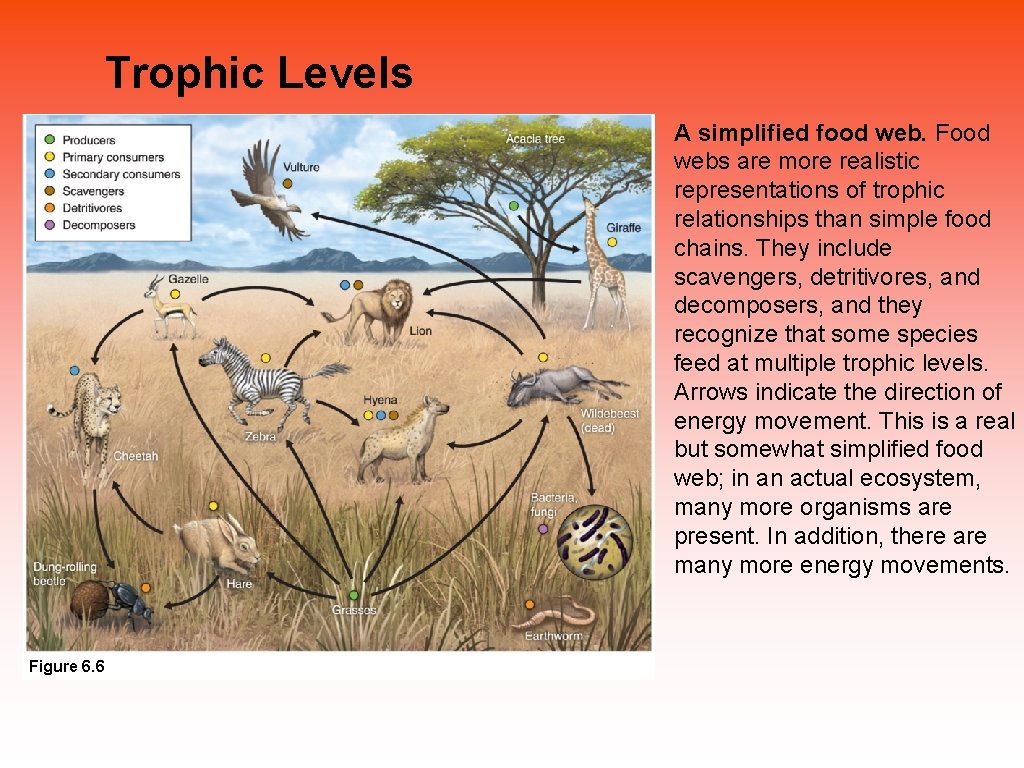
Trophic Levels A simplified food web. Food webs are more realistic representations of trophic relationships than simple food chains. They include scavengers, detritivores, and decomposers, and they recognize that some species feed at multiple trophic levels. Arrows indicate the direction of energy movement. This is a real but somewhat simplified food web; in an actual ecosystem, many more organisms are present. In addition, there are many more energy movements. Figure 6. 6

Some ecosystems are more productive than others • Gross primary productivity (GPP) The total amount of solar energy that producers in an ecosystem capture via photosynthesis over a given amount of time. • Net primary productivity (NPP) The energy captured by producers in an ecosystem minus the energy producers respire.
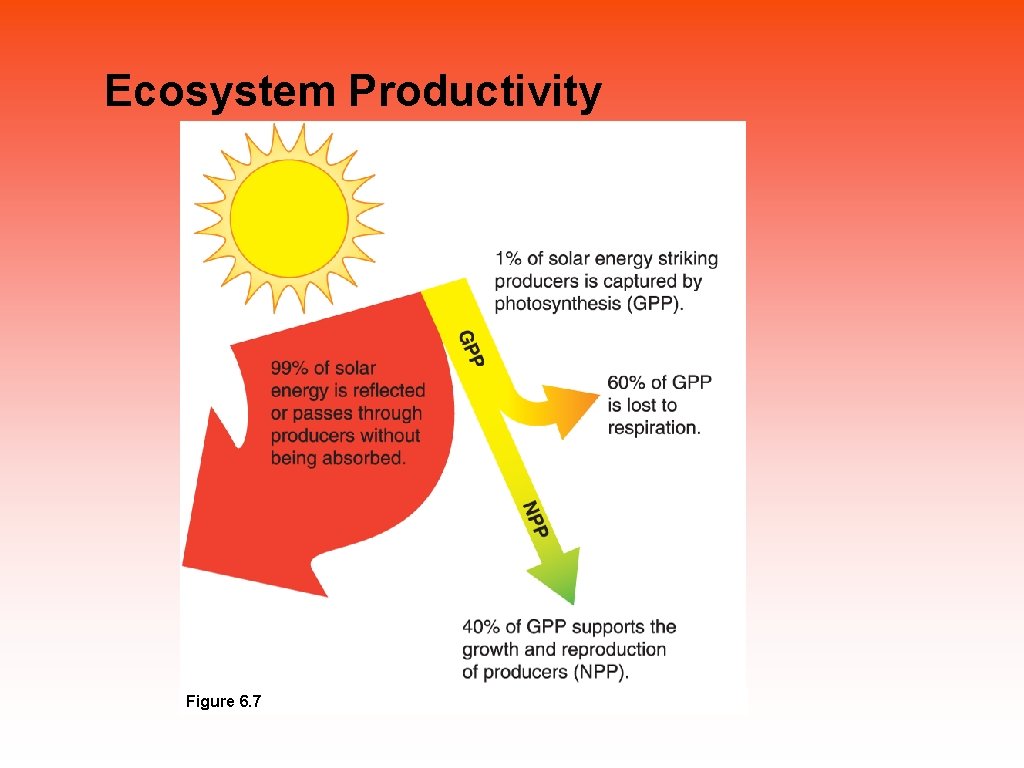
Ecosystem Productivity Figure 6. 7
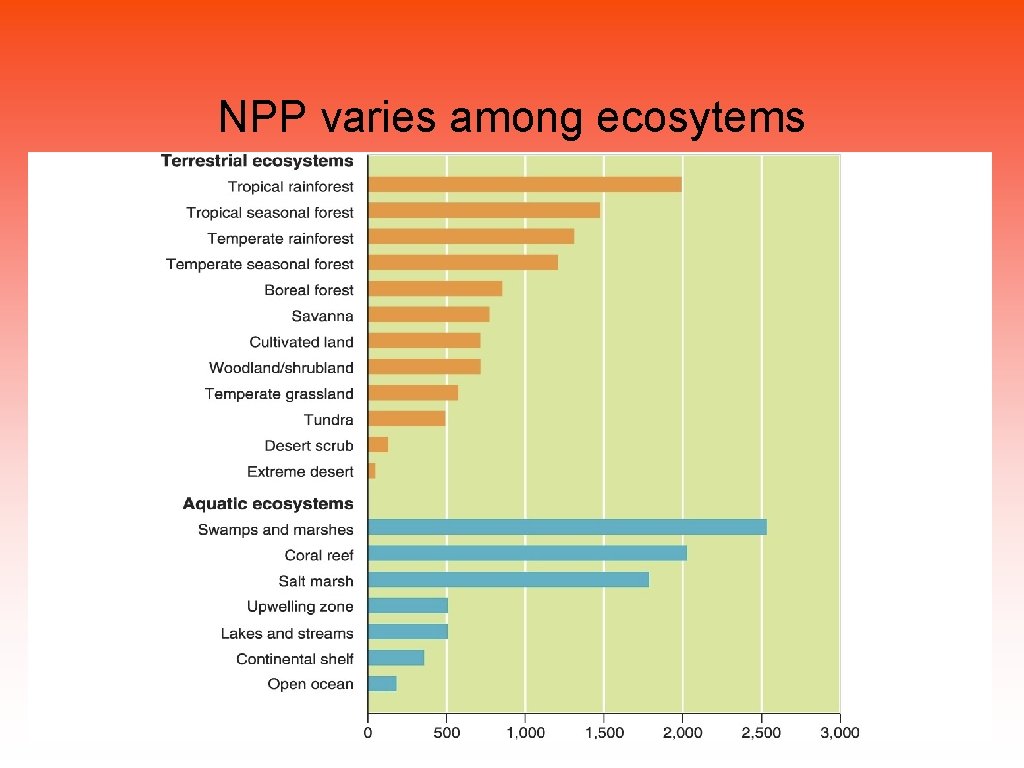
NPP varies among ecosytems

Ecosystem Efficiency Figure 6. 9 Trophic pyramid for the Serengeti ecosystem. The amount of energy that is present at each trophic level is shown in joules (J). The pyramid assumes 10 percent ecological efficiency, but efficiencies can range from 5 to 20 percent across different ecosystems. For most ecosystems, graphing the numbers of individuals or biomass within each trophic level would produce a similar pyramid.
- Slides: 9