
Chapter 3 Ecosystem Dynamics website on spheres Earths
Chapter 3 Ecosystem Dynamics website on spheres
Earth’s Major Spheres The five major spheres that support life on Earth are: - Geosphere - Atmosphere - Hydrosphere - Biosphere - Cryosphere The natural capital which life depends is the product of Earth’s spheres and energy from the sun.
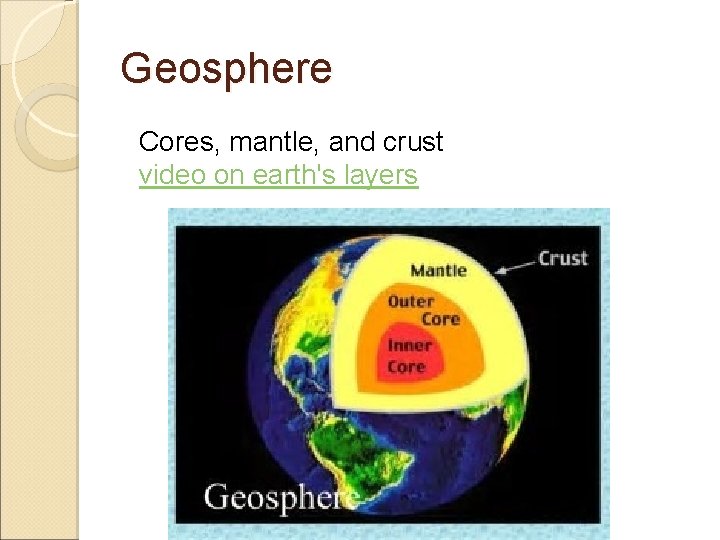
Geosphere Cores, mantle, and crust video on earth's layers
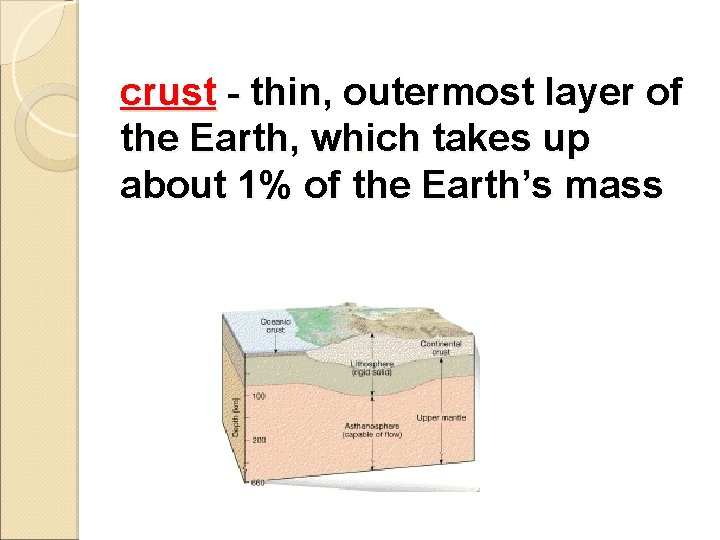
crust - thin, outermost layer of the Earth, which takes up about 1% of the Earth’s mass
mantle - zone of rock below the crust, about 2, 900 kilometers thick, and making up about two-thirds of the Earth’s mass
core - center of the Earth, making up about one-third of its mass, consisting of a solid inner core of nickel and iron which rotates within a molten outer core of nickel and iron
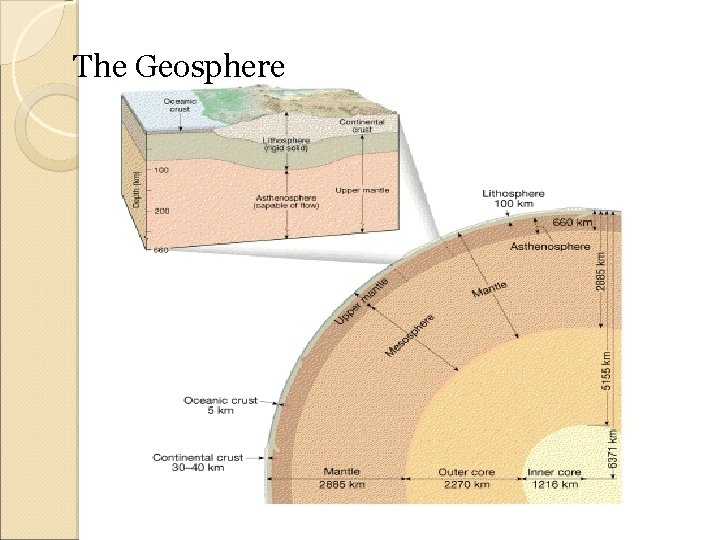
The Geosphere
Atmosphere Held by gravity Jobs to help life on Earth - shields from meteors - blocks most of sun’s UV rays - regulates Earth’s climate There are 5 main layers of the atmosphere.
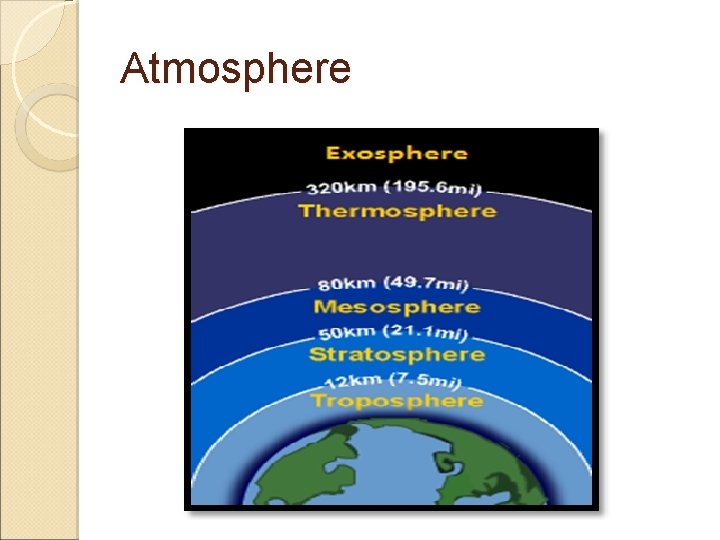
Atmosphere
Atmosphere Troposphere: lower layer, weather occurs here, only atmospheric layer where life exists, 78% nitrogen and 21% oxygen Tropopause: upper boundary of the troposphere (~10 km up)
Atmosphere Stratosphere: contains the ozone layer (O 3) which absorbs most of the sun’s UV radiation (nature’s sunscreen) Stratopause: upper boundary of the stratosphere (~50 km up)
Atmosphere Mesosphere: Mesopause: coldest layer upper boundary of the mesosphere Thermosphere: contains the ionosphere which reflects radio waves back toward Earth; nitrogen and oxygen molecules absorb solar energy and heat this layer
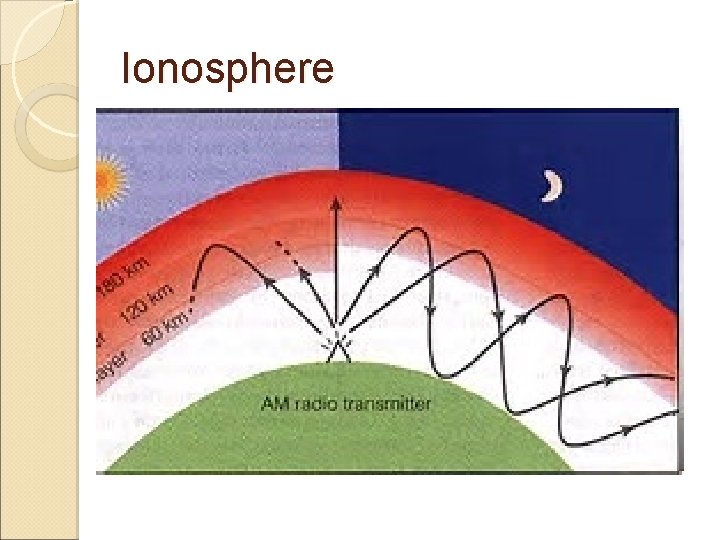
Ionosphere
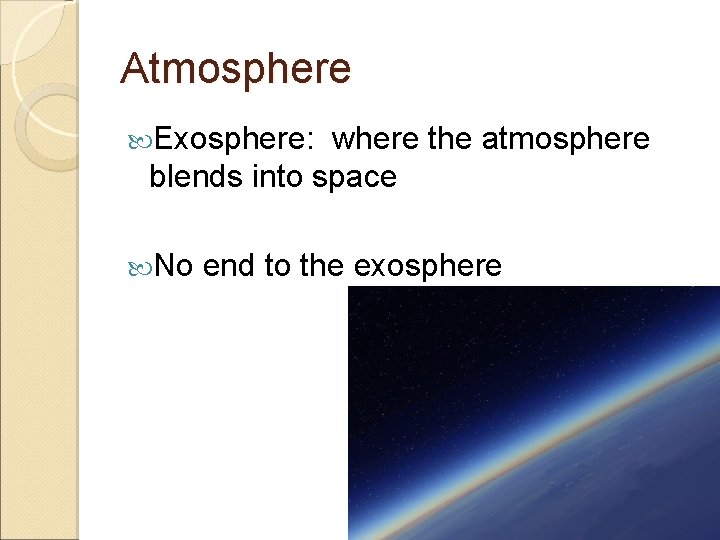
Atmosphere Exosphere: where the atmosphere blends into space No end to the exosphere
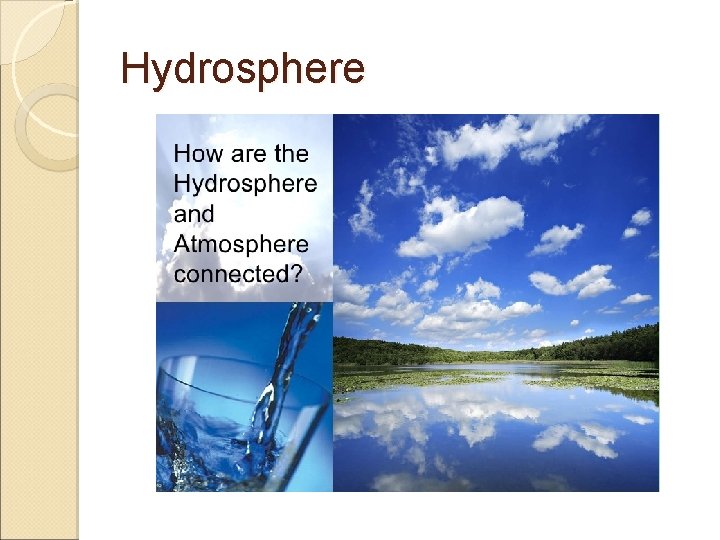
Hydrosphere Includes all of the gaseous, liquid, and solid water on or near Earth’s surface What would be included in the hydrosphere? glaciers, lakes, rivers, aquifers, water vapor, clouds, oceans
Hydrosphere

Hydrosphere
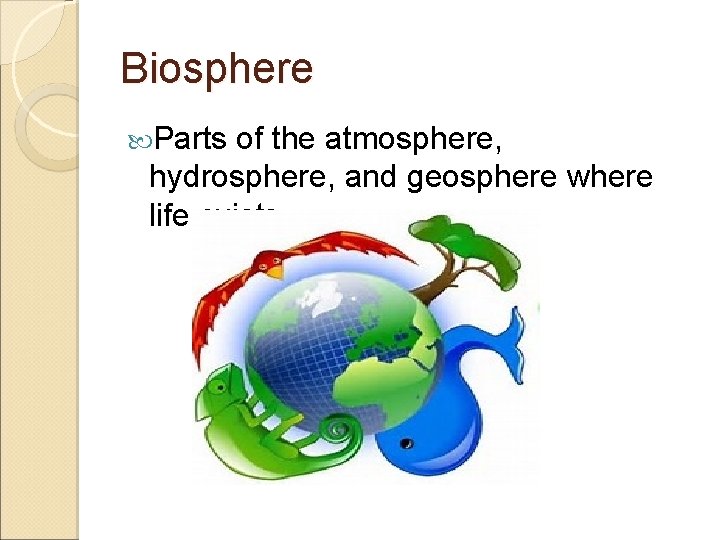
Biosphere Parts of the atmosphere, hydrosphere, and geosphere where life exists
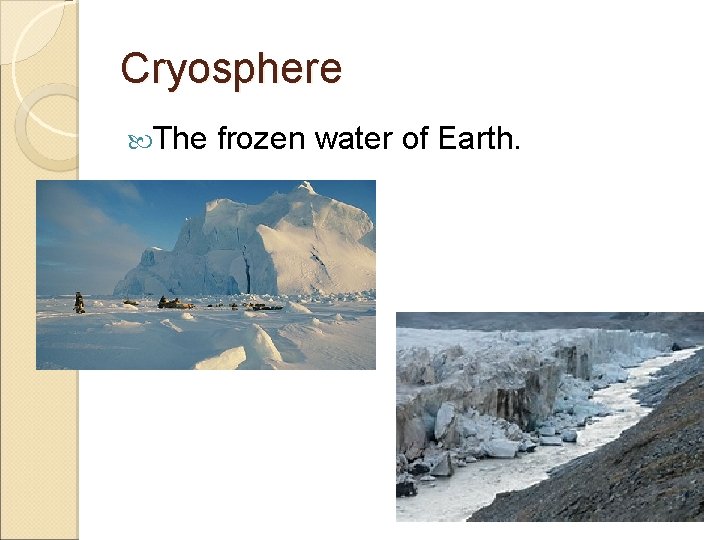
Cryosphere The frozen water of Earth.
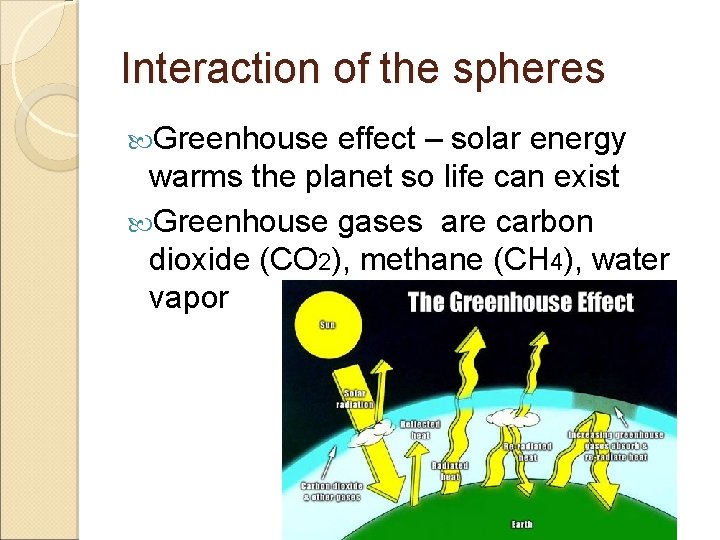
Interaction of the spheres Greenhouse effect – solar energy warms the planet so life can exist Greenhouse gases are carbon dioxide (CO 2), methane (CH 4), water vapor
Earth’s Spheres Interact Look at page 71 in your book. Write the process of how the greenhouse effect involves all five of the major spheres of Earth. Draw a picture if needed.
Greenhouse gas picture
Major Components of an Ecosystem Biotic components – living Examples: plants, animals, microbes Abiotic components – nonliving Examples: water, air, rocks, heat, sunlight, nutrients
Video ladder of matter video Matter is organized by scientists: Organism Population Community Ecosystem Biosphere Watch the video and come up with definitions to these categories.
Biotic Components Each living organism is assigned a feeding level called a trophic level. This level depends on whether it makes food or finds food. Producers: make own food (plants/algae/phytoplankton) Consumers: find food
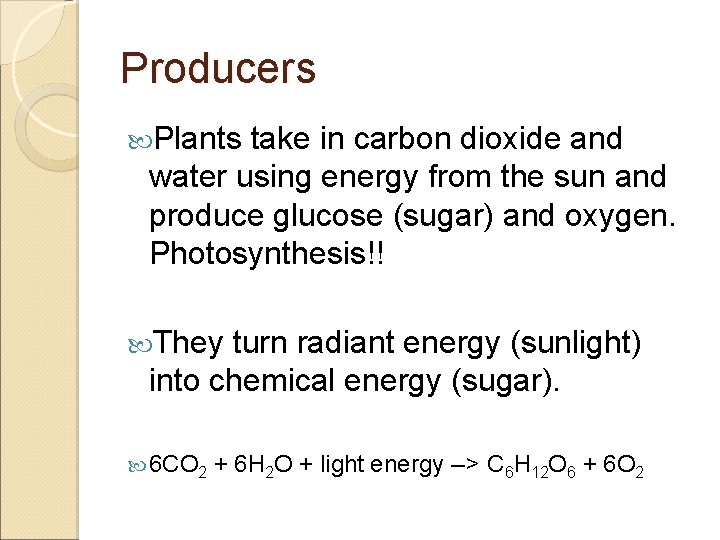
Producers Plants take in carbon dioxide and water using energy from the sun and produce glucose (sugar) and oxygen. Photosynthesis!! They turn radiant energy (sunlight) into chemical energy (sugar). 6 CO 2 + 6 H 2 O + light energy --> C 6 H 12 O 6 + 6 O 2
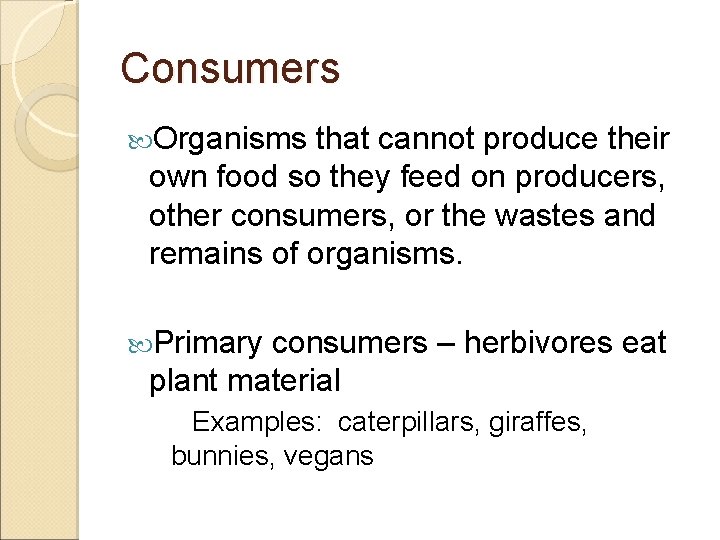
Consumers Organisms that cannot produce their own food so they feed on producers, other consumers, or the wastes and remains of organisms. Primary consumers – herbivores eat plant material Examples: caterpillars, giraffes, bunnies, vegans
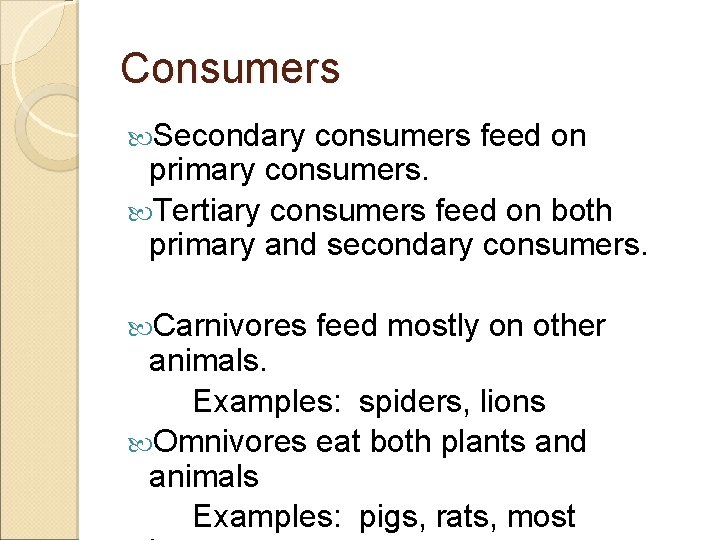
Consumers Secondary consumers feed on primary consumers. Tertiary consumers feed on both primary and secondary consumers. Carnivores feed mostly on other animals. Examples: spiders, lions Omnivores eat both plants and animals Examples: pigs, rats, most
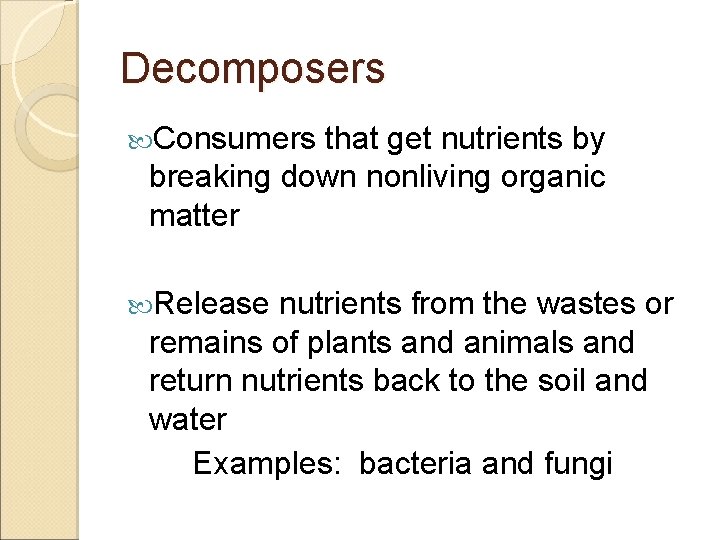
Decomposers Consumers that get nutrients by breaking down nonliving organic matter Release nutrients from the wastes or remains of plants and animals and return nutrients back to the soil and water Examples: bacteria and fungi
Decomposers Bioremediation uses bacteria and fungi that decompose organic wastes to clean up polluted sites. This is a “natural” way to clean up an oil spill in the ocean without using chemicals. The only thing we do is genetically modify the decomposers by transferring genes from one species to another. What do you think?
Detritivores Consume freshly dead organisms before they are fully decomposed Examples: earthworms, hyenas, vultures, some insects Both decomposers and detritivores eliminate build up of plant litter, animal wastes, and dead organisms which pushes nutrient cycling forward.

Video ecosystem video
Cellular Respiration Energy is released by aerobic respiration. It uses oxygen and glucose (sugar) to produce energy and carbon dioxide and water. C 6 H 12 O 6 Both + 6 O 2 --> 6 CO 2 + 6 H 2 O + energy consumers and producers carry out cellular respiration.
Decomposers: Anaerobic Respiration Fermentation is another name Decomposers breakdown glucose without oxygen Examples: yeast and some bacteria Products are methane gas (natural gas), ethyl alcohol, acetic acid (vinegar), hydrogen sulfide (smells like rotten eggs)
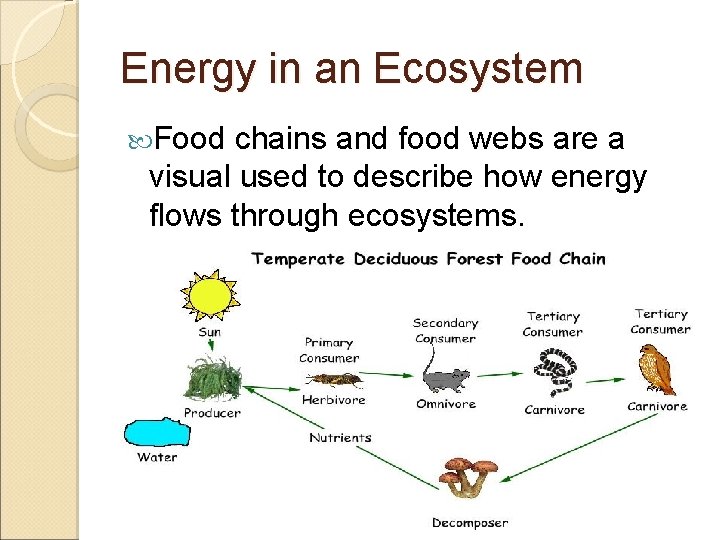
Energy in an Ecosystem Food chains and food webs are a visual used to describe how energy flows through ecosystems.
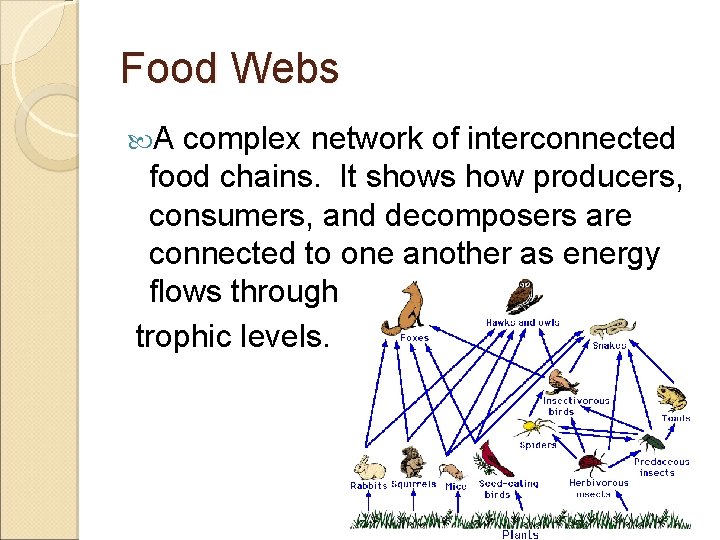
Food Webs A complex network of interconnected food chains. It shows how producers, consumers, and decomposers are connected to one another as energy flows through trophic levels.
Energy in an Ecosystem 90% of the chemical energy is lost at each link in a food chain (when one organism eats another organism) Why? Cells Where does it go? respire, chemical energy is converted into other forms of energy and we lose the quality of energy; low quality energy is thermal energy (heat)
Primary Productivity Only a small fraction of energy produced at the lowest trophic level is available to top predators in an ecosystem. How do scientists measure the amount of energy produced by primary producers in an ecosystem?
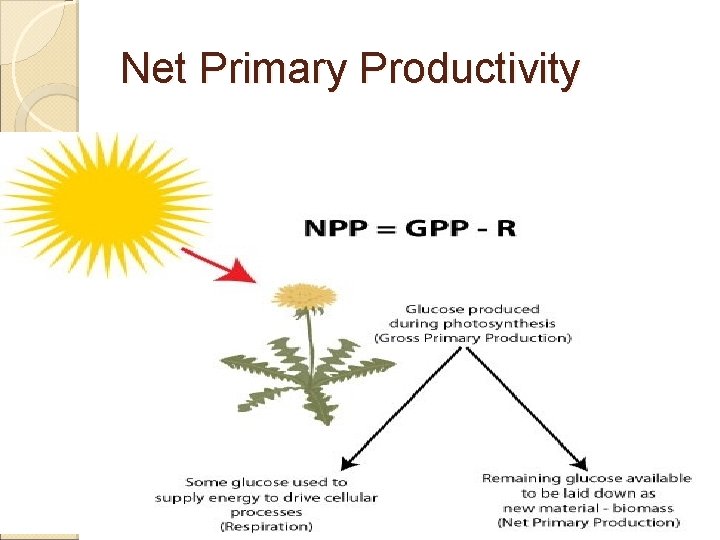
Net Primary Productivity
NPP Is a measure of the rate at which producers make chemical energy available to the consumers in an ecosystem. Which type of ecosystem would you think has a high NPP? Give one reason why you picked this ecosystem.
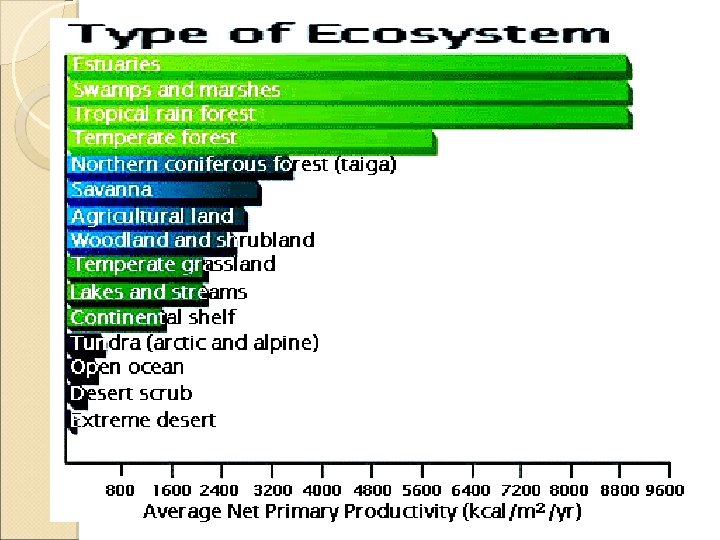
NPP Since only plant matter in the NPP is available as nutrients for consumers, the planet’s NPP ultimately limits the number of consumers that can survive. What does this mean for humans? What should we be doing for the ecosystems that have a high NPP?
Matter in an Ecosystem Elements and compounds that make up nutrients, cycle through air, water, soil, rock, and living organisms. This all happens within the biosphere. Nutrient cycles are driven by: - energy from the sun - earth’s gravity
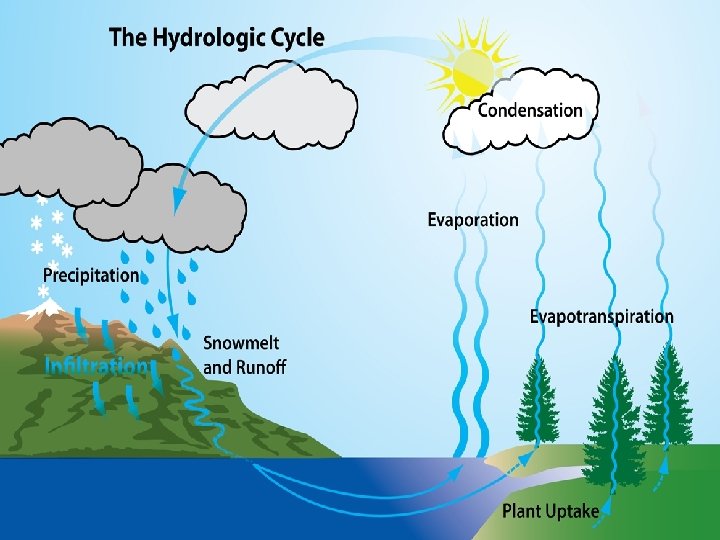
Water Cycle Hydrologic cycle collects, purifies, and distributes Earth’s fixed supply of water. Energy for this cycle is the sun. Think of all the words of the water cycle you remember.
Water Cycle – free ecosystem service Evaporation: liquid to gas (water vapor) Precipitation: gas to liquid/solid Transpiration: evaporation from plant surfaces (plant sweat) Condensation: gas to liquid Deposition: water vapor to solid (frost) Sublimation: solid to gas (dry ice) Infiltration: liquid soaks into the
Human Impacts 1. Drain and fill wetlands to create other environments like farmland or housing areas. 2. Use freshwater faster than the cycle can replace it. 3. Clear natural land turn it into human made areas which alters how much water gets into the ground.
Carbon Cycle Carbon is found in every cell in your body. It is the building block for carbohydrates, fats, proteins, DNA, and other organic compounds. It is different compounds of carbon that circulate through the biosphere, atmosphere, parts of the geosphere, and hydrosphere.
Carbon Cycle Photosynthesis by producers on land moves carbon from the atmosphere to the biosphere. In marine environments, producers remove carbon from the water. Aerobic respiration releases carbon back into the air or water.
Carbon Cycle On land, decomposers release carbon by breaking down dead organisms. In water, decomposers release carbon stored in the bottom sediment of the aquatic environment. If decomposers didn’t reach the sediment before it got buried, the carbon materials turned into fossil
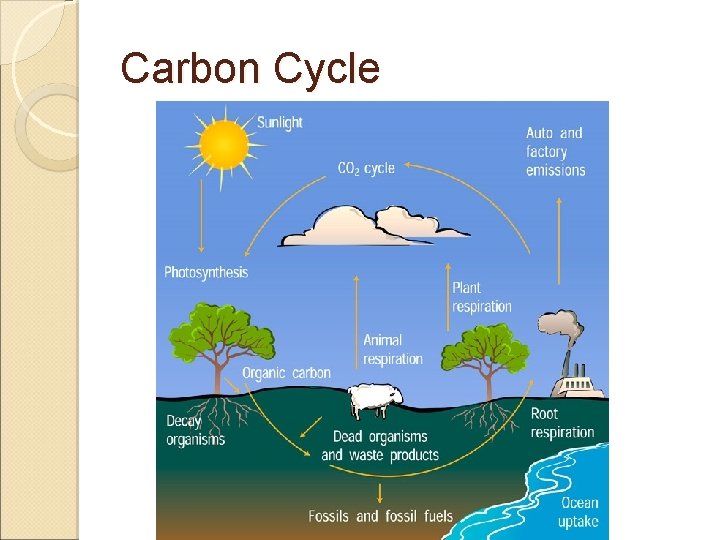
Carbon Cycle
PBS carbon cycle
Human Impacts Humans add to the carbon cycle by: -burning huge quantities of fossil fuels -cutting plants and forests down -polluting the ocean and killing phytoplankton which are the plants of water environments
Nitrogen Cycle Huge amount in the atmosphere. 78% of it is N 2 It has to be in the form of NH 3, NH 4, and NO 3 which lightning and bacteria can do. Organisms get the nitrogen by eating plants. The nitrogen gets returned through waste material, skin, hair, leaves, and when an organism dies
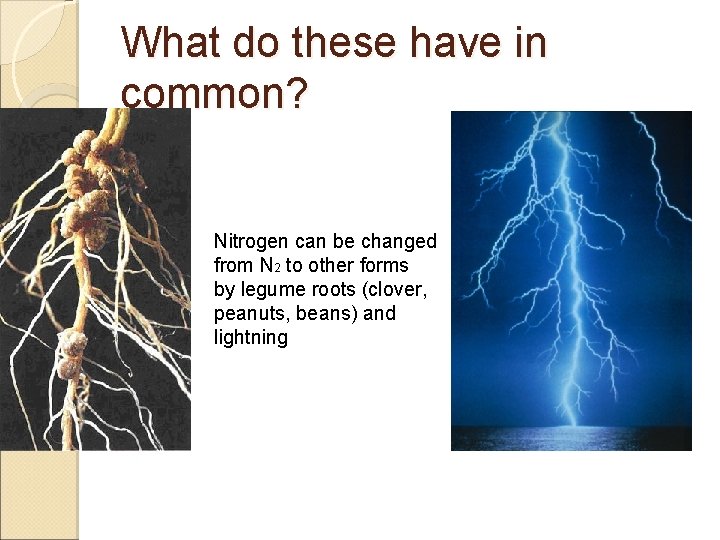
What do these have in common? Nitrogen can be changed from N 2 to other forms by legume roots (clover, peanuts, beans) and lightning
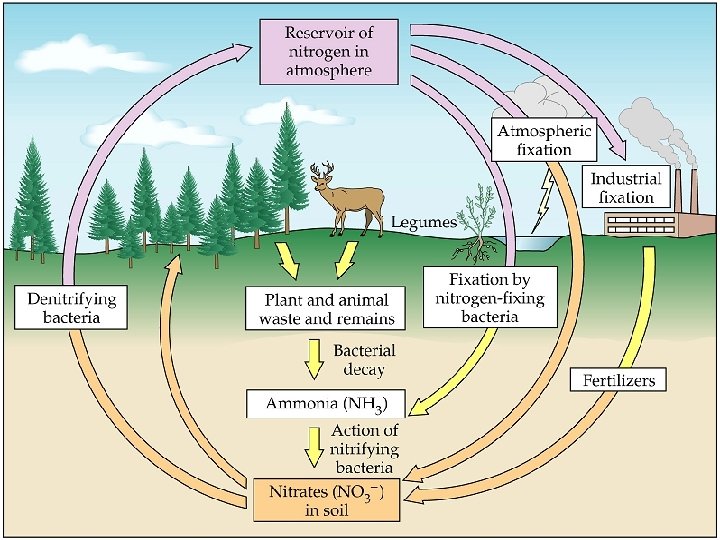
Human Impacts Burning fossil fuels releases NO (nitric oxide) which can mix with water vapor in the atmosphere to create acid rain. Human remove N 2 in the air to create fertilizer. We add excess nitrates into water environments from farm runoff, sewage treatment plants, and animal manure which causes algae to grow
Review review of carbon and nitrogen cycle
Phosphorus Cycle P is an element essential for living things Remember ATP, energy for life processes in your cells!! Phosphate ions PO 43 Comes from water eroding rocks, ends up in the soil (rivers, streams, ocean too) where plants absorb it, consumers eat the plants
Phosphorus Cycle Does NOT cycle through the atmosphere. Is very slow compared to the other cycles. Is the limiting nutrient in soil and water which controls how many plants can grow, add fertilizer and get an over growth of plants which can be bad for environment.
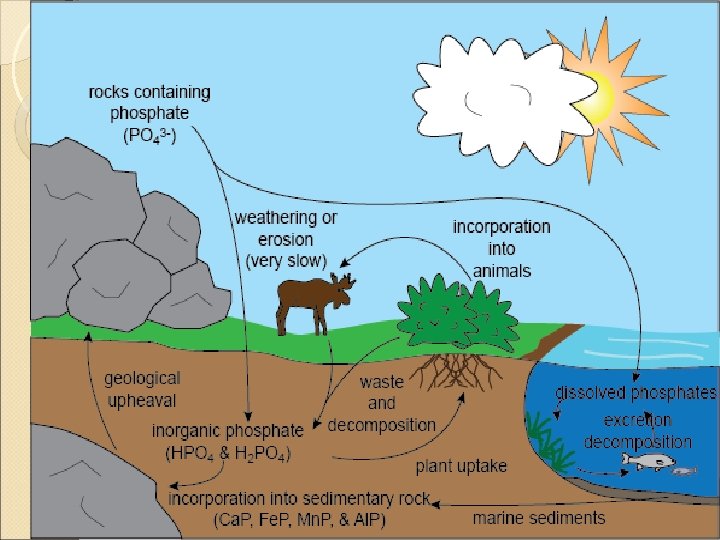
Human Impacts Mining land areas for phosphate to make fertilizer to put in other areas around the world. Clearing forests exposes soil to erosion, which can deplete soil of phosphorus. So we then add fertilizer to get plants to grow there. Extra fertilizer can runoff into lakes and streams and deplete water of sunlight and oxygen. (Same as nitrogen cycle)

Video cycle video
- Slides: 63