CHAPTER 3 EARLY ATOMIC THEORY THE ATOM FROM
- Slides: 28
CHAPTER 3 EARLY ATOMIC THEORY
THE ATOM: FROM PHILOSOPHY TO SCIENTIFIC THEORY • 400 BC – Democritus • came up with the idea of the ____ • Nature’s basic particle • _______ • His ideas were not useful in explaining chemical behavior because _______________________. • Aristotle • Thought matter was _________ • Did not believe in atoms • Resulted in delaying the progress of science for about 2000 years.
DEMOCRITUS’ ATOM
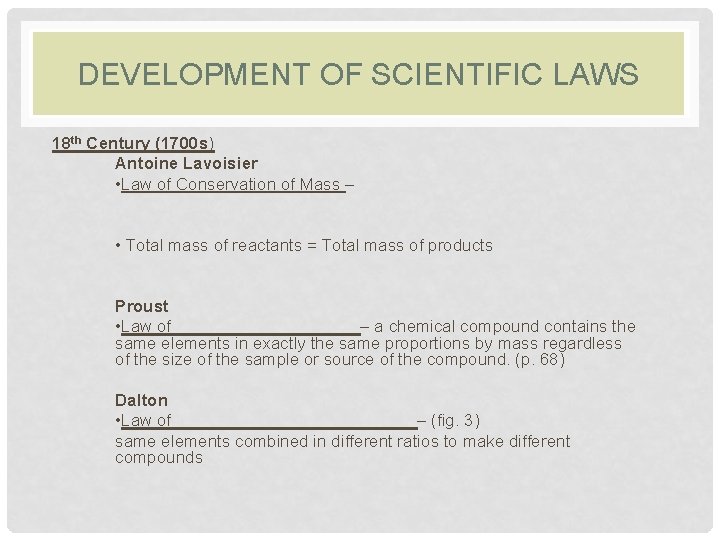
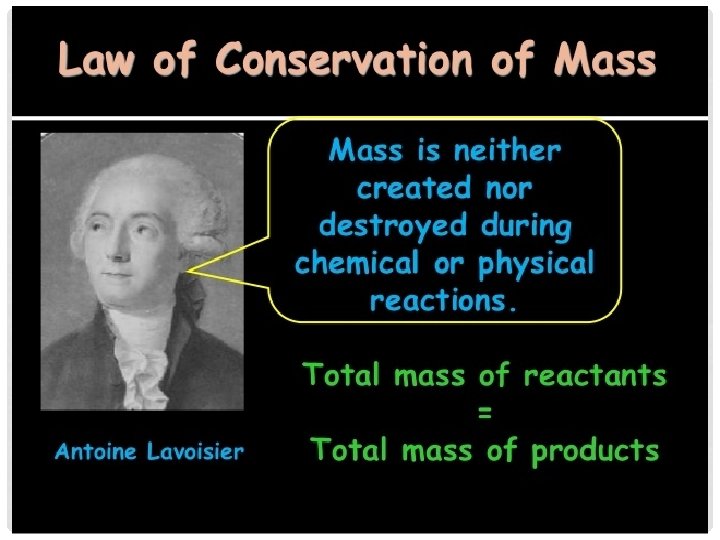
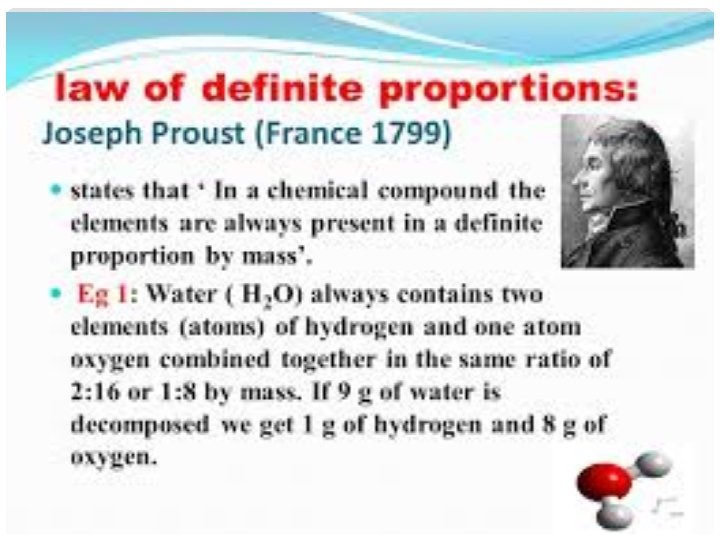
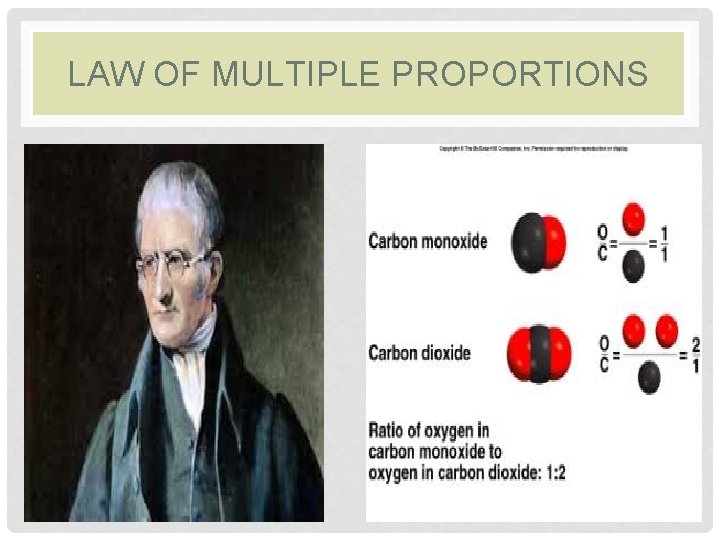
DEVELOPMENT OF SCIENTIFIC LAWS 18 th Century (1700 s) Antoine Lavoisier • Law of Conservation of Mass – • Total mass of reactants = Total mass of products Proust • Law of __________ – a chemical compound contains the same elements in exactly the same proportions by mass regardless of the size of the sample or source of the compound. (p. 68) Dalton • Law of _____________ – (fig. 3) same elements combined in different ratios to make different compounds
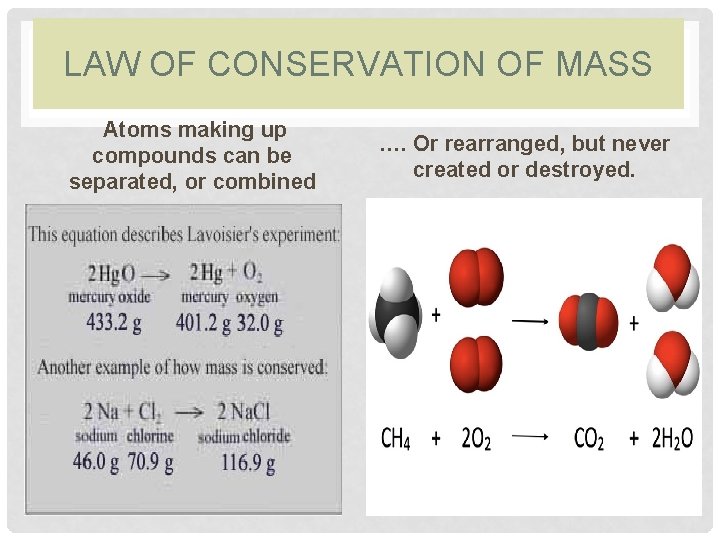
LAW OF CONSERVATION OF MASS Atoms making up compounds can be separated, or combined …. Or rearranged, but never created or destroyed.
LAW OF MULTIPLE PROPORTIONS
DALTON’S ATOMIC THEORY 1808 – Dalton’s Atomic Theory 1. 2. 3. 4. Atoms of different elements combined in whole-number ratios to form chemical compounds. 5. In chemical reactions, ______________________________________________ • Dalton’s theory helped explain the law of conservation of mass because it stated that atoms could not be created or destroyed. • Modifications have been made to theory to explain new observations.
MODERN ATOMIC THEORY • Atoms of an element - disproves point #2 of Dalton’s theory • Atoms_______________________ in ordinary chemical reactions. However, these changes CAN occur in nuclear reactions. -modified version of point #3 of Dalton’s theory
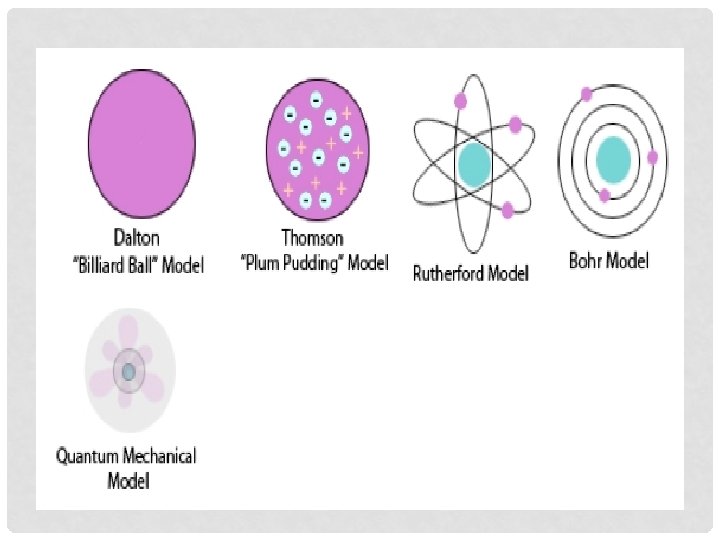
DALTON’S ATOMIC MODEL
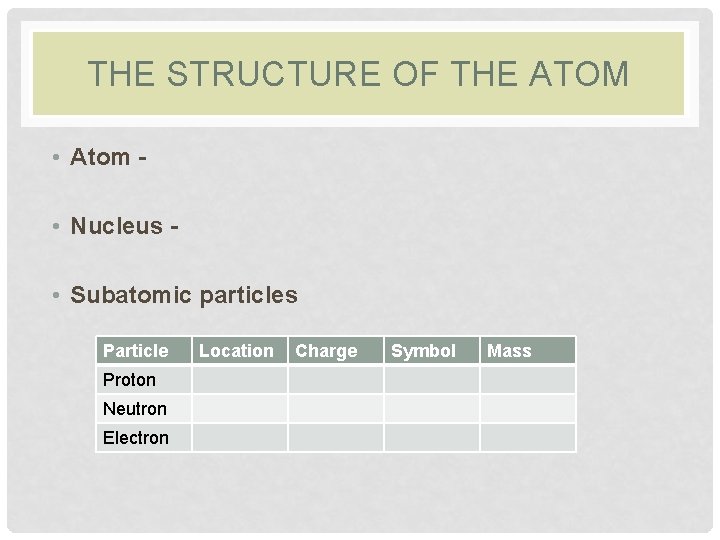
THE STRUCTURE OF THE ATOM • Atom • Nucleus • Subatomic particles Particle Proton Neutron Electron Location Charge Symbol Mass
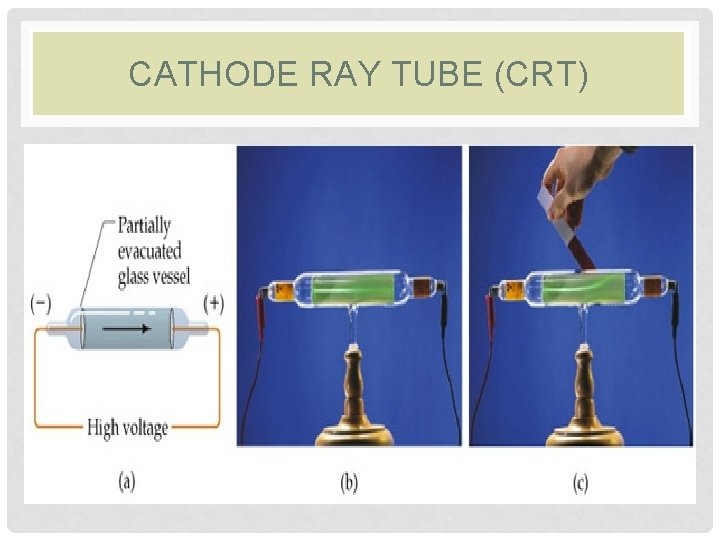
CATHODE RAY TUBE (CRT)
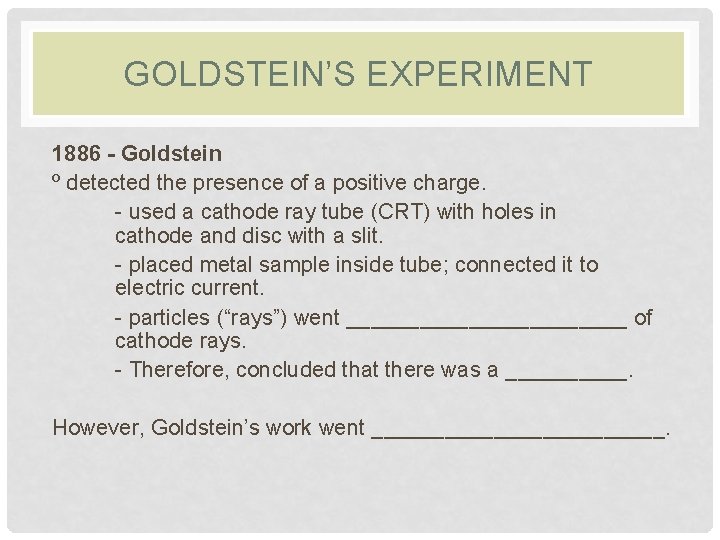
GOLDSTEIN’S EXPERIMENT 1886 - Goldstein º detected the presence of a positive charge. - used a cathode ray tube (CRT) with holes in cathode and disc with a slit. - placed metal sample inside tube; connected it to electric current. - particles (“rays”) went ____________ of cathode rays. - Therefore, concluded that there was a _____. However, Goldstein’s work went ____________.
GOLDSTEIN’S CRT EXPERIMENT
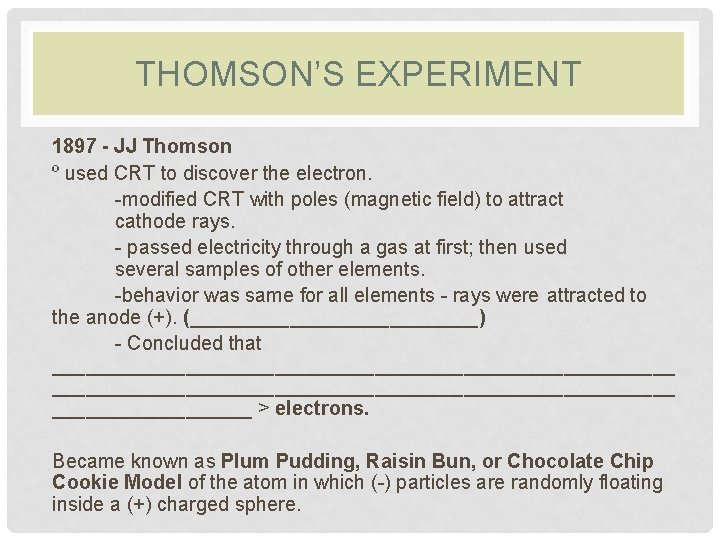
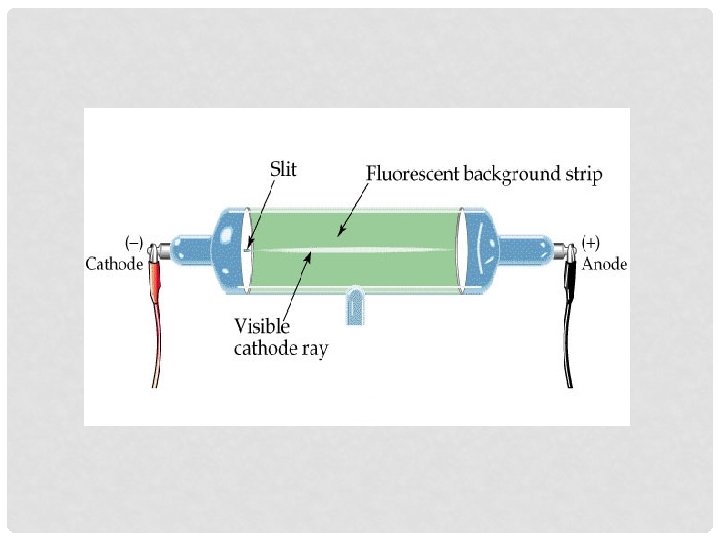
THOMSON’S EXPERIMENT 1897 - JJ Thomson º used CRT to discover the electron. -modified CRT with poles (magnetic field) to attract cathode rays. - passed electricity through a gas at first; then used several samples of other elements. -behavior was same for all elements - rays were attracted to the anode (+). (_____________) - Concluded that ________________________________________________________ > electrons. Became known as Plum Pudding, Raisin Bun, or Chocolate Chip Cookie Model of the atom in which (-) particles are randomly floating inside a (+) charged sphere.
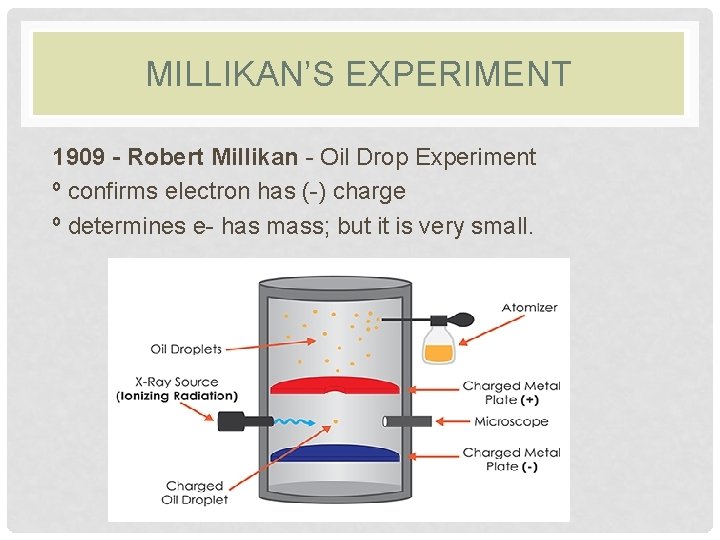
MILLIKAN’S EXPERIMENT 1909 - Robert Millikan - Oil Drop Experiment º confirms electron has (-) charge º determines e- has mass; but it is very small.
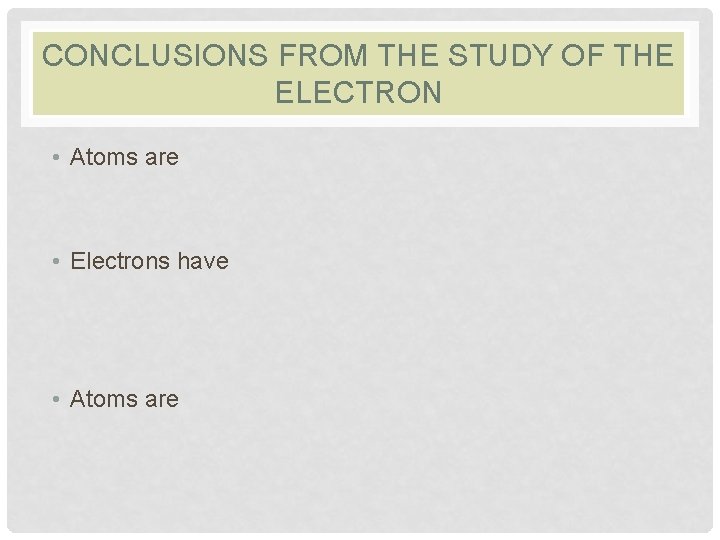
CONCLUSIONS FROM THE STUDY OF THE ELECTRON • Atoms are • Electrons have • Atoms are
THOMSON’S ATOMIC MODEL
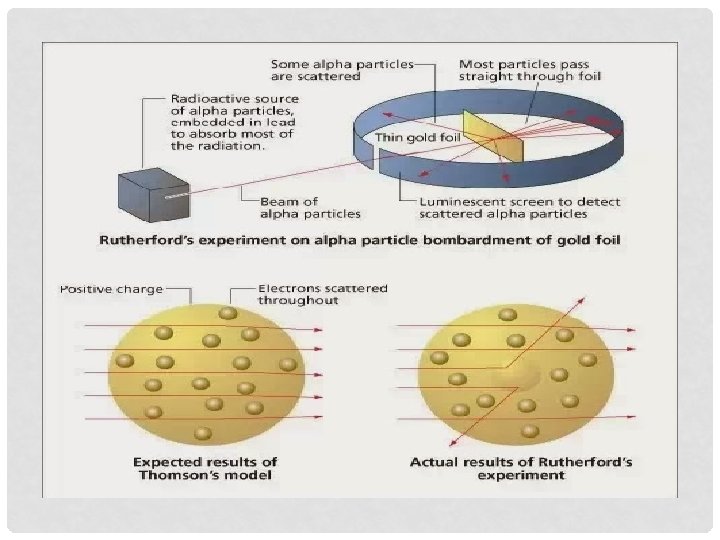
ERNEST RUTHERFORD • 1911 – Ernest Rutherford • _______________ • Used info from previous experiments conducted by Henri Becquerel (1896) that determined types of radioactive particles. • Bombarded thin metal foil with alpha particles and recorded “hits” on detecting screen.
RUTHERFORD’S GOLD FOIL EXPERIMENT • Findings: Conclusions:
RUTHERFORD’S ATOMIC MODEL
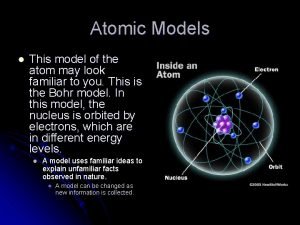
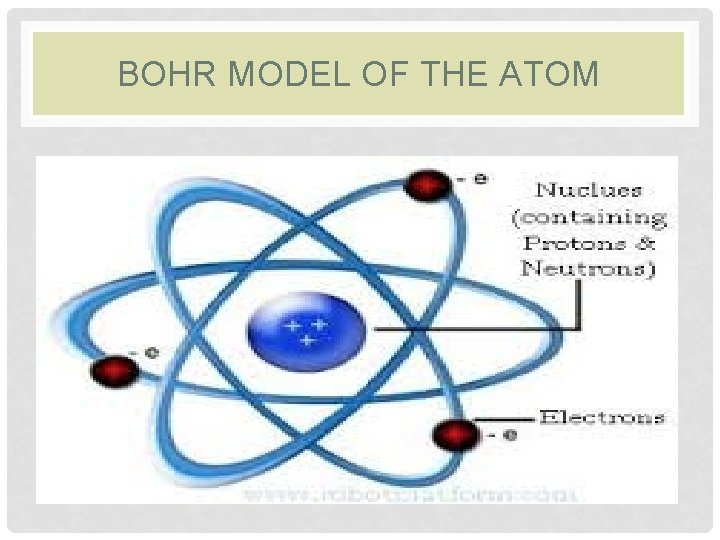
THE BOHR MODEL • 1913 – Niels Bohr • - absorption and emission of light energy. • - spectra – colors emitted by e- at different energy levels. • 1932 – J. Chadwick – discovered the neutron. • -Bohr Model – atoms are divisible units composed of positive and neutral particles (____________) concentrated inside the ______, with (-) particles (_______) orbiting around in electron shells or energy levels.
BOHR MODEL OF THE ATOM
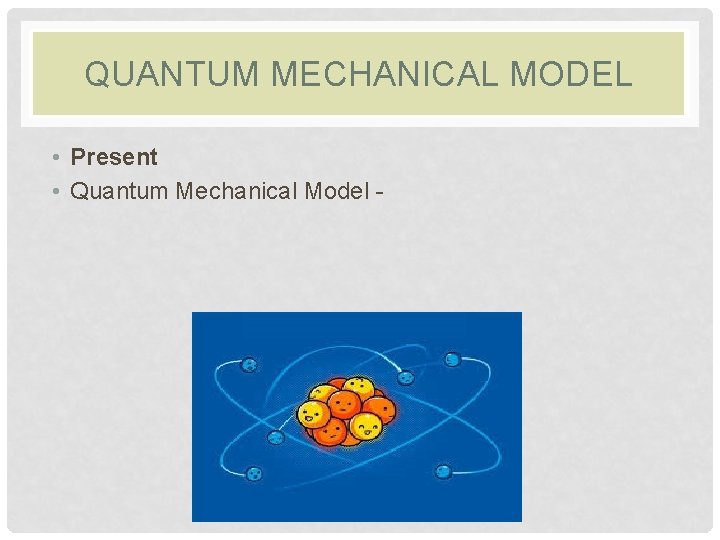
QUANTUM MECHANICAL MODEL • Present • Quantum Mechanical Model -