
Chapter 3 Digestion and Absorption of the Food
Chapter 3 Digestion and Absorption of the Food Nutrients Copyright © 2013 Wolters Kluwer Health | Lippincott Williams & Wilkins
Digestive Process § Controlled by the autonomic nervous system: involuntary control § Digestion hydrolyzes complex molecules into simpler substances for absorption. § Self-regulating processes within the digestive tract largely control the liquidity, mixing, and transit time of the digestive mixture. Copyright © 2013 Wolters Kluwer Health | Lippincott Williams & Wilkins
Hormones Control Digestion Four hormones regulate digestion. § • Gastrin • Secretin • Cholecystokinin (CCK) • Gastric inhibitory peptide Copyright © 2013 Wolters Kluwer Health | Lippincott Williams & Wilkins
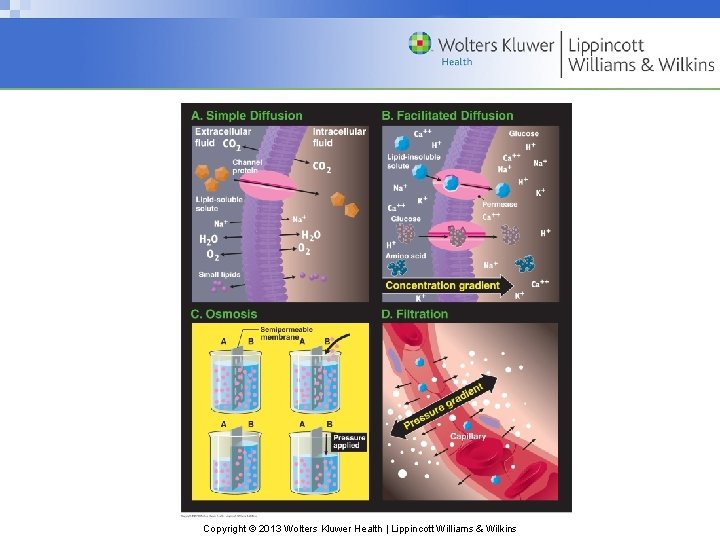
Passive Transport § Simple diffusion § Facilitated diffusion § Osmosis § Filtration Copyright © 2013 Wolters Kluwer Health | Lippincott Williams & Wilkins
Copyright © 2013 Wolters Kluwer Health | Lippincott Williams & Wilkins
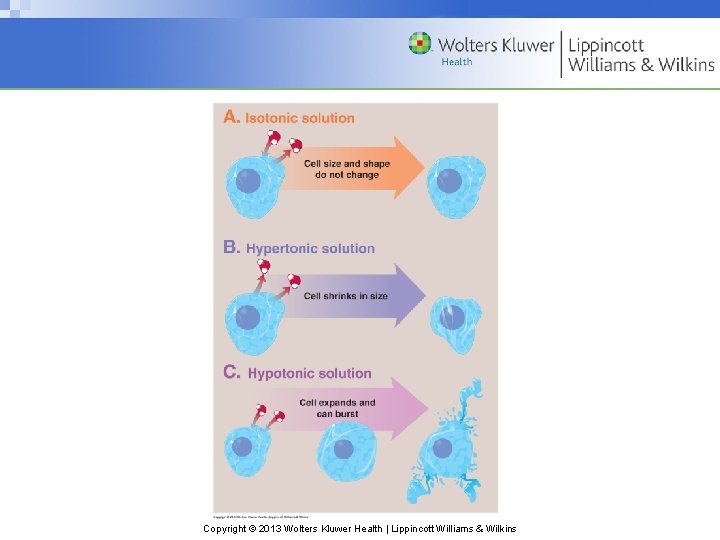
Osmolality § Concentration of particles in a solution • Isotonic • Hypertonic • Hypotonic Copyright © 2013 Wolters Kluwer Health | Lippincott Williams & Wilkins
Copyright © 2013 Wolters Kluwer Health | Lippincott Williams & Wilkins
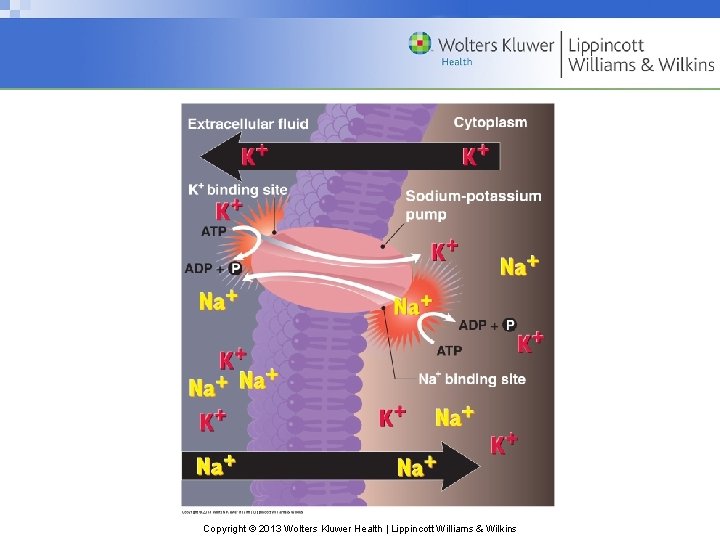
Active Transport § Sodium-potassium pump § Coupled transport § Bulk transport • Exocytosis • Endocytosis Copyright © 2013 Wolters Kluwer Health | Lippincott Williams & Wilkins
Copyright © 2013 Wolters Kluwer Health | Lippincott Williams & Wilkins
The Gastrointestinal (GI) Tract § The GI tract includes the esophagus, gallbladder, liver, stomach, pancreas, small intestine, large intestine, rectum, and anus. § It is surrounded by a connective tissue mesentery that weaves around and supports the intestinal organs. § This membrane contains a diffuse network of capillaries that transports absorbed nutrients via the hepatic-portal vein to the liver. • The liver processes the nutrients. Copyright © 2013 Wolters Kluwer Health | Lippincott Williams & Wilkins
The Mouth and Esophagus § Mouth • Chewing or mechanical digestion alters food in the mouth. • Easier to swallow • Increases the accessibility to enzymes § Esophagus • Connects the pharynx to the stomach Copyright © 2013 Wolters Kluwer Health | Lippincott Williams & Wilkins
Peristalsis and Sphincters § Peristalsis involves progressive, recurring waves of smooth muscle contractions that compress and squeeze the GI tract. § Sphincters control the passage of food. • Act as valves that regulate passage or flow of material through the GI tract • Respond to stimuli from nerves, hormones, and hormone-like substances and an increase in pressure Copyright © 2013 Wolters Kluwer Health | Lippincott Williams & Wilkins
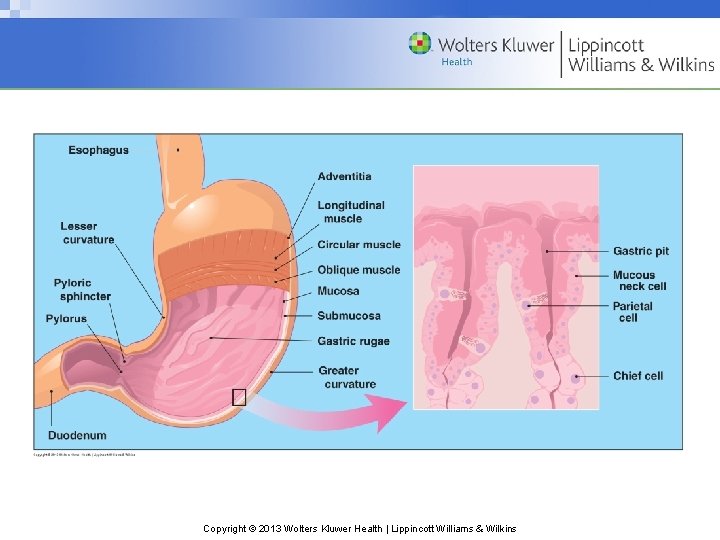
The Stomach § Temporary holding tank for partially digested food before moving it into the small intestine § The stomach’s contents mix with chemical substances to produce chyme, a mixture of food and digestive juices. § Parietal cells secrete hydrochloric acid stimulated by gastrin and acetylcholine released by the vagus nerve. § Food mixes as hydrochloric acid and enzymes continue the breakdown process. Copyright © 2013 Wolters Kluwer Health | Lippincott Williams & Wilkins
Copyright © 2013 Wolters Kluwer Health | Lippincott Williams & Wilkins
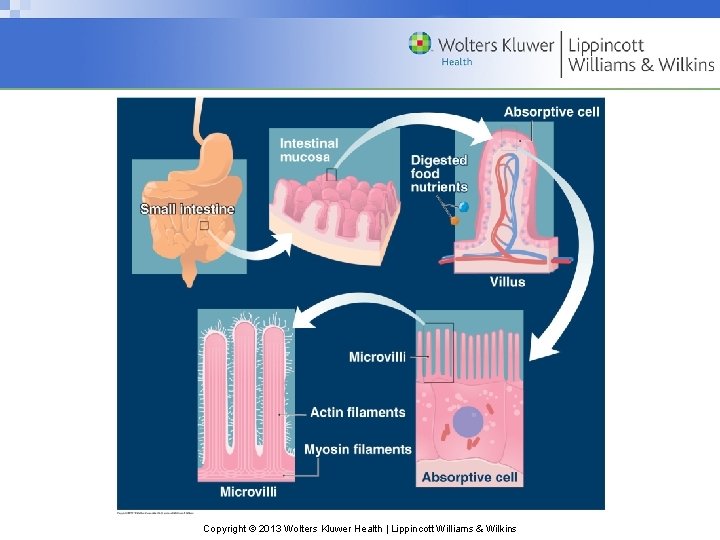
The Small Intestine § Consists of three sections: the duodenum, the jejunum, and the ileum. § Most digestion occurs in the small intestine. § Absorption takes place through millions of villi. • Most absorption through the villi occurs by active transport that uses a carrier molecule and expends ATP energy. § Lacteals absorb most digested lipids. Copyright © 2013 Wolters Kluwer Health | Lippincott Williams & Wilkins
Copyright © 2013 Wolters Kluwer Health | Lippincott Williams & Wilkins
Intestinal Contractions § 1– 3 days for foods to leave the GI tract § Segmentation: intermittent oscillating contractions and relaxations of the intestinal wall’s circular smooth muscle • Gives digestive juices time to mix with food § Gallbladder and pancreas secrete digestive juices. Copyright © 2013 Wolters Kluwer Health | Lippincott Williams & Wilkins
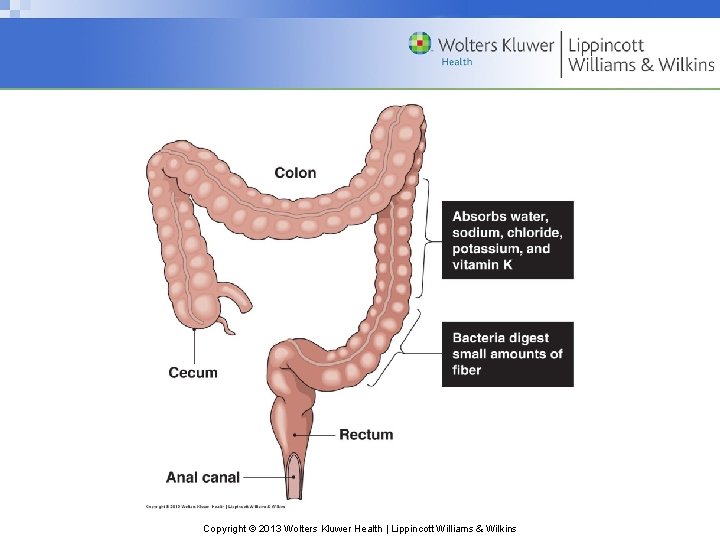
The Large Intestine § This terminal portion of the GI tract, also known as the colon or bowel, contains no villi. § Its major anatomic sections include the ascending colon, transverse colon, descending colon, sigmoid colon, rectum, and anal canal. § Bacteria ferment the remaining undigested food residue. § Serves as a storage area for undigested food residue (feces) § Where absorption of water and electrolytes occurs Copyright © 2013 Wolters Kluwer Health | Lippincott Williams & Wilkins
Copyright © 2013 Wolters Kluwer Health | Lippincott Williams & Wilkins
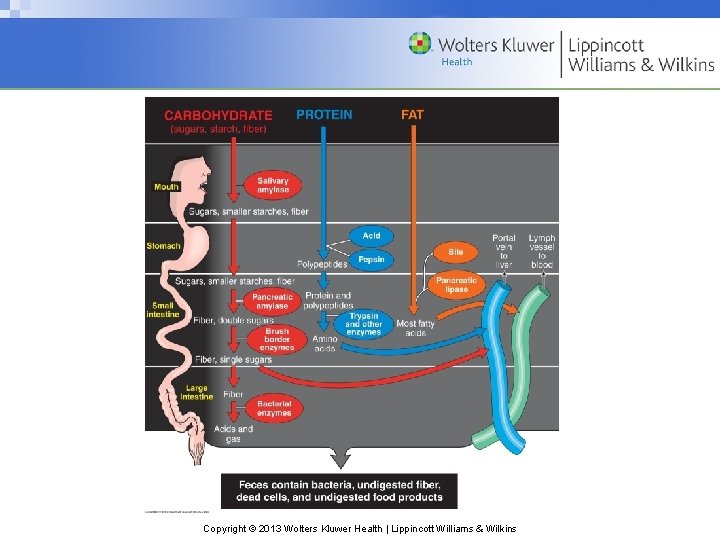
Carbohydrate Digestion and Absorption § Salivary amylase degrades starch to simpler disaccharides. § Pancreatic amylase continues carbohydrate hydrolysis. § Enzymes on the brush border complete the final stage of carbohydrate digestion to monosaccharides • Maltase • Sucrase • Lactase Copyright © 2013 Wolters Kluwer Health | Lippincott Williams & Wilkins
Lipid Digestion and Absorption § Lingual lipase begins lipid digestion in the mouth. • Short-chain and medium-chain saturated fatty acids § Gastric lipase continues lipid breakdown in the stomach. • Triacylglycerols § Majority of lipid breakdown occurs in the small intestine. Copyright © 2013 Wolters Kluwer Health | Lippincott Williams & Wilkins
Lipids Digestion and Absorption (cont. ) § Major lipid breakdown occurs by the emulsifying action of bile and the hydrolytic action of pancreatic lipase. § Cholecystokinin (CCK) is released from the wall of the duodenum. § Gastric inhibitory peptide and secretin are released in response to a high lipid content in the stomach. Copyright © 2013 Wolters Kluwer Health | Lippincott Williams & Wilkins
Medium-Chain Triacylglycerols § Medium-chain triacylglycerols rapidly absorb into the portal vein. § Bound to glycerol and medium-chain free fatty acids § Bypass the lymphatic system and enter the bloodstream rapidly § Supplements have clinical application for patients with tissue-wasting disease or with intestinal malabsorption difficulties. Copyright © 2013 Wolters Kluwer Health | Lippincott Williams & Wilkins
Long-Chain Fatty Acids § Long-chain fatty acids are absorbed by the intestinal mucosa. They reform into triacylglycerols and then form chylomicrons. § Chylomicrons move slowly through the lymphatic system and empty into the venous blood of the systemic circulation. § Lipoprotein lipase is an enzyme that allows chylomicrons to hydrolyze to free fatty acids and glycerol. Copyright © 2013 Wolters Kluwer Health | Lippincott Williams & Wilkins
Protein Digestion and Absorption § Pepsin initiates protein digestion in the stomach. § Gastrin stimulates secretion of gastric hydrochloric acid, performing many functions. • Activates pepsin • Stimulates the release of hydrochloric acid • Kills pathogenic organisms • Improves absorption of iron and calcium • Inactivates hormones of plant and animal origin • Denatures food proteins, making them more vulnerable to enzyme action Copyright © 2013 Wolters Kluwer Health | Lippincott Williams & Wilkins
Protein Digestion and Absorption (cont. ) § The final steps in protein digestion occur under the action of the enzyme trypsin. • The peptide fragments further dismantle into tripeptides, dipeptides, and single amino acids. § Amino acids also join with sodium for active absorption through the small intestine into the portal vein and on to the liver. Copyright © 2013 Wolters Kluwer Health | Lippincott Williams & Wilkins
Amino Acids in the Liver Once amino acids reach the liver, one of three events occurs: § • Conversion to glucose (glucogenic amino acids) • Conversion to fat (ketogenic amino acids) • Direct release into the bloodstream as plasma proteins, such as albumin, or as free amino acids Copyright © 2013 Wolters Kluwer Health | Lippincott Williams & Wilkins
Vitamins § Vitamin absorption occurs mainly by the passive process of diffusion in the jejunum and ileum. § Fat-soluble vitamins are absorbed with dietary lipids. § Once absorbed, chylomicrons and lipoproteins transport these vitamins to the liver and fatty tissues. Copyright © 2013 Wolters Kluwer Health | Lippincott Williams & Wilkins
Vitamins (cont. ) § Water-soluble vitamins diffuse into the blood, except for vitamin B 12. • This vitamin combines with intrinsic factor produced by the stomach, which the intestine absorbs by endocytosis. § Water-soluble vitamins pass into the urine when their concentration in plasma exceeds the renal capacity for reabsorption. Copyright © 2013 Wolters Kluwer Health | Lippincott Williams & Wilkins
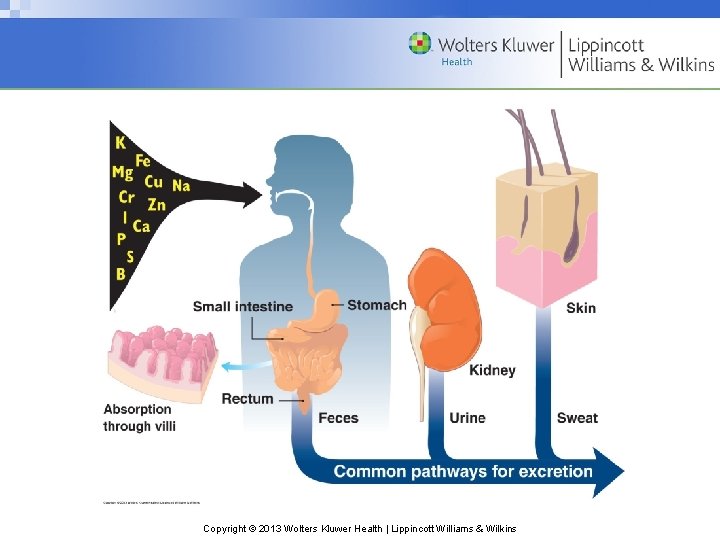
Minerals § Both extrinsic (dietary) and intrinsic (cellular) factors control the eventual fate of ingested minerals. § The body does not absorb minerals very well. § Mineral availability in the body depends on its chemical form. § Gender influences mineral absorption. § Males absorb calcium better than females. Copyright © 2013 Wolters Kluwer Health | Lippincott Williams & Wilkins
Copyright © 2013 Wolters Kluwer Health | Lippincott Williams & Wilkins
Water Absorption § Major absorption of ingested water and water contained in foods occurs by the passive process of osmosis in the small intestine. § Intestinal tract absorbs about 9 L of water each day. • 72% absorbed in the proximal small intestine • 20% absorbed from the distal segment of the small intestine • 8% absorbed from the large intestine Copyright © 2013 Wolters Kluwer Health | Lippincott Williams & Wilkins
Copyright © 2013 Wolters Kluwer Health | Lippincott Williams & Wilkins
Exercise & Gastrointestinal Function § Intensity § Mode § Duration Copyright © 2013 Wolters Kluwer Health | Lippincott Williams & Wilkins
Disorders of the GI Tract § Constipation § Diarrhea § Diverticulosis § Heartburn/reflux § Irritable Bowel Syndrome § Gas § Functional Dyspepsia Copyright © 2013 Wolters Kluwer Health | Lippincott Williams & Wilkins
- Slides: 35