
Chapter 3 Cultural Competence Cultural Care The Neurologic
- Slides: 66
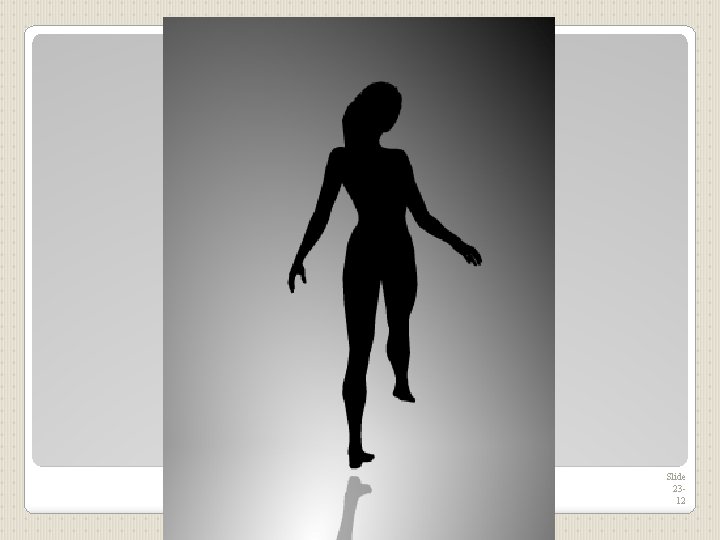
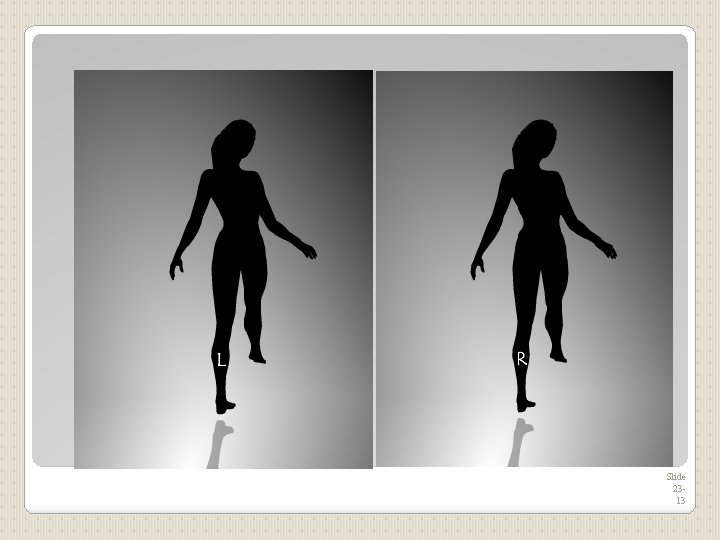
Chapter 3: Cultural Competence: Cultural Care The Neurologic System The Spinning Woman Illusion --Nobuyuki Kayahara J Carley MSN, MA, RN, CNE Fall, 2009 JARVIS , C. (2008) Physical Examination & Health Assessment Chapter 232004, 2000, 1996, 1992 by Saunders, an imprint of Elsevier Inc. Elsevier items and derived items © 2008, Slide 3 -1
Unit Objectives • 1. Describe the anatomic structures of the central nervous system and brain. • 2. Identify the 12 cranial nerves and their function • 3. Complete the Glasgow Coma scale, the Rancho Los Amigos scale, and the mini mental state exam as appropriate for case studies. 4. Explain how to prepare the client for a neurological examination 5. Discuss the appropriate equipment necessary for examining the neurological system. Slide 23 -2
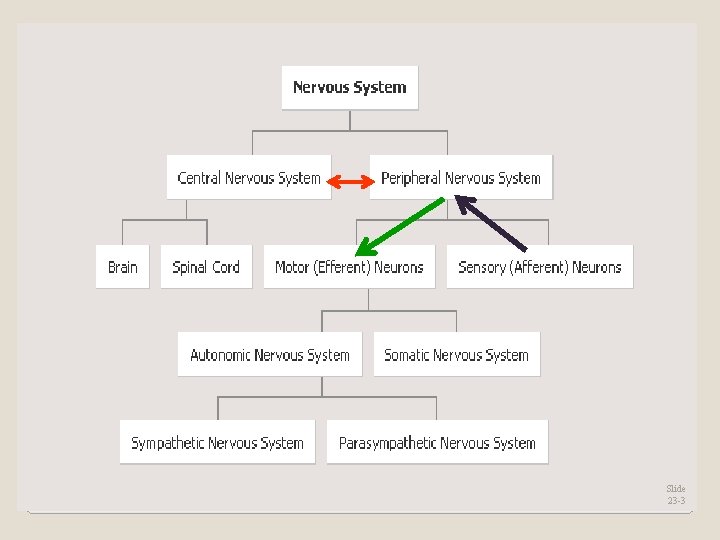
Slide 23 -3
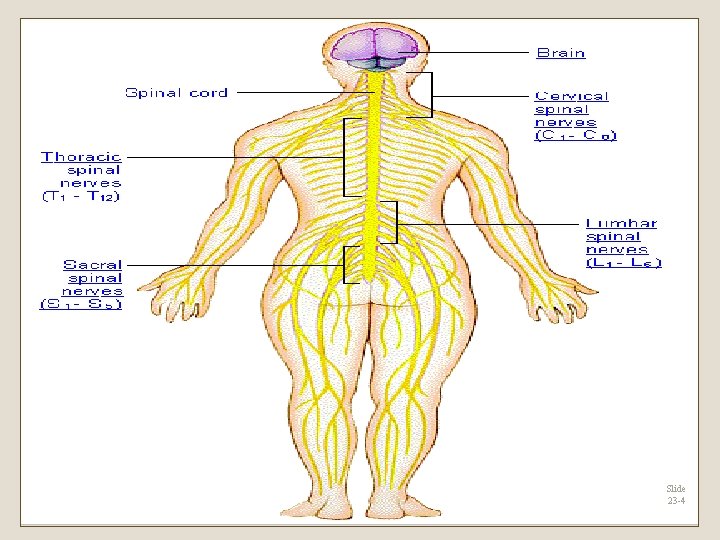
Slide 23 -4
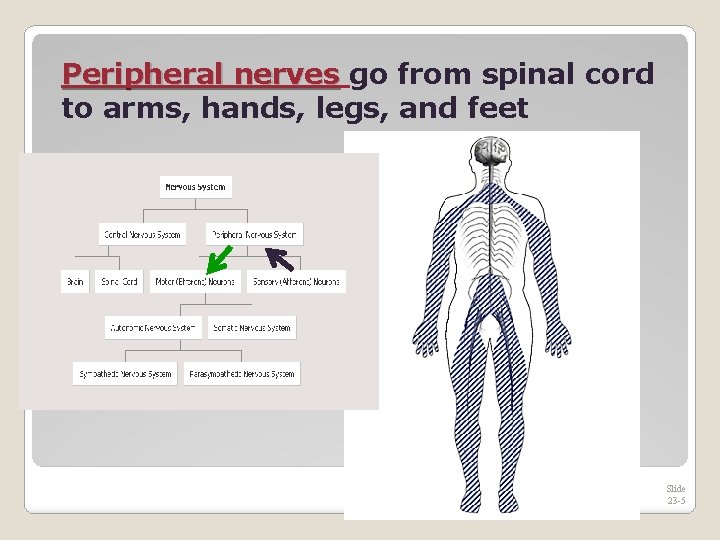
Peripheral nerves go from spinal cord to arms, hands, legs, and feet Slide 23 -5
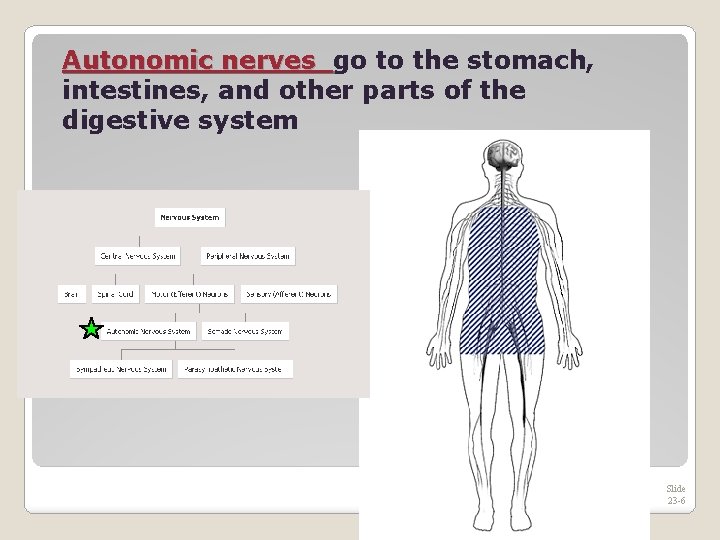
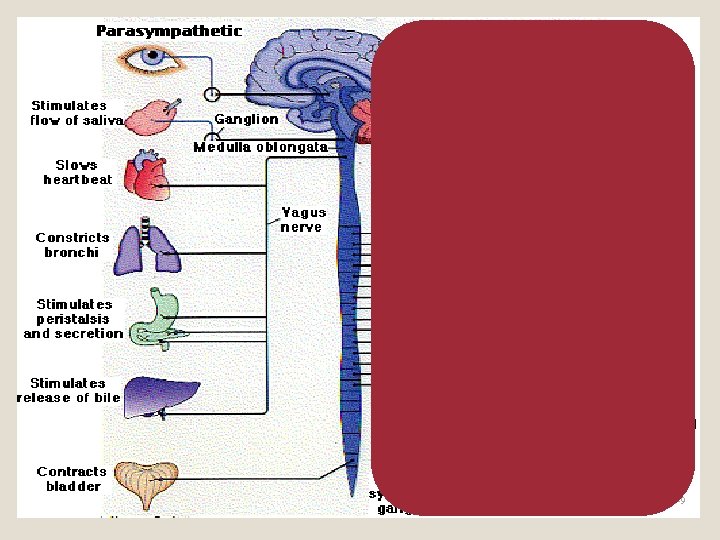
Autonomic nerves go to the stomach, intestines, and other parts of the digestive system Slide 23 -6
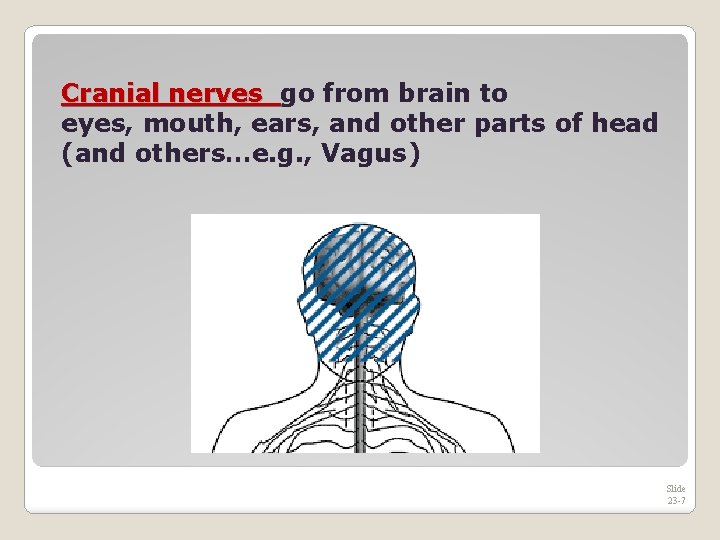
Cranial nerves go from brain to eyes, mouth, ears, and other parts of head (and others…e. g. , Vagus) Slide 23 -7
Slide 23 -8
Slide 23 -9
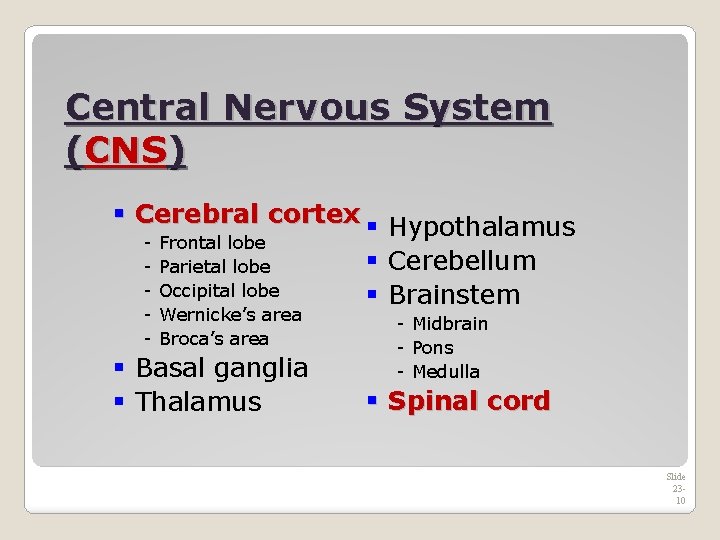
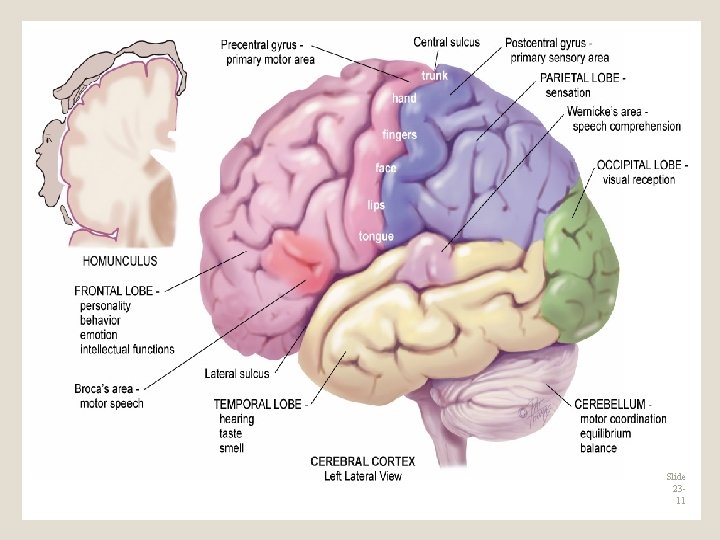
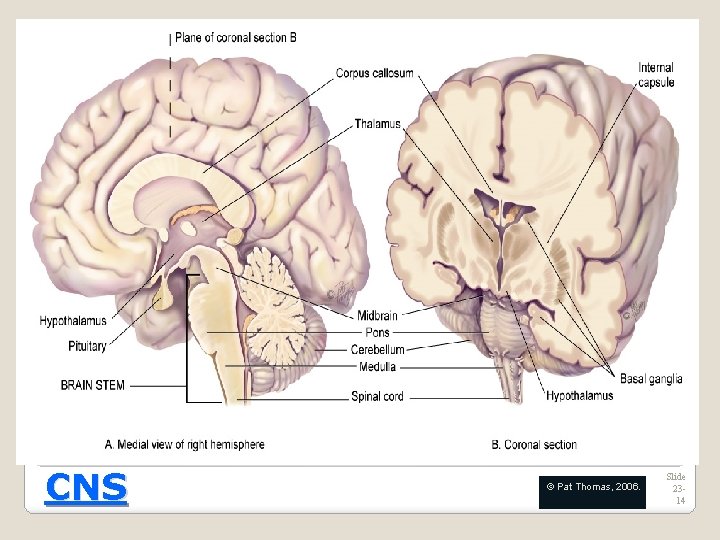
Central Nervous System (CNS) § Cerebral cortex § Hypothalamus - Frontal lobe § Cerebellum - Parietal lobe - Occipital lobe § Brainstem - Wernicke’s area - Broca’s area § Basal ganglia § Thalamus - Midbrain - Pons - Medulla § Spinal cord Slide 2310
Cerebral Cortex Slide 2311
Slide 2312
Slide 2313
[PRODUCTION NOTE: Please insert Figure 23 -2 (from Jarvis Physical Examination and Health Assessment, 5 e, ISBN: 978 -1 -4160 -3243 -4)] CNS © Pat Thomas, 2006. Slide 2314
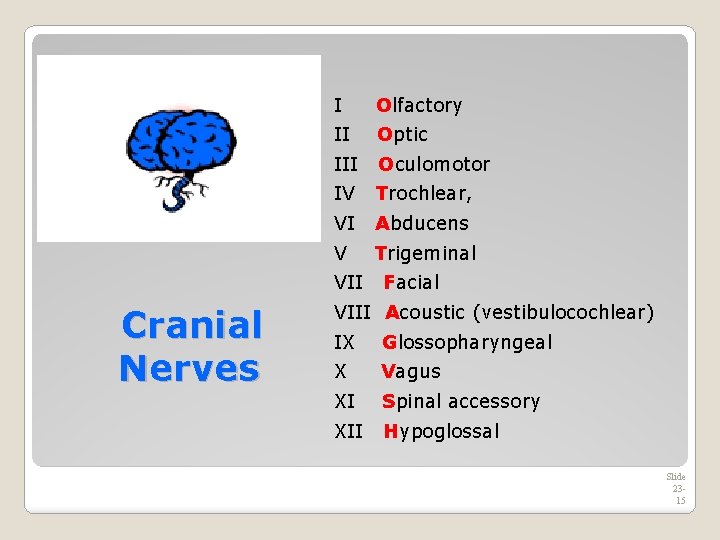
I Olfactory II Optic III Oculomotor IV Trochlear, VI Abducens V Trigeminal VII Cranial Nerves Facial VIII Acoustic (vestibulocochlear) IX Glossopharyngeal X Vagus XI Spinal accessory XII Hypoglossal Slide 2315
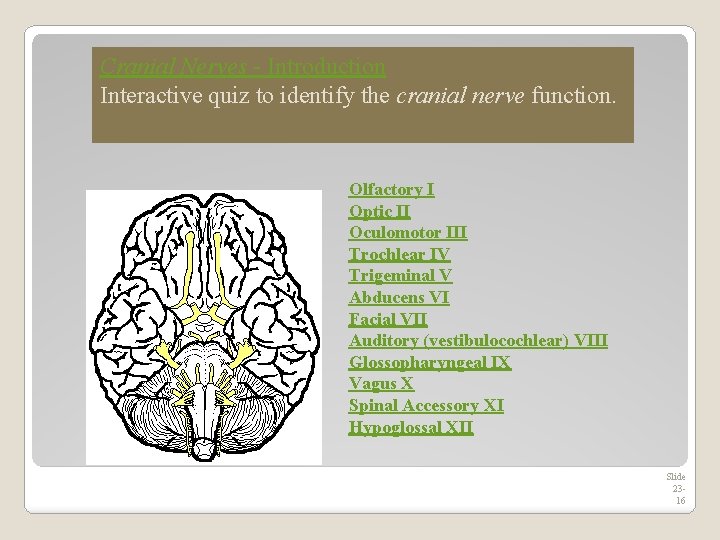
Cranial Nerves - Introduction Interactive quiz to identify the cranial nerve function. Olfactory I Optic II Oculomotor III Trochlear IV Trigeminal V Abducens VI Facial VII Auditory (vestibulocochlear) VIII Glossopharyngeal IX Vagus X Spinal Accessory XI Hypoglossal XII Slide 2316
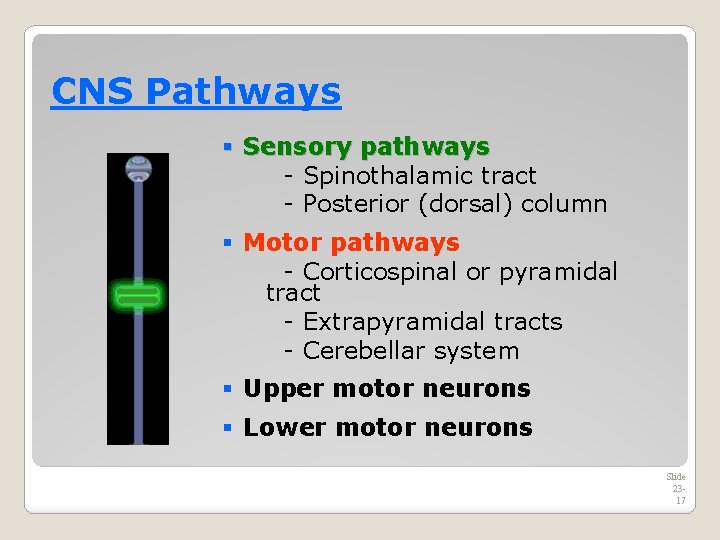
CNS Pathways § Sensory pathways - Spinothalamic tract - Posterior (dorsal) column § Motor pathways - Corticospinal or pyramidal tract - Extrapyramidal tracts - Cerebellar system § Upper motor neurons § Lower motor neurons Slide 2317
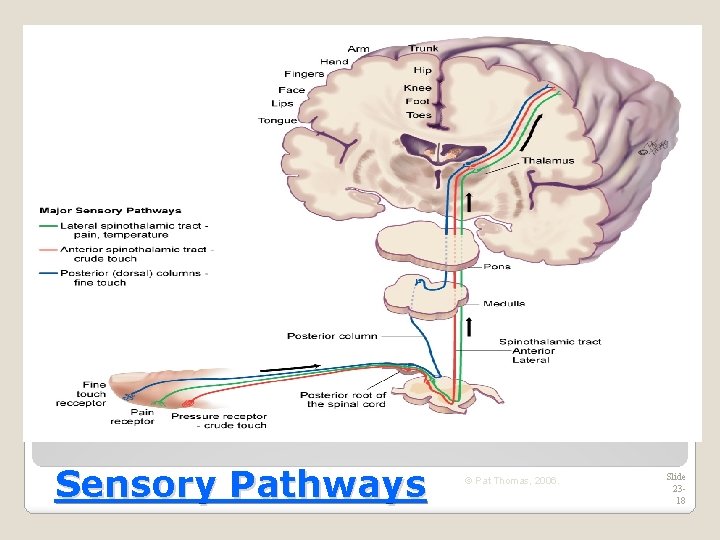
Sensory Pathways © Pat Thomas, 2006. Slide 2318
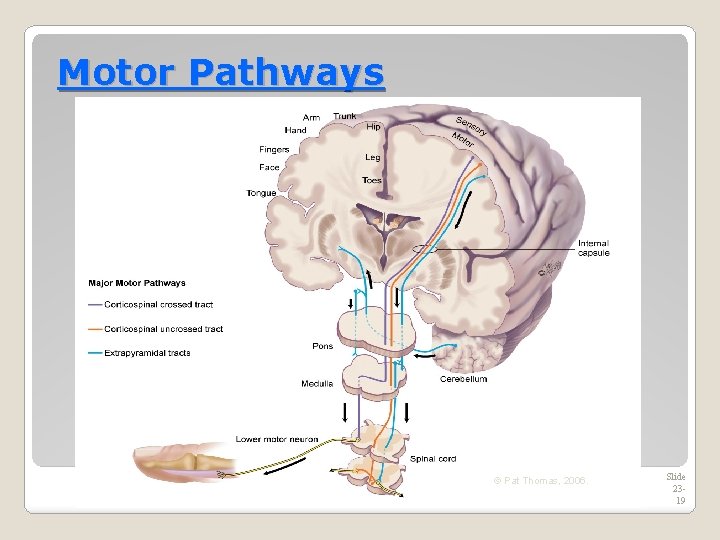
Motor Pathways © Pat Thomas, 2006. Slide 2319
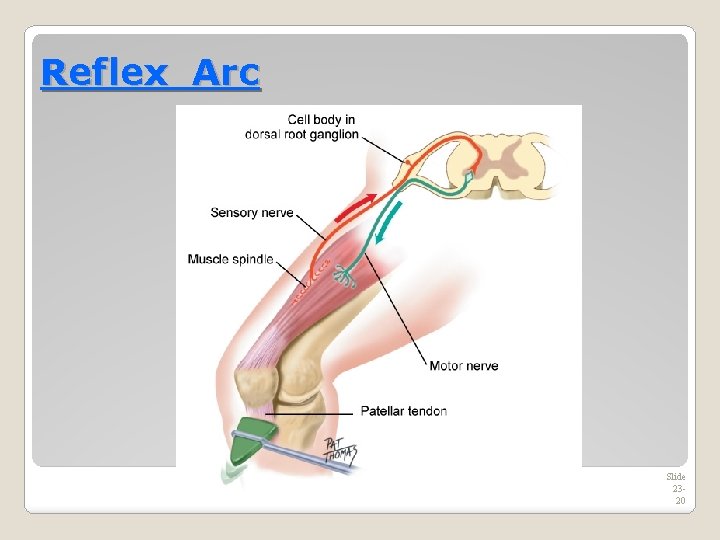
Reflex Arc Slide 2320
Subjective Data § § § Headache Head injury Dizziness or Vertigo Seizures Tremors Weakness Slide 2321
Subjective Data § In-coordination / “uncoordinated” § Numbness or tingling § Difficulty swallowing § Difficulty speaking (Dysphasia) § Environmental/occupational hazards Slide 2322
Objective Data § Equipment needed - Penlight - Tongue blade - Toothpick - Cotton swab / Cotton ball - Tuning fork (128 or 256 Hz) - Percussion hammer - Familiar aromatic substance Slide 2323
Motor System § Muscles - Size - Strength - Tone - Involuntary movements § Cerebellar function - Balance tests - Coordination - Skilled movements Slide 2324
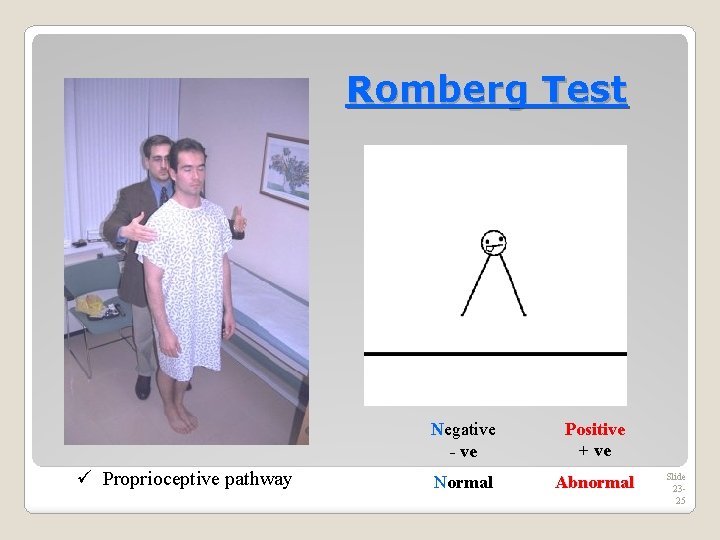
Romberg Test ü Proprioceptive pathway Negative - ve Positive + ve Normal Abnormal Slide 2325
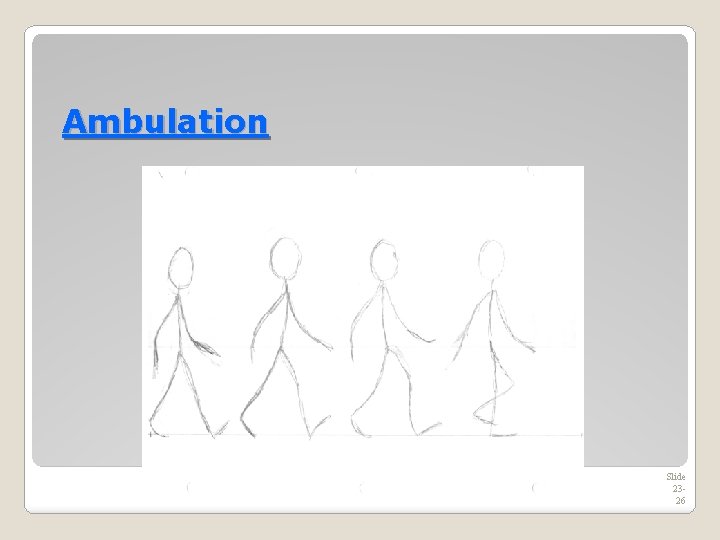
Ambulation Slide 2326
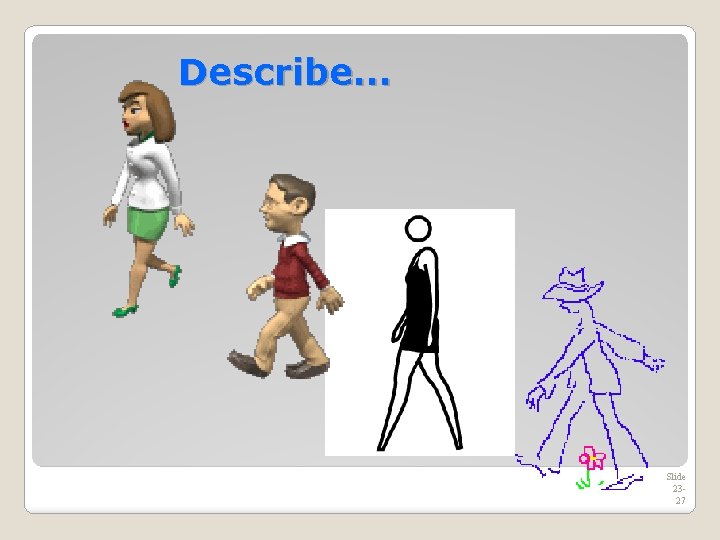
Describe… Slide 2327
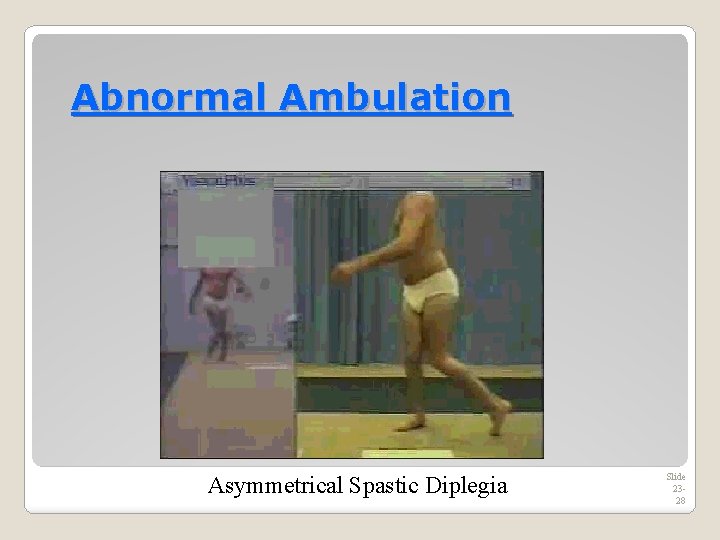
Abnormal Ambulation Asymmetrical Spastic Diplegia Slide 2328
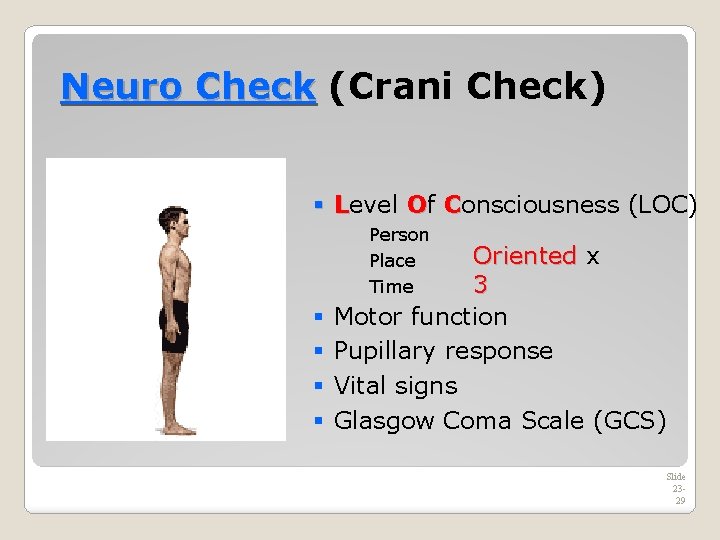
Neuro Check (Crani Check) § Level Of Consciousness (LOC) Person Place Time § § Oriented x 3 Motor function Pupillary response Vital signs Glasgow Coma Scale (GCS) Slide 2329
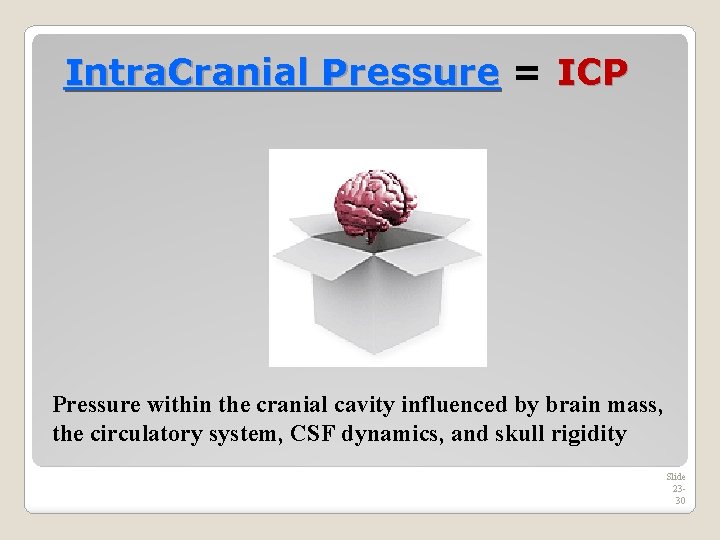
Intra. Cranial Pressure = ICP Pressure within the cranial cavity influenced by brain mass, the circulatory system, CSF dynamics, and skull rigidity Slide 2330
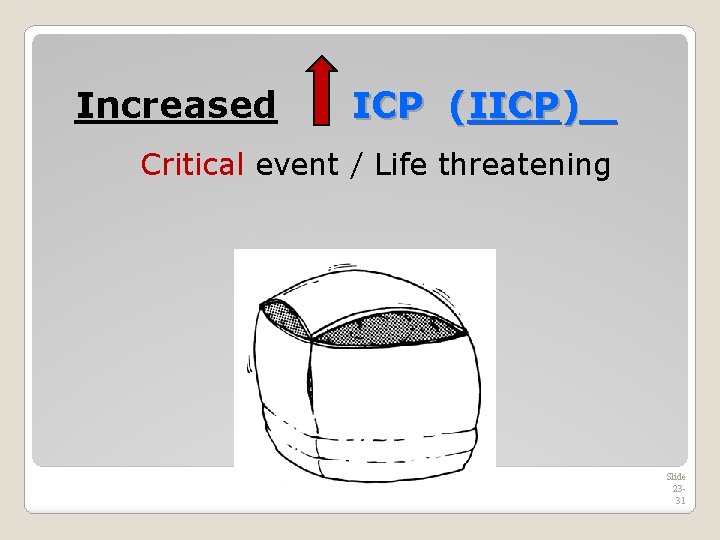
Increased ICP (IICP) Critical event / Life threatening Slide 2331
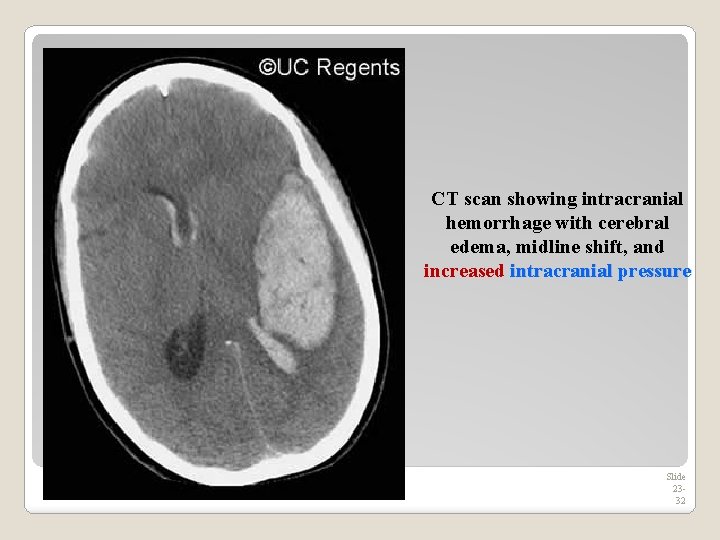
CT scan showing intracranial hemorrhage with cerebral edema, midline shift, and increased intracranial pressure Slide 2332
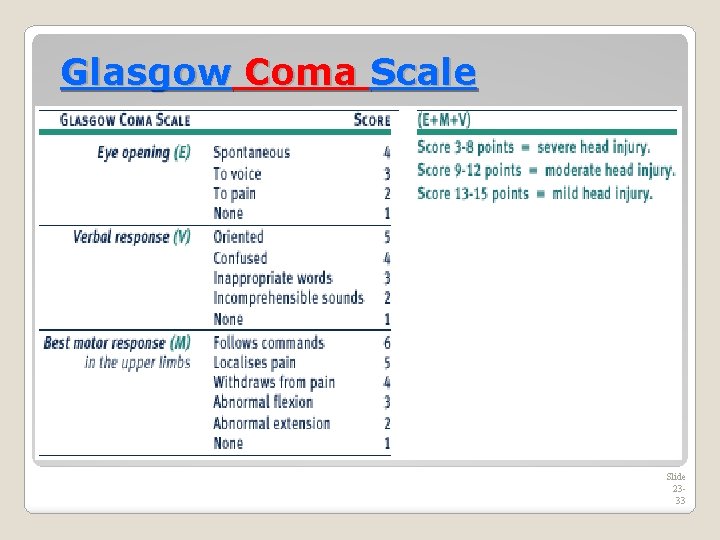
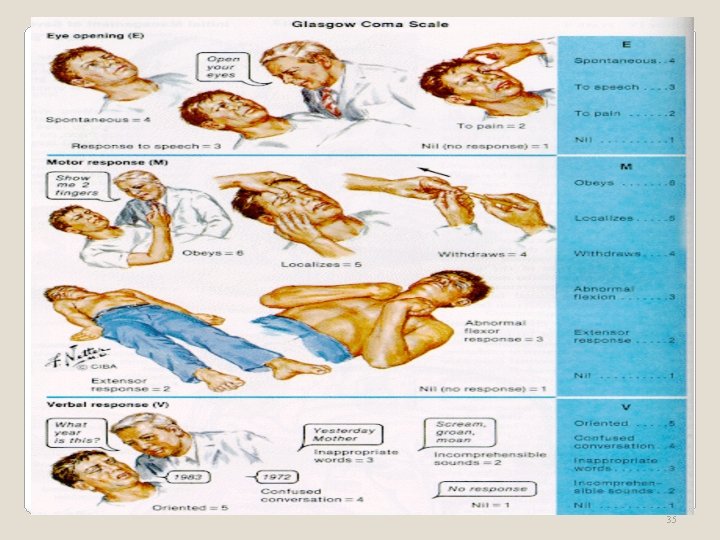
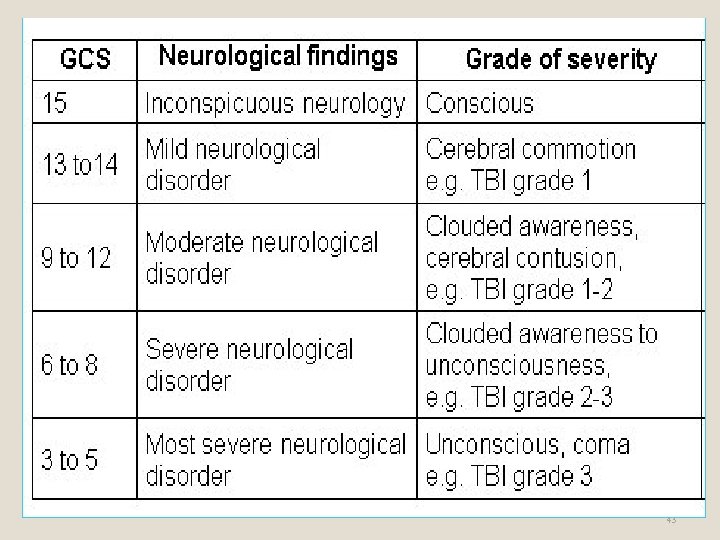
Glasgow Coma Scale Slide 2333
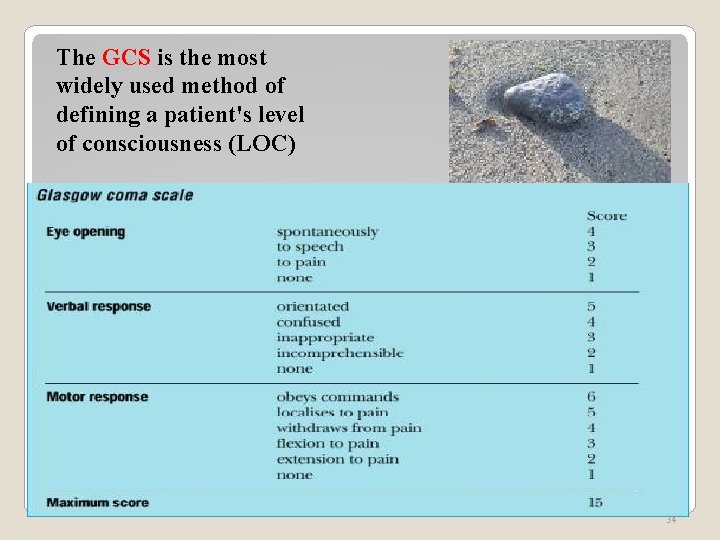
The GCS is the most widely used method of defining a patient's level of consciousness (LOC) 34
35
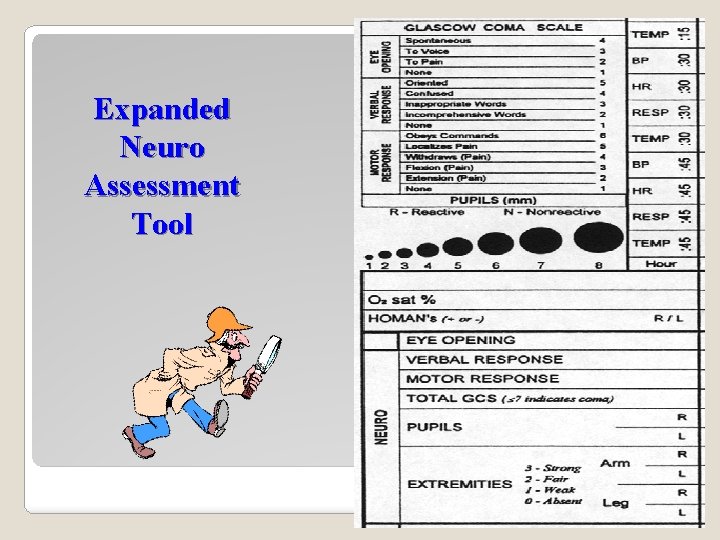
Expanded Neuro Assessment Tool 36
Mini-Mental Status Exam Rancho Los Amigos Scale Slide 2337
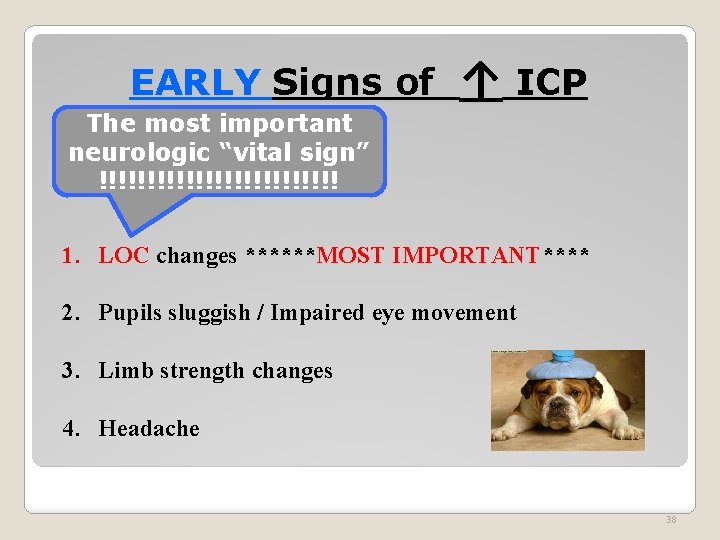
EARLY Signs of The most important neurologic “vital sign” !!!!!!!!!!!!! ↑ ICP 1. LOC changes ******MOST IMPORTANT**** 2. Pupils sluggish / Impaired eye movement 3. Limb strength changes 4. Headache 38
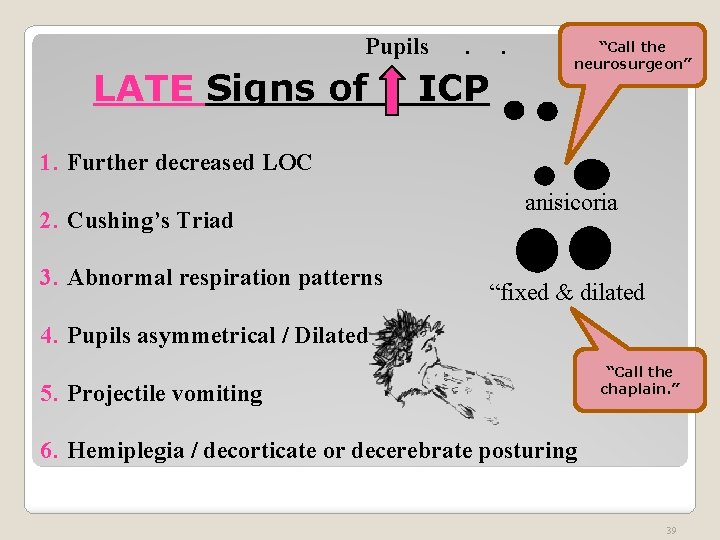
Pupils LATE Signs of . . ICP “Call the neurosurgeon” 1. Further decreased LOC 2. Cushing’s Triad 3. Abnormal respiration patterns anisicoria “fixed & dilated 4. Pupils asymmetrical / Dilated 5. Projectile vomiting “Call the chaplain. ” 6. Hemiplegia / decorticate or decerebrate posturing 39
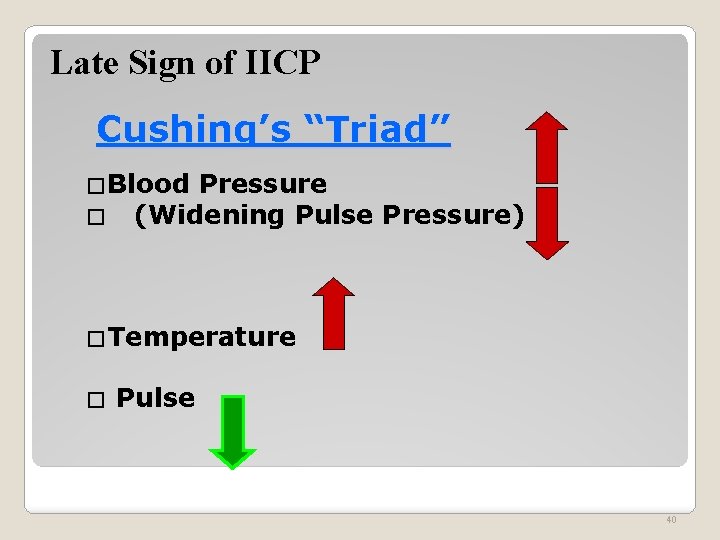
Late Sign of IICP Cushing’s “Triad” �Blood Pressure � (Widening Pulse Pressure) �Temperature � Pulse 40
Abnormal Postures § Flaccid quadriplegia § Decorticate rigidity § Decerebrate rigidity Slide 2341
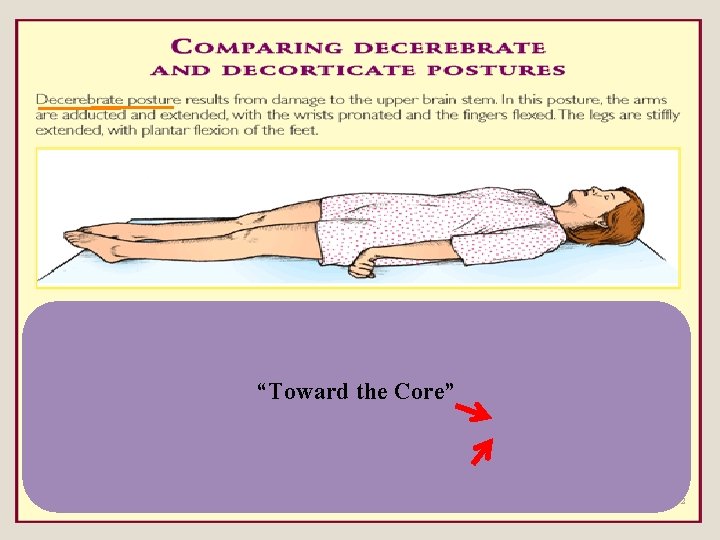
“Toward the Core” Slide 2342
43
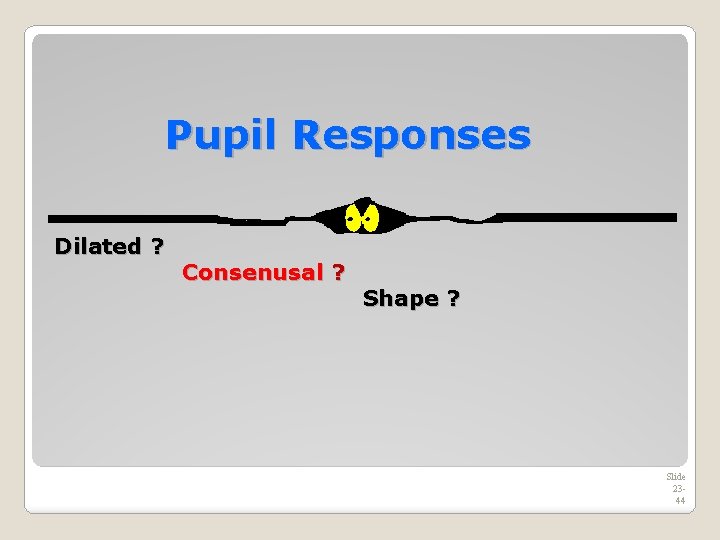
Pupil Responses Dilated ? Consenusal ? Shape ? Slide 2344
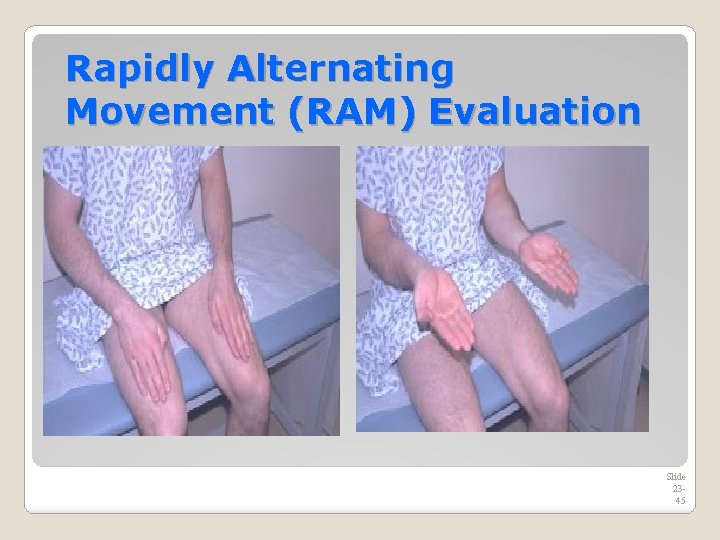
Rapidly Alternating Movement (RAM) Evaluation Slide 2345
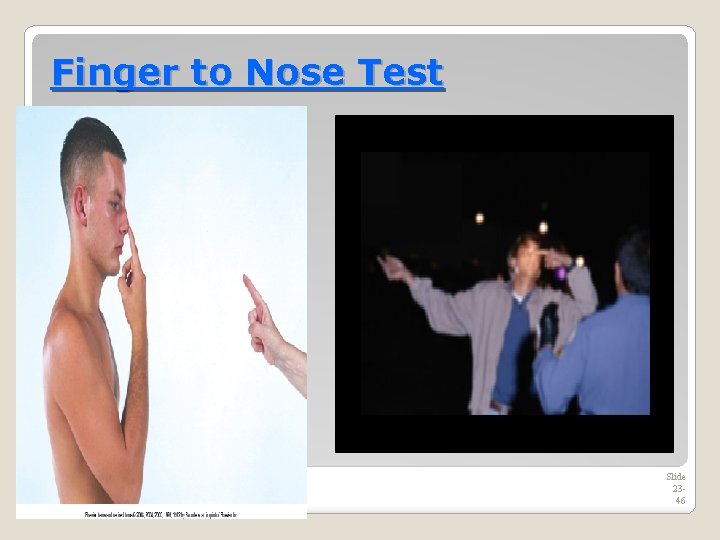
Finger to Nose Test Slide 2346
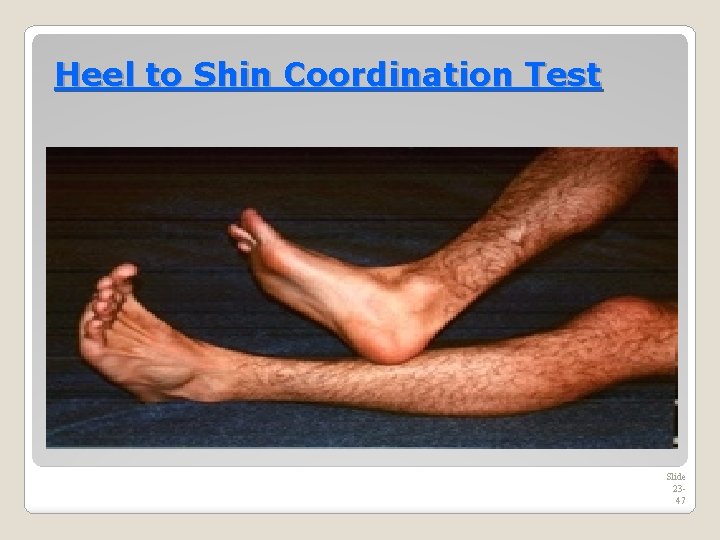
Heel to Shin Coordination Test Slide 2347
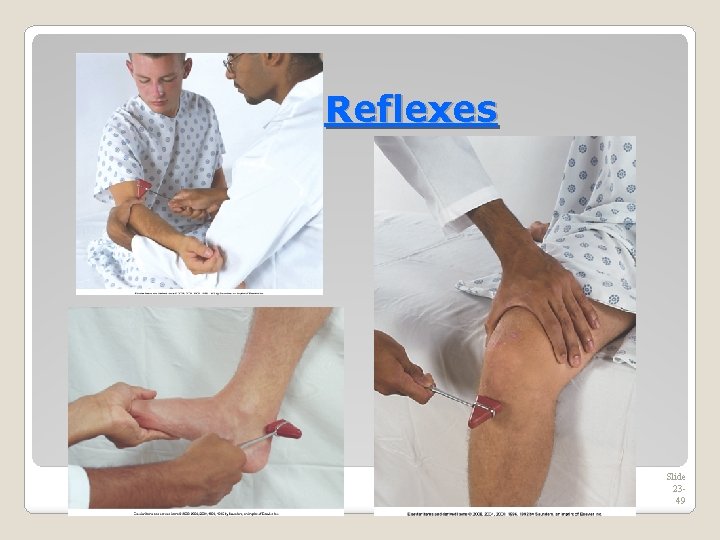
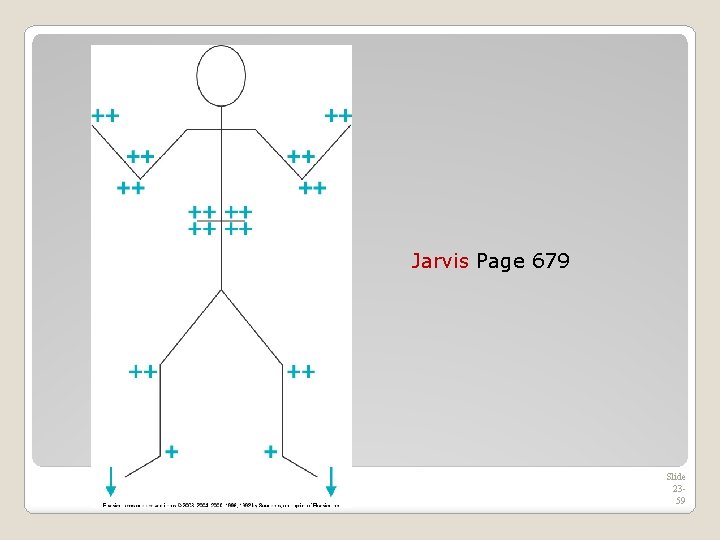
Test Deep Tendon Reflexes Technique Grading Babinski’s sign Biceps reflex Triceps reflex Brachioradialis reflex Quadriceps reflex Achilles reflex (“ankle jerk”) Abdominal reflexes Slide 2348
Reflexes Slide 2349
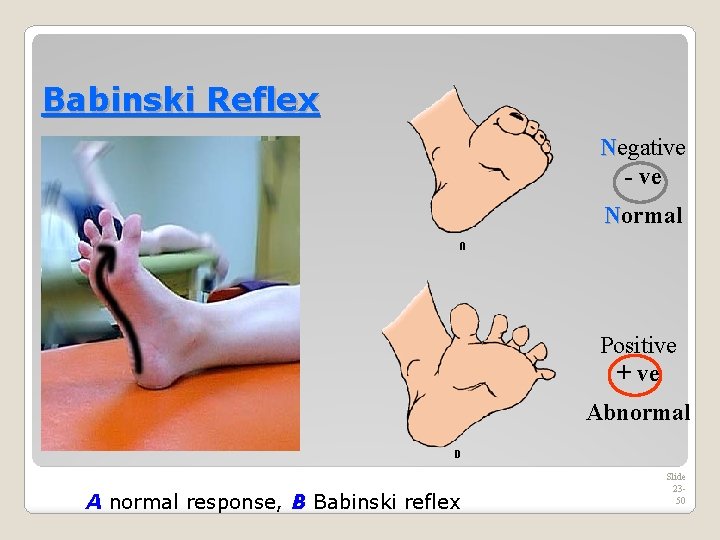
Babinski Reflex Negative - ve Normal Positive + ve Abnormal A normal response, B Babinski reflex Slide 2350
Testing the DTR’s provides data about the INTACTNESS of the REFLEX ARC at specific levels in the spinal cord. Slide 2351
Abnormalities in Muscle Movement § § Paralysis Fasciculations Flaccidity Ataxia § Rest tremor § Intention tremor § Paresthesia § Coma Slide 2352
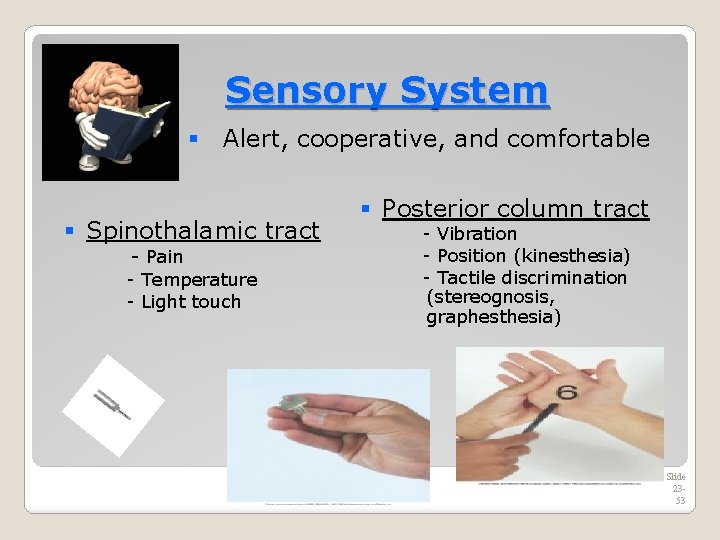
Sensory System § Alert, cooperative, and comfortable § Spinothalamic tract - Pain - Temperature - Light touch § Posterior column tract - Vibration - Position (kinesthesia) - Tactile discrimination (stereognosis, graphesthesia) Slide 2353
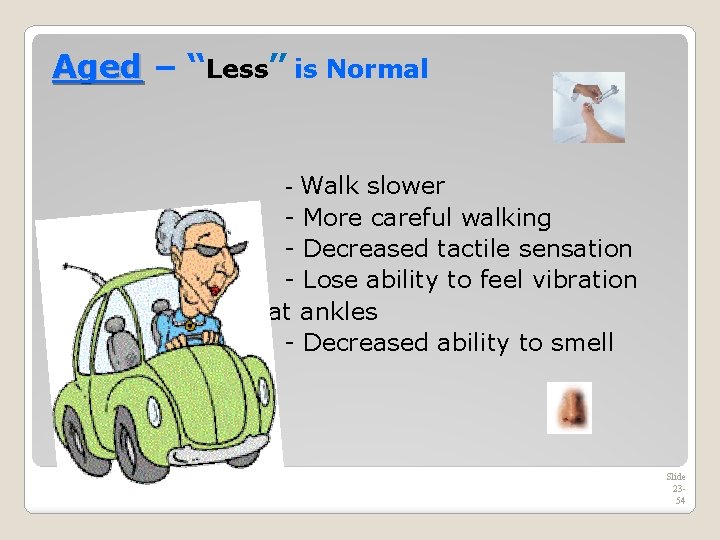
Aged – “Less” is Normal Walk slower - More careful walking - Decreased tactile sensation - Lose ability to feel vibration at ankles - Decreased ability to smell - Slide 2354
Cultural Considerations “Epilepsy” Uganda: Uganda contagious, untreatable Greece: Greece source of family shame Mexican-American: Mexican-American evidence of physical imbalance Hutterites: having endured a trial by God Slide 2355
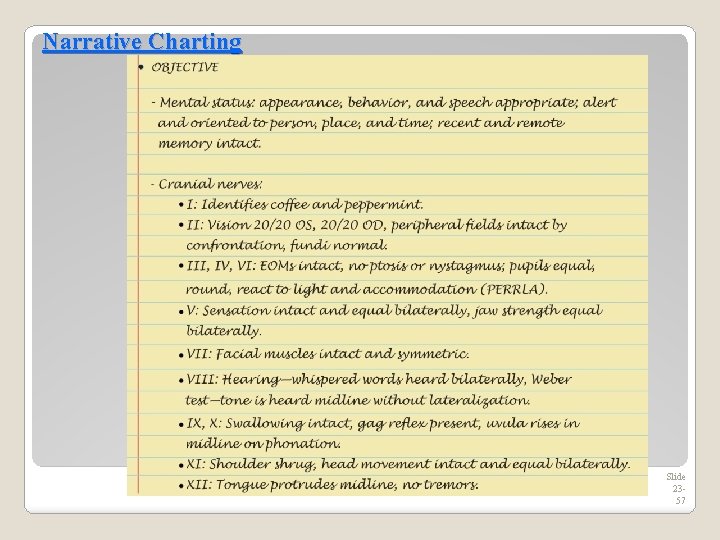
Narrative Charting Denies any of the following: frequent or severe headaches; history of head injury, dizziness, or vertigo. Denies weakness, numbness, or tingling; no difficulty swallowing or speaking. No past history of stroke, meningitis, spinal cord injury, or alcoholism. Slide 2356
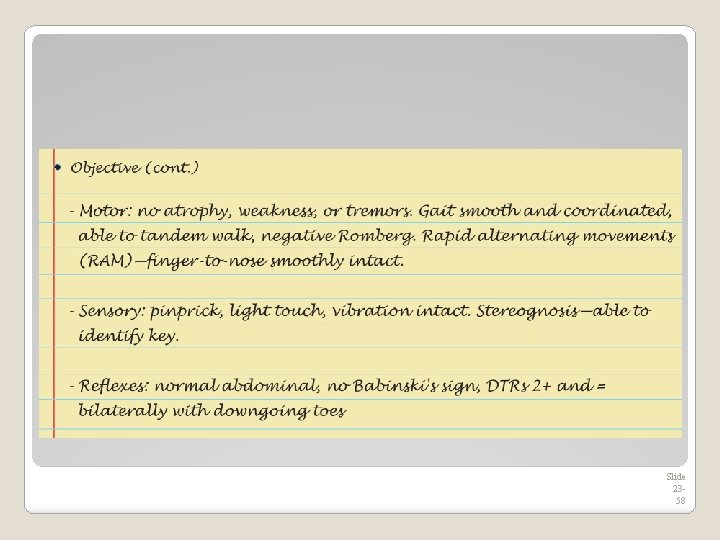
Narrative Charting Slide 2357
Slide 2358
Jarvis Page 679 Slide 2359
Neuro Assessments �Neuro Assessment Practice: �http: //icarus. med. utoronto. ca/Neuro. Exam/ Slide 2360
Which area of the brain is most likely affected if the patient is having trouble with the finger-to-nose test? A. B. C. D. Cerebellum Cerebrum Hypothalmus Brain stem Slide 2361
Vibratory sense is most frequently affected in cases of? A. B. C. D. Heart disease Crohns’ disease Lung Cancer Diabetes Slide 2362
Brain Teasers http: //brainconnection. positscience. com/teasers/ Slide 2363
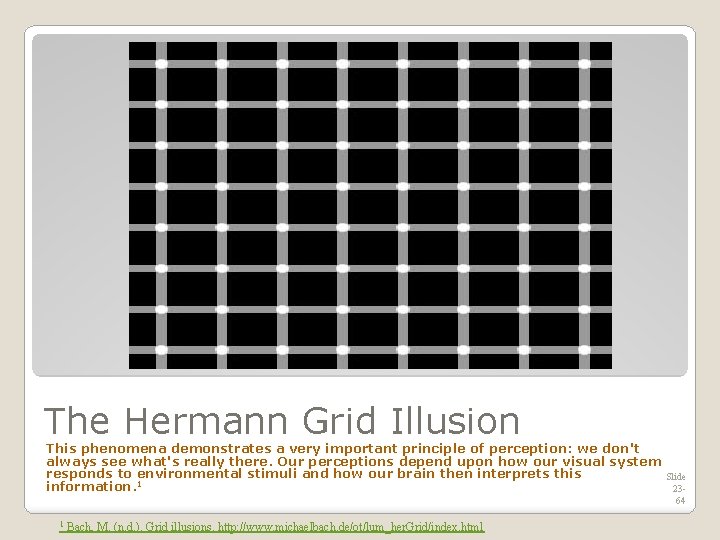
The Hermann Grid Illusion This phenomena demonstrates a very important principle of perception: we don't always see what's really there. Our perceptions depend upon how our visual system responds to environmental stimuli and how our brain then interprets this Slide information. 1 2364 1 Bach, M. (n. d. ). Grid illusions. http: //www. michaelbach. de/ot/lum_her. Grid/index. html
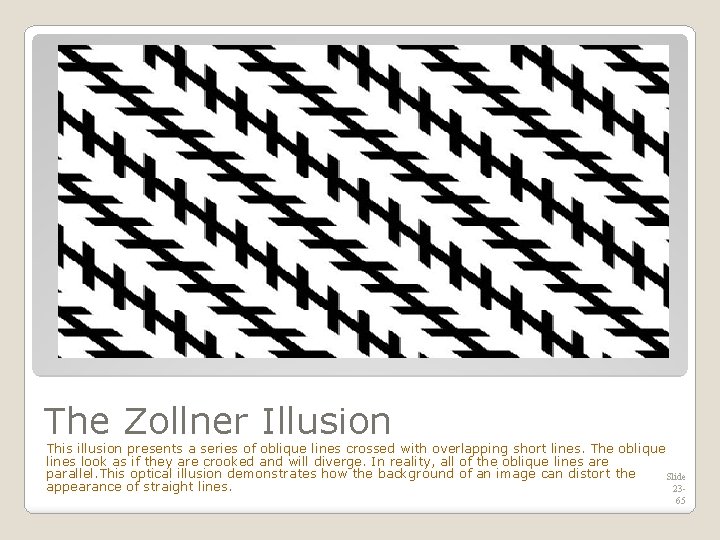
The Zollner Illusion This illusion presents a series of oblique lines crossed with overlapping short lines. The oblique lines look as if they are crooked and will diverge. In reality, all of the oblique lines are parallel. This optical illusion demonstrates how the background of an image can distort the Slide appearance of straight lines. 2365
The End Slide 2366