
Chapter 3 Creativity and The Business Idea TRENDS

Chapter 3 Creativity and The Business Idea
TRENDS • The start of a trend that lasts for a considerable period of time provides one of the greatest opportunities for starting a new venture. • Trends that will provide opportunities include: green trend, clean-energy trend, organic-orientation trend, economic trend, social trend, health trend, and Web trend. 4 -2
SOURCES OF NEW IDEAS • Consumers • Informally monitor potential ideas and needs. • Formally arrange for consumers to express their opinions. • Existing Products and Services • Analysis uncovers ways to improve offerings that may result in a new product or service. • Distribution Channels • Channel members can help suggest and market new products. 4 -3
Sources of New Ideas (cont. ) • Federal Government • Files of the Patent Office can suggest new product possibilities. • New product ideas can come in response to government regulations. • Research and Development • A formal endeavor connected with one’s current employment. • An informal lab in a basement or garage. 4 -4
METHODS OF GENERATING NEW IDEAS • Focus Groups • A moderator leads a group of 8 to 14 participants through an open, in-depth discussion in a directive or nondirective manner. • An excellent method for generating and screening ideas and concepts. 4 -5
Methods of Generating New Ideas (cont. ) • Brainstorming • Allows people to be stimulated to greater creativity. • Good ideas emerge when the brainstorming effort focuses on a specific product or market area. • Rules of brainstorming: • • No criticism. Freewheeling is encouraged. Quantity of ideas is desired. Combinations and improvements of ideas are encouraged. 4 -6
Methods of Generating New Ideas (cont. ) • Brainwriting • A form of written brainstorming. • Participants write their ideas on special forms or cards that circulate within the group. • Problem Inventory Analysis • Consumers are provided with a list of problems and are asked to identify products that have those problems. • Results must be carefully evaluated as they may not actually reflect a new business opportunity. 4 -7

CREATIVE PROBLEM SOLVING • Creativity tends to decline with age, education, lack of use, and bureaucracy. • Latent creative potential can be stifled by perceptual, cultural, emotional, and organizational factors. • Creativity can be unlocked by using any of the creative problemsolving techniques. 4 -8
Creative Problem Solving (cont. ) • Brainstorming • Session starts with a problem statement. • No group member should be an expert in the field of the problem. • All ideas must be recorded. • Reverse Brainstorming • A group method that focuses on the negative aspects of a product, service, or idea as well as ways to overcome these problems. • Care must be taken to maintain group morale. 4 -9
Creative Problem Solving (cont. ) • Gordon Method • Method for developing new ideas when the individuals are unaware of the problem. • Solutions are not clouded by preconceived ideas and behavioral patterns. • Checklist Method • Developing a new idea through a list of related issues. • Free Association • Developing a new idea through a chain of word associations. 4 -10
Creative Problem Solving (cont. ) • Forced Relationships • Developing a new idea by looking at product combinations. • A five step process which focuses on generating ideas from relationship patterns between elements of a problem. • Collective Notebook Method • Developing a new idea by group members regularly recording ideas. 4 -11
Creative Problem Solving (cont. ) • Attribute Listing • Developing a new idea by looking at the positives and negatives. • Big-Dream Approach • Developing a new idea by thinking without constraints. • Parameter Analysis • Developing a new idea by focusing on parameter identification and creative synthesis. 4 -12
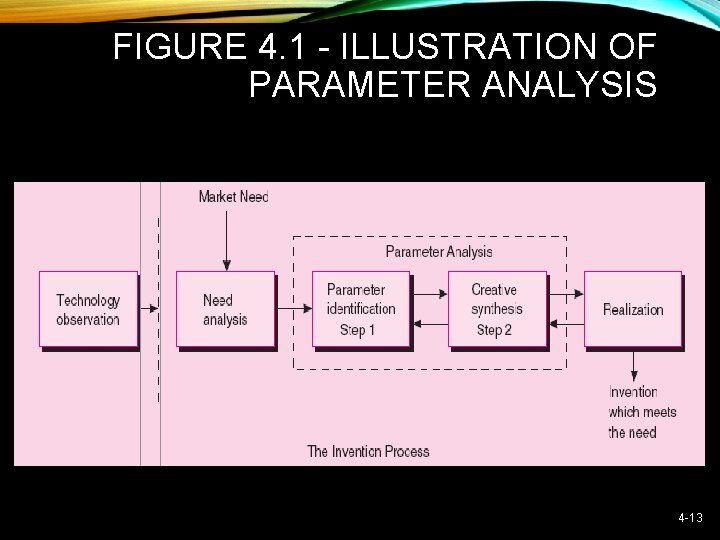
FIGURE 4. 1 - ILLUSTRATION OF PARAMETER ANALYSIS 4 -13
INNOVATION • Types of Innovation • Breakthrough • Fewest number of innovations. • Establishes the platform on which future innovations in an area are developed. • Should be protected by patents, trademarks, and copyrights. • Technological • Occurs more frequently; not at the same level of breakthrough inventions. • Offers advancements in the product/market area. • Needs to be protected. 4 -14
Innovation (cont. ) • Ordinary • Occurs most frequently. • Extends a technological innovation into a better product or service or one that has a different market appeal. • Usually come from market analysis and pull, not technology push. 4 -15
Innovation (cont. ) • Defining a New Innovation (Product or Service) • Newness can be: • In the consumer concept. • A change in the package or container. • Slight changes or modifications in the appearance of the product. (Industrial market) • Companies also add products to their product line that are already marketed by other companies; products are new to the manufacturer but not the consumer. 4 -16
Innovation (cont. ) • Classification of New Products • Consumer’s Viewpoint • The continuum proposed by Thomas Robertson is based on the disrupting influence that use of the product has on established consumption patterns. • Continuous innovations. • Dynamically continuous. • Discontinuous innovations. • This approach is consistent with the marketing philosophy that “satisfaction of consumer needs” is fundamental to a venture’s existence. 4 -17
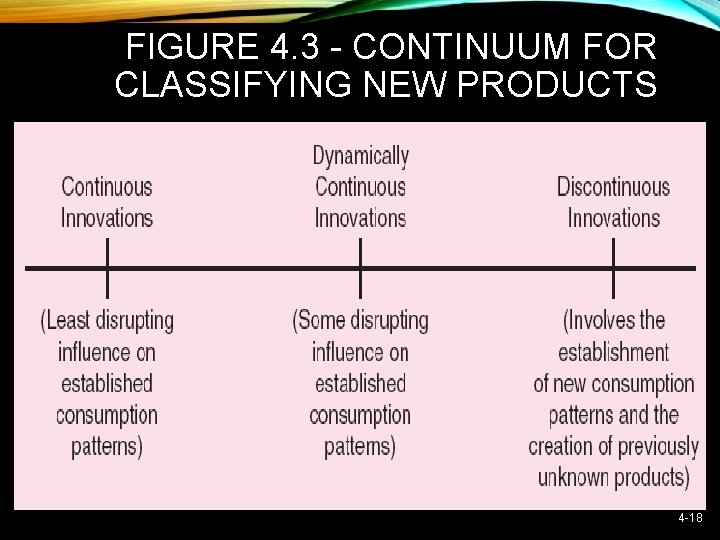
FIGURE 4. 3 - CONTINUUM FOR CLASSIFYING NEW PRODUCTS 4 -18
Innovation (cont. ) • Firm’s Viewpoint • Distinction can be made between new products and new markets. • Situations with a new technology and a new market are the most complicated and pose the highest degree of risk. 4 -19
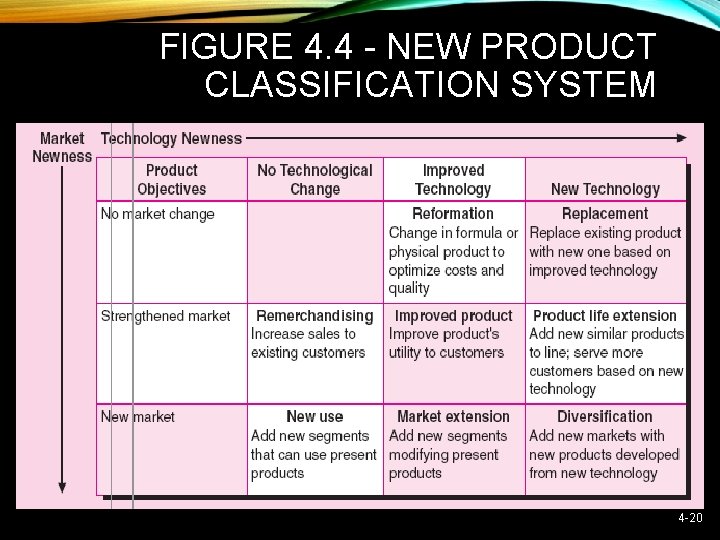
FIGURE 4. 4 - NEW PRODUCT CLASSIFICATION SYSTEM 4 -20
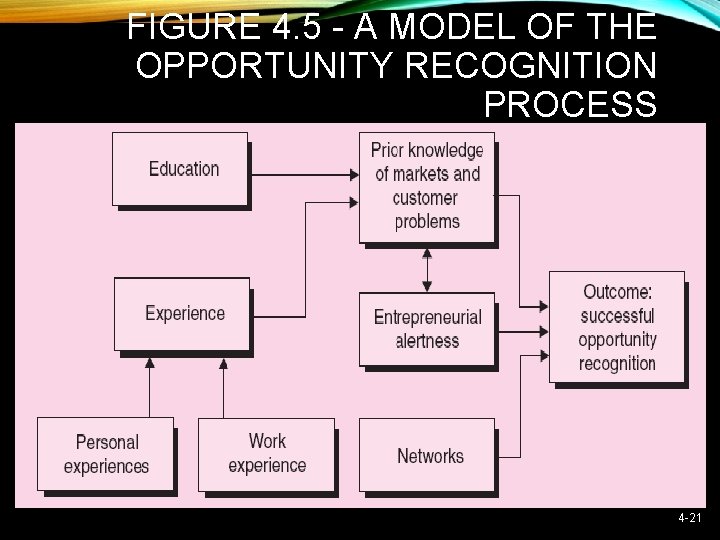
FIGURE 4. 5 - A MODEL OF THE OPPORTUNITY RECOGNITION PROCESS 4 -21
PRODUCT PLANNING AND DEVELOPMENT PROCESS • Establishing Evaluation Criteria • Criteria should be established at each stage of the product planning and development process. • It should be all-inclusive and quantitative in nature. • Criteria should evaluate the idea in terms of: • • • Market opportunity. Competition. Marketing system. Financial factors. Production factors. 4 -22
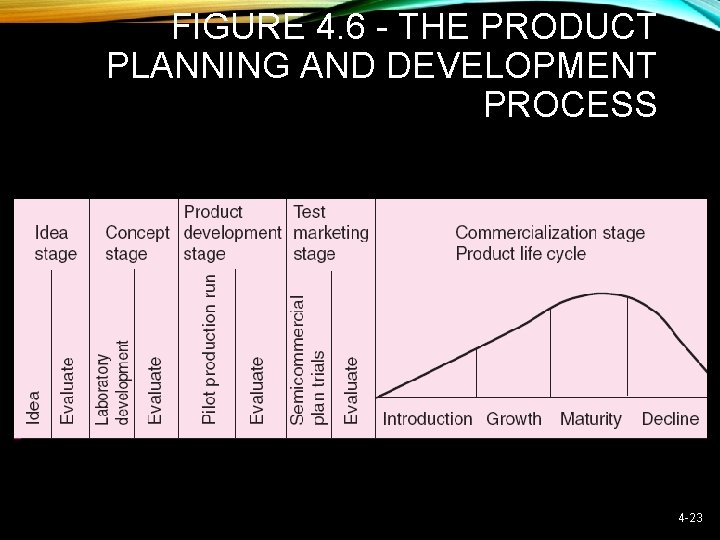
FIGURE 4. 6 - THE PRODUCT PLANNING AND DEVELOPMENT PROCESS 4 -23
Product Planning and Development Process (cont. ) • Idea Stage • Promising ideas should be identified and impractical ones eliminated. • Evaluation method – Systematic market evaluation checklist. • Determine the need for the new idea as well as its value to the company. • Concept Stage • Refined idea is tested to determine consumer acceptance which can be measured through the conversational interview method. 4 -24
Product Planning and Development Process (cont. ) • Product Development Stage • Consumer reaction to the product/service is determined. • A consumer panel is given a product sample and preference is determined through methods such as multiple brand comparisons, risk analysis, etc. • Test Marketing Stage • Increases certainty of successful commercialization. • Actual sales reflect consumer acceptance. 4 -25
E-COMMERCE AND BUSINESS START-UP • E-commerce offers entrepreneurs an opportunity to be creative and innovative. • Factors that facilitate high-growth in electronic commerce: • • Widespread use of personal computers. Adoption of intranets in companies. Acceptance of the Internet as a business communications platform. Faster and more secure systems. 4 -26
E-commerce and Business Start-up (cont. ) • Using E-Commerce Creatively • Entrepreneurs have to decide whether to: • Run Internet operations within the company. • Outsource these operations to Internet specialists. • Use e-commerce packages provided by software companies. • The integration of front-end and back-end operations represents the greatest challenge for doing Internet business. 4 -27
E-commerce and Business Start-up (cont. ) • Web Sites • • • Ease of use. Structure and organization of information. Search capability. E-mail response system. Speed. Compatibility with different browsers and platforms. 4 -28
E-commerce and Business Start-up (cont. ) • Tracking Customer Information • Electronic databases track the activity of the industry, segment, and company. • It supports personal marketing targeted at individual clients. • Care must be taken to follow the laws protecting the privacy of individuals. 4 -29
E-commerce and Business Start-up (cont. ) • Doing E-Commerce as an Entrepreneurial Company • Products should be delivered economically and conveniently. • Products need to interest a wide market; company must be ready to ship the product outside its own geographical location. • Online operations should bring significant cost reductions. • Company must be able to economically draw customers to its Web site. 4 -30
- Slides: 30