
Chapter 3 Communities Biomes and Ecosystems Various substances
Chapter 3 Communities, Biomes, and Ecosystems Various substances or elements on Earth move through long-term and short-term biogeochemical cycles as they become part of different aspects of the biosphere. The amount of a substance that is involved in a long-term cycle has an effect on the availability of that substance for use by humans and other organisms on Earth. Choose a substance or element that you know is involved in both long-term and short-term biogeochemical cycles. In a well-organized essay, describe how it moves through both types of cycles, and how these cycles affect its availability to humans and other organisms.
Chapter 3 Communities, Biomes, and Ecosystems Section 1: Community Ecology Section 2: Terrestrial Biomes Section 3: Aquatic Ecosystems Click on a lesson name to select.
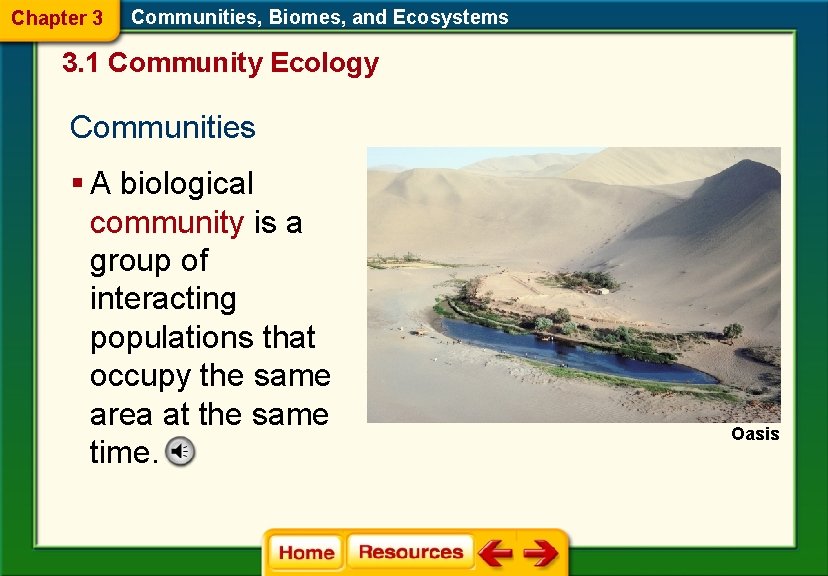
Chapter 3 Communities, Biomes, and Ecosystems 3. 1 Community Ecology Communities § A biological community is a group of interacting populations that occupy the same area at the same time. Oasis
Chapter 3 Communities, Biomes, and Ecosystems 3. 1 Community Ecology Limiting Factors § Any abiotic factor or biotic factor that restricts the numbers, reproduction, or distribution of organisms is called a limiting factor. § Includes sunlight, climate, temperature, water, nutrients, fire, soil chemistry, and space, and other living things
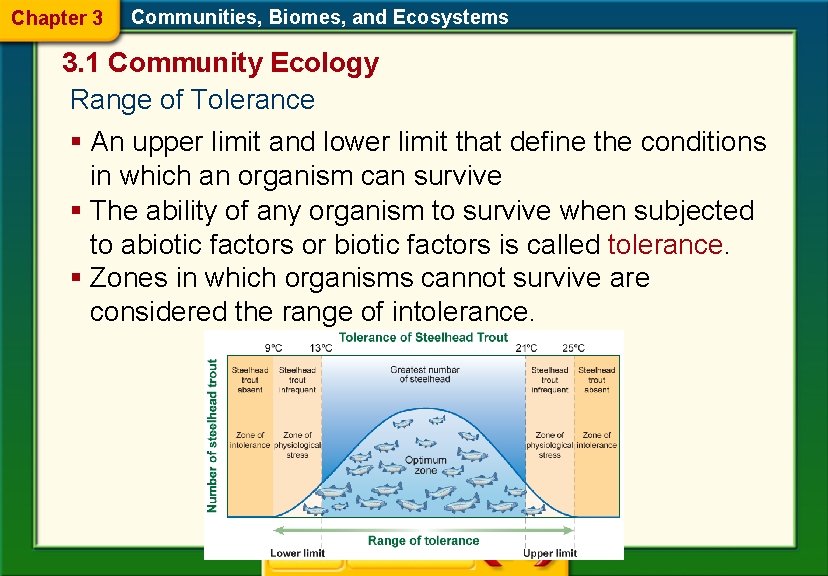
Chapter 3 Communities, Biomes, and Ecosystems 3. 1 Community Ecology Range of Tolerance § An upper limit and lower limit that define the conditions in which an organism can survive § The ability of any organism to survive when subjected to abiotic factors or biotic factors is called tolerance. § Zones in which organisms cannot survive are considered the range of intolerance.
Chapter 3 Communities, Biomes, and Ecosystems 3. 1 Community Ecological Succession § The change in an ecosystem that happens when one community replaces another as a result of changing abiotic and biotic factors is ecological succession. § There are two types of ecological succession— primary succession and secondary succession.
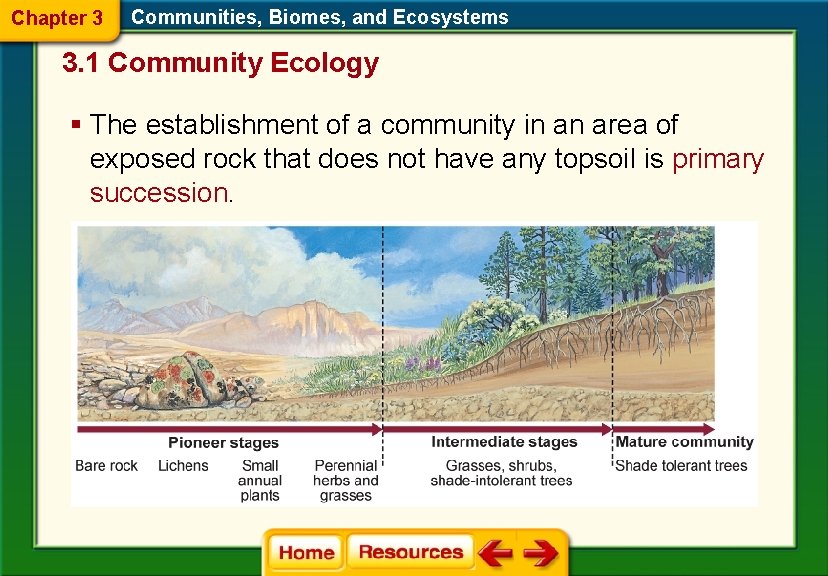
Chapter 3 Communities, Biomes, and Ecosystems 3. 1 Community Ecology § The establishment of a community in an area of exposed rock that does not have any topsoil is primary succession.
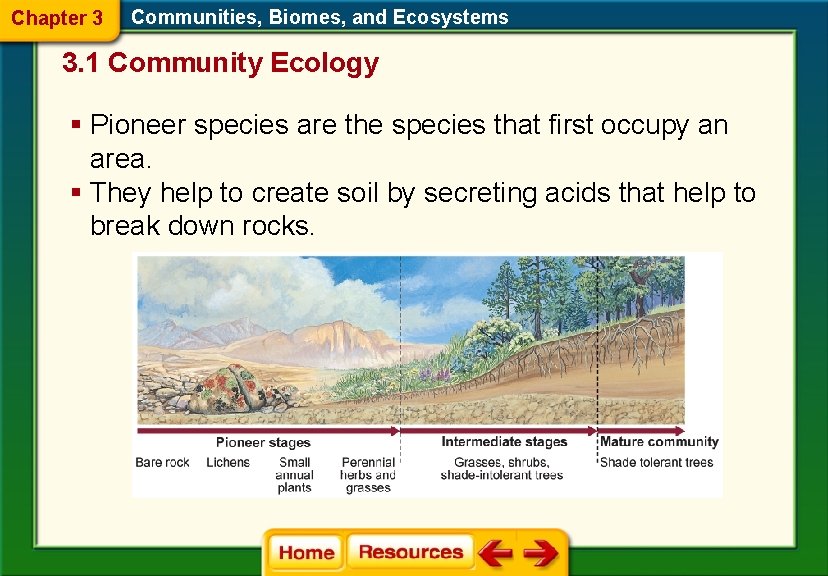
Chapter 3 Communities, Biomes, and Ecosystems 3. 1 Community Ecology § Pioneer species are the species that first occupy an area. § They help to create soil by secreting acids that help to break down rocks.
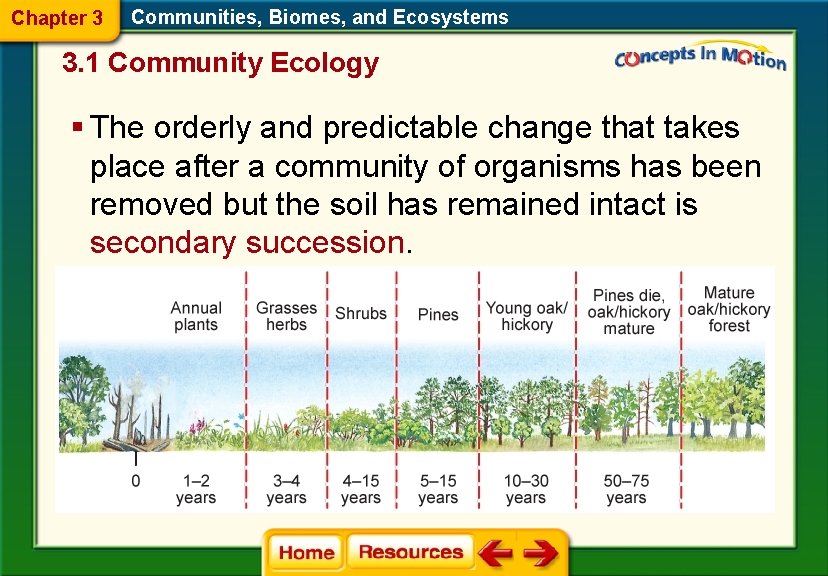
Chapter 3 Communities, Biomes, and Ecosystems 3. 1 Community Ecology § The orderly and predictable change that takes place after a community of organisms has been removed but the soil has remained intact is secondary succession.
Chapter 3 Communities, Biomes, and Ecosystems Click here for video
- Slides: 11