
Chapter 3 Clamping and Workholding Princples Objective After
Chapter 3 Clamping and Workholding Princples
Objective After completing this unit, the student should be able to: - explain the basic principles of workholders. - Identify the types of workholding device. - Match the carecteristics and application to particular type of clamping device.
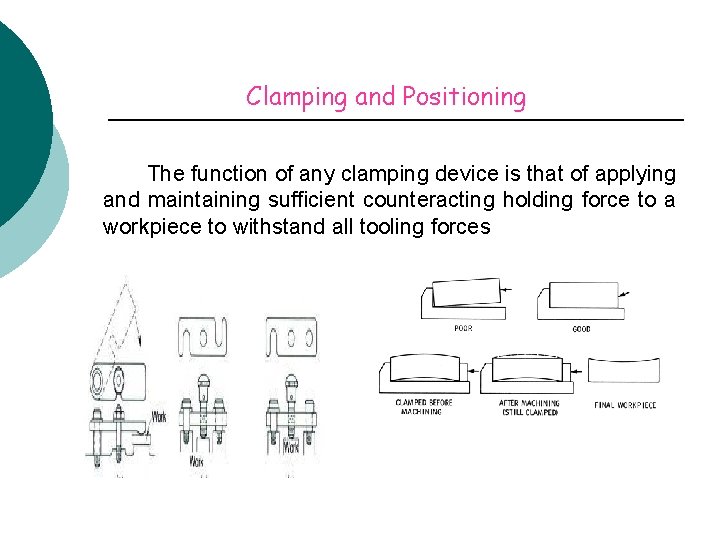
Clamping and Positioning The function of any clamping device is that of applying and maintaining sufficient counteracting holding force to a workpiece to withstand all tooling forces
Basic rules of clamping 1. Position the clamps. • It should rigidly hold the workpiece. • The workpiece being clamped should not be damaged due to application of clamping pressure by the clamping unit. • It should also be user friendly, like its clamping and releasing should be easy and less time consuming. Its maintenance should also be easy 2. Tool forces. • Force generated by the cutting acction. • Clamping device should be capable to be unaffected by the vibrations generated during an operation. 3. Clamping forces. • The clamping pressure should be enough to over come the operating pressure applied on the workpiece as both pressure act on the workpiece in opposite directions. • Clamping pressure should be directed towards the support surfaces or support points to prevent undesired lifting of workpiece from its supports.

Types of clamp Strap clamp Swinging clamp
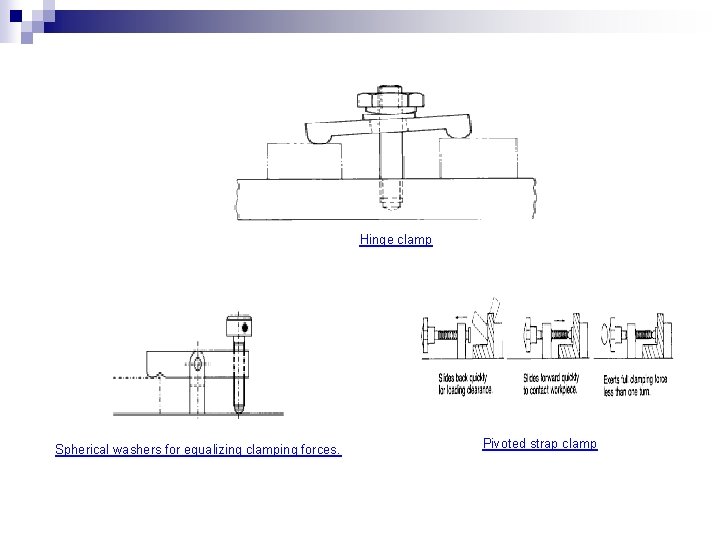
Hinge clamp Spherical washers for equalizing clamping forces. Pivoted strap clamp
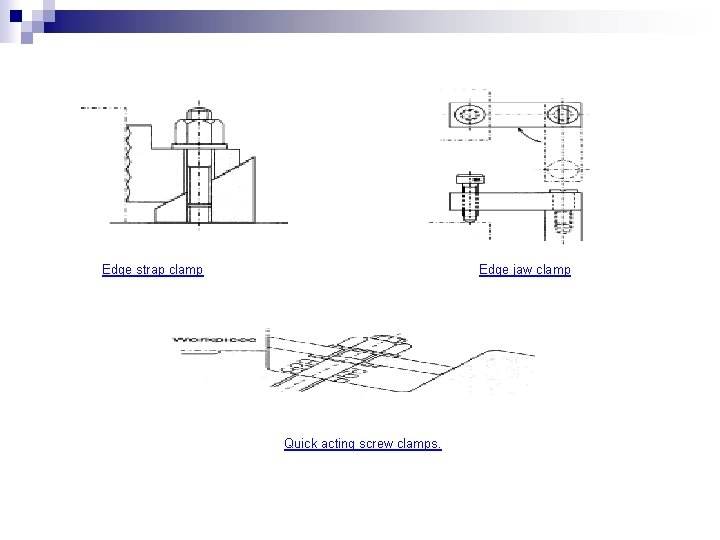
Edge strap clamp Edge jaw clamp Quick acting screw clamps.
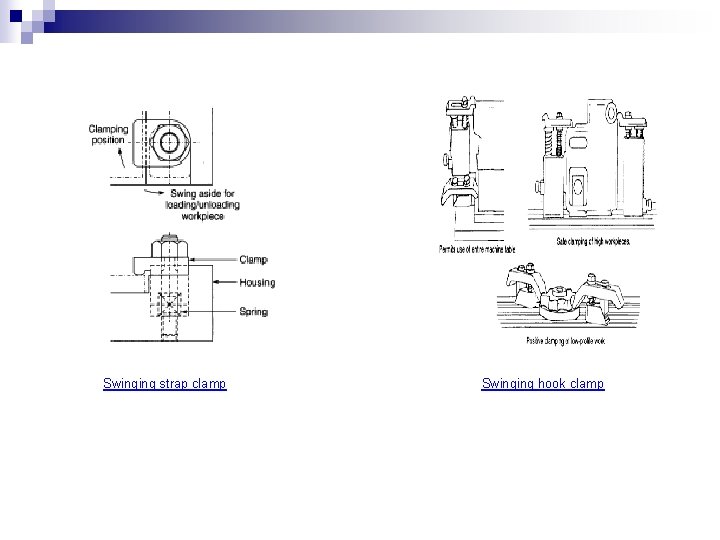
Swinging strap clamp Swinging hook clamp
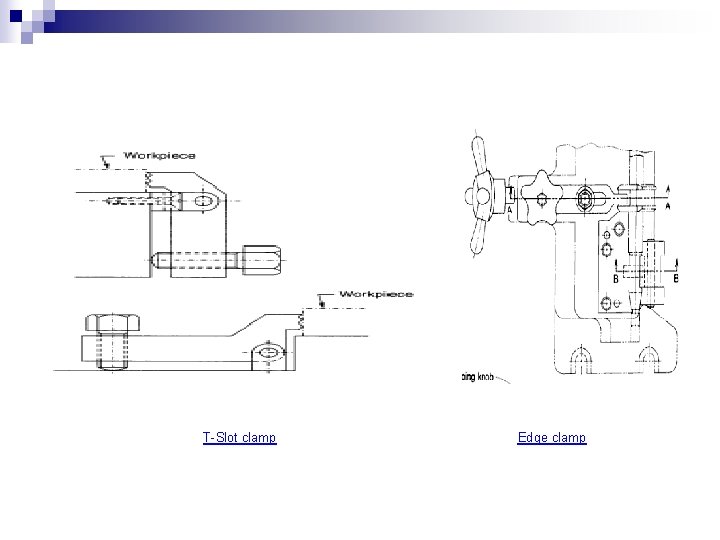
T-Slot clamp Edge clamp
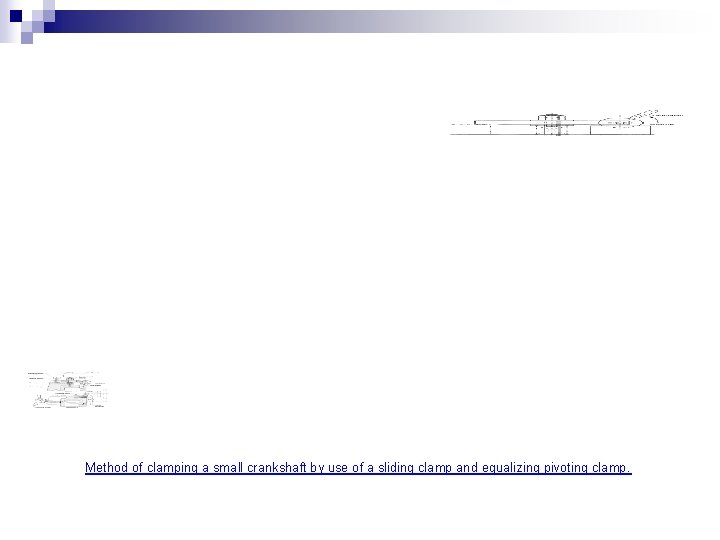
Method of clamping a small crankshaft by use of a sliding clamp and equalizing pivoting clamp.
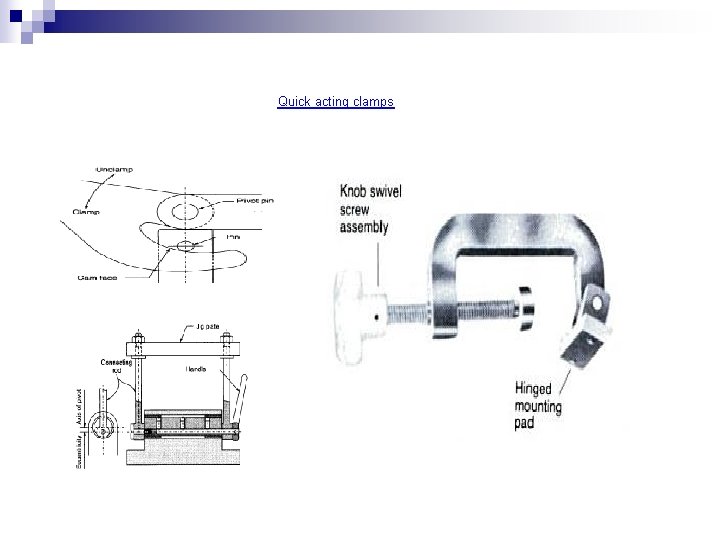
Quick acting clamps
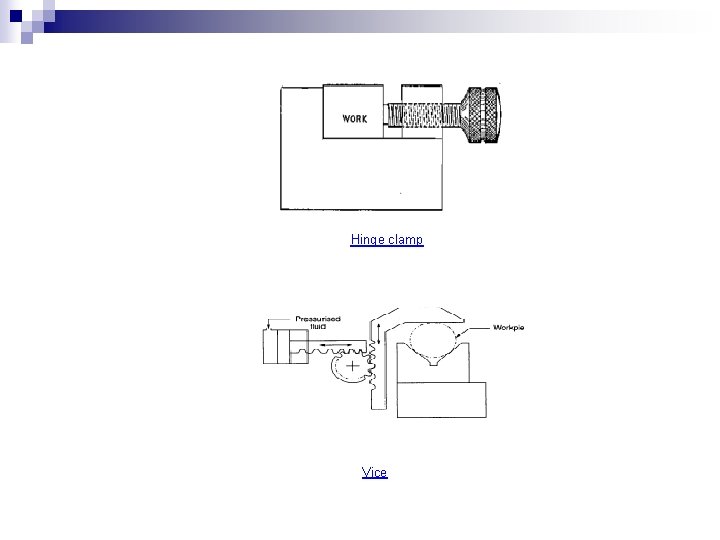
Hinge clamp Vice
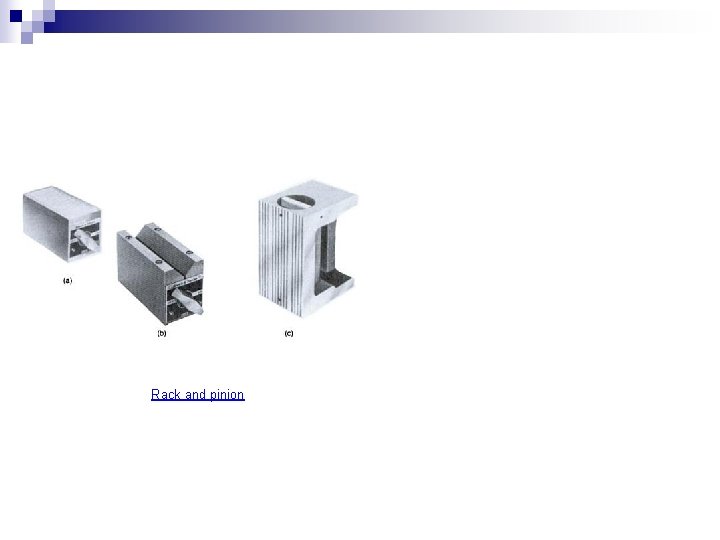
Rack and pinion
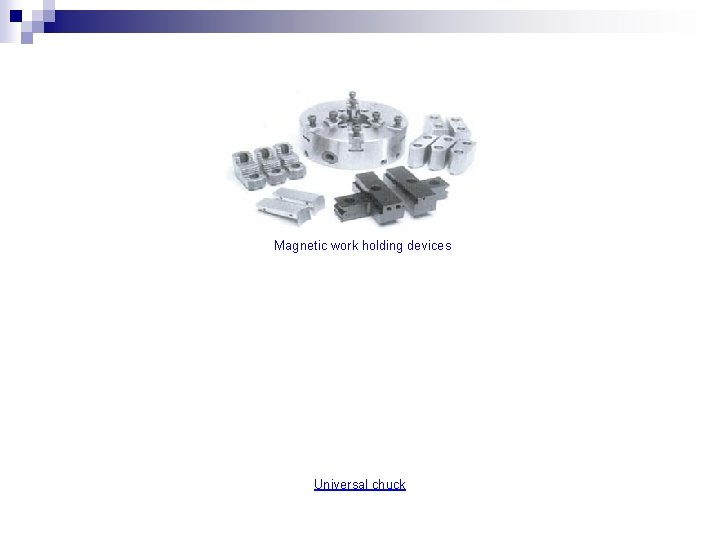
Magnetic work holding devices Universal chuck

Q&A
Exercise 3 n n n What is clamping? Explain Basic Rules of clamping. List and explain type of clamping.
- Slides: 16