
Chapter 3 Cell Structure and Taxonomy Introduction Cell
- Slides: 33
Chapter 3: Cell Structure and Taxonomy
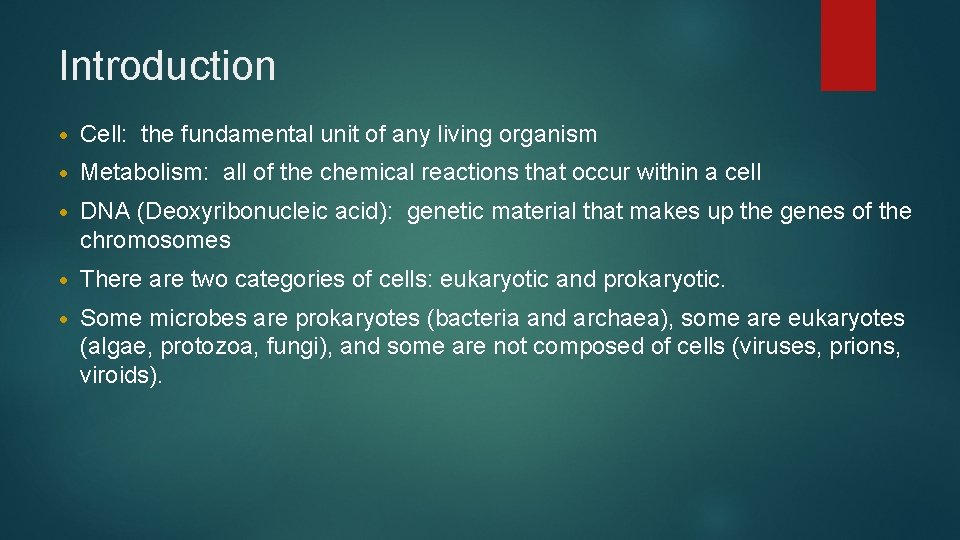
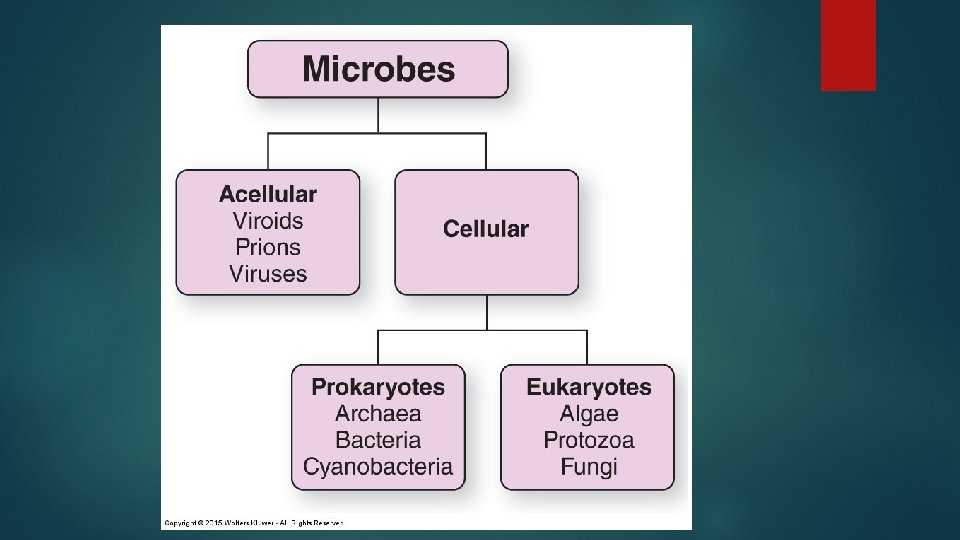
Introduction • Cell: the fundamental unit of any living organism • Metabolism: all of the chemical reactions that occur within a cell • DNA (Deoxyribonucleic acid): genetic material that makes up the genes of the chromosomes • There are two categories of cells: eukaryotic and prokaryotic. • Some microbes are prokaryotes (bacteria and archaea), some are eukaryotes (algae, protozoa, fungi), and some are not composed of cells (viruses, prions, viroids).
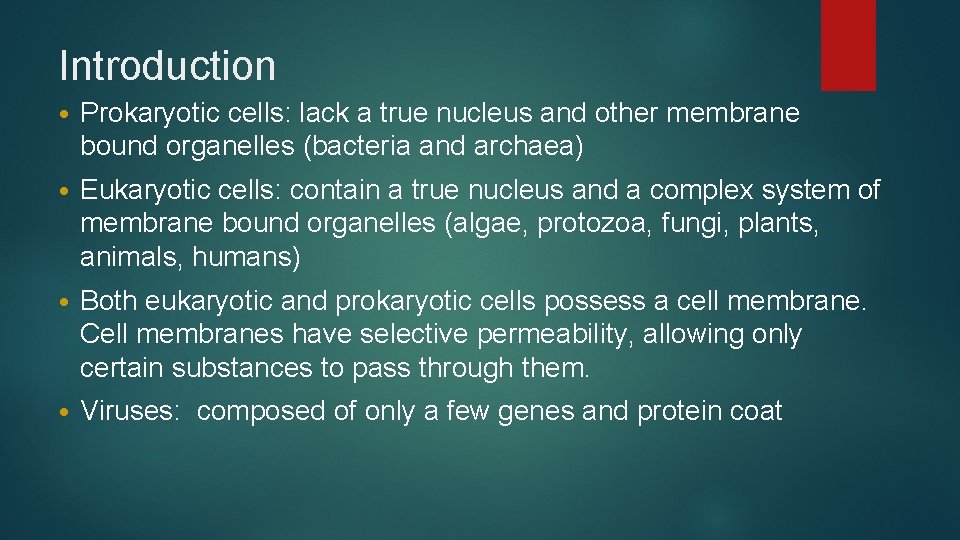
Introduction • Prokaryotic cells: lack a true nucleus and other membrane bound organelles (bacteria and archaea) • Eukaryotic cells: contain a true nucleus and a complex system of membrane bound organelles (algae, protozoa, fungi, plants, animals, humans) • Both eukaryotic and prokaryotic cells possess a cell membrane. Cell membranes have selective permeability, allowing only certain substances to pass through them. • Viruses: composed of only a few genes and protein coat
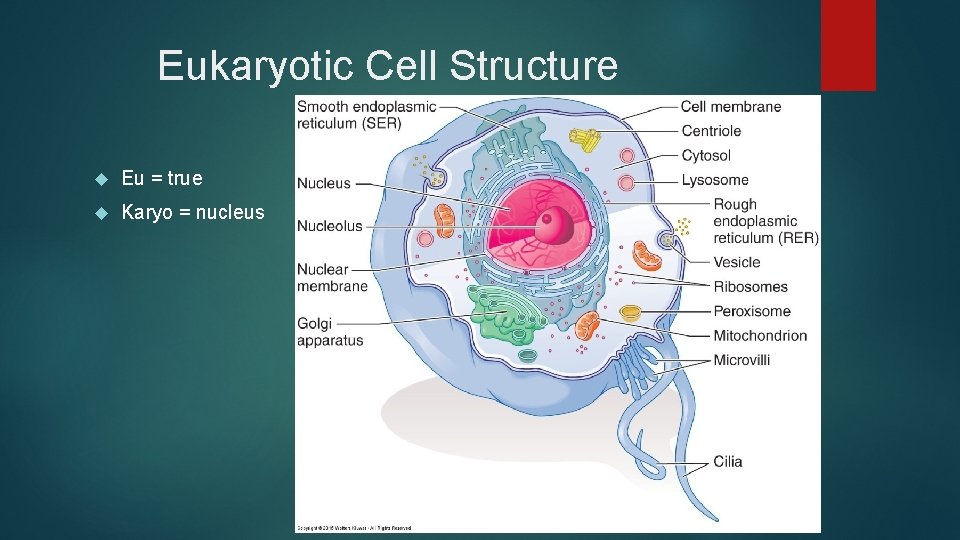
Eukaryotic Cell Structure Eu = true Karyo = nucleus
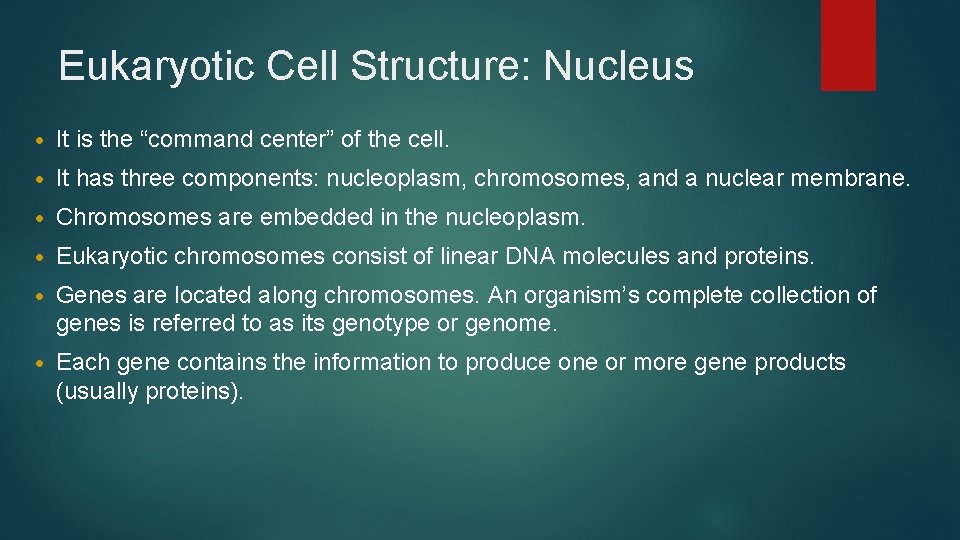
Eukaryotic Cell Structure: Nucleus • It is the “command center” of the cell. • It has three components: nucleoplasm, chromosomes, and a nuclear membrane. • Chromosomes are embedded in the nucleoplasm. • Eukaryotic chromosomes consist of linear DNA molecules and proteins. • Genes are located along chromosomes. An organism’s complete collection of genes is referred to as its genotype or genome. • Each gene contains the information to produce one or more gene products (usually proteins).
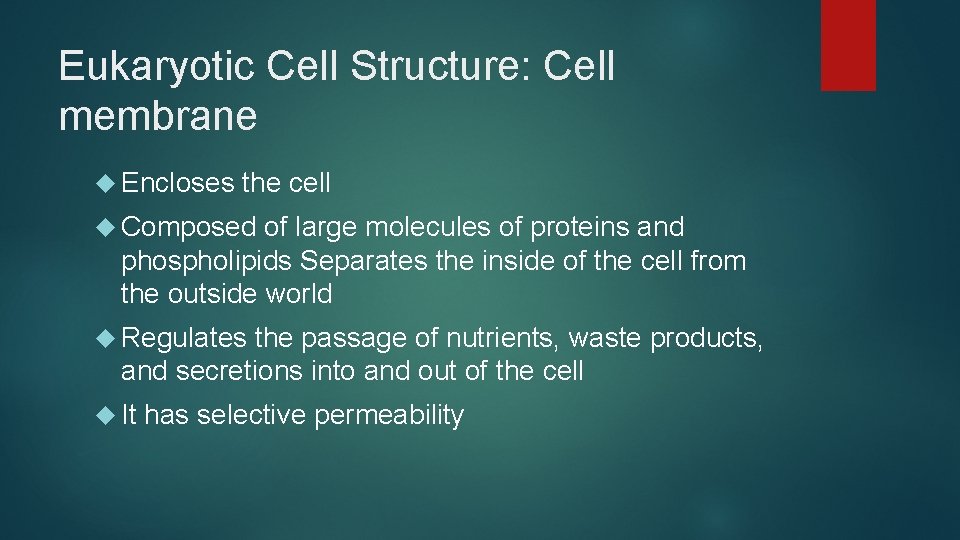
Eukaryotic Cell Structure: Cell membrane Encloses the cell Composed of large molecules of proteins and phospholipids Separates the inside of the cell from the outside world Regulates the passage of nutrients, waste products, and secretions into and out of the cell It has selective permeability
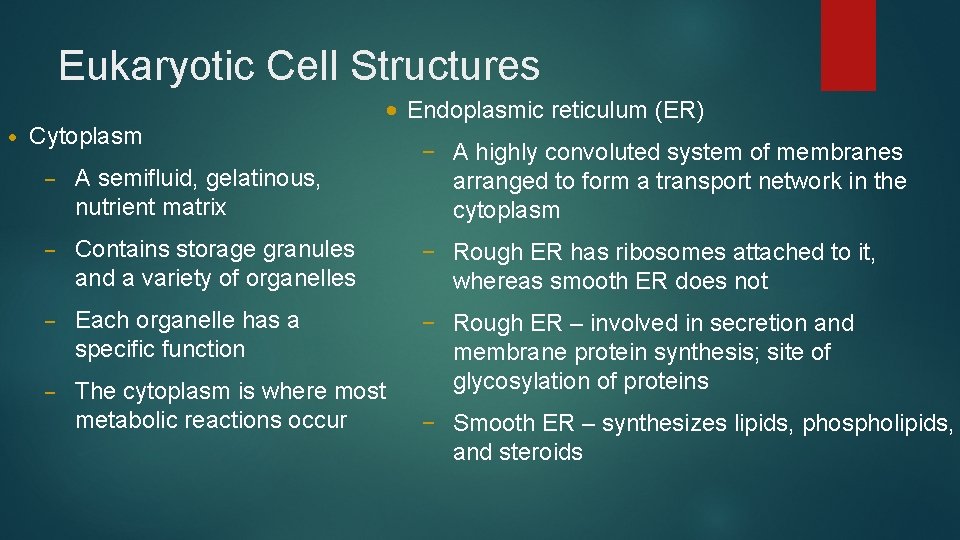
Eukaryotic Cell Structures • Cytoplasm • Endoplasmic reticulum (ER) – A semifluid, gelatinous, nutrient matrix – A highly convoluted system of membranes arranged to form a transport network in the cytoplasm – Contains storage granules and a variety of organelles – Rough ER has ribosomes attached to it, whereas smooth ER does not – Each organelle has a specific function – The cytoplasm is where most metabolic reactions occur – Rough ER – involved in secretion and membrane protein synthesis; site of glycosylation of proteins – Smooth ER – synthesizes lipids, phospholipids, and steroids
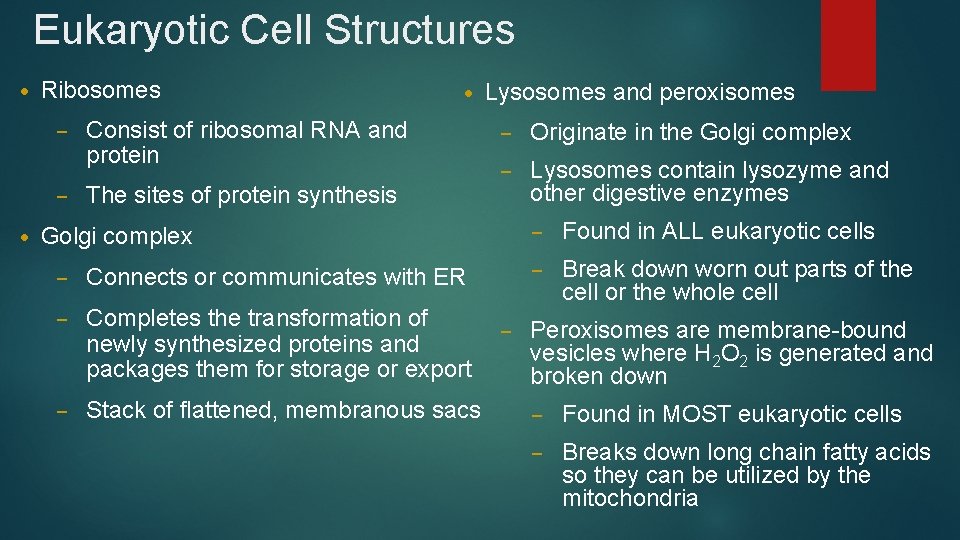
Eukaryotic Cell Structures • Ribosomes – – • • Consist of ribosomal RNA and protein The sites of protein synthesis Lysosomes and peroxisomes – Originate in the Golgi complex – Lysosomes contain lysozyme and other digestive enzymes Golgi complex – Connects or communicates with ER – Completes the transformation of newly synthesized proteins and packages them for storage or export – Stack of flattened, membranous sacs – – Found in ALL eukaryotic cells – Break down worn out parts of the cell or the whole cell Peroxisomes are membrane-bound vesicles where H 2 O 2 is generated and broken down – Found in MOST eukaryotic cells – Breaks down long chain fatty acids so they can be utilized by the mitochondria
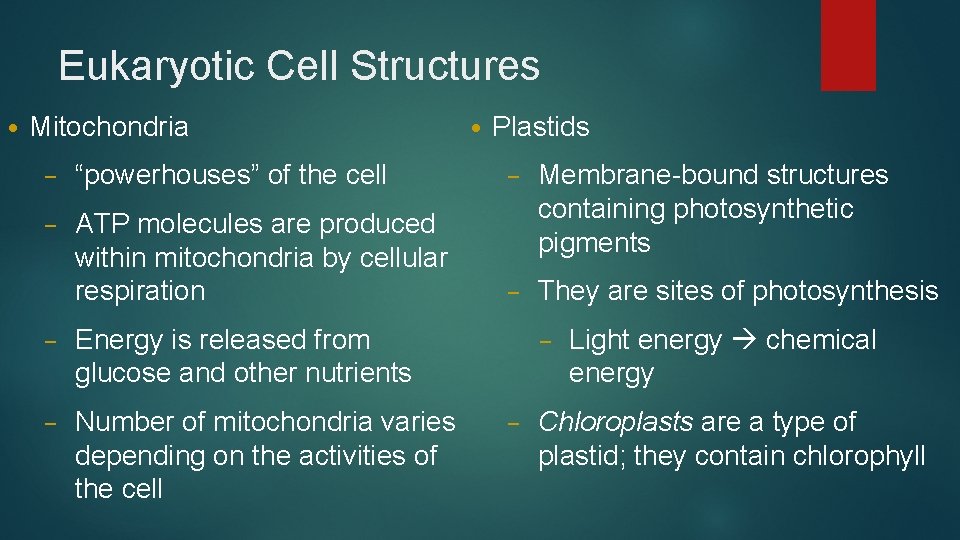
Eukaryotic Cell Structures • Mitochondria • Plastids – “powerhouses” of the cell – – ATP molecules are produced within mitochondria by cellular respiration Membrane-bound structures containing photosynthetic pigments – They are sites of photosynthesis – Energy is released from glucose and other nutrients – Number of mitochondria varies depending on the activities of the cell – – Light energy chemical energy Chloroplasts are a type of plastid; they contain chlorophyll
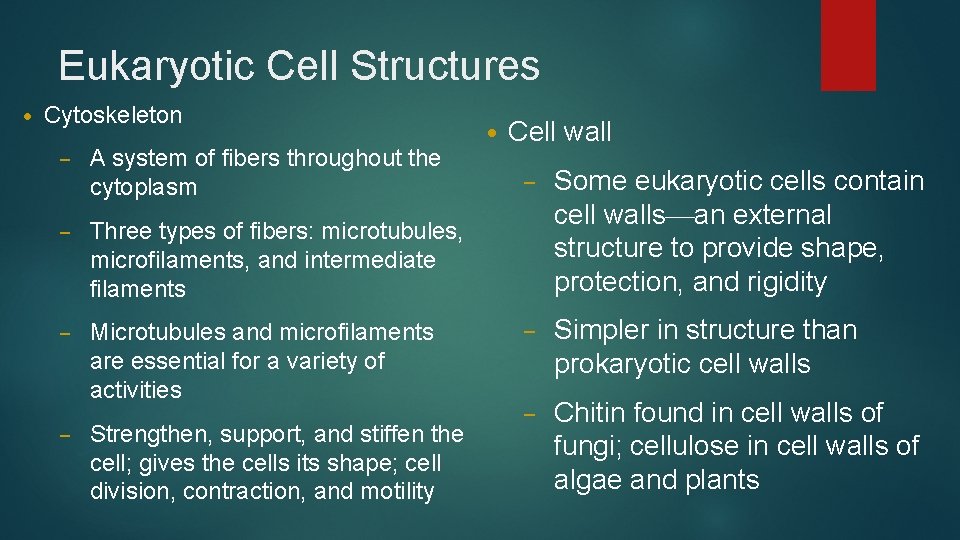
Eukaryotic Cell Structures • Cytoskeleton – A system of fibers throughout the cytoplasm – Three types of fibers: microtubules, microfilaments, and intermediate filaments – Microtubules and microfilaments are essential for a variety of activities – Strengthen, support, and stiffen the cell; gives the cells its shape; cell division, contraction, and motility • Cell wall – Some eukaryotic cells contain cell walls an external structure to provide shape, protection, and rigidity – Simpler in structure than prokaryotic cell walls – Chitin found in cell walls of fungi; cellulose in cell walls of algae and plants
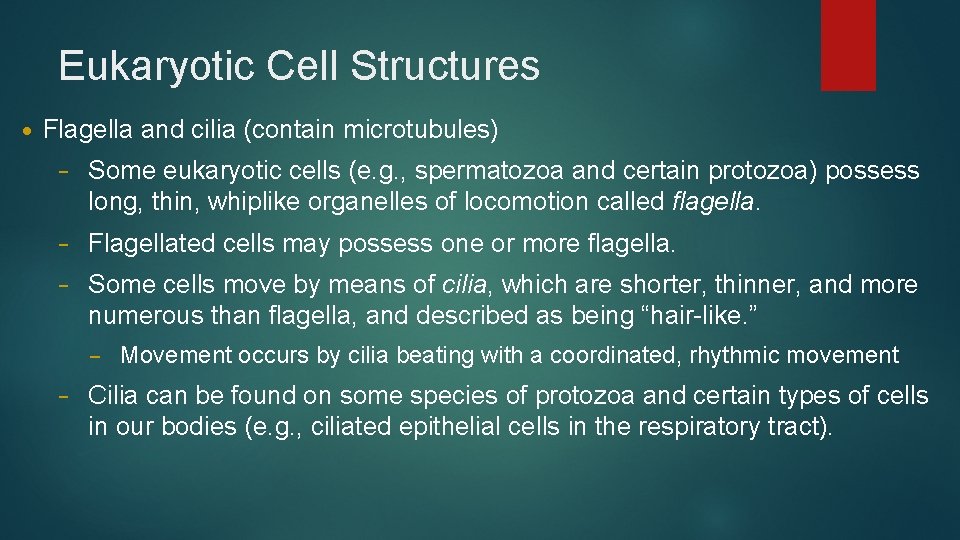
Eukaryotic Cell Structures • Flagella and cilia (contain microtubules) – Some eukaryotic cells (e. g. , spermatozoa and certain protozoa) possess long, thin, whiplike organelles of locomotion called flagella. – Flagellated cells may possess one or more flagella. – Some cells move by means of cilia, which are shorter, thinner, and more numerous than flagella, and described as being “hair-like. ” – – Movement occurs by cilia beating with a coordinated, rhythmic movement Cilia can be found on some species of protozoa and certain types of cells in our bodies (e. g. , ciliated epithelial cells in the respiratory tract).
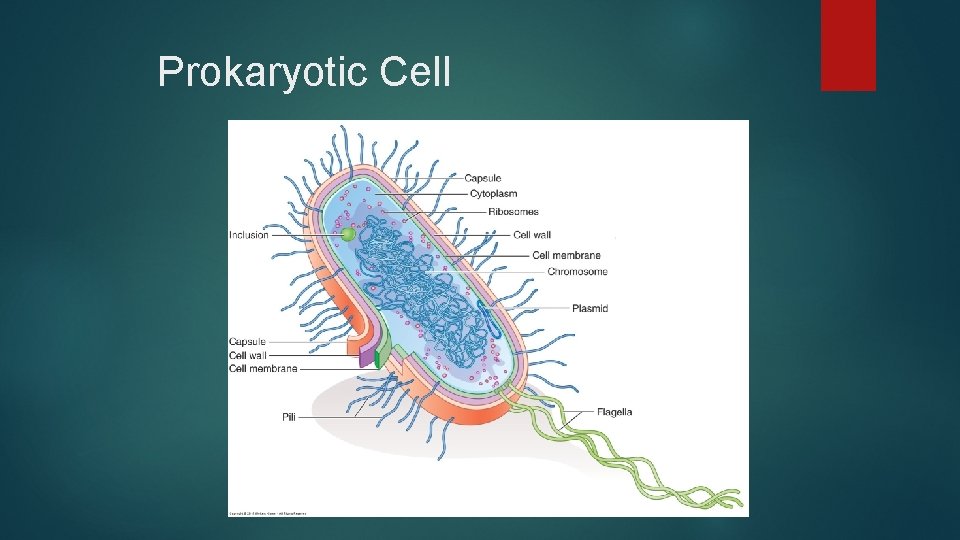
Prokaryotic Cells • About 10 times smaller than eukaryotic cells. • Simple compared to eukaryotic cells • reproduce by binary fission. • bacteria and archaea • the cytoplasm is not filled with internal membranes. • The cytoplasm of prokaryotic cells is surrounded by a cell membrane, a cell wall (usually), and sometimes a capsule or slime layer. • LACK membrane bound organelles
Prokaryotic Cell
Prokaryotic Cell Structures • Cell membrane – Similar in structure and function to the eukaryotic cell membrane – Selectively permeable – Flexible and thin, cannot be seen with compound microscope – Many enzymes are attached to the cell membrane where metabolic reactions take place • Chromosome – Prokaryotic chromosome usually consists of a single, long, supercoiled, circular DNA molecule and serves as the control center of the cell – Suspended in the cytoplasm – Plasmids are small, circular molecules of DNA that are not part of the chromosome (extra-chromosomal) – Capable of self-replication – Can give the cell an advantage
Prokaryotic Cell Structures Cytoplasm – It is a semiliquid that consists of water, enzymes, waste products, nutrients, proteins, carbohydrates, and lipids materials required for metabolic functions. • Cytoplasmic particles – Most are ribosomes, some of which occur in clusters. – Prokaryotic ribosomes are smaller than eukaryotic ribosomes – Granules present in some bacteria – Consist of starch, lipids, sulfur, iron, or other stored substances •
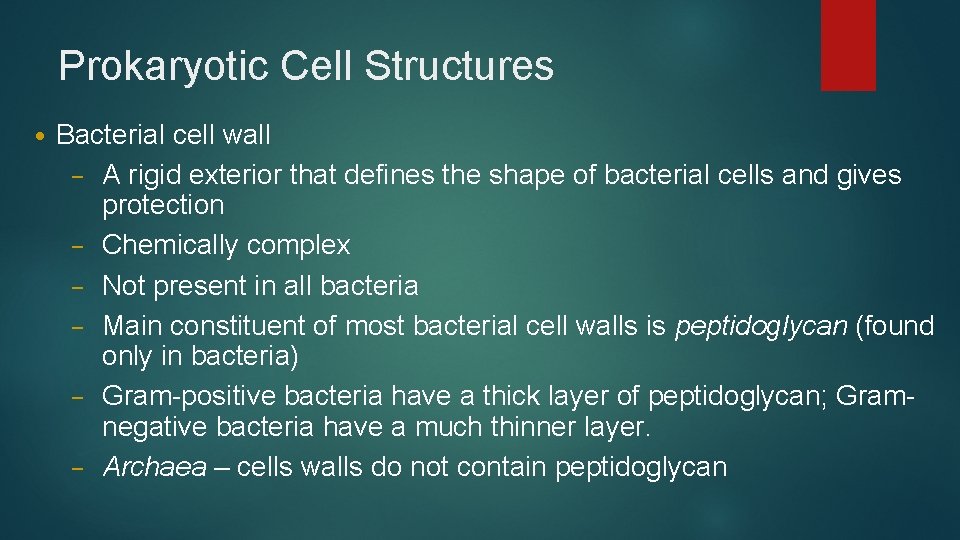
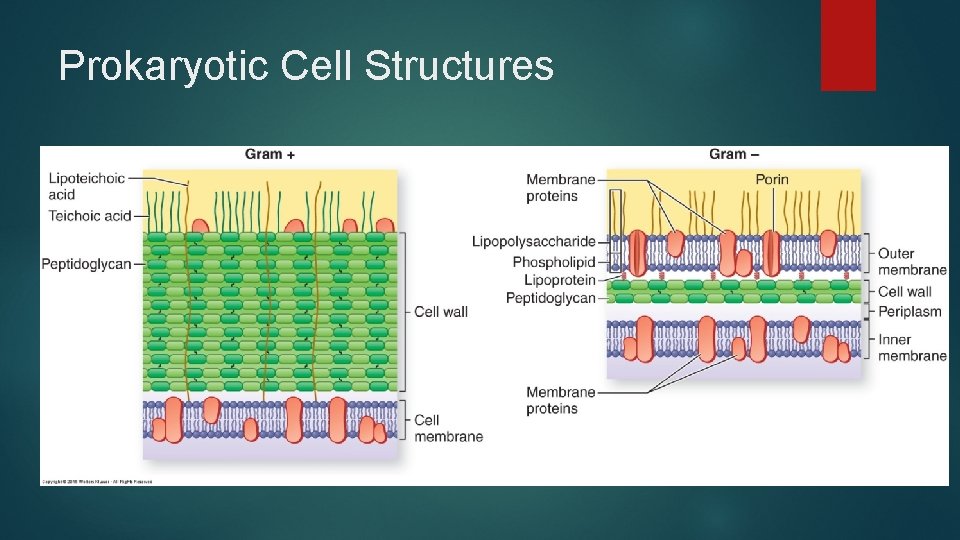
Prokaryotic Cell Structures • Bacterial cell wall – A rigid exterior that defines the shape of bacterial cells and gives protection – Chemically complex – Not present in all bacteria – Main constituent of most bacterial cell walls is peptidoglycan (found only in bacteria) – Gram-positive bacteria have a thick layer of peptidoglycan; Gramnegative bacteria have a much thinner layer. – Archaea – cells walls do not contain peptidoglycan
Prokaryotic Cell Structures
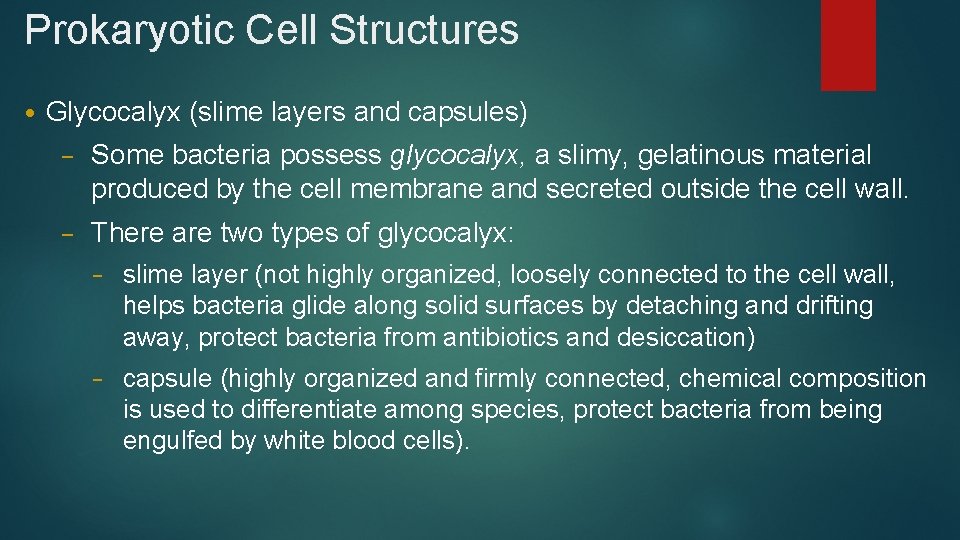
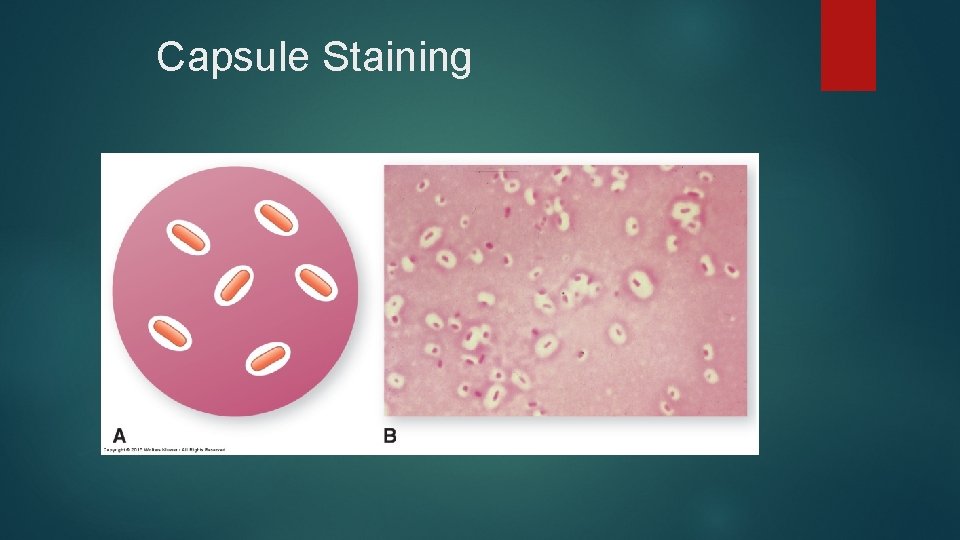
Prokaryotic Cell Structures • Glycocalyx (slime layers and capsules) – Some bacteria possess glycocalyx, a slimy, gelatinous material produced by the cell membrane and secreted outside the cell wall. – There are two types of glycocalyx: – slime layer (not highly organized, loosely connected to the cell wall, helps bacteria glide along solid surfaces by detaching and drifting away, protect bacteria from antibiotics and desiccation) – capsule (highly organized and firmly connected, chemical composition is used to differentiate among species, protect bacteria from being engulfed by white blood cells).
Capsule Staining
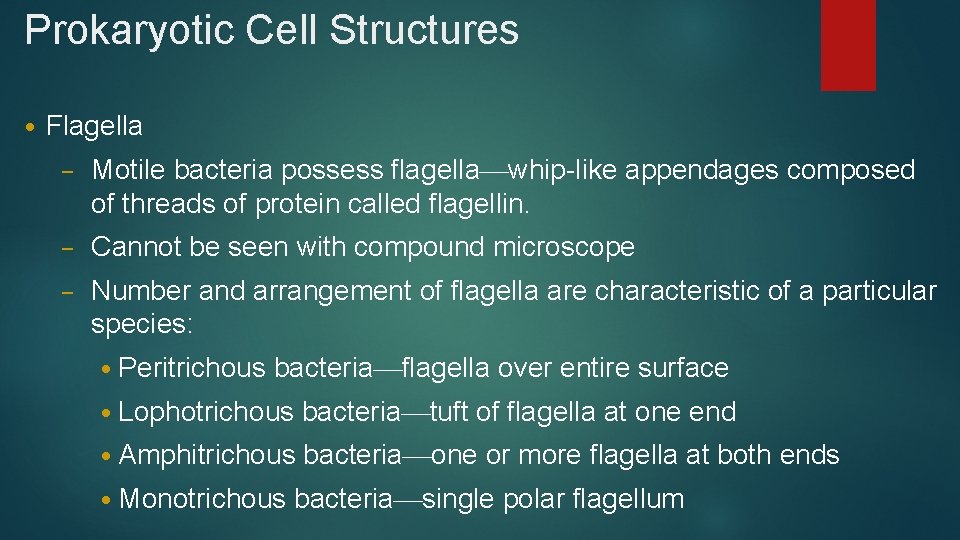
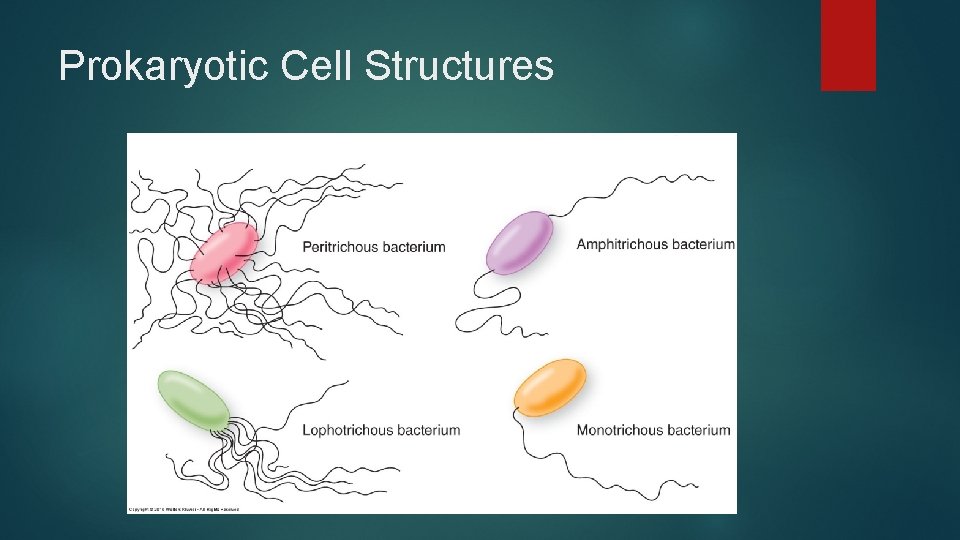
Prokaryotic Cell Structures • Flagella – Motile bacteria possess flagella whip-like appendages composed of threads of protein called flagellin. – Cannot be seen with compound microscope – Number and arrangement of flagella are characteristic of a particular species: • Peritrichous bacteria flagella over entire surface • Lophotrichous bacteria tuft of flagella at one end • Amphitrichous bacteria one or more flagella at both ends • Monotrichous bacteria single polar flagellum
Prokaryotic Cell Structures
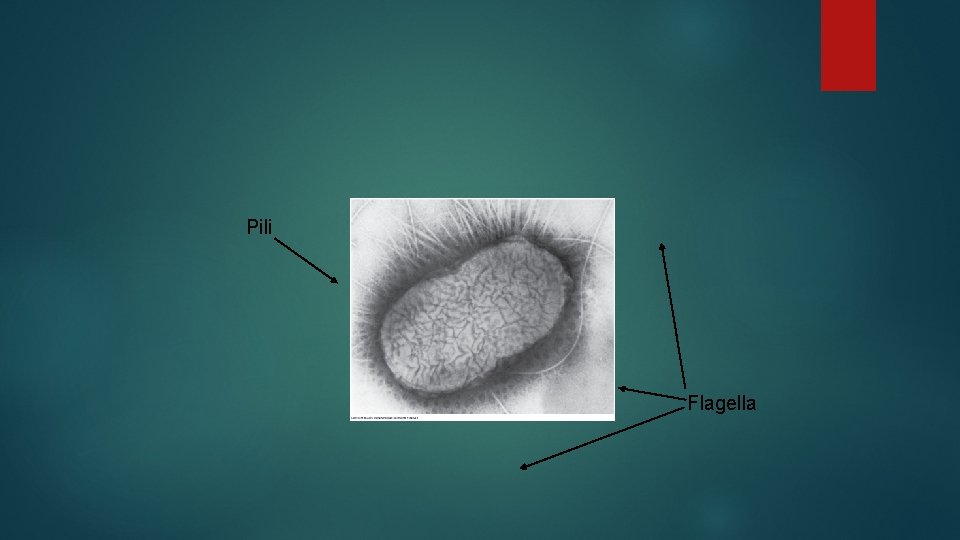
Prokaryotic Cell Structures • Pili (also called fimbriae) – They are hairlike structures, most often observed on Gramnegative bacteria. – They are composed of polymerized protein molecules called pilin. – Pili are thinner than flagella, have a rigid structure, and are not associated with motility. – They enable bacteria to anchor themselves to surfaces. – Some bacteria possess a sex pilus for conjugation.
Pili Flagella
Prokaryotic Cell Structures • Spores (endospores) – A few genera (e. g. , Bacillus and Clostridium) are capable of forming thick-walled spores as a means of survival. – The process of spore formation is called sporulation it is not reproduction. – Copy of the chromosome and some of the surrounding cytoplasm becomes enclosed in several thick protein coats – Spores have been shown to survive for many years and are resistant to heat, cold, drying, and most chemicals. – When the dried spore lands on a moist, nutrient-rich surface, it germinates and a new bacterial cell emerges – Usually one spore is produced in a bacterial cell, which generates into one vegetative bacterium. – Endospores can be visualized using a spore stain.
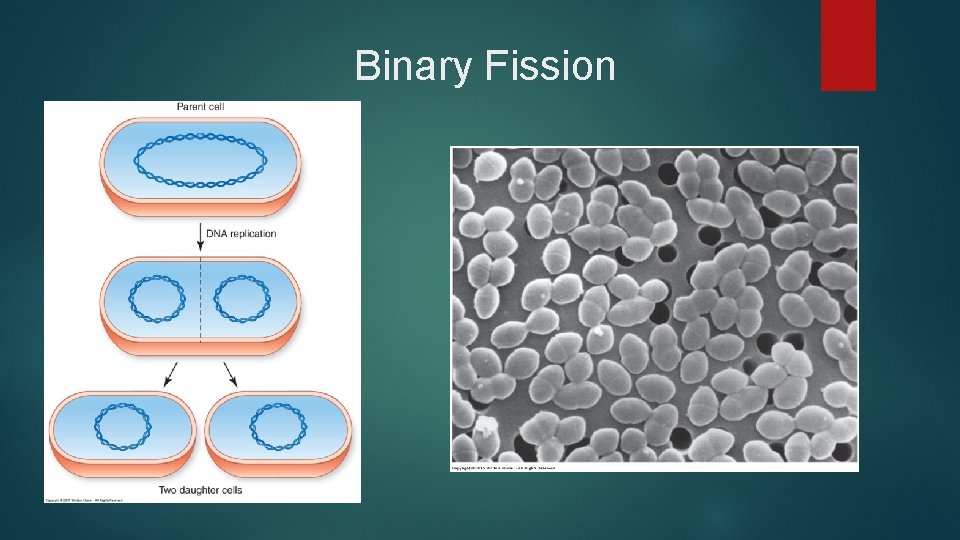
Reproduction of Organisms and Their Cells • Reproduction – refers to the manner in which an organism reproduces • Cell reproduction – refers to the process by which individual cells reproduce • Prokaryotic cell reproduction – Prokaryotic cells reproduce by a process known as binary fission one cell splits in half to become two daughter cells. • – Before a prokaryotic cell divides in half, the chromosome must be duplicated. The time it takes for binary fission to occur is called the generation time. • Generation time varies from one species to another and depends on growth conditions (under ideal conditions, Escherichia coli has a generation time of about 20 minutes).
Binary Fission
Taxonomy • Taxonomy is the science of classification of living organisms. • Taxonomy consists of classification, nomenclature, and identification. • Classification: the arrangement of organisms into taxonomic groups (known as taxa) • Nomenclature: assignment of names to the various taxa according to international rules • Identification: the process of determining whether an isolate belongs to one of the established taxa or represents a previously unidentified species
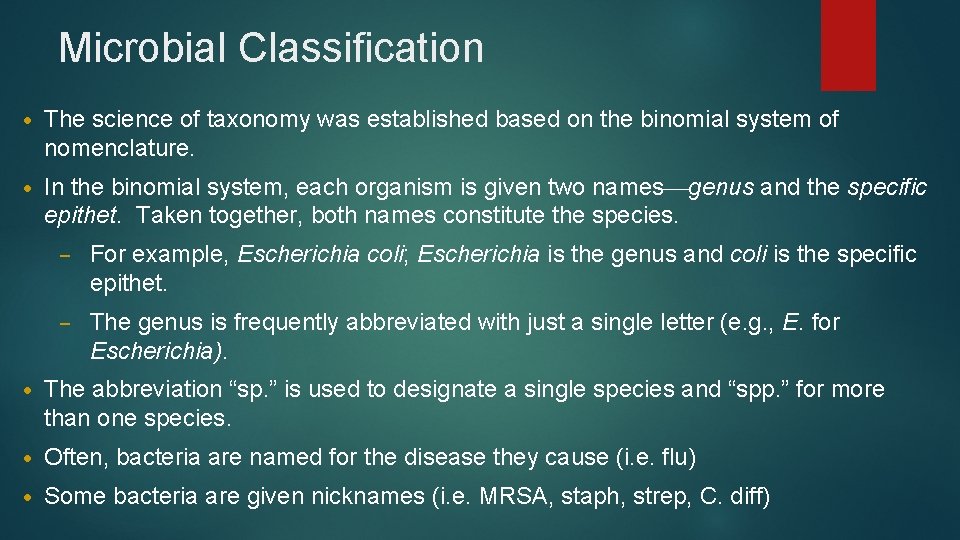
Microbial Classification • The science of taxonomy was established based on the binomial system of nomenclature. • In the binomial system, each organism is given two names genus and the specific epithet. Taken together, both names constitute the species. – For example, Escherichia coli; Escherichia is the genus and coli is the specific epithet. – The genus is frequently abbreviated with just a single letter (e. g. , E. for Escherichia). • The abbreviation “sp. ” is used to designate a single species and “spp. ” for more than one species. • Often, bacteria are named for the disease they cause (i. e. flu) • Some bacteria are given nicknames (i. e. MRSA, staph, strep, C. diff)
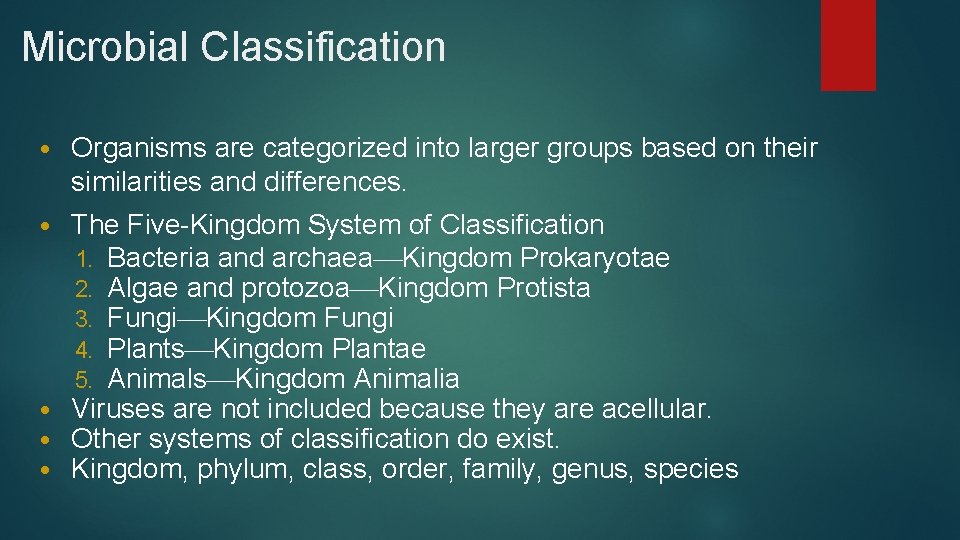
Microbial Classification • Organisms are categorized into larger groups based on their similarities and differences. The Five-Kingdom System of Classification 1. Bacteria and archaea Kingdom Prokaryotae 2. Algae and protozoa Kingdom Protista 3. Fungi Kingdom Fungi 4. Plants Kingdom Plantae 5. Animals Kingdom Animalia • Viruses are not included because they are acellular. • Other systems of classification do exist. • Kingdom, phylum, class, order, family, genus, species •
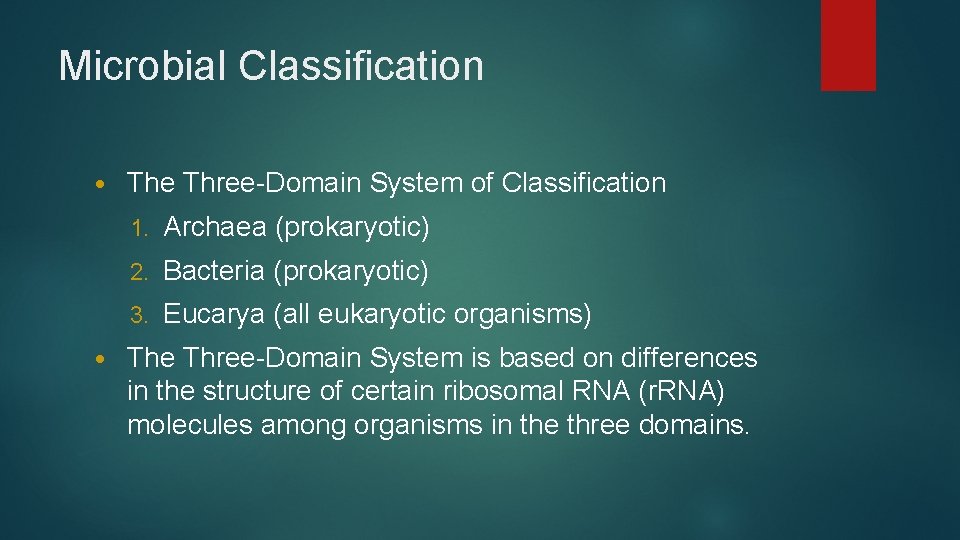
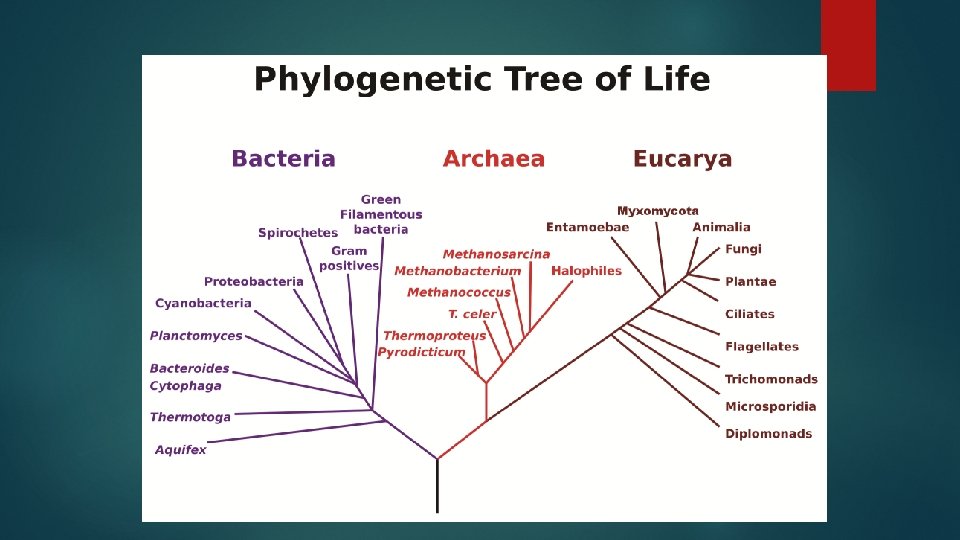
Microbial Classification • • The Three-Domain System of Classification 1. Archaea (prokaryotic) 2. Bacteria (prokaryotic) 3. Eucarya (all eukaryotic organisms) The Three-Domain System is based on differences in the structure of certain ribosomal RNA (r. RNA) molecules among organisms in the three domains.
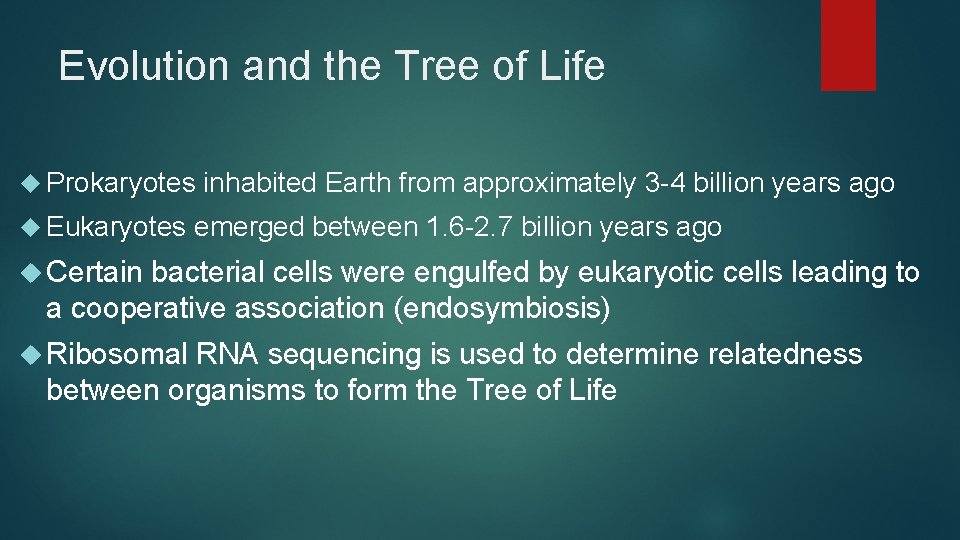
Evolution and the Tree of Life Prokaryotes Eukaryotes inhabited Earth from approximately 3 -4 billion years ago emerged between 1. 6 -2. 7 billion years ago Certain bacterial cells were engulfed by eukaryotic cells leading to a cooperative association (endosymbiosis) Ribosomal RNA sequencing is used to determine relatedness between organisms to form the Tree of Life