
Chapter 3 Cell Division 3 1 Cell division
- Slides: 15
Chapter 3: Cell Division 3. 1 Cell division occurs in all organisms 3. 2 Cell division is part of the cell cycle 4. 3 Meiosis is a special form of cell division Before, you learned: -cells come from other cells through cell division -a cell must have a full set of genetic material to function -cell division enables multicellular organisms to develop, grow, and repair themselves Now, you will learn: -about two main stages in the cell cycle -about the changes that occur in cells before mitosis -about the events that take place during mitosis
n Mitosis animation/video: n n n http: //www. youtube. com/watch? v=Ahg. Rh. Xl 7 w_g Activity: http: //bio. rutgers. edu/~gb 101/lab 2_mitosi s/index 2. html
3. 2 Cell division is part of the cell cycle
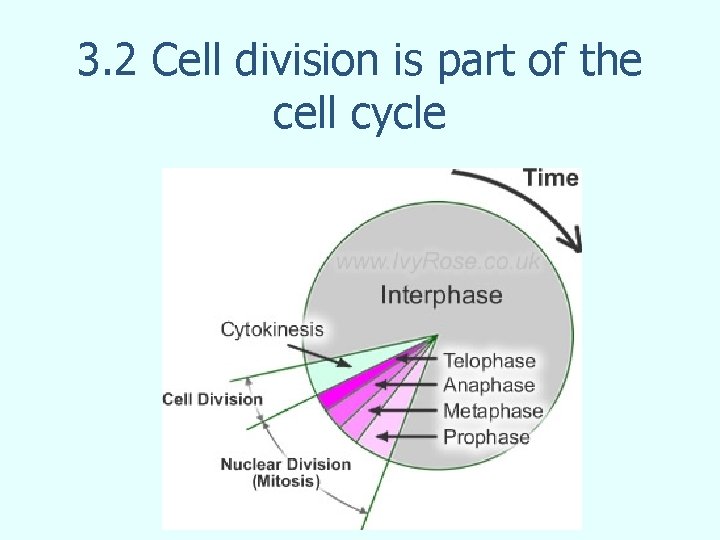
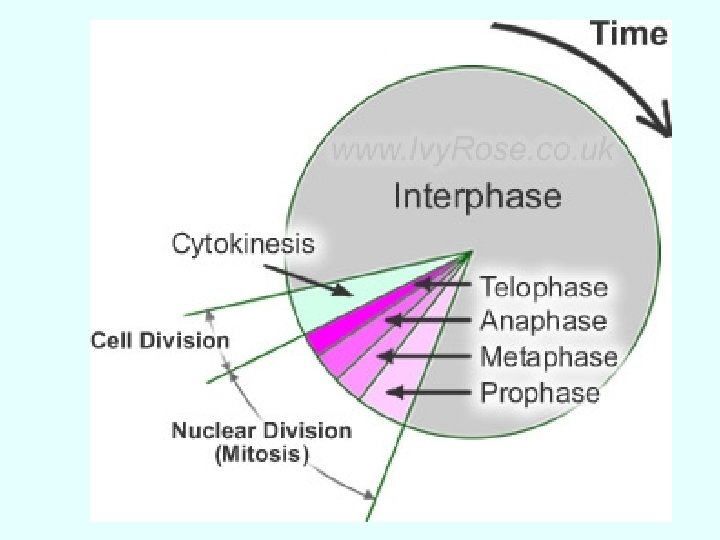
Cycles n Life cycle, Carbon cycle, Water cycle n n Cycles: regularly repeats Cell Cycle The normal sequence of development and division of a cell n Includes: n Interphase – cell carries out its functions n Cell division – cell divides n n Only eukaryotes undergo mitosis
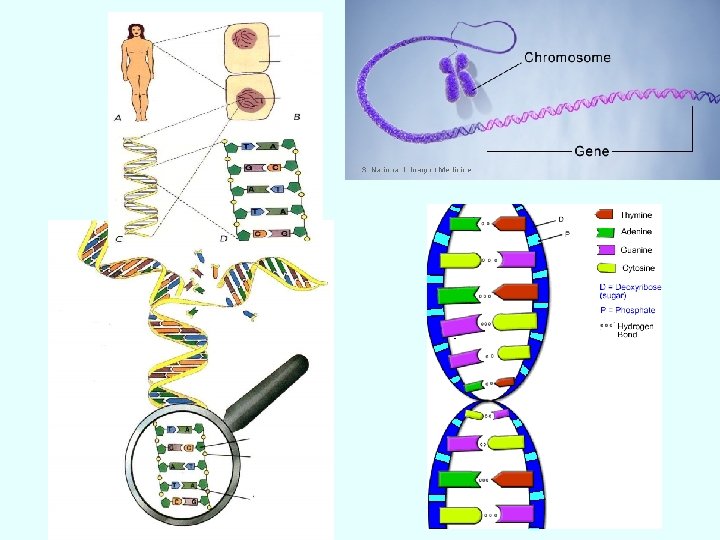
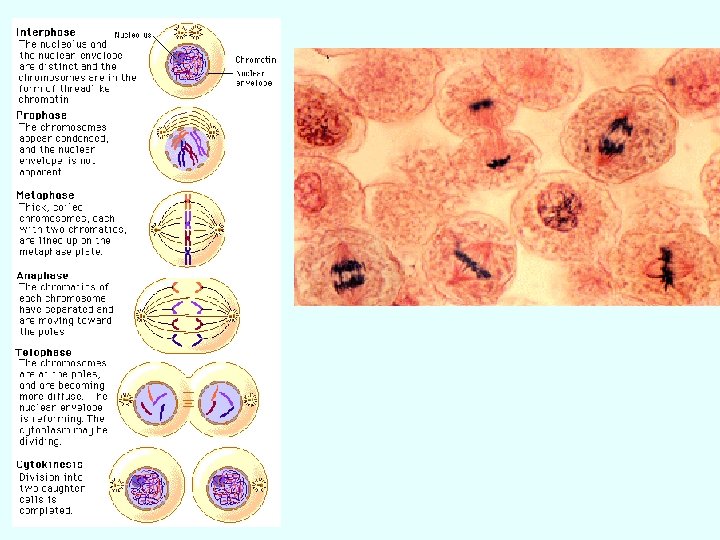
Interphase n n Part of the cell cycle that the cell is NOT dividing Cell grows to twice its original size Normal cell activities: transporting materials in and wastes out, cellular respiration (provides energy) Prepare for cell division n Duplicated DNA exactly n During most of Interphase, DNA is in chromatin form
Cell Division Phase n Mitosis: nucleus divides n n Prokaryotes do not undergo mitosis because they have only one chromosome and no nucleus To move the DNA and other material in the parent cell into position for cell division When the cell divides, each new cell gets a full set of DNA and other cell structures Cytokinesis: division of the parent cell’s cytoplasm – immediately after mitosis n Results in two genetically identical daughter cells
Cell division produces two genetically identical cells n n New cells help your body to grow, develop, and repair Body cells divide at different rates, but the same process (mitosis) divides their genetic material
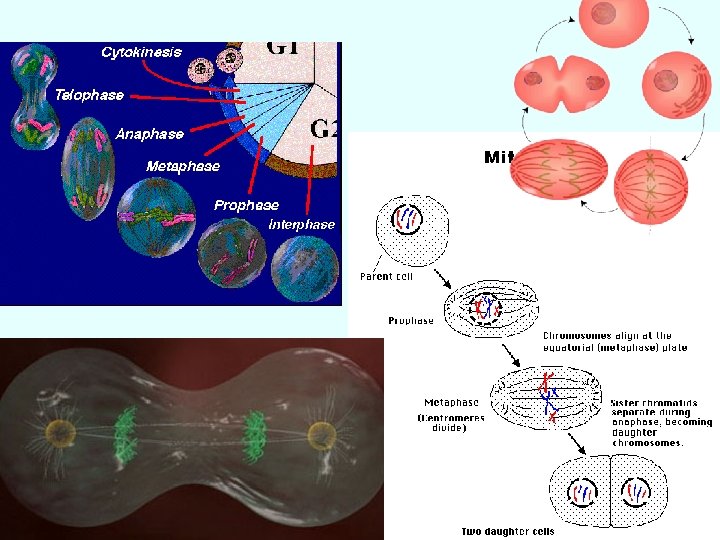
Mitosis 1. 2. 3. 4. Prophase: the DNA in the nucleus forms chromosomes, consist of two identical chromatids held together by a centromere Metaphase: chromosomes line up in the middle of the cell Anaphase: chromosomes/chromatids separate forming two chromosomes, which are pulled to opposite sides of the cell Telophase: nuclei form around each group of chromosomes
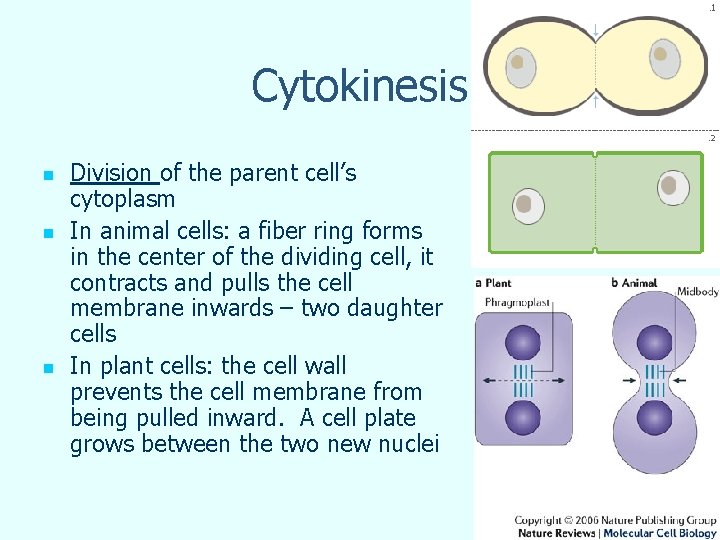
Cytokinesis n n n Division of the parent cell’s cytoplasm In animal cells: a fiber ring forms in the center of the dividing cell, it contracts and pulls the cell membrane inwards – two daughter cells In plant cells: the cell wall prevents the cell membrane from being pulled inward. A cell plate grows between the two new nuclei
Mitosis and Cytokinesis n http: //highered. mcgrawhill. com/sites/0072437316/student_view 0/ chapter 11/animations. html# n n Mitosis and Cytokinesis http: //www. classzone. com/books/ml_scien ce_share/vis_sim/chm 05_pg 86_mitosis/ch m 05_pg 86_mitosis. html
3. 2 Cell division is part of the cell cycle n Name and draw each stage of mitosis.